Risek – Uses, Side Effects, Dosage & Warnings | QuickDawa
Imagine this.
You just had a regular dinner — maybe some biryani or a plate of spicy karahi.
You lie down to sleep, and suddenly your chest starts burning.
That sour, bitter taste creeps up your throat.
Your stomach feels like it is on fire.
You toss and turn all night, unable to get comfortable.
Sound familiar?
If you have ever dealt with heartburn, acid reflux, or that awful feeling of acid rising up in your chest, you are definitely not alone.
Millions of people around the world deal with this every single day.
And one of the most commonly prescribed medicines for this exact problem is Risek.
You have probably seen it in someone’s medicine cabinet.
Maybe your doctor prescribed it to you.
Or maybe a friend told you, “Just take a Risek, it will fix your stomach.”
But do you actually know what Risek does inside your body?
Do you know when you should take it, when you should NOT take it, and what side effects to watch for?
That is exactly what we are going to cover today.
At QuickDawa, we are all about making medicine easy to understand — so let us break down everything you need to know about Risek in simple, clear language.
No complicated medical terms.
No confusing jargon.
Just plain, honest information that actually makes sense.
💊 What Is Risek?
Risek is a brand name for a medicine called Omeprazole.
It belongs to a group of medicines known as Proton Pump Inhibitors, or PPIs for short.
Now, that might sound complicated, but here is the simple version:
Your stomach has tiny little “pumps” that produce acid.
Risek turns those pumps off.
Less acid = less burning, less pain, and faster healing.
That is literally it.
Risek is manufactured by Getz Pharma, one of the largest and most trusted pharmaceutical companies in Pakistan.
It has been around for decades and is one of the most widely used stomach medicines in the country — and across the Middle East and South Asia too.
Risek is available in several forms:
- Risek 20mg Capsules — the standard dose
- Risek 40mg Capsules — a stronger dose for more serious conditions
- Risek INSTA — a convenient powder sachet that dissolves in water (great for people who have trouble swallowing capsules)
You can get Risek over the counter in many pharmacies, but for higher doses or long-term use, a doctor’s prescription is recommended.
✅ Uses of Risek
Risek is one of those medicines that doctors prescribe for a wide range of stomach and digestive problems.

Let us go through each one.
🔥 Heartburn and Acid Reflux (GERD)
This is the number one reason people take Risek.
GERD stands for Gastroesophageal Reflux Disease.
In simple words, it means stomach acid keeps flowing back up into your food pipe (esophagus).
This causes that burning sensation in your chest — what most people call “heartburn.”
Risek reduces the acid your stomach makes, so the burning stops and your food pipe gets a chance to heal.
Think of it this way:
If your stomach is a pot of boiling water that keeps overflowing, Risek turns the heat down so the water stops spilling over.
🩹 Stomach Ulcers (Gastric Ulcers)
An ulcer is basically a painful sore on the lining of your stomach.
It happens when too much acid eats away at the protective layer inside your stomach.
Risek lowers the acid, which allows the ulcer to heal naturally.
Doctors often prescribe Risek 40mg for ulcers because a stronger dose helps the healing happen faster.
🩹 Duodenal Ulcers
The duodenum is the first part of your small intestine — right after the stomach.
Ulcers can form there too.
Risek works the same way here — it reduces acid so the sore can heal without being constantly irritated.
🦠 H. Pylori Infection Treatment
Helicobacter pylori (H. pylori) is a type of bacteria that lives in the stomach lining.
It is one of the major causes of stomach ulcers.
Risek is used as part of a combination therapy — meaning it is given alongside two antibiotics (usually Amoxicillin and Clarithromycin) to kill the bacteria and heal the ulcer at the same time.
Risek lowers the acid so the antibiotics can work more effectively.
It is a team effort, and Risek plays a key role.
🔴 Zollinger-Ellison Syndrome
This is a rare condition where the stomach produces way too much acid — much more than normal.
It is caused by tumors in the pancreas or duodenum.
Risek is one of the main medicines used to manage this condition, often at higher doses.
Most people will never need Risek for this reason, but it is good to know.
💊 NSAID-Related Stomach Damage
If you take painkillers like ibuprofen, diclofenac, or naproxen regularly, they can damage your stomach lining over time.
Doctors often prescribe Risek alongside these painkillers to protect the stomach from acid damage.
This is especially common in older adults or people with arthritis who need painkillers daily.
🔄 Off-Label Uses
Some doctors also prescribe Risek for:
- Laryngopharyngeal reflux (acid reaching the throat and voice box)
- Stress ulcer prevention in hospital patients
- Barrett’s esophagus management
- Chronic cough caused by acid reflux
These uses are not officially listed on the label, but they are medically accepted in many cases.
👨👩👧👦 Who Is Risek Prescribed For?
- Adults — most commonly
- Elderly — with dosage adjustments
- Children — in specific cases, under a doctor’s supervision
- Hospital patients — for stress ulcer prevention
🧪 How Does Risek Work in the Body?
Let me keep this super simple.
Your stomach lining has cells called parietal cells.
These cells have tiny acid-producing pumps called proton pumps.
Risek enters your bloodstream, reaches those cells, and blocks those pumps directly.
When the pumps are blocked, your stomach produces significantly less acid.
Less acid means less irritation, less burning, and faster healing of any damage inside your stomach or food pipe.
The effect of one dose lasts about 24 hours, which is why most people only need to take Risek once a day.
Pretty neat, right?
⚠️ Side Effects of Risek
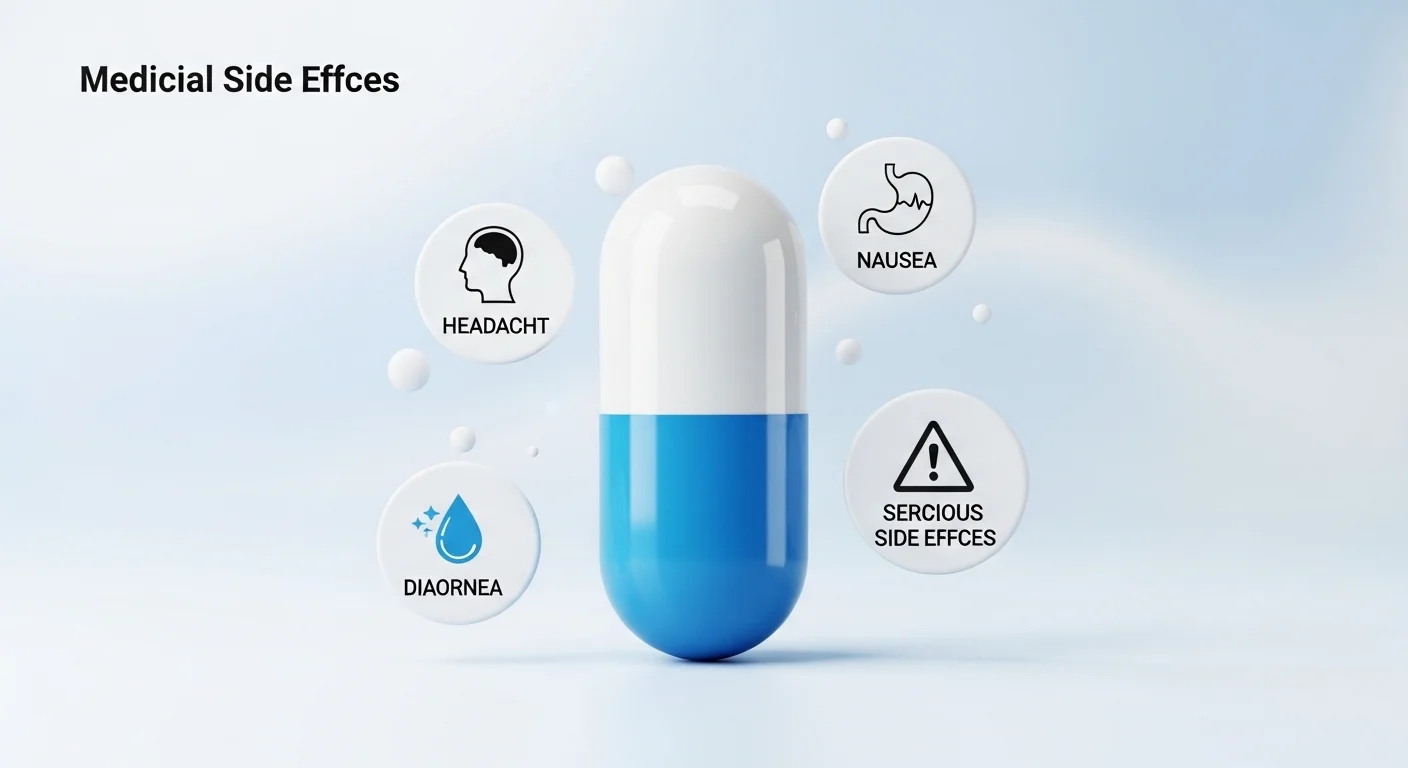
Now, every medicine has side effects.
That is just how it works.
But here is the thing — not everyone experiences them.
Many people take Risek for weeks or even months and feel perfectly fine.
Still, it is important to know what to look out for.
😐 Common Side Effects (Most People May Experience)
These are usually mild and go away on their own:
- Headache — one of the most reported side effects
- Nausea — feeling a bit queasy, especially when you first start
- Diarrhea — loose or watery stools
- Stomach pain or gas — a little ironic, but it happens
- Constipation — some people experience the opposite of diarrhea
- Dizziness — mild lightheadedness
These are generally nothing to worry about.
If they bother you, talk to your doctor — but they usually settle down within a few days.
🤔 Less Common Side Effects
- Dry mouth
- Skin rash or itching
- Feeling tired or sleepy
- Joint pain
- Mild changes in taste
- Flatulence (gas)
🚨 Rare but Serious Side Effects (Seek Medical Help Immediately)
These are uncommon, but they need urgent attention:
- Severe allergic reaction — swelling of face, lips, tongue, or throat; difficulty breathing; hives
- Severe diarrhea that does not stop — could indicate a C. difficile infection
- Kidney problems — changes in urination, swelling in ankles or feet
- Low magnesium levels — muscle cramps, tremors, irregular heartbeat, seizures (usually with long-term use)
- Bone fractures — long-term use of PPIs has been linked to increased risk of hip, wrist, and spine fractures
- Liver problems — yellowing of skin or eyes (jaundice), dark urine
- Lupus-like syndrome — skin rash on cheeks and arms, joint pain (very rare, usually with prolonged use)
💡 Reassuring note: Side effects do not happen to everyone. Many people use Risek with no issues at all. But it is important to be aware so you can act quickly if something does not feel right.
🚨 Warnings & Precautions

This section is really important.
Please read it carefully.
🚫 Who Should NOT Take Risek?
- Anyone who is allergic to omeprazole or any ingredient in Risek
- Anyone who is allergic to other PPIs like esomeprazole (Nexium), lansoprazole (Prevacid), or pantoprazole (Protonix)
- People currently taking a medicine called rilpivirine (used for HIV) — this is a major contraindication
If you are unsure whether Risek is safe for you, ask your doctor or pharmacist before taking even one dose.
🤰 Pregnancy & Breastfeeding
- Pregnancy: Risek falls under FDA Pregnancy Category C. This means animal studies have shown some risk, but there are no well-controlled studies in pregnant women. Use it only if your doctor says the benefits outweigh the risks.
- Breastfeeding: Omeprazole does pass into breast milk in small amounts. Talk to your doctor before taking Risek if you are nursing.
🫀 Liver and Kidney Disease
- If you have liver disease, your doctor may prescribe a lower dose of Risek because the medicine is processed by the liver.
- If you have kidney problems, let your doctor know. Long-term PPI use has been associated with a small risk of kidney issues.
👶 Children and 👴 Elderly
- Children: Risek can be used in children, but the dose must be carefully calculated by a doctor based on body weight.
- Elderly: Older adults can use Risek but should be monitored more closely, especially for bone health and magnesium levels during long-term use.
🍺 Alcohol Interaction
Alcohol does not directly interact with Risek in a dangerous way.
However, alcohol increases stomach acid production and irritates the stomach lining — which basically works against what Risek is trying to do.
So drinking alcohol while taking Risek is like mopping the floor while someone keeps pouring water on it.
Not a great idea.
🚗 Driving and Operating Machinery
Risek can occasionally cause dizziness or drowsiness in some people.
If you feel dizzy after taking it, avoid driving or using heavy machinery until you know how the medicine affects you.
⚫ Long-Term Use Warning
This is a big one.
Risek is incredibly effective, but it was never designed to be taken forever.
Long-term use (more than a few months) has been linked to:
- Low magnesium levels
- Vitamin B12 deficiency
- Increased risk of bone fractures
- Higher risk of stomach infections
- Possible kidney damage
If you have been taking Risek for a long time, do not stop it suddenly without talking to your doctor. Stopping abruptly can cause a “rebound” effect where your stomach produces even more acid than before.
Your doctor can help you taper off gradually and safely.
🔄 Drug Interactions
Risek can interact with several other medicines.
Some interactions are serious, so it is crucial to be aware.
Here are the most important ones:
🔴 Major Interactions
- Clopidogrel (Plavix) — Risek can reduce the effectiveness of clopidogrel, increasing the risk of heart attack or stroke. Avoid this combination.
- Rilpivirine (HIV medicine) — Risek significantly reduces rilpivirine absorption, making it ineffective. Do NOT take together.
- Methotrexate — Risek can increase methotrexate levels in the blood, raising the risk of toxicity.
🟡 Moderate Interactions
- Warfarin (blood thinner) — Risek may increase the effect of warfarin, raising bleeding risk. Regular INR monitoring is needed.
- Diazepam (Valium) — Risek can slow down the breakdown of diazepam, making it stay in the body longer.
- Phenytoin (seizure medicine) — Risek may increase phenytoin blood levels. Monitoring is required.
- Iron supplements — Risek reduces stomach acid, which makes it harder for the body to absorb iron properly.
- St. John’s Wort (herbal) — This herb can speed up Risek’s breakdown in the body, making it less effective.
- Ketoconazole / Itraconazole — These antifungal medicines need acid to be absorbed. Risek reduces acid, reducing their effectiveness.
🟢 Minor Interactions
- Calcium supplements — Reduced acid can slightly decrease calcium absorption, especially calcium carbonate forms.
📋 Important reminder: Always tell your doctor or pharmacist about every medicine, supplement, or herbal product you are currently taking before starting Risek. Even something that seems harmless could cause an interaction.
💉 Overdose / Missed Dose
🔴 Overdose
Taking too much Risek is uncommon, but it can happen — especially accidentally.
Signs of Risek (Omeprazole) overdose may include:
- Blurred vision
- Confusion
- Excessive drowsiness
- Rapid heartbeat
- Nausea and vomiting
- Excessive sweating
- Dry mouth
- Headache
What to do if you suspect an overdose:
- Stay calm. Do not panic.
- Call your doctor immediately or go to the nearest emergency room.
- In the United States, you can call Poison Control at 1-800-222-1222.
- In Pakistan, head to the nearest hospital emergency right away.
- Do NOT try to make yourself vomit unless a medical professional tells you to.
Overdose on Risek alone is rarely life-threatening, but it still needs medical attention — especially in children or elderly patients.
💛 Missed Dose
Forgot to take your Risek?
Do not worry. It happens to everyone.
Here is what to do:
- If you remember within a few hours, take it as soon as you remember.
- If it is almost time for your next dose, just skip the missed dose and continue your regular schedule.
- Never take a double dose to make up for the one you missed.
Taking two doses at once will not help you heal faster — it will only increase the chances of side effects.
One missed dose is not going to cause major problems, so there is no need to stress about it.
📊 Dosage Guide
But remember — your doctor knows your situation best, so always follow their instructions.
👨 Adult Dosage
- GERD / Acid Reflux — 20mg once daily for 4 to 8 weeks
- Stomach Ulcer — 20mg to 40mg once daily for 4 to 8 weeks
- Duodenal Ulcer — 20mg once daily for 2 to 4 weeks
- H. Pylori Eradication — 20mg twice daily (taken with antibiotics) for 7 to 14 days
- Zollinger-Ellison Syndrome — 60mg once daily (may be higher) for as long as directed by your doctor
- NSAID Stomach Protection — 20mg once daily for as long as NSAIDs are being used
⚠️ Disclaimer: This dosage information is for general awareness only. Always follow your doctor’s prescription or the instructions on your medicine packaging.
👶 Children’s Dosage
- Children aged 1 year and older can take Risek, but the dose depends on body weight.
- Typical dose: 0.7 to 3.3 mg/kg/day
- Always consult a pediatrician. Do not guess the dose for a child.
👴 Elderly Dosage
- No specific dose adjustment is usually needed for elderly patients.
- However, the doctor may start with the lowest effective dose.
- Monitoring for bone health, magnesium levels, and kidney function is recommended during long-term use.
💊 Available Forms
- Risek 20mg Capsules
- Risek 40mg Capsules
- Risek INSTA 20mg Sachets (dissolves in water — ideal for those who cannot swallow capsules)
- Risek INSTA 40mg Sachets
⏰ When and How to Take Risek
- Take Risek before a meal — ideally 30 minutes before breakfast.
- Swallow the capsule whole with a glass of water.
- Do not crush, chew, or break the capsule. It has a special coating that protects the medicine from stomach acid.
- If using Risek INSTA, pour the sachet into a glass of water, stir, and drink immediately.
⚠️ Disclaimer: This dosage information is for general awareness only. Always follow your doctor’s prescription or the instructions on your medicine packaging.
🩺 When to Call Your Doctor
Risek is generally safe, but there are certain situations where you should contact your doctor right away.
Call your doctor if you experience:
- Severe stomach pain that does not go away
- Blood in your vomit or vomit that looks like coffee grounds
- Black, tarry, or bloody stools
- Difficulty swallowing that gets worse
- Unexplained weight loss
- Persistent diarrhea that lasts more than 3 days
- Muscle spasms, cramps, or tremors — could indicate low magnesium
- Signs of an allergic reaction — swelling, rash, trouble breathing
- Joint pain with a skin rash — could indicate a rare lupus-like reaction
- No improvement after 2 weeks of taking Risek as directed
Do not try to diagnose yourself.
If something feels off, it is always better to check with a professional.
Your doctor is there to help — not to judge.
At QuickDawa, we always encourage our readers to use medicine information as a starting point, not as a replacement for a real doctor’s visit.
🙋 FAQs
Q: Is Risek safe during pregnancy?
A: Risek should only be used during pregnancy if your doctor specifically prescribes it. It falls under FDA Pregnancy Category C, so the benefits must outweigh the potential risks. Never self-medicate during pregnancy.
Q: Can I take Risek on an empty stomach?
A: Yes, actually Risek works best when taken on an empty stomach — ideally 30 minutes before your first meal of the day. This allows the medicine to activate properly before food triggers acid production.
Q: How long does Risek take to work?
A: Most people start feeling relief within 1 to 2 hours after taking Risek. However, for full healing of ulcers or severe acid damage, it may take 2 to 8 weeks of consistent use. Do not stop early just because you feel better.
Q: Can I take Risek daily for a long time?
A: Risek is meant for short-term use in most cases (2 to 8 weeks). Long-term use should only happen under a doctor’s supervision because of potential risks like low magnesium, vitamin B12 deficiency, and bone fractures. Always talk to your doctor about the right duration for you.
Q: What is the difference between Risek and Risek INSTA?
A: Both contain the same active ingredient — omeprazole. The difference is the form. Risek comes in capsules, while Risek INSTA comes in sachets that dissolve in water. Risek INSTA is ideal for people who have trouble swallowing capsules, children (as directed by a doctor), or patients with feeding tubes.
🌐 Sources & External References
Here are trusted medical resources where you can learn more about Omeprazole (the active ingredient in Risek):
- FDA Drug Label — Omeprazole
- MedlinePlus — Omeprazole
- Drugs.com — Omeprazole Full Information
- WebMD — Omeprazole Oral
- Mayo Clinic — Omeprazole (Oral Route)
- RxList — Prilosec (Omeprazole)
🏁 Conclusion

So there you have it — your complete guide to Risek.
It is one of the most effective and widely used medicines for heartburn, acid reflux, GERD, and stomach ulcers.
It works by reducing the amount of acid your stomach produces, giving your stomach and food pipe a chance to heal.
Like any medicine, it is not without its side effects and precautions.
But when used correctly and under a doctor’s guidance, Risek can genuinely improve your quality of life.
The key takeaways?
Take it as prescribed.
Do not use it longer than necessary without medical supervision.
Watch for warning signs.
And always keep your doctor in the loop.
At QuickDawa, we believe that understanding your medicine is just as important as taking it. Knowledge is the first step toward better health. If you found this guide helpful, share it with someone who needs it — and explore more medicine guides on QuickDawa.com for trusted, easy-to-understand health information.
Got questions about Risek or any other medicine? Drop them in the comments below or reach out to us through our contact page. We love hearing from our readers and are always happy to help!
⚠️ Medical Disclaimer
The information provided in this article is intended for educational and informational purposes only. It is not a substitute for professional medical advice, diagnosis, or treatment. Always seek the guidance of your qualified doctor, pharmacist, or healthcare provider with any questions you may have regarding a medical condition, medication, or treatment plan.
Never disregard professional medical advice or delay seeking it because of something you read on QuickDawa.com or any other website. If you think you may have a medical emergency, call your doctor, go to the nearest emergency room, or call emergency services immediately.
Drug information, dosages, and interactions described in this post are provided for general awareness only and may not apply to your individual health situation. Medications affect people differently based on age, weight, health conditions, and other factors.
QuickDawa.com and its authors do not assume any liability for any consequences arising from the use or misuse of information presented on this website.