Is Ibuprofen Safe for Kids? 7 Critical Facts Parents Miss
It is 2 AM.
Your little one is burning up with a fever.
They are crying, restless, and you just want to help them feel better.
You open your medicine cabinet and see a bottle of ibuprofen.
And then the worry hits you.
Is ibuprofen safe for kids?
Can I even give this to my child right now?
What if I give too much?
If you have ever been in this moment, trust me, you are not alone.
Every parent has felt this panic.
Ibuprofen is one of the most common medicines used for fevers and pain in children.
But that does not mean you should use it without understanding a few important things first.
The age of your child matters a lot.
So does their weight, their health condition, and even what illness they are fighting.
Some situations make ibuprofen perfectly fine.
Others make it risky or even dangerous.
That is exactly why I am writing this guide for you today.
At QuickDawa, we are all about making medicine easy to understand.
So let’s break down everything you need to know about ibuprofen for kids in simple, clear language.
No confusing medical terms.
Just real answers from one parent to another.
💊 What Is Ibuprofen?
Ibuprofen is a pain reliever and fever reducer.
It belongs to a group of medicines called NSAIDs (non-steroidal anti-inflammatory drugs).
Popular brand names include Advil and Motrin for children.
It helps with fevers, headaches, toothaches, earaches, minor injuries, and body aches.
You can find it as a liquid suspension, chewable tablets, or regular tablets.
👶 What Is the Age Limit for Ibuprofen in Kids?
This is the first thing every parent needs to know.
Ibuprofen should NOT be given to babies under 6 months old.
That is the general guideline from most pediatricians and health organizations.
For babies under 6 months, acetaminophen (Tylenol) is usually the safer choice.
Here is a simple age breakdown for ibuprofen use in children:
- Under 6 months: Do NOT give ibuprofen. Use acetaminophen instead.
- 6 months to 2 years: Use infant ibuprofen drops. Always consult your pediatrician first.
- 2 to 11 years: Children’s ibuprofen liquid or chewable tablets can be used.
- 12 years and older: Adult ibuprofen tablets may be appropriate at proper doses.
Always check with your child’s doctor before giving any medicine.
The right dose depends on your child’s weight, not just their age.
Never guess the dosage.
Read the label carefully or ask your pharmacist.
⚖️ Ibuprofen Dosage for Children
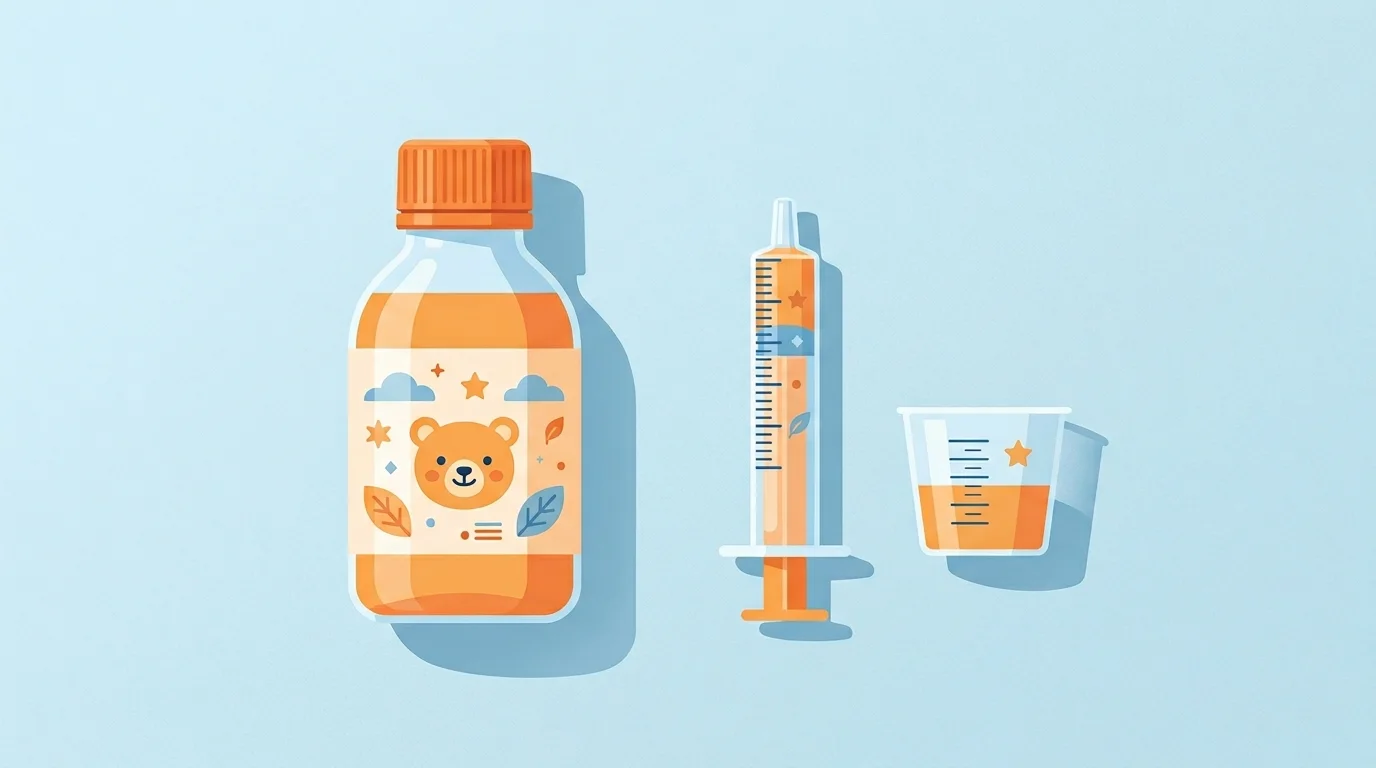
Getting the dose right is extremely important.
Too little and it will not work.
Too much and it can be harmful.
Here is a general dosing guide based on weight:
- 12 to 17 lbs (6 to 11 months): 50 mg (1.25 mL of infant drops)
- 18 to 23 lbs (12 to 23 months): 75 mg (1.875 mL of infant drops)
- 24 to 35 lbs (2 to 3 years): 100 mg (5 mL of children’s liquid)
- 36 to 47 lbs (4 to 5 years): 150 mg (7.5 mL of children’s liquid)
- 48 to 59 lbs (6 to 8 years): 200 mg (10 mL of children’s liquid)
- 60 to 71 lbs (9 to 10 years): 250 mg (12.5 mL of children’s liquid)
- 72 to 95 lbs (11 years): 300 mg (15 mL of children’s liquid)
Important reminders about dosage:
- Give every 6 to 8 hours as needed.
- Do NOT give more than 3 doses in 24 hours unless your doctor says otherwise.
- Always use the measuring tool that comes with the medicine.
- Kitchen spoons are NOT accurate. Please do not use them.
- Weight-based dosing is always more accurate than age-based dosing.
When in doubt, call your pediatrician or pharmacist before giving a dose.
🍓 What About Flavored Ibuprofen for Kids?
Most children’s ibuprofen comes in flavored liquid forms.
You will find grape, berry, bubblegum, and other kid-friendly flavors.
These flavorings make it easier for children to take their medicine.
But here is something important.
Some children may be sensitive or allergic to certain artificial colors or flavors.
If your child has a known allergy to dyes or artificial ingredients, read the label very carefully.
There are also dye-free versions of children’s ibuprofen available.
Ask your pharmacist about dye-free options if you are concerned.
Also, because flavored ibuprofen tastes like candy, always keep it out of reach of children.
Accidental overdose from a child drinking flavored medicine is more common than you think.
Store it in a locked cabinet or a high shelf.
🦠 The Chickenpox Warning: Ibuprofen and Viral Infections
This is one of the most important facts that many parents miss.
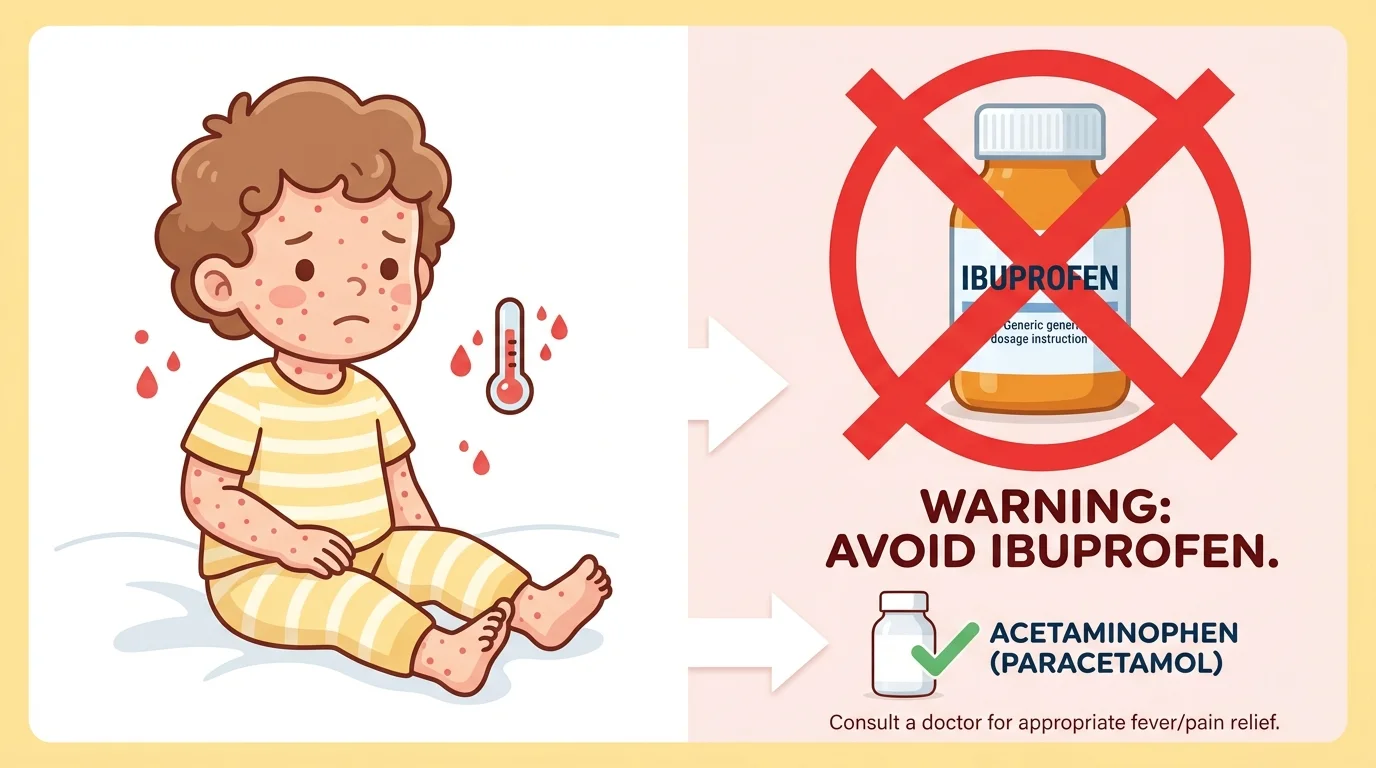
You should NOT give ibuprofen to a child who has or might have chickenpox.
There is a connection between ibuprofen use during chickenpox and a serious skin infection called necrotizing fasciitis.
It is rare, but it is serious enough that doctors warn against it.
Also, if your child has a viral illness and you are not sure what it is, be extra cautious.
Some healthcare experts also raise concerns about using ibuprofen during flu-like illnesses in children.
Here is what you should do:
- If your child has chickenpox, use acetaminophen for fever and pain instead.
- If you are not sure whether your child has a viral infection, ask your doctor before using ibuprofen.
- Never assume a fever is “just a cold” without paying attention to other symptoms.
At QuickDawa, we always say this: when in doubt, call your doctor.
It is always better to ask one question too many than one too few.
💧 Dehydration Risks: Why This Matters a Lot

Here is something many parents do not realize.
Ibuprofen can be hard on the kidneys, especially when a child is dehydrated.
Kids get dehydrated fast.
Vomiting, diarrhea, not drinking enough fluids, or sweating from a high fever can all cause dehydration.
When a child is dehydrated and takes ibuprofen, the risk of kidney damage goes up.
Signs of dehydration in children include:
- Dry lips and mouth
- No tears when crying
- Less urination or dark-colored urine
- Feeling very tired or dizzy
- Sunken eyes
What should you do?
- If your child is vomiting or has diarrhea, avoid ibuprofen.
- Use acetaminophen instead in these situations.
- Make sure your child is drinking enough water or electrolyte drinks before and while taking ibuprofen.
- If your child cannot keep fluids down, get medical help right away.
This is one of those things that sounds small but can become serious quickly.
Always make sure your child is well-hydrated before giving ibuprofen.
🚨 Side Effects of Ibuprofen in Children
Like any medicine, ibuprofen can cause side effects.
Most kids tolerate it well, but you should know what to watch for.
Common side effects include:
- Stomach pain or upset
- Nausea
- Vomiting
- Headache
- Dizziness
Serious side effects (rare but important) include:
- Blood in stool or black, tarry stools
- Vomiting blood or material that looks like coffee grounds
- Severe stomach pain
- Skin rash, hives, or swelling
- Difficulty breathing
- Signs of an allergic reaction
If your child shows any serious side effects, stop the medicine and seek emergency medical care immediately.
Giving ibuprofen with food or milk can help reduce stomach upset.
Never give it on a completely empty stomach if possible.
📞 When to Call the Doctor
Sometimes ibuprofen alone is not enough.
And sometimes, the situation needs a doctor’s attention.
Call your child’s doctor if:
- The fever lasts more than 3 days even with ibuprofen.
- The pain does not improve after 2 to 3 doses.
- Your child develops a rash after taking ibuprofen.
- Your child seems to be getting worse instead of better.
- You notice signs of dehydration.
- Your child has a history of kidney problems, liver problems, or stomach ulcers.
- Your child is taking other medicines and you are not sure about interactions.
Go to the emergency room if:
- Your child has difficulty breathing.
- There is severe swelling of the face, lips, or throat.
- Your child has a seizure.
- Your child becomes unresponsive or extremely drowsy.
Trust your instincts as a parent.
If something feels wrong, get help.
You know your child better than anyone.
🙋 Frequently Asked Questions (FAQ)
Q: Can you take ibuprofen and acetaminophen together for kids?
A: Yes, some doctors recommend alternating between ibuprofen and acetaminophen for stubborn fevers. But never give both at the exact same time without your doctor’s guidance.
Q: How long does ibuprofen take to work in children?
A: Ibuprofen usually starts working within 20 to 30 minutes. Full effect is often felt within 1 to 2 hours. The relief typically lasts 6 to 8 hours.
Q: Is ibuprofen safe for kids with asthma?
A: Ibuprofen can trigger breathing problems in some children with asthma. Always check with your pediatrician before using it if your child has asthma or a history of wheezing.
Q: Ibuprofen vs acetaminophen for kids: which is better?
A: Both are effective for fever and pain. Ibuprofen also reduces inflammation, while acetaminophen does not. Acetaminophen is safer for younger babies (under 6 months) and during chickenpox. Your doctor can help you choose the right one.
Q: Can I give ibuprofen to my child for a toothache?
A: Yes, ibuprofen is commonly used for toothache pain in children. It helps reduce both pain and swelling. But still see a dentist to treat the actual cause of the tooth problem.
🏁 Conclusion
So, is ibuprofen safe for kids?
Yes, it can be, when used correctly.
The key is knowing the right age, the right dose, and the right situation.
Avoid it for babies under 6 months.
Be careful during chickenpox or viral infections.
Make sure your child is hydrated.
Watch for side effects.
And always, always follow the dosing instructions on the label or from your doctor.
Ibuprofen is a helpful tool in your parenting toolkit.
But like any tool, it works best when you know how to use it safely.
At QuickDawa, we believe that understanding your medicine is just as important as taking it. Knowledge is the first step toward better health. If you found this guide helpful, share it with someone who needs it and explore more medicine guides on QuickDawa.com for trusted, easy-to-understand health information.
Got a question about ibuprofen or any other medicine?
Drop a comment below or reach out through our contact page.
We love hearing from you and we are always here to help.
⚠️ Medical Disclaimer
The information provided in this article is intended for educational and informational purposes only. It is not a substitute for professional medical advice, diagnosis, or treatment. Always seek the guidance of your qualified doctor, pharmacist, or healthcare provider with any questions you may have regarding a medical condition, medication, or treatment plan.
Never disregard professional medical advice or delay seeking it because of something you read on QuickDawa.com or any other website. If you think you may have a medical emergency, call your doctor, go to the nearest emergency room, or call emergency services immediately.
Drug information, dosages, and interactions described in this post are provided for general awareness only and may not apply to your individual health situation. Medications affect people differently based on age, weight, health conditions, and other factors.
QuickDawa.com and its authors do not assume any liability for any consequences arising from the use or misuse of information presented on this website.
🌐 Sources & External References
- FDA Drug Label / Official FDA Page — Ibuprofen
- MedlinePlus — Ibuprofen
- Drugs.com — Ibuprofen Full Information
- WebMD — Ibuprofen Oral
- Mayo Clinic — Ibuprofen (Oral Route)
- RxList — Ibuprofen