15 Things Women Need to Know About Mental Health in 2026 | QuickDawa
Let me ask you something.
When was the last time you checked in with yourself?
Not just physically.
But mentally.
Emotionally.
If you’re like most women, the answer is probably “I can’t remember.”
Between taking care of your family, managing work deadlines, running errands, cooking meals, helping with homework, and being there for everyone else, you’ve probably put yourself last on the list.
Maybe even off the list completely.
And that needs to change.
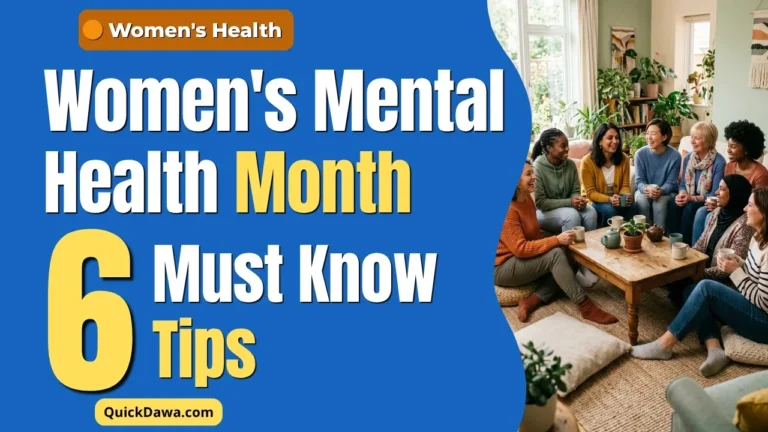
Every May, we observe Women’s Mental Health Month in the United States.
It’s a dedicated time to shine a light on the mental health challenges that women uniquely face.
And in 2026, this awareness is more important than ever.
Women’s Mental Health Month was established to raise awareness about mental health conditions that disproportionately affect women.
Things like depression, anxiety, postpartum disorders, eating disorders, and trauma-related conditions.
It’s a time to break the silence, reduce stigma, and encourage women to prioritize their mental wellness just as much as their physical health.
According to the latest statistics, nearly 1 in 5 women in the U.S. will experience a mental health condition in any given year.
That’s millions of mothers, daughters, sisters, and friends silently struggling.
But here’s the good news.
Mental health conditions are treatable.
Recovery is possible.
And you don’t have to go through it alone.
This comprehensive guide will walk you through everything you need to know about Women’s Mental Health Month in 2026.
From understanding why women face unique mental health challenges to learning actionable self-care strategies and knowing when to seek help.
Whether you’re struggling yourself or want to support the women in your life, this guide is for you.
At QuickDawa, we’re all about making health topics easy to understand, so let’s break down everything you need to know about women’s mental health in simple, clear language.
💊 WHAT IS WOMEN’S MENTAL HEALTH MONTH?
Women’s Mental Health Month is observed every May across the United States and beyond.
It’s a national awareness campaign designed to spotlight the unique mental health challenges that women experience throughout their lives.
The campaign was created to educate the public, reduce stigma, encourage open conversations, and remind women that seeking help is a sign of strength, not weakness.
This month focuses on conditions like depression, anxiety, postpartum and perinatal mood disorders, trauma, eating disorders, PTSD, and the mental health impacts of hormonal changes.
It’s also a time to celebrate resilience, share stories of recovery, and build supportive communities.
In 2026, the theme emphasizes holistic wellness, preventive mental health care, and accessible resources for all women, regardless of background or income.
🧠 15 ESSENTIAL FACTS EVERY WOMAN NEEDS TO KNOW ABOUT MENTAL HEALTH IN 2026

Let’s dive deep into the essential truths every woman should understand about mental health.
These aren’t just statistics.
They’re life-changing insights that could help you or someone you love.
1. Your Mental Health Is Just as Important as Physical Health
Mental health isn’t a separate category from physical health.
It’s an integral part of it.
Your mental well-being affects how you think, feel, behave, and make decisions every single day.
It influences your relationships, your work performance, your ability to parent, and your overall quality of life.
Just like you wouldn’t ignore chest pain or a broken bone, you shouldn’t ignore persistent sadness, anxiety, or emotional pain.
Your brain is an organ.
And just like any other organ, it needs care, attention, and sometimes medical treatment.
Taking care of your mind is essential for living a happy, healthy, fulfilling life.
And it’s not selfish.
It’s necessary.
In 2026, we’re seeing a positive shift where more women are prioritizing mental wellness alongside physical fitness and nutrition.
Join that movement.
2. Mental Illness Is More Common Than You Think
Here’s a fact that might surprise you.
Approximately 1 in 5 adults in the United States experiences a mental health condition each year.
For women specifically, the numbers are even higher.
Women are nearly twice as likely as men to experience depression and anxiety disorders.
Depression, anxiety, and substance use disorders are the three most common mental health conditions overall.
In women, we also see higher rates of eating disorders, PTSD, and perinatal mood disorders.
That means if you’re in a room with five women, statistically at least one (possibly two) is dealing with a mental health challenge right now.
You’re not broken.
You’re not weak.
You’re not alone.
Mental health struggles are incredibly common, and there’s no shame in experiencing them.
3. Mental Health Conditions Are Treatable and Recovery Is Real
This is one of the most important things to remember.
Mental health conditions are treatable.
Most people who seek help recover and go on to live full, meaningful, joyful lives.
Modern treatment options are more effective than ever and include:
- Therapy (cognitive behavioral therapy, dialectical behavior therapy, EMDR for trauma)
- Medication (antidepressants, anti-anxiety medications, mood stabilizers)
- Lifestyle interventions (exercise, sleep hygiene, nutrition, mindfulness)
- Support groups (peer support, group therapy, online communities)
- Alternative therapies (acupuncture, yoga, art therapy, music therapy)
- Technology-based solutions (mental health apps, teletherapy, virtual support)
The key is early intervention.
If you notice symptoms, don’t wait.
Talk to a healthcare provider as soon as possible.
The sooner you get help, the better your outcomes will be.
In 2026, telehealth and digital mental health tools have made treatment more accessible than ever before.
You can see a therapist from the comfort of your home.
There’s no excuse not to reach out.
4. Women Face Unique Mental Health Challenges
Women’s bodies go through biological, hormonal, and social experiences that men simply don’t have.
And those experiences can have a profound impact on mental health.
Here’s what makes women’s mental health different:
Biological Factors:
- Hormonal fluctuations during menstruation, pregnancy, postpartum, perimenopause, and menopause
- Reproductive health issues like PCOS, endometriosis, and infertility can trigger depression and anxiety
- Higher sensitivity to stress hormones
Psychological Factors:
- Women are twice as likely to experience depression and anxiety
- Higher rates of eating disorders (anorexia, bulimia, binge eating disorder)
- Greater likelihood of experiencing trauma (sexual assault, domestic violence, childhood abuse)
Social and Cultural Factors:
- Pressure to be the “perfect” mother, partner, professional, and caregiver
- Gender discrimination and workplace inequality
- Caregiver burden (women are more likely to care for children, aging parents, and sick family members)
- Body image pressures and unrealistic beauty standards
These aren’t excuses.
They’re realities.
And understanding them helps us get the right support and advocate for better mental health care.
If you’re not feeling like yourself during any life transition or hormonal change, talk to your doctor.
It could be more than just “normal stress.”
It could be a treatable condition.
5. Mental Illness Can Affect Children and Teens Too
Mental health issues don’t just affect adults.
Children and teens can struggle too, and early recognition is critical.
Recent 2026 data shows that 1 in 6 children aged 2 to 8 has a diagnosed mental, behavioral, or developmental disorder.
Among adolescent girls, rates of anxiety and depression have increased significantly in recent years.
Common mental health issues in children and teens include:
- Anxiety disorders and panic attacks
- Depression and mood disorders
- Attention deficit hyperactivity disorder (ADHD)
- Behavioral problems and oppositional defiant disorder
- Autism spectrum disorders
- Trauma-related conditions and PTSD
- Eating disorders (especially in teen girls)
- Self-harm and suicidal ideation
As a mother, caregiver, teacher, or woman in a child’s life, it’s important to recognize the warning signs:
- Sudden withdrawal from friends and activities
- Significant changes in eating or sleeping habits
- Declining school performance
- Extreme mood swings or irritability
- Talk of self-harm or suicide
- Physical complaints with no medical cause
If you notice any of these signs, don’t ignore them.
Early intervention can literally save lives.
Talk to a pediatrician, school counselor, or child psychologist.
6. Self-Care Is Essential, Not Selfish
Let’s say it louder for the people in the back.
Taking care of yourself is not selfish.
It’s essential.
You cannot pour from an empty cup.
If you’re constantly giving to everyone else and never refilling your own tank, you will burn out.
And burnout isn’t just exhaustion.
It’s a serious mental health crisis that can lead to depression, anxiety, and physical illness.
Self-care doesn’t mean expensive spa days or luxury vacations (though those are nice too).
It means small, intentional, daily actions that nourish your mind, body, and spirit.
Here are practical self-care strategies backed by research in 2026:
Physical Self-Care:
- Get 7 to 9 hours of sleep each night (sleep deprivation increases anxiety and depression risk)
- Eat regular, nutritious meals (don’t skip breakfast; your brain needs fuel)
- Move your body daily (even 15-20 minutes of walking boosts mood and reduces anxiety)
- Stay hydrated (dehydration affects mood and cognitive function)
- Limit caffeine and alcohol (both can worsen anxiety)
Mental Self-Care:
- Practice mindfulness and meditation (even 5 minutes a day reduces stress)
- Deep breathing exercises (activates the relaxation response)
- Journaling (helps process emotions and reduce rumination)
- Limit screen time (especially before bed and first thing in the morning)
- Set boundaries (it’s okay to say no)
Emotional Self-Care:
- Spend time with loved ones (social connection is healing)
- Do activities you enjoy (hobbies, reading, gardening, creative pursuits)
- Seek therapy or counseling (professional support is valuable)
- Practice self-compassion (talk to yourself like you would a friend)
Spiritual Self-Care:
- Spend time in nature (research shows it reduces stress and improves mood)
- Practice gratitude (write down three things you’re grateful for daily)
- Connect with your values (live in alignment with what matters most to you)
Self-care is medicine.
Treat it that way.
Schedule it into your day just like you would a doctor’s appointment.
7. Mental and Physical Health Are Deeply Connected
Your mind and body are not separate entities.
They’re intimately connected.
What affects one, affects the other.
Studies consistently show that people with chronic physical conditions are at significantly higher risk of developing mental health issues:
- People with diabetes are 2 to 3 times more likely to have depression
- Heart disease patients often experience anxiety and depression
- Autoimmune diseases like lupus and rheumatoid arthritis are linked to higher depression rates
- Chronic pain conditions often co-occur with anxiety and depression
- Cancer patients frequently experience depression and PTSD
And it works the other way too.
People with depression and anxiety are at higher risk of developing:
- Heart disease and stroke
- Type 2 diabetes
- Chronic pain conditions
- Alzheimer’s disease and dementia
- Weakened immune system
This is why treating the whole person is so important.
If you have a chronic illness, talk to your doctor about your mental health too.
And if you’re struggling emotionally, don’t ignore physical symptoms.
In 2026, integrated care models that treat both physical and mental health together are becoming more common.
Advocate for that kind of comprehensive care.
8. Stigma Still Prevents Women From Seeking Help
Despite all the progress we’ve made, stigma remains one of the biggest barriers to mental health treatment.
Women often report feeling:
- Ashamed of struggling
- Guilty for not being “strong enough”
- Afraid of being judged as a “bad mother” or “weak woman”
- Worried about discrimination at work
- Concerned about being seen as “crazy”
This stigma is especially strong in certain communities, including:
- Communities of color
- Religious communities
- Immigrant communities
- Rural areas with limited mental health resources
But here’s the truth.
Seeking help is one of the bravest and strongest things you can do.
It takes courage to admit you’re struggling.
It takes strength to ask for support.
Here’s how we can fight stigma together:
- Talk openly about mental health without shame
- Educate yourself and others about mental health conditions
- Don’t use stigmatizing language (avoid words like “crazy,” “psycho,” “nuts”)
- Share your story if you feel safe and comfortable
- Support others without judgment
- Challenge stereotypes when you hear them
- Normalize therapy (talk about it like you would going to the gym)
The more we normalize mental health conversations, the easier it becomes for everyone to get help.
You can be part of that change in 2026 and beyond.
9. Postpartum and Perinatal Mental Health Deserve Special Attention
Pregnancy and childbirth are often portrayed as purely joyful experiences.
But the reality is much more complex.
And we need to talk about it.
Perinatal mental health refers to mental health during pregnancy and the first year after birth.
Many women experience the “baby blues” in the first few days after delivery.
Symptoms include mood swings, crying spells, anxiety, and trouble sleeping.
This is normal and usually resolves within two weeks.
But for some women, it becomes something more serious.
Postpartum depression (PPD) affects about 1 in 7 women (some studies suggest it’s even higher).
Symptoms include:
- Severe sadness, hopelessness, or emptiness
- Loss of interest in the baby or difficulty bonding
- Extreme fatigue or loss of energy
- Feelings of worthlessness or guilt
- Difficulty concentrating or making decisions
- Changes in appetite or sleep patterns
- Thoughts of harming yourself or the baby
Postpartum anxiety is also common and often co-occurs with PPD.
Symptoms include:
- Constant worry about the baby’s health or safety
- Racing thoughts
- Physical symptoms like rapid heartbeat, sweating, nausea
- Difficulty relaxing or sleeping even when the baby sleeps
- Intrusive, scary thoughts
Postpartum PTSD can develop after a traumatic birth experience.
Postpartum psychosis is rare but serious and requires immediate medical attention.
Here’s what you need to know:
PPD is not your fault.
It’s not a sign of weakness or bad mothering.
It’s a medical condition caused by hormonal changes, sleep deprivation, and other factors.
PPD is treatable.
With proper care (therapy, medication, support), most women recover fully.
You are not alone.
Millions of women experience this.
If you’re experiencing any perinatal mental health symptoms, reach out to your doctor, midwife, or a perinatal mental health specialist immediately.
Don’t wait.
Early treatment leads to better outcomes for both you and your baby.
In 2026, perinatal mental health screening has become standard practice in many healthcare settings.
Make sure your provider screens you during pregnancy and postpartum visits.
10. Hormonal Changes Throughout Life Impact Mental Health
Women experience multiple hormonal transitions throughout their lives.
And each one can significantly affect mental health.
Let’s break down the major transitions:
Menstruation:
- Premenstrual syndrome (PMS) causes mood changes, irritability, and fatigue before periods
- Premenstrual dysphoric disorder (PMDD) is a severe form causing debilitating depression, anxiety, and mood swings
- Affects 3-8% of menstruating women
Pregnancy:
- Hormonal surges can trigger anxiety and depression
- About 10-20% of pregnant women experience prenatal depression or anxiety
Postpartum:
- Sudden hormone drops after birth can lead to postpartum depression
- Affects 1 in 7 new mothers
Perimenopause and Menopause:
- Declining estrogen levels can cause mood changes, anxiety, irritability, and depression
- Brain fog and memory issues are common
- Can start as early as the mid-30s but typically begins in the 40s
- Symptoms can last several years
Hormonal birth control:
- Some women experience mood changes, anxiety, or depression on hormonal contraceptives
- If you notice mental health symptoms after starting birth control, talk to your doctor
If you notice mental health symptoms during any of these hormonal transitions, don’t dismiss them as “just hormones.”
Talk to your healthcare provider.
Hormonal issues are treatable through therapy, medication, hormone therapy, lifestyle changes, or a combination of approaches.
You don’t have to suffer through them alone.
11. Trauma Disproportionately Affects Women
Trauma is a major contributor to mental health conditions in women.
The statistics are sobering:
- 1 in 3 women worldwide has experienced physical or sexual violence
- Women are more likely than men to experience sexual assault, domestic violence, and childhood abuse
- 90% of adult rape victims are female
- Women who experience trauma are at significantly higher risk for PTSD, depression, anxiety, and substance use disorders
Trauma can also be:
- Emotional abuse
- Medical trauma (difficult childbirth, miscarriage, chronic illness)
- Loss and grief
- Witnessing violence
- Systemic oppression and discrimination
Trauma doesn’t just affect you mentally.
It affects you physically too.
Research on Adverse Childhood Experiences (ACEs) shows that childhood trauma increases the risk of chronic diseases, mental health conditions, and early death.
But here’s the hopeful part.
Trauma is treatable.
Evidence-based therapies like:
- EMDR (Eye Movement Desensitization and Reprocessing)
- Trauma-focused CBT
- Somatic therapy
- Internal Family Systems (IFS)
These approaches can help you heal from trauma and reclaim your life.
If you’ve experienced trauma, please know:
- It’s not your fault
- You are not damaged
- Healing is possible
- You deserve support
Reach out to a trauma-informed therapist.
You don’t have to carry this burden alone.
12. Many Free and Low-Cost Mental Health Resources Are Available
You don’t need a lot of money to get help.
There are free and low-cost resources available right now in 2026.
Crisis Resources (Available 24/7):
- 988 Suicide & Crisis Lifeline: Call or text 988 anytime for free, confidential support
- Crisis Text Line: Text “HELLO” to 741741 to connect with a trained counselor
- National Domestic Violence Hotline: Call 1-800-799-7233 or text “START” to 88788
National Helplines:
- SAMHSA National Helpline: Call 1-800-662-4357 for free referrals to local treatment centers (substance use and mental health)
- Postpartum Support International: Call 1-800-944-4773 for perinatal mental health support
Online Resources:
- Mental Health America (MHA): Free screening tools and resources at mhanational.org
- NAMI (National Alliance on Mental Illness): Support groups, education, and resources at nami.org
- Postpartum Support International: Resources and support groups at postpartum.net
- RAINN (Rape, Abuse & Incest National Network): Support for sexual assault survivors at rainn.org
Low-Cost Therapy Options:
- Community health centers: Offer sliding-scale fees based on income
- University training clinics: Supervised therapy students provide low-cost services
- Online therapy platforms: BetterHelp, Talkspace, and others offer affordable options
- Open Path Collective: Nationwide network of therapists offering $30-$80 sessions
Mental Health Apps (Many Offer Free Versions):
- Headspace: Meditation and mindfulness
- Calm: Sleep, meditation, and relaxation
- Sanvello: Mood tracking and CBT tools
- Shine: Self-care for people of color and marginalized communities
Don’t let cost stop you from getting help.
Help is available.
You just have to reach out.
13. The Connection Between Social Media and Women’s Mental Health
In 2026, we can’t talk about women’s mental health without addressing social media.
Research shows that excessive social media use is linked to:
- Increased anxiety and depression (especially in young women)
- Body image issues and eating disorders
- Sleep disturbances
- FOMO (fear of missing out)
- Cyberbullying and harassment
- Comparison culture (everyone’s highlight reel vs. your behind-the-scenes)
But it’s not all bad.
Social media can also provide:
- Support communities for mental health struggles
- Education and awareness about mental health
- Connection with others who understand
- Advocacy platforms for mental health causes
The key is mindful use.
Here’s how to protect your mental health on social media:
- Set time limits (use app timers to limit daily use)
- Curate your feed (unfollow accounts that make you feel bad about yourself)
- Take regular breaks (digital detoxes can be incredibly healing)
- Don’t compare (remember, you’re seeing everyone’s best moments, not their struggles)
- Engage authentically (real connection is more valuable than likes)
- Avoid scrolling before bed (blue light and stimulating content disrupt sleep)
Your mental health is more important than any social media platform.
If it’s hurting you, take a break.
14. Mental Health in the Workplace Matters
Women spend a significant portion of their lives at work.
And workplace stress is a major contributor to mental health issues.
Common workplace mental health challenges for women include:
- Burnout from overwork and lack of boundaries
- Gender discrimination and pay inequality
- Sexual harassment
- Work-life balance struggles (especially for working mothers)
- Imposter syndrome and perfectionism
- Lack of support from management
- Toxic work environments
In 2026, more companies are recognizing the importance of mental health and offering:
- Employee Assistance Programs (EAPs) with free counseling
- Mental health days and flexible PTO policies
- Workplace wellness programs
- Mental health training for managers
- Remote work options for better work-life balance
Know your rights:
- Mental health conditions may be protected under the Americans with Disabilities Act (ADA)
- You may be entitled to reasonable accommodations (flexible hours, remote work, modified duties)
- FMLA (Family and Medical Leave Act) may cover mental health treatment
If your workplace is negatively affecting your mental health:
- Talk to HR about accommodations or concerns
- Set boundaries (don’t check email after hours, use your PTO)
- Seek support from a therapist or EAP
- Consider other options if the environment is toxic and unchangeable
Your mental health is more important than any job.
15. You Are Not Alone and Recovery Is Possible
This is the most important message of Women’s Mental Health Month 2026.
You are not alone.
Millions of women across the country and around the world are going through exactly what you’re going through.
Feeling overwhelmed, anxious, depressed, lost, or broken.
But here’s what I want you to know:
You are not broken.
You’re human.
And humans struggle sometimes.
Asking for help is not weakness.
It’s courage.
It’s strength.
It’s self-love.
Recovery is real.
With the right support, treatment, and time, most people with mental health conditions recover and go on to live full, joyful, meaningful lives.
You deserve to feel better.
You deserve to be happy.
You deserve support, compassion, and care.
So please, if you’re struggling, reach out.
Talk to someone.
A friend, a family member, a doctor, a therapist, a crisis counselor.
You don’t have to carry this weight alone.
And to everyone reading this who isn’t currently struggling:
Check in on the women in your life.
Ask how they’re really doing.
Listen without judgment.
Offer support.
Sometimes, just knowing someone cares can make all the difference.
Together, we can break the silence, reduce stigma, and create a world where every woman feels safe seeking the mental health care she deserves.
🩺 WHEN TO CALL A DOCTOR
Mental health is just as important as physical health.
Please seek professional help if you or someone you love is experiencing any of the following:
Immediate Emergency (Call 911 or go to ER):
- Active thoughts of suicide with a plan
- Thoughts of harming your baby or someone else
- Psychotic symptoms (hallucinations, delusions, losing touch with reality)
- Severe panic attacks that feel like a heart attack
Call Your Doctor or 988 Crisis Line:
- Persistent sadness, hopelessness, or emptiness lasting more than two weeks
- Severe anxiety or panic attacks that disrupt daily life
- Significant changes in sleep (insomnia or sleeping too much)
- Loss of interest in activities you once enjoyed
- Difficulty functioning at work, home, or in relationships
- Thoughts of self-harm (even without a plan)
- Difficulty bonding with your baby after childbirth
- Flashbacks, nightmares, or hypervigilance related to trauma
- Severe mood swings that affect your relationships
- Significant changes in appetite or weight
- Substance use that’s causing problems in your life
- Physical symptoms with no medical cause (chronic pain, headaches, digestive issues)
Don’t wait.
Early intervention can save lives and prevent conditions from worsening.
If you’re in crisis right now, call 988 or text “HELLO” to 741741.
Help is available 24/7.
At QuickDawa, we encourage you to prioritize your mental health just like you would any other health concern.
Your well-being matters.
🙋 FAQs
Q: Why is Women’s Mental Health Month celebrated in May?
A: Women’s Mental Health Month is observed every May to raise awareness about the unique mental health challenges women face, including depression, anxiety, postpartum disorders, and trauma. It aims to reduce stigma, encourage women to seek help, and promote mental wellness for women of all ages.
Reference: Mental Health America
Q: How long does postpartum depression last if untreated?
A: Postpartum depression can last several months to over a year if left untreated and may worsen over time. However, with proper treatment including therapy and medication, most women begin to feel better within weeks to a few months. Early intervention leads to faster recovery.
Reference: Mayo Clinic – Postpartum Depression
Q: Can you take antidepressants during pregnancy safely?
A: Some antidepressants are considered safe during pregnancy, particularly certain SSRIs, while others may carry risks. Your doctor will weigh the benefits of treatment against potential risks. Untreated depression during pregnancy can also harm both mother and baby, so it’s important to discuss options with your healthcare provider.
Reference: American College of Obstetricians and Gynecologists
Q: Is therapy safe for women with anxiety disorders?
A: Yes, therapy is completely safe and highly effective for anxiety disorders. Cognitive Behavioral Therapy (CBT) is the gold standard treatment for anxiety and has been proven effective in numerous studies. Therapy has no side effects and teaches skills you can use for life.
Reference: National Institute of Mental Health
Q: How does menopause affect mental health in women?
A: Menopause causes hormonal changes, particularly declining estrogen levels, that can trigger mood swings, anxiety, irritability, and depression. Many women also experience brain fog and memory issues. These symptoms can be managed through hormone therapy, antidepressants, therapy, and lifestyle changes.
Reference: Office on Women’s Health
Q: What is the difference between baby blues and postpartum depression?
A: Baby blues are mild mood swings, crying, and anxiety that start within days of childbirth and resolve within two weeks without treatment. Postpartum depression is more severe, lasts longer (weeks to months), interferes with daily functioning, and requires professional treatment.
Reference: Postpartum Support International
Q: Can hormonal birth control affect mental health?
A: Yes, some women report mood changes, increased anxiety, or depression while using hormonal birth control. Research shows a link between hormonal contraceptives and mental health symptoms in some women. If you notice mental health changes after starting birth control, talk to your doctor about non-hormonal alternatives.
Reference: Cleveland Clinic
Q: Women’s mental health statistics vs men’s mental health statistics
A: Women are twice as likely as men to experience depression and anxiety disorders. Women have higher rates of PTSD, eating disorders, and perinatal mood disorders. However, men have higher rates of suicide completion and substance use disorders. Both genders face unique mental health challenges that require different approaches.
Reference: National Institute of Mental Health
🏁 SUMMARY + CTA
Women’s Mental Health Month 2026 isn’t just a hashtag or an awareness campaign.
It’s a movement.
A call to action.
A reminder that your mental health matters just as much as your physical health.
Maybe even more.
Because when your mind is healthy, everything else follows.
Whether you’re dealing with depression, anxiety, postpartum struggles, trauma, hormonal changes, or just feeling overwhelmed by the demands of life, please know this:
You are not alone.
You are not broken.
You deserve help.
Recovery is possible.
Mental health challenges are real, but they’re also treatable.
With the right support, therapy, medication, lifestyle changes, and community, you can heal and thrive.
This May and beyond, commit to prioritizing your mental wellness.
Check in with yourself regularly.
Practice self-care without guilt.
Set boundaries.
Ask for help when you need it.
And support the other women in your life who may be struggling silently.
Together, we can break the stigma, normalize mental health conversations, and create a world where every woman feels empowered to seek the care she deserves.
At QuickDawa, we believe that understanding your health is the first step toward healing.
Knowledge empowers you to make informed decisions about your well-being.
If you found this guide helpful, please share it with a woman in your life who might need it.
Explore more health guides on QuickDawa.com for trusted, easy-to-understand, evidence-based information on women’s health, mental wellness, and general health topics.
Have questions, stories to share, or need support?
Drop a comment below or visit our contact page anytime.
We’re here for you.
You’re not alone in this journey.
Let’s support each other, lift each other up, and prioritize mental wellness together.
⚠️ MEDICAL DISCLAIMER
The information provided in this article is intended for educational and informational purposes only. It is not a substitute for professional medical advice, diagnosis, or treatment. Always seek the guidance of your qualified doctor, therapist, psychiatrist, psychologist, or healthcare provider with any questions you may have regarding a mental health condition, medication, or treatment plan.
Never disregard professional medical advice or delay seeking it because of something you read on QuickDawa or any other website. If you think you may have a medical or mental health emergency, call your doctor, go to the nearest emergency room, call emergency services, or call 988 immediately.
Mental health conditions affect people differently based on age, hormones, genetics, life circumstances, trauma history, health conditions, and other individual factors. What works for one person may not work for another.
The statistics, treatment options, and recommendations in this article are based on current research and expert guidelines as of 2026, but medical knowledge and best practices continue to evolve.
QuickDawa and its authors do not assume any liability for any consequences arising from the use or misuse of information presented on this website.
If you are in crisis, please reach out for help immediately. You are not alone, and support is available.
🌐 SOURCES & EXTERNAL REFERENCES
- Mental Health America – Women’s Mental Health Month
- National Institute of Mental Health – Women and Mental Health
- Office on Women’s Health – Mental Health
- Mayo Clinic – Postpartum Depression
- Postpartum Support International
- American Psychological Association – Women’s Mental Health
- MedlinePlus – Mental Health
- SAMHSA National Helpline
- NAMI – National Alliance on Mental Illness
- RAINN – Rape, Abuse & Incest National Network