Bedtime Habits – 9 Sneaky Mistakes Killing Your Energy | QuickDawa
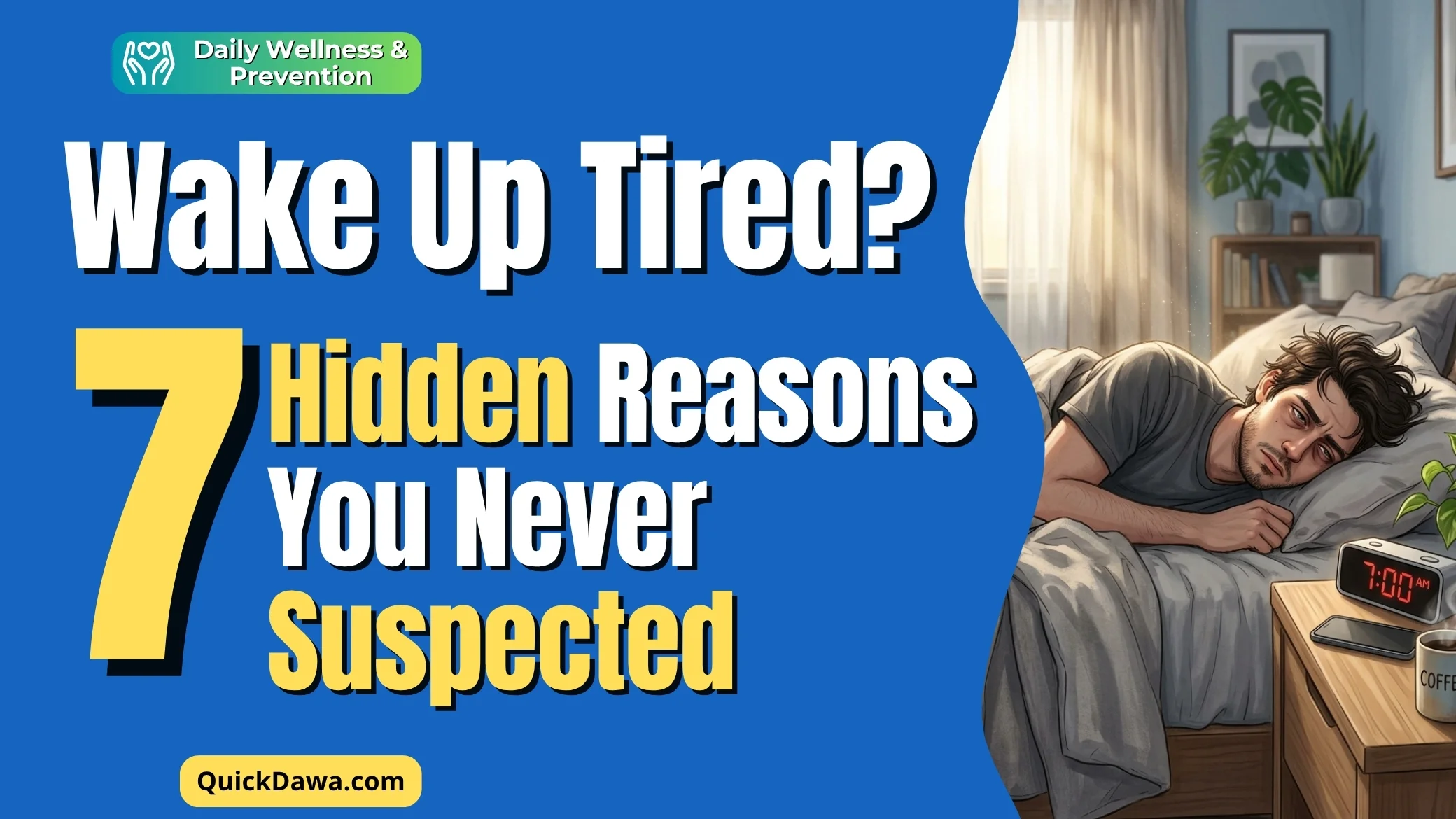
Ever had one of those mornings where you wake up and feel like you never slept at all?
Your alarm goes off. You open your eyes. And your body already feels heavy.
You think, “I slept enough hours. So why am I always tired?”
You drag yourself out of bed. You grab coffee just to function. And by noon, you’re already running on fumes.
Sound familiar? You’re not alone.
Millions of people deal with this every single day. And the crazy part? The problem usually isn’t how much you sleep. It’s what you do before you sleep.
Your bedtime habits play a bigger role in your energy than you might think. Some of the things you do every single night before bed are quietly sabotaging your rest.
You don’t even realize it.
The good news? Once you spot these mistakes, fixing them is pretty simple.
At QuickDawa, we’re all about making health easy to understand. So let’s walk through 9 common bedtime habits that are secretly stealing your next-day energy. And more importantly, let’s talk about what you can do instead.
💊 What Are Bedtime Habits and Why Do They Matter?
Bedtime habits are the things you regularly do in the hour or two before you fall asleep. They shape how fast you fall asleep, how deep your sleep is, and how refreshed you feel the next morning.
Bad habits before bed can mess with your sleep quality even if you’re in bed for 8 full hours. Good habits help your brain and body prepare for deep, restorative rest.
🌙 9 Bedtime Habits That Quietly Ruin Your Next-Day Energy
Let’s get into it. These are the sneaky sleep killers most people never think about.
1. Scrolling Your Phone in Bed
This is the number one mistake. And almost everyone does it.
You’re lying in bed. You pick up your phone. “Just five minutes,” you tell yourself.
Then suddenly it’s been 45 minutes and your brain is wide awake.
Here’s why this wrecks your sleep. Your phone screen gives off blue light. This blue light tells your brain it’s still daytime. So your brain stops making melatonin, the hormone that helps you feel sleepy.
Even if you do fall asleep after scrolling, your sleep quality is lower. You toss and turn more. And you wake up feeling groggy.
What to do instead: Put your phone on the charger across the room at least 30 minutes before bed. Read a book or listen to calm music.
2. Eating a Heavy Meal Right Before Bed
We all love a late-night snack. But eating a big, heavy meal close to bedtime forces your body to work overtime.
Instead of resting, your stomach is busy digesting food. This can cause acid reflux, bloating, and general discomfort.
Your body can’t focus on deep sleep when it’s working hard to break down a full meal.
What to do instead: Try to finish your last big meal at least 2 to 3 hours before bed. If you’re really hungry, go for something light. A banana or a small handful of almonds works great.
3. Drinking Coffee or Tea Too Late
This one catches a lot of people off guard.
You had coffee at 4 PM. You think, “That was hours ago. It shouldn’t affect my sleep.”
But caffeine stays in your system for 6 to 8 hours. So that afternoon cup is still buzzing in your brain when you try to sleep at 10 PM.
Even if you manage to fall asleep, caffeine reduces your deep sleep. You get lighter, less restful sleep. And you wake up tired.
What to do instead: Set a caffeine cutoff time. Noon or 2 PM at the latest. Switch to herbal tea or warm water in the evening.
4. Sleeping in a Room That’s Too Warm
Your body needs to cool down slightly to fall into deep sleep. If your bedroom is too warm, your body struggles to do this.
You might not fully wake up. But you’ll keep shifting positions. Your sleep stays shallow. And by morning, you feel like you barely rested.
What to do instead: Keep your room between 60 to 67°F (15 to 19°C). Use a fan if needed. Wear light, breathable clothes to bed.
5. Going to Bed at Different Times Every Night
Monday you sleep at 10 PM. Tuesday it’s midnight. Friday you’re up till 2 AM. Sunday you crash at 9 PM.
Your body has an internal clock called the circadian rhythm. When you keep changing your sleep schedule, this clock gets confused.
It doesn’t know when to release sleep hormones. So falling asleep gets harder. Waking up gets harder. And your energy stays low all day.
This is one of the most overlooked bedtime habits that destroy your healthy sleep routine.
What to do instead: Pick a consistent bedtime and wake time. Stick to it even on weekends. Your body will thank you within a week.
6. Watching Stressful or Exciting Content Before Sleep
Binge-watching a thriller at 11 PM? Watching the news right before bed? Scrolling through stressful social media posts?
All of this spikes your cortisol levels. That’s your stress hormone. When cortisol is high, your body stays alert. It goes into fight-or-flight mode.
That’s the exact opposite of what you need before sleep. Even if you eventually fall asleep, your body stays tense. Your heart rate stays elevated. And your sleep quality drops.
What to do instead: Switch to calming content at least an hour before bed. Try light reading, gentle podcasts, or relaxation videos. Save the thrillers for weekends.
7. Skipping a Wind-Down Routine
A lot of people go from full activity mode straight to bed. You finish working, close your laptop, brush your teeth, and jump under the covers.
Your brain doesn’t have an off switch. It needs time to transition from “awake mode” to “sleep mode.”
Without a wind-down routine, your mind keeps racing. You lie in bed staring at the ceiling. Thoughts keep popping up. Sleep takes forever to come.
What to do instead: Create a simple 20 to 30 minute wind-down routine. It could be as simple as dim the lights, do some stretching, read a few pages, and practice slow breathing.
At QuickDawa, we always say that small routines create big health changes over time. This is one of those routines.
8. Drinking Too Much Water Before Bed
Staying hydrated is important. No question about that. But chugging a big glass of water right before bed is a common sleep mistake to avoid.
What happens? You wake up at 2 AM to use the bathroom. Then maybe again at 4 AM. Each time, you break your sleep cycle.
Your body goes through important sleep stages during the night. Every time you get up, you interrupt that process. So even if you go right back to sleep, the damage is already done.
What to do instead: Stay well-hydrated throughout the day. Sip water in the evening but stop big drinks about an hour before bedtime.
9. Falling Asleep With the TV On
A lot of people say, “I can’t sleep without the TV on. It helps me relax.”
But here’s what actually happens. The TV keeps sending light and sound to your brain throughout the night. Your brain processes these signals even while you’re asleep.
This means your sleep stays shallow. Your brain never fully enters deep, restorative sleep stages. You miss out on the kind of sleep that actually recharges you.
And those random loud commercials or dramatic show scenes? They can partially wake you up multiple times without you even knowing it.
What to do instead: Try a sleep timer if you must use TV. Or better yet, switch to white noise or a sleep sounds app. Your brain will get the background comfort without the stimulation.
🩺 When to Call a Doctor
Sometimes, low energy isn’t just about bad bedtime habits. It could be a sign of something deeper.
Talk to your doctor if you notice any of these:
- You’ve fixed your sleep habits but still feel exhausted every day
- You snore loudly or your partner says you stop breathing during sleep
- You feel sleepy during the day no matter how much you sleep
- You experience restless legs, tingling, or unusual sensations at night
- You have trouble staying awake while driving or working
- Your tiredness comes with mood changes, weight gain, or brain fog
These could be signs of conditions like sleep apnea, thyroid issues, anemia, or depression. All of these are treatable. But you need a proper diagnosis first.
Don’t ignore constant fatigue. It’s your body trying to tell you something.
🙋 Frequently Asked Questions
Q: How long does it take to fix bad bedtime habits?
A: Most people start noticing better energy within 7 to 14 days of consistent sleep habit changes. Your body’s internal clock needs about a week to adjust. Be patient and stick with it. (Sleep Foundation)
Q: Can you take melatonin supplements to fix poor sleep from bad habits?
A: Melatonin can help short-term, but it’s not a permanent fix. You still need to address the root cause. Fix your bedtime habits first, and use melatonin only if your doctor recommends it. (MedlinePlus)
Q: Is it safe to exercise before bed for better sleep?
A: Light exercise like stretching or yoga is fine. But intense workouts within 1 to 2 hours of bedtime can raise your heart rate and make it harder to fall asleep. Try to finish hard exercise earlier in the evening. (Mayo Clinic)
Q: Warm milk vs melatonin for sleep, which is better?
A: Warm milk is a gentle, natural option that works through comfort and a small amount of tryptophan. Melatonin is a stronger, direct sleep hormone supplement. For most people, building a healthy sleep routine works better than both. (WebMD)
Q: How long does caffeine affect your sleep?
A: Caffeine has a half-life of about 5 to 6 hours. That means half the caffeine from your 3 PM coffee is still active in your body at 9 PM. That’s why sleep experts recommend stopping caffeine by early afternoon. (Harvard Health)
Q: Can bad bedtime habits cause weight gain?
A: Yes, poor sleep increases hunger hormones like ghrelin and decreases leptin, the hormone that tells you you’re full. Over time, this can lead to overeating and weight gain. Fixing your sleep is a surprisingly powerful weight management tool. (Sleep Foundation)
🏁 Small Changes Tonight, Big Energy Tomorrow
Let’s be honest. Most of us don’t have terrible bedtime habits on purpose. We just never realized how much these little things affect our energy.
The truth is, great sleep isn’t just about the number of hours. It’s about what you do before those hours begin.
You don’t need to change everything overnight. Pick one or two habits from this list. Start there. Build from that.
Maybe tonight you put your phone down 30 minutes earlier. Maybe you skip that late coffee. Maybe you set a consistent bedtime for the first time in years.
Small steps lead to real results. And you deserve to wake up actually feeling rested.
At QuickDawa, we believe that understanding your health is the first step toward improving it. Knowledge is power, and better sleep is absolutely within your reach. If this post helped you, share it with someone who always complains about being tired. And explore more wellness guides on QuickDawa.com for trusted, easy-to-understand health information.
Got questions or want to share your own bedtime struggles? Drop a comment below or reach out to us on our contact page. We’d love to hear from you.
⚠️ Medical Disclaimer
The information provided in this article is intended for educational and informational purposes only. It is not a substitute for professional medical advice, diagnosis, or treatment. Always seek the guidance of your qualified doctor, pharmacist, or healthcare provider with any questions you may have regarding a medical condition, medication, or treatment plan.
Never disregard professional medical advice or delay seeking it because of something you read on QuickDawa or any other website. If you think you may have a medical emergency, call your doctor, go to the nearest emergency room, or call emergency services immediately.
Drug information, dosages, and interactions described in this post are provided for general awareness only and may not apply to your individual health situation. Medications affect people differently based on age, weight, health conditions, and other factors.
QuickDawa and its authors do not assume any liability for any consequences arising from the use or misuse of information presented on this website.
🌐 Sources & External References