Children’s Amoxicillin Dosage Chart by Weight & Age (2026 Guide)
It is 2 AM.
Your little one is burning up with fever.
Their ear hurts so bad they cannot stop crying.
You just got back from the doctor, and they prescribed amoxicillin.
Now you are staring at the bottle of pink liquid wondering, “How much do I actually give?”
You are not alone.
This is one of the most common questions parents ask.
And honestly, it can feel really stressful when you are tired, worried, and trying to figure out the right dose for your child.
Getting the dosage right is super important.
Too little and the antibiotic might not work properly.
Too much and you risk unnecessary side effects.
The good news?
Amoxicillin dosing for kids is actually pretty straightforward once you understand how it works.
At QuickDawa, we are all about making medicine easy to understand.
So let’s break down everything you need to know about Children’s Amoxicillin Dosage Chart by Weight in simple, clear language.
No confusing medical jargon.
Just the facts you need as a parent.
💊 What Is Amoxicillin?
Amoxicillin is one of the most commonly prescribed antibiotics for children worldwide.
It belongs to a drug class called penicillin-type antibiotics.
It works by stopping bacteria from building their protective walls.
Without those walls, the bacteria die off, and your child starts feeling better.
Amoxicillin is sold under several brand names including Amoxil, Trimox, and Moxatag.
It is also available as a generic, which means it is usually very affordable.
For kids, it most commonly comes as a liquid suspension (that famous pink or white liquid).
It also comes in chewable tablets and regular capsules for older children.
Doctors love prescribing amoxicillin for kids because it works well, it tastes decent, and it has a long safety track record.
It has been used for decades and is considered one of the safest antibiotics for pediatric use.
✅ Uses of Amoxicillin for Children
Amoxicillin treats a wide range of bacterial infections in kids.
Let me walk you through the most common ones.
Ear Infections (Otitis Media)
This is probably the number one reason kids get amoxicillin.
Ear infections are incredibly common in children under 5.
Amoxicillin is the first-line treatment recommended by the American Academy of Pediatrics for most ear infections.
Think of it like this: the bacteria causing the ear pain are throwing a party in your child’s ear, and amoxicillin shows up to shut it down.
Strep Throat
That painful, scratchy throat with white patches?
If a strep test comes back positive, amoxicillin is usually the go-to antibiotic.
It works really well against the Streptococcus bacteria that cause strep throat.
Sinus Infections (Sinusitis)
When a cold just will not go away and turns into a sinus infection, amoxicillin can help clear it up.
Urinary Tract Infections (UTIs)
Yes, kids can get UTIs too.
Amoxicillin is sometimes prescribed for urinary tract infections in children, depending on the type of bacteria involved.
Pneumonia and Lower Respiratory Infections
For certain types of bacterial pneumonia, amoxicillin is an effective treatment option for children.
Skin Infections
Some mild to moderate skin infections caused by susceptible bacteria can also be treated with amoxicillin.
How Does It Work in the Body?
Here is a simple way to think about it.
Bacteria need to build a wall around themselves to survive.
Amoxicillin blocks the tools they use to build that wall.
Without the wall, the bacteria burst and die.
Your child’s immune system then cleans up the rest.
Pretty cool, right?
📊 Children’s Amoxicillin Dosage Chart by Weight & Age
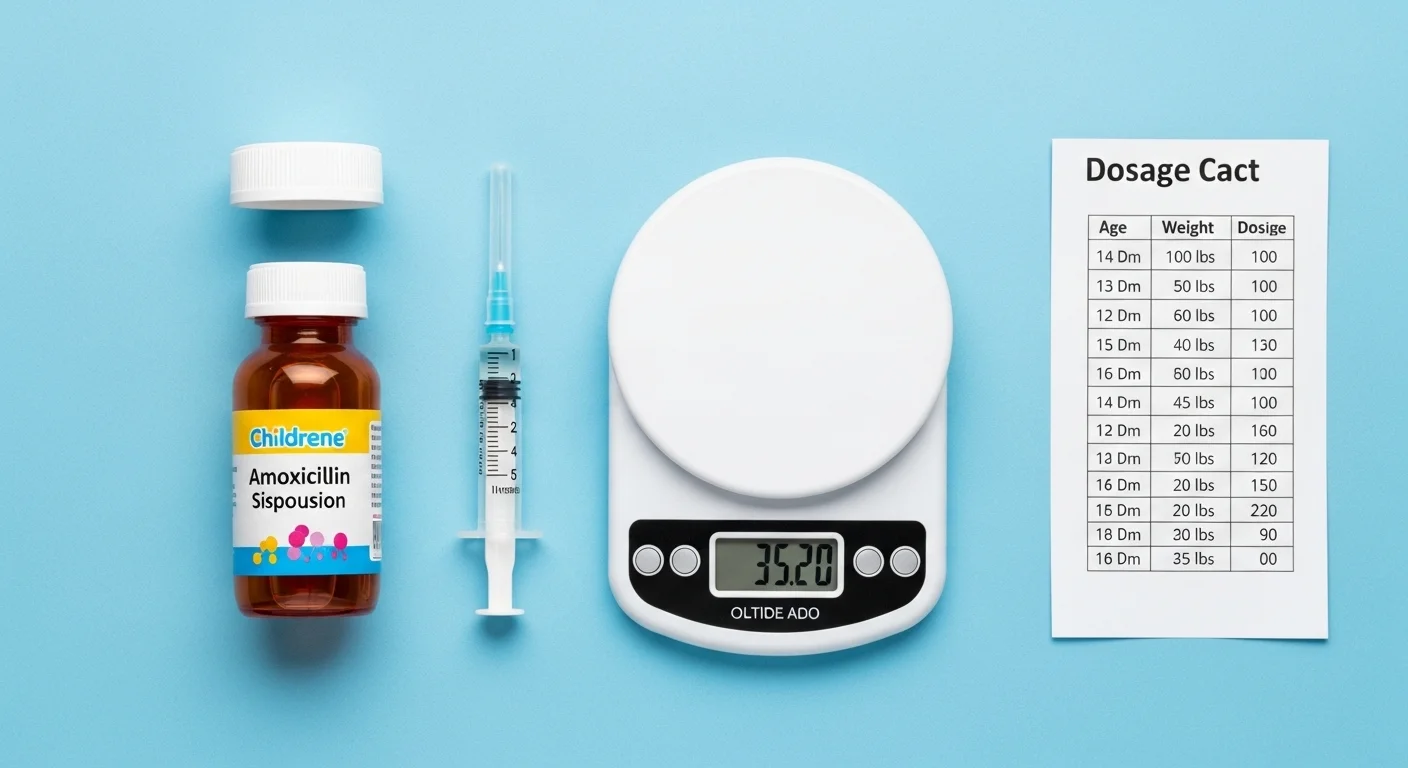
Okay, this is the section you have been waiting for.
Here is the important thing to know: amoxicillin dosage for children is calculated based on weight, not just age.
Age can give you a rough idea, but weight is what really determines the right dose.
Your doctor calculates the dose in milligrams per kilogram of body weight per day (mg/kg/day).
Standard Dosing Guidelines
For most common infections, the general dosing is:
- Standard dose: 25 mg/kg/day, divided into 2 doses (every 12 hours)
- High dose (for resistant infections or ear infections): 80-90 mg/kg/day, divided into 2 doses
📋 Amoxicillin Dosage Chart by Weight (Standard Dose – 25 mg/kg/day)
Standard Dose (25 mg/kg/day)
- 5 kg (11 lbs) — ~1-3 months
- Total: 125 mg/day
- Every 12 hrs: 62.5 mg
- 7 kg (15 lbs) — ~3-6 months
- Total: 175 mg/day
- Every 12 hrs: 87.5 mg
- 10 kg (22 lbs) — ~6-12 months
- Total: 250 mg/day
- Every 12 hrs: 125 mg
- 12 kg (26 lbs) — ~1-2 years
- Total: 300 mg/day
- Every 12 hrs: 150 mg
- 15 kg (33 lbs) — ~2-4 years
- Total: 375 mg/day
- Every 12 hrs: 187.5 mg
- 20 kg (44 lbs) — ~4-6 years
- Total: 500 mg/day
- Every 12 hrs: 250 mg
- 25 kg (55 lbs) — ~6-8 years
- Total: 625 mg/day
- Every 12 hrs: 312.5 mg
- 30 kg (66 lbs) — ~8-10 years
- Total: 750 mg/day
- Every 12 hrs: 375 mg
- 35 kg (77 lbs) — ~10-12 years
- Total: 875 mg/day
- Every 12 hrs: 437.5 mg
- 40 kg+ (88 lbs+) — ~12+ years
- Adult dose
- Every 12 hrs: 500 mg
📋 High-Dose Amoxicillin Chart (80-90 mg/kg/day – For Ear Infections & Resistant Bacteria)
For ear infections & resistant bacteria
- 5 kg (11 lbs)
- Total: 400–450 mg/day
- Every 12 hrs: 200–225 mg
- 7 kg (15 lbs)
- Total: 560–630 mg/day
- Every 12 hrs: 280–315 mg
- 10 kg (22 lbs)
- Total: 800–900 mg/day
- Every 12 hrs: 400–450 mg
- 12 kg (26 lbs)
- Total: 960–1,080 mg/day
- Every 12 hrs: 480–540 mg
- 15 kg (33 lbs)
- Total: 1,200–1,350 mg/day
- Every 12 hrs: 600–675 mg
- 20 kg (44 lbs)
- Total: 1,600–1,800 mg/day
- Every 12 hrs: 800–900 mg
- 25 kg (55 lbs)
- Total: 2,000–2,250 mg/day
- Every 12 hrs: 1,000–1,125 mg
- 30 kg (66 lbs)
- Total: 2,400–2,700 mg/day
- Every 12 hrs: 1,200–1,350 mg
⚠️ Disclaimer: This is for informational reference only. Always follow your prescribing physician’s or pharmacist’s specific instructions for dosing.
Amoxicillin Suspension Strengths Available
Amoxicillin liquid comes in different concentrations:
- 125 mg/5 mL (lower concentration)
- 200 mg/5 mL
- 250 mg/5 mL (most common)
- 400 mg/5 mL (higher concentration, less volume to give)
Pro tip from Hussain: If your child hates taking medicine, ask the pharmacist for the 400 mg/5 mL concentration. Your child has to swallow less liquid to get the same dose. Less medicine to swallow = less fighting at medicine time.
How to Measure the Dose Correctly
- Always use the oral syringe or measuring cup that comes with the medicine.
- Never use a regular kitchen spoon. They are not accurate at all.
- Draw the liquid slowly to avoid air bubbles.
- Double check the amount before giving it to your child.
How Long Should My Child Take Amoxicillin?
The typical course is:
- Ear infections: 5-10 days
- Strep throat: 10 days (very important to complete the full course)
- Sinus infections: 10-14 days
- Other infections: As prescribed by the doctor
Never stop the antibiotic early just because your child feels better.
Stopping too soon can allow the bacteria to come back stronger.
⚠️ This dosage information is for general awareness only. Always follow your doctor’s prescription or the instructions on your medicine packaging. Your child’s doctor may adjust the dose based on the specific infection and your child’s health history.
⚠️ Side Effects of Amoxicillin in Children

Like all medicines, amoxicillin can cause side effects.
But here is the reassuring news: most kids tolerate it really well.
Common Side Effects (Most Children May Experience)
- Diarrhea – This is the most common one. The antibiotic kills some good gut bacteria along with the bad ones.
- Nausea or vomiting – Some kids feel a little queasy, especially on an empty stomach.
- Diaper rash – Very common in babies and toddlers taking amoxicillin.
- Stomach pain or cramping – Usually mild and goes away on its own.
Less Common Side Effects
- Mild skin rash – A non-allergic rash can appear, especially in kids with viral infections. This is not always a true allergy.
- Headache – Older kids might mention this.
- Changes in taste – Food might taste a little weird for a few days.
- Darkening of the tongue – Sounds scary but is harmless and temporary.
Rare but Serious Side Effects (Seek Medical Help Immediately)
- Severe allergic reaction (anaphylaxis) – Hives, swelling of face/lips/throat, difficulty breathing. Call 911 immediately.
- Severe skin reactions – Blistering, peeling skin, or widespread rash with fever.
- Persistent severe diarrhea – Could indicate C. difficile infection.
- Yellowing of skin or eyes (jaundice) – May suggest liver problems.
- Unusual bleeding or bruising – Very rare but needs immediate attention.
- Seizures – Extremely rare, usually only with very high doses.
Side effects do not happen to everyone. Many children use amoxicillin with no issues at all. But it is important to be aware so you can act quickly if something does not seem right.
🚨 Warnings & Precautions for Children’s Amoxicillin

This section is really important for parents.
Please read it carefully.
Who Should NOT Take Amoxicillin?
- Children with a known allergy to penicillin or any penicillin-type antibiotics.
- Children who have had a severe allergic reaction to cephalosporin antibiotics (there can be cross-reactivity).
- Children with a history of amoxicillin-related liver problems.
If your child has ever had an allergic reaction to ANY antibiotic, tell the doctor before they prescribe amoxicillin.
Pregnancy & Breastfeeding (For Mothers Reading This)
While this post focuses on children, some breastfeeding moms wonder if amoxicillin is safe.
Amoxicillin is generally considered safe during pregnancy and breastfeeding.
Small amounts pass into breast milk but usually do not cause problems for the baby.
Always check with your doctor to be sure.
Kidney & Liver Considerations
- Children with kidney problems may need a lower dose or longer intervals between doses.
- If your child has any liver condition, tell the doctor. Amoxicillin can rarely cause liver issues.
Age-Related Precautions
- Newborns (under 1 month): Dosing is very carefully calculated. Only a pediatrician should determine the dose.
- Infants and toddlers: Always use the liquid suspension with proper measuring tools.
- Children over 40 kg (88 lbs): Can usually take adult-strength doses.
Allergic Reaction Warning
About 5-10% of people report a penicillin allergy.
However, studies show that many people who think they are allergic actually are not.
Still, always err on the side of caution.
Watch for these signs after giving amoxicillin:
- Hives or welts on the skin
- Swelling of the face, lips, or tongue
- Wheezing or trouble breathing
- Rapid heartbeat
If you see any of these signs, stop the medicine and seek emergency help right away.
Amoxicillin Rash vs. Allergic Rash
Here is something many parents do not know.
There are two types of rashes that can happen with amoxicillin:
- Allergic rash – Appears as raised, itchy hives (welts). This IS an allergy. Stop the medicine and call the doctor.
- Non-allergic rash (amoxicillin rash) – Flat, pink, non-itchy spots. This is NOT a true allergy. It is especially common in kids with mono (mononucleosis). Talk to your doctor, but this type of rash does not always mean your child is allergic.
🔄 Drug Interactions with Amoxicillin
Even though amoxicillin is generally very safe, it can interact with some other medicines.
Here is what you need to know.
Overdose
If you accidentally give your child too much amoxicillin, stay calm but act quickly.
Signs of amoxicillin overdose may include:
- Severe nausea and vomiting
- Persistent diarrhea
- Stomach pain or cramping
- Skin rash
- Drowsiness or hyperactivity
- In rare cases, kidney problems or seizures
What to do:
- Contact Poison Control right away: 1-800-222-1222 (in the US)
- Or call your local emergency number
- Do NOT try to make your child vomit unless instructed by a medical professional
- Keep the medicine bottle handy so you can tell them the exact strength and how much was taken
Do NOT panic. Amoxicillin has a wide safety margin, meaning small accidental overdoses usually do not cause serious harm. But it is always better to be safe and call for help.
Missed Dose
Life happens. You forgot a dose. It is okay.
Here is what to do:
- If you remember within a few hours: Give the missed dose right away.
- If it is almost time for the next dose: Skip the missed dose and continue with the regular schedule.
- Never give two doses at the same time to make up for a missed one.
- Try setting a phone alarm to help you remember dose times.
One missed dose is unlikely to cause a problem, but try your best to stay on schedule for the antibiotic to work properly.
🩺 When to Call the Doctor
Sometimes you need to pick up the phone and call your child’s doctor.
Here are the situations where you should not wait:
- Your child’s symptoms are not improving after 48-72 hours of taking amoxicillin
- The fever is getting worse instead of better
- Your child develops hives, swelling, or difficulty breathing (this is an emergency, call 911)
- Severe diarrhea that is watery or bloody
- Your child refuses to eat or drink and seems dehydrated
- New symptoms appear that were not there before
- You notice yellowing of the skin or eyes
- Your child seems unusually tired, confused, or limp
- A rash appears and you are unsure if it is allergic or non-allergic
- You accidentally gave the wrong dose
Trust your gut. If something feels off, call your pediatrician. It is always better to ask and be reassured than to wait and worry.
At QuickDawa, we always say: when in doubt, reach out to your healthcare provider.
🙋 Frequently Asked Questions (FAQ)
Q: How much amoxicillin do I give my child by weight?
A: The standard dose is 25 mg per kg of body weight per day, split into two doses. For ear infections, doctors often prescribe a higher dose of 80-90 mg/kg/day. Always follow your doctor’s specific instructions.
Q: Can I mix amoxicillin with milk or juice for my child?
A: Yes, you can mix it with a small amount of milk, juice, or formula to help your child take it. Just make sure they finish all of it so they get the full dose. However, mixing with a full bottle is not recommended because they might not drink it all.
Q: What happens if my child spits out amoxicillin?
A: If your child spits out the dose right away and you can see most of it came out, you can give another full dose. If it has been more than a few minutes and you are unsure how much was swallowed, do not re-dose. Just give the next dose at the regular time and mention it to your doctor.
Q: Does amoxicillin need to be refrigerated?
A: Yes, most amoxicillin suspensions (liquid form) should be refrigerated after the pharmacist mixes them. Refrigeration helps it taste better and keeps it stable. It is usually good for 14 days after mixing. Check the label on your specific bottle.
Q: Can my child take amoxicillin on an empty stomach?
A: Yes, amoxicillin can be taken with or without food. But giving it with food or a small snack can help reduce stomach upset, which is especially helpful for kids with sensitive tummies.
📝 Tips for Parents Giving Amoxicillin to Kids
Here are some practical tips from QuickDawa to make medicine time easier:
- Refrigerate the liquid – Cold amoxicillin tastes much better than room temperature.
- Use a syringe, not a spoon – Much more accurate and easier to use with squirmy kids.
- Aim for the inside of the cheek – Squirt the medicine toward the inside of your child’s cheek, not straight to the back of the throat (this can cause gagging).
- Follow with a favorite drink – Let your child chase the medicine with juice or their favorite drink.
- Give probiotics – A child-friendly probiotic can help prevent antibiotic-related diarrhea. Give it at least 2 hours apart from the antibiotic.
- Complete the full course – Even if your child feels better after a few days, finish all the medicine. This is crucial.
- Store properly – Keep the suspension refrigerated and discard any leftover medicine after 14 days.
- Write it down – Keep a simple log of when you gave each dose. It helps, especially when multiple caregivers are involved.
🌐 Sources & External References
- FDA – Amoxicillin Drug Label Information
- MedlinePlus – Amoxicillin
- Drugs.com – Amoxicillin Dosage Guide
- WebMD – Amoxicillin Oral
- Mayo Clinic – Amoxicillin Proper Use
- AAP – Clinical Practice Guidelines for Acute Otitis Media
🏁 Final Thoughts from QuickDawa

Giving your child medicine can feel overwhelming, especially in the middle of the night when they are crying and you are exhausted.
But you are doing a great job just by being here and trying to learn the right way to do it.
Amoxicillin is one of the safest and most effective antibiotics available for children.
When given at the right dose, for the right amount of time, it works wonderfully.
The key takeaways from this guide are simple: dose by weight (not just age), use proper measuring tools, complete the full course, and watch for any signs of an allergic reaction.
At QuickDawa, we believe that understanding your medicine is just as important as taking it. Knowledge is the first step toward better health. If you found this guide helpful, share it with another parent who might need it, and explore more medicine guides on QuickDawa.com for trusted, easy-to-understand health information.
Got questions? Drop them in the comments below or reach out to us on our contact page. We love hearing from you and are always happy to help.
You have got this, parents. 💛
⚠️ Medical Disclaimer
The information provided in this article is intended for educational and informational purposes only. It is not a substitute for professional medical advice, diagnosis, or treatment. Always seek the guidance of your qualified doctor, pharmacist, or healthcare provider with any questions you may have regarding a medical condition, medication, or treatment plan.
Never disregard professional medical advice or delay seeking it because of something you read on QuickDawa.com or any other website. If you think you may have a medical emergency, call your doctor, go to the nearest emergency room, or call emergency services immediately.
Drug information, dosages, and interactions described in this post are provided for general awareness only and may not apply to your individual health situation. Medications affect people differently based on age, weight, health conditions, and other factors.
QuickDawa.com and its authors do not assume any liability for any consequences arising from the use or misuse of information presented on this website.