Naproxen (Aleve) – Uses, Side Effects, Dosage & Warnings – Your Complete Guide
You know that kind of pain that just hangs around?
Maybe your knee has been aching for three days straight. Maybe your lower back seized up after lifting something heavy. Or maybe it’s that time of the month and the cramps are absolutely brutal.
You’ve tried resting. You’ve tried a hot compress. But the pain is still there — dull, throbbing, and annoying.
That’s usually when someone says, “Just take an Aleve.”
And honestly? They’re not wrong.
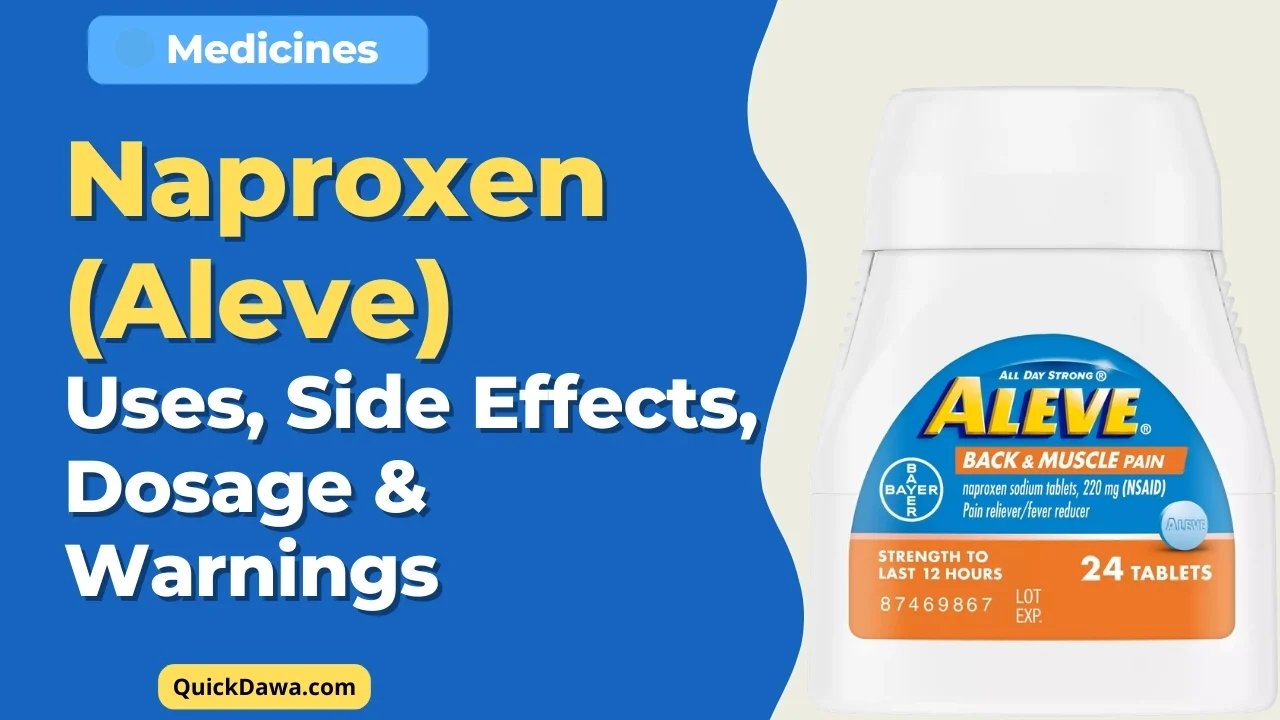
Naproxen — the active ingredient behind the brand name Aleve — is one of the most popular and effective over-the-counter pain relievers out there. It fights pain. It reduces swelling. And it lasts longer than most other pain meds.
But there’s more to this little blue pill than most people realize.
How much should you take? What are the risks? Who shouldn’t take it at all?
At QuickDawa, we’re all about making medicine easy to understand — so let’s break down everything you need to know about naproxen (Aleve) in simple, clear language.
💊 What Is Naproxen?
Naproxen is an over-the-counter and prescription medication used to relieve pain, reduce inflammation, and bring down fever.
It belongs to a drug class called NSAIDs — that stands for Nonsteroidal Anti-Inflammatory Drugs. Other drugs in this family include ibuprofen (Advil) and aspirin.
The most well-known brand name for naproxen is Aleve, made by Bayer. But it also comes in prescription-strength versions under brand names like Naprosyn, Anaprox, and EC-Naprosyn.
Here’s what makes naproxen stand out from other pain relievers: it lasts longer. While ibuprofen wears off in about 4–6 hours, a single dose of naproxen can provide relief for up to 12 hours.
That means fewer pills throughout the day. And for people dealing with ongoing pain — like arthritis — that’s a huge advantage.
It’s been around since the 1970s. Doctors have decades of experience with it. It’s trusted, effective, and widely available.
But like every NSAID, it comes with risks you should understand. Let’s dig in.
✅ Uses of Naproxen
Naproxen is a workhorse. It handles pain, swelling, and fever — all in one.
Here’s a detailed look at what it’s used for.
🔹 Pain Relief (Analgesic)
This is the big one. Naproxen tackles mild to moderate pain from all kinds of sources:
- Headaches and tension headaches
- Toothaches
- Muscle aches and strains
- Back pain (especially lower back)
- Menstrual cramps (period pain)
- Minor injuries — sprains, bruises, overuse
If your pain involves any kind of swelling or inflammation, naproxen is often a better choice than acetaminophen (Tylenol). That’s because Tylenol doesn’t fight inflammation — but naproxen does.
🔹 Anti-Inflammatory (Reduces Swelling)
This is naproxen’s superpower.
Inflammation is your body’s natural response to injury or illness. But sometimes, that response goes overboard — leading to swelling, redness, warmth, and pain.
Naproxen calms that response down. That’s why it’s commonly used for:
- Rheumatoid arthritis
- Osteoarthritis
- Tendinitis (inflamed tendons)
- Bursitis (inflamed joint cushions)
- Gout attacks (sudden, painful joint inflammation)
- Ankylosing spondylitis (inflammatory spinal condition)
Think of inflammation like a fire alarm going off in your body. Naproxen doesn’t just muffle the alarm — it actually helps put out the fire.
🔹 Fever Reduction (Antipyretic)
Got a fever? Naproxen can bring your temperature down, just like acetaminophen or ibuprofen. It’s not the most common choice for fevers alone, but it works.
🔹 Menstrual Pain (Dysmenorrhea)
This is a big deal for a lot of women.
Naproxen is one of the most effective OTC options for period cramps. It works by reducing the prostaglandins — the chemicals that cause your uterus to contract and cramp up. Many gynecologists specifically recommend it for menstrual pain.
🔹 Off-Label Uses
Some doctors may prescribe naproxen for:
- Migraine prevention (in certain patients)
- Mild post-surgical pain management
- Juvenile idiopathic arthritis in children (prescription versions)
(Off-label means the drug is used in a way not officially approved by the FDA, but doctors may still recommend it based on clinical experience.)
🔹 How Does Naproxen Work in Your Body?
Let me keep this super simple.
When your body is hurt or inflamed, it produces chemicals called prostaglandins. These little guys are responsible for sending pain signals and triggering swelling.
Naproxen blocks an enzyme called COX (cyclooxygenase) — specifically COX-1 and COX-2. These enzymes are the factories that make prostaglandins.
By shutting down the factory, naproxen reduces:
- Pain signals reaching your brain
- Inflammation and swelling at the injury site
- Fever
Think of it like turning off a faucet. The water (prostaglandins) stops flowing, and the flooding (pain and swelling) slows down.
The catch? Those same prostaglandins also protect your stomach lining and help your kidneys. That’s why blocking them too much, or for too long, can cause side effects. More on that next.
⚠️ Side Effects of Naproxen
Let’s be straight with you.
Naproxen is a fantastic pain reliever. But it’s an NSAID. And all NSAIDs come with certain risks — especially if you take them in high doses or for long periods.
Here’s what you should know.
🟢 Common Side Effects (Most People May Experience)
These are the ones that show up most often. They’re usually mild and manageable:
- Stomach pain or discomfort — this is the most common one. NSAIDs can irritate your stomach lining.
- Nausea — that queasy, unsettled feeling, especially if taken on an empty stomach.
- Heartburn or indigestion — a burning sensation in your chest or upper belly.
- Headache — yes, a pain reliever can occasionally cause a headache. Ironic, right?
- Dizziness or drowsiness — some people feel a little lightheaded.
- Bloating or gas — mild digestive discomfort.
Pro tip: Taking naproxen with food or a glass of milk can really help reduce stomach-related side effects.
🟡 Less Common Side Effects
These happen less frequently but are still worth noting:
- Constipation or diarrhea
- Ringing in the ears (tinnitus)
- Mild skin rash or itching
- Swelling of the hands, ankles, or feet (fluid retention)
- Blurred vision
- Difficulty sleeping
If any of these bother you or don’t go away, check in with your doctor.
🔴 Rare but Serious Side Effects — Seek Help Immediately
These are uncommon. But they can be dangerous. Don’t ignore them.
- Stomach ulcers or bleeding — signs include black/tarry stools, vomiting blood (may look like coffee grounds), or severe stomach pain. This is the biggest GI risk with all NSAIDs.
- Heart attack or stroke — NSAIDs may slightly increase cardiovascular risk, especially with long-term or high-dose use. Signs include chest pain, sudden weakness on one side of the body, slurred speech, or sudden severe headache.
- Severe allergic reaction (anaphylaxis) — difficulty breathing, swelling of the face/lips/throat, severe hives. Call 911 immediately.
- Kidney problems — decreased urination, swelling, unusual fatigue. NSAIDs reduce blood flow to the kidneys.
- Liver damage — yellowing skin/eyes (jaundice), dark urine, severe fatigue.
- Severe skin reactions — blistering, peeling skin, or widespread rash (Stevens-Johnson Syndrome). Extremely rare but a medical emergency.
💡 Reassuring note: Side effects don’t happen to everyone. Many people use naproxen with no issues at all. But it’s important to be aware — especially if you use it regularly. Short-term use at the lowest effective dose is always the safest approach.
🚨 Warnings & Precautions
This section is critically important. Please read it carefully.
Naproxen carries an FDA Black Box Warning — that’s the strongest safety warning the FDA can put on a drug. It applies to all NSAIDs, not just naproxen.
⚫ FDA BLACK BOX WARNING
Cardiovascular Risk: NSAIDs like naproxen may increase the risk of serious cardiovascular events, including heart attack and stroke. This risk may increase with longer use or higher doses. People with existing heart disease are at greater risk.
Gastrointestinal Risk: NSAIDs increase the risk of serious GI events, including bleeding, ulcers, and perforation (a hole in the stomach or intestinal wall). These events can happen without warning and can be fatal. Elderly patients are at higher risk.
This is not meant to scare you. It’s meant to make sure you use this medicine wisely.
🔹 Who Should NOT Take Naproxen?
- People with a known allergy to naproxen, aspirin, or other NSAIDs
- People who have experienced asthma, hives, or allergic reactions after taking aspirin or another NSAID (this is called the “NSAID triad” or Samter’s triad)
- People about to have or who recently had coronary artery bypass graft (CABG) surgery — NSAIDs are strictly prohibited
- People with active stomach ulcers or GI bleeding
🔹 Pregnancy & Breastfeeding
- Pregnancy: Naproxen should be avoided during the third trimester (after 30 weeks). It can cause serious problems for the baby’s heart. During the first and second trimesters, use only if your doctor says it’s absolutely necessary.
- Breastfeeding: Small amounts of naproxen pass into breast milk. Short-term use may be okay, but talk to your doctor first.
🔹 Liver & Kidney Disease
- If you have kidney disease, naproxen can make it worse. Your kidneys need prostaglandins to maintain proper blood flow — and naproxen blocks them.
- If you have liver disease, your body may not process naproxen properly, leading to higher blood levels and more side effects.
Always tell your doctor about any liver or kidney issues before taking naproxen.
🔹 Age-Related Precautions
- Children under 12: OTC naproxen (Aleve) is not recommended for children under 12 unless directed by a doctor. Prescription versions may be used for juvenile arthritis under medical supervision.
- Elderly (65+): Higher risk of stomach bleeding, kidney problems, and cardiovascular events. Doctors usually recommend the lowest dose for the shortest time.
🔹 Alcohol Warning
Avoid drinking alcohol while taking naproxen.
Both alcohol and naproxen irritate the stomach lining. Combining them significantly increases your risk of stomach bleeding and ulcers. If you drink 3 or more alcoholic beverages per day, this risk is even higher.
🔹 Driving & Machinery
Naproxen can cause dizziness or drowsiness in some people. If it affects you this way, avoid driving or operating heavy machinery until you know how your body reacts.
🔄 Drug Interactions
Naproxen can interact with quite a few medications. Some of these interactions are serious.
Here’s a clear breakdown:
| Drug / Substance | Type of Interaction | What Happens |
|---|---|---|
| Aspirin (low-dose) | Major | Naproxen can interfere with aspirin’s heart-protective effects. If you take daily aspirin for your heart, the timing of naproxen matters — talk to your doctor. |
| Warfarin (Coumadin) / Blood Thinners | Major | Increases the risk of bleeding — potentially dangerous. Naproxen affects platelet function and can amplify blood-thinning effects. |
| ACE Inhibitors / ARBs (blood pressure meds like Lisinopril, Losartan) | Major | Naproxen can reduce the effectiveness of these blood pressure medications and may worsen kidney function. |
| Lithium | Major | Naproxen can increase lithium levels in the blood, leading to toxicity. |
| Methotrexate | Major | Can increase methotrexate levels, raising the risk of serious side effects. |
| SSRIs (antidepressants like Prozac, Zoloft) | Moderate | Combining SSRIs with naproxen increases the risk of GI bleeding. |
| Diuretics (water pills like Furosemide) | Moderate | Naproxen can reduce the effectiveness of diuretics and increase kidney strain. |
| Alcohol | Major | Increases stomach irritation and bleeding risk significantly. |
| Ginkgo Biloba / Fish Oil supplements | Moderate | Both have blood-thinning properties. Combining with naproxen increases bleeding risk. |
| Other NSAIDs (ibuprofen, aspirin, etc.) | Major | Never take two NSAIDs at the same time. Doubles the risk of stomach bleeding and kidney damage. |
📌 Always tell your doctor or pharmacist about every medicine, supplement, or herbal product you’re currently taking before starting naproxen. Even things like fish oil, turmeric, or garlic supplements can matter.
💉 Overdose / Missed Dose
Let’s talk about what happens if you take too much — or forget a dose. I’ll keep it calm but clear.
🔸 Naproxen Overdose
Taking too much naproxen can be dangerous. It usually happens when someone takes multiple doses too close together or doesn’t realize another medicine they’re taking also contains an NSAID.
Signs and symptoms of naproxen overdose include:
- Severe nausea and vomiting
- Stomach pain or bleeding
- Drowsiness or extreme fatigue
- Dizziness or feeling faint
- Ringing in the ears
- Seizures (in severe cases)
- Slow or difficult breathing
What to do if you suspect an overdose:
- Call Poison Control immediately: 1-800-222-1222 (U.S.)
- Go to the nearest emergency room. Don’t wait for symptoms to get worse.
- Bring the medicine bottle with you so the doctors know exactly what was taken.
Do NOT try to make yourself vomit unless a medical professional tells you to.
🔸 Missed Dose
If you’re taking naproxen on a regular schedule and you miss a dose:
- Take it as soon as you remember — as long as it’s not too close to your next scheduled dose.
- If your next dose is coming up soon, skip the missed one and continue your regular schedule.
- Never take a double dose to “catch up.” That’s a fast track to side effects.
If you’re using naproxen on an “as-needed” basis, missing a dose isn’t really an issue. Just take it when the pain comes back.
📊 Dosage Guide
Here’s a general overview of naproxen dosing. Remember — these are general guidelines. Your doctor’s instructions always come first.
🔹 Adults (12 years and older) — OTC (Aleve)
- Starting dose: 220 mg (one tablet) every 8–12 hours
- For the first dose, some people take 440 mg (two tablets) followed by 220 mg every 8–12 hours
- Maximum daily OTC dose: 660 mg in 24 hours (that’s 3 tablets) unless a doctor says otherwise
🔹 Prescription Strength (Naprosyn, Anaprox)
- Doses can range from 250 mg to 500 mg, taken twice daily
- Maximum prescription dose: Typically 1,000–1,500 mg per day, depending on the condition
- Your doctor will determine the exact dose and duration
🔹 Children (Under 12)
- OTC Aleve is NOT recommended for children under 12 unless directed by a doctor.
- Prescription naproxen may be used for conditions like juvenile arthritis — dosing is based on weight and determined by the child’s doctor.
🔹 Elderly (65+)
- Start with the lowest effective dose.
- Increased risk of side effects — especially stomach bleeding and kidney issues.
- Regular monitoring by a doctor is recommended.
🔹 Available Forms
Naproxen comes in several forms:
- Tablets (regular and extra strength)
- Liquid gel capsules
- Delayed-release (enteric-coated) tablets — designed to reduce stomach irritation
- Oral suspension (liquid — prescription, often for children)
- Extended-release tablets (prescription)
⚠️ “This dosage information is for general awareness only. Always follow your doctor’s prescription or the instructions on your medicine packaging.”
🙋 Frequently Asked Questions — FAQ
Q: Is naproxen safe during pregnancy?
A: Naproxen should be avoided during the third trimester of pregnancy (after 30 weeks). It can harm the baby’s heart and cause complications during delivery. During the first and second trimesters, it should only be used if your doctor specifically approves it. There are safer alternatives — so always check with your OB-GYN first.
Q: Can I take naproxen on an empty stomach?
A: You can, but it’s not recommended. Naproxen is known for irritating the stomach lining. Taking it with food, a glass of milk, or a snack can really help reduce the risk of nausea, heartburn, and stomach pain. Your stomach will thank you.
Q: How long does naproxen take to work?
A: Most people start feeling relief within 30 minutes to 1 hour. The full effect usually kicks in within 1–2 hours. One of the best things about naproxen is that it lasts longer than ibuprofen — up to 12 hours per dose — so you don’t have to take it as often.
Q: What’s the difference between naproxen and ibuprofen?
A: Both are NSAIDs. Both reduce pain, inflammation, and fever. But there are key differences:
- Naproxen lasts longer (8–12 hours vs. 4–6 hours for ibuprofen).
- Ibuprofen kicks in slightly faster.
- Naproxen may be slightly harder on the stomach for some people.
- Ibuprofen requires more frequent dosing throughout the day.
Your doctor can help you decide which is best for your situation. At QuickDawa, we’ve got separate guides for both — so check those out too!
Q: Can children take naproxen?
A: OTC naproxen (Aleve) is not recommended for kids under 12 unless a doctor says otherwise. Prescription naproxen is sometimes used for children with conditions like juvenile arthritis, but the dosing must be carefully calculated based on the child’s weight. Always consult a pediatrician.
Q: Can I drink alcohol while taking naproxen?
A: It’s best to avoid alcohol while taking naproxen. Both substances irritate the stomach. Together, they significantly increase your risk of stomach bleeding and ulcers. If you must have a drink, keep it occasional and minimal — and never on the same day you’re taking high doses.
Q: Can I take naproxen and Tylenol together?
A: Yes, actually — in many cases, you can. Naproxen (an NSAID) and acetaminophen (Tylenol) work through different mechanisms. Some doctors even recommend alternating them for better pain control. However, never take naproxen with another NSAID (like ibuprofen or aspirin) — that doubles your risk of side effects. Always confirm with your doctor or pharmacist before combining any medications.
🏁 Conclusion — Use It Wisely, Stay Pain-Free
Let’s bring it all together.
Naproxen (Aleve) is one of the most effective over-the-counter pain relievers available today. It handles pain, reduces inflammation, brings down fevers, and lasts longer than most alternatives. For conditions like arthritis, menstrual cramps, back pain, and gout — it can be a real game-changer.
But it’s still a medicine. And all medicines deserve respect.
The golden rule with naproxen? Use the lowest dose that works, for the shortest time necessary. Take it with food. Don’t mix it with other NSAIDs. Watch out for stomach symptoms. And if you have heart, kidney, or liver issues — talk to your doctor before reaching for that bottle.
Knowledge is power. And now you’ve got plenty of it.
At QuickDawa, we believe that understanding your medicine is just as important as taking it. Knowledge is the first step toward better health. If you found this guide helpful, share it with someone who needs it — and explore more medicine guides on QuickDawa.com for trusted, easy-to-understand health information.
💬 Have a question about naproxen — or any other medicine? Drop it in the comments below or reach out through our contact page. We’d love to hear from you!
⚠️ Medical Disclaimer
The information provided in this article is intended for educational and informational purposes only. It is not a substitute for professional medical advice, diagnosis, or treatment. Always seek the guidance of your qualified doctor, pharmacist, or healthcare provider with any questions you may have regarding a medical condition, medication, or treatment plan.
Never disregard professional medical advice or delay seeking it because of something you read on QuickDawa.com or any other website. If you think you may have a medical emergency, call your doctor, go to the nearest emergency room, or call emergency services immediately.
Drug information, dosages, and interactions described in this post are provided for general awareness only and may not apply to your individual health situation. Medications affect people differently based on age, weight, health conditions, and other factors.
QuickDawa.com and its authors do not assume any liability for any consequences arising from the use or misuse of information presented on this website.
🌐 Sources & External References
Here are trusted, authoritative sources where you can learn more about naproxen:
- FDA Drug Information — Naproxen — Official FDA resource
- MedlinePlus — Naproxen — U.S. National Library of Medicine
- Drugs.com — Naproxen Full Information — Comprehensive drug database
- WebMD — Naproxen Oral — Consumer-friendly drug info
- Mayo Clinic — Naproxen (Oral Route) — Trusted medical institution
- RxList — Naprosyn (Naproxen) — Detailed drug reference