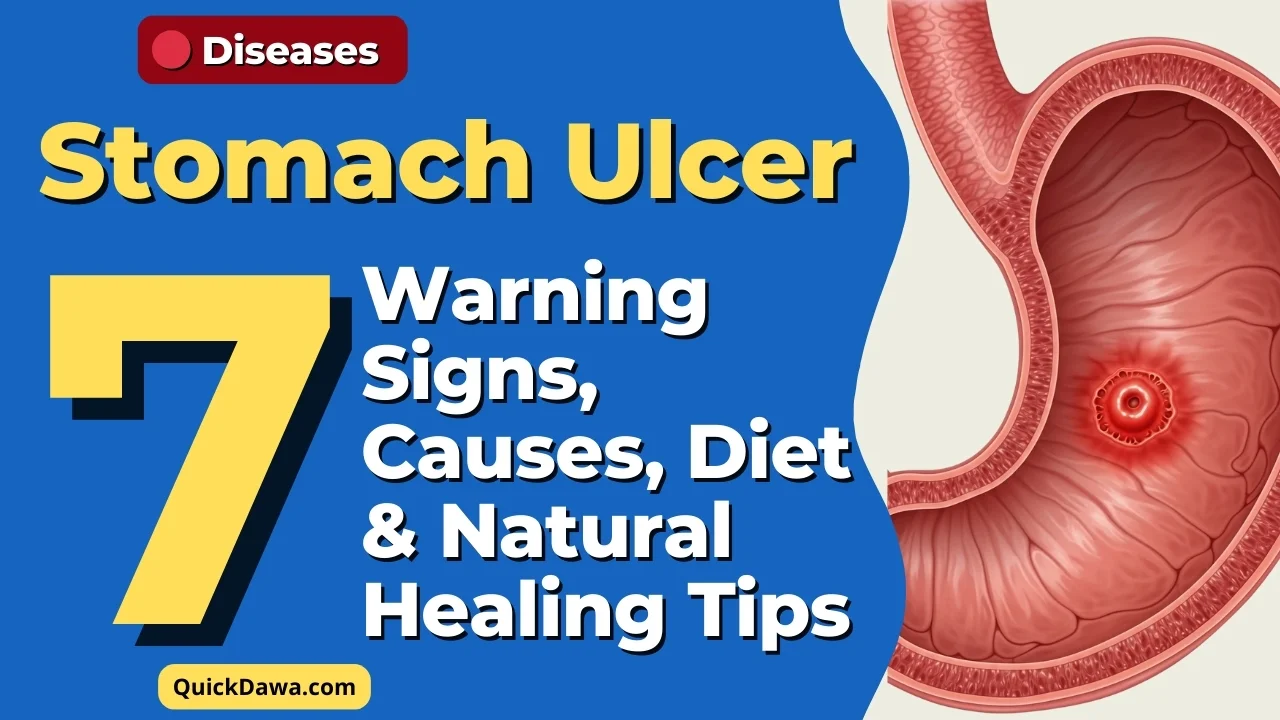
Stomach Ulcer – 7 Warning Signs, Causes, Diet & Natural Healing Tips (2026 Guide)
A stomach ulcer changed how I look at stomach pain forever.
I used to think it was just acidity.
Turns out, it was much more serious.
Let me walk you through everything I learned — the hard way.
What Exactly Is a Stomach Ulcer?
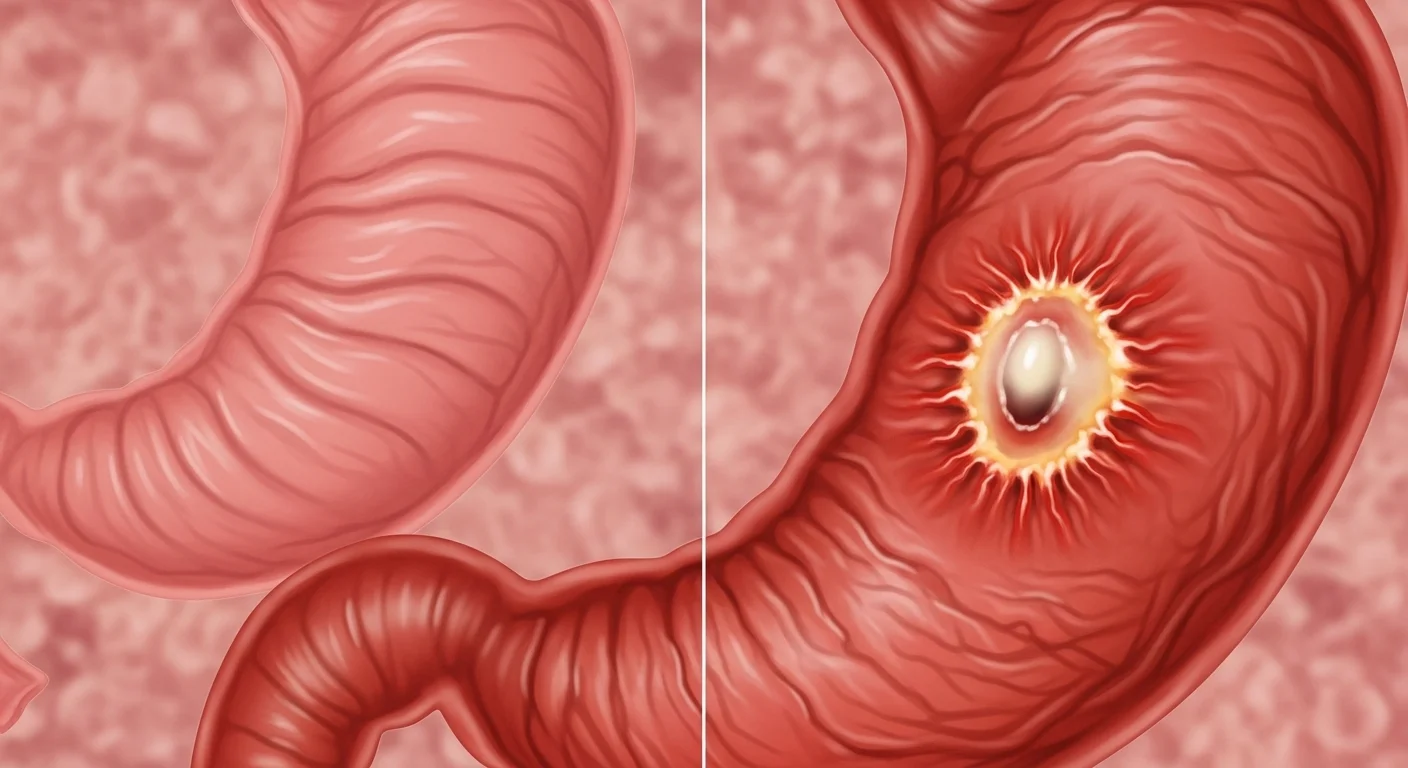
A stomach ulcer is a sore that forms inside your stomach.
Think of it like a small wound on the inner wall of your tummy.
Your stomach has a protective lining.
When that lining gets damaged, acid starts eating through it.
That is when a stomach ulcer is born.
It burns.
It aches.
And it gets worse when you ignore it.
Doctors also call it a peptic ulcer or gastric ulcer.
They all mean the same thing.
The good news is most people fully recover with the right care.
You can find helpful medicines and digestive health products at QuickDawa to support your recovery.
How Common Are Stomach Ulcers?
More common than you think.
Millions of people around the world deal with them every year.
Adults, older people, even teenagers.
Nobody is immune.
If you have one, you are definitely not alone.
What Causes a Stomach Ulcer?
There are two big reasons.
Let me break them down simply.
1. A Bacteria Called H. pylori
This is the number one cause of a stomach ulcer.
H. pylori is a tiny germ that quietly lives in the stomach.
It slowly damages the protective lining.
Once that shield is weak, stomach acid burns right through it.
That burning creates the ulcer.
Here is the scary part.
About 50% of the world’s population carries this bacteria.
But not everyone gets an ulcer from it.
2. Painkillers Like Aspirin and Ibuprofen
These are called NSAIDs.
Taking too many for too long wears your stomach lining thin.
This is the second most common cause.
A lot of people do not even realize their painkillers are causing the damage.
Other Things That Make It Worse
🚬 Smoking slows healing and increases acid.
🍺 Alcohol irritates and weakens the stomach lining.
😰 Severe stress messes with your stomach’s acid balance.
☕ Too much caffeine can make an existing stomach ulcer worse.
7 Warning Signs of a Stomach Ulcer
Your body talks to you.
You just need to listen.
Here are seven signals that a stomach ulcer might be forming.
🔥 Burning pain in the stomach — especially when your tummy is empty.
😣 Pain that wakes you up at night — this one catches people off guard.
🤢 Feeling nauseous — even when you have not eaten anything bad.
🎈 Bloating and gas after eating — that heavy, uncomfortable feeling.
🍽️ Loss of appetite — food just does not seem appealing anymore.
⚖️ Losing weight without trying — and not in a good way.
🩸 Dark, tarry stools or bloody vomit — this one is serious. See a doctor immediately.
The pain usually feels like a dull ache or sharp burn in the upper belly area.
Some days are better.
Some days are terrible.
That on-and-off pattern is very common with a stomach ulcer.
When Should You See a Doctor?
Do not wait if you notice any of these.
Vomit that looks like coffee grounds.
Bright red blood in your stool or vomit.
Sharp stomach pain that refuses to stop.
Feeling dizzy or dangerously weak.
Sudden weight loss for no reason.
These signs could mean the ulcer is bleeding.
Or worse — it could mean a hole has formed in your stomach wall.
That is a medical emergency.
Go to the hospital right away.
Medicines Used to Treat a Stomach Ulcer
Treatment depends on the cause.
Here is what doctors usually prescribe.
1. Antibiotics (for H. pylori)
If H. pylori caused your stomach ulcer, antibiotics kill it.
Doctors usually prescribe a combo of two antibiotics.
Common ones include Amoxicillin, Clarithromycin, and Metronidazole.
You take them for 7 to 14 days.
Finish the full course.
Stopping early is one of the top reasons ulcers come back.
2. Proton Pump Inhibitors (PPIs)
These reduce the amount of acid your stomach makes.
Less acid means less pain and faster healing.
Common ones are Omeprazole, Esomeprazole, and Pantoprazole.
They are often taken alongside antibiotics.
3. H2 Blockers
These also reduce stomach acid.
They work a bit differently from PPIs but do the same job.
Famotidine is a common example.
4. Antacids
Quick relief medicines.
They neutralize the acid already sitting in your stomach.
They do not cure the ulcer.
But they ease the pain fast.
5. Bismuth Subsalicylate
This one coats the ulcer like a protective blanket.
It also helps fight H. pylori bacteria.
Always take medicines exactly as your doctor prescribes.
Never self-medicate a stomach ulcer.
You can conveniently order prescribed stomach ulcer medicines from QuickDawa.com and get them delivered to your doorstep.
The Best Stomach Ulcer Diet: What to Eat
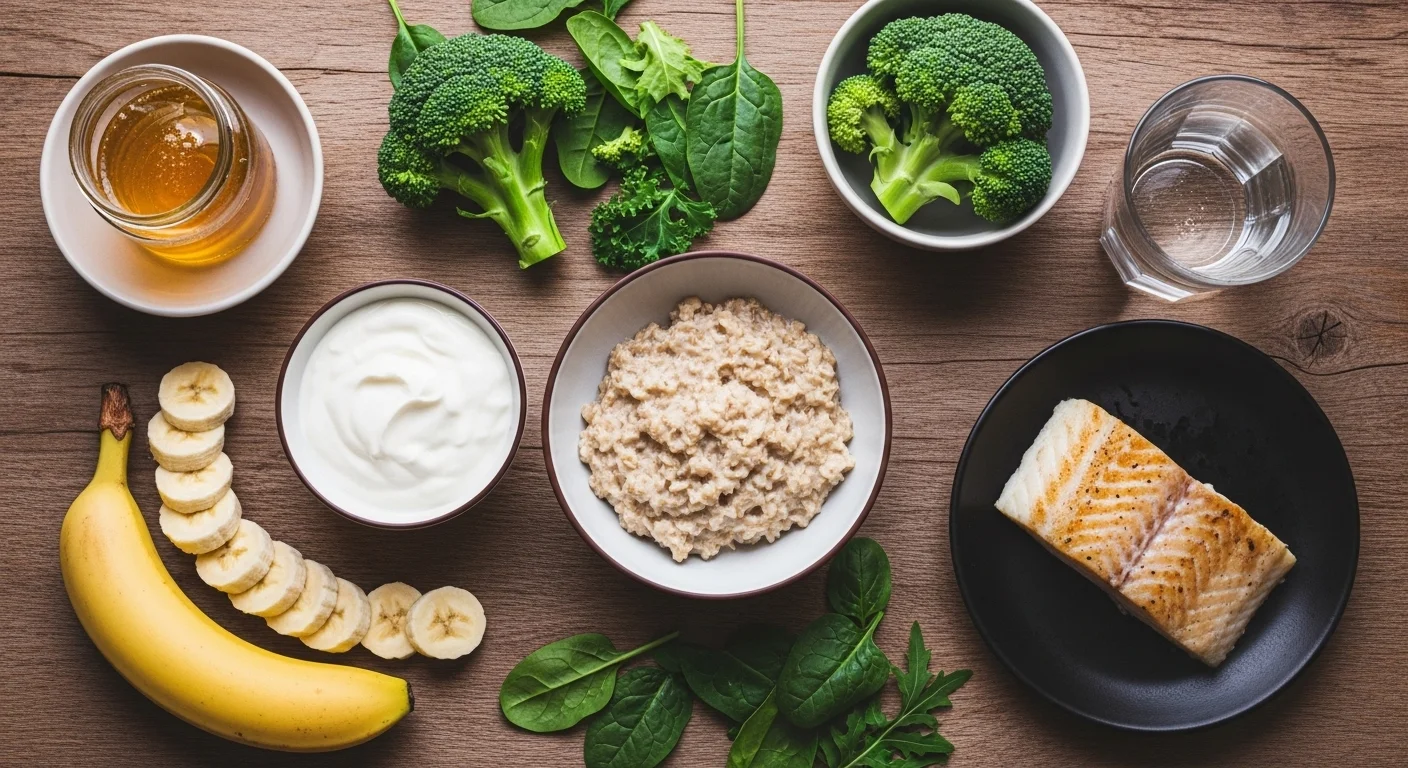
Food plays a massive role in how fast your stomach ulcer heals.
Some foods help.
Some foods hurt.
Let me make it simple.
✅ Foods That HELP a Stomach Ulcer
| Food | Why It Helps |
|---|---|
| 🥦 Broccoli & cabbage | Contains sulforaphane — fights H. pylori bacteria |
| 🫐 Berries (blueberries, cranberries) | Rich in antioxidants, protect the stomach lining |
| 🍌 Bananas | Soothe the stomach and coat the lining |
| 🥣 Oatmeal | High fiber, gentle on the stomach |
| 🥚 Eggs | Easy to digest, good protein |
| 🐟 Lean fish & chicken | Low fat, easy on digestion |
| 🧴 Yogurt & kefir | Probiotics that balance gut health |
| 🧄 Garlic | Natural antibacterial against H. pylori |
| 🍯 Honey | Antibacterial and soothing |
| 🥬 Spinach & kale | High fiber, packed with healing vitamins |
❌ Foods to AVOID With a Stomach Ulcer
🌶️ Spicy foods — they irritate the damaged lining.
🍊 Citrus fruits and tomatoes — too acidic.
🍺 Alcohol — tears down the stomach lining.
☕ Coffee and soda — pump up acid production.
🍫 Chocolate — stimulates extra acid.
🍟 Fried and fatty foods — slow digestion and worsen pain.
🧂 Salty and processed snacks — linked to H. pylori growth.
One small tip that helped me a lot.
Eat small meals throughout the day instead of three big ones.
It keeps your acid levels more balanced.
Your stomach will thank you.
How to Heal a Stomach Ulcer Faster

Most stomach ulcers heal in 4 to 8 weeks with proper treatment.
Severe ones may take up to 12 weeks.
Here are real recovery tips that actually work.
🌿 Natural and Lifestyle Recovery Tips
1. Take your medicines every single day.
Do not skip doses. Incomplete treatment is the top reason ulcers return.
2. Quit smoking.
Smoking slows healing. It also makes your stomach produce more acid.
3. Cut out alcohol completely.
Even a little bit irritates the ulcer. Give your stomach a real break.
4. Manage your stress.
Stress does not directly cause ulcers. But it makes them worse and slows healing. Try deep breathing, gentle walks, or yoga.
5. Eat slowly.
Rushing through meals increases acid. Chew your food well. Take your time.
6. Drink plenty of water.
Water helps flush your system and keeps digestion smooth.
7. Try cabbage juice.
Some studies suggest fresh cabbage juice may speed up healing. It contains glutamine — a nutrient that feeds stomach lining cells.
8. Add a little turmeric.
Turmeric has anti-inflammatory properties. A pinch in warm water or food can soothe irritation.
9. Stay away from NSAIDs.
Avoid aspirin, ibuprofen, and similar painkillers while healing. Ask your doctor for a safer option.
10. Sleep on your left side.
This simple trick reduces acid reflux and pressure on the stomach.
Can a Stomach Ulcer Come Back?
Unfortunately, yes.
A stomach ulcer can return if the root cause is not fully addressed.
It tends to come back when:
The H. pylori infection was not completely treated.
You keep taking painkillers like ibuprofen regularly.
You continue smoking or drinking alcohol.
Your stress levels stay dangerously high.
The best protection against relapse is finishing all your medicines and sticking with the lifestyle changes.
How Is a Stomach Ulcer Diagnosed?
Your doctor may run one of these tests.
🔬 H. pylori breath test — you simply breathe into a bag. Easy and painless.
💉 Blood test — checks for H. pylori antibodies.
💩 Stool test — looks for bacteria in your stool sample.
📷 Endoscopy — a tiny camera goes into your stomach so the doctor can see the ulcer directly.
Final Thoughts
A stomach ulcer sounds scary.
I know because I felt that fear too.
But here is the truth — it is very treatable.
With the right medicine, a gentle diet, and smart daily habits, most people fully recover.
The key is acting early.
Do not brush off that burning pain.
Do not wait for things to get worse.
See a doctor. Follow the treatment. Eat the right foods. Rest. Be patient.
Your stomach is tougher than you think.
With the right help, it will heal.
For genuine medicines and health essentials, QuickDawa is a trusted option worth exploring.
📌 Medical Disclaimer
This article is for informational and educational purposes only. It is not a substitute for professional medical advice, diagnosis, or treatment. Always consult a qualified healthcare provider before starting any medication or treatment plan. If you are experiencing severe symptoms, seek emergency medical help immediately.