Ibuprofen for Back Pain – 90% of People Take It Wrong (Here’s the Right Way)
It hits you out of nowhere.
You bend down to pick up your phone, and suddenly your lower back screams at you.
The pain locks you in place like someone shoved a knife between your spine.
You can’t stand straight.
You can’t sit comfortably.
Even breathing feels like a punishment.
So what do most people do?
They grab ibuprofen for back pain and hope for the best.
And here’s the scary part.
Most of them are taking it completely wrong.
Wrong dose. Wrong timing. Wrong combination. Wrong duration.
Some people make their back pain WORSE without even realizing it.
Others risk stomach bleeding, kidney damage, or heart problems because nobody warned them.
But it doesn’t have to be that way.
When used correctly, ibuprofen can be an absolute game changer for back pain.
It can get you moving again within 30 minutes.
It can cut inflammation at the source and give you your life back.
The difference between relief and disaster is simply knowing what you’re doing.
At QuickDawa, we’re all about making medicine easy to understand.
So let’s break down everything you need to know about ibuprofen for back pain before you take another pill.
This guide could literally save you from a painful mistake.
💊 What Is Ibuprofen? (The 30-Second Version)
Ibuprofen is a nonsteroidal anti-inflammatory drug (NSAID) that fights pain, swelling, and inflammation.
You probably know it by brand names like Advil, Motrin, or Brufen.
You can buy it without a prescription at almost any pharmacy in the world.
Doctors recommend it for headaches, toothaches, period cramps, arthritis, and especially back pain.
It’s cheap, it’s accessible, and when used right, it’s incredibly powerful.
🔬 The Secret Behind Why Ibuprofen Actually Works (Most People Have No Idea)
Here’s something that will change how you think about pain.
Your back doesn’t hurt just because of the injury.
It hurts because your body overreacts to the injury.
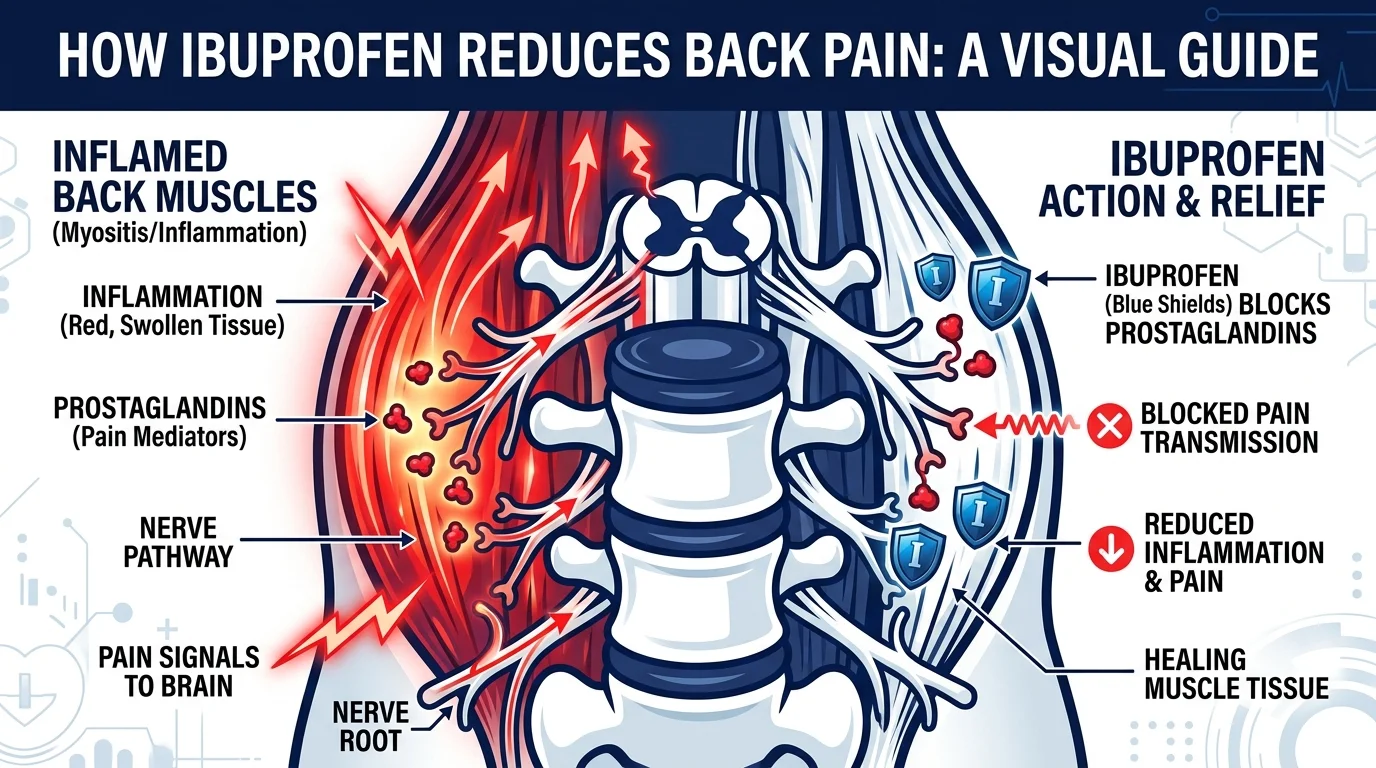
When your back gets strained, your body floods the area with chemicals called prostaglandins.
These chemicals cause swelling, redness, and that throbbing pain you can’t escape.
Here’s the genius part about ibuprofen.
It doesn’t just mask the pain like a bandage.
It actually shuts down the factory that produces those pain chemicals.
Less prostaglandins means less swelling.
Less swelling means less pressure on your muscles and nerves.
Less pressure means the pain starts melting away.
That’s why ibuprofen often works better than basic painkillers for back pain.
It attacks the actual problem, not just the symptom.
🏋️ The Mistake That Makes Back Pain 10x Worse (Muscular vs. Nerve Pain)
This is where most people go wrong.
They assume all back pain is the same.
It’s not.
And treating the wrong type of pain with the wrong approach can make things significantly worse.
Muscular Back Pain (Ibuprofen’s Sweet Spot)
This is the most common type, and this is where ibuprofen truly shines.
Muscle strain from lifting, bad posture, or sleeping wrong causes inflammation in the muscle fibers.
Ibuprofen targets that inflammation directly.
Studies confirm that NSAIDs like ibuprofen are one of the most effective first-line treatments for muscular back pain.
If your pain feels achy, stiff, and sore, ibuprofen is probably your best friend right now.
Nerve Back Pain (The Dangerous One People Ignore)
This type feels completely different.
Sharp. Burning. Shooting. Electrical.
It often travels down your buttock and leg.
This is usually sciatica, caused by a compressed nerve in your spine.
Ibuprofen can reduce some swelling around the nerve.
But here’s the honest truth.
For severe nerve pain, ibuprofen alone is usually NOT enough.
If your pain shoots down your leg, causes numbness, or makes your foot feel weak, STOP guessing and see a doctor immediately.
This could be a sign of something much more serious.
💊 The Exact Right Way to Take Ibuprofen for Back Pain (Dosage Guide)

This section alone could save you from a trip to the emergency room.
Most people either take too little (and wonder why it’s not working) or take too much (and destroy their stomach lining).
Here is the correct approach for adults:
- Mild back pain: 200 mg every 4 to 6 hours as needed
- Moderate to severe back pain: 400 mg every 4 to 6 hours as needed
- Maximum OTC dose: 1,200 mg per day (unless your doctor says otherwise)
- Prescription dose (doctor supervised only): Up to 3,200 mg per day
Golden Rules Most People Break
Rule 1: ALWAYS take ibuprofen with food or milk. Never on an empty stomach. Your stomach lining will thank you.
Rule 2: Don’t exceed 10 days of continuous use without a doctor’s approval. Period.
Rule 3: Take the lowest effective dose. If 200 mg works, don’t take 400 mg just because you can.
Rule 4: Swallow the tablet whole with a full glass of water. Don’t crush or chew unless the product specifically allows it.
Rule 5: Space your doses properly. Every 4 to 6 hours. Not every 2 hours because the pain came back faster than you expected.
These rules aren’t suggestions.
They’re the difference between safe relief and a hospital visit.
🧊🔥 The Combo Trick That Doubles Your Pain Relief (Most People Skip This)

Here’s a secret that even some doctors forget to mention.
Ibuprofen alone is good.
Ibuprofen combined with heat or ice therapy is GREAT.
This combination can nearly double your pain relief without adding any extra medication.
Ice Therapy (The First 48 to 72 Hours)
Fresh injury? New pain? Swelling?
Grab an ice pack immediately.
Wrap it in a thin towel and apply it to your lower back for 15 to 20 minutes.
Ice constricts blood vessels and reduces swelling from the outside.
Ibuprofen fights inflammation from the inside.
Together, they attack pain from both directions at once.
Heat Therapy (After 72 Hours)
Once the initial swelling calms down, switch to heat.
A warm towel, a heating pad, or a hot water bottle works perfectly.
Heat relaxes tight, spasming muscles and increases blood flow.
This helps your body heal faster while ibuprofen keeps the inflammation under control.
What Does the Science Say?
Multiple studies published in peer-reviewed journals confirm that NSAIDs combined with physical therapies like heat, ice, and gentle movement deliver significantly better outcomes than medication alone.
This is not opinion.
This is evidence-based medicine.
So please, don’t just swallow a pill and lie on the couch.
Give your body the full treatment it deserves.
📊 Does Ibuprofen ACTUALLY Work for Back Pain? (What the Studies Reveal)
Let’s cut through the noise and look at real science.
A massive review in The Cochrane Database of Systematic Reviews analyzed dozens of clinical trials.
The conclusion?
NSAIDs like ibuprofen provide meaningful short-term relief for acute low back pain.
That’s the good news.
Now here’s the part most websites won’t tell you.
The relief is moderate, not miraculous.
Ibuprofen won’t cure a herniated disc.
It won’t fix spinal stenosis.
It won’t rebuild a degenerated joint.
But for everyday muscle strain, stiffness, and acute back pain?
It remains one of the most recommended first-line treatments on the planet.
The American College of Physicians specifically lists NSAIDs as a top recommendation for acute back pain before trying stronger drugs.
So yes, ibuprofen works.
But it works best when you use it smartly, at the right dose, for the right type of pain, and alongside other strategies like movement and heat therapy.
At QuickDawa, we always encourage our readers to be smart patients, not just passive pill-takers.
⚠️ The Dark Side of Ibuprofen Nobody Talks About (Side Effects You MUST Know)
Let’s be real for a second.
Ibuprofen is not candy.
It’s a powerful drug, and powerful drugs come with real risks.
Most people will be fine if they follow the rules above.
But you need to know what can go wrong, especially if you use it too often or for too long.
Common Side Effects (Usually Mild)
- Upset stomach or nausea
- Heartburn or acid reflux
- Mild dizziness or headache
- Bloating or gas
Serious Side Effects (Rare but Dangerous)
- Stomach ulcers or internal bleeding (especially without food)
- Kidney damage with long-term use
- Increased risk of heart attack or stroke with prolonged high doses
- Severe allergic reactions like facial swelling, hives, or trouble breathing
Red Flags That Mean STOP Immediately
If you experience any of these, stop taking ibuprofen right away and get emergency help:
- Black or bloody stools
- Vomiting blood or material that looks like coffee grounds
- Chest pain or shortness of breath
- Sudden swelling of the face, lips, or throat
- Severe stomach pain that doesn’t go away
These are not things to “wait out.” These are emergencies.
People with stomach ulcer history, kidney disease, heart conditions, or asthma should talk to their doctor BEFORE using ibuprofen.
🚨 When to Stop Guessing and Call Your Doctor (Don’t Ignore These Warning Signs)
Ibuprofen is a fantastic first step.
But some back pain is your body’s way of screaming that something is seriously wrong.
Call your doctor immediately if:
- Your back pain lasts more than 2 weeks without improvement
- The pain is getting progressively worse
- You feel numbness, tingling, or weakness in your legs or feet
- You lose control of your bladder or bowels (this is an emergency)
- The pain started after a car accident, fall, or serious injury
- You develop an unexplained fever with back pain
- Ibuprofen that used to work suddenly stops helping
Any of these could signal a herniated disc, spinal infection, fracture, or nerve compression.
These conditions need real medical intervention, not more ibuprofen.
Please don’t be the person who waits months to see a doctor because “it’s probably just a muscle thing.”
Your spine is not something to gamble with.
🙋 Frequently Asked Questions (FAQ)
Q: Can you take ibuprofen and acetaminophen together for back pain?
A: Yes! Many doctors actually recommend alternating between the two for stronger pain control. They work through completely different mechanisms, so they complement each other well. But always confirm the timing and dosage with your pharmacist or doctor first.
Q: How long does ibuprofen take to work for back pain?
A: Most people start feeling relief within 20 to 30 minutes. Full effect usually kicks in around 1 hour. If you don’t feel ANY improvement after 2 to 3 doses, the ibuprofen may not be enough for your type of pain, and you should consult your doctor.
Q: Is ibuprofen safe for back pain during pregnancy?
A: No. Ibuprofen is generally NOT recommended during pregnancy, especially during the third trimester. It can cause serious complications for the baby’s heart and reduce amniotic fluid. Pregnant women should always consult their OB-GYN before taking any pain medication.
Q: Ibuprofen vs naproxen for back pain: which one wins?
A: Both are NSAIDs and work similarly. Naproxen (Aleve) lasts longer (up to 12 hours), so you take fewer pills per day. Ibuprofen kicks in faster but wears off in 4 to 6 hours. For ongoing pain, naproxen may be more convenient. For quick relief, ibuprofen has the edge. Ask your doctor which fits your situation better.
Q: Can you take ibuprofen for back pain every single day?
A: Not without a doctor’s supervision. Daily ibuprofen use beyond 10 days significantly increases the risk of stomach bleeding, kidney damage, and cardiovascular events. If you need daily pain relief, your doctor should evaluate you and create a proper treatment plan. Do not self-medicate long-term.
🌐 Sources and External References
- FDA Drug Label for Ibuprofen
- MedlinePlus: Ibuprofen
- Drugs.com: Ibuprofen Full Information
- WebMD: Ibuprofen Oral Uses and Side Effects
- Mayo Clinic: Ibuprofen (Oral Route)
- RxList: Motrin (Ibuprofen)
🏁 The Bottom Line: Don’t Let Back Pain Control Your Life
Back pain is brutal.
It steals your sleep, your productivity, your mood, and your freedom.
But you don’t have to suffer in silence.
Ibuprofen for back pain is one of the most effective, affordable, and accessible tools available to you right now.
When you use it correctly, at the right dose, with food, for the right duration, and alongside heat, ice, and gentle movement, it can give you incredible relief.
But here’s the most important thing I want you to remember.
Ibuprofen is a tool, not a cure.
If your pain is chronic, getting worse, or accompanied by scary symptoms, please see a doctor.
Your spine deserves professional attention.
At QuickDawa, we believe that understanding your medicine is just as important as taking it. Knowledge is the first step toward better health. If you found this guide helpful, share it with someone who needs it and explore more medicine guides on QuickDawa.com for trusted, easy-to-understand health information.
Have a question about ibuprofen or back pain?
We want to hear from YOU.
Drop your question in the comments below or reach out to us directly on our Contact Page. Hussain and the QuickDawa team read every single message.
⚠️ Medical Disclaimer
The information provided in this article is intended for educational and informational purposes only. It is not a substitute for professional medical advice, diagnosis, or treatment. Always seek the guidance of your qualified doctor, pharmacist, or healthcare provider with any questions you may have regarding a medical condition, medication, or treatment plan.
Never disregard professional medical advice or delay seeking it because of something you read on QuickDawa.com or any other website. If you think you may have a medical emergency, call your doctor, go to the nearest emergency room, or call emergency services immediately.
Drug information, dosages, and interactions described in this post are provided for general awareness only and may not apply to your individual health situation. Medications affect people differently based on age, weight, health conditions, and other factors.
QuickDawa.com and its authors do not assume any liability for any consequences arising from the use or misuse of information presented on this website.