Ibuprofen for Elderly – What Every Senior Must Know Before Taking It | QuickDawa
Imagine this.
Your grandmother wakes up with stiff, aching knees.
She reaches into her medicine cabinet and grabs a bottle of ibuprofen.
After all, it worked for her headache last week.
It’s available over the counter, so it must be safe, right?
Well, not exactly.
Ibuprofen for elderly adults is actually one of the most misunderstood topics in everyday medicine.
Millions of seniors pop ibuprofen like candy without realizing the serious risks hiding behind this “simple” painkiller.
We are talking about increased GI bleed risk, kidney function decline, heart problems, and more.
The scary part is that many older adults have no idea they are putting themselves in danger.
Even some doctors do not always explain these risks clearly enough.
That is exactly why this guide exists.
Whether you are a senior yourself or you are looking out for an aging parent or grandparent, this post is for you.
At QuickDawa, we are all about making medicine easy to understand.
So let’s break down everything you need to know about ibuprofen for elderly adults in simple, clear language.
No confusing medical jargon.
Just honest, helpful information you can actually use.
💊 What Is Ibuprofen?
Ibuprofen is a nonsteroidal anti-inflammatory drug (NSAID).
It reduces pain, swelling, and fever.
Popular brand names include Advil and Motrin.
It is available over the counter and by prescription.
People commonly use it for headaches, arthritis, muscle pain, menstrual cramps, and minor injuries.
It works by blocking chemicals in your body called prostaglandins that cause inflammation and pain.
⚠️ Ibuprofen for Elderly -Why Is Riskier?
Here is the thing most people do not realize.
As we age, our bodies change.
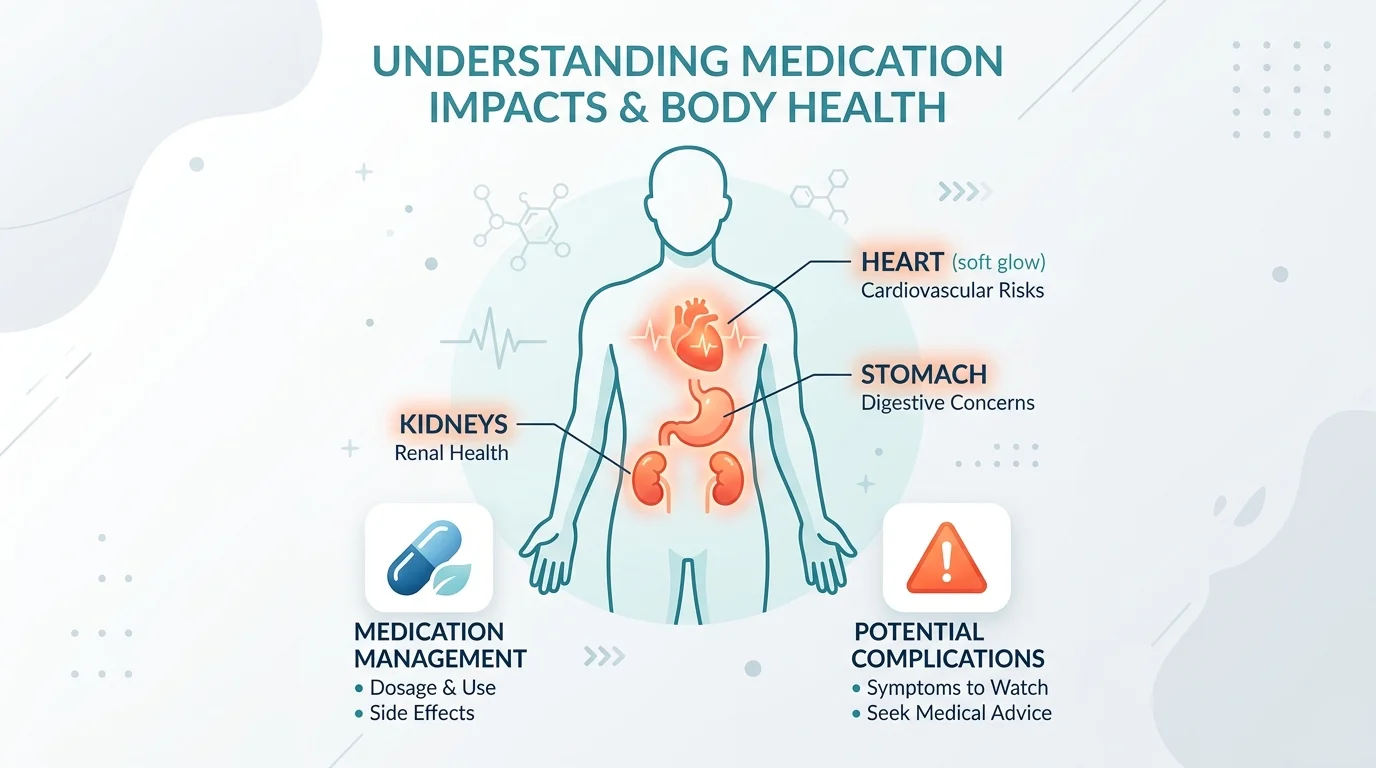
Our kidneys do not filter as well.
Our stomach lining gets thinner and more fragile.
Our heart and blood vessels become more vulnerable.
These natural changes make ibuprofen much more dangerous for people over 65.
What might be a safe dose for a 30 year old can cause real harm in a 75 year old.
Let’s look at the specific risks one by one.
🩸 Increased GI Bleed Risk in Seniors
This is the big one.
Ibuprofen can cause bleeding in the stomach and intestines.
For elderly adults, this risk is significantly higher.
The stomach lining naturally thins as you get older.
Ibuprofen irritates that lining even further.
This can lead to ulcers, internal bleeding, or even a perforated stomach.
Here are the warning signs of a GI bleed to watch for:
- Black or tarry stools
- Vomiting blood or material that looks like coffee grounds
- Severe stomach pain that does not go away
- Feeling dizzy or lightheaded without explanation
- Unusual weakness or fatigue
The risk gets even worse if the elderly person is also taking blood thinners like warfarin or aspirin.
If you notice any of these signs, stop taking ibuprofen and get medical help immediately.
🫘 Kidney Function Decline and Ibuprofen
Your kidneys are like filters for your blood.
They remove waste and extra fluid from your body.
As you age, kidney function naturally slows down.
Ibuprofen puts extra stress on already aging kidneys.
It reduces blood flow to the kidneys, which can cause damage over time.
For seniors who already have mild kidney problems, even a short course of ibuprofen can make things worse fast.
Signs of kidney trouble include:
- Swelling in the ankles, feet, or hands
- Decreased urination or very dark urine
- Nausea and loss of appetite
- Feeling unusually tired
- Confusion or difficulty concentrating
If an elderly person has been diagnosed with chronic kidney disease (CKD), ibuprofen should generally be avoided entirely.
Always ask a doctor to check kidney function before starting any NSAID.
❤️ Heart Risks for Elderly Taking Ibuprofen
This is another risk that does not get talked about enough.
NSAIDs like ibuprofen can raise the risk of heart attack and stroke.
This risk is even higher in older adults, especially those who already have heart disease or high blood pressure.
Even short term use at higher doses can increase this risk.
The U.S. FDA has issued strong warnings about this since 2015.
If your elderly loved one has any of the following, ibuprofen should be used with extreme caution or avoided altogether:
- History of heart attack or stroke
- High blood pressure
- Heart failure
- Coronary artery disease
There are safer alternatives available, and we will get to those shortly.
📋 Beers Criteria Listing: What Doctors Follow
You might not have heard of this before, but it is very important.
The Beers Criteria is a list created by the American Geriatrics Society.
It identifies medications that are potentially inappropriate for older adults.
Guess what is on that list?
Ibuprofen and other NSAIDs.
The Beers Criteria recommends avoiding ibuprofen in elderly patients, especially those with:
- GI bleeding history
- Kidney disease
- Heart failure
- People taking blood thinners or corticosteroids
This is the guideline that geriatricians (doctors who specialize in elderly care) actually follow.
So if your doctor prescribes ibuprofen to an elderly family member, it is absolutely okay to ask questions about whether it is the safest choice.
At QuickDawa, we always encourage you to have open conversations with your healthcare provider.
💊 Safer Pain Relief Alternatives for Seniors
So if ibuprofen is risky, what can elderly adults take instead?
Great question.
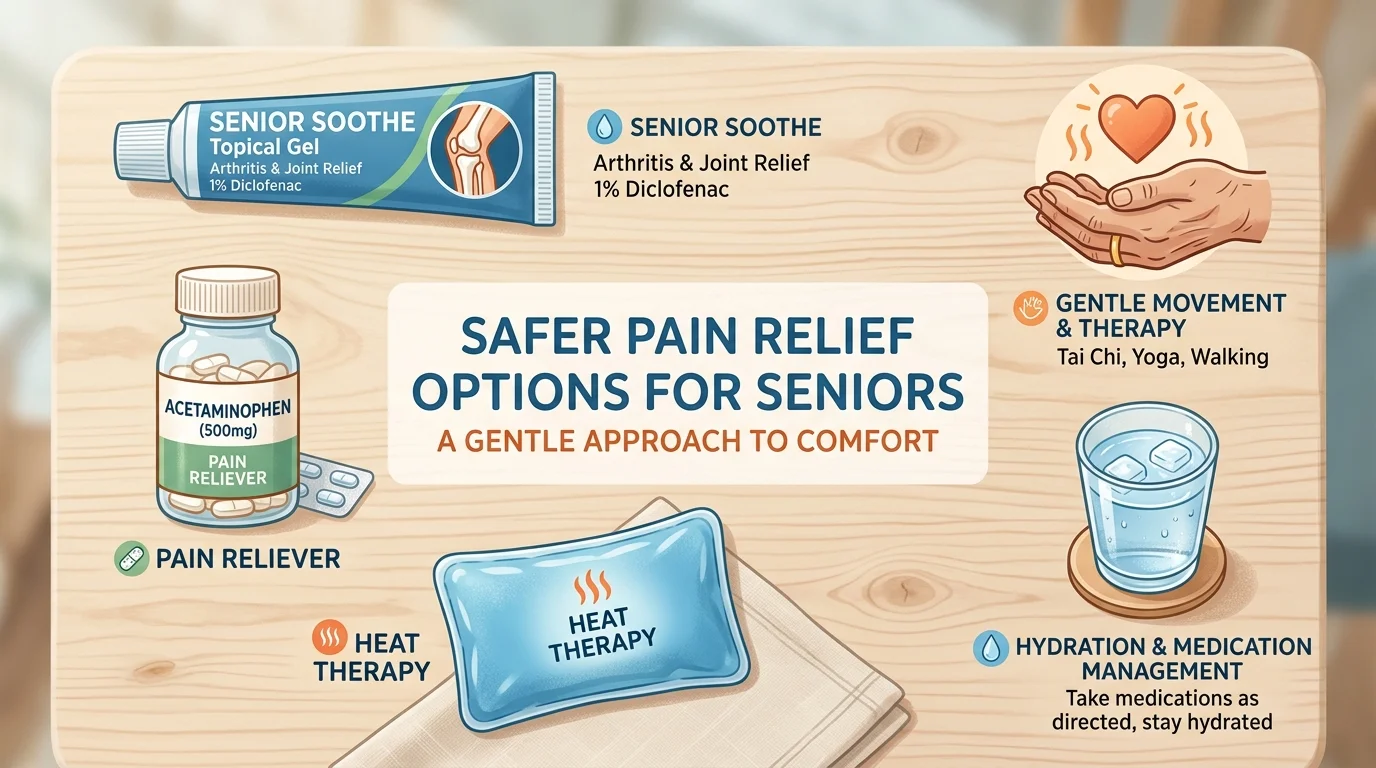
Here are some safer alternatives that doctors often recommend for older adults:
- Acetaminophen (Tylenol): This is usually the first choice for mild to moderate pain in seniors. It is gentler on the stomach and kidneys. But it must be used carefully to avoid liver damage.
- Topical NSAIDs (like Voltaren Gel): These are applied directly to the skin over the painful area. They work locally and much less of the drug enters the bloodstream, making them safer for elderly use.
- Physical therapy: For chronic pain like arthritis, physical therapy can reduce the need for painkillers altogether.
- Heat and cold therapy: Simple hot packs or ice packs can provide real relief for joint and muscle pain.
- Prescription options: In some cases, a doctor might prescribe a different medication that is safer for the individual patient.
Never start or stop any medication without talking to a doctor first.
📏 Ibuprofen Dosage Tips for Elderly (If a Doctor Approves It)
Sometimes, a doctor may still decide that ibuprofen is the best option for a specific situation.
In that case, here are the key dosage guidelines for elderly adults:
- Use the lowest effective dose. Do not take more than what relieves the pain.
- Use it for the shortest time possible. A few days is usually the maximum recommended.
- Take it with food to reduce stomach irritation.
- Avoid doses higher than 1200mg per day unless specifically directed by a doctor.
- Stay hydrated. Drink plenty of water to help protect the kidneys.
- Do not combine ibuprofen with other NSAIDs like naproxen or aspirin without medical advice.
- Monitor for side effects closely, especially during the first week.
Your doctor should regularly check blood pressure, kidney function, and overall health if ibuprofen is being used for more than a few days.
🚨 When to Call a Doctor
Call a doctor or seek emergency help immediately if an elderly person taking ibuprofen experiences any of the following:
- Black, bloody, or tarry stools
- Vomiting blood
- Severe stomach pain or cramping
- Sudden chest pain or shortness of breath
- Sudden weakness on one side of the body
- Difficulty speaking or sudden confusion
- Significant swelling in the legs, ankles, or feet
- Very little or no urination
- Unexplained weight gain
- Skin rash, hives, or signs of an allergic reaction
- Yellowing of the skin or eyes (jaundice)
Do not wait. These could be signs of serious complications like a GI bleed, heart event, kidney failure, or liver damage.
It is always better to be safe than sorry.
🙋 Frequently Asked Questions (FAQ)
Q: Is ibuprofen safe for elderly adults over 65?
A: Generally, ibuprofen is not the safest choice for adults over 65 due to increased risks of GI bleeding, kidney damage, and heart problems. The Beers Criteria lists it as potentially inappropriate for seniors. Always consult a doctor before use.
Q: Can you take ibuprofen with blood pressure medication?
A: Ibuprofen can raise blood pressure and may reduce the effectiveness of blood pressure medications. If your elderly loved one takes blood pressure drugs, talk to a doctor before combining them with ibuprofen.
Q: How long does ibuprofen take to work in older adults?
A: Ibuprofen usually starts working within 20 to 30 minutes and reaches peak effect in about 1 to 2 hours. However, elderly adults may metabolize it more slowly, so effects and side effects can last longer.
Q: Ibuprofen vs acetaminophen: which is better for elderly?
A: For most elderly patients, acetaminophen (Tylenol) is considered safer because it does not carry the same stomach, kidney, and heart risks as ibuprofen. However, acetaminophen does have liver risks at high doses. Your doctor can help you choose the best option.
Q: Can elderly take ibuprofen for arthritis pain?
A: While ibuprofen can help with arthritis inflammation, elderly patients should explore safer alternatives first, such as topical NSAIDs, acetaminophen, or physical therapy. If ibuprofen is necessary, it should be used at the lowest dose for the shortest time under medical supervision.
🏁 Conclusion
Let’s be real.
Ibuprofen is a powerful and effective painkiller.
But for elderly adults, the risks often outweigh the benefits.
From increased GI bleed risk to kidney function decline and heart complications, there is a lot to consider before reaching for that bottle.
The Beers Criteria exists for a reason.
There are safer alternatives available, and a good doctor will help find the right one.
If you are caring for a senior loved one, be their advocate.
Ask questions.
Read labels.
And never assume that “over the counter” means “risk free.”
At QuickDawa, we believe that understanding your medicine is just as important as taking it. Knowledge is the first step toward better health. If you found this guide helpful, share it with someone who needs it and explore more medicine guides on QuickDawa.com for trusted, easy to understand health information.
Got a question about ibuprofen or any other medication?
Drop it in the comments below or reach out to us through our contact page.
We love hearing from you and we are always here to help.
⚠️ Medical Disclaimer
The information provided in this article is intended for educational and informational purposes only. It is not a substitute for professional medical advice, diagnosis, or treatment. Always seek the guidance of your qualified doctor, pharmacist, or healthcare provider with any questions you may have regarding a medical condition, medication, or treatment plan.
Never disregard professional medical advice or delay seeking it because of something you read on QuickDawa.com or any other website. If you think you may have a medical emergency, call your doctor, go to the nearest emergency room, or call emergency services immediately.
Drug information, dosages, and interactions described in this post are provided for general awareness only and may not apply to your individual health situation. Medications affect people differently based on age, weight, health conditions, and other factors.
QuickDawa.com and its authors do not assume any liability for any consequences arising from the use or misuse of information presented on this website.
🌐 Sources & External References
- FDA Drug Safety Communication: NSAIDs and Heart Risk
- MedlinePlus: Ibuprofen
- Drugs.com: Ibuprofen Full Prescribing Information
- WebMD: Ibuprofen Oral Uses, Side Effects
- Mayo Clinic: Ibuprofen (Oral Route)
- American Geriatrics Society: 2023 Updated AGS Beers Criteria