Artifen Tablet Uses, Side Effects, Dosage & Warnings – Complete Guide | Quick Dawa
Just Imagine!
You wake up one morning and your back is killing you.
Maybe you slept in a weird position.
Or maybe you’ve been sitting at your desk for too many hours.
Either way, the pain is real , and it’s ruining your whole day.
You pop into the doctor’s office.
They check you out, nod, and scribble something on a prescription pad.
“Artifen Tablet.”
Now you’re staring at the medicine strip thinking , what is this?
Is it safe?
Will it actually fix my back pain?
What if there are side effects?
Totally normal questions.
And honestly, the smart thing to do is ask them.
Because here’s the truth , you should never take a medicine without understanding what it does.
That’s like eating food without checking what’s in it.
Not the best idea, right?
That’s exactly why I started QuickDawa , to help people like you understand their medicines in simple words.
No complicated doctor-speak.
No confusing terms.
Just straight, honest information.
So let’s break down everything you need to know about Artifen Tablet in simple, clear language.
💊 What Is Artifen Tablet?
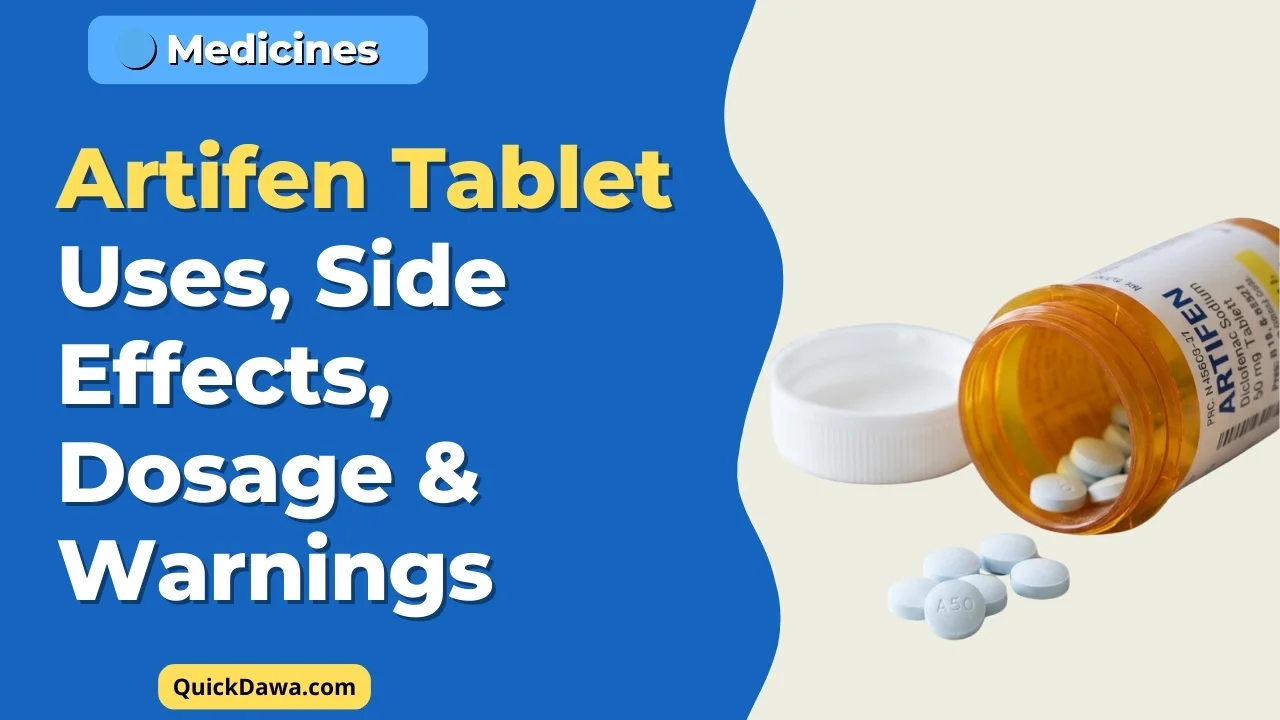
Artifen Tablet is a pain-relieving and anti-inflammatory medicine.
It contains an active ingredient called Diclofenac Sodium. This belongs to a family of drugs called NSAIDs — which stands for Non-Steroidal Anti-Inflammatory Drugs.
In simple words? It fights pain, reduces swelling, and brings down fever.
Artifen is manufactured by Sami Pharmaceuticals and is widely available in Pakistan. It comes in different strengths — most commonly 50mg and 75mg tablets. There’s also a slow-release version called Artifen Retard 100mg.
Doctors prescribe it for all kinds of pain — from backaches and toothaches to arthritis and sports injuries.
It’s a prescription medicine. That means you shouldn’t just grab it off the shelf and start popping it. A doctor needs to say it’s okay for you first.
✅ Uses of Artifen Tablet
Artifen Tablet is one of those medicines that doctors reach for a lot. And for good reason. It handles many different types of pain and inflammation.
Let’s go through each use one by one.
🦴 Arthritis Pain (Osteoarthritis & Rheumatoid Arthritis)
This is probably the number one reason doctors prescribe Artifen Tablet.
If you have arthritis, your joints are constantly inflamed. They feel stiff, swollen, and painful — especially in the morning.
Artifen works by calming down that inflammation. It doesn’t cure arthritis, but it makes living with it a whole lot easier.
Think of it like turning down the volume on a really loud alarm. The problem is still there, but the noise isn’t driving you crazy anymore.
🏋️ Muscle Pain and Sprains
Pulled a muscle while lifting something heavy? Twisted your ankle while playing cricket?
Artifen is great for soft tissue injuries. It reduces both the swelling and the pain so your body can heal faster.
🦷 Dental Pain
Toothaches are honestly some of the worst pains out there. They make it hard to eat, talk, or even think straight.
Artifen is commonly prescribed after tooth extractions, root canals, or gum surgeries to keep the pain and swelling under control.
🤕 Back Pain and Neck Pain
Whether it’s from bad posture, a slipped disc, or just sleeping funny — back and neck pain can be debilitating.
Artifen helps relieve that deep, aching pain and reduces any inflammation around the spine or muscles.
🩸 Menstrual Pain (Period Cramps)
Ladies, this one’s for you.
Painful period cramps — medically called dysmenorrhea — happen when your uterus contracts to shed its lining. Artifen blocks the chemicals that cause those painful contractions.
Many women find real relief with Diclofenac-based medicines like Artifen during their periods.
🌡️ Fever Reduction
Artifen can also bring down a fever. But it’s usually not the first choice for simple fevers. Doctors prefer paracetamol for that.
Artifen is more useful when fever comes alongside pain and inflammation — like during an infection or after surgery.
🩹 Post-Surgical Pain
After minor or moderate surgeries, there’s always some pain and swelling. Artifen is often part of the post-operative pain management plan to help you recover more comfortably.
💢 Gout Attacks
Gout is a type of arthritis caused by uric acid crystals building up in a joint — usually the big toe. It’s incredibly painful.
Artifen helps reduce the intense inflammation and pain during a gout flare-up.
🧪 Ankylosing Spondylitis
This is a condition where the spine becomes inflamed and stiff over time. Artifen helps manage the chronic pain and stiffness that comes with it.
🧠 How Does Artifen Work in Your Body?
Here’s the simple explanation.
When your body gets injured or infected, it produces chemicals called prostaglandins. These are the bad guys — they cause pain, swelling, and fever.
Artifen blocks an enzyme called COX (cyclooxygenase) that creates these prostaglandins. Block the enzyme, and you block the pain signal.
It’s like cutting the power supply to a fire alarm. The fire might still be there, but the alarm stops screaming at you.
⚠️ Side Effects of Artifen Tablet
No medicine is perfect. Every drug has potential side effects.
But here’s the reassuring part — most people take Artifen without any major problems. The side effects listed below don’t happen to everyone. They’re just possibilities you should know about.
🟡 Common Side Effects (May Happen in Some People)
These are usually mild and often go away on their own:
- Stomach pain or discomfort — This is the most common one. Diclofenac can irritate your stomach lining.
- Nausea — You might feel like throwing up, especially on an empty stomach.
- Heartburn or acid reflux — A burning feeling in your chest or throat.
- Diarrhea — Loose stools that usually settle within a day or two.
- Headache — A bit ironic for a painkiller, but it can happen.
- Dizziness — Feeling lightheaded or slightly off-balance.
- Gas or bloating — Your tummy might feel puffy.
🟠 Less Common Side Effects
These don’t happen often, but they’re worth knowing:
- Constipation — The opposite of diarrhea, but still possible.
- Skin rash or itching — Your skin might react, especially if you’re sensitive.
- Ringing in the ears (tinnitus) — A strange buzzing or ringing sound.
- Increased blood pressure — Diclofenac can slightly raise your BP.
- Drowsiness or fatigue — You might feel unusually tired.
- Swelling of hands or feet — Fluid retention is possible with NSAIDs.
🔴 Rare but Serious Side Effects (Get Help Immediately)
These are rare, but if you notice any of them, stop taking Artifen and go to a doctor right away:
- Severe stomach pain, vomiting blood, or black/tarry stools — This could mean a stomach ulcer or internal bleeding.
- Chest pain, shortness of breath, or sudden weakness on one side of the body — Could indicate a heart attack or stroke. NSAIDs carry a small cardiovascular risk.
- Yellowing of skin or eyes (jaundice) — A sign of liver problems.
- Dark urine or very little urine output — Could signal kidney damage.
- Severe allergic reaction (anaphylaxis) — Swelling of the face, lips, tongue, or throat. Difficulty breathing. Hives everywhere.
- Severe skin reactions — Blistering, peeling, or a widespread rash (Stevens-Johnson Syndrome).
💡 “Side effects don’t happen to everyone. Many people use Artifen with no issues at all. But it’s important to be aware so you can take action quickly if something doesn’t feel right.”
🚨 Warnings & Precautions
Please read this section carefully. It could literally save you from a bad experience.
❌ Who Should NOT Take Artifen?
Do not take Artifen if you:
- Are allergic to Diclofenac or any other NSAID (like ibuprofen, aspirin, or naproxen).
- Have a history of stomach ulcers or gastrointestinal bleeding.
- Have severe heart failure.
- Have severe liver or kidney disease.
- Are about to have or recently had coronary artery bypass surgery (CABG).
- Have experienced asthma attacks, hives, or allergic reactions after taking aspirin or other NSAIDs.
🤰 Pregnancy & Breastfeeding
Pregnancy: Artifen is not safe during the third trimester (last 3 months of pregnancy). It can harm the baby’s heart and affect labor. During the first and second trimesters, it should only be used if absolutely necessary — and only under a doctor’s guidance.
Breastfeeding: Diclofenac does pass into breast milk in small amounts. Most experts say it can be used cautiously and for short periods while breastfeeding, but always check with your doctor first.
🫀 Heart Health Warning
⚠️ This is a big one.
NSAIDs like Diclofenac (Artifen) can increase the risk of heart attack and stroke. This risk is higher if you:
- Use it for a long time.
- Take high doses.
- Already have heart disease or risk factors like high blood pressure, diabetes, or high cholesterol.
The FDA has a Black Box Warning on all NSAIDs about cardiovascular risk. Use Artifen at the lowest effective dose for the shortest time possible.
🫁 Liver and Kidney Concerns
Diclofenac is processed by the liver and cleared by the kidneys. If either of these organs isn’t working well, the drug can build up in your body and cause problems.
If you have liver or kidney disease, tell your doctor before taking Artifen. They may adjust your dose or choose a different medicine.
👶 Children
Artifen tablets are generally for adults and older teenagers. For younger children, doctors usually prefer other forms of Diclofenac (like drops or suppositories) in appropriate doses.
Never give Artifen to a child without a doctor’s prescription.
🧓 Elderly Patients
Older adults are at higher risk for stomach bleeding, kidney problems, and heart complications from NSAIDs. Doctors usually start with the lowest dose and keep a close eye on things.
🍺 Alcohol Warning
Avoid alcohol while taking Artifen. Both alcohol and Diclofenac can irritate the stomach. Together, they significantly increase the risk of stomach ulcers and bleeding.
Not worth the risk. Seriously.
🚗 Driving & Machinery
Artifen can cause dizziness and drowsiness in some people. If you feel any of these effects, don’t drive or use heavy machines until you feel normal again.
🔄 Drug Interactions
Medicines don’t always play nicely together. Taking Artifen with certain other drugs can cause problems — either increasing side effects or making one of the medicines less effective.
Here are the most important interactions to know about:
| Drug / Substance | Type of Interaction | What Happens |
|---|---|---|
| Warfarin / Blood thinners | Major | Increases the risk of serious bleeding. Diclofenac boosts the blood-thinning effect. |
| Other NSAIDs (Ibuprofen, Aspirin, Naproxen) | Major | Doubles the risk of stomach ulcers and bleeding. Never combine two NSAIDs. |
| Methotrexate | Major | Artifen can increase Methotrexate levels in the blood, leading to toxicity. |
| ACE Inhibitors (Enalapril, Ramipril, Lisinopril) | Moderate | Artifen may reduce the effectiveness of blood pressure medicines and can harm kidneys. |
| Diuretics (Furosemide, Hydrochlorothiazide) | Moderate | Can reduce the diuretic effect and increase kidney damage risk. |
| Lithium | Moderate | Artifen can raise lithium levels in the blood, causing lithium toxicity. |
| SSRIs (Fluoxetine, Sertraline) | Moderate | Increased risk of gastrointestinal bleeding when combined. |
| Corticosteroids (Prednisolone) | Moderate | Higher chance of stomach ulcers when taken together. |
| Alcohol | Moderate | Greater risk of stomach irritation, ulcers, and liver strain. |
| Cyclosporine | Major | Both drugs can damage the kidneys. Together, the risk multiplies. |
📋 “Always tell your doctor or pharmacist about every medicine, supplement, or herbal product you’re currently taking before starting Artifen Tablet.”
This includes vitamins, herbal teas, and anything you buy over the counter. Don’t assume something is “too small to matter.” It might matter a lot.
💉 Overdose / Missed Dose
🚑 Overdose — What If You Take Too Much?
Taking more Artifen than prescribed is dangerous and can cause serious harm.
Signs of a Diclofenac overdose include:
- Severe nausea and vomiting
- Intense stomach pain
- Vomiting blood or seeing blood in stools
- Drowsiness or confusion
- Ringing in the ears
- Seizures (in severe cases)
- Kidney failure (in extreme cases)
What to do immediately:
- Stay calm, but act fast.
- Call your doctor right away or rush to the nearest emergency room.
- In the US, contact Poison Control at 1-800-222-1222.
- In Pakistan, head straight to the ER of the nearest hospital.
- Bring the medicine box or strip with you so doctors know exactly what was taken and how much.
⚠️ Never take a double dose to “catch up.” That’s not how medicine works, and it can make things much worse.
⏰ Missed Dose — What If You Forget?
It happens. Life gets busy. Here’s what to do:
- If you remember shortly after the missed time, take it right away.
- If it’s almost time for your next scheduled dose, skip the missed one completely. Just take your next dose at the regular time.
- Do NOT take two tablets at once. That’s basically an overdose waiting to happen.
One missed dose won’t ruin everything. Just get back on your regular schedule and carry on.
📊 Dosage Guide
Here’s a general overview of how Artifen is typically prescribed. But remember — your doctor’s instructions always come first. What works for someone else might not be right for you.
👨⚕️ Adult Dosage
- The usual dose is 50mg taken 2 to 3 times daily.
- For the slow-release version (Artifen Retard), it’s typically 100mg once daily.
- Always take it with or after food to protect your stomach.
📏 Maximum Daily Dose
- 150mg per day is generally the maximum for adults.
- Your doctor may prescribe less depending on your condition and overall health.
👶 Children’s Dosage
- Diclofenac can be used in children, but the dose is calculated based on body weight.
- Typically 1–3 mg per kg of body weight per day, divided into 2–3 doses.
- Artifen tablets might not be suitable for very young children. Drops or suppositories are often preferred.
- Never give a child adult-strength tablets without a doctor’s guidance.
🧓 Elderly Dosage
- Older adults should use the lowest effective dose for the shortest time.
- Doctors monitor kidney function, liver function, and stomach health closely.
💊 Available Forms
- Tablets: 25mg, 50mg, 75mg
- Retard (Slow-Release) Tablets: 100mg
- Diclofenac is also available from other brands in gel form, injection, suppository, and eye drops.
⚠️ “This dosage information is for general awareness only. Always follow your doctor’s prescription or the instructions on your medicine packaging.”
🙋 Frequently Asked Questions (FAQ)
Q: What is Artifen tablet used for?
A: Artifen tablet is used for pain relief, reducing inflammation, and lowering fever. It’s commonly prescribed for arthritis, back pain, dental pain, muscle injuries, period cramps, gout attacks, and post-surgical pain. It contains Diclofenac Sodium, which is a well-known NSAID.
Q: Is Artifen tablet safe during pregnancy?
A: Artifen is not considered safe during the last trimester of pregnancy (months 7–9). It can affect the baby’s heart development and delay labor. During earlier months, it should only be used if your doctor specifically prescribes it. Always consult your gynecologist before taking any painkiller while pregnant.
Q: Can I take Artifen on an empty stomach?
A: It’s not a good idea. Taking Artifen Tablet on an empty stomach increases the risk of nausea, heartburn, stomach pain, and even ulcers. Always take it after a meal or at least with a snack and a full glass of water. Some doctors also prescribe a stomach-protecting medicine (like Omeprazole) alongside Artifen.
Q: How long does Artifen tablet take to work?
A: Most people start feeling pain relief within 30 minutes to 1 hour after taking Artifen. The peak effect usually kicks in around 2 hours. The slow-release version (Artifen Retard) takes a bit longer to start but provides relief over a longer period. Everybody is different though, so your experience may vary slightly.
Q: Can I take Artifen and paracetamol together?
A: Yes, in many cases, doctors do prescribe Diclofenac and Paracetamol together because they work in different ways to fight pain. Paracetamol works in the brain to block pain signals, while Artifen works at the site of inflammation. However, don’t combine them on your own — let your doctor decide if this combination is right for you. And never combine Artifen Tablet with another NSAID like ibuprofen.
🌐 Sources & External References
Here are trusted sources where you can learn more about Diclofenac Sodium, the active ingredient in Artifen Tablet:
- FDA — Diclofenac Sodium Drug Label — Official FDA prescribing information
- MedlinePlus — Diclofenac — Patient-friendly drug information
- Drugs.com — Diclofenac Full Information — Comprehensive drug profile
- WebMD — Diclofenac Sodium Oral — Uses, side effects, and interactions
- Mayo Clinic — Diclofenac (Oral Route) — Trusted medical overview
- RxList — Voltaren (Diclofenac Sodium) — Professional drug reference
🏁 Conclusion
Alright, let’s wrap this up with the key takeaways.
Artifen Tablet is a powerful pain-relieving and anti-inflammatory medicine that contains Diclofenac Sodium. It’s used for everything from arthritis and back pain to dental pain and period cramps.
When taken correctly — at the right dose, after food, and for a short period — it works really well for most people.
But it’s not without risks. Stomach problems, heart concerns, and liver or kidney issues are all things to be aware of. That’s why Artifen is a prescription medicine — your doctor decides if it’s right for you.
Here are the golden rules:
- ✅ Take it after food. Always.
- ✅ Stick to the prescribed dose. Don’t go rogue.
- ✅ Use it for the shortest time needed.
- ❌ Don’t mix it with alcohol or other NSAIDs.
- ❌ Avoid it if you have heart, liver, or kidney problems (unless your doctor says otherwise).
At QuickDawa, we believe that understanding your medicine is just as important as taking it. Knowledge is the first step toward better health. If you found this guide helpful, share it with someone who needs it — and explore more medicine guides on QuickDawa.com for trusted, easy-to-understand health information.
Got a question about Artifen or any other medicine? Drop it in the comments below or reach out through our contact page. We love hearing from you and we’re always happy to help!
⚠️ Medical Disclaimer
The information provided in this article is intended for educational and informational purposes only. It is not a substitute for professional medical advice, diagnosis, or treatment. Always seek the guidance of your qualified doctor, pharmacist, or healthcare provider with any questions you may have regarding a medical condition, medication, or treatment plan.
Never disregard professional medical advice or delay seeking it because of something you read on QuickDawa.com or any other website. If you think you may have a medical emergency, call your doctor, go to the nearest emergency room, or call emergency services immediately.
Drug information, dosages, and interactions described in this post are provided for general awareness only and may not apply to your individual health situation. Medications affect people differently based on age, weight, health conditions, and other factors.
QuickDawa.com and its authors do not assume any liability for any consequences arising from the use or misuse of information presented on this website.