

Chronic Back Pain? 7 Proven Exercises for Chronic Back Pain That Work Better Than Painkillers
Are you tired of popping painkillers every single day just to survive your back pain?
The best exercises for chronic back pain might be exactly what your body is begging for.
Millions of people rely on medications that only mask the pain temporarily.
But here’s the truth , pills don’t fix the root cause.
They just silence the alarm while the fire keeps burning.
Exercise, on the other hand, actually heals your body from the inside out.
Research proves that specific movements reduce back pain better than most medications.
So let’s explore seven powerful exercises that could finally set you free from chronic back pain for good.
🔹 What Is Chronic Back Pain? 🤔
Let’s keep this super simple. Back pain is “chronic” when it lasts longer than 12 weeks. That’s about three months of constant discomfort.
Your spine is like a tall stack of building blocks. Muscles, ligaments, and discs hold those blocks together. When any of these parts get weak or damaged, pain shows up.
Think of it like a rubber band. A healthy rubber band stretches easily and snaps back. But an old, stiff rubber band cracks when you pull it.
That’s what happens to your back muscles. They get stiff, weak, and tight over time. Without proper movement, they only get worse.
Chronic back pain isn’t just soreness after a long day. It’s persistent pain that affects your daily life. It makes sitting, standing, and even sleeping difficult.
🔹 How Common Is Chronic Back Pain? 📊
Chronic back pain is one of the most widespread health problems on the planet. The numbers are truly eye-opening.
- Low back pain is the single leading cause of disability worldwide. It affects roughly 619 million people globally. (Source: WHO, 2023)
- About 80% of adults will experience significant back pain at some point in their lifetime. (Source: National Institute of Neurological Disorders and Stroke)
- Back pain costs the United States alone over $100 billion annually in medical bills and lost productivity.
- Only 25–30% of people with chronic back pain seek treatment through exercise or physical therapy. The rest rely mostly on medication.
- Studies show that targeted exercises for chronic back pain reduce pain intensity by 10–50% compared to no treatment. (Source: The Lancet, 2018)
These facts send a clear message. Back pain is everywhere. And most people are treating it the wrong way.
🔹 Top Causes of Chronic Back Pain 🔍
Understanding why your back hurts is the first step to fixing it. Here are the most common causes.
1. Poor Posture 🪑
Slouching puts enormous pressure on your spine. Sitting hunched over a desk for hours strains your back muscles. Over time, poor posture reshapes your spine’s natural curve.
Example: A student who leans forward over their laptop for 8 hours daily often develops chronic upper and lower back pain by their mid-20s.
2. Weak Core Muscles 💪
Your core muscles wrap around your midsection like a natural belt. When they’re weak, your spine loses its main support system. This forces your back muscles to overwork and strain.
3. Sedentary Lifestyle 🛋️
Sitting too long is terrible for your back. Your muscles shorten and stiffen when you don’t move enough. Lack of movement is one of the biggest causes of chronic back pain.
Example: An office worker who drives to work, sits all day, and watches TV all evening is a prime candidate for chronic back pain.
4. Muscle Strains and Sprains 🏋️
Lifting heavy objects incorrectly can tear or strain back muscles. Sudden awkward movements also cause sprains. These injuries can become chronic if not properly treated.
5. Herniated or Bulging Discs 🫧
Spinal discs sit between your vertebrae like soft cushions. Sometimes these cushions slip out of place or bulge. This presses on nearby nerves and causes sharp, lasting pain.
6. Aging and Wear 🎂
As you get older, your spinal discs lose moisture and flexibility. Bones can develop small fractures or arthritis. Degenerative changes are a natural but manageable part of aging.
7. Excess Body Weight ⚖️
Extra weight puts additional stress on your lower back. Your spine has to support more load than it was designed for. Even losing 10 pounds can significantly reduce back pain.
8. Stress and Mental Health 😰
Stress causes your muscles to tighten unconsciously. Chronic stress keeps your back muscles in constant tension. Anxiety and depression also amplify how intensely you feel pain.
Example: A person going through a difficult divorce may notice their back pain getting significantly worse — even without any new physical injury.
9. Smoking 🚬
Smoking reduces blood flow to your spinal tissues. Less blood means less nutrition reaching your discs and muscles. Smokers are significantly more likely to develop chronic back pain.
10. Sleeping on a Bad Mattress 🛏️
An old or unsupportive mattress misaligns your spine all night. Eight hours in the wrong position causes real damage. Your mattress should support your spine’s natural curve.
🔹 The 7 Best Exercises for Chronic Back Pain 🏆
Now let’s get to the good stuff. These seven exercises for chronic back pain are backed by research. They strengthen, stretch, and heal your back naturally.
Always warm up for 2–3 minutes before starting. Listen to your body. Stop immediately if any exercise causes sharp pain.
Exercise 1: Cat-Cow Stretch 🐱🐄 (Exercises for Chronic Back Pain — Starter Move)
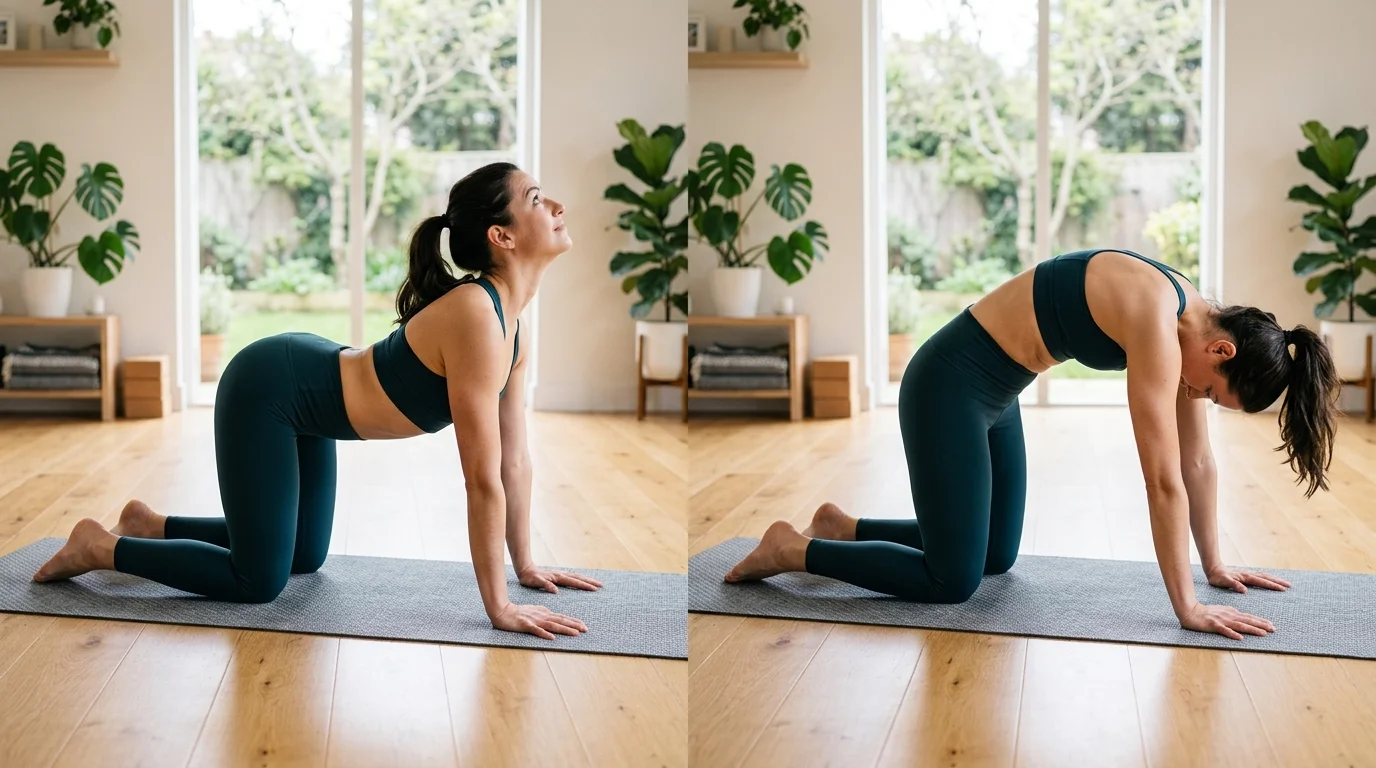
This is the perfect warm-up for your spine. It gently mobilizes every segment of your back.
How to do it:
- Get on your hands and knees. Keep your back flat like a table.
- Cow: Slowly drop your belly toward the floor. Lift your head and tailbone up. Arch your back gently.
- Cat: Round your back up toward the ceiling. Tuck your chin to your chest. Pull your belly button in.
- Move between these two positions slowly and smoothly.
- Repeat 10–15 times. Breathe deeply with each movement.
Why it works: This exercise improves spinal flexibility and relieves stiffness. It warms up the muscles surrounding your spine. It’s gentle enough for beginners and highly effective.
Exercise 2: Bird-Dog 🐦🐕 (Core Stability Builder)

The bird-dog is one of the most recommended exercises for chronic back pain by physical therapists worldwide.
How to do it:
- Start on your hands and knees. Keep your back flat and core tight.
- Extend your right arm straight forward. At the same time, extend your left leg straight back.
- Hold for 5 seconds. Keep your body steady — no wobbling.
- Return to the starting position slowly.
- Switch sides. Left arm forward, right leg back.
- Repeat 8–10 times on each side.
Why it works: This exercise strengthens your core, lower back, and glutes simultaneously. It teaches your body to stabilize your spine during movement. Research shows it significantly reduces chronic low back pain.
Exercise 3: Partial Crunches (Safe Ab Strengthener) 💪

Regular crunches can hurt your back. Partial crunches are a safer alternative for back pain sufferers.
How to do it:
- Lie on your back with knees bent. Feet flat on the floor.
- Cross your arms over your chest. Or place hands behind your neck lightly.
- Tighten your stomach muscles. Raise your shoulders off the floor slightly.
- Hold for 1–2 seconds at the top.
- Lower back down slowly with control.
- Repeat 12–15 times. Don’t pull your neck.
Why it works: Partial crunches build core strength without stressing your spine. A strong core takes pressure off your lower back. This is a foundational exercise for back pain prevention.
Exercise 4: Knee-to-Chest Stretch 🦵 (Lower Back Tension Release)
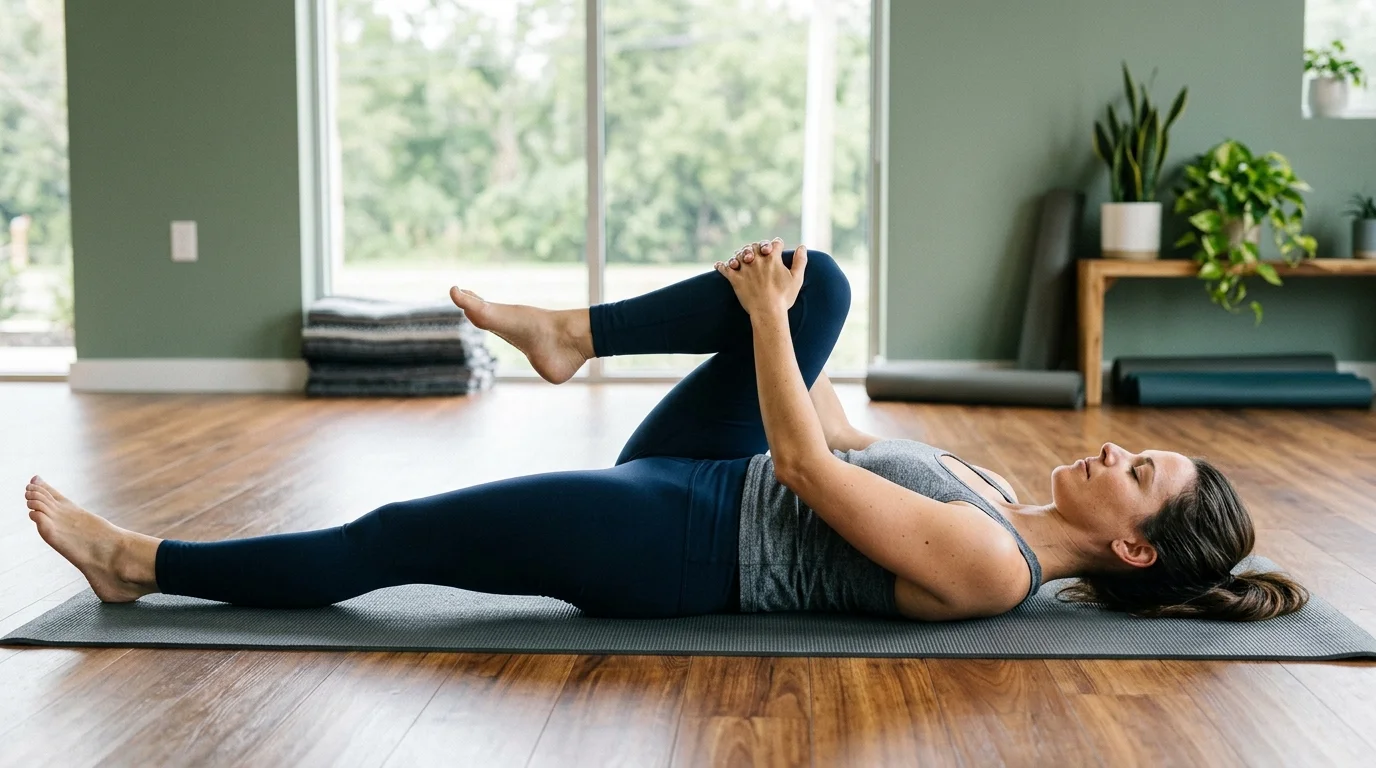
This stretch is incredibly soothing for tight, achy lower backs. You’ll feel relief almost immediately.
How to do it:
- Lie on your back with both knees bent. Feet on the floor.
- Bring one knee up toward your chest slowly.
- Hold it with both hands behind your thigh.
- Hold the stretch for 20–30 seconds. Breathe deeply.
- Lower your leg slowly. Switch to the other side.
- Then pull both knees to your chest together. Hold for 20–30 seconds.
- Repeat 3 times on each side.
Why it works: This exercise stretches the lower back and hip muscles gently. It reduces tension and increases flexibility. It’s especially helpful after long periods of sitting.
Exercise 5: Glute Bridge 🍑 (Powerhouse Strengthener)

Weak glutes are a hidden cause of back pain. The glute bridge fixes this problem directly.
How to do it:
- Lie on your back with knees bent. Feet flat, hip-width apart.
- Squeeze your glutes and lift your hips toward the ceiling.
- Your body should form a straight line from shoulders to knees.
- Hold at the top for 5 seconds. Squeeze your glutes hard.
- Lower your hips back down slowly.
- Repeat 12–15 times for 2–3 sets.
Why it works: Strong glutes support your lower back and pelvis. When your glutes are weak, your back compensates and overworks. This exercise is one of the most effective exercises for chronic back pain relief.
Exercise 6: Child’s Pose 🧒 (Relaxation Stretch)

This gentle yoga pose stretches your entire back beautifully. It’s perfect for rest days or before bed.
How to do it:
- Kneel on the floor with your toes together. Knees apart slightly.
- Sit back on your heels.
- Fold forward and reach your arms out in front of you.
- Rest your forehead on the floor gently.
- Breathe deeply and relax completely.
- Hold for 30–60 seconds. Repeat 3 times.
Why it works: Child’s pose decompresses your spine and relaxes tight muscles. It calms your nervous system and reduces stress. It’s a therapeutic exercise that combines physical and mental relief.
Exercise 7: Wall Sits 🧱 (Endurance Builder for Exercises for Chronic Back Pain)

Wall sits build the endurance your back muscles desperately need. They’re simple but incredibly effective.
How to do it:
- Stand with your back flat against a wall.
- Slide down slowly until your knees are bent at 90 degrees.
- Your thighs should be parallel to the floor.
- Press your lower back firmly into the wall.
- Hold for 10–30 seconds. Build up gradually over time.
- Slide back up slowly. Rest for 30 seconds. Repeat 5 times.
Why it works: Wall sits strengthen your legs, core, and back together. They teach proper spinal alignment under load. Building endurance in these muscles protects your back throughout the day.
🔹 Sample Weekly Routine 📅
Here’s a simple schedule to follow:
| Day | Exercises | Duration |
|---|---|---|
| Monday | Cat-Cow, Bird-Dog, Partial Crunches | 15 minutes |
| Tuesday | Knee-to-Chest, Child’s Pose (Rest Day Stretches) | 10 minutes |
| Wednesday | Glute Bridge, Wall Sits, Bird-Dog | 15 minutes |
| Thursday | Cat-Cow, Knee-to-Chest, Child’s Pose | 10 minutes |
| Friday | All 7 exercises combined | 20 minutes |
| Saturday | Light walking + Child’s Pose | 15 minutes |
| Sunday | Complete rest | — |
Start slow. Increase intensity gradually. Consistency matters far more than intensity.
🔹 Warning Signs & Symptoms You Shouldn’t Ignore ⚠️
Most chronic back pain is manageable with exercise. But some symptoms signal something more serious.
⚡ Pain that radiates down one or both legs past the knee.
⚡ Numbness or tingling in your legs, feet, or groin area.
⚡ Sudden weakness in your legs making walking difficult.
⚡ Loss of bladder or bowel control alongside back pain.
⚡ Back pain after a fall, accident, or significant injury.
⚡ Unexplained weight loss combined with persistent back pain.
⚡ Pain that wakes you up from sleep consistently.
⚡ Fever accompanying your back pain.
🩺 See a doctor immediately if you notice any of these signs. These could indicate nerve damage, infection, or other serious conditions requiring urgent care.
🔹 How to Prevent Chronic Back Pain 🛡️
Prevention is always smarter than treatment. These habits protect your back for life.
1. Move Every 30 Minutes ⏰
Set a timer if you sit at a desk. Stand up, stretch, or walk for 2 minutes every half hour. This prevents your muscles from stiffening and weakening.
2. Strengthen Your Core Regularly 💪
A strong core protects your spine like armor. Do core exercises 3–4 times per week. Even 10 minutes makes a huge difference.
3. Eat Anti-Inflammatory Foods 🥗
Chronic inflammation worsens back pain significantly. Eat more fatty fish, berries, leafy greens, and turmeric. Reduce processed foods, sugar, and refined carbs.
4. Maintain a Healthy Weight ⚖️
Extra pounds strain your lower back constantly. Losing even a small amount reduces spinal pressure. Combine healthy eating with regular movement for best results.
5. Practice Stress Management 🧘
Stress directly increases muscle tension in your back. Practice daily meditation, deep breathing, or journaling. Even 5 minutes of mindfulness relaxes tight back muscles noticeably.
6. Sleep on a Supportive Mattress 🛏️
Replace your mattress every 7–10 years. Choose medium-firm support for optimal spinal alignment. Sleep on your side with a pillow between your knees.
7. Lift Objects Correctly 📦
Always bend your knees — never your back. Hold objects close to your body while lifting. Ask for help with heavy items instead of risking injury.
8. Stay Hydrated 💧
Your spinal discs need water to maintain cushioning. Dehydration makes discs shrink and stiffen. Drink at least 8 glasses of water daily for a healthier spine.
🔹 When to See a Doctor 🩺
Exercise helps most chronic back pain. But sometimes you need professional guidance. See a doctor if:
- ☑️ Your pain hasn’t improved after 4–6 weeks of regular exercise.
- ☑️ Pain is getting worse instead of better over time.
- ☑️ You experience numbness, tingling, or weakness in your legs.
- ☑️ Back pain disrupts your sleep most nights.
- ☑️ You have a history of cancer, osteoporosis, or spinal injury.
- ☑️ Over-the-counter medications no longer provide any relief.
Don’t panic if you need medical help. Seeing a doctor early leads to better outcomes. Most back problems are completely treatable with the right approach. You’re not alone in this journey.
🔹 Frequently Asked Questions (FAQ) ❓
Q1: Can exercise really replace painkillers for back pain?
For many people, yes. Research published in The Lancet shows that targeted exercises for chronic back pain are more effective than medication for long-term relief. Painkillers mask symptoms temporarily. Exercise addresses the actual root cause — muscle weakness and stiffness.
Q2: How long before exercises for chronic back pain show results?
Most people notice improvement within 2–4 weeks of consistent practice. Significant relief typically comes after 6–8 weeks. The key is consistency — doing your exercises regularly, not just when pain flares up.
Q3: What is the single best exercise for lower back pain?
The bird-dog exercise is widely considered one of the most effective single moves. It strengthens your core, glutes, and back simultaneously. However, combining multiple exercises for chronic back pain gives far better results than relying on just one.
Q4: Should I exercise when my back is hurting?
Gentle movement is usually better than complete rest. Light stretches like cat-cow and child’s pose can actually reduce pain. But avoid heavy exercises during acute flare-ups. If movement causes sharp pain, stop immediately and consult your doctor.
Q5: Can walking help chronic back pain?
Absolutely. Walking is one of the simplest and most effective ways to manage back pain. It improves blood flow to spinal tissues and keeps muscles active. Aim for 20–30 minutes of walking daily alongside your targeted exercises for chronic back pain.
🔹 Conclusion 🌟
Chronic back pain doesn’t have to control your life. Painkillers offer temporary relief — but exercise offers lasting healing. The seven exercises above target the real causes of your pain: weak muscles, stiff joints, and poor posture.
Start with just one or two exercises today. Build up gradually over the coming weeks. Be patient with your body — real healing takes time but it absolutely happens.
You have the power to heal your back naturally. Your body is stronger than you think. Trust the process and stay consistent.
Share this post with someone who struggles with back pain — these exercises could change their life! 💛
Remember, the best exercises for chronic back pain are the ones you actually do — starting today.
⚕️ MEDICAL DISCLAIMER
Disclaimer: This blog post is for informational and educational purposes only. It is not a substitute for professional medical advice, diagnosis, or treatment. Always consult your physician, physical therapist, or qualified healthcare provider before beginning any new exercise program — especially if you have chronic back pain, spinal injuries, or any underlying medical conditions. Stop any exercise immediately if you experience sharp pain, numbness, or tingling. Never discontinue prescribed medications without consulting your doctor first. The author and publisher of this content assume no responsibility for any injury, loss, or consequence arising from the use of the information provided. Individual results may vary.