Perfect Honey Glazed Salmon – The Anti-Grey Fish Method
There’s something absolutely magical about the moment honey hits a hot pan and starts to sizzle around perfectly cooked salmon.
That sweet, savory aroma that drifts through your kitchen and makes your mouth water before you even take a bite.
But let me tell you, I spent years making honey glazed salmon that looked more like cafeteria food than anything Instagram-worthy.
Pale. Watery. Disappointing.
The glaze would slide right off, pooling around the fish like a sad little puddle.
Or worse, it would burn to a crisp while the salmon stayed raw in the middle.
I was convinced honey glazed salmon was one of those dishes that only worked in restaurant kitchens with fancy equipment.
Turns out, I was just making one critical mistake: I was drowning my fish in glaze before understanding how heat and sugar actually work together.
Once I figured out the timing and the technique, everything clicked.
Now my honey glazed salmon comes out with a gorgeous mahogany crust, sticky enough to cling to every bite, and fish that’s so tender it practically melts on your fork.
This isn’t just another salmon recipe.
It’s a complete reset on how you think about glazing fish.
Why Most Honey Glazed Salmon Fails
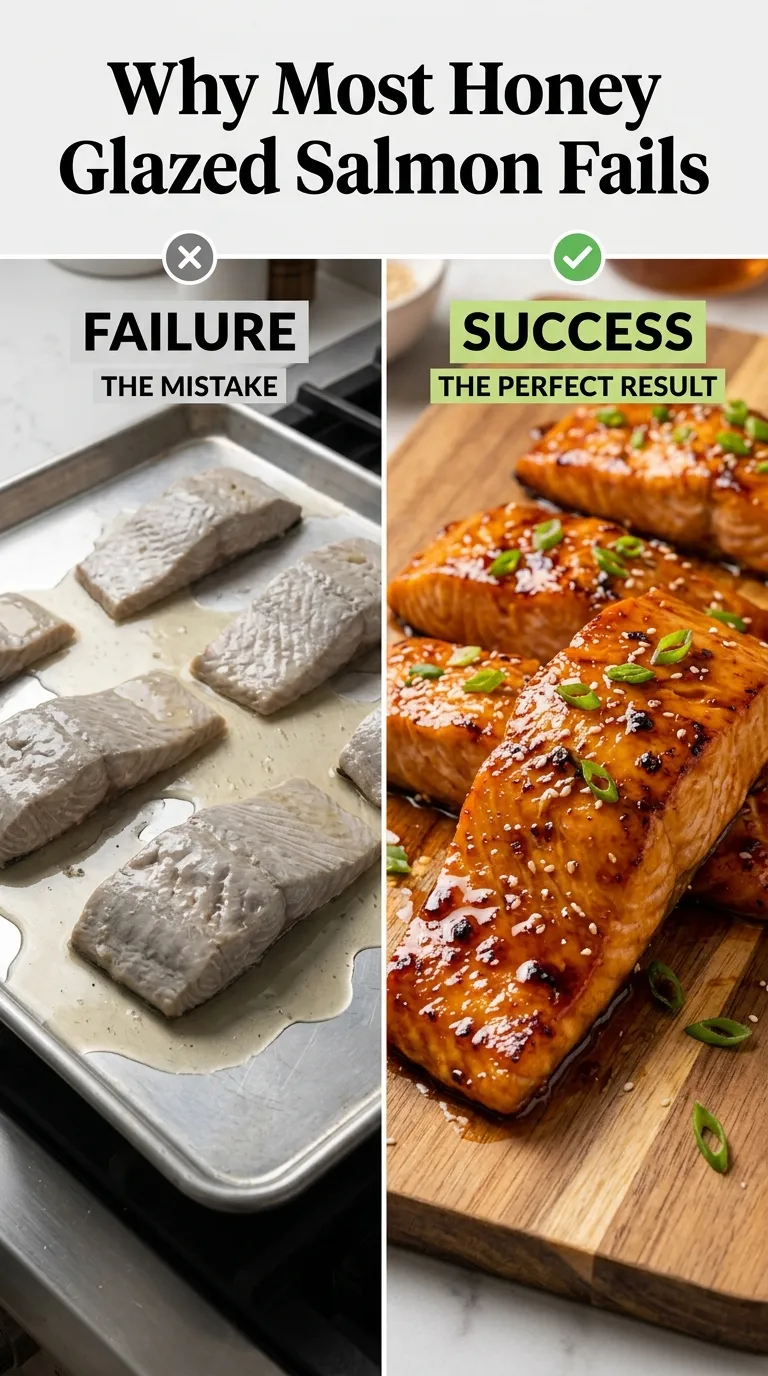
The biggest issue with honey glazed salmon isn’t the ingredients, it’s understanding what happens when sugar meets high heat and protein. Most recipes tell you to slather on the glaze and bake, but they skip the science that makes it actually work.
Moisture Management: Wet fish creates steam, and steam prevents caramelization. That’s why restaurant kitchens obsess over dry surfaces before anything hits the heat.
Sugar Timing: Honey burns faster than you think. If you apply it too early, you’ll get char instead of caramelization. Too late, and it never develops that sticky texture.
Fat Distribution: Salmon is already fatty, but without a proper oil base in your glaze, the honey won’t emulsify and coat evenly.
Temperature Control: The difference between perfectly cooked salmon and dry, flaky sadness is about 10°F. There’s almost no margin for error.
The bake-and-broil combo is honestly the sweet spot for home cooks. You get controlled, even cooking plus that restaurant-quality crust.
Now, before we dive into technique, let’s talk about what actually goes into this glaze.
Breaking Down the Glaze Formula
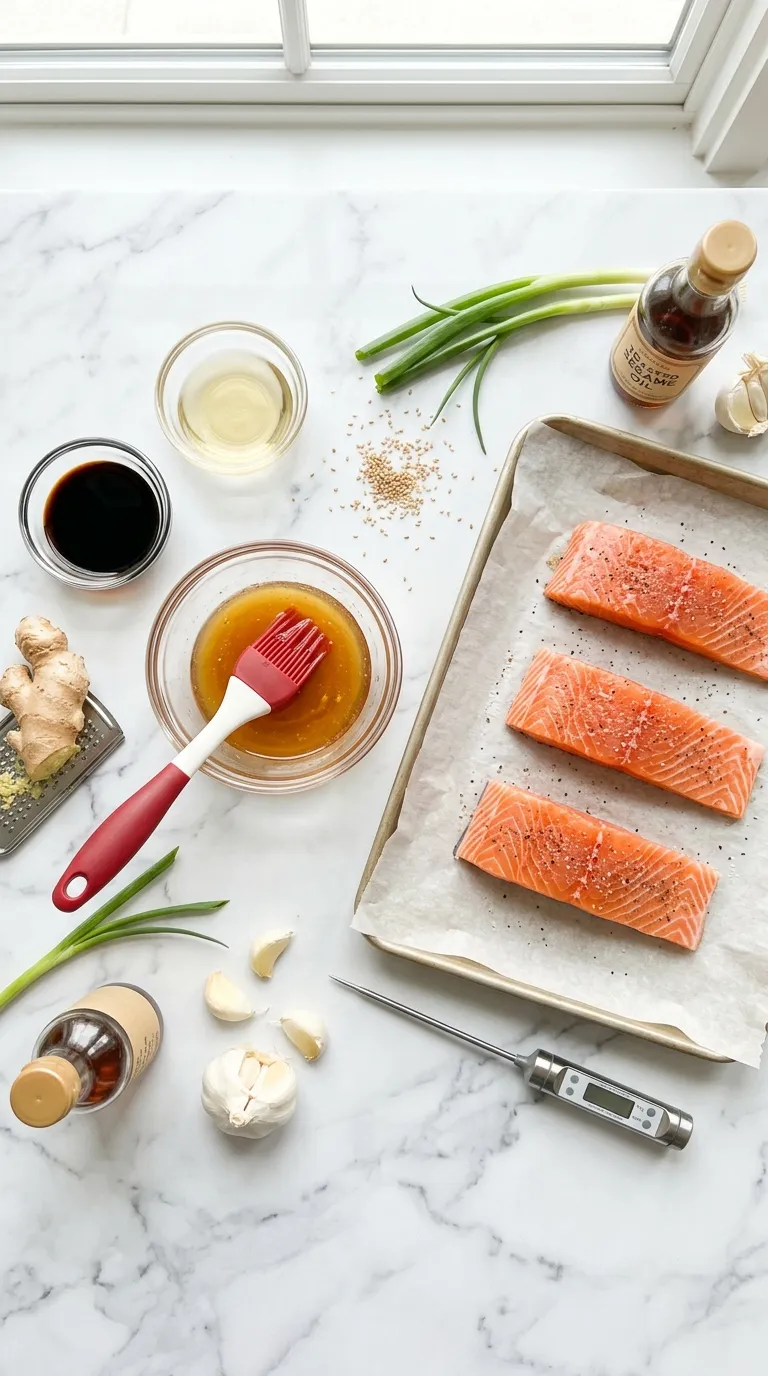
Every ingredient in honey glazed salmon serves a specific purpose. This isn’t just a list of things to dump in a bowl, it’s a carefully balanced formula that creates layers of flavor.
- Honey
- Functional Role: Primary sweetener & glazing agent
- Insider Tip: Use liquid honey, not crystallized
- Soy Sauce
- Functional Role: Umami depth & salt
- Insider Tip: Always use low-sodium to control saltiness
- Rice Vinegar
- Functional Role: Acidity to cut sweetness
- Insider Tip: Apple cider vinegar works in a pinch
- Ginger
- Functional Role: Aromatic warmth
- Insider Tip: Fresh grated is 10x better than powder
- Sesame Oil
- Functional Role: Nutty richness
- Insider Tip: A little goes a long way, don’t overdo it
The ratio matters more than you’d think. Too much honey and it burns. Too much soy and it’s overwhelmingly salty. Too much acid and the glaze won’t thicken properly.
Tools That Make or Break This Dish
You absolutely don’t need a gourmet kitchen, but a few specific tools will save you from frustration and ruined dinners.
First up: a rimmed baking sheet. The glaze will bubble and drip, so you need those raised edges to catch everything. Line it with aluminum foil first, then parchment paper on top. The foil catches drips, the parchment prevents sticking.
A silicone basting brush is non-negotiable. Those old-school bristle brushes fall apart and leave little hairs in your glaze. Silicone is heat-proof and clean.
Finally, get yourself an instant-read thermometer. Seriously. Guessing when salmon is done is how you end up with either sushi or shoe leather. Pull it at exactly 125°F if you like it medium-rare, 135°F for medium.
If you’re working with a charcoal grill instead, you’ll need a different approach entirely, like in my grilled salmon with herb butter guide.
Step-by-Step: How to Make Honey Glazed Salmon
Golden-brown salmon fillet glistening with caramelized honey glaze, garnished with sesame seeds and fresh scallions on a white plate.
Alright, let’s get into it. Make sure your salmon has been out of the fridge for about 15 minutes before you start, so it cooks evenly from edge to center.
Step 1.Combine honey, low-sodium soy sauce, rice vinegar, minced ginger, minced garlic, and sesame oil in a small bowl. Note: Whisk until completely smooth with no streaks of honey.
Step 2. Preheat your oven to 375°F (190°C). Line your baking sheet with foil, then parchment paper on top.
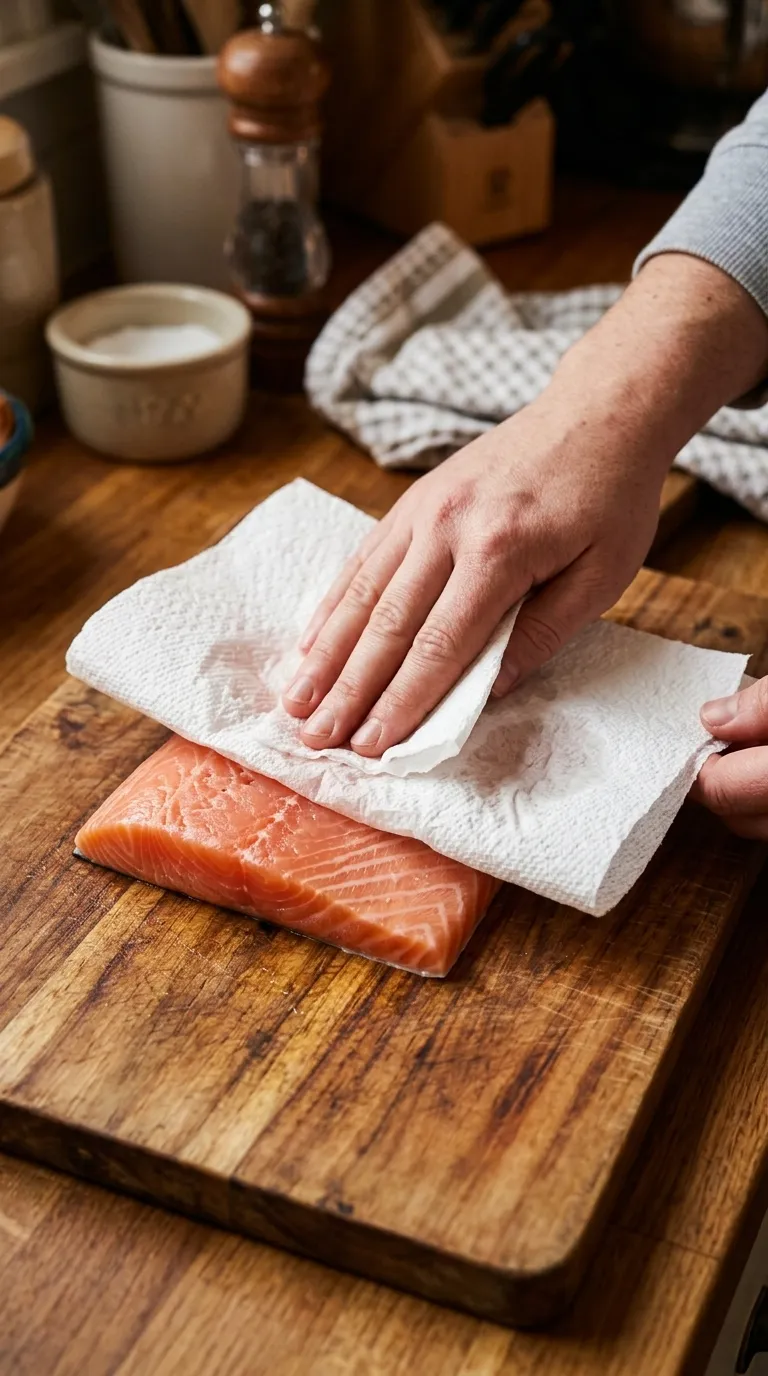
Step 3. Pat your salmon fillets bone-dry with paper towels. Note: This is the single most important step for achieving a proper caramelized crust.
Step 4. Brush a thin layer of glaze on each fillet. Don’t use all of it yet, just enough to create a base coat.
Step 5. Bake for 10 minutes until the fish is just starting to turn opaque around the edges.
Step 6. Remove from oven and brush on a second, generous coat of glaze. This is when the magic happens.
Step 7. Switch your oven to broil and return the salmon to the top rack. Broil for 2-3 minutes, watching carefully, until the glaze bubbles and turns a deep amber color.
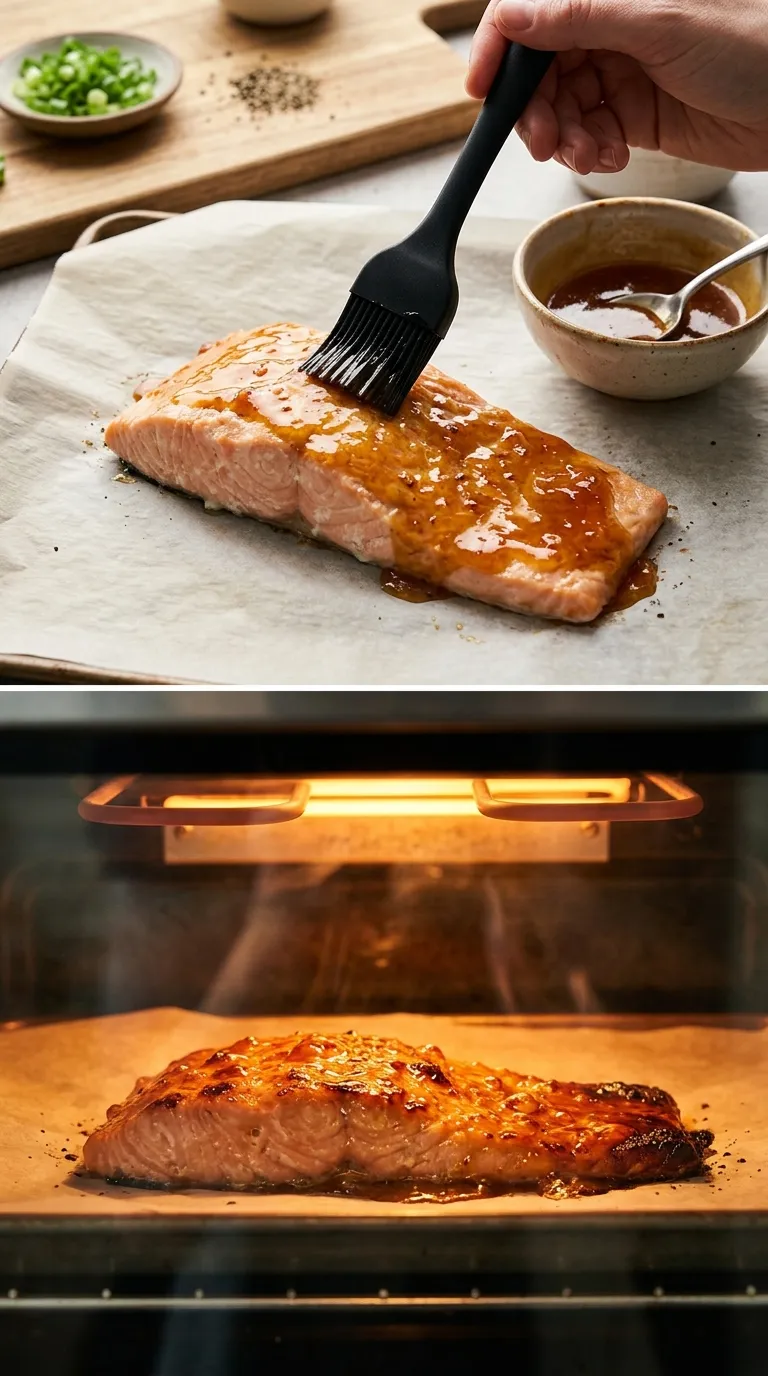
Step 8. Check internal temperature. Pull when it hits 125-135°F depending on your preference.
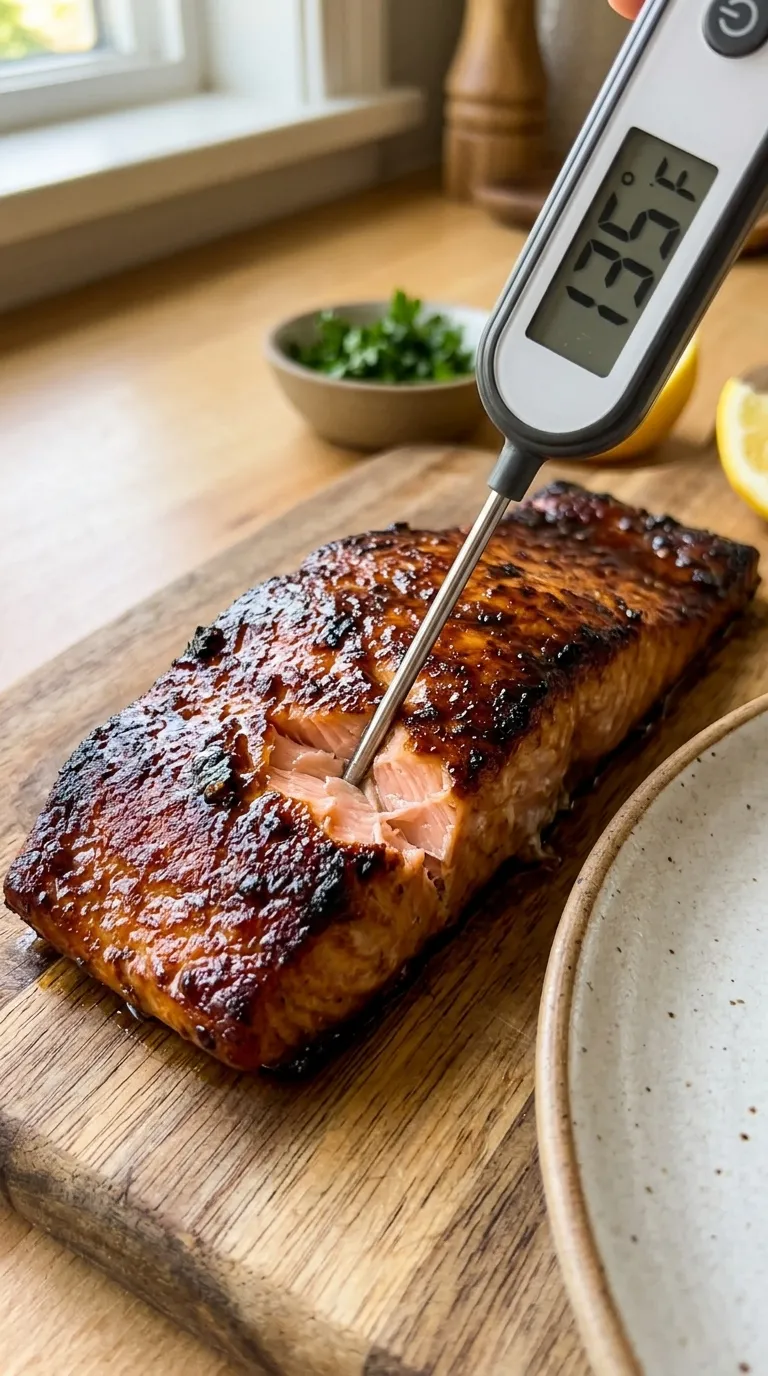
Step 9. Let rest for 3 minutes before serving. The carryover heat will finish the cooking perfectly.
Chef’s Note: Reserve about 2 tablespoons of glaze before brushing any on the raw fish. Use this reserved portion to drizzle over the finished salmon for food-safe presentation.
Troubleshooting Your Honey Glazed Salmon
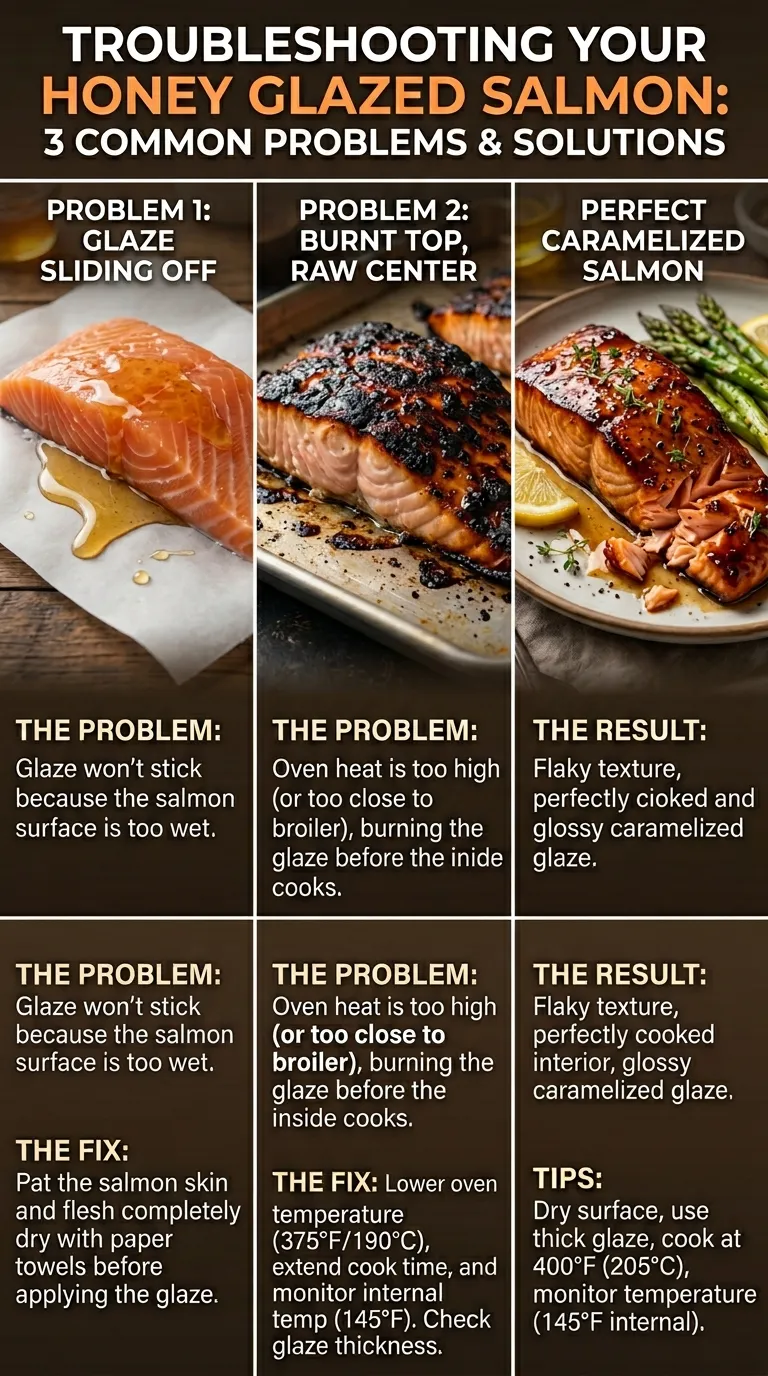
Even with a solid recipe, things can go sideways. I’ve fielded hundreds of questions about why glazed salmon doesn’t turn out, and most issues fall into a few predictable categories.
Glaze Won’t Stick
If your glaze is sliding off the fish, you’ve got too much moisture. Either the fish wasn’t dried properly, or you added too much vinegar to the glaze.
Fix: Pat the fish dry again, and add another teaspoon of honey to thicken the glaze before reapplying.
Burnt Top, Raw Center
This happens when your oven rack is too close to the broiler element. The surface burns before the heat penetrates the thick part of the fillet.
Fix: Move your rack to the middle position during baking, and only use the top rack for the final broil.
Glaze is Too Thin
Thin glaze usually means too much liquid (soy sauce or vinegar) or not enough emulsification.
Fix: Simmer the glaze in a small saucepan for 2-3 minutes before brushing it on. The heat will evaporate excess water and concentrate the flavors.
- Glaze slides off
- Why It Happens: Fish too wet
- Quick Fix: Double-dry with paper towels
- Tastes too salty
- Why It Happens: Regular soy sauce
- Quick Fix: Switch to low-sodium next time
- Fish is rubbery
- Why It Happens: Overcooked past 145°F
- Quick Fix: Use a thermometer, pull at 135°F
- No caramelization
- Why It Happens: Broiler not used
- Quick Fix: Always finish with 2–3 min broil
For a completely different texture approach, check out my baked salmon in foil packets method, which steams instead of caramelizes.
Common Mistakes Checklist:
✗ Using frozen fillets without fully thawing (causes uneven cooking)
✗ Applying all the glaze at once (leads to burning)
✗ Skipping the broil step (no caramelization)
✗ Using thick-cut fillets without adjusting time (raw centers)
✗ Overcrowding the pan (steams instead of roasts)
Recipe Variations for Different Needs
The base honey glazed salmon formula is incredibly flexible. Depending on dietary needs or what’s in your pantry, you can swap and adjust without losing the core appeal.
Paleo-Friendly Version
Replace soy sauce with coconut aminos for a soy-free, gluten-free alternative. The flavor is slightly sweeter and less salty, so reduce honey by 1 teaspoon.
Spicy Honey Glazed Salmon
Add 1-2 teaspoons of Sriracha or gochujang to the glaze for a sweet-heat combo. This works especially well if you’re serving it over rice that can absorb the spicy drippings.
Maple Glazed Salmon (No Honey)
Substitute honey with pure maple syrup for a different flavor profile. It’s less floral, more earthy, and pairs beautifully with Dijon mustard stirred into the glaze.
Air Fryer Honey Glazed Salmon
Preheat air fryer to 380°F. Cook salmon for 8-10 minutes, brushing glaze on halfway through. The circulating heat works brilliantly for caramelization, just watch it closely in the final minutes.
For a completely different glaze strategy, try my Asian-inspired sticky salmon with a mirin-based sauce.
Storing and Reheating Like a Pro
Honey glazed salmon is one of those dishes that can actually hold up well as leftovers if you store and reheat it correctly. Most people nuke it in the microwave and wonder why it turns to rubber.
Storage: Let the salmon cool completely, then transfer to an airtight container lined with paper towel. The paper towel absorbs excess moisture and prevents sogginess. Keeps for 3 days in the fridge.
Freezing: You can freeze cooked honey glazed salmon for up to 2 months, but the texture will soften. I recommend flaking the thawed salmon and using it in salmon fried rice or grain bowls rather than eating it as a whole fillet.
Reheating: The oven is your best friend. Reheat at 275°F for 8-10 minutes until just warmed through. The microwave will make it rubbery and dry.
Zero-Waste Hack: If there’s extra glaze in the pan, scrape it up and toss it with roasted Brussels sprouts or drizzle over sautéed green beans. It’s basically liquid gold.
What to Serve with Honey Glazed Salmon
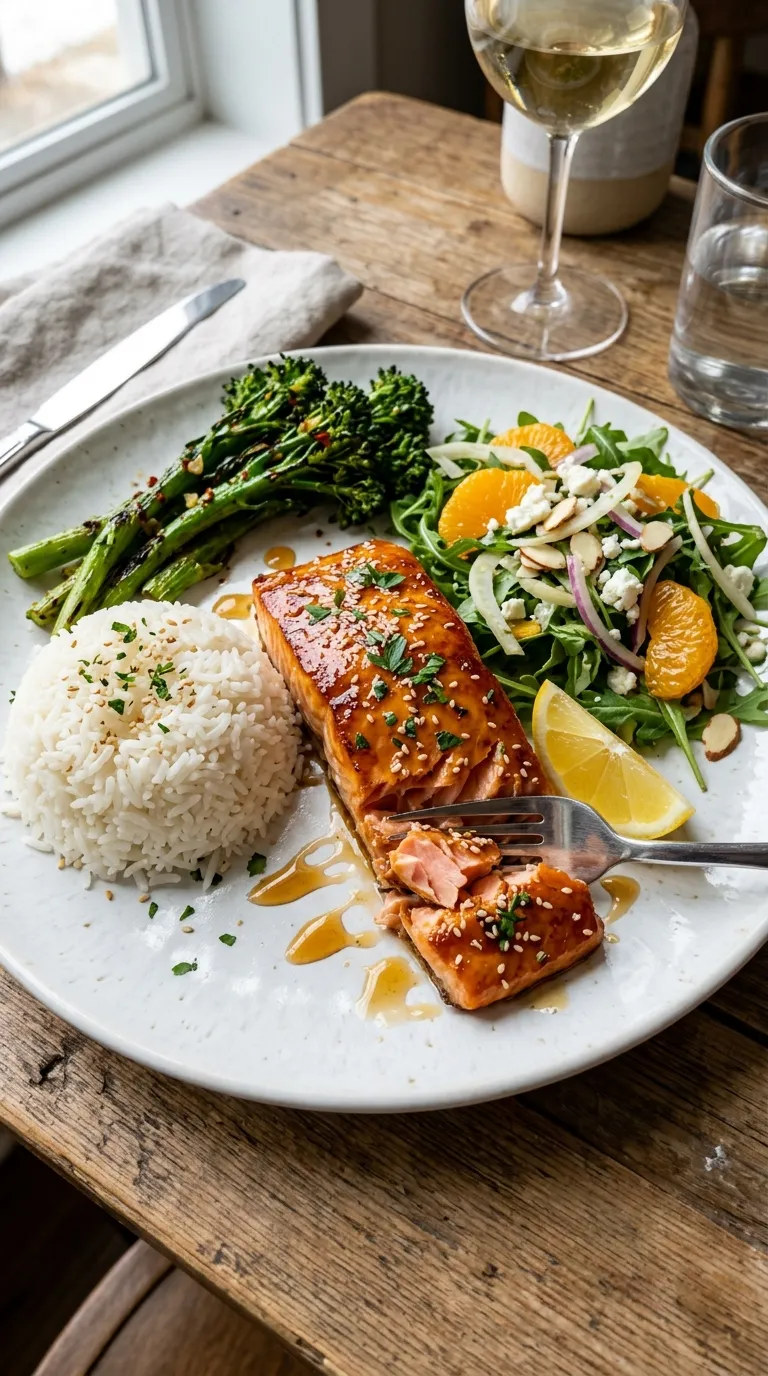
Because honey glazed salmon is rich, sweet, and intensely flavored, you need sides that provide contrast, texture, and freshness.
The Light Option: A citrus arugula salad with shaved fennel and orange segments cuts through the sweetness beautifully. Add a simple lemon vinaigrette and you’ve got balance.
The Starch: Coconut jasmine rice or cauliflower rice both work. The rice soaks up the glaze that drips onto the plate, which is honestly the best part of the meal.
The Veggie: Roasted broccolini with garlic or steamed bok choy with ginger add a slight bitterness that plays perfectly against the honey.
If you want something more substantial, pair it with my sesame ginger soba noodles for a complete Asian-inspired dinner.