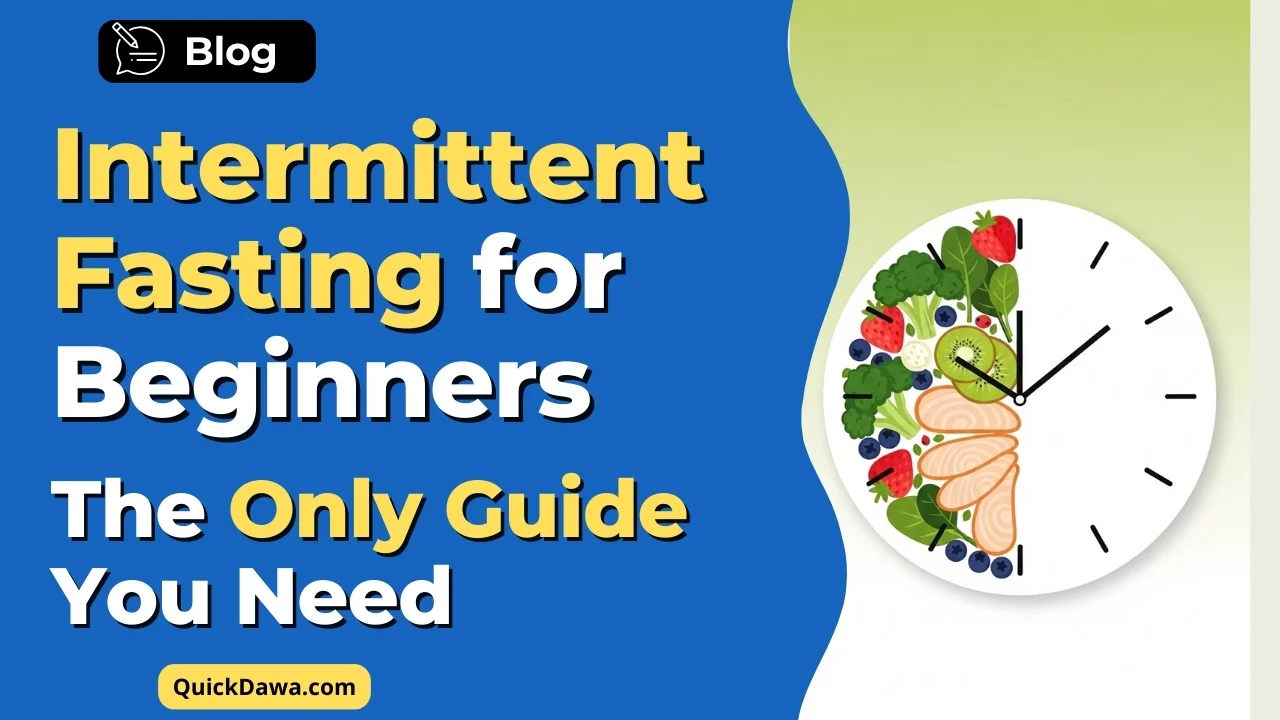
Intermittent Fasting for Beginners – The Only Guide You Need
What if eating less often could actually make you healthier?
Intermittent fasting for beginners sounds scary at first.
But millions of people around the world swear by it.
Intermittent fasting is not really a diet.
It’s more about when you eat, not what you eat.
People use it to lose weight, feel sharper, and boost energy.
And the science behind it is growing stronger every year.
In this guide, you’ll learn exactly what intermittent fasting is.
You’ll discover its benefits, methods, side effects, and simple tips.
Whether you’re brand new or just curious, this post is for you.
Let’s break it all down in the simplest way possible. 👇
🔹 What Is Intermittent Fasting? 🤔

Intermittent fasting (IF) means you cycle between eating and not eating.
You pick certain hours to eat.
And the rest of the time, you don’t eat anything.
Think of it like this.
Your body is like a car.
When you keep filling it with gas non-stop, the engine gets overwhelmed.
But if you give it breaks, it runs better and cleaner.
That’s exactly what intermittent fasting does for your body.
It gives your digestive system a rest.
During that rest, your body burns stored fat for energy.
It also repairs damaged cells.
So fasting isn’t starving yourself.
It’s giving your body time to heal and reset.
Pretty cool, right?
Most people already fast every night while sleeping.
Intermittent fasting for beginners just extends that natural fasting window a little longer.
🔹 How Common Is Intermittent Fasting? 📊
Intermittent fasting has exploded in popularity worldwide.
Here are some eye-opening facts:
- 📌 A 2023 International Food Information Council survey found that intermittent fasting was the most popular diet in America for the third year in a row. (Source)
- 📌 According to Google Trends, searches for “intermittent fasting” have increased by over 10,000% since 2010.
- 📌 A study published in the New England Journal of Medicine confirmed fasting can improve heart health, brain function, and lifespan. (Source)
- 📌 Roughly 24% of American adults have tried some form of intermittent fasting.
So you’re definitely not alone if you’re considering it!
🔹 Top Benefits of Intermittent Fasting 🌟 (Main Section)
Why do so many people love intermittent fasting?
Here are the top science-backed reasons.
1. 🔥 Powerful Weight Loss
Intermittent fasting helps you eat fewer calories naturally.
Your body also shifts to burning fat during fasting hours.
Many beginners lose 3–8% of body weight within 3–24 weeks.
Example: Sarah skipped breakfast and ate only between 12 PM–8 PM.
She lost 15 pounds in three months without counting a single calorie.
2. 🧠 Sharper Brain Function
Fasting boosts a brain protein called BDNF.
BDNF helps grow new brain cells.
That’s why many people feel mentally clearer during fasting.
3. ❤️ Better Heart Health
Intermittent fasting can lower blood pressure and bad cholesterol.
It also reduces inflammation in blood vessels.
A healthier heart means a longer, stronger life.
4. 💪 Reduced Inflammation
Chronic inflammation causes many serious diseases.
Studies show fasting significantly reduces inflammatory markers in the body.
Less inflammation means less pain and fewer health problems.
Example: Mark had joint pain for years.
After starting intermittent fasting, his inflammation markers dropped noticeably.
5. 🔄 Cellular Repair (Autophagy)
During fasting, your body cleans out damaged cells.
This process is called autophagy (aw-TOFF-uh-jee).
Think of it like your body’s recycling system.
Old, broken cell parts get removed and replaced.
6. 🩸 Improved Blood Sugar Control
Fasting lowers insulin levels naturally.
Lower insulin helps your body access stored fat.
This can reduce the risk of Type 2 diabetes.
According to Harvard Health, fasting improves insulin sensitivity significantly.
7. ⚡ Increased Energy Levels
Many people feel tired after big meals.
With intermittent fasting, your body uses fat for steady energy.
No more afternoon energy crashes!
Example: Lisa used to feel sleepy every afternoon at work.
After starting IF, she felt energized all day long.
8. 🧬 May Help You Live Longer
Animal studies show fasting can extend lifespan by 20–30%.
Human research is still ongoing.
But early results look very promising.
9. 😌 Simplifies Your Daily Routine
No more planning six meals a day.
No more constant cooking and cleaning.
Intermittent fasting actually saves you time and money.
10. 🧘 Supports Mental Health
Fasting can reduce stress hormones over time.
Some people report less anxiety and better mood.
A calm gut often leads to a calm mind.
🔹 Popular Intermittent Fasting Methods for Beginners 📋
Not all fasting plans are the same.
Here are the most beginner-friendly methods:
🕐 The 16/8 Method (Most Popular)
Fast for 16 hours.
Eat within an 8-hour window.
Example: Eat between 12 PM and 8 PM. Skip breakfast.
This is the easiest method for intermittent fasting for beginners.
🕐 The 5:2 Method
Eat normally five days a week.
On two days, eat only 500–600 calories.
This works well if you don’t want to fast daily.
🕐 Eat-Stop-Eat
Do a full 24-hour fast once or twice per week.
For example, eat dinner Monday and don’t eat until dinner Tuesday.
This method is more advanced.
🕐 The 14/10 Method
Fast for 14 hours. Eat within 10 hours.
This is gentler and great for absolute beginners.
🕐 The Warrior Diet
Eat small amounts of raw fruits and veggies during the day.
Then eat one big meal at night within a 4-hour window.
🔹 Warning Signs & Side Effects of Intermittent Fasting ⚠️
Fasting is safe for most healthy adults.
But watch out for these side effects, especially when starting:
✅ Headaches — common in the first few days as your body adjusts.
✅ Dizziness or lightheadedness — usually means you need more water.
✅ Irritability or mood swings — your body is adapting to a new schedule.
✅ Extreme hunger — normal at first, but it fades after a week.
✅ Trouble sleeping — eating too close to bedtime can disrupt sleep.
✅ Low energy during workouts — your body needs time to switch fuel sources.
✅ Digestive issues — eating too much during your window can cause bloating.
✅ Difficulty concentrating — temporary and usually improves within days.
🩺 See a doctor immediately if you feel chest pain, fainting, or extreme weakness while fasting.
Most side effects disappear after the first 1–2 weeks.
Your body just needs time to adjust.
🔹 How to Start Intermittent Fasting the Right Way 🚀
Ready to begin?
Follow these simple tips for success.
1. 🥇 Start Slow
Don’t jump into a 20-hour fast on day one.
Start with 12 hours of fasting and work your way up.
Your body will thank you for the gradual change.
2. 💧 Drink Plenty of Water
Dehydration is a common beginner mistake.
Drink at least 8–10 glasses of water daily.
Herbal tea and black coffee are also fine during fasting.
3. 🥗 Eat Nutritious Foods During Your Window
Don’t use your eating window as an excuse to eat junk.
Focus on whole foods — vegetables, lean protein, healthy fats.
Quality matters just as much as timing.
4. 🧘 Manage Your Stress Levels
High stress increases cortisol.
Cortisol makes fasting harder and weight loss slower.
Try meditation, deep breathing, or a short walk daily.
5. 🛌 Get Enough Sleep
Sleep is when your body does major repair work.
Aim for 7–9 hours every night.
Poor sleep can sabotage your fasting results.
6. 📓 Track Your Progress
Keep a simple journal or use a fasting app.
Write down how you feel each day.
Tracking keeps you motivated and accountable.
7. 🏃 Stay Active but Don’t Overdo It
Light exercise during fasting is perfectly fine.
Walking, yoga, or light stretching works great.
Avoid intense workouts until your body is fully adapted.
8. 👥 Find a Fasting Buddy
Having support makes everything easier.
Share your journey with a friend or join an online community.
Accountability doubles your chances of sticking with it.
🔹 Who Should NOT Try Intermittent Fasting? 🚫
Intermittent fasting is not for everyone.
Avoid it if you:
- Are pregnant or breastfeeding
- Have a history of eating disorders
- Are under 18 years old
- Have Type 1 diabetes (without medical supervision)
- Take medications that require food
- Have very low blood pressure
Always talk to your doctor before starting any new eating plan.
🔹 When to See a Doctor 🩺
Intermittent fasting is generally safe.
But see a healthcare professional if you notice:
- ☑️ You feel faint or pass out during fasting
- ☑️ You experience heart palpitations
- ☑️ Your period becomes irregular (for women)
- ☑️ You develop an unhealthy relationship with food
- ☑️ You lose weight too rapidly (more than 2 pounds per week consistently)
- ☑️ You feel extremely weak even after 2–3 weeks of trying
Don’t panic — these are rare.
Most people adjust just fine.
But it’s always smart to listen to your body. ❤️
🔹 Frequently Asked Questions (FAQ) ❓
Q1: Can I drink water during intermittent fasting?
Yes, absolutely!
Water, black coffee, and unsweetened tea are all allowed.
Staying hydrated is actually essential during fasting.
Q2: Will intermittent fasting make me lose muscle?
Not if you eat enough protein during your eating window.
Studies show IF preserves muscle better than traditional calorie-cutting diets.
Strength training also helps protect muscle mass.
Q3: How long does it take to see results with intermittent fasting?
Most beginners notice changes within 2–4 weeks.
Intermittent fasting for beginners works best when combined with healthy food choices.
Be patient — your body needs time to adapt.
Q4: Is intermittent fasting safe for women?
Yes, but women may need a gentler approach.
A 14/10 method often works better for women than 16/8.
Hormonal changes should be monitored closely.
Q5: Can I exercise while doing intermittent fasting for beginners?
Yes, light to moderate exercise is fine.
Walking, yoga, and swimming are great options.
Just listen to your body and don’t push too hard in the beginning.
🔹 Conclusion 🎯
Intermittent fasting is one of the simplest health strategies you can try.
It helps with weight loss, brain health, heart health, and so much more.
Start slow, eat clean, and stay hydrated.
Remember, consistency matters more than perfection.
You don’t need a complicated diet plan to feel amazing.
Sometimes, it’s not about eating less — it’s about eating smarter.
Listen to your body and give it the rest it deserves.
Share this post with someone who’s been curious about trying fasting! 💌
Your journey toward better health can start today with intermittent fasting for beginners. 🌟
⚕️ Medical Disclaimer
Disclaimer: This blog post is for informational and educational purposes only. It is NOT a substitute for professional medical advice, diagnosis, or treatment. Always consult your doctor or a qualified healthcare provider before starting intermittent fasting or making any changes to your diet. Individual results may vary. If you have any underlying medical conditions, are pregnant, breastfeeding, or taking medications, please seek personalized medical guidance before fasting.