30 Lemon Kitchen Decor Ideas
Your kitchen environment directly impacts your health choices, and at Quick Dawa, we’re passionate about creating spaces that inspire wellness. A cheerful, well-designed kitchen with fresh lemon accents doesn’t just look beautiful; it motivates you to cook nutritious meals, maintain cleanliness, and spend more joyful time preparing food that nourishes your body. Transform your kitchen into a healthy haven with these inspiring lemon decor ideas.
If you’ve been craving a kitchen refresh that feels sunny, welcoming, and effortlessly stylish, these lemon kitchen decor ideas might be exactly what you need.
There’s something magical about citrus-inspired design; it instantly lifts the mood, brings brightness into everyday spaces, and adds a touch of Mediterranean charm that feels both timeless and current.
Whether you’re drawn to soft yellow accents, vintage lemon prints, or bold statement pieces, this collection offers 27 creative ways to transform your kitchen into a cheerful, personality-filled space you’ll love spending time in.
I’ve noticed that many people hesitate to commit to themed decor, worrying it might feel too bold or overwhelming.
But the beauty of lemon-inspired design lies in its flexibility; you can start small with a few tea towels or placemats, or go all-in with yellow subway tile and statement lighting.
Each idea in this guide is designed to work independently or as part of a larger vision, giving you the freedom to create a look that feels yours authentically.
From functional pieces like cutting boards and canisters to purely decorative touches like wall art and wreaths, you’ll discover options for every style, budget, and commitment level.
These aren’t just decorating ideas; they’re practical solutions that bring joy, personality, and warmth into the heart of your home.
Lemon Print Tea Towels
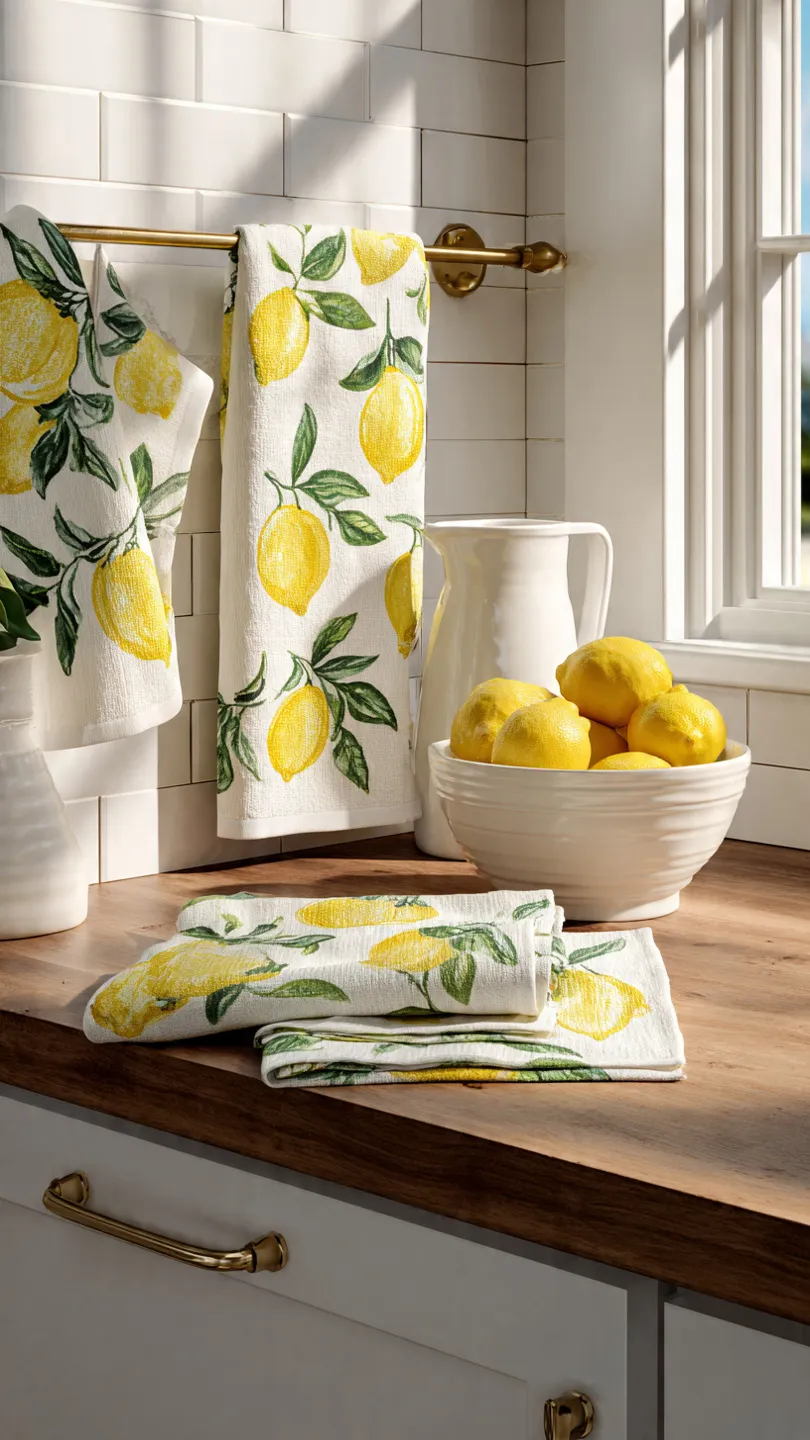
- Tea towels with lemon prints instantly brighten your cooking space without permanent changes
- This simple swap adds seasonal charm while remaining functional for everyday kitchen tasks
- The yellow and green color palette brings a fresh, garden-inspired feel to neutral counters
- Hanging them visibly turns practical items into decorative focal points that catch the eye
- Choose cotton fabric for durability and easy washing after regular kitchen use
Switching out plain dish towels for lemon-printed versions creates an immediate visual refresh that costs very little but delivers major style impact.
I’ve noticed this works especially well in kitchens with white or cream cabinets, where the pop of citrus yellow draws attention without overwhelming the space.
The beauty of this approach lies in its flexibility; you can rotate these towels seasonally or keep them year-round if you love the sunny vibe.
Look for designs that blend vintage botanical illustrations with modern typography for a balanced aesthetic that feels both timeless and current.
This small change makes your kitchen feel more curated and intentional.
Beyond aesthetics, lemon-themed tea towels serve as conversation starters when guests visit your home.
They signal a thoughtful approach to design while maintaining practicality; these aren’t just decorative pieces gathering dust.
In my experience, choosing towels with varied lemon motifs rather than identical patterns adds visual interest when multiple towels are displayed together.
Consider mixing solid yellow towels with patterned lemon prints for depth, or coordinate them with other citrus accents already present in your space.
The result is a kitchen that feels cheerful, welcoming, and perfectly suited for spring and summer entertaining while remaining appropriate throughout the year.
Vintage Lemon Canisters
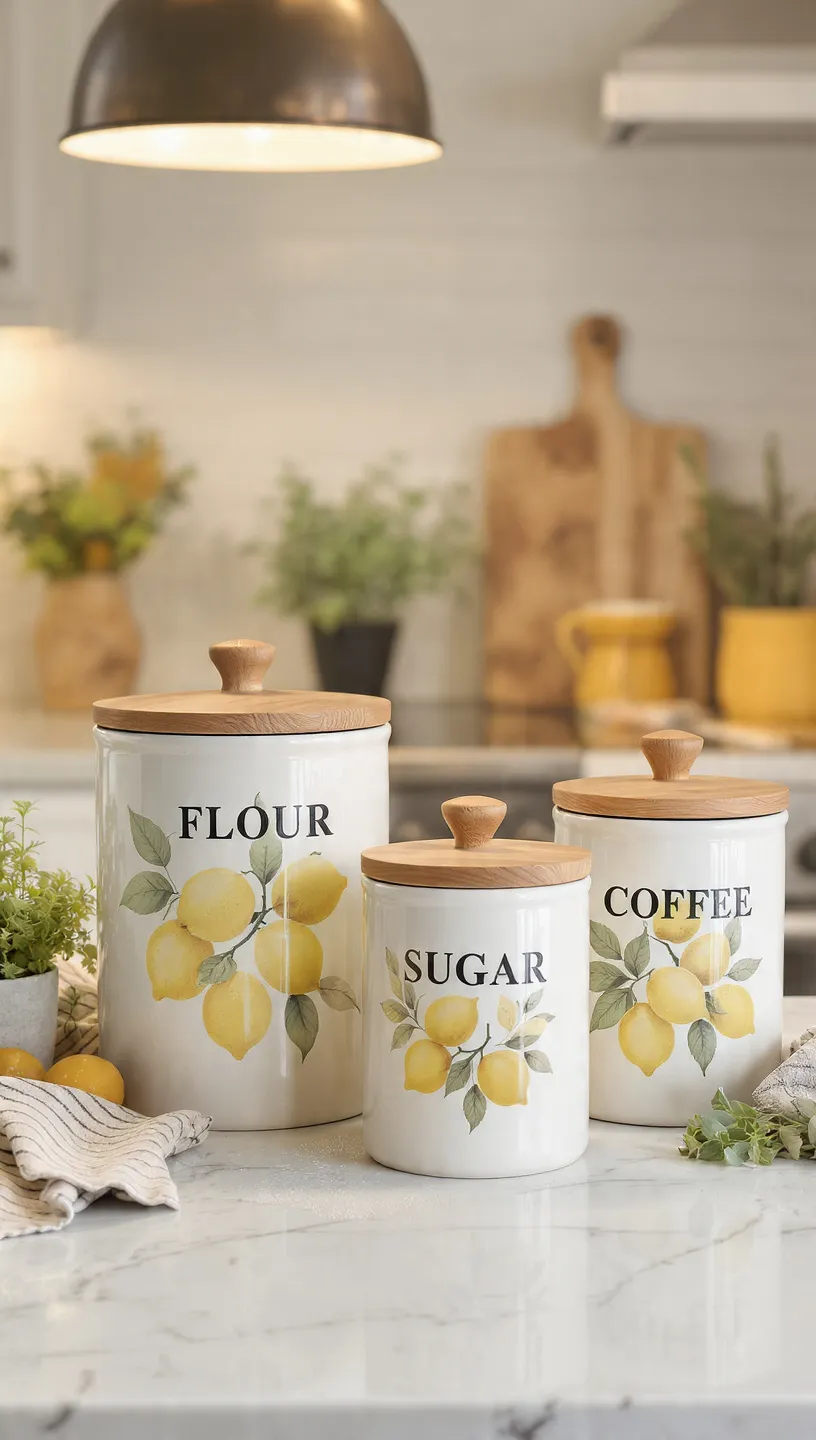
- Vintage-inspired lemon canisters combine storage functionality with decorative charm on open counters
- The graduated sizing creates visual rhythm while keeping dry goods organized and accessible
- Ceramic or pottery materials add texture and weight that feels substantial and quality-made
- These pieces work beautifully in farmhouse, cottage, or traditional kitchen aesthetics
- Look for hand-painted details or transfers that give each canister character and authenticity
Choosing canisters adorned with lemon motifs transforms everyday storage into displayed art that enhances your kitchen’s personality.
That’s why many designers recommend starting with functional decor, pieces you’ll actually use daily rather than items that merely occupy space.
These containers typically house flour, sugar, coffee, or tea, meaning they’re accessed frequently and deserve to be visually appealing.
The vintage lemon aesthetic specifically evokes a nostalgic, homey feeling reminiscent of grandmother’s kitchens while remaining fresh enough for contemporary spaces.
Position them on countertops near your baking station or coffee area where they’ll be both useful and admired throughout your daily routine.
The key to making lemon canisters feel intentional rather than kitschy lies in selecting designs with muted, sophisticated color palettes instead of overly bright or cartoonish renderings.
I’ve seen this work well in many homes when the lemon artwork features watercolor-style painting or botanical illustration techniques rather than bold graphic prints.
Pair them with neutral backgrounds, white subway tile, natural wood shelving, or marble counters, to let the citrus theme shine without visual competition.
This approach creates a collected-over-time appearance that feels authentic and personal rather than matching-set predictable, giving your kitchen that coveted lived-in charm that design magazines celebrate.
Lemon Branch Centerpiece
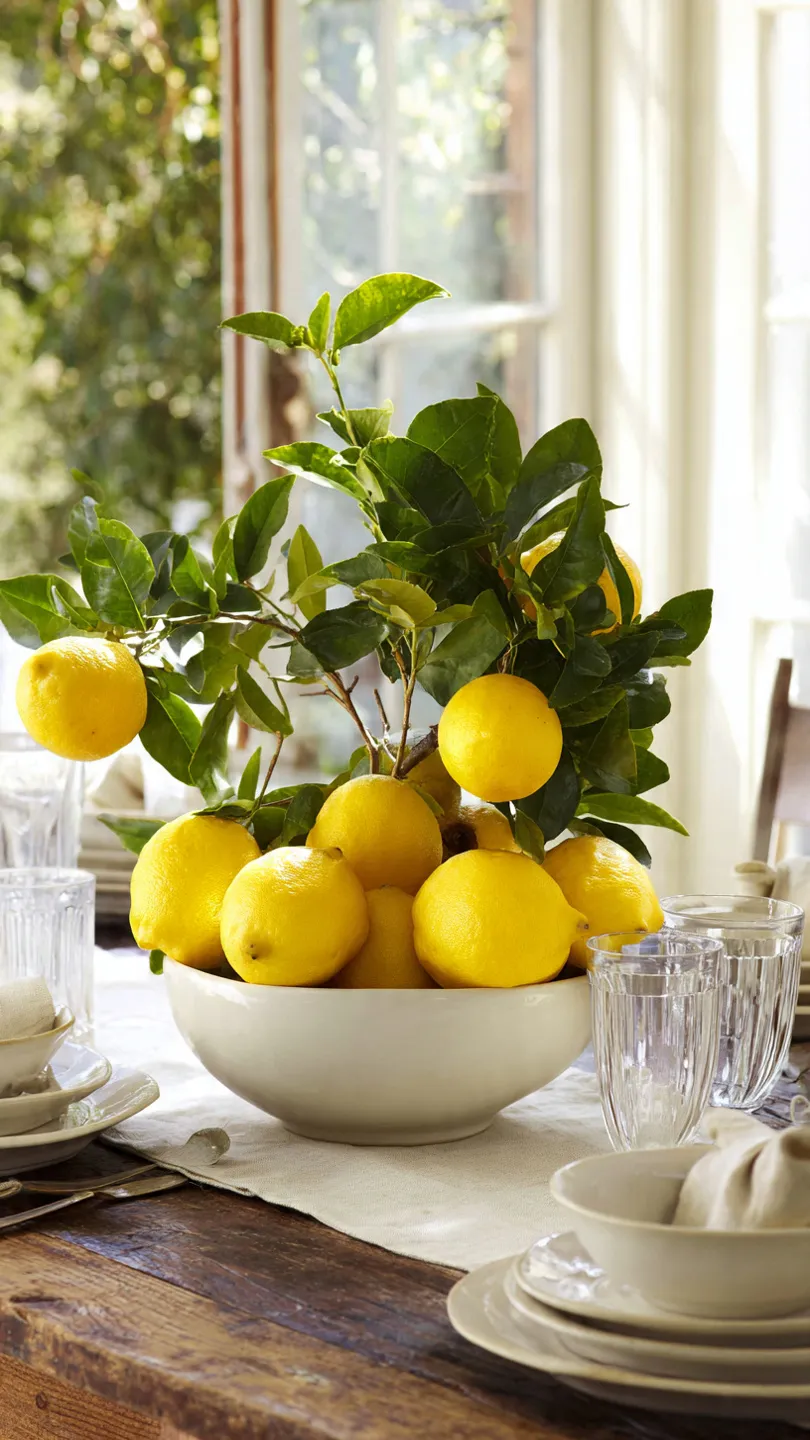
- Fresh lemon branches create an organic centerpiece that brings life and fragrance to your table
- The natural arrangement works for casual breakfasts and formal dinner gatherings alike
- Real fruit adds authenticity and visual texture that artificial versions can’t replicate
- This idea suits spring celebrations, summer brunches, or year-round Mediterranean-inspired styling
- Replace branches every week or two to maintain freshness and a vibrant appearance
Creating a centerpiece with actual lemon branches elevates your kitchen or dining table with minimal effort while delivering maximum sensory impact.
The glossy leaves and bright fruit immediately draw the eye, while the subtle citrus scent adds an aromatic dimension that artificial decor cannot provide.
I’ve noticed this approach feels especially appropriate for breakfast nooks and eat-in kitchens where casual elegance is the goal.
The arrangement requires only a wide, shallow bowl or compote dish and pruned branches from a grocery store or farmer’s market.
What makes this idea particularly appealing is its temporary nature; you can enjoy it for special occasions without commitment to permanent citrus themes.
The styling flexibility of lemon branch arrangements allows them to adapt across multiple design aesthetics, from farmhouse rustic to coastal modern.
Keep the vessel simple, white ceramic, clear glass, or natural wood, so the organic beauty of the lemons remains the focal point.
In my experience, lower arrangements work better for dining tables where conversation happens across the centerpiece, while taller branches suit kitchen islands or console tables.
Combine the branches with seasonal elements like eucalyptus in winter or lavender in summer to create evolving displays that feel fresh and considered.
This natural approach to kitchen decor creates warmth and livability that perfectly balances trendiness with timeless appeal.
Yellow Subway Tile Backsplash
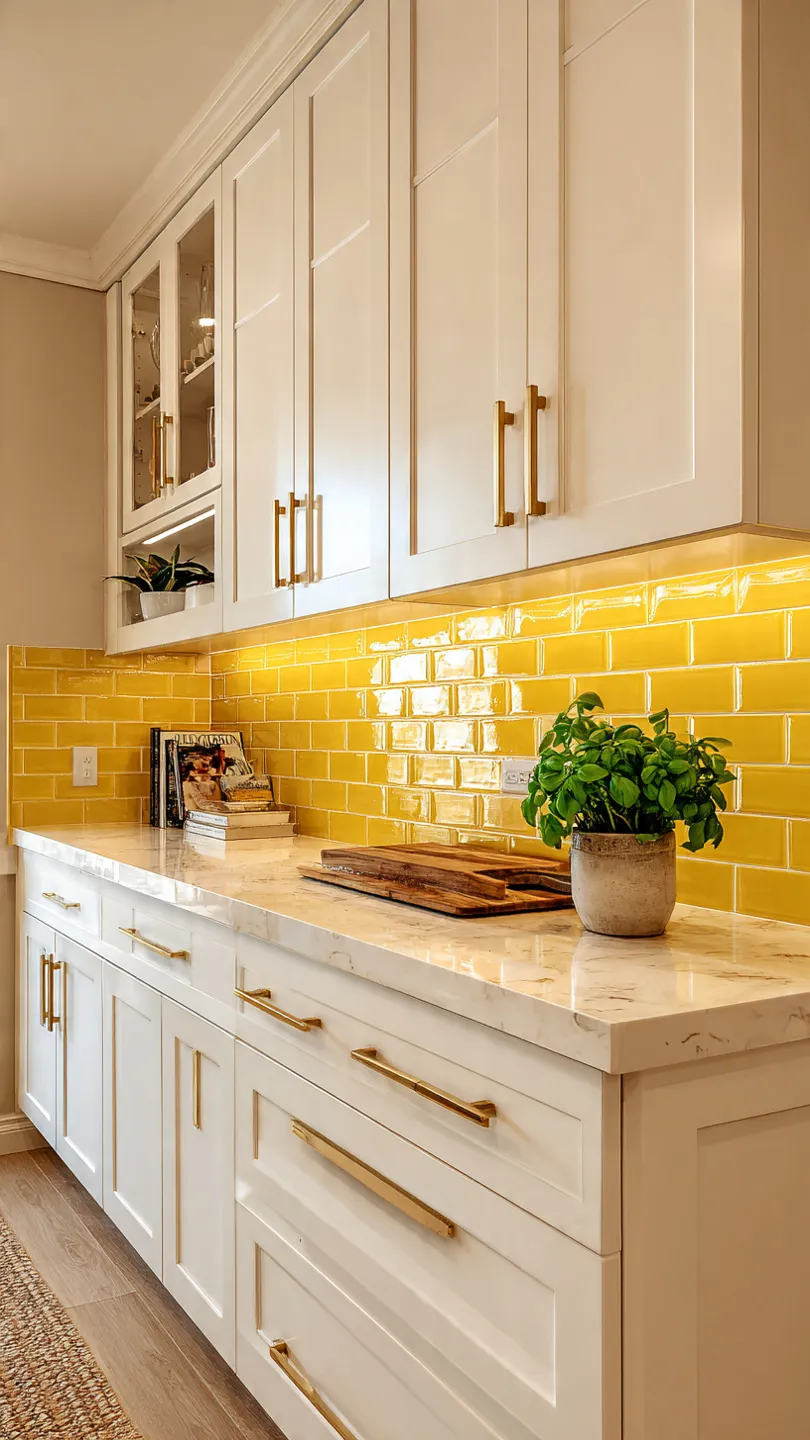
- A yellow subway tile backsplash makes a bold statement while maintaining classic design sensibility
- The glazed tile surface reflects light beautifully, making smaller kitchens feel brighter and larger
- This permanent installation adds value and personality compared to temporary decor items
- Subway tile’s timeless shape ensures the look won’t feel dated as trends shift
- Choose buttery yellow tones for subtlety or vibrant lemon shades for dramatic impact
Installing yellow subway tiles creates an architectural element that transforms your entire kitchen’s atmosphere without requiring a complete renovation.
This approach works particularly well when you’re ready to commit to a citrus-inspired palette as your kitchen’s defining characteristic.
The beauty of subway tile lies in its versatility; the traditional shape and pattern provide structure, while the unexpected color choice adds personality and warmth.
I’ve seen this work brilliantly in kitchens with white or light gray cabinets, where the yellow becomes the room’s focal point and conversation piece.
The reflective glaze also bounces light throughout the space, an advantage in kitchens with limited natural illumination.
What makes this idea especially practical is how the yellow tone influences your entire decorating scheme moving forward, providing a foundation for coordinated accessories and textiles.
The backsplash essentially functions as a large-scale artwork that doesn’t require wall space or picture hanging.
In my experience, homeowners who choose this route find that decorating becomes easier because the backsplash establishes a clear color story that other elements can support.
Pair it with brass or gold fixtures to enhance warmth, or choose matte black hardware for modern contrast.
Consider extending the tile from counter to cabinet for dramatic impact, or keep it traditional at standard backsplash height for a more conservative approach that still delivers personality.
Lemon Slice Wall Art
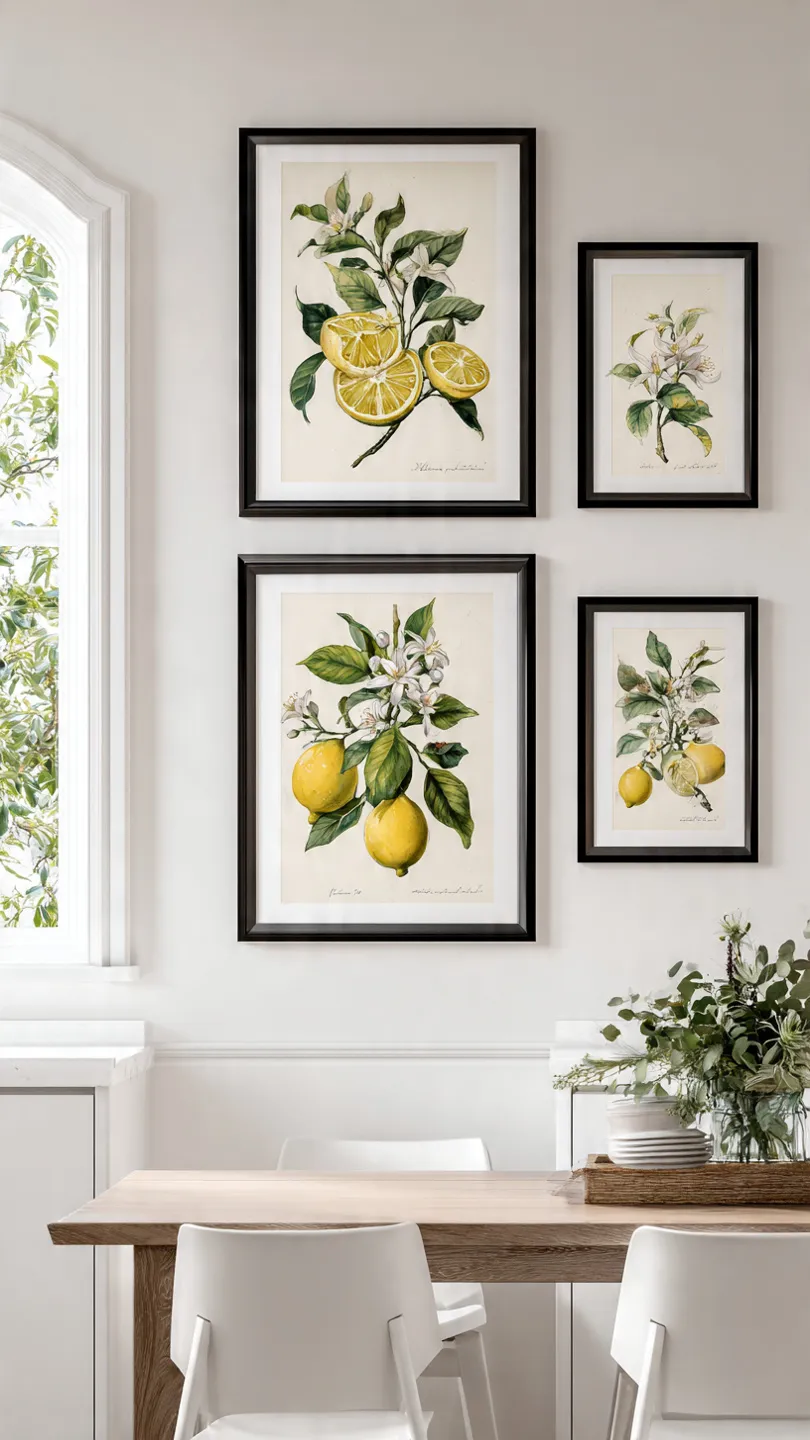
- Lemon-themed wall art fills vertical space with color and pattern in a controlled, sophisticated way
- Framed prints offer the permanence of wall decor with the flexibility to change seasonally
- Botanical illustration styles bring scientific elegance that elevates citrus themes beyond kitsch
- This approach works in both large eat-in kitchens and compact galley spaces
- Choose watercolor or vintage print styles for timeless appeal that transcends trendy moments
Hanging lemon-themed artwork brings the citrus aesthetic to eye level, creating visual interest on walls that might otherwise remain blank and uninspiring.
The key is selecting pieces that feel artistic rather than purely decorative, think botanical garden illustrations or vintage fruit crate labels reproduced as quality prints.
I’ve noticed that framing makes an enormous difference in how sophisticated these pieces appear; investing in proper matting and simple frames elevates grocery store prints into gallery-worthy displays.
This option particularly suits renters or anyone hesitant about permanent color commitments, since artwork can be swapped as tastes evolve or seasons change throughout the year.
The arrangement strategy significantly impacts how lemon wall art contributes to your overall kitchen design.
A single large-scale piece makes a bold statement above a dining bench or breakfast nook, while a gallery wall of smaller coordinated prints creates visual rhythm along a longer wall.
In my experience, odd-numbered groupings, three or five pieces, feel more dynamic and intentional than even numbers.
Consider mixing lemon illustrations with complementary citrus, like oranges, or botanical greenery to add depth while maintaining thematic cohesion.
The result is a personalized space that reflects thoughtful curation rather than rushed decorating, giving your kitchen that designer-selected feeling that makes everyday moments feel special.
Lemon Patterned Curtains
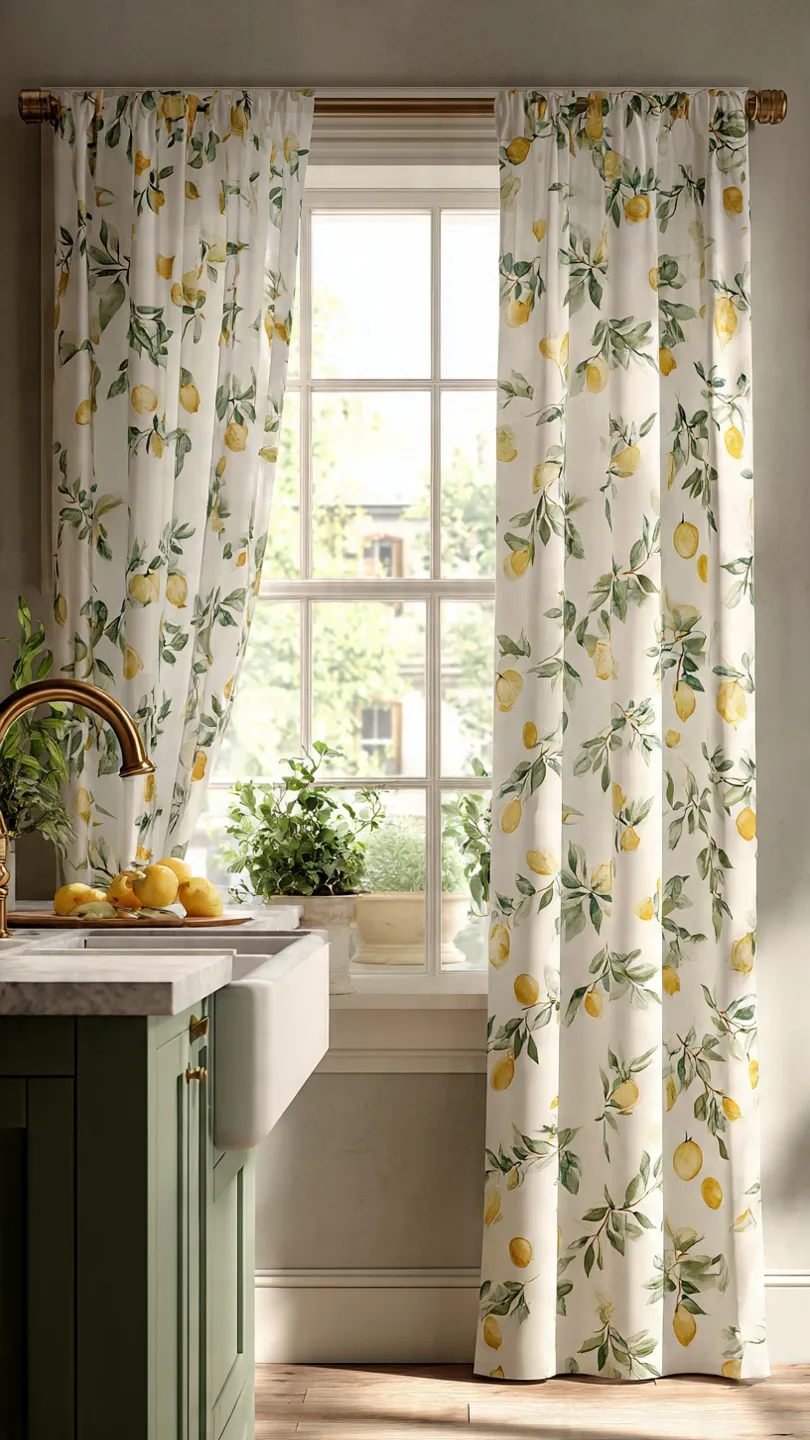
- Patterned curtains introduce the lemon theme at the window level, where the fabric softens hard kitchen surfaces
- The filtered light through printed fabric creates a gentle, sun-dappled effect throughout the day
- Cafe-length curtains offer privacy while maintaining an open, airy feeling in the space
- This textile approach adds pattern without overwhelming walls or countertops with competing designs
- Choose washable cotton or linen-blend fabrics that withstand kitchen humidity and cooking residue
Window treatments featuring lemon patterns serve double duty by addressing practical light control needs while advancing your decorative vision.
I’ve found that curtains make a significant impact because they occupy substantial visual real estate without cluttering counters or shelving.
The movement of fabric adds life to a kitchen, especially when breezes from open windows create gentle motion that purely static decor cannot provide.
For kitchens with multiple windows, repeating the lemon curtain treatment establishes cohesion and intentionality.
Choose designs where lemons appear as part of a larger botanical pattern rather than overwhelming graphic prints for a sophisticated result that won’t tire your eyes over time.
The fabric weight and opacity you select dramatically change how lemon curtains function in your space.
Sheer or semi-sheer options maintain brightness while adding color, perfect for kitchens needing maximum natural light.
Heavier cotton or linen provides more privacy and light blocking, better suited for windows facing neighboring properties or intense afternoon sun.
That’s why many designers recommend layering, using sheer lemon-printed curtains as the decorative layer with plain white blinds behind for light control flexibility.
This combination lets you adjust functionality while maintaining the cheerful citrus aesthetic.
The window becomes a framed focal point that changes character throughout the day as light conditions shift, adding dynamic interest to your kitchen environment.
Ceramic Lemon Trivet
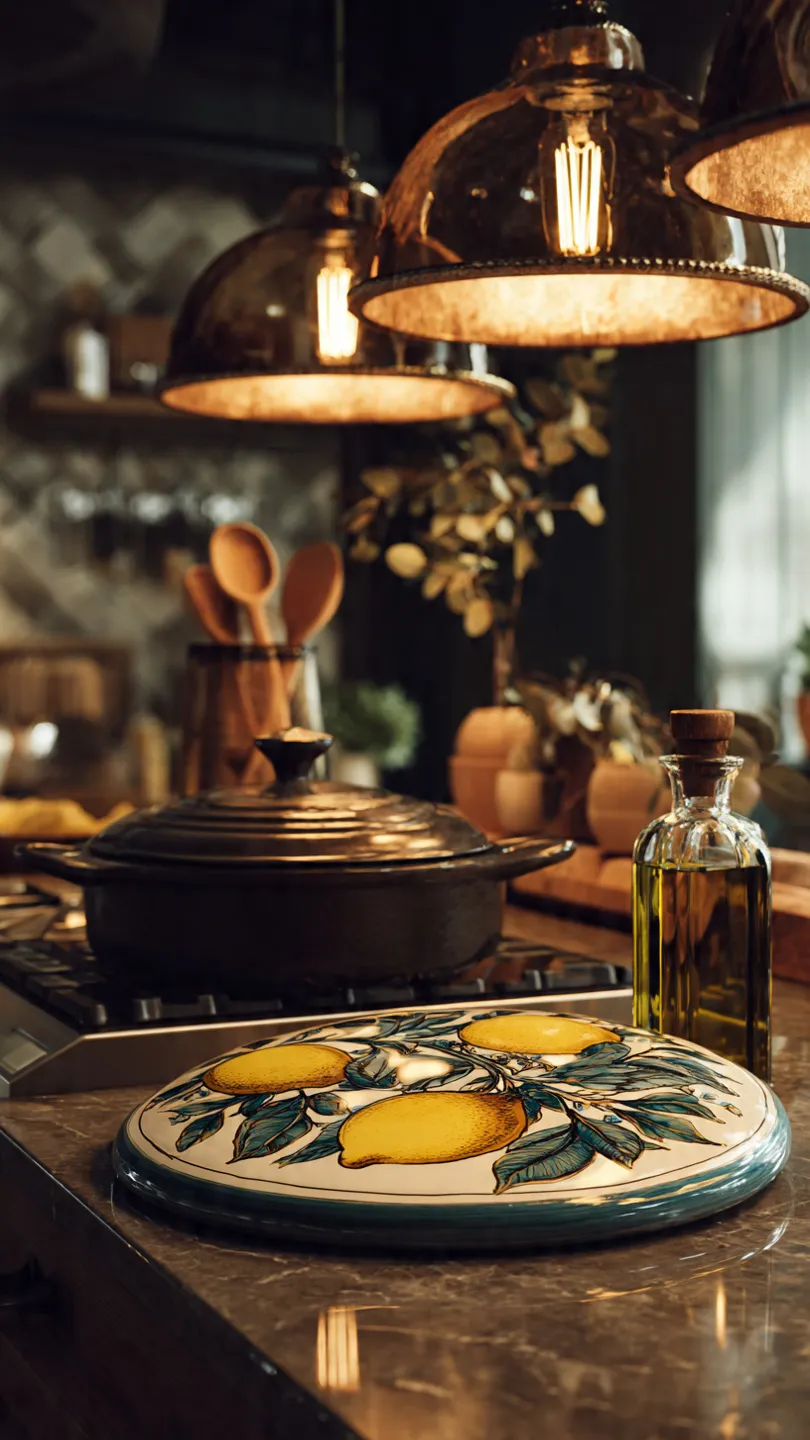
- A lemon-decorated trivet protects counters while contributing decorative value when displayed between uses
- The small scale makes this an easy entry point for testing citrus themes before larger commitments
- Ceramic or tile trivets bring artisanal quality that feels collected rather than mass-produced
- This functional piece transitions from stovetop use to wall display, depending on your needs
- Look for hand-painted or Portuguese tile styles that add Mediterranean warmth
Trivets represent the perfect intersection of utility and decoration, making them ideal for anyone hesitant about purely decorative items.
A lemon-themed version protects your countertops from hot pots while reinforcing your design vision when it’s visible on the counter or hung on the wall.
I’ve noticed these smaller accent pieces often serve as gateway items. Once you see how much personality one cheerful trivet adds, expanding the theme to other elements feels natural and exciting.
The key is choosing designs with artistic merit, pieces that look handcrafted or culturally inspired rather than generic mass-market offerings.
Mediterranean and Italian ceramic styles particularly suit lemon motifs given the fruit’s association with those regions.
Display strategies for lemon trivets extend beyond purely horizontal counter placement.
Many feature hanging holes, allowing them to function as wall art when not protecting surfaces from hot cookware.
This dual-purpose nature maximizes value while minimizing clutter, a crucial consideration in smaller kitchens where every item must earn its place.
In my experience, grouping a lemon trivet with coordinating hot pads or oven mitts creates a cohesive station near the stove that’s both practical and visually pleasing.
The trivet becomes part of a larger narrative about how you’ve thoughtfully considered both function and beauty in your kitchen.
Choose styles that complement your existing pottery or dishware for a collected appearance.
Lemon Wreath Display
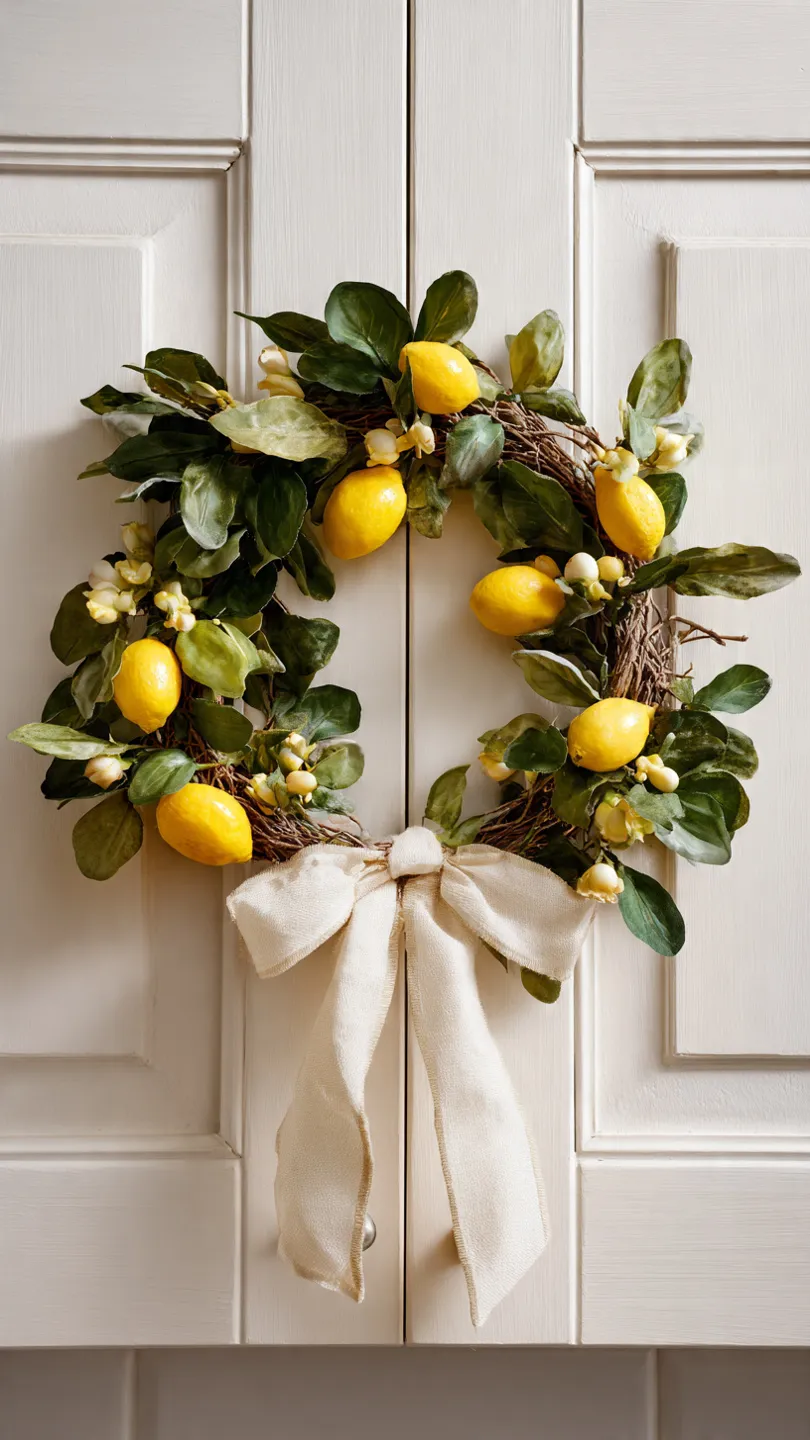
- A lemon wreath on a cabinet or kitchen door adds vertical interest in unexpected places
- This seasonal accent can rotate with other wreaths throughout the year for evolving aesthetics
- The circular shape creates visual softness that balances the kitchen’s angular cabinetry and appliances
- Faux lemon wreaths maintain their appearance indefinitely without the maintenance that fresh versions require
- Position at eye level, where it naturally draws attention when entering the space
Hanging a lemon wreath in your kitchen extends the decorative theme beyond horizontal surfaces into vertical space that often goes underutilized.
Cabinet doors, pantry entrances, or even the kitchen side of a dining room entrance become opportunities for this cheerful accent.
What makes wreaths particularly effective is their self-contained nature; the circular form creates a complete composition that doesn’t require supporting elements to feel finished.
I’ve seen this work especially well in kitchens lacking wall space for traditional artwork, where cabinet-mounted decor provides the necessary visual interest.
Choose wreaths with realistic-looking artificial lemons and varied greenery to avoid an overly crafted or artificial appearance that might cheapen the overall aesthetic.
The seasonal flexibility of wreath displays gives you permission to embrace trends without permanent commitment.
A lemon wreath feels perfectly suited for spring and summer months when citrus themes align with warmer weather and outdoor entertaining.
Then autumn arrives, and you swap it for a harvest-themed alternative, keeping your kitchen feeling current and seasonally appropriate.
That’s why many designers recommend investing in wreath hangers that don’t damage cabinet finishes, removable adhesive hooks, or over-door hangers that preserve your cabinetry while enabling easy rotation.
The result is a kitchen that feels dynamic and responsive to the changing calendar, showing attentiveness to detail that elevates everyday living into something more intentional and celebratory.
Lemon Tiered Tray Styling
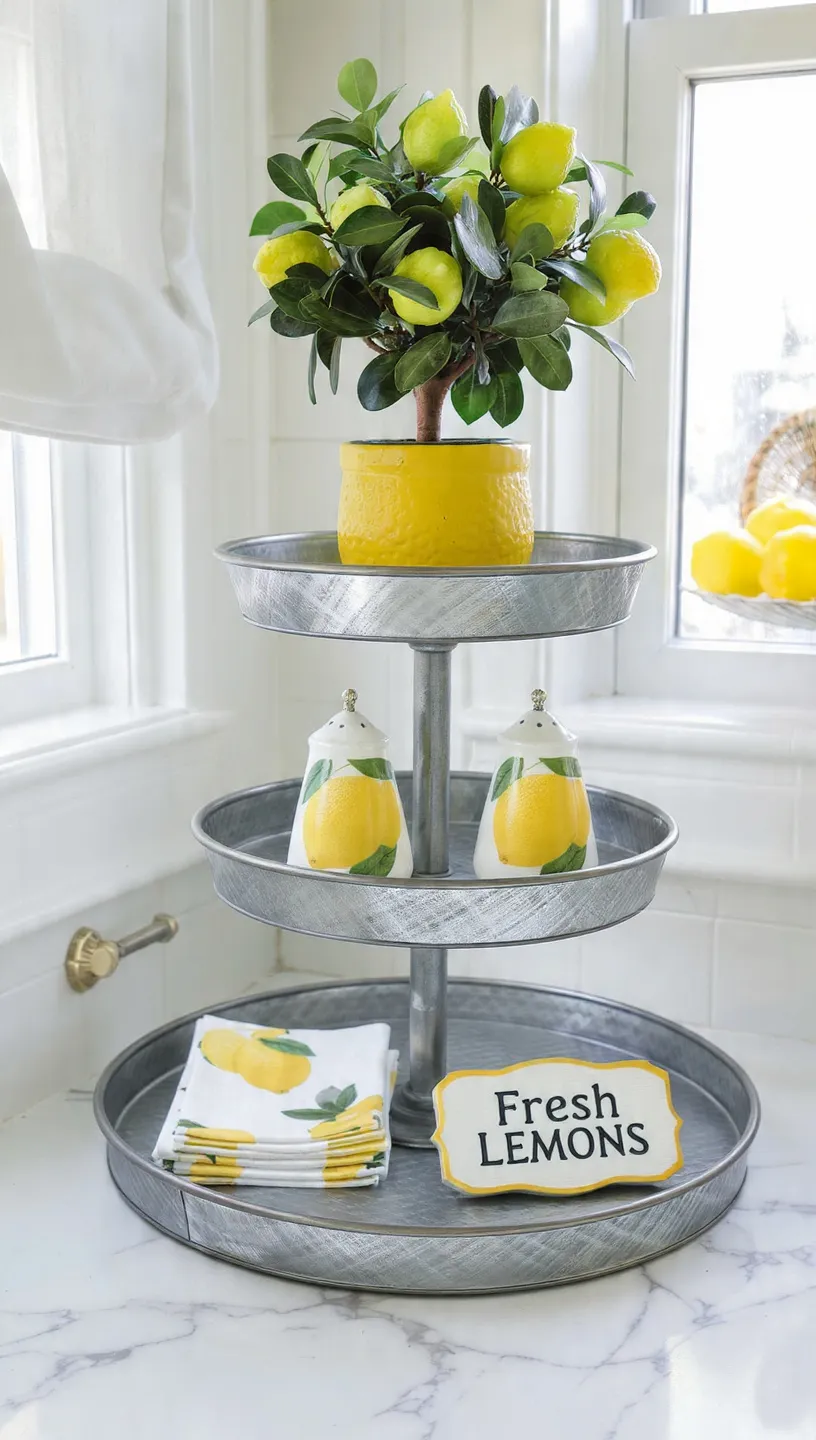
- Tiered trays consolidate multiple small decor items into one organized, vertical display
- This approach prevents counter clutter while maintaining decorative impact and visual interest
- The layered height creates dimension that draws the eye upward in compact kitchens
- Seasonal rotation becomes simple, just swap items on the tray rather than redecorating entire surfaces
- Mix functional items like salt shakers with purely decorative pieces for balanced styling
Tiered tray displays have become popular for good reason; they organize small decorative objects into cohesive vignettes that feel curated rather than scattered.
For lemon enthusiasts, these trays provide the perfect staging platform to showcase citrus-themed collectibles without overwhelming counter space.
I’ve noticed that the vertical stacking naturally creates visual interest in ways that flat arrangements cannot achieve, making even modest collections appear more substantial and intentional.
The key is balancing heights, textures, and purposes across the three levels.
Include one or two functional items like a small cutting board or recipe cards alongside purely decorative lemons to maintain authenticity and avoid the overly staged appearance that can feel disconnected from real kitchen life.
What makes tiered tray styling particularly appealing is the low-commitment experimentation it enables.
You can test various lemon decor items, ceramic figurines, small prints, candles, or fresh fruit, seeing how they work together before making larger purchasing decisions.
This try-before-you-commit approach helps develop your personal aesthetic preferences without expensive mistakes.
In my experience, limiting the color palette to yellows, greens, whites, and natural wood tones keeps the display cohesive even when mixing different item types and styles.
Rotate items seasonally or whenever inspiration strikes; the tray structure remains constant while the contents evolve, giving you creative flexibility within an organized framework.
This makes lemon decor feel fresh and intentional rather than permanent and potentially tiresome.
Lemon Cutting Board
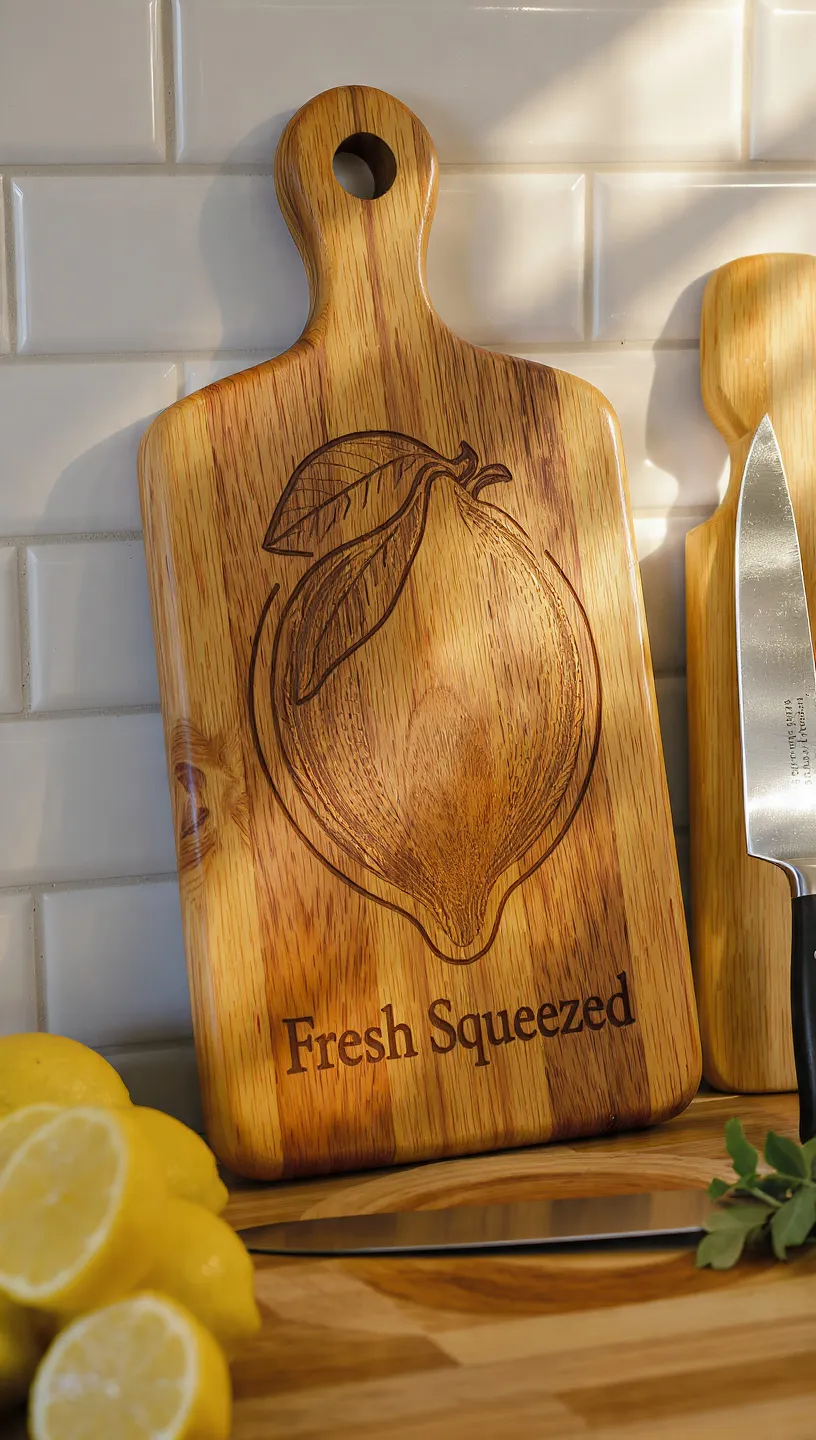
- A decorative cutting board serves daily food prep while contributing to your design scheme
- Wood-burned or carved lemon designs add artisanal character that feels personal and unique
- Displaying the board vertically when not in use maintains visibility as a decorative element
- This functional approach ensures decor items earn their space through practical utility
- Choose quality hardwood that withstands use and develops beautiful patina over time
Decorative cutting boards blur the line between tool and art, making them perfect for kitchens where every item must justify its presence through usefulness.
A lemon-adorned version handles daily slicing tasks while reinforcing your aesthetic vision when propped against the backsplash or hung on the wall.
I’ve found that items serving dual purposes feel more authentic in kitchen spaces than purely decorative objects; they signal a working kitchen with personality rather than a styled-for-photos space that nobody actually cooks in.
Look for boards with subtle lemon motifs, wood-burned illustrations, carved relief designs, or understated engraving, rather than painted graphics that might wear off with use and washing over time.
The display method you choose affects how prominently the lemon cutting board features in your overall design.
Leaning it casually against the backsplash creates an effortless, lived-in appearance that suggests you grabbed it for chopping just moments ago.
Installing a plate rail or small shelf allows multiple boards to display together, with the lemon version anchoring a collection that might include other wood tones and shapes.
That’s why many designers recommend treating cutting boards as rotational art: use your lemon board for a week, then swap in alternatives, keeping the display fresh while ensuring all your quality boards see regular use.
This approach maintains visual interest while honoring the functional nature of these kitchen essentials.
Lemon Grove Wallpaper Accent
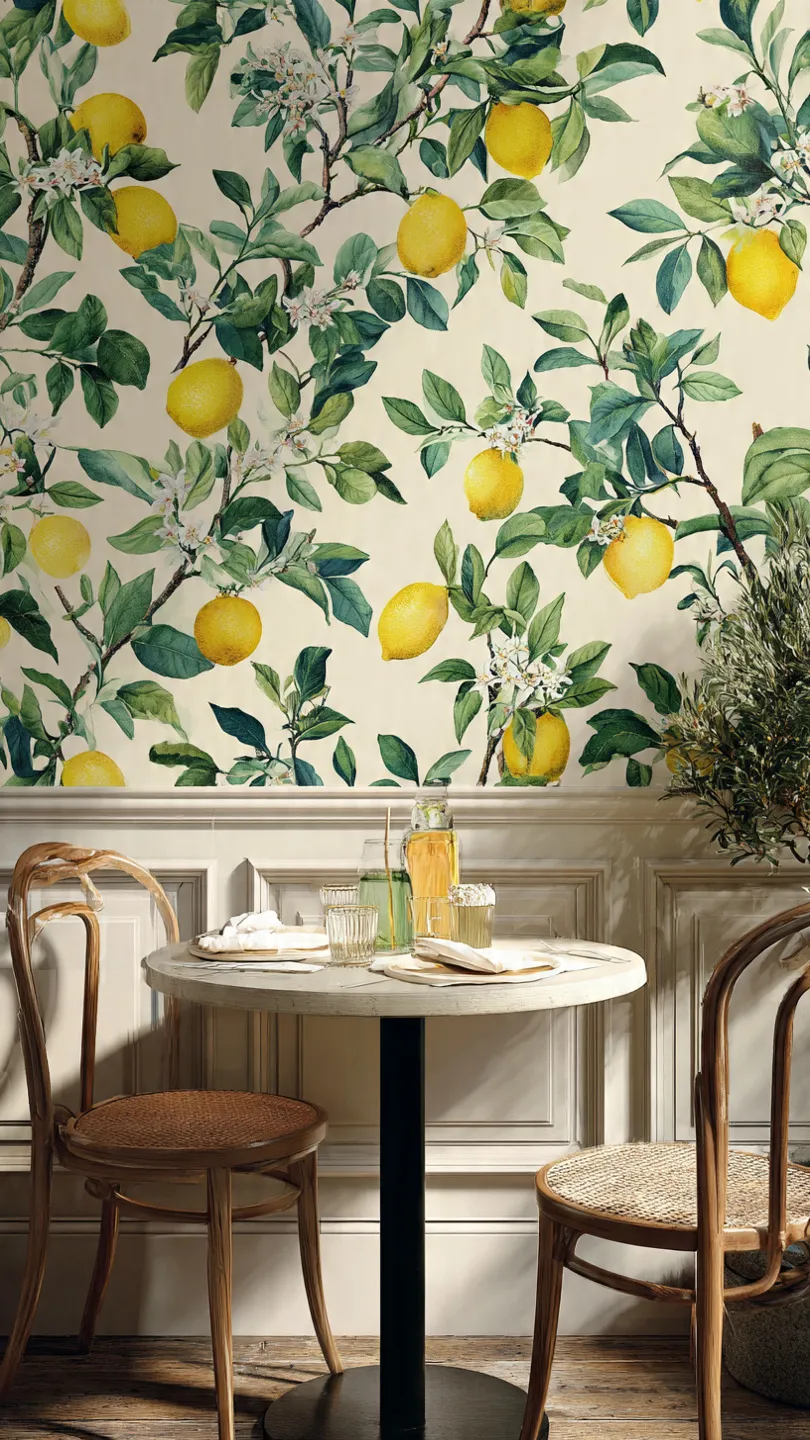
- Wallpaper on a single accent wall delivers maximum visual impact without overwhelming the entire kitchen
- Lemon grove patterns create depth and a garden-like atmosphere that expands perceived space
- The botanical illustration style brings sophistication that elevates citrus themes beyond casual decoration
- Peel-and-stick options allow renters or commitment-hesitant homeowners to experiment with bold patterns
- This approach works best in breakfast nooks or dining areas rather than active cooking zones
Accent wall wallpaper featuring lemon groves or botanical citrus prints makes a dramatic statement that completely transforms a kitchen’s character.
The key to success with this bold approach is restraint; papering just one wall prevents pattern overload while creating a stunning focal point.
I’ve noticed this works particularly well in breakfast nooks or dining areas within open kitchens, where the wallpaper defines a specific zone without interfering with practical cooking spaces.
The right pattern feels like looking into an Italian orchard, adding romantic European charm that contrasts beautifully with modern appliances and clean-lined cabinetry.
Choose designs with authentic botanical illustration quality rather than cartoon-like renderings for a sophisticated result.
The technical improvements in wallpaper, particularly peel-and-stick varieties, have made this once-permanent decision much more accessible and reversible.
Modern options install without professional help and remove without damaging walls, perfect for testing whether you’ll love living with such a prominent lemon theme.
In my experience, larger-scale patterns with generous spacing between elements feel less busy than small, dense designs that can overwhelm in enclosed spaces.
Coordinate the wallpaper’s background color with your existing paint for cohesion; cream or soft white backgrounds allow yellow lemons to shine while maintaining an airy feeling.
The result is a kitchen with a distinctive personality and memorable character that guests immediately notice and comment on.
Lemon Shaped Cutting Board
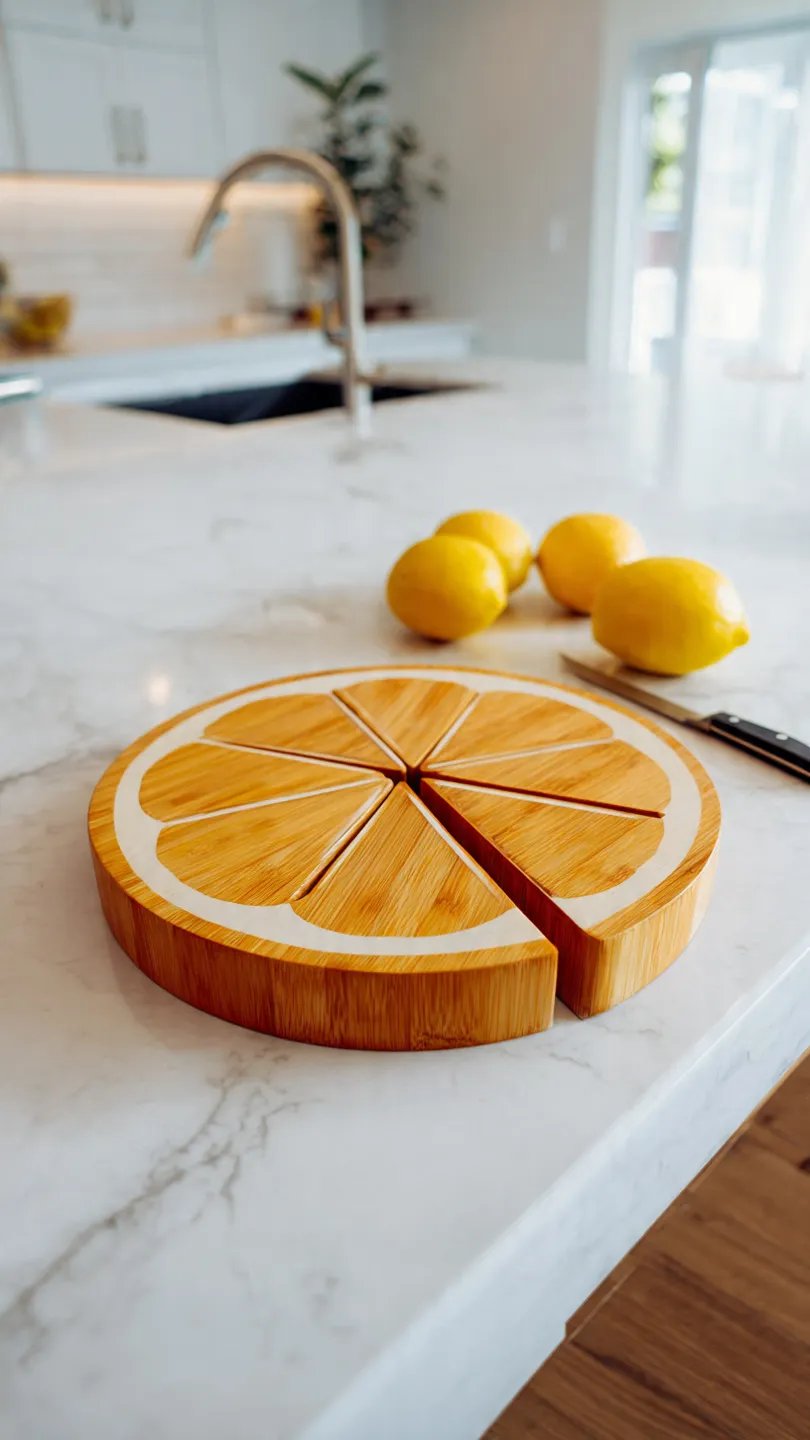
- Lemon-shaped boards make immediate visual statements through form rather than just surface decoration
- The sculptural quality adds three-dimensional interest that flat decor cannot provide
- Bamboo or wood construction ensures functionality alongside playful design
- This whimsical touch adds personality without requiring serious design commitment or expense
- The unique shape creates conversation-starting moments when guests visit your kitchen
Choosing a cutting board shaped like a lemon slice itself rather than merely decorated with lemon prints takes the theme in a more playful, dimensional direction.
These sculptural boards function perfectly well for cheese presentations, small chopping tasks, or serving appetizers while making people smile with their charming silhouette.
What I appreciate about this approach is how it injects personality through form; the shape tells the story even from across the room before anyone notices surface details.
Look for quality wood construction with food-safe finishes that allow actual use rather than purely decorative versions that gather dust.
The best examples balance novelty with craftsmanship, feeling special without crossing into silly territory.
Display options for shaped cutting boards differ from standard rectangular versions because the form itself provides visual interest.
Simply laying it on the counter near the sink or stove creates an eye-catching moment that breaks up monotonous horizontal lines.
Standing it in a plate rack or propping it against the backsplash showcases the distinctive silhouette beautifully.
In my experience, limiting novelty-shaped items to one or two prevents kitchens from feeling theme-park excessive. A lemon-slice board paired with otherwise classic elements strikes the right balance between fun and sophisticated.
Use it during gatherings for serving, then display it prominently afterward as a reminder of good times and cheerful hospitality that defines your home.
Sunny Yellow Bar Stools
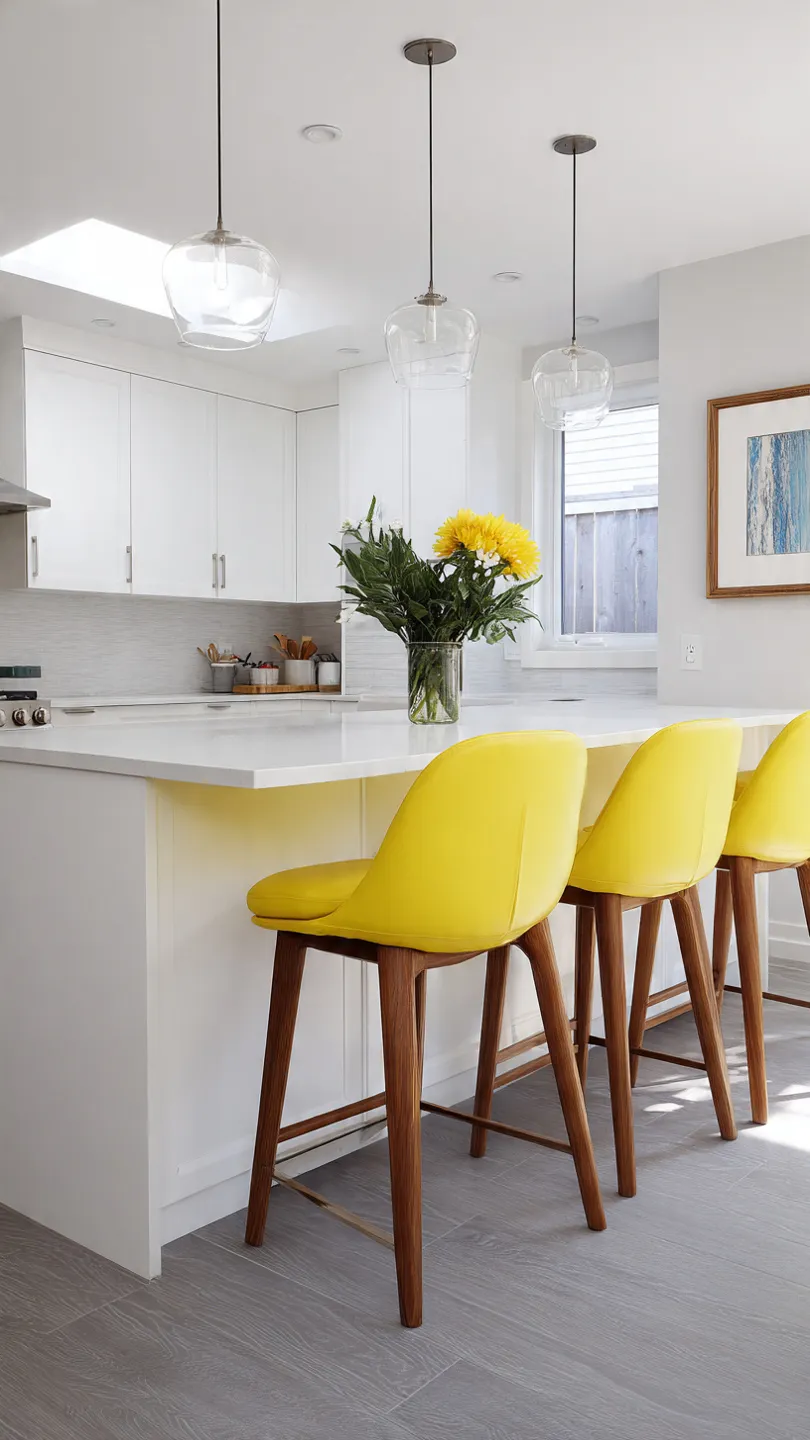
- Yellow bar stools introduce the lemon color palette through furniture rather than small accessories
- The larger scale creates a bold impact that anchors the entire citrus theme confidently
- Upholstered seating adds comfort and texture that hard surfaces lack in kitchen environments
- This permanent piece signals commitment to the aesthetic while remaining changeable if tastes evolve
- Choose yellow tones matching lemon rind for thematic consistency or softer buttery shades for subtlety
Investing in yellow bar stools represents a more substantial commitment to the lemon aesthetic than smaller decor items, but the impact justifies the investment.
These furniture pieces occupy significant visual space and immediately establish yellow as a primary color in your kitchen’s palette.
I’ve seen this work beautifully in predominantly white or neutral kitchens where the yellow seating becomes the room’s personality and energy source.
The key is selecting the right yellow tone; true lemon yellow makes a vibrant, energetic statement, while softer butter or marigold shades feel warmer and more subdued.
Consider your kitchen’s natural light; spaces with abundant sunlight can handle bolder yellows, while darker kitchens benefit from lighter, more reflective shades.
The style of your yellow bar stools should complement your kitchen’s overall design language rather than fighting against it.
Mid-century modern silhouettes suit contemporary and transitional kitchens, while traditional turned-leg stools work in farmhouse settings.
Upholstered seats in yellow fabric offer comfort and visual softness, though they require more maintenance than solid wood or metal versions.
That’s why many designers recommend performance fabrics that resist stains and clean easily, crucial in kitchens where spills happen regularly.
The stools become gathering spots for casual meals, homework sessions, and morning coffee, making them hardworking pieces that should balance beauty with durability.
When guests enter your kitchen, these sunny seats immediately communicate warmth and welcoming hospitality.
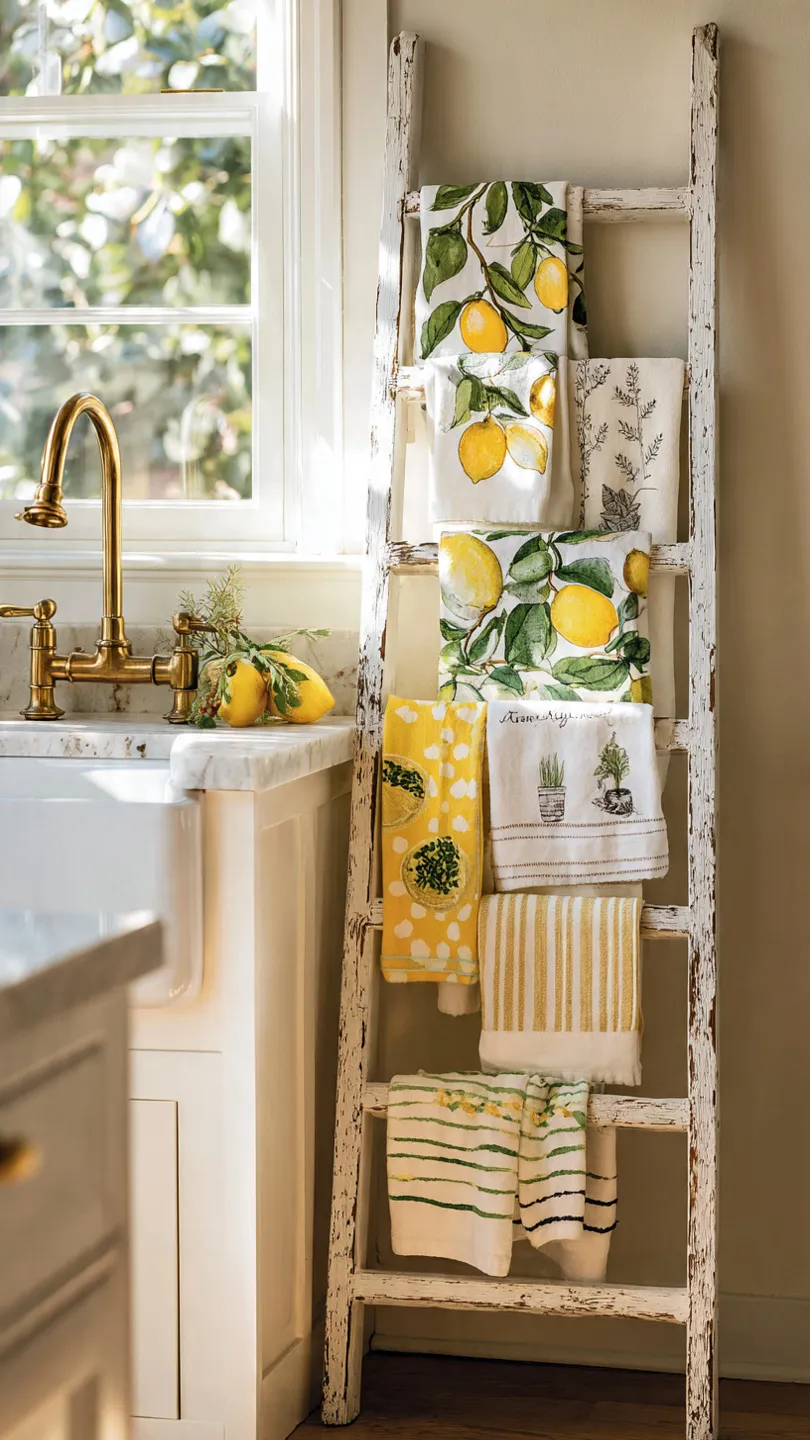
- A towel ladder displays multiple lemon textiles vertically, maximizing visual impact in a limited space
- The casual draping creates a relaxed, farmhouse-inspired atmosphere rather than formal styling
- This approach allows mixing different lemon patterns and styles within a cohesive yellow-green palette
- The ladder keeps frequently-used towels accessible while maintaining decorative appeal
- Easy rotation keeps the display fresh as you launder and replace towels throughout the week
Decorative ladders have become popular kitchen storage solutions because they add vertical interest while remaining functional.
Dedicating one to lemon-themed dish towels creates a focal point that celebrates your chosen aesthetic enthusiastically.
I’ve noticed that this display method works particularly well for collectors who’ve accumulated various lemon textiles and want to showcase them all rather than hiding most in drawers.
The ladder’s rustic character suits farmhouse and cottage styles naturally, though painted versions can adapt to more modern aesthetics.
Position it near the sink for practical towel access or in a breakfast nook area where it functions more decoratively.
The mixing and layering possible with towel ladders creates visual richness that single-pattern displays cannot achieve.
Combine vintage-style lemon prints with modern geometric designs and hand-drawn botanical illustrations for depth and personality.
Vary the background colors, some white, some cream, maybe one in soft gray, to prevent monotony while maintaining thematic cohesion through repeated lemon motifs.
In my experience, odd numbers of towels create more dynamic arrangements than even numbers; five or seven towels draped at different angles look intentionally casual rather than overly styled.
This collected-over-time appearance suggests genuine appreciation for the theme rather than a single shopping trip, giving your kitchen an authentic personality that feels personal.
Lemon Print Tablecloth
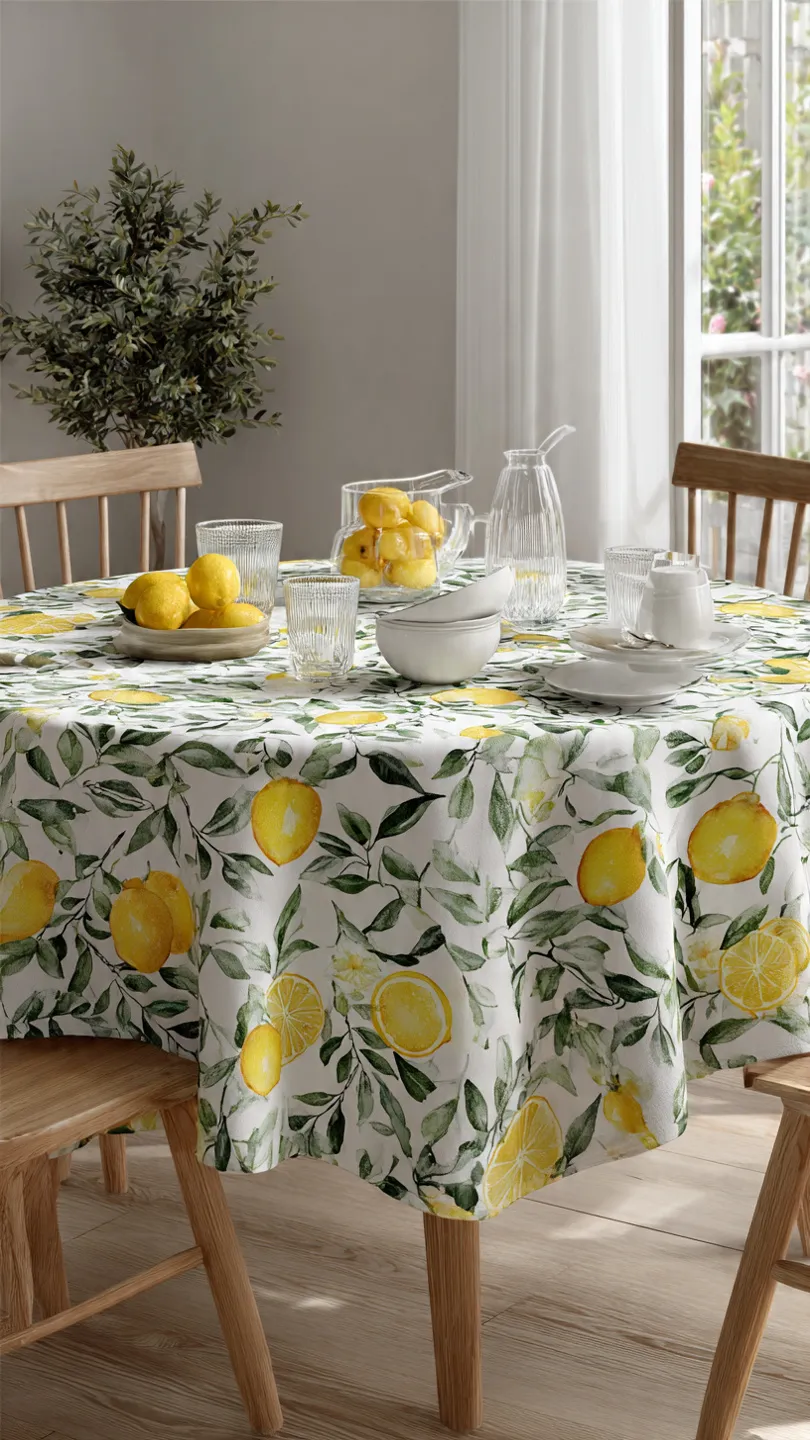
- A lemon-printed tablecloth transforms your eating area with one simple textile change
- The large surface area makes a significant visual impact without cluttering vertical spaces
- This washable fabric approach suits busy kitchens where spills and messes happen regularly
- Tablecloths protect table surfaces while advancing your decorative vision simultaneously
- Choose cotton or linen-cotton blends that launder easily and soften beautifully with repeated washing
Table linens offer one of the easiest ways to introduce or intensify lemon themes because they’re inherently temporary and seasonally flexible.
A cheerful lemon tablecloth instantly refreshes your breakfast nook or eat-in kitchen area, creating a foundation for coordinated place settings and centerpieces.
What makes this approach particularly appealing is the low commitment; if you tire of the pattern, switch to a different cloth without any permanent changes to your space.
I’ve found that watercolor or hand-painted lemon designs feel more sophisticated than graphic prints, bringing artistic quality that elevates the entire dining experience.
Look for generous sizing that allows graceful draping rather than tight fits that appear strained.
The styling opportunities tablecloths enable extend beyond the fabric itself to how you layer and accessorize the table.
A lemon-printed cloth pairs beautifully with solid white dinnerware, letting the pattern shine without visual competition.
Alternatively, coordinate with lemon-yellow napkins or placemats in complementary shades for a more immersive tablespace.
That’s why many designers recommend starting with the tablecloth as your foundation, then building other elements around its specific yellow and green tones for perfect color matching.
In my experience, patterns with generous white or cream backgrounds feel less overwhelming for everyday use than densely packed designs, making meals feel fresh and inviting rather than visually exhausting.
The table becomes a celebration of simple pleasures and sunny optimism.
Floating Shelf Lemon Vignette
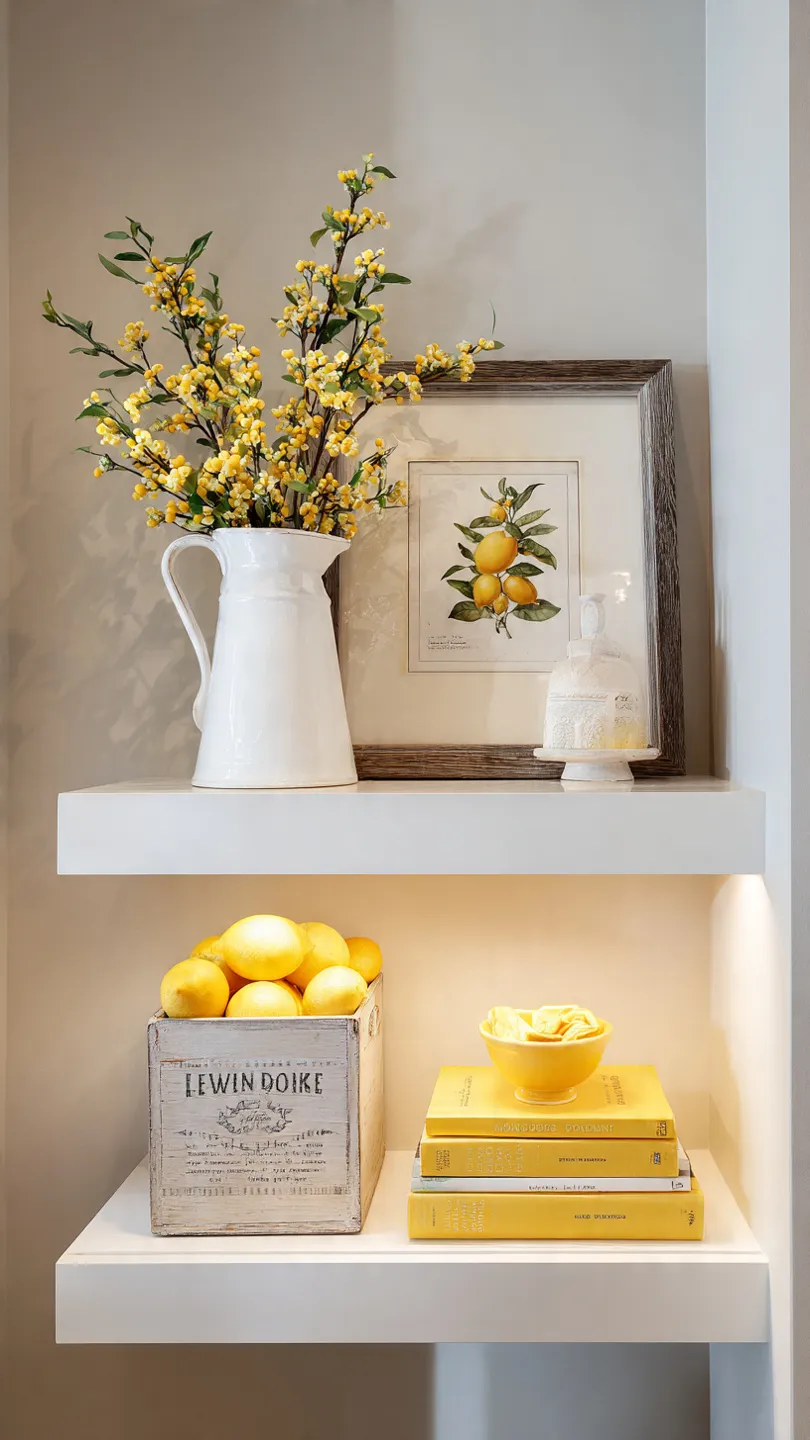
- Floating shelves create a dedicated space for lemon collections without sacrificing counter area
- The elevated positioning places decor at eye level, where it receives maximum attention
- This curated approach allows mixing various lemon items into a cohesive, gallery-like display
- Open shelving adds depth and dimension to flat wall surfaces in compact kitchens
- Rotate items seasonally to maintain a fresh appearance and prevent visual staleness
Installing floating shelves specifically for lemon-themed displays gives your collection prominence while freeing up valuable counter space for actual cooking tasks.
This approach works particularly well for smaller items that get lost on expansive counters but shine when grouped intentionally on dedicated shelving.
I’ve noticed that successful shelf vignettes follow the rule of varying heights, textures, and purposes, combine framed art with three-dimensional objects and functional items like cookbooks for visual interest.
Limit the color palette to your lemon theme’s yellows, greens, whites, and natural woods to maintain cohesion even when mixing different item types and styles throughout the arranged collection.
The styling technique significantly impacts whether your shelf feels professionally curated or randomly cluttered.
Start with a larger anchor piece, perhaps a framed print or substantial ceramic pitcher, then build around it with smaller supporting items.
Leave some negative space; overcrowding diminishes impact and makes the display feel chaotic rather than intentional.
In my experience, grouping items in odd numbers and creating subtle triangular arrangements leads the eye naturally across the shelf.
Include one or two functional pieces like a small plant or frequently-referenced cookbook to prevent the display from feeling like untouchable museum staging.
The result is a living vignette that evolves with your collection while maintaining the fresh, cheerful spirit that drew you to lemon decor initially.
Lemon Slice Placemats
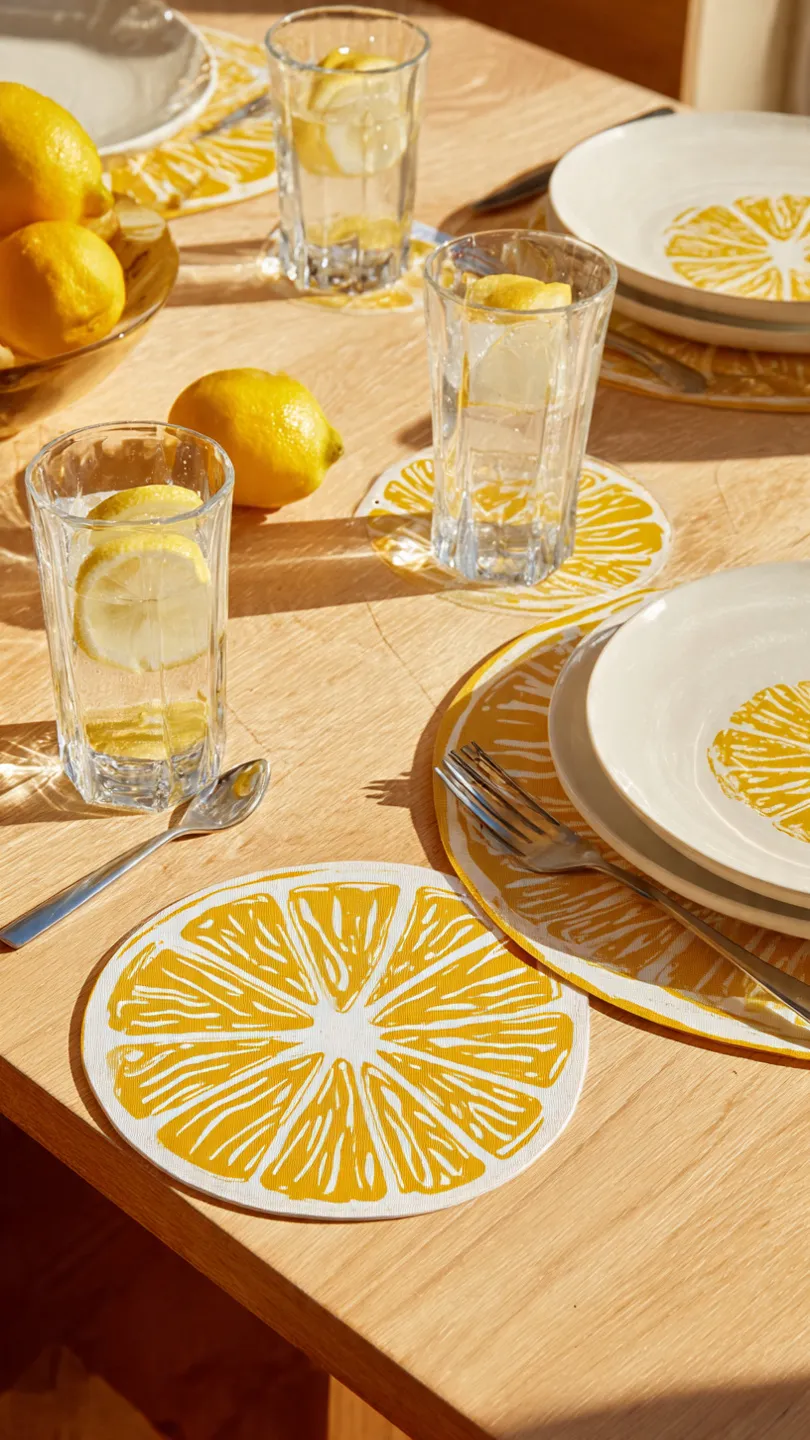
- Lemon slice placemats introduce the theme directly, where you eat, creating an immersive dining experience
- The playful circular shape breaks from traditional rectangular mats for unexpected visual interest
- This whimsical touch adds personality to casual meals without formal table-setting complexity
- Wipe-clean materials make them practical for everyday use despite their decorative appearance
- Kids especially love the fun design, making family meals more engaging and cheerful
Placemats shaped and designed like lemon slices bring playful energy to breakfast and lunch settings while protecting your table surface.
This approach works beautifully for families seeking to inject fun into everyday routines; children delight in the novelty, while adults appreciate the cheerful aesthetic.
I’ve found that these work best for casual meals rather than formal dinner parties, where their whimsical nature fits the relaxed atmosphere perfectly.
Look for versions made from wipeable materials like cork, laminated fabric, or silicone that handle spills and crumbs easily.
The round shape differs from standard rectangular mats, creating visual variety that catches the eye and signals a less conventional, more creative approach to table setting.
Coordinating lemon slice placemats with other table elements requires thoughtful balance to avoid overwhelming the dining experience.
Pair them with solid-colored napkins in complementary yellows or fresh whites rather than additional patterns that compete visually.
Simple white dinnerware provides a clean backdrop that lets the placemat design shine without creating chaotic pattern-on-pattern conflicts.
That’s why many designers recommend limiting bold patterns to one or two elements per table setting, using solids elsewhere for visual rest.
In my experience, these novelty pieces feel most successful when treated as the table’s statement element, supported by simpler coordinating items.
The result is a dining area that feels deliberately cheerful and welcoming, perfect for sunny weekend brunches or casual weeknight family dinners.
Lemon Farmhouse Sign
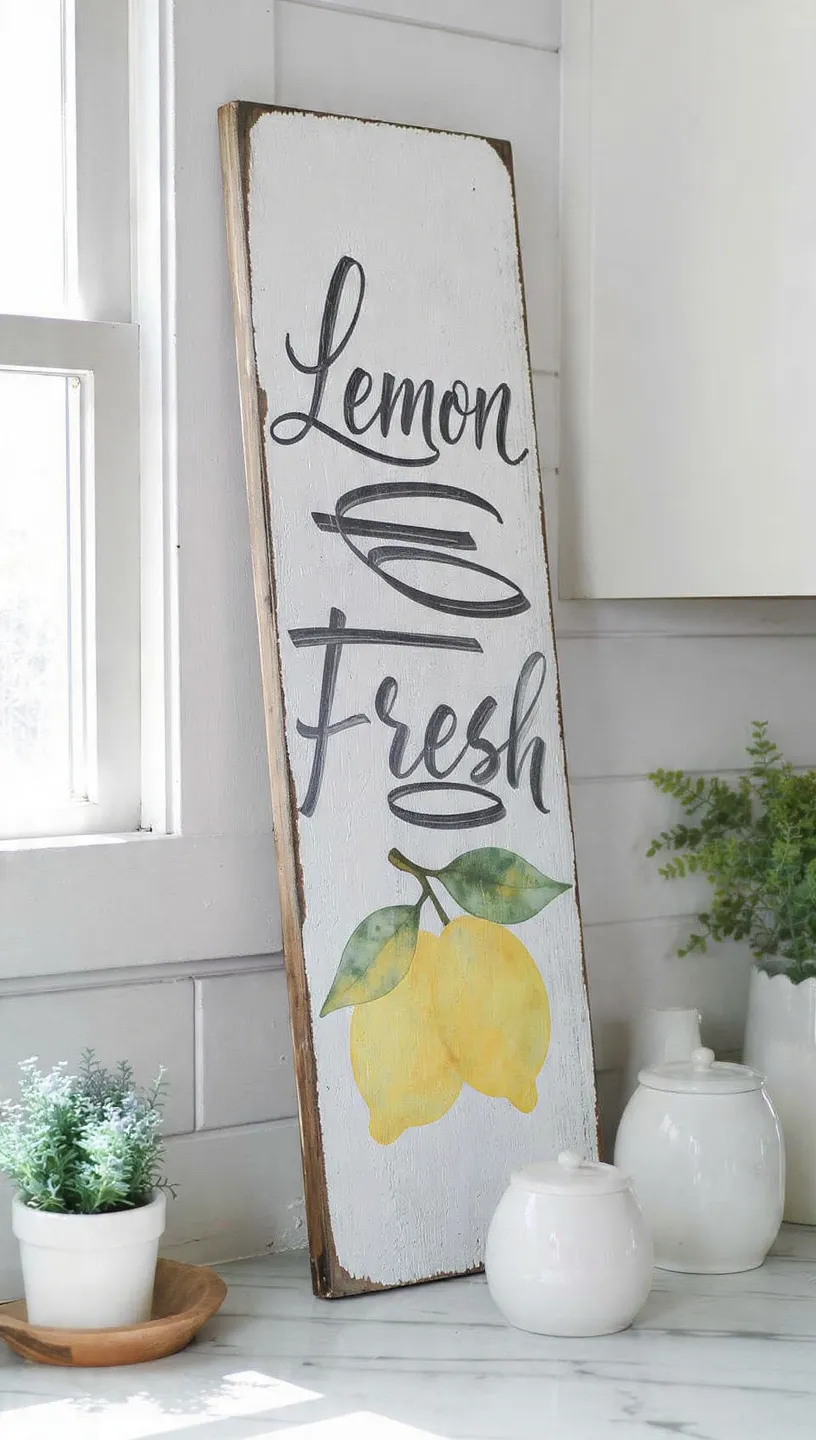
- Farmhouse-style signs add personalized messaging that reinforces your lemon theme through words and imagery
- The rustic, handmade appearance brings warmth and casual charm to modern kitchen spaces
- These affordable pieces make significant visual statements despite their simple construction
- Signs work on counters, shelves, or are hung on walls, depending on size and backing hardware
- Look for hand-painted versions with authentic distressing rather than mass-produced printed alternatives
Decorative signs featuring lemon-related phrases or illustrations tap into the popular farmhouse aesthetic while advancing your citrus theme.
These pieces typically feature sayings like “When Life Gives You Lemons,” “Lemon Fresh,” or “Fresh Squeezed,” combining typography with simple lemon illustrations.
I’ve noticed that hand-painted signs with genuine wood grain and subtle distressing feel significantly more authentic than digitally printed versions on manufactured boards.
The personal touch matters; signs that appear handcrafted add warmth and character that perfectly manufactured items cannot replicate.
Position them on open shelving, counter areas, or hanging on walls near your dining space, where the messaging becomes part of daily life.
The styling context around lemon signs affects whether they read as thoughtful decor or kitschy clutter.
A single well-chosen sign among mostly neutral, functional kitchen items makes a charming statement.
Multiple signs or excessive text-based decor can overwhelm and cheapen the overall aesthetic.
In my experience, signs work best when they’re one element within a larger vignette that includes varied textures and forms, perhaps grouped with a small plant, ceramic pieces, or cookbooks that share the yellow color story.
Keep the messaging positive and light-hearted; overly clever or sarcastic phrases date quickly, while simple, optimistic statements maintain timeless appeal.
The goal is to add personality that feels genuine to your home rather than recreating a retail display.
Yellow Kitchen Mixer
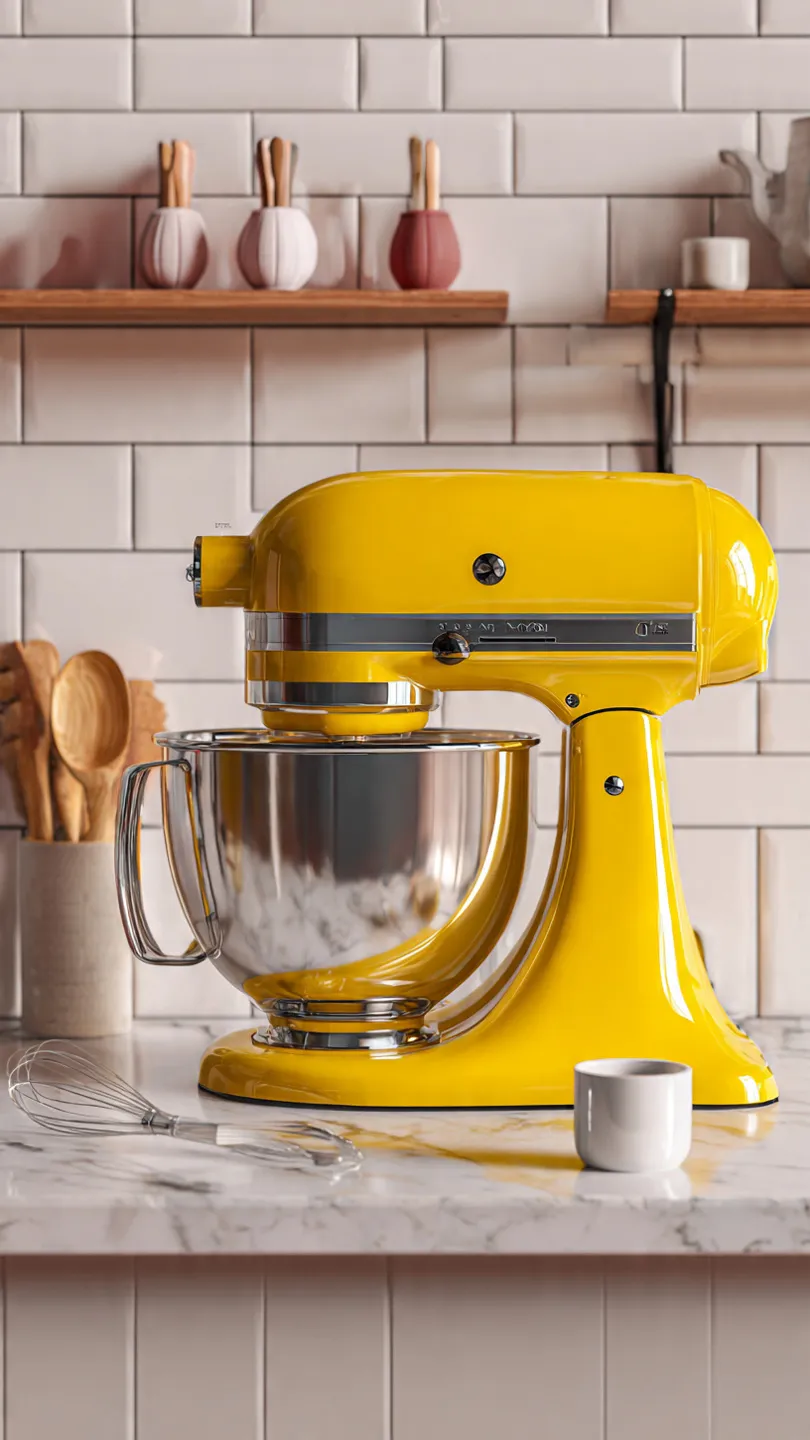
- A yellow stand mixer combines essential kitchen functionality with significant decorative impact
- The substantial size and countertop placement make it a constant, prominent color element
- Quality kitchen appliances in statement colors eliminate the need for purely decorative items
- This approach suits serious cooks who want beauty and performance in their tools
- The investment signals long-term commitment to the lemon-inspired yellow aesthetic
Choosing a stand mixer in sunny yellow represents perhaps the ultimate marriage of function and aesthetic in lemon-themed kitchens.
This essential appliance occupies prime counter real estate, meaning its appearance significantly influences your kitchen’s overall look.
I’ve seen how selecting major appliances in statement colors transforms kitchens because the items are too substantial to ignore; they become architectural elements rather than mere accessories.
For avid bakers who use stand mixers regularly, investing in a beautiful yellow version means your most-used tool also serves as your most impactful decor piece.
This approach particularly appeals to those who prefer functional beauty over purely decorative objects that serve no practical purpose.
The key consideration with colorful appliances is ensuring you’ll love the shade long-term, as these represent significant investments compared to easily changeable textiles or accessories.
True lemon yellow creates vibrant energy but might feel overwhelming in smaller kitchens, while softer buttercream or marigold tones offer subtler warmth.
That’s why many designers recommend obtaining color samples or viewing display models in person rather than relying on online photos that may not represent actual hues accurately.
In my experience, a yellow mixer works best in kitchens with predominantly white or neutral palettes where it becomes the singular bold accent.
Pair it with coordinating yellow accessories, dish towels, trivets, canisters, in matching shades to create intentional color cohesion throughout the space.
Lemon Branch Garland
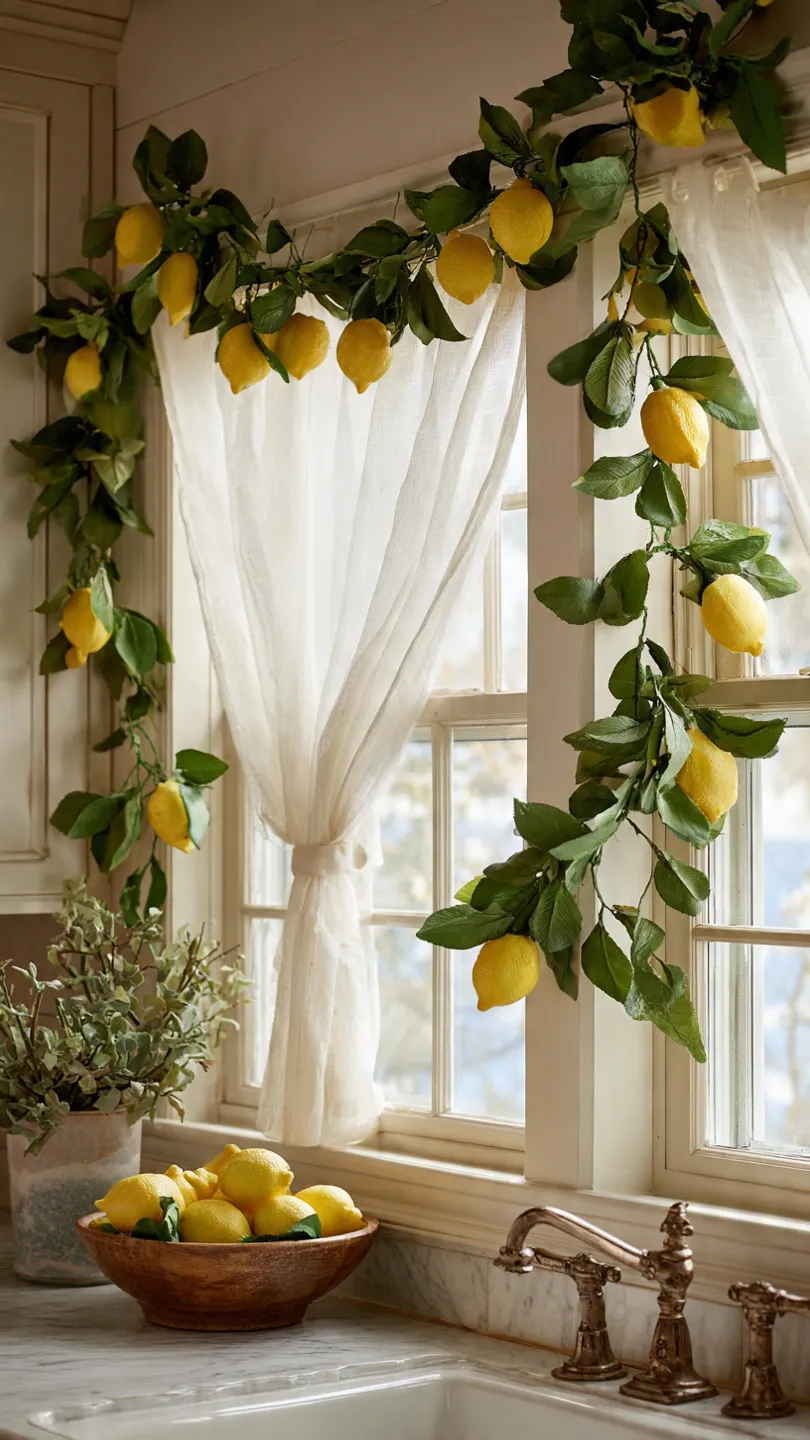
- Garlands add movement and organic flow that rigid decor items cannot provide
- Window or cabinet placement brings the lemon theme to architectural features
- This approach works particularly well for seasonal decorating during the spring and summer months
- Artificial versions maintain appearance indefinitely without the upkeep fresh garlands require
- The draped installation creates softness that balances the kitchen’s hard surfaces and angular cabinetry
Draping lemon garland around windows, over cabinet doors, or along open shelving introduces graceful curves and natural movement to kitchen spaces dominated by straight lines and hard surfaces.
This decorative technique draws inspiration from European kitchens, where fresh herb and fruit garlands have long added rustic charm.
I’ve found that artificial garlands now look remarkably realistic, with quality versions featuring varied lemon sizes, textured rinds, and flexible stems that drape naturally rather than stiffly.
Position garlands where they’ll be noticed but won’t interfere with cooking activities, above windows is ideal, or along the top edge of upper cabinets, where they add visual interest to otherwise blank space.
The installation method affects how professional and intentional the garland appears, versus appearing haphazardly stuck in place.
Use small adhesive hooks or tiny nails placed strategically to support the garland’s weight while controlling its drape and curve.
Create gentle swags rather than tight, uniform loops for a more organic, collected appearance.
In my experience, combining lemon garland with simple greenery, eucalyptus, or olive branches, adds depth and prevents the all-citrus approach from feeling one-note or excessive.
This works especially beautifully for spring celebrations, Easter gatherings, or summer entertaining when the fresh, bright theme aligns perfectly with the season.
The garland transforms ordinary architectural elements into festive focal points that make everyday moments feel special.
Lemon Herb Garden Display
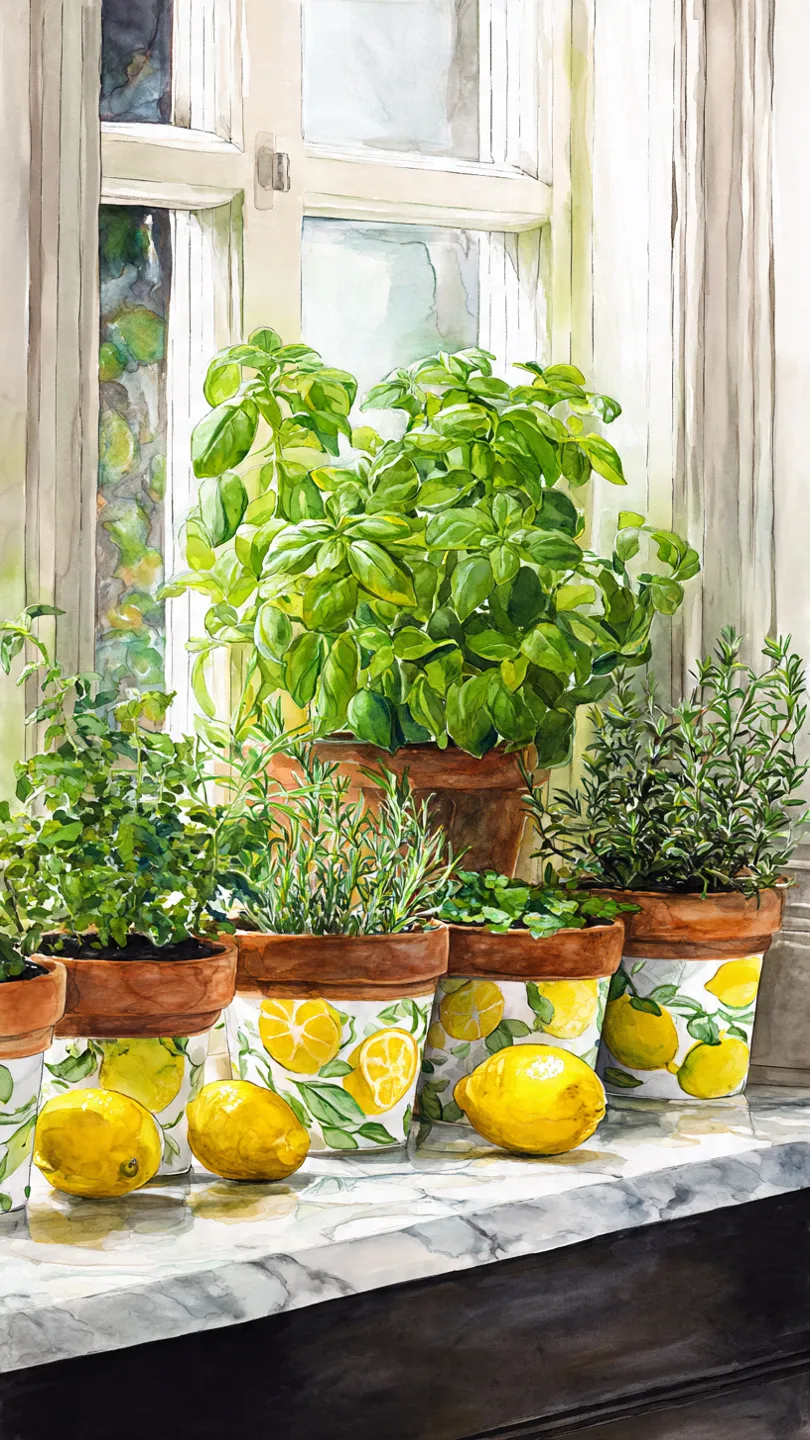
- Herb pots with lemon designs combine functional gardening with decorative theme reinforcement
- Fresh growing plants add life, movement, and fragrance that static decor cannot provide
- The windowsill placement maximizes natural light while keeping herbs accessible for cooking
- Hand-painted or decorated pots transform basic terracotta into personalized decorative pieces
- This approach appeals to cooks who value fresh ingredients and beautiful presentation equally
Growing fresh herbs in lemon-decorated pots merges practical kitchen gardening with aesthetic expression.
This living display serves daily cooking needs while advancing your citrus theme through decorated containers and the visual connection between fresh herbs and lemon’s culinary uses.
I’ve noticed that this approach resonates particularly with home cooks who appreciate both functionality and beauty. The herbs get snipped regularly for recipes, while the cheerful pots bring constant color to the windowsill.
Choose terracotta pots you’ve hand-painted with simple lemon motifs, or purchase artisan versions featuring botanical illustrations.
The natural material of clay pots coordinates beautifully with lemons’ organic origins and Mediterranean heritage.
The care routine required for living herbs ensures your lemon display remains dynamic rather than static.
New growth, occasional flowering, and the act of harvesting mean the arrangement constantly evolves, preventing the visual staleness that sometimes affects permanent decor.
Position pots in your sunniest window where herbs receive adequate light while being visible and accessible during cooking.
That’s why many designers recommend kitchen windowsills as prime real estate for this functional-decorative hybrid approach.
In my experience, grouping three to five different herb varieties creates interesting textural variety with their different leaf shapes and growth habits.
Scatter a few whole lemons between the pots or place a small lemon print nearby to strengthen the thematic connection and create cohesive styling.
Lemon Themed Oven Mitts
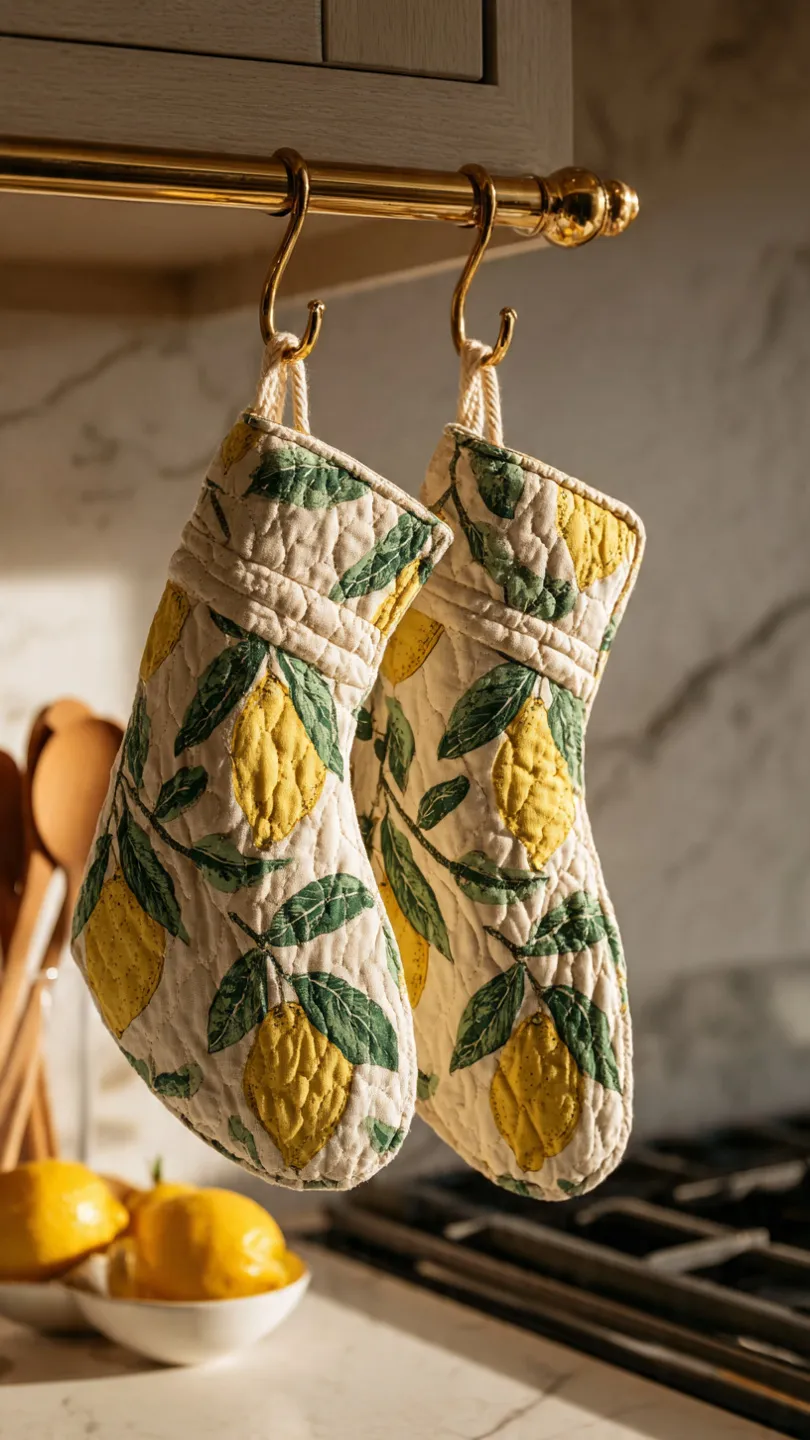
- Oven mitts bring lemon patterns into active cooking zones where they’re seen and used daily
- The practical necessity means these decorative items truly earn their place in working kitchens
- Hanging them visibly turns safety equipment into casual wall decor between uses
- This small, affordable change makes an immediate visual impact with minimal investment
- Look for quality insulation and washable fabrics that maintain appearance through regular laundering
Oven mitts represent the perfect example of functional items that can advance your decorative vision without adding clutter.
Choosing versions adorned with lemon prints ensures that necessary cooking safety equipment also contributes to your aesthetic goals.
I’ve found that hanging mitts from hooks near the stove keeps them accessible while displaying their cheerful patterns as casual decor.
This approach particularly suits those who resist purely decorative items, preferring everything in their kitchen to serve genuine purposes.
Quality matters here; select mitts with adequate heat protection and durable fabric that withstands frequent washing, ensuring they remain beautiful and functional through extended use rather than degrading into shabby, stained embarrassments.
The display strategy for lemon oven mitts affects whether they read as intentional decor or merely utilitarian tools shoved on hooks.
Coordinate them with matching pot holders to create a cohesive set that signals thoughtful selection rather than random accumulation.
Position hooks at an appropriate height near your stove or oven, where mitts are genuinely useful, not just decorative. Authenticity matters in kitchen design.
In my experience, pairing lemon-printed mitts with solid yellow or cream kitchen towels nearby creates subtle color repetition that feels curated and intentional.
This small detail might seem insignificant, but guests notice when even utilitarian items reflect your overall design vision, suggesting an attentiveness to detail that characterizes truly well-considered homes.
Lemon Cookie Jar
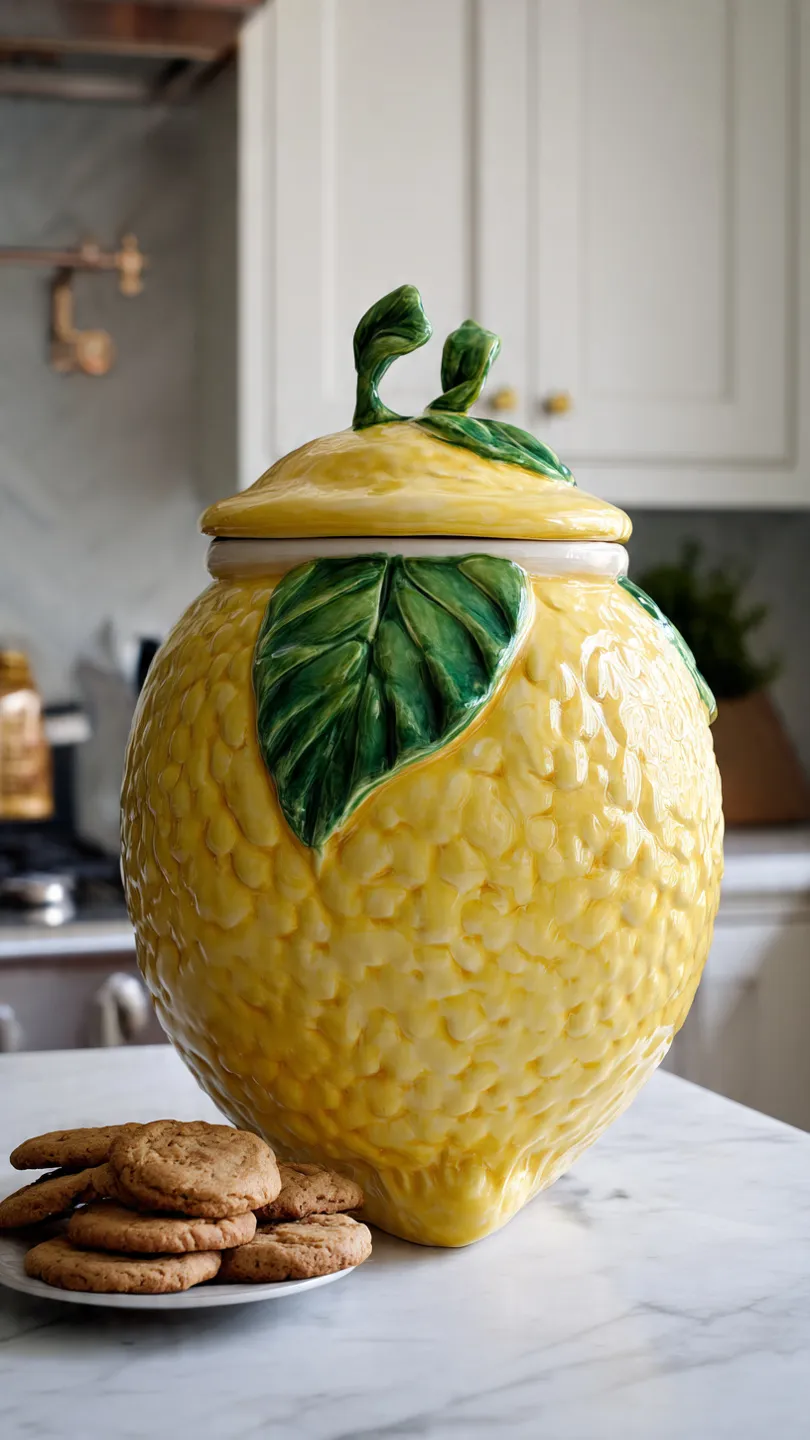
- A lemon-shaped cookie jar adds whimsical three-dimensional sculpture to otherwise flat counter surfaces
- The functional storage purpose justifies its prominent countertop placement
- Ceramic construction and quality glazing ensure durability for daily cookie access
- This nostalgic piece evokes vintage kitchen charm while feeling fresh in contemporary spaces
- The sculptural form makes a statement even from across the room before details become visible
Cookie jars shaped like lemons inject playful personality into kitchens while serving the practical purpose of storing baked goods.
These charming containers typically feature vibrant yellow ceramic with glossy glazing and green leaf details that form the lid, creating miniature sculptures that command attention.
I’ve noticed that three-dimensional lemon forms feel more sophisticated than flat lemon prints because they add architectural interest and cast shadows that change throughout the day as light shifts.
Position the jar prominently on counters near your baking area or breakfast station where it’s both accessible and visible.
The nostalgic cookie jar format evokes grandmother’s kitchen warmth while feeling perfectly appropriate in modern settings when selected in clean, sculptural forms.
The key to making novelty-shaped items like lemon cookie jars work in adult kitchens is ensuring quality construction and a thoughtful styling context.
A beautifully glazed ceramic piece with substantial weight and detailed craftsmanship reads as collectible art rather than cheap kitsch.
Surround it with simpler, more neutral items that allow the lemon jar to shine as the focal point rather than competing with equally bold elements.
That’s why many designers recommend the “one statement piece per vignette” rule.
In my experience, keeping treats actually stored in the jar reinforces its functional legitimacy; it’s genuinely used, not just displayed.
This working-decor approach creates kitchens that feel lived-in and authentic, where beauty and utility coexist naturally rather than existing in separate, disconnected spheres.
Yellow Pendant Lighting
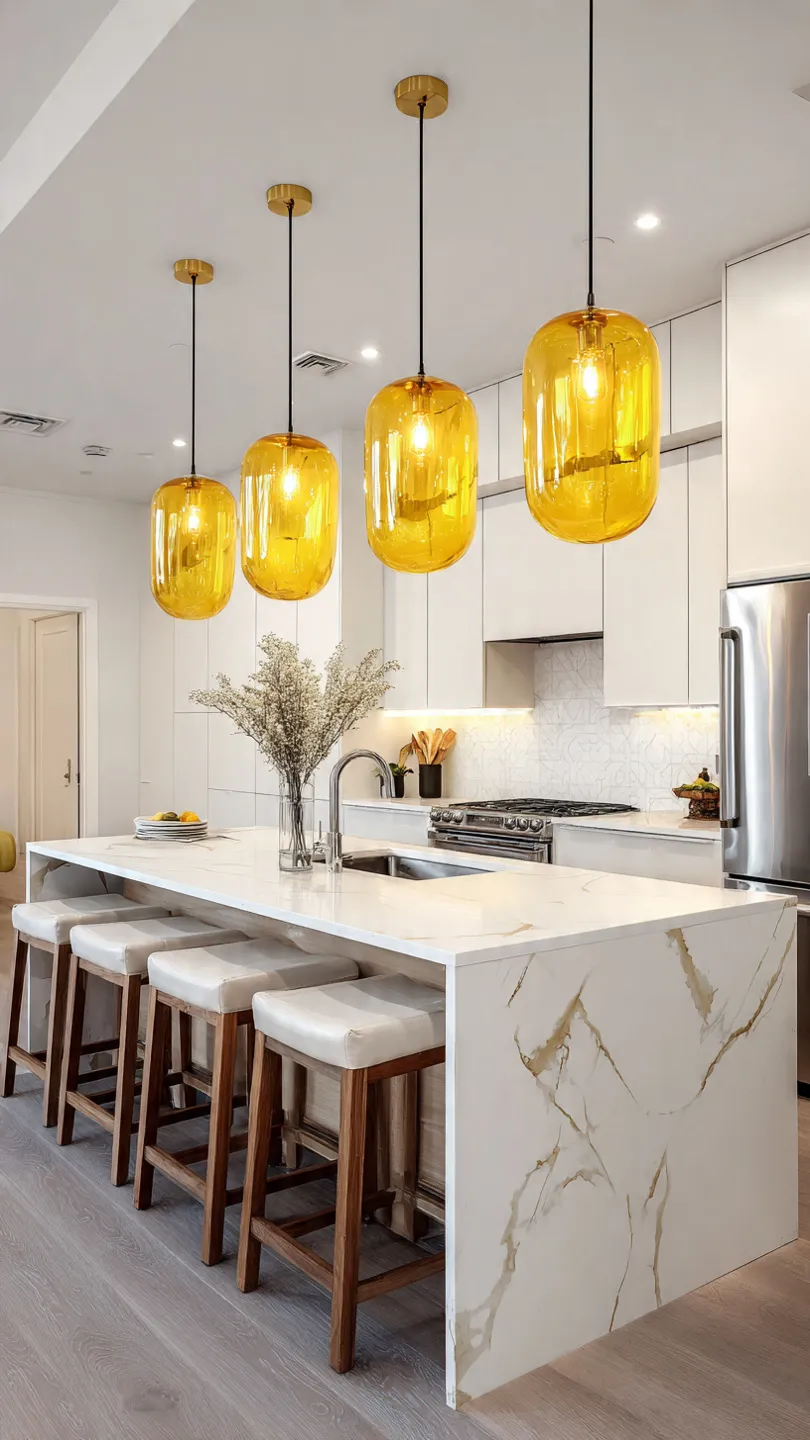
- Yellow pendant lights introduce lemon tones at ceiling level, often overlooked in kitchen decorating
- The fixtures provide essential task lighting while making bold decorative statements
- Glass shades cast colored light that warms the entire space with a golden, sun-like glow
- This permanent installation represents a significant commitment to the yellow aesthetic
- The elevated position draws eyes upward, making ceilings feel higher and spaces more dynamic
Installing pendant lights with yellow shades represents a more architectural approach to incorporating lemon-inspired color than movable accessories allow.
These fixtures illuminate work surfaces while bathing the kitchen in warm, golden light that enhances the space’s overall ambiance.
I’ve seen how dramatically colored lighting transforms kitchens because it affects not just one surface but casts a tinted glow across counters, cabinets, and walls below.
This creates an immersive color experience that smaller decor items cannot achieve.
The key is selecting yellow glass in tones that complement rather than clash with other yellows in your lemon-themed items. Consistency in undertones (warm versus cool yellows) ensures cohesion across all elements.
The installation configuration and shade style significantly impact how yellow pendants integrate with your kitchen’s design.
Three matching fixtures in a row above an island create symmetry and strong visual rhythm, while varied heights add dynamic interest.
Consider the glass opacity; clear yellow glass provides vibrant color with transparency, while frosted or opaque shades diffuse light softly and intensify the yellow tone.
That’s why many designers recommend consulting with lighting professionals to ensure proper brightness levels; heavily tinted glass can reduce light output significantly, requiring higher wattage bulbs than clear fixtures need.
In my experience, yellow pendants work best in kitchens with abundant natural light during the day, where the colored glow becomes especially noticeable and atmospheric during evening hours.
Lemon Napkin Rings
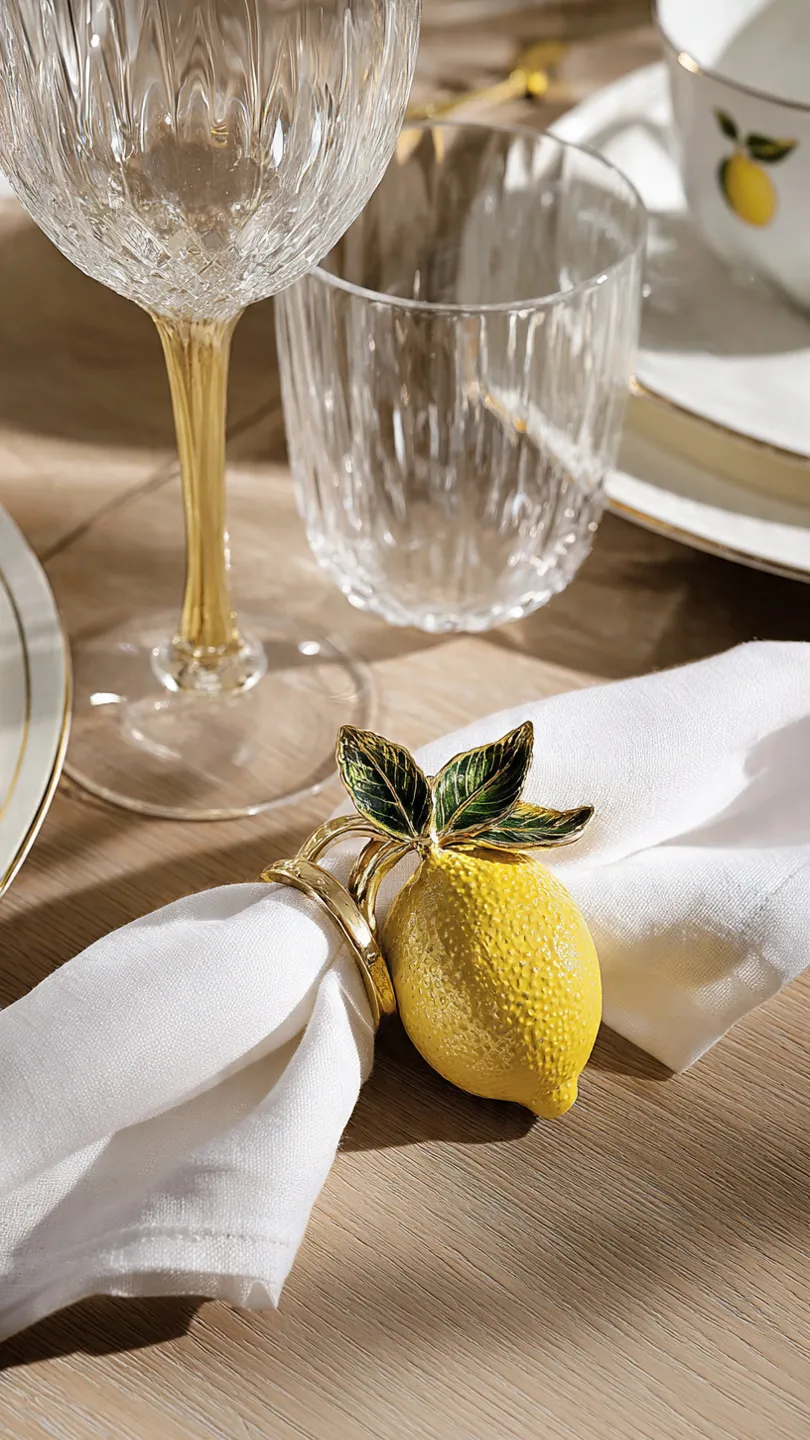
- Napkin rings add a subtle lemon theme to table settings without overwhelming the dining experience
- The small scale makes these perfect for formal occasions where restraint is appropriate
- Metal or ceramic rings bring a quality material presence that elevates everyday meals
- This detail-oriented approach shows attentiveness to the complete design vision
- Sets of four to eight allow coordinated place settings for dinner parties and family gatherings
Lemon-shaped or lemon-adorned napkin rings demonstrate how small details create a cohesive design vision across all kitchen elements.
These tiny accessories transform simple napkins into styled place settings that signal care and attention to hospitality.
I’ve found that napkin rings particularly suit those who enjoy entertaining; they add polish to dinner parties while reinforcing your aesthetic theme subtly.
Unlike bold lemon prints on tablecloths or placemats, delicate napkin rings introduce the citrus motif with restraint appropriate for formal dining.
Look for quality materials like brass, ceramic, or beaded versions that feel substantial in hand rather than lightweight plastic alternatives that cheapen the overall presentation.
The styling flexibility of napkin rings allows them to work across various occasions and seasons.
Use them for spring and summer gatherings when lemon themes feel especially appropriate, then switch to autumn-themed rings as seasons change, while keeping the quality rings stored for future use.
Pair lemon napkin rings with white or cream linens to maintain elegance, or coordinate with yellow napkins for guests who appreciate more immersive thematic experiences.
That’s why many designers recommend investing in quality rings that will last years rather than trendy disposable versions.
In my experience, mixing lemon napkin rings with otherwise classic table settings creates sophisticated balance; the themed element feels intentional rather than overwhelming, showing appreciation for both design cohesion and restraint.
Lemon Tile Backsplash Border
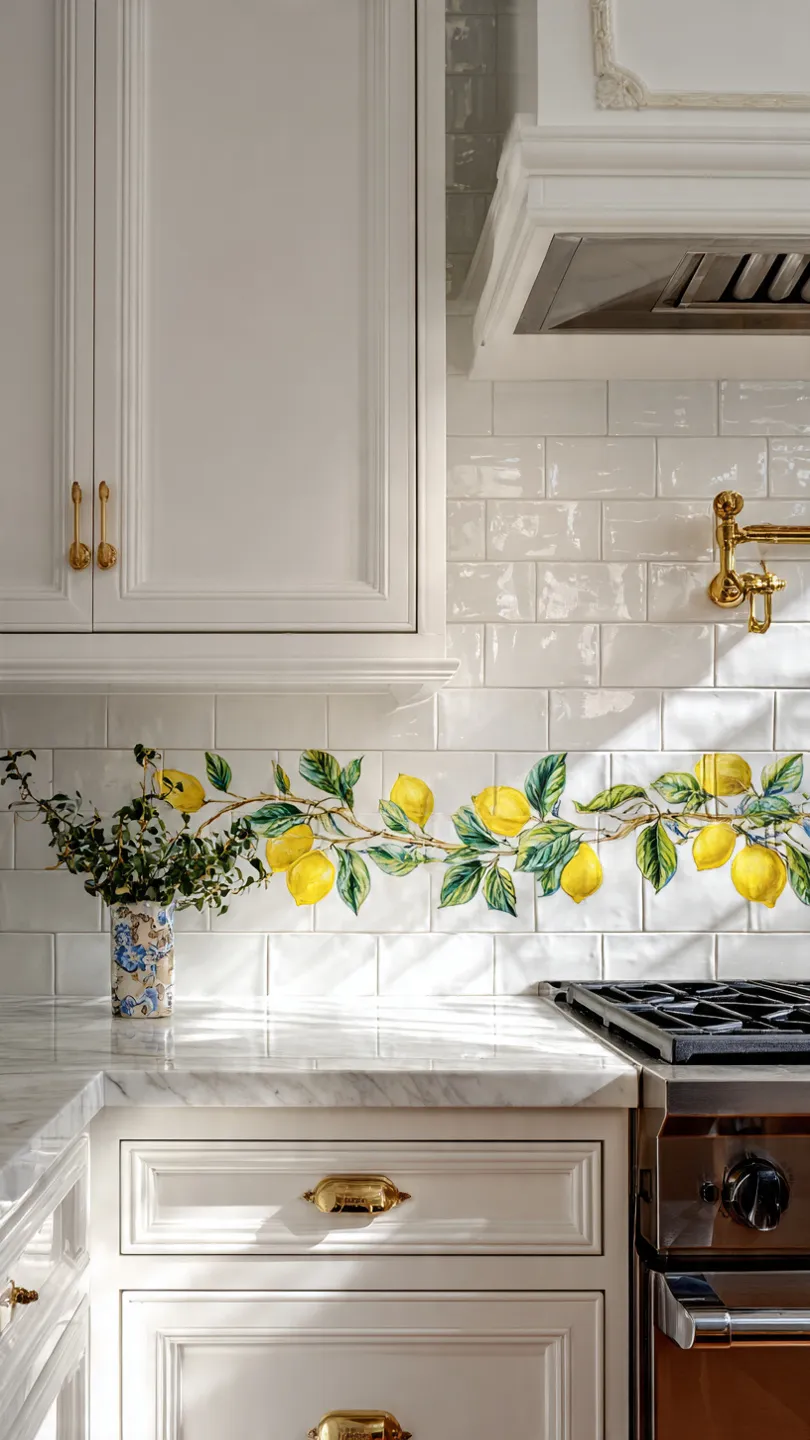
- A decorative tile border adds permanent lemon detail without fully committing to a bold backsplash
- Hand-painted accent tiles bring artisanal quality and Mediterranean character
- The horizontal band creates visual interest that breaks up expansive plain tile areas
- This architectural detail adds value to the home as a permanent improvement
- The classic approach references European kitchen traditions, where decorative tiles are heritage elements
Installing a border of lemon-decorated tiles within a larger neutral backsplash creates architectural interest while controlling how prominently the citrus theme appears.
This approach works beautifully for those who love lemon aesthetics but hesitate about covering entire walls with bold patterns.
I’ve noticed that a single row of decorative tiles running horizontally at eye level provides sufficient visual interest without overwhelming the space.
The hand-painted quality of artisan tiles adds texture and subtle color variation that mass-produced options lack, bringing warmth and character reminiscent of European farmhouse kitchens, where decorative tile work has been traditional for generations.
The placement and proportion of your lemon tile border significantly affect the overall impact.
Running it behind the cooktop creates a focal point in the kitchen’s functional heart, while extending it across the entire wall length provides continuity and rhythm.
Consider the tile size relative to your main field tiles; larger decorative tiles make bolder statements, while smaller accent tiles integrate more subtly.
That’s why many designers recommend obtaining samples and temporarily positioning them on your wall before final installation, ensuring the scale feels right in your specific space.
In my experience, coordinating the decorative tiles’ grout color with your field tiles maintains cohesion while allowing the lemon artwork to remain the focus.
This permanent installation becomes a defining kitchen characteristic that future buyers will remember and appreciate.
Lemon Theme Calendar Board
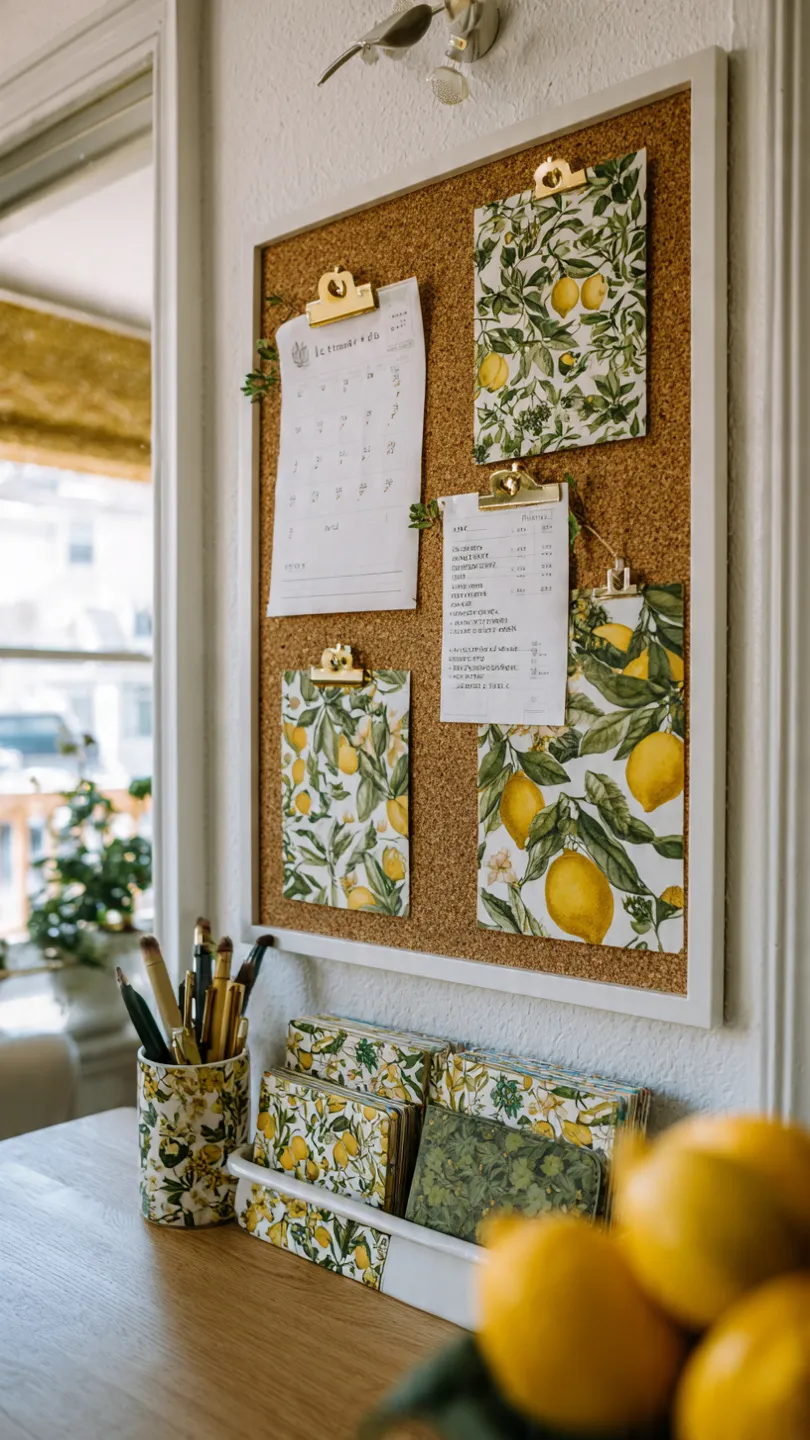
- A fabric-backed calendar board turns necessary organization into a decorative element
- The vertical wall space usage keeps counters clear while adding visual interest
- Lemon-printed fabric coordinates with the command center and the broader kitchen theme
- This functional approach ensures decor serves genuine household management purposes
- The pinboard nature allows contents to change while the background remains constant
Creating a command center or calendar board with lemon-printed fabric backing transforms practical household organization into theme-supporting decor.
These boards typically hold shopping lists, calendars, school papers, and recipe cards, essential kitchen information that needs visible placement.
I’ve found that dedicating specific wall space to organization prevents paper clutter from spreading across counters while creating a defined, styled zone.
Backing the cork or pin board with lemon-themed fabric means even this utilitarian element reinforces your design vision.
Choose fabrics with patterns that coordinate with other lemon textiles in your kitchen for visual cohesion, ensuring the command center feels intentional rather than like an afterthought stuck wherever space allowed.
The styling and framing of your lemon calendar board affect whether it reads as a functional necessity or a designed feature.
A painted wood frame, white, cream, or natural finish, elevates the board beyond a basic cork square thumbtacked to walls.
Coordinate accessories like the pen holder, small containers for paper clips, and even push pins in brass or yellow tones to maintain thematic consistency.
That’s why many designers recommend treating command centers as styled vignettes rather than purely functional spaces.
In my experience, keeping the board relatively organized and limiting paper clutter maintains its decorative appeal, too many overlapping papers obscure the pretty lemon background and defeat the styled purpose.
This balance between function and beauty creates kitchen spaces that support busy lives while remaining visually pleasing and thoughtfully designed.
Lemon Scented Candle Display
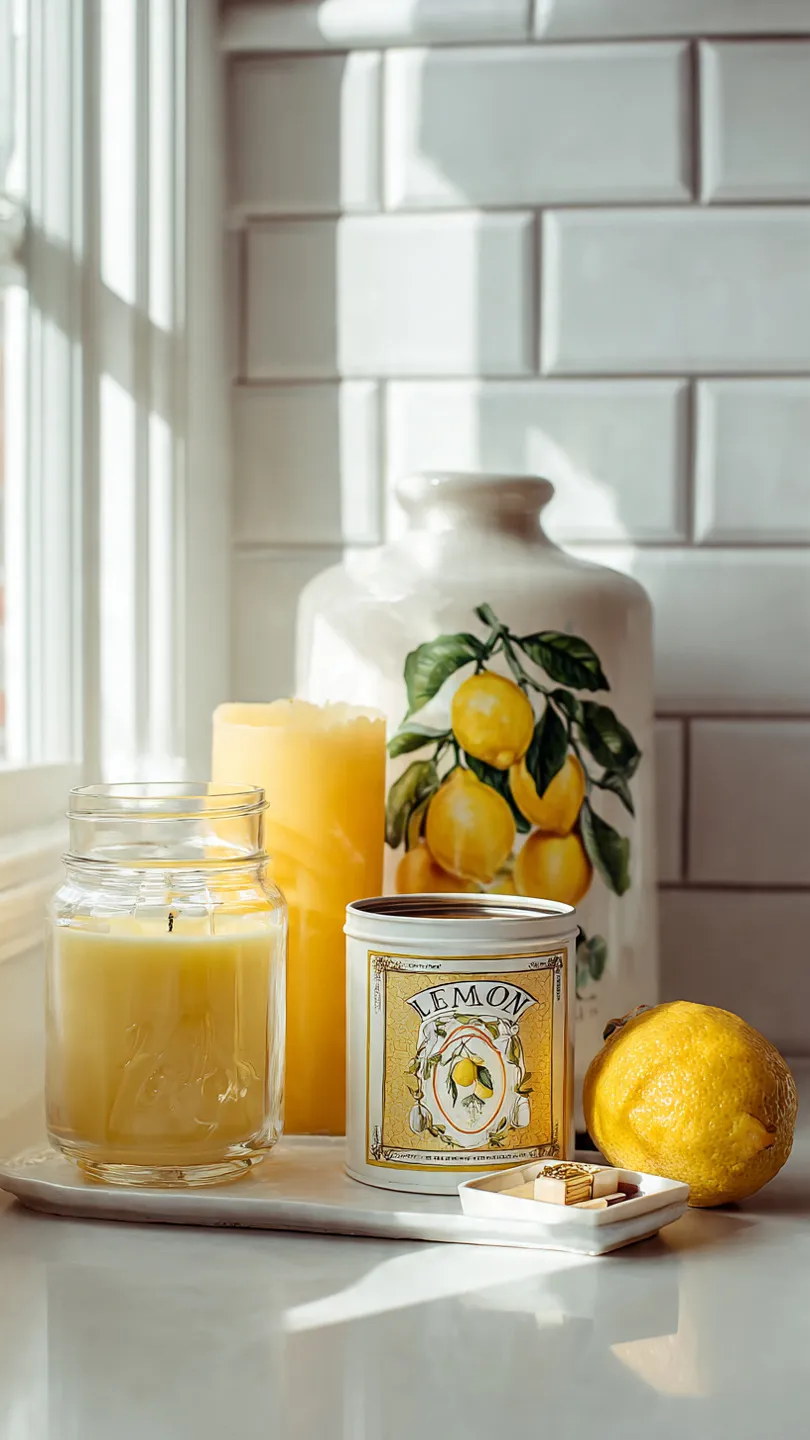
- Lemon-scented candles add an aromatic dimension that purely visual decor cannot provide
- The grouped display creates an intentional vignette from functional items
- Varying container styles and heights builds visual interest within a coordinated theme
- Candles refresh the kitchen atmosphere after cooking, serving a practical deodorizing function
- This approach appeals to those who appreciate multi-sensory home environments
Displaying lemon-scented candles as grouped decoration adds fragrance to your citrus-themed kitchen while creating attractive counter vignettes.
This multi-sensory approach enhances the lemon aesthetic beyond visual elements, surrounding you with a clean citrus scent that refreshes the space.
I’ve noticed that grouping candles in odd numbers, typically three, creates more dynamic arrangements than pairs or single candles.
Vary the container styles and heights for visual interest while maintaining thematic cohesion through the lemon scent and yellow-toned packaging.
Position the display on a small tray or decorative plate to define the grouping and prevent scattered individual candles from appearing disorganized or random across your counters.
The quality of lemon-scented candles varies dramatically, making careful selection important for both safety and scent accuracy.
Natural soy or beeswax candles with essential oil-based fragrances burn cleaner and smell more authentic than synthetic petroleum-based alternatives.
Look for scents described as fresh lemon or lemon verbena rather than overly sweet lemon cake or artificial candy variations that might clash with cooking smells.
That’s why many designers recommend burning candles before guests arrive or during morning coffee rather than while actively cooking, allowing the citrus scent to refresh the space without competing with food aromas.
In my experience, the prettiest candle containers transition beautifully into small planters or storage vessels once the wax is depleted, extending their decorative life beyond their burning phase and justifying investment in quality versions.
Vintage Lemon Crate Labels
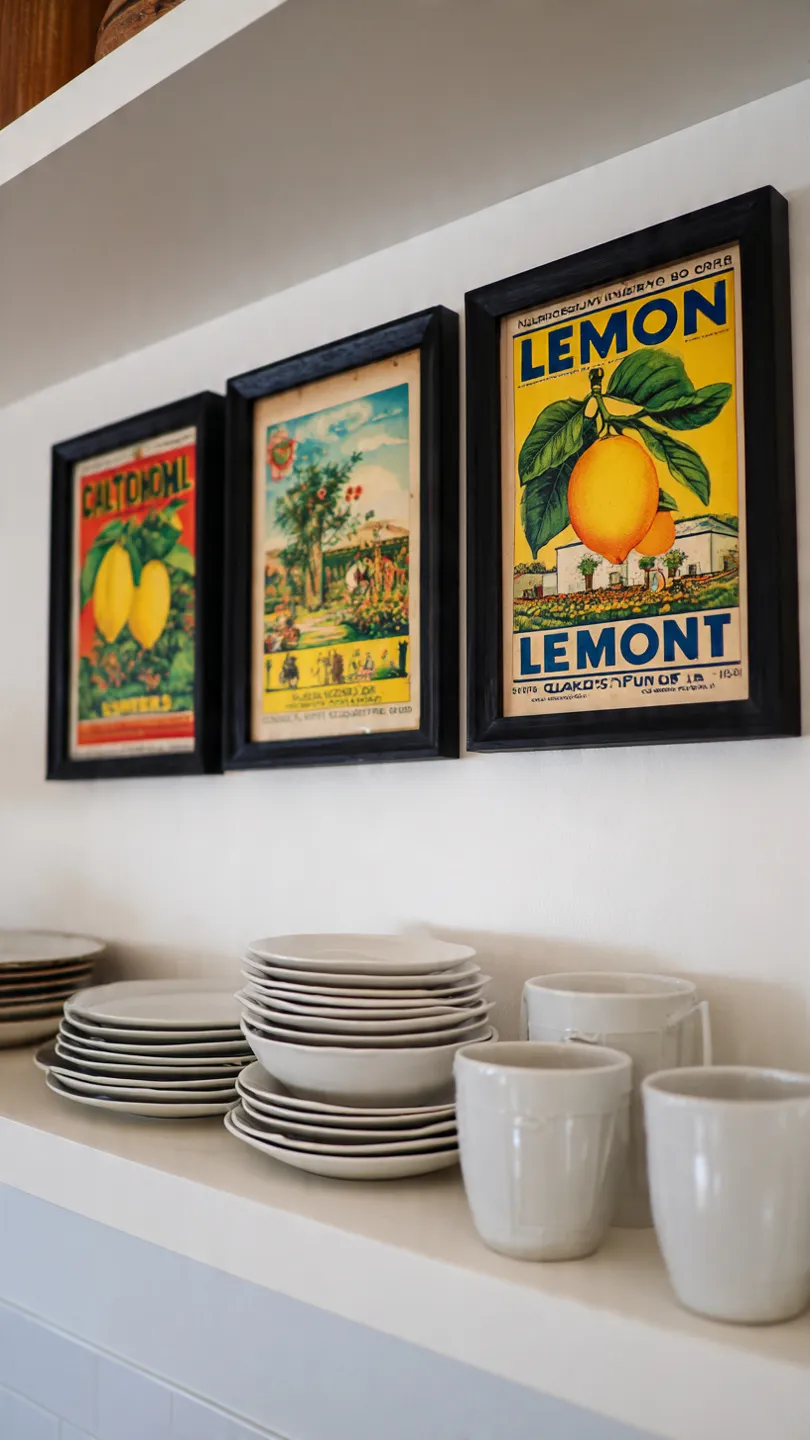
- Vintage crate labels bring authentic historical connection to lemon-growing heritage
- The graphics offer bold, colorful artwork with genuine artistic and cultural value
- Framing elevates reproduction prints into gallery-worthy wall decor
- This approach appeals to vintage enthusiasts and those appreciating agricultural history
- The varied label designs allow mixing multiple prints without a repetitive appearance
Framing vintage lemon crate labels creates wall art with historical significance and graphic appeal that transcends purely decorative purposes.
These labels once advertised California citrus to markets worldwide, featuring bold typography and illustrated designs that are now collectible Americana.
I’ve found that reproductions of these vintage labels offer affordable access to attractive designs without the cost of authentic antique labels.
The vibrant colors and varied compositions allow grouping multiple labels together without monotony. Each advertisement had unique branding, resulting in diverse artistic styles within the cohesive lemon theme.
This creates gallery walls with visual rhythm and historical interest that mass-produced modern prints cannot match.
The framing and arrangement strategy significantly impacts how vintage lemon labels integrate with your kitchen aesthetic.
Simple black or natural wood frames prevent the artwork from feeling overly themed or kitschy, instead treating them as the legitimate graphic design artifacts they are.
Uniform matting and frame styles create cohesion when displaying multiple labels together, while the varied label graphics within provide plenty of visual interest.
That’s why many designers recommend salon-style arrangements where frames touch or nearly touch, creating a unified composition rather than scattered individual pieces.
In my experience, positioning vintage label art in dining areas or breakfast nooks rather than active cooking zones helps preserve the prints. It keeps them at a comfortable viewing distance where the detailed typography and illustrations can be appreciated.
This bridges the gap between a functional kitchen and a curated living space.
Lemon Print Kitchen Runner
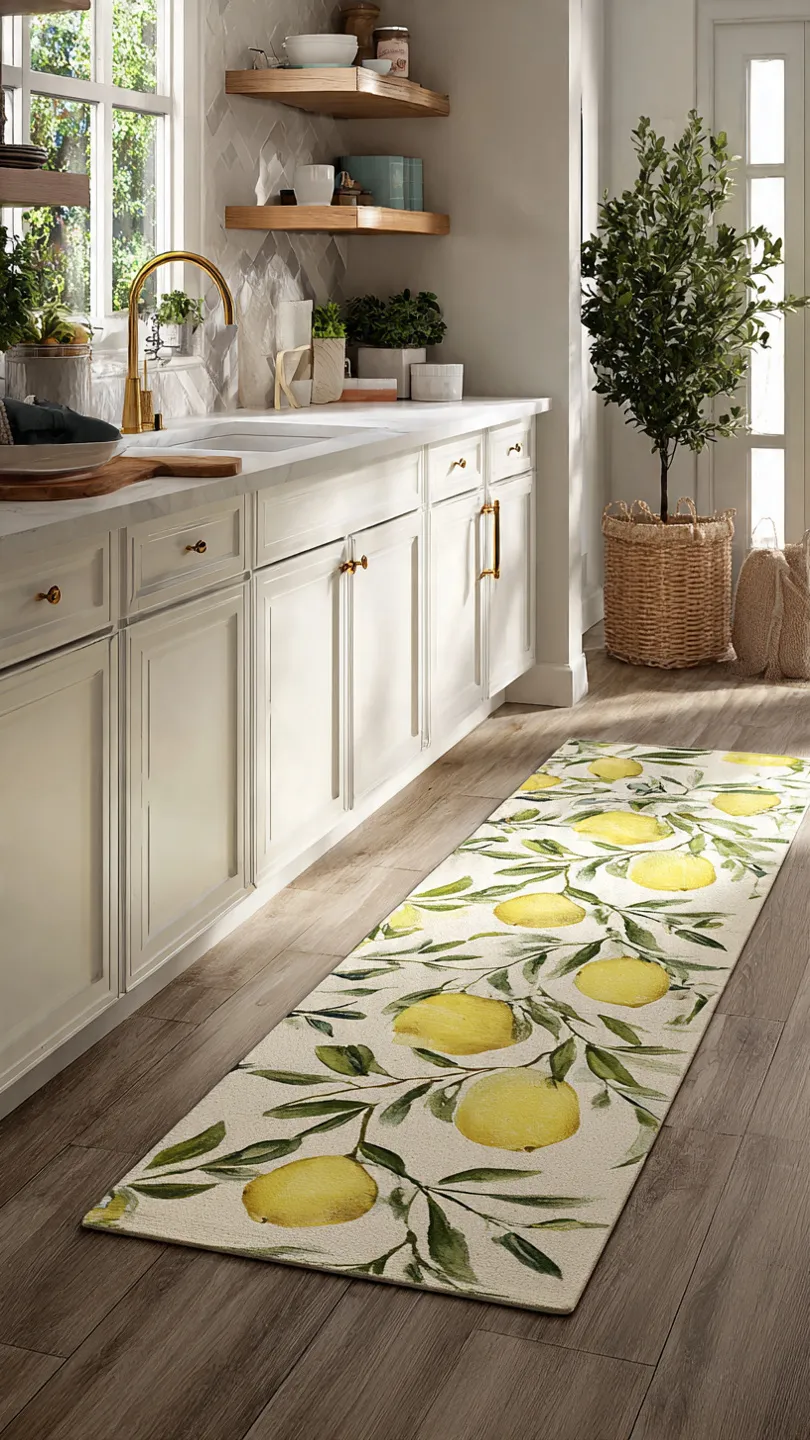
- Kitchen runners add comfort underfoot in standing work areas while introducing a floor-level pattern
- The horizontal placement draws the eye across the room, making narrow kitchens feel wider
- Lemon prints on runners coordinate with floor decor, wall, and counter elements for a complete theme
- Low-pile, washable construction ensures practicality despite decorative appearance
- Non-slip backing provides safety in spaces where water and spills occur regularly
A runner rug featuring lemon prints brings your citrus theme literally underfoot while providing cushioning in areas where you stand during food preparation.
This often-overlooked element of kitchen design significantly impacts comfort during extended cooking sessions while visually connecting floor space with decorated walls and counters above.
I’ve noticed that runners specifically suit galley kitchens or long stretches in front of sink and stove areas where continuous standing happens.
The pattern introduces color and softness to spaces dominated by hard flooring and angular cabinetry.
Choose low-pile construction that won’t trap crumbs or create tripping hazards, and ensure machine-washable materials that handle inevitable kitchen spills without permanent staining or damage.
The styling challenge with patterned runners involves balancing visual interest with practical concerns about showing stains and wear.
Patterns with varied, multi-tonal backgrounds camouflage minor spills better than solid white or cream backgrounds, extending the time between necessary washings.
Consider the runner’s width relative to your workspace, too narrow reads as insignificant, while excessively wide runners crowd the floor and create obstacles.
That’s why many designers recommend runners that span roughly two-thirds of the floor width in galley-style kitchens, providing substantial coverage without edge-to-edge extension.
In my experience, coordinating the runner’s background color with your flooring helps it feel integrated rather than randomly placed, while the lemon pattern provides the desired decorative punch.
This creates a grounding element that completes your citrus-themed kitchen from floor to ceiling.
Conclusion
Your kitchen should be a space that makes you smile every time you walk in, and these lemon kitchen decor ideas offer endless ways to create that cheerful, welcoming atmosphere.
Whether you choose one simple swap or layer multiple citrus-inspired elements throughout your space, each addition brings brightness, personality, and intentional design to your daily routine.
I’ve seen how small changes like these can completely transform a space, not just visually, but in how it feels to cook, gather, and live there.
Start with the idea that resonates most, save this post for future inspiration, and don’t be afraid to let your kitchen reflect the sunny, joyful energy you want in your home.
Share these ideas with friends who love fresh, cheerful design, and enjoy the transformation!