29 Mid-Century Modern Office Ideas 2026
Your workspace should inspire you the moment you sit down, not drain your energy before you even start.
If you’ve been dreaming of an office that feels both beautifully designed and genuinely functional, you’re in exactly the right place.
These 27 Mid-Century Modern Office Ideas will show you how to create a workspace that balances timeless style with everyday practicality.
It proves you don’t need to sacrifice aesthetics for productivity or comfort for visual appeal.
At QuickDawa, we believe health goes beyond medicine—it starts with the environments where you spend most of your time.
A thoughtfully designed office directly impacts your mental clarity, physical comfort, and overall wellbeing.
Poor ergonomics, inadequate lighting, and cluttered spaces contribute to stress, fatigue, and decreased productivity.
Conversely, intentional design choices support focus, reduce anxiety, and promote healthier work habits throughout your day.
Mid-century modern design has remained popular for decades because it solves real problems elegantly.
Clean lines prevent visual clutter, quality materials last for generations, and thoughtful proportions work in spaces both large and small.
I’ve noticed how this style adapts beautifully to contemporary work-from-home needs while maintaining warmth and character.
Whether you’re working with a dedicated room or carving out space in a corner, these ideas will help you create an environment that supports your best work.
From compact desk solutions to bold color choices, you’ll discover practical inspiration that transforms your daily work experience. Let’s explore these brilliant ideas.
29 Mid-Century Modern Office Ideas 2026
Walnut Desk With Tapered Legs
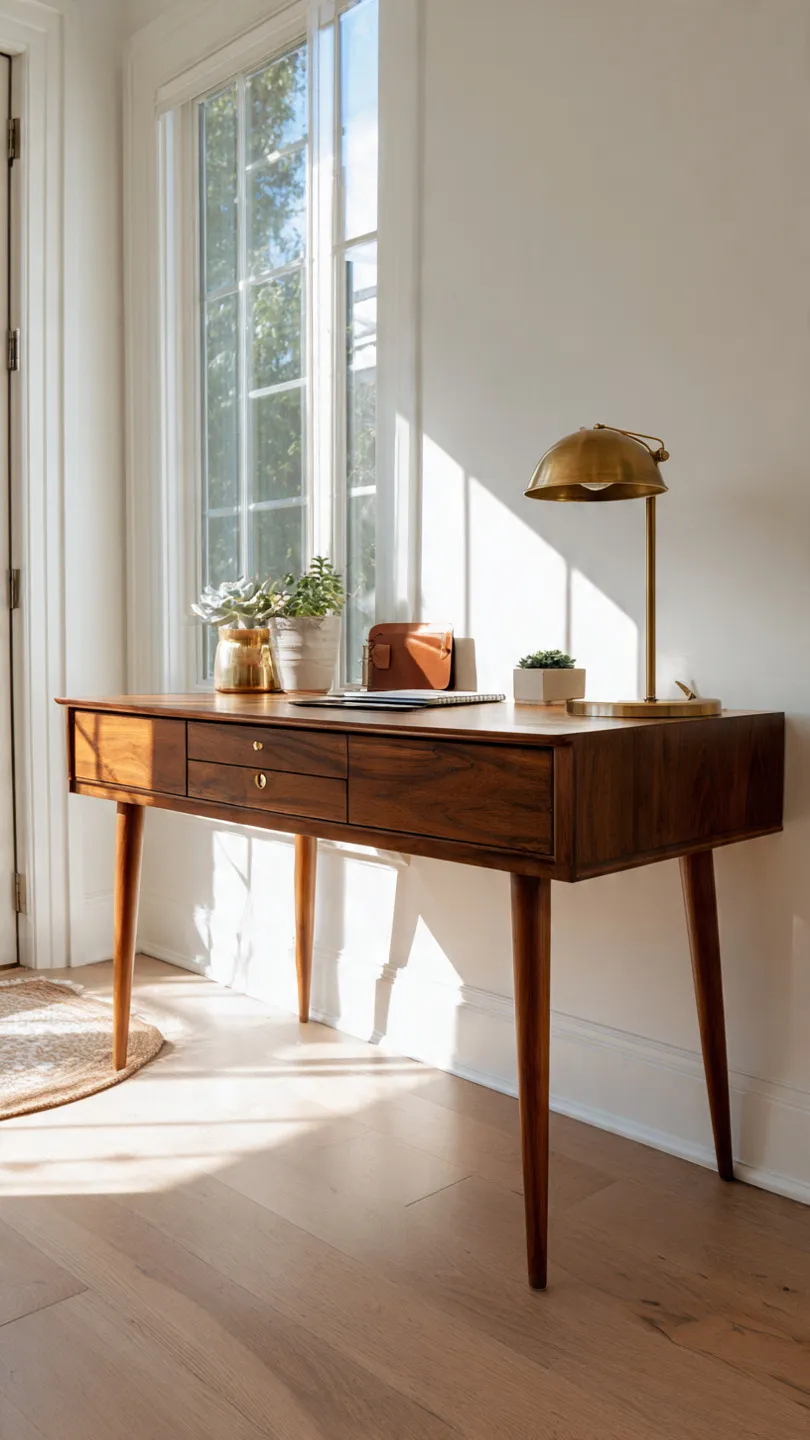
Key Features:
- Tapered legs create visual lightness while maintaining sturdy support
- Rich walnut grain adds organic warmth to modern workspaces
- Minimalist silhouette prevents visual clutter in compact areas
- Pairs beautifully with neutral walls and simple accessories
- Timeless design that anchors the entire room’s aesthetic
Choosing furniture with authentic character transforms how you feel during long work hours.
A walnut desk with tapered legs brings that iconic 1950s silhouette into your daily routine without feeling overly themed.
The slender legs make even larger desks appear lighter, which matters in rooms where space feels precious.
I’ve noticed how the warm wood grain naturally draws your eye and creates a focal point that doesn’t require excessive styling.
This kind of mid-century desk decor works because it balances function with visual interest, giving you a workspace that inspires creativity.
The beauty of this setup lies in its versatility across different room styles.
Whether you’re working in a dedicated home office study room or carving out space in a multipurpose area, the clean lines adapt seamlessly.
The wood’s natural variation means no two desks look identical, adding personalized character to your modern workspace.
Pairing it with a simple task chair and minimal accessories lets the desk’s craftsmanship shine.
That’s why many designers recommend starting with one strong furniture piece rather than trying to fill every corner at once.
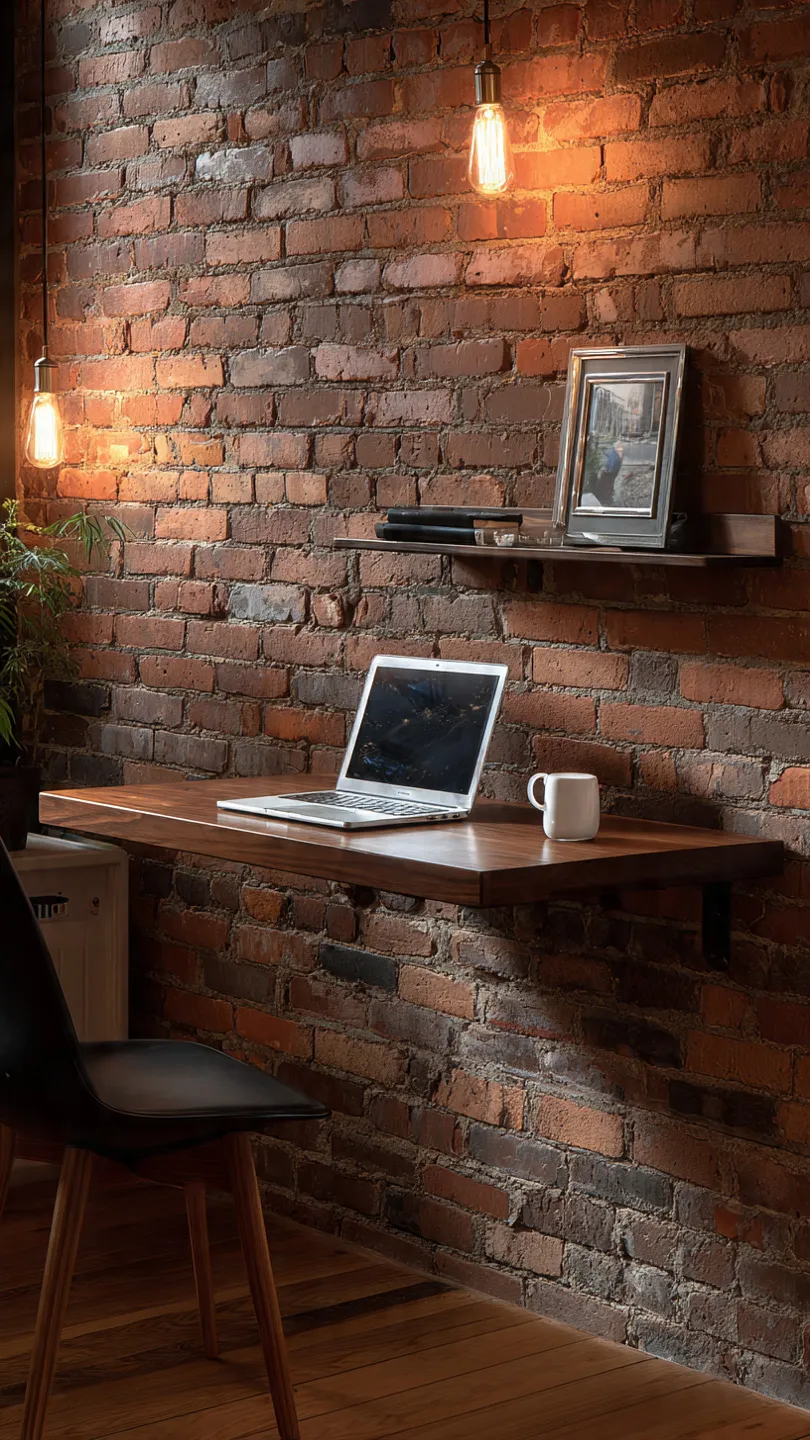
Floating Desk Against Brick Wall
Key Features:
- Wall-mounted design frees up floor space in tight areas
- Exposed brick adds textural contrast to smooth wood surfaces
- Creates an open, airy feeling even in smaller rooms
- Perfect for renters who need flexible furniture solutions
- Combines industrial elements with mid-century warmth
Maximizing vertical space changes everything about how a room functions.
A floating desk setup eliminates bulky legs and visually expands your floor area, making it ideal for compact office ideas.
The contrast between smooth walnut and rough brick creates dynamic visual interest that feels curated rather than cookie-cutter.
I’ve seen this work well in many homes where traditional desks overwhelmed the space.
The wall-mounted approach also allows you to position the desk at your perfect ergonomic height.
This arrangement excels in loft-style apartments or converted spaces where architectural features deserve attention.
The brick wall becomes part of your decor rather than something to hide, celebrating the building’s history.
Adding targeted lighting above the desk highlights the texture and creates focused task illumination.
In my experience, keeping accessories minimal on floating surfaces maintains that sleek, intentional look.
The setup proves you don’t need a massive desk footprint to create a fully functional modern workspace.
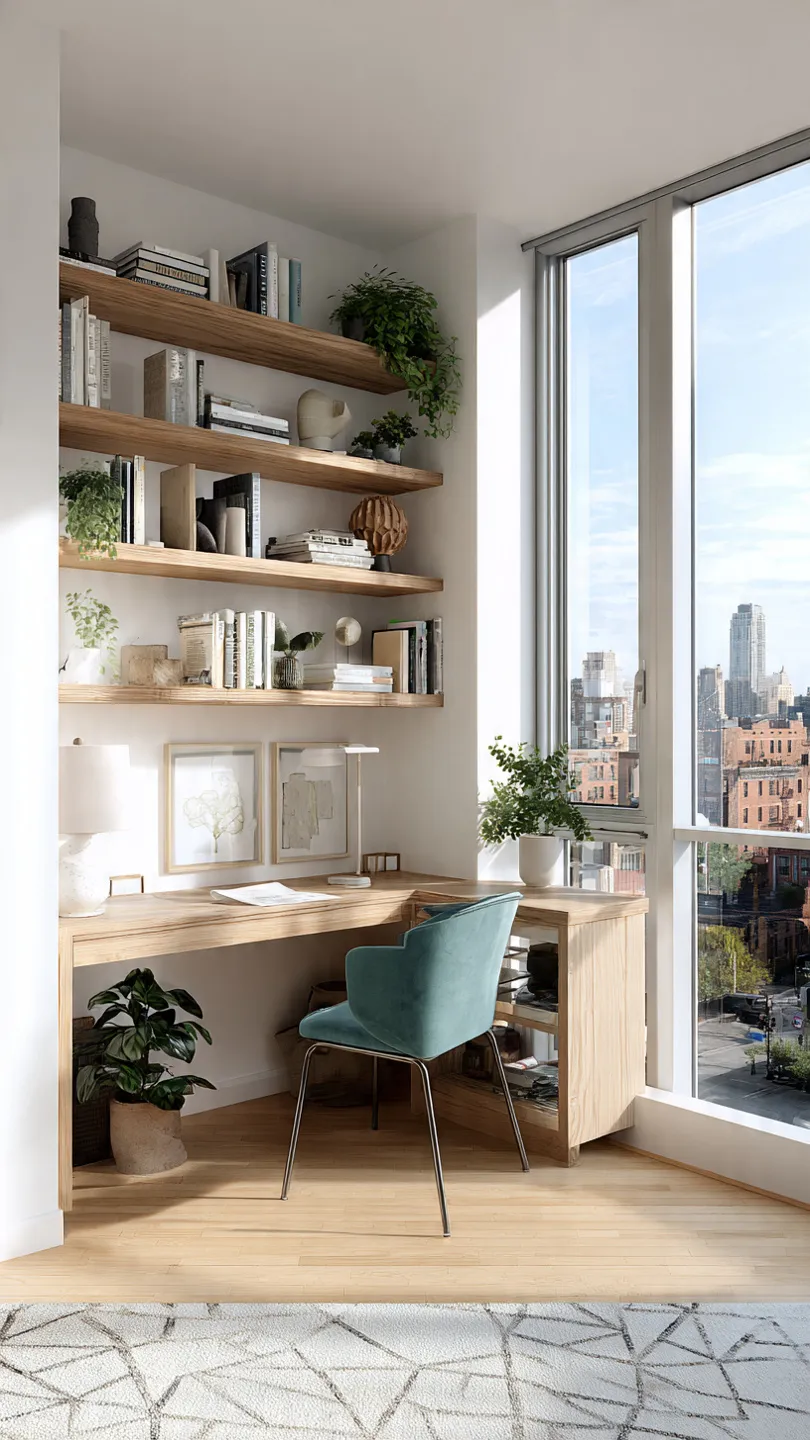
Corner Desk With Built-In Shelving
Key Features:
- Utilizes often-wasted corner space efficiently
- Built-in shelving reduces need for additional furniture
- Keeps supplies within arm’s reach without desktop clutter
- Creates a defined work zone in open floor plans
- Vertical storage draws the eye upward, enhancing room height
Corners often sit empty in home offices, representing missed opportunities for functional design.
A corner desk configuration with vertical storage transforms these dead zones into productive hubs.
The built-in shelving keeps everything you need visible and accessible, reducing the constant shuffle between desk and storage.
I’ve noticed how this setup naturally encourages better organization since items have designated homes.
The visual continuity of matching wood creates cohesion that separate pieces rarely achieve together.
This approach works especially well when you’re balancing work and personal life in shared spaces.
The corner placement defines your work area without requiring walls or dividers, making it perfect for multi-use rooms.
Display items on upper shelves become part of your room’s overall decor rather than office clutter.
In my experience, the psychological benefit of a contained workspace helps maintain focus during the day.
The teal chair introduces personality without overwhelming the neutral wood tones, proving accent colors matter.
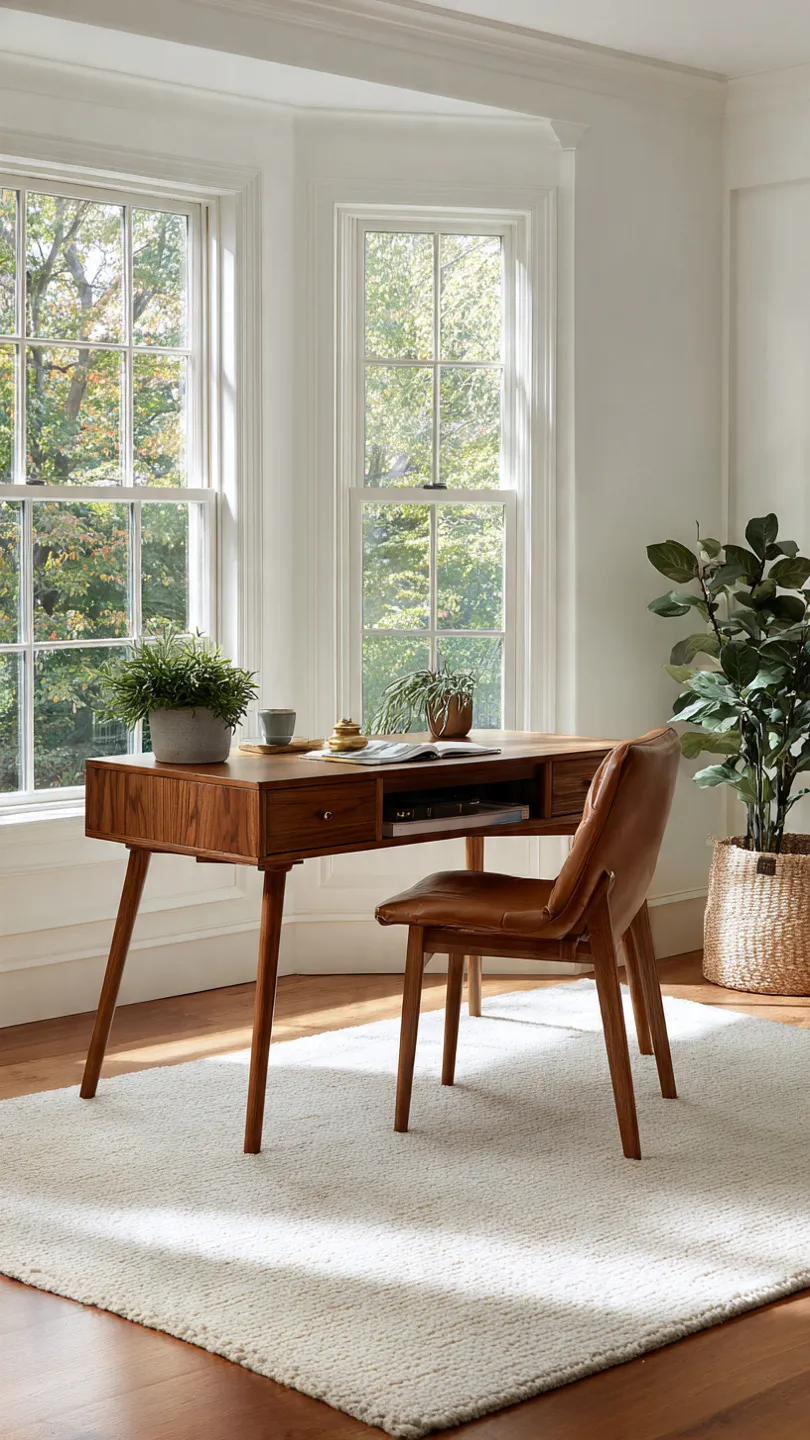
Desk Positioned In Room Center
Key Features:
- Breaks conventional desk-against-wall thinking
- Provides access from all sides for flexible movement
- Creates architectural interest in spacious rooms
- Allows natural light from multiple directions
- Encourages intentional room planning and flow
Placing your desk in the center challenges traditional layouts but unlocks surprising benefits.
This arrangement requires sufficient square footage but rewards you with balanced lighting and freedom of movement.
I’ve seen this transform converted bedrooms into spaces that feel purposeful rather than squeezed-in.
The desk becomes a statement piece, demanding furniture with strong design integrity.
Desk in middle of room ideas work best with desks that look finished from every angle.
The setup naturally improves focus by creating physical separation from walls and distractions.
You’re sitting in your defined zone, surrounded by intentional space rather than facing a blank wall.
Natural light reaches you from multiple angles, reducing eye strain and creating a dynamic environment.
In my experience, this layout only succeeds when you resist the urge to fill surrounding space with extra furniture.
Keep the perimeter open with minimal plants to let the central desk anchor the room.
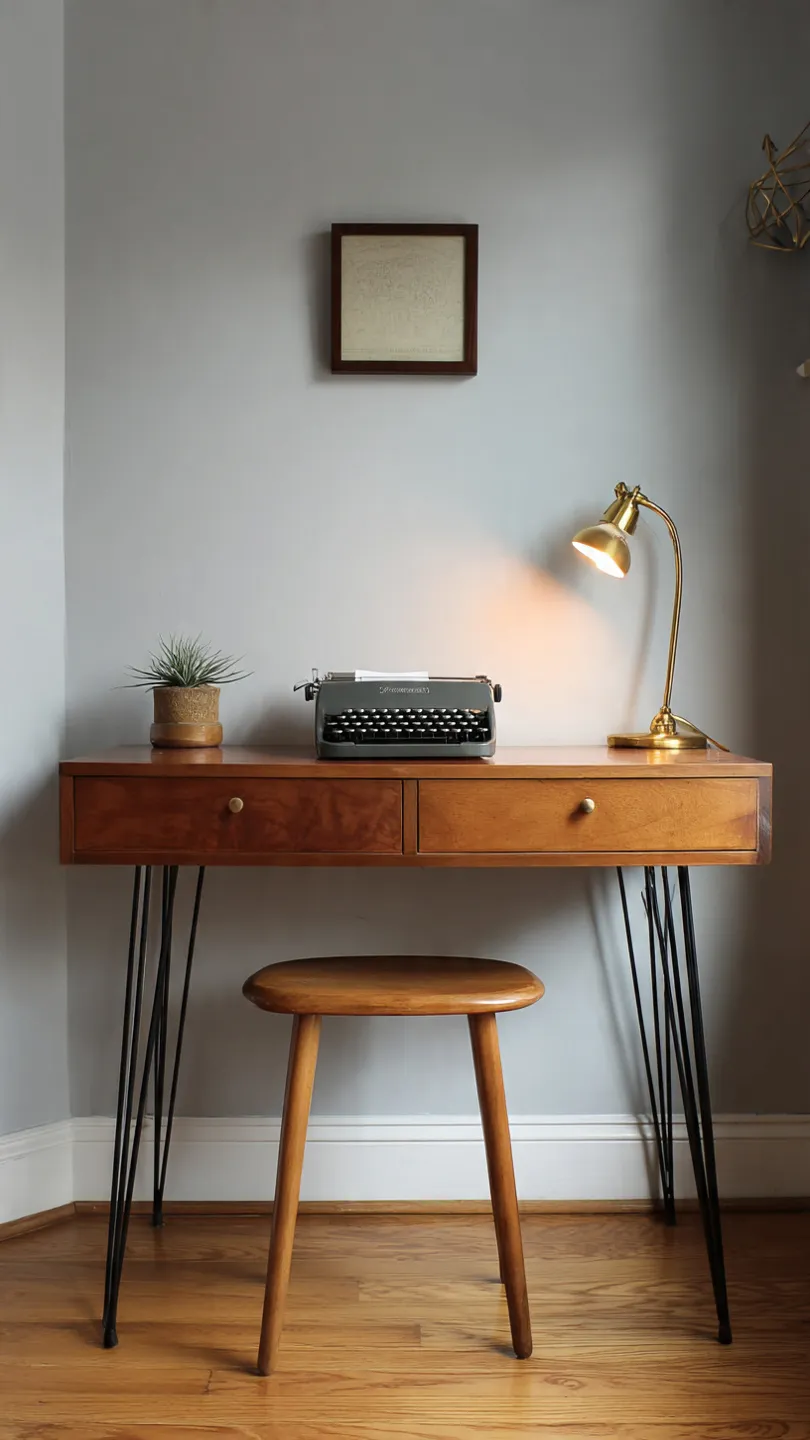
Teak Desk With Hairpin Legs
Key Features:
- Hairpin legs add iconic mid-century character instantly
- Metal and wood combination balances warmth with industrial edge
- Lighter visual weight works in small or shared spaces
- Easy to find replacement legs if customizing existing furniture
- Timeless design that never feels overly trendy
Hairpin legs became iconic for good reason—they’re structurally sound while appearing almost weightless.
This combination makes them perfect for work desk design that needs to feel substantial without visual heaviness.
The contrast between warm teak and matte black metal creates depth without requiring busy patterns.
I’ve noticed how this simple pairing lets you experiment with desktop styling since the base is so strong.
Whether you’re displaying vintage finds or keeping things minimal, the hairpin base supports your aesthetic choices.
This style of mid-century desk fits seamlessly into both dedicated offices and multipurpose rooms.
The open leg design makes cleaning underneath effortless and prevents that cramped feeling larger desks can create.
In my experience, hairpin legs also make moving furniture less daunting since they’re lighter than solid wood bases.
You can reposition your workspace seasonally to follow natural light or accommodate changing needs.
The simple geometry works in modern vintage settings, proving that design from decades ago still solves spatial challenges today.
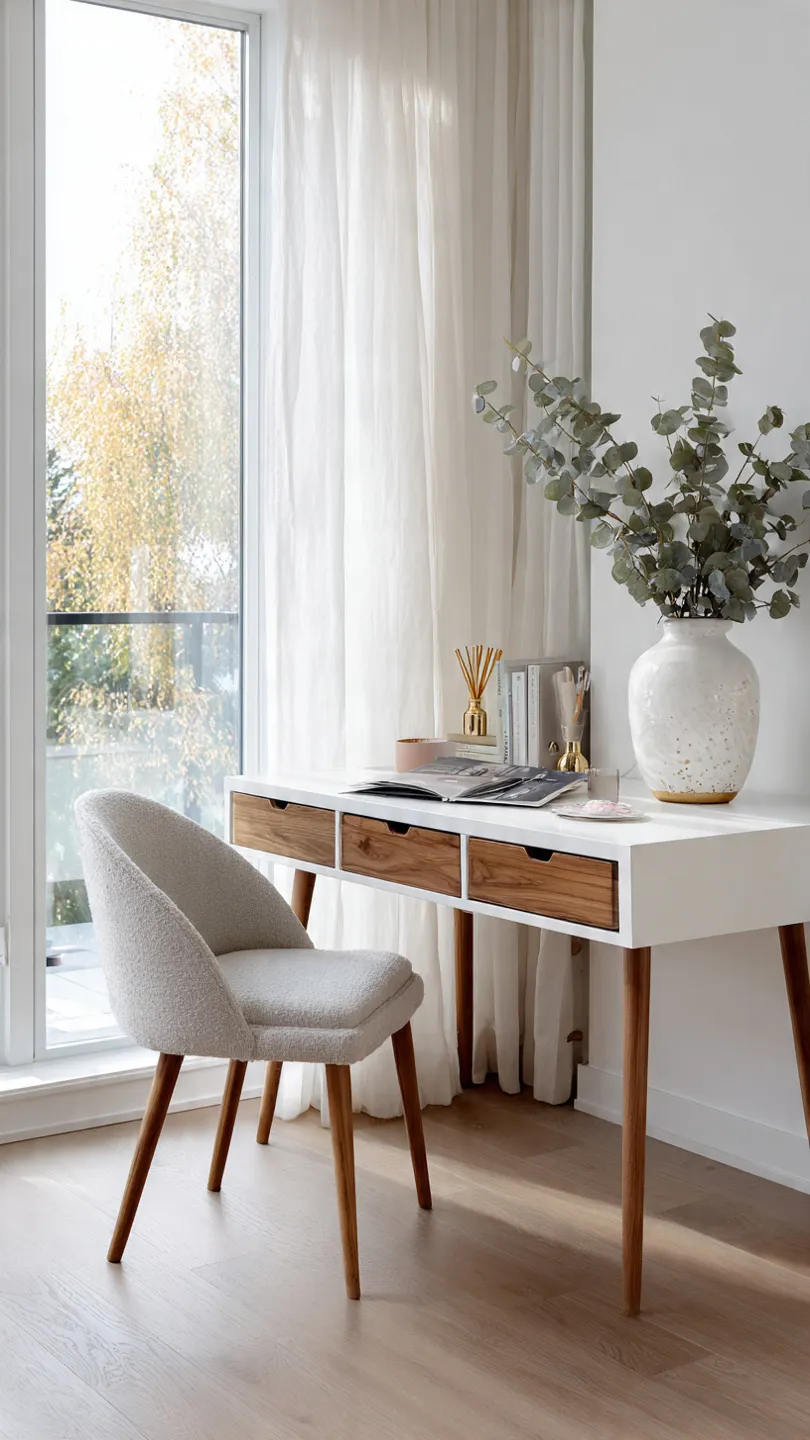
White Desk With Wood Accents
Key Features:
- White surfaces maximize light reflection in darker rooms
- Wood accents prevent stark, cold appearance
- Easier to match with existing furniture and decor
- Creates calming atmosphere conducive to focused work
- Shows less visual clutter than darker surfaces
Lighter furniture opens up spaces in ways dark wood cannot replicate.
A white desk with strategic wood details gives you brightness without sacrificing warmth.
The natural grain in drawer fronts prevents the sterile feeling all-white rooms sometimes develop.
I’ve noticed how this approach photographs beautifully, making it perfect for a modern workspace.
The combination works across seasons and decor changes, adapting to your evolving style preferences.
This setup excels in rooms with limited natural light or northern exposures.
White surfaces bounce available light throughout the space, making mornings feel much brighter.
Pairing the desk with warm metallics like brass or copper adds sophistication without heaviness.
Many designers recommend starting with neutral foundations to allow for maximum flexibility for future changes.
In my experience, quality white finishes resist staining better than you’d expect and stay looking fresh for years.
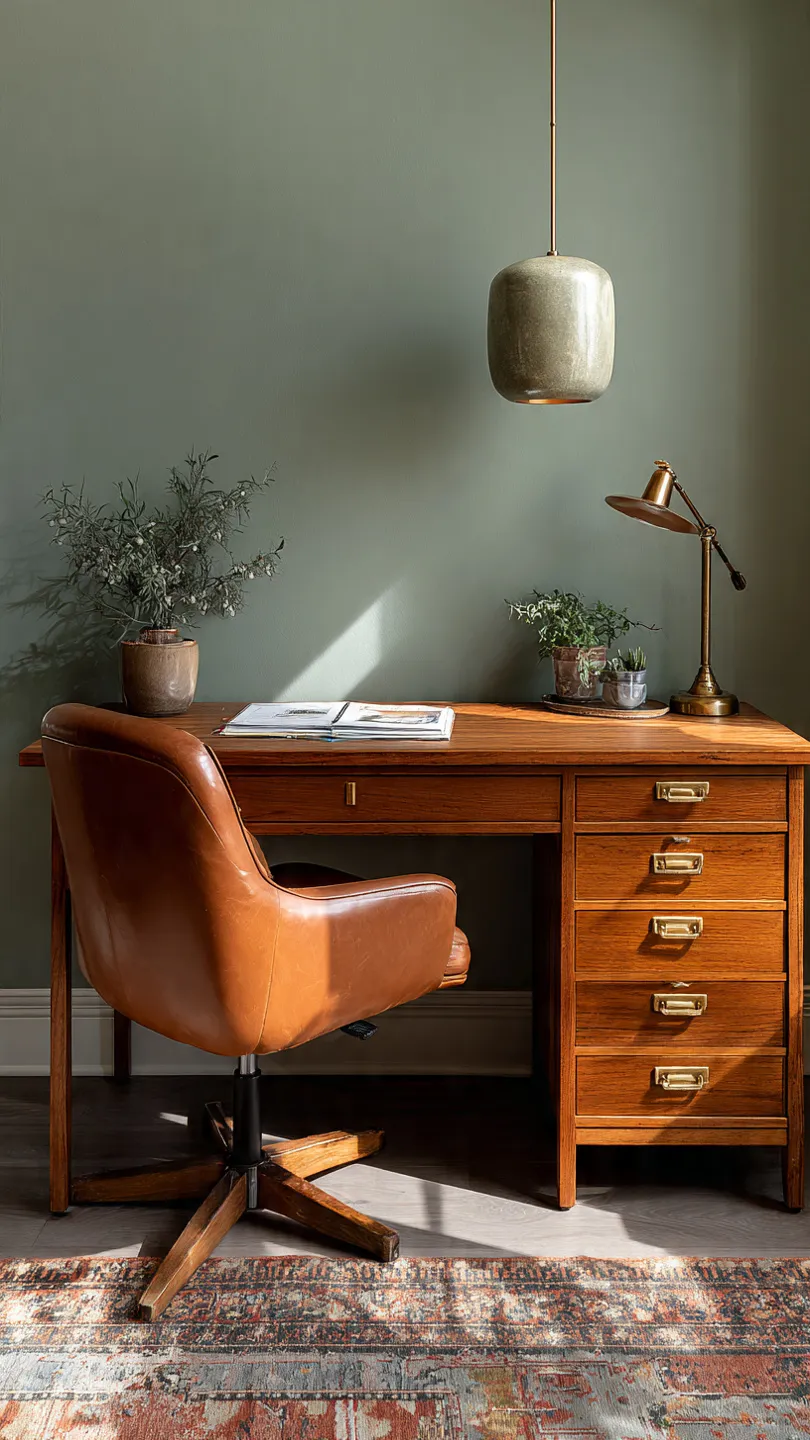
Desk With Integrated Filing Cabinet
Key Features:
- Eliminates need for separate filing furniture
- Keeps important documents secure and accessible
- Creates visual balance with integrated storage
- Maintains clean lines despite increased functionality
- Perfect for paper-heavy work that requires organization
Integrated storage transforms desks from simple surfaces into complete workstations.
A built-in filing cabinet maintains cohesive design while providing practical document organization.
The unified appearance prevents the mismatched look that accumulates when you add separate storage pieces.
I’ve seen this approach work particularly well for professionals managing physical files or creative reference materials.
The style proves that functional furniture doesn’t require sacrificing sophisticated design.
This setup addresses real-world office needs without cluttering your floor space.
Everything stays contained within the desk’s footprint, making it ideal for compact office ideas.
The filing drawers often include organizational inserts that keep supplies separated and easy to locate.
In my experience, having dedicated storage within arm’s reach reduces the desktop pile-up that feels chaotic.
Choose desks with smooth-gliding drawers and quality hardware since you’ll open them countless times.
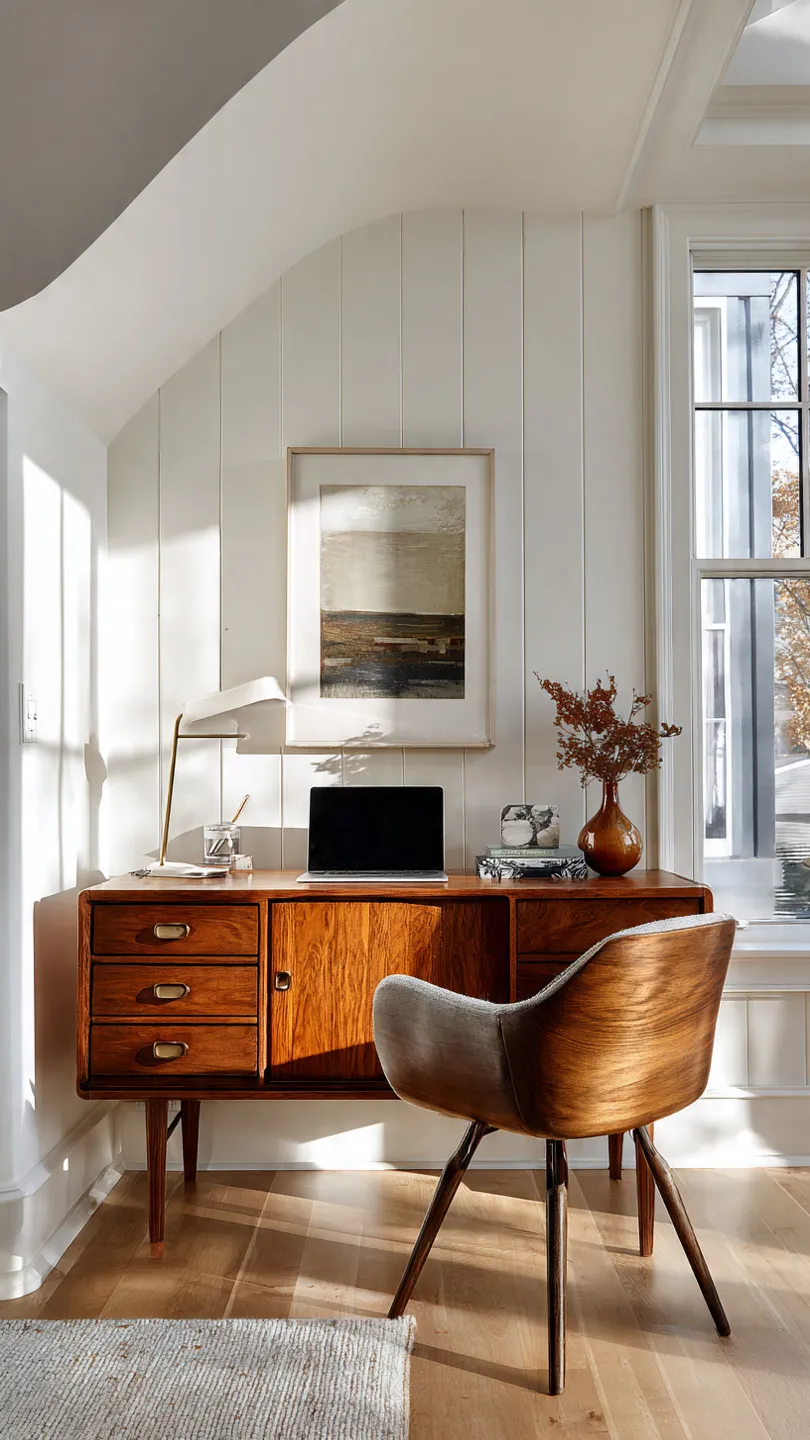
Credenza Converted To Desk
Key Features:
- Repurposes vintage furniture with built-in character
- Lower height creates unique visual interest
- Sliding doors conceal storage without swing clearance
- Sustainable approach using existing furniture
- Creates conversation-starting workspaces with history
Thinking beyond traditional desk shopping opens creative possibilities for your office.
A credenza conversion brings instant character through aged wood and vintage hardware.
The lower profile creates a grounded, relaxed feeling different from standard desk heights.
I’ve noticed how vintage credenzas often feature superior craftsmanship that surpasses contemporary pieces.
This approach exemplifies unique home office ideas that reflect personal style rather than showroom trends.
The sliding door feature solves a common problem in tight spaces where door swing interrupts flow.
You can conceal office supplies or electronics instantly when transitioning from work mode to relaxation.
The wood patina and original hardware tell stories that brand-new furniture cannot replicate.
Many designers recommend mixing eras and functions because unexpected combinations create memorable spaces.
Just ensure the height works with your seating before committing to the conversion for your daily tasks.
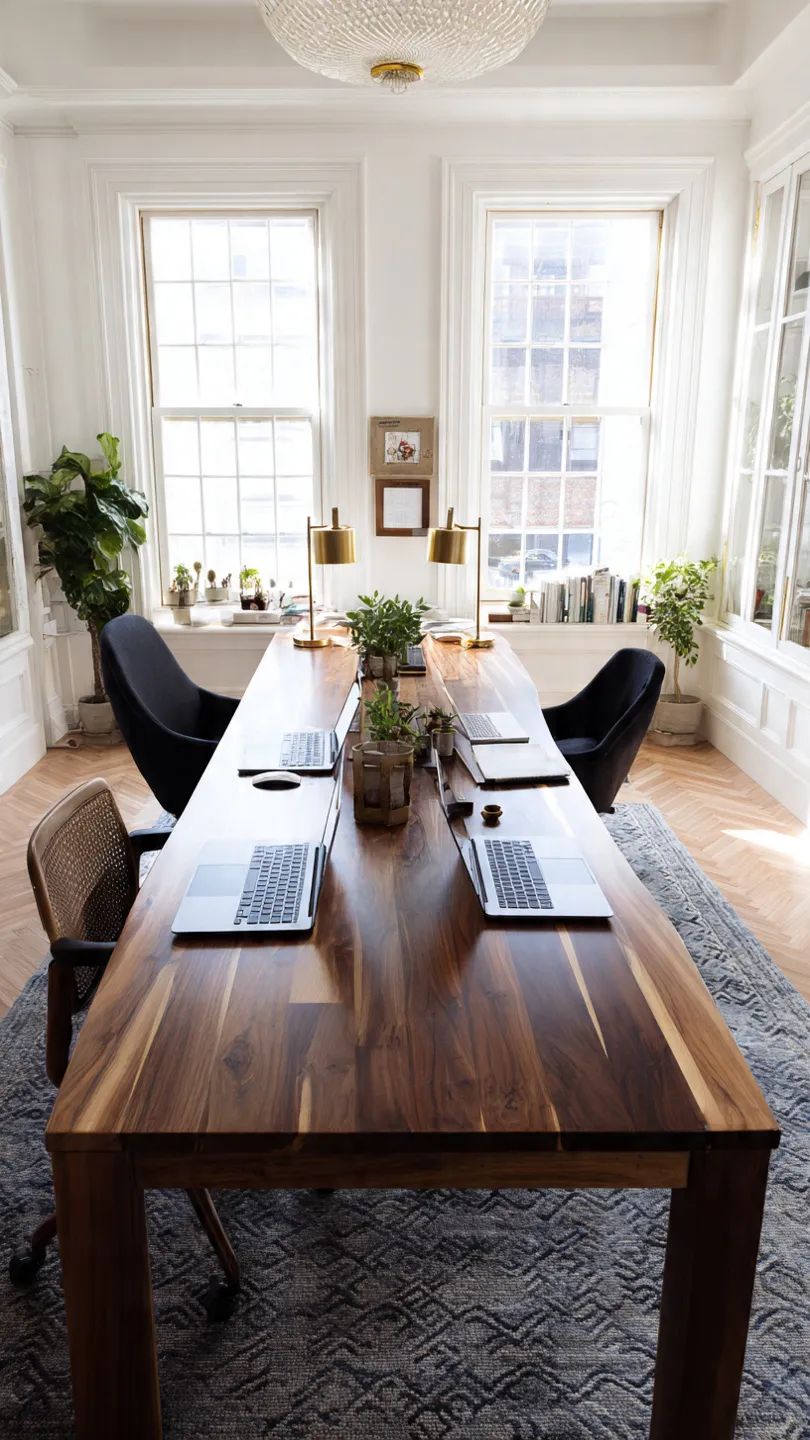
Dual-Person Desk Setup
Key Features:
- Accommodates two workers without cramped feeling
- Promotes collaboration while maintaining personal space
- Efficient use of space compared to separate desks
- Creates symmetrical, visually pleasing arrangement
- Perfect for couples or roommates sharing home office
Shared workspaces require thoughtful planning to succeed both functionally and aesthetically.
A dual-person desk provides individual zones while fostering a connection that separate rooms cannot.
The extended surface area means neither person feels squeezed, maintaining harmony during work hours.
I’ve seen this arrangement strengthen working relationships by enabling quick collaboration without formal meetings.
The setup works whether you’re both in deep focus or bouncing ideas throughout the day.
This configuration shines in home office combinations where square footage limits separate workstations.
The unified desk creates cleaner visual lines than two individual pieces positioned awkwardly.
Choose a substantial desk length—at least six to eight feet—to provide genuine personal space for each user.
In my experience, communication about organization systems prevents territorial disputes and maintains order.
The arrangement transforms working from home from an isolated task into a shared, productive experience.
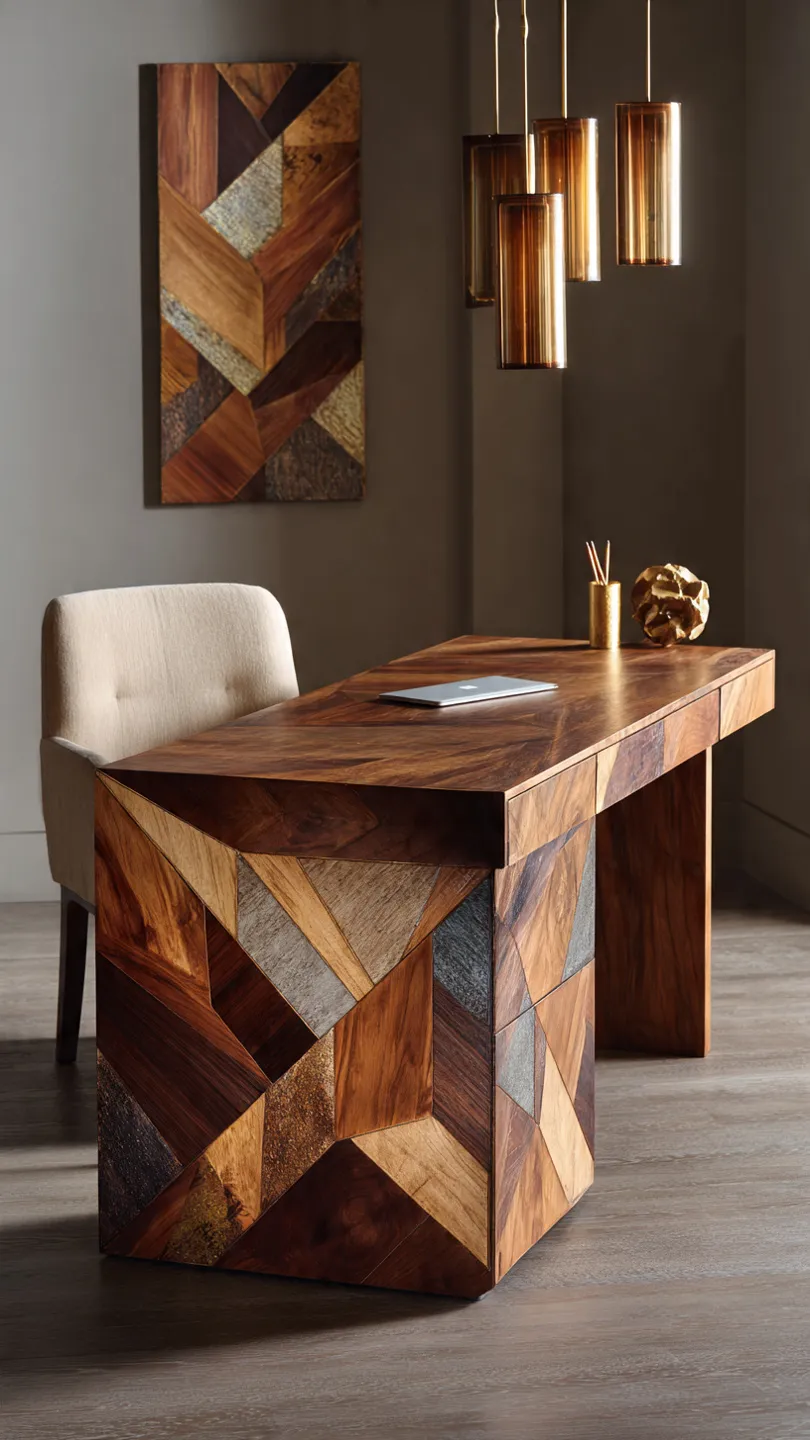
Desk With Geometric Drawer Fronts
Key Features:
- Geometric patterns add visual interest without color
- Creates focal point through design rather than accessories
- Demonstrates superior craftsmanship and attention to detail
- Reduces need for additional decorative elements
- Brings artistic quality to functional furniture
Statement furniture transforms rooms with less effort than accumulating smaller decorative items.
A desk with geometric patterns provides built-in visual interest that carries the entire space aesthetically.
The contrasting wood veneers create dimension and movement that plain surfaces cannot achieve.
I’ve noticed how these pieces anchor rooms so effectively that minimal styling becomes the best choice.
This approach suits anyone drawn to art and design who wants functionality integrated into their decor.
The geometric details reward close inspection while maintaining impact from across the room.
They demonstrate the era’s commitment to craftsmanship, where even utilitarian furniture received artistic consideration.
In my experience, these distinctive pieces become long-term favorites that never feel dated.
The bold patterns work surprisingly well in both maximalist and minimalist settings.
Quality always outperforms quantity when building spaces with lasting appeal and personal significance.
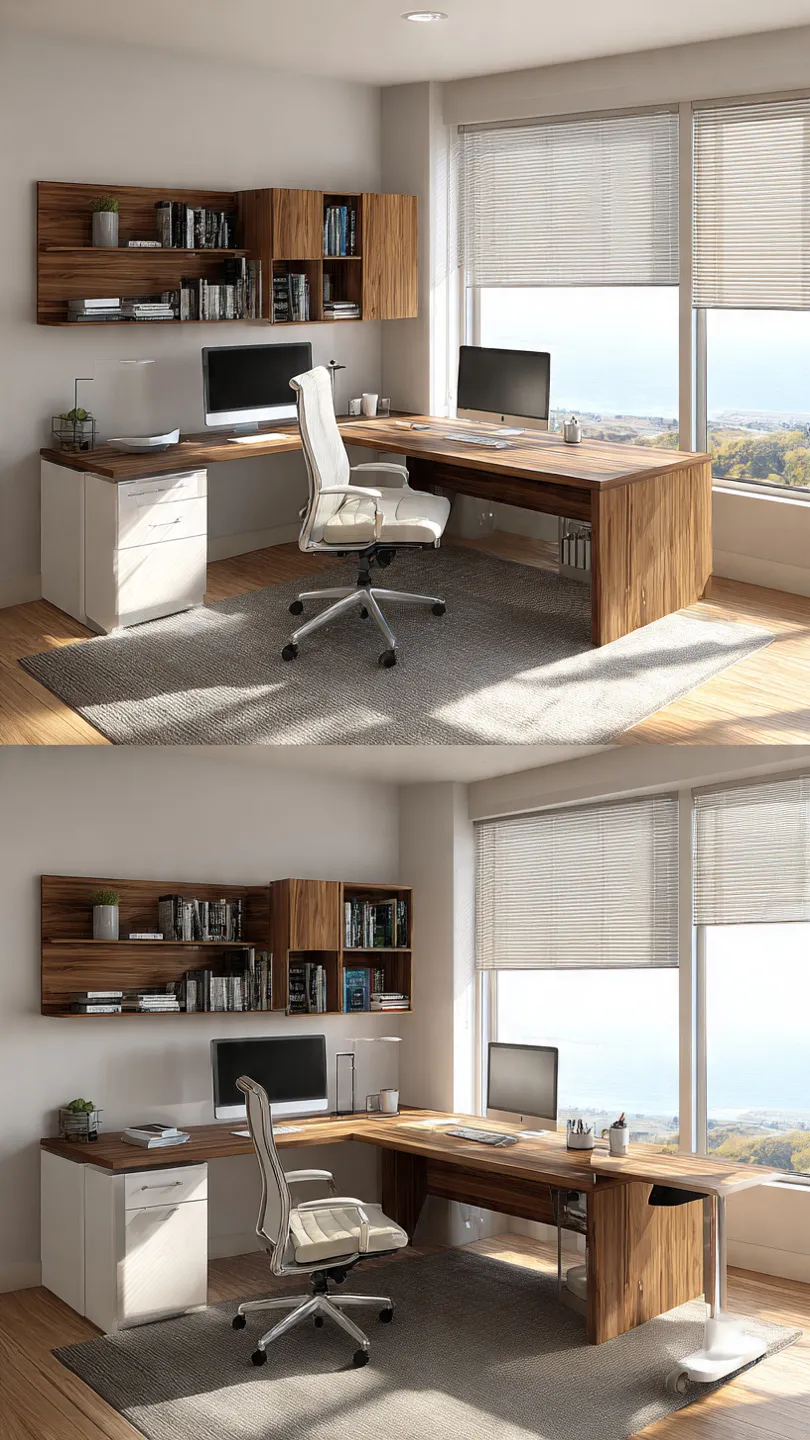
Desk With Attached Side Table
Key Features:
- Extends workspace without requiring separate furniture
- Creates distinct zones for different task types
- Maintains visual continuity through connected design
- Perfect for mixing computer work with analog tasks
- Provides landing space for drinks, phones, and supplies
Extended work surfaces address real-world needs that single desks often cannot accommodate.
An attached side table gives you designated space for items you want nearby but not in your primary zone.
The connected design maintains cleaner visual lines than separate furniture pieces scattered around.
I’ve noticed how this setup naturally organizes tasks by separating computer work from other activities.
This physical separation reduces desktop clutter and creates a more focused environment for deep work.
The configuration excels for professionals juggling multiple project types or creative processes.
You can dedicate the side surface to sketching or reviewing documents without disrupting your digital setup.
In my experience, the attached design also creates a helpful psychological boundary between task types.
This matters for work-from-home designs where physical transitions help mental shifts.
The setup proves valuable in mid-century arrangements where furniture served multiple purposes efficiently within smaller footprints.
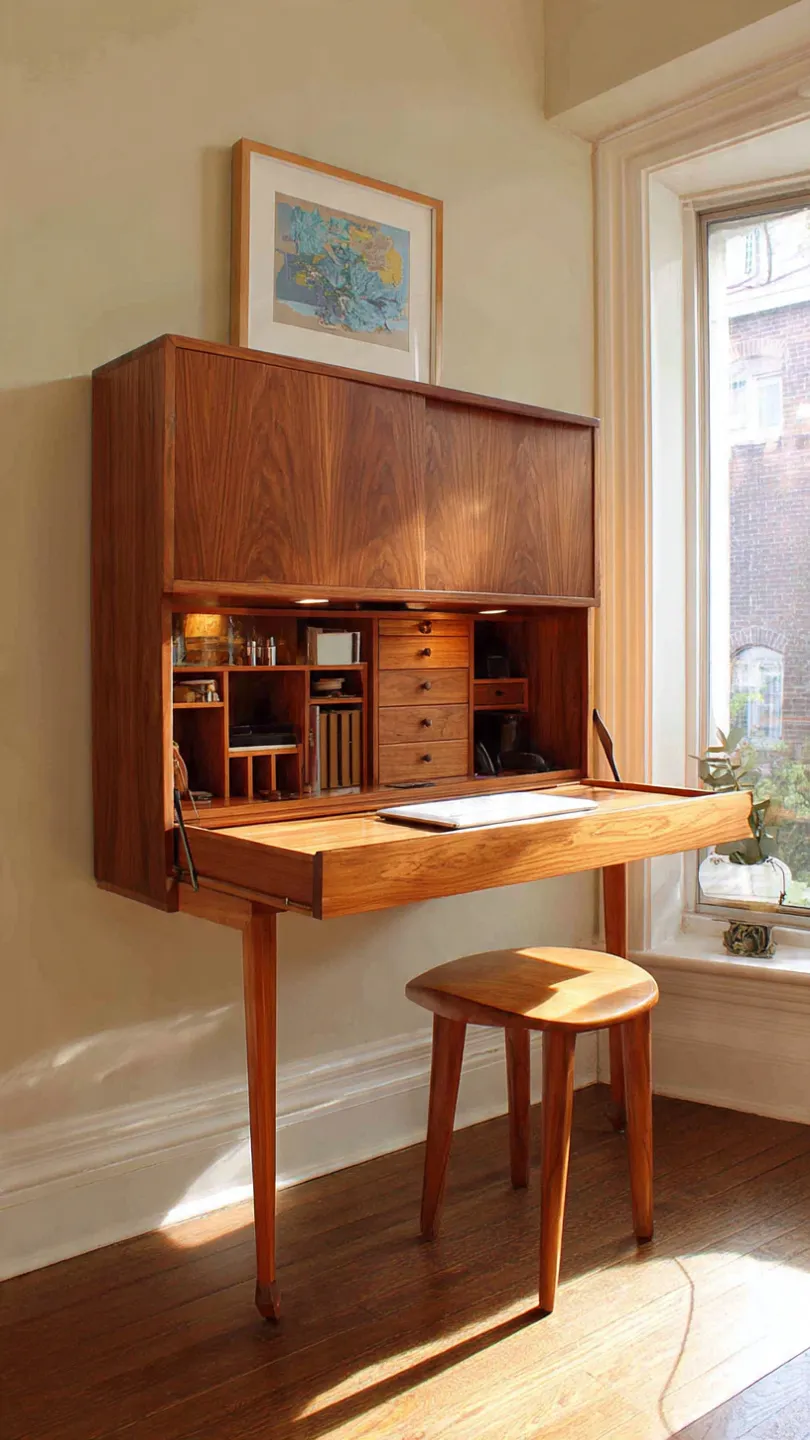
Compact Secretary Desk
Key Features:
- Closes completely to hide workspace and clutter
- Perfect for small apartments or multipurpose rooms
- Provides storage without requiring floor space
- Maintains traditional craftsmanship with modern utility
- Creates instant organization through built-in compartments
Space limitations demand creative furniture solutions that don’t sacrifice style or personality.
A secretary desk addresses square footage challenges while delivering authentic mid-century character.
The fold-down surface transforms from a decorative cabinet to a functional workspace in seconds.
I’ve seen this approach work beautifully in guest rooms where visible work materials would disrupt the atmosphere.
The ability to conceal everything maintains clean aesthetics that permanent desk setups cannot achieve.
The built-in organization compartments eliminate the need for additional desk accessories.
Small cubbies naturally sort mail and supplies, making the limited area feel surprisingly adequate.
In my experience, the size constraint actually improves focus by forcing regular editing of your materials.
This makes secretary desks excellent choices for those easily overwhelmed by visual clutter.
The traditional silhouette brings warmth and history into modern homes, creating a functional conversation piece.
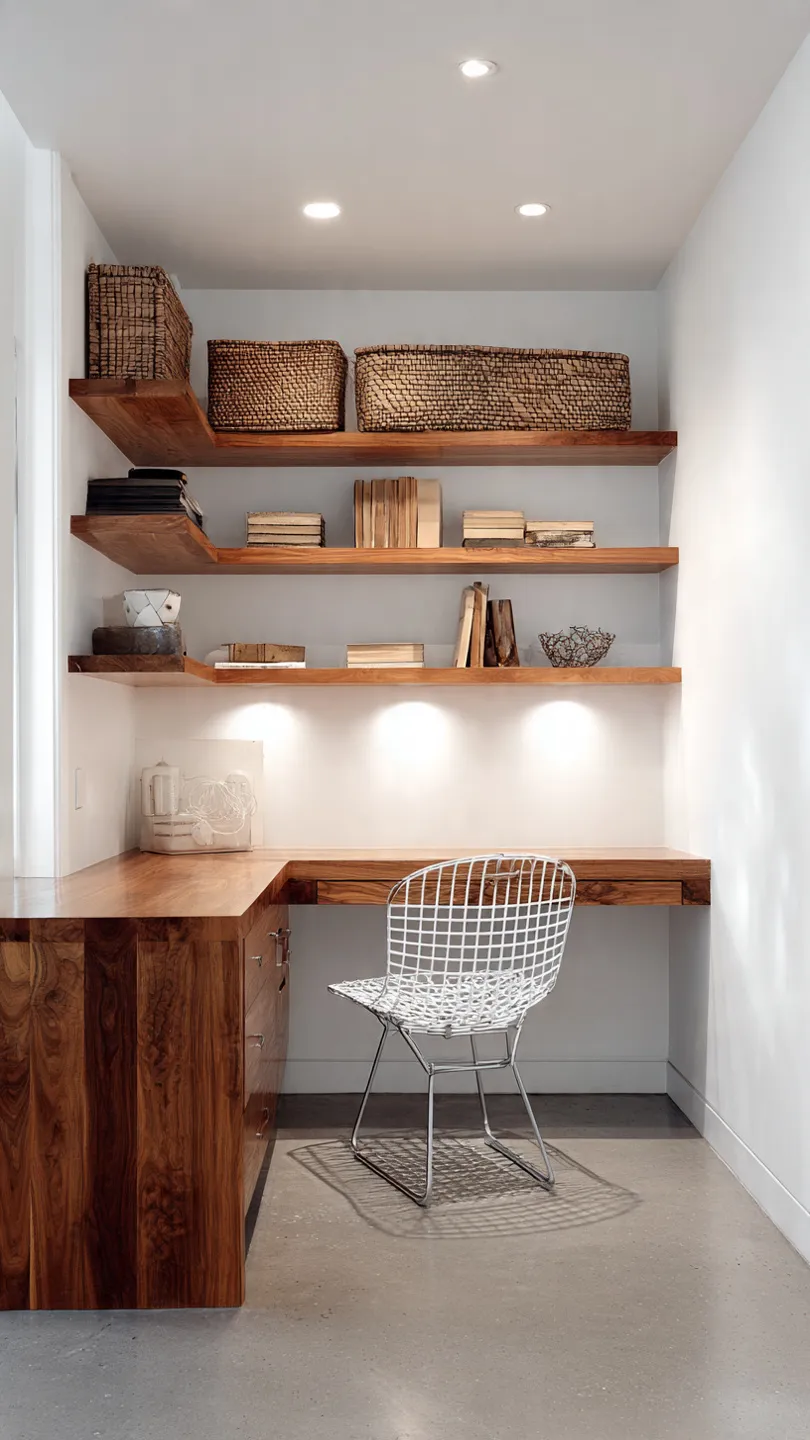
Desk With Open Shelf Base
Key Features:
- Open shelves create lighter visual appearance than enclosed bases
- Provides visible storage that encourages organization
- Easier to access items without opening drawers
- Allows decorative styling that enhances room aesthetics
- Suits both work supplies and display objects
Visible storage changes how you interact with your workspace on a daily basis.
Open shelf bases make retrieving supplies effortless with no drawers to open or close.
The see-through design keeps you honest about organization, as clutter becomes immediately obvious.
I’ve noticed how this transparency encourages better habits and a more polished room appearance.
The shelving works equally well for practical items in containers and carefully chosen decorative objects.
The architectural openness prevents the heavy appearance that fully enclosed desks can create.
This matters in smaller rooms where visual weight affects how spacious the area feels.
Using attractive baskets on shelves maintains organization while adding texture and warmth.
In my experience, the styling possibilities make these desks excellent for personally expressive spaces.
You’re essentially creating a curated display that happens to hold your necessary office supplies.
Desk Paired With Vintage Credenza
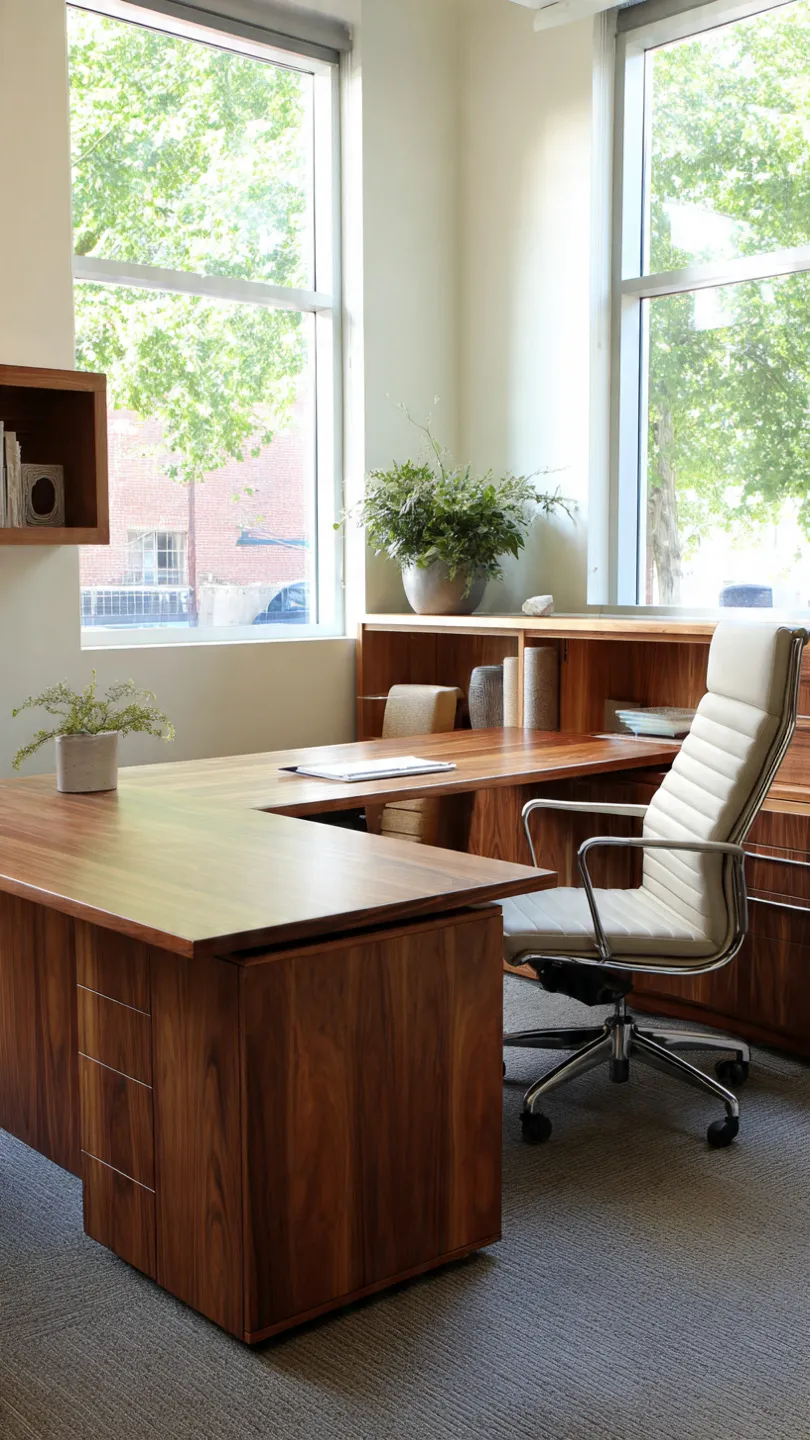
Key Features:
- Combines open workspace with concealed storage
- Creates efficient L-configuration without built-in furniture
- Maintains design continuity through matching wood tones
- Allows flexible rearrangement compared to integrated pieces
- Provides substantial storage without desktop clutter
Separating the work surface from storage furniture offers flexibility that built-in solutions cannot match.
A desk paired with a credenza gives you the best of both worlds—clean workspace and abundant storage.
The L-shaped arrangement creates a defined office zone while maximizing corner space efficiency.
I’ve seen this work well for professionals needing serious storage without sacrificing mid-century aesthetics.
Matching wood creates visual unity while separate pieces allow for future room layout changes.
The credenza handles everything you want accessible but not visible, like office supplies and electronics.
This separation keeps your desk surface clear for actual work rather than permanent storage.
In my experience, the psychological benefit of distinct zones improves both productivity and cleanup routines.
You can sweep desktop items into the credenza quickly to restore visual order at the end of the day.
This pairing is ideal for executive-style setups requiring a professional appearance and high organizational capacity.
Desk With Colorful Laminate Top
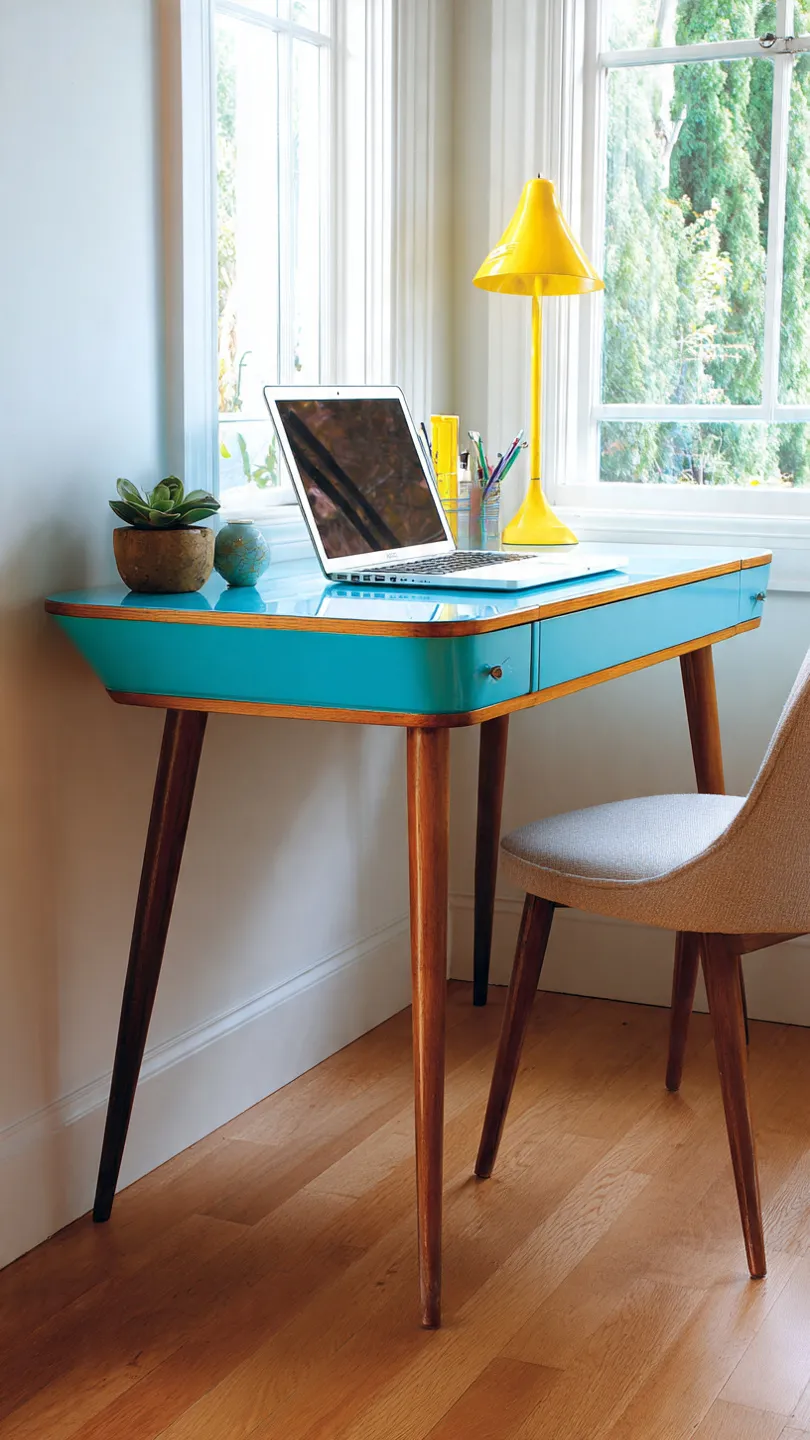
Key Features:
- Bold color creates instant personality and energy
- Easy-clean laminate surface handles daily wear
- Adds retro authenticity to mid-century styling
- Becomes room’s focal point without additional decor
- Challenges neutral-only office design conventions
Color transforms spaces emotionally in ways neutral palettes simply cannot replicate.
A colored desk top brings joy into your daily work routine, making the space feel intentionally designed.
The laminate material offers practical benefits like stain resistance while delivering a classic glossy finish.
I’ve noticed how one bold piece often provides enough visual interest for an entire room.
This approach works beautifully for those who want a pop of color without painting permanent walls.
The vibrant surface energizes morning work sessions and prevents a sterile office feel.
The color choice becomes a personal expression—whether it’s cheerful yellow or calming aqua.
In my experience, surrounding the bold desk with neutral elements lets the color shine effectively.
Many designers recommend a mostly neutral foundation with strategic pops of personality.
The desk becomes that intentional accent that proves mid-century modern can be both sophisticated and fun.
Standing Desk Converter
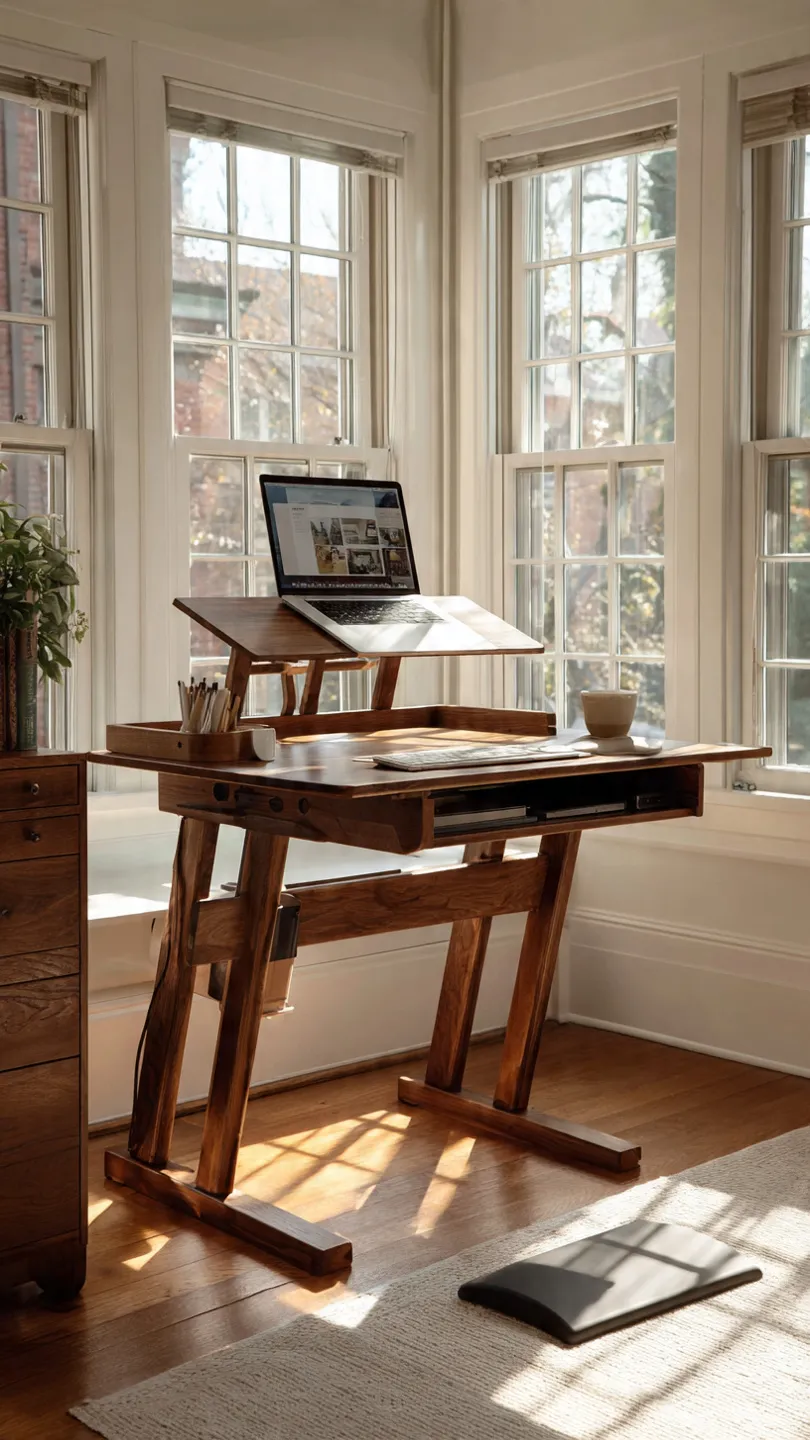
Key Features:
- Adds ergonomic benefits to existing furniture
- Preserves vintage desk’s aesthetic and storage
- Allows position changes throughout workday
- More affordable than replacing entire desk
- Demonstrates practical problem-solving in design
Honoring vintage furniture while addressing ergonomic needs requires creative thinking.
A standing converter placed on a mid-century desk preserves its character while introducing health benefits.
The combination demonstrates thoughtful space planning—keeping what works while adapting what doesn’t.
I’ve seen this resonate with people who love their inherited furniture but need modern height adjustability.
You don’t have to sacrifice style for wellness or abandon beautiful pieces from the past.
The converter adds minimal visual disruption when chosen in a coordinating finish.
Your original desk continues providing storage and room presence while the addition handles function.
In my experience, alternating between sitting and standing dramatically improves energy and focus.
Physical movement breaks prevent the fatigue that comes from static positioning all day.
This hybrid approach is cost-effective while maintaining the authentic character that gives your space personality.
Desk In Alcove With Floating Shelves
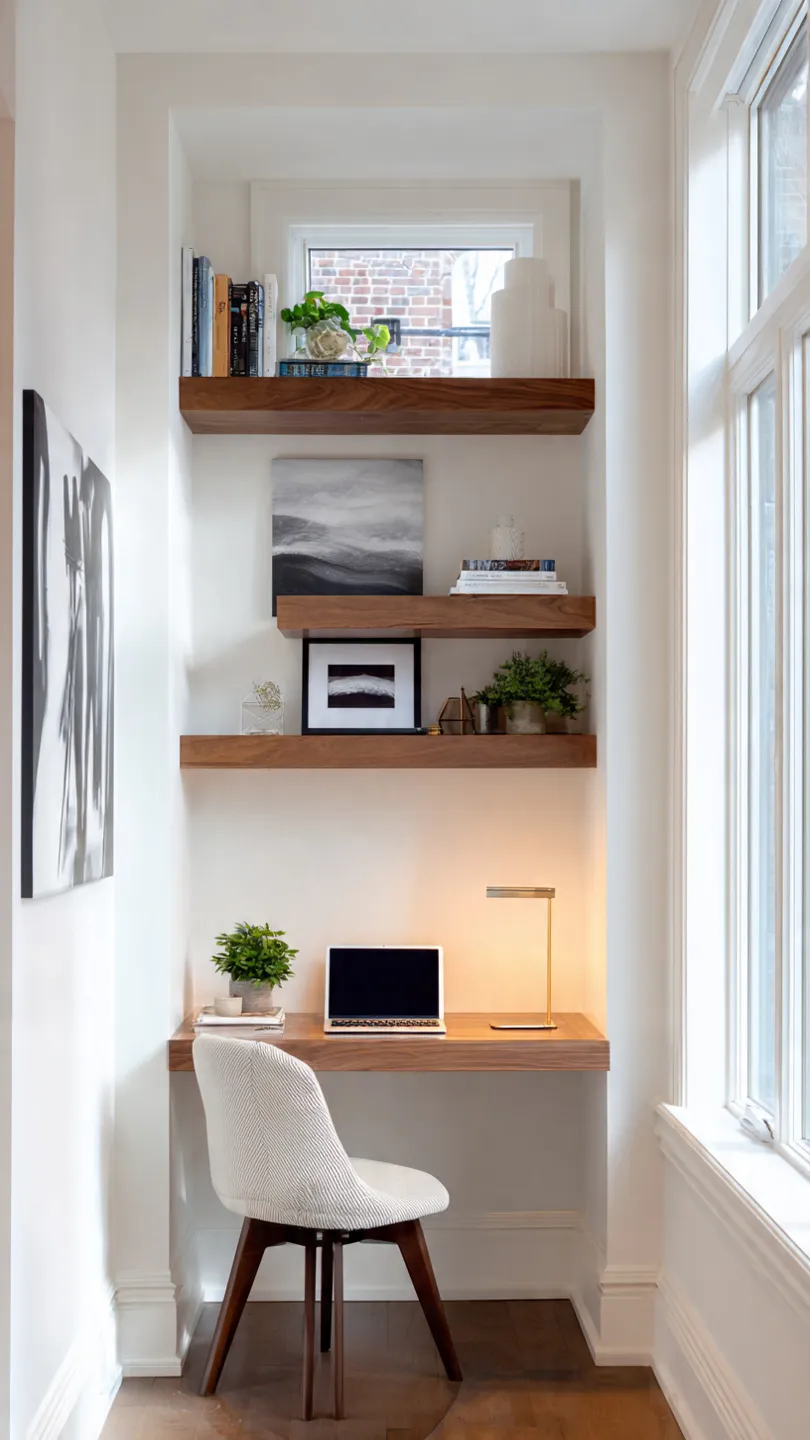
Key Features:
- Maximizes awkward architectural features effectively
- Vertical storage compensates for limited desk space
- Creates defined workspace in open floor plans
- Built-in feeling without permanent construction
- Perfect for small apartments or shared rooms
Architectural quirks become design opportunities with a little creative thinking.
An alcove that might feel useless transforms into a perfectly scaled workspace when furnished intentionally.
The natural boundaries create a defined office zone without requiring extra walls or dividers.
I’ve noticed how recessed positioning provides psychological comfort and a sense of protection while working.
Vertical shelving extends functionality upward, proving compact ideas can deliver full functionality.
The alcove depth typically fits desk width perfectly while the walls provide support for floating shelves.
This built-in appearance costs far less than custom carpentry while delivering high visual impact.
In my experience, these tucked-away workspaces often become favorite spots because they feel cozy.
The setup works whether the alcove exists architecturally or you create the effect with bookshelves.
Sometimes the best workspace is hiding in plain sight, waiting for the right furniture to unlock it.
Desk With Leather Inlay Top
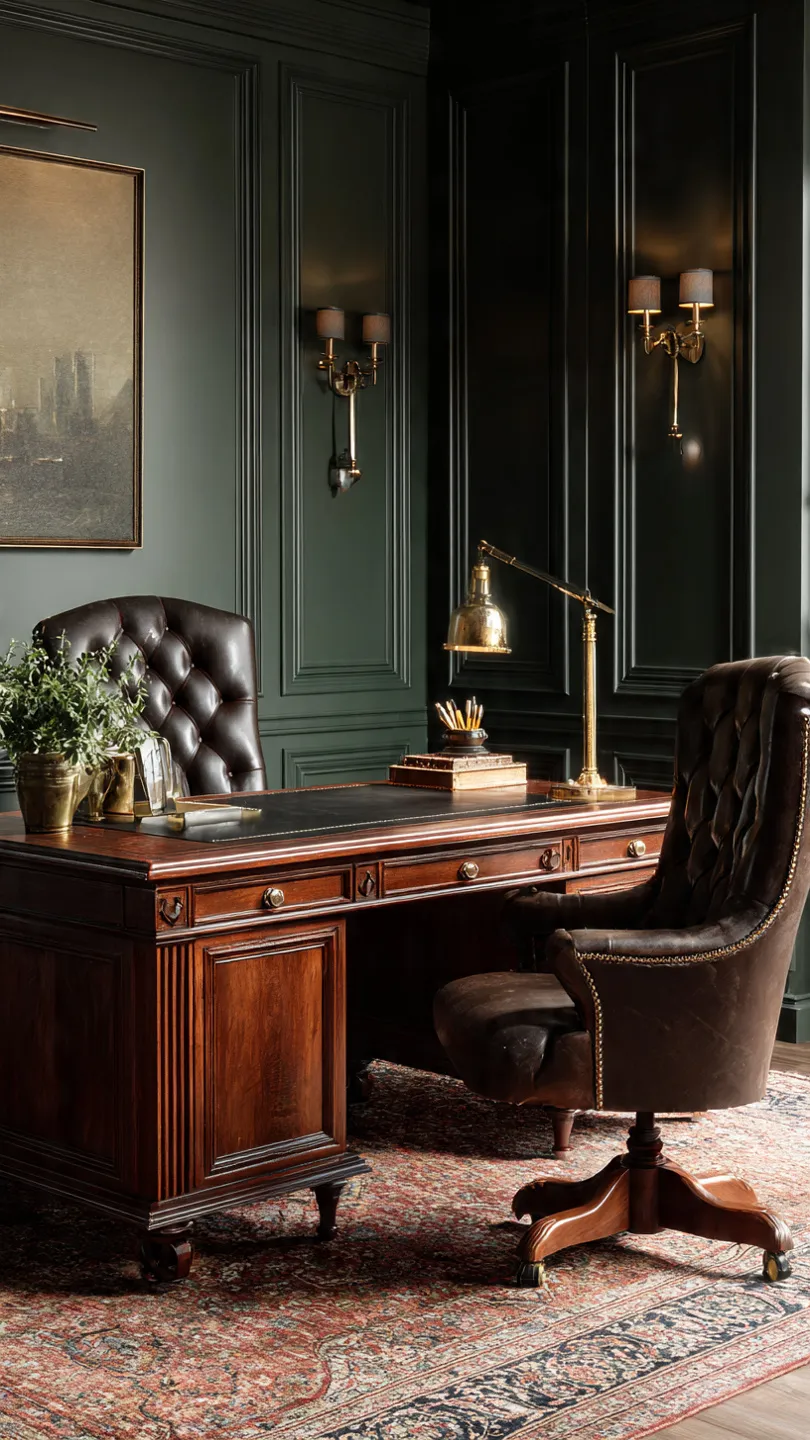
Key Features:
- Leather surface adds luxury and tactile richness
- Develops character and patina over time
- Provides smooth writing surface for analog work
- Elevates desk from functional to investment piece
- Creates sophisticated atmosphere for professional work
Premium materials transform everyday furniture into heirloom-quality pieces.
A leather desk top delivers tactile pleasure, creating a sensory experience beyond visual aesthetics.
The smooth surface feels warm under your hands, adding subtle luxury to routine daily tasks.
I’ve noticed how leather-topped desks naturally encourage analog work like writing or sketching.
The material develops a beautiful patina over time, recording your work history in its color variations.
This desk style suits those drawn to classic craftsmanship over contemporary minimalism.
The leather inlay demonstrates an attention to detail that mass-produced furniture rarely achieves.
In my experience, these pieces convey a sense of professionalism and permanence in an office.
Maintenance is minimal—occasional conditioning keeps the leather looking supple and fresh.
A leather-topped desk is a lifetime purchase that projects authority and established success.
Desk With Contrasting Chair
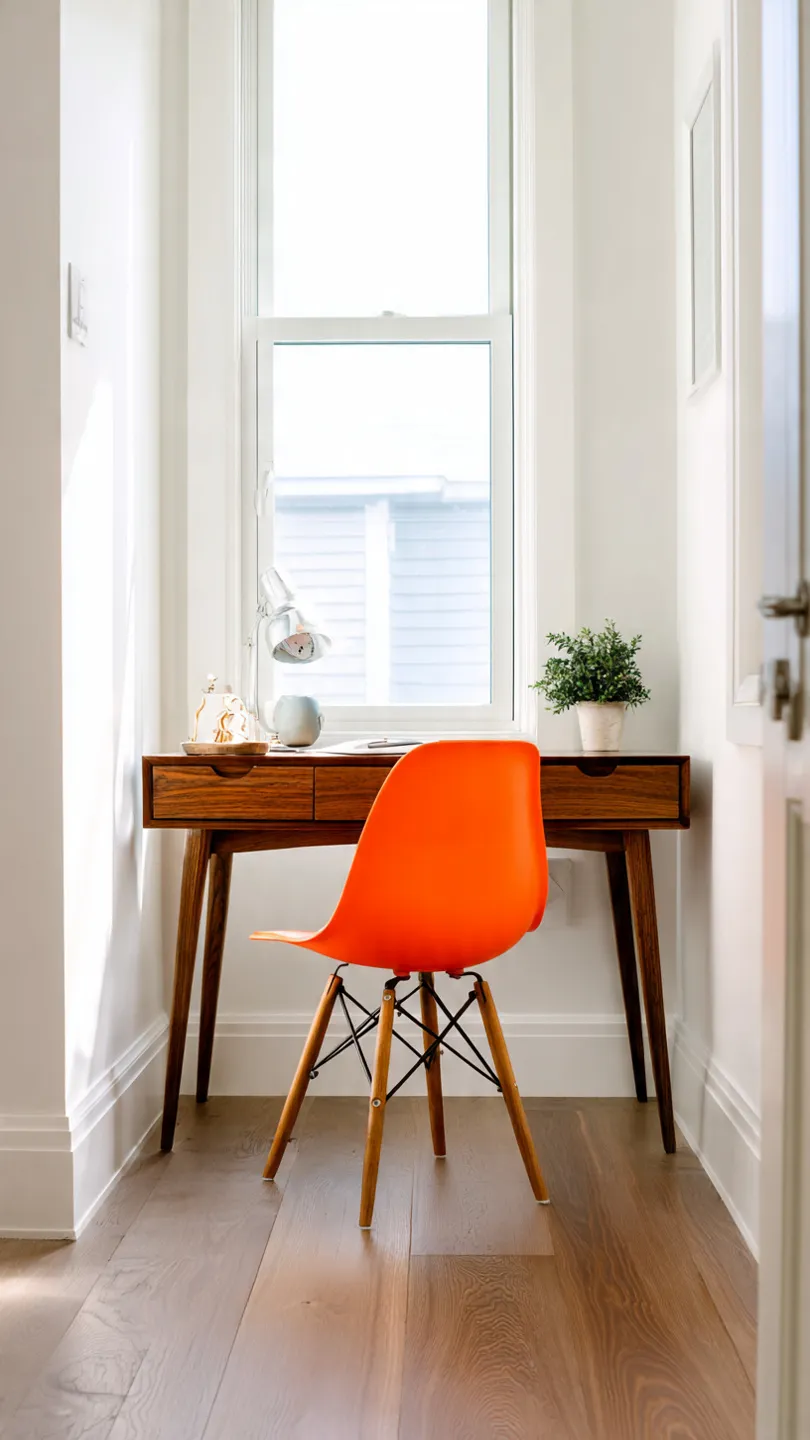
Key Features:
- Bold chair adds personality without permanent commitment
- Creates focal point through furniture pairing
- Easier to change than painting walls or buying new desk
- Demonstrates color theory in practical application
- Allows personal expression in functional furniture
Furniture relationships create opportunities for expression beyond individual pieces.
A neutral desk paired with a vibrant chair balances timeless investment with playful personality.
The contrast draws the eye and creates visual interest without a long-term commitment.
I’ve seen this work perfectly for renters who want high impact without painting walls.
When you tire of the color, simply swap the chair to refresh the room’s energy instantly.
The pairing strategy extends beyond color to include material and style contrasts.
A warm wood desk gains a contemporary edge when matched with molded plastic or wire seating.
In my experience, these intentional opposites create more dynamic energy than perfectly matched sets.
Mixing periods and materials ensures your room doesn’t feel like a sterile furniture showroom.
Your workspace should reflect who you are now, incorporating various elements you truly love.
Desk With Marble Accents
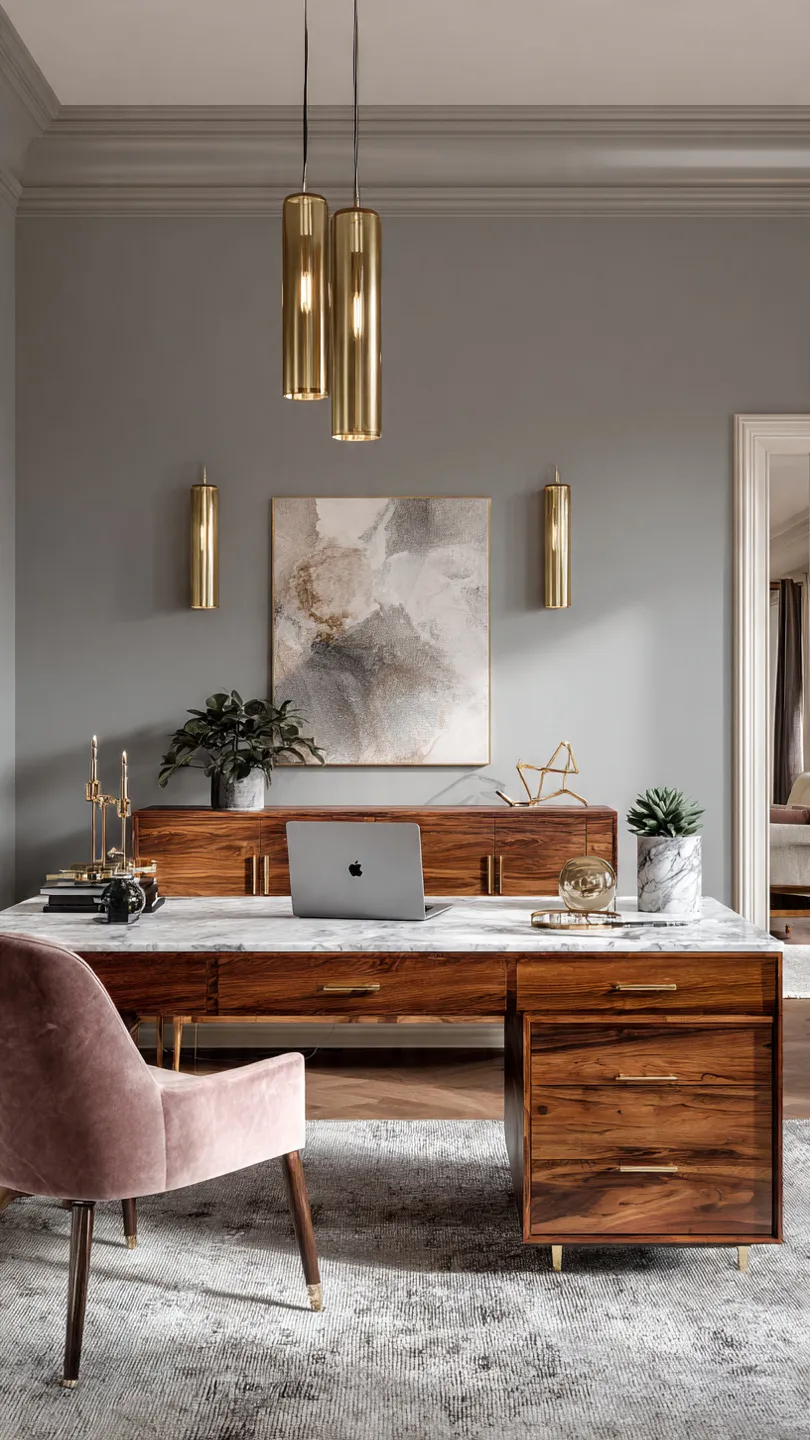
Key Features:
- Marble adds instant sophistication and luxury
- Cool stone balances warm wood tones
- Demonstrates skilled material mixing and contrast
- Creates jewelry-box quality in functional furniture
- Elevates standard desk into statement piece
Material combinations create complexity and visual interest that single-material pieces cannot achieve.
Marble accents introduce cool elegance that balances the natural warmth of wood.
The stone’s natural veining ensures that no two desks will look identical, making yours unique.
I’ve noticed how marble details elevate the perception of furniture quality and craftsmanship.
The combination works because each material enhances the best qualities of the other.
This approach suits those who want a luxe aesthetic without sacrificing daily functionality.
The marble typically appears on drawer fronts where it won’t interfere with your computer use.
In my experience, mixed materials create focal points that reduce the need for extra decorating.
Designing with one exceptional piece is often better than filling a room with forgettable items.
A marble-accented desk becomes the room’s jewelry—the piece that guests always notice and remember.
Desk With Built-In Lighting
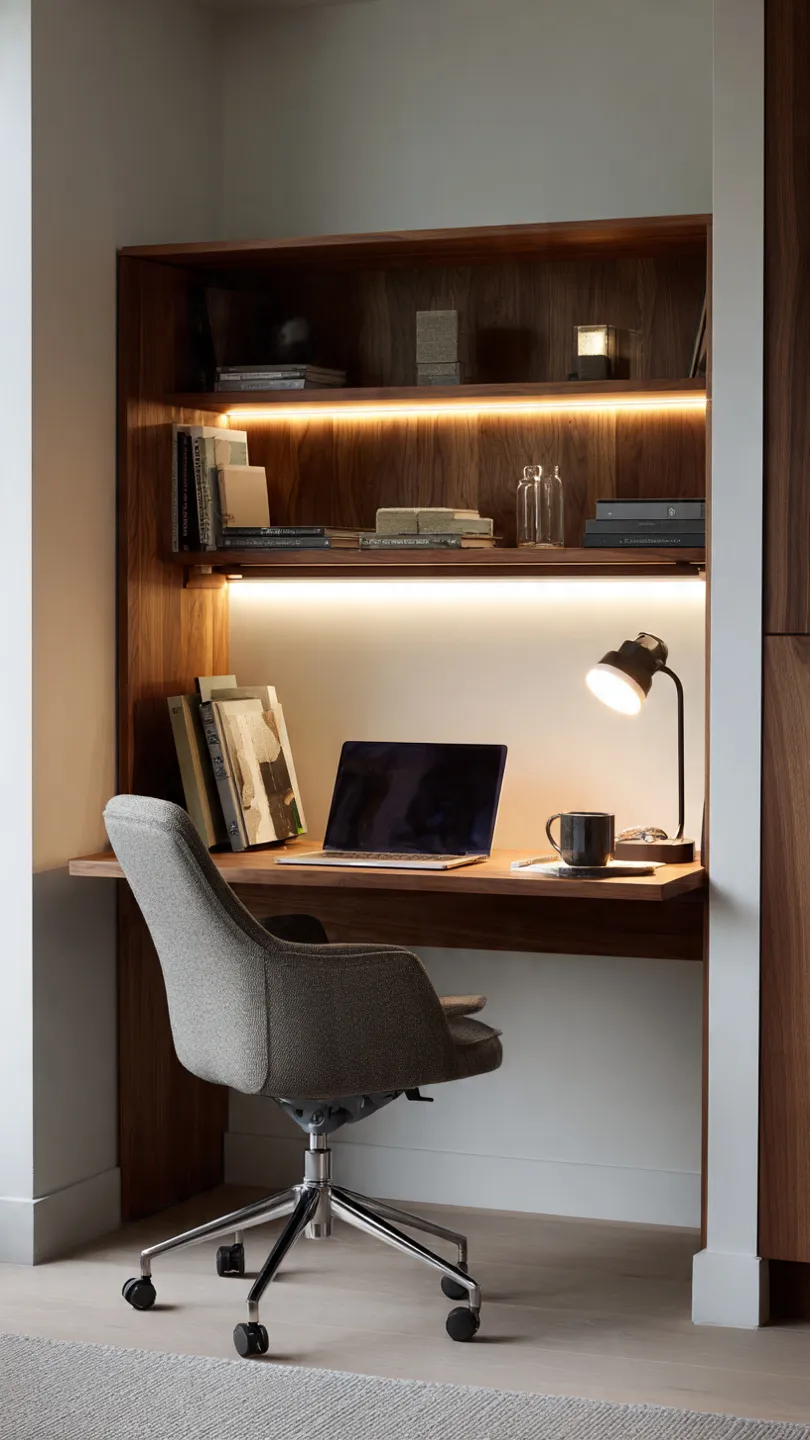
Key Features:
- Eliminates need for separate task lighting
- Provides consistent, shadow-free illumination
- Creates clean lines without lamp clutter
- Demonstrates thoughtful design integration
- Perfect for video calls requiring good lighting
Integrated solutions eliminate the lamp shuffle that clutters surfaces and tangles power cords.
Built-in lighting provides consistent illumination exactly where you need it most.
The under-shelf positioning eliminates shadows, which significantly improves visibility for detailed tasks.
I’ve noticed how this feature particularly benefits those doing frequent video calls or virtual meetings.
The integrated approach ensures form follows function with nothing extraneous cluttering the view.
The desk becomes a complete workstation requiring only your computer to function fully.
This streamlined approach suits minimalists who want to reduce equipment accumulation.
In my experience, reducing separate components creates a calmer environment that supports focus.
The lighting often includes dimming capability, allowing for adjustment based on the time of day.
Thoughtful technology integration makes a modern workspace feel seamless rather than awkwardly tacked-on.
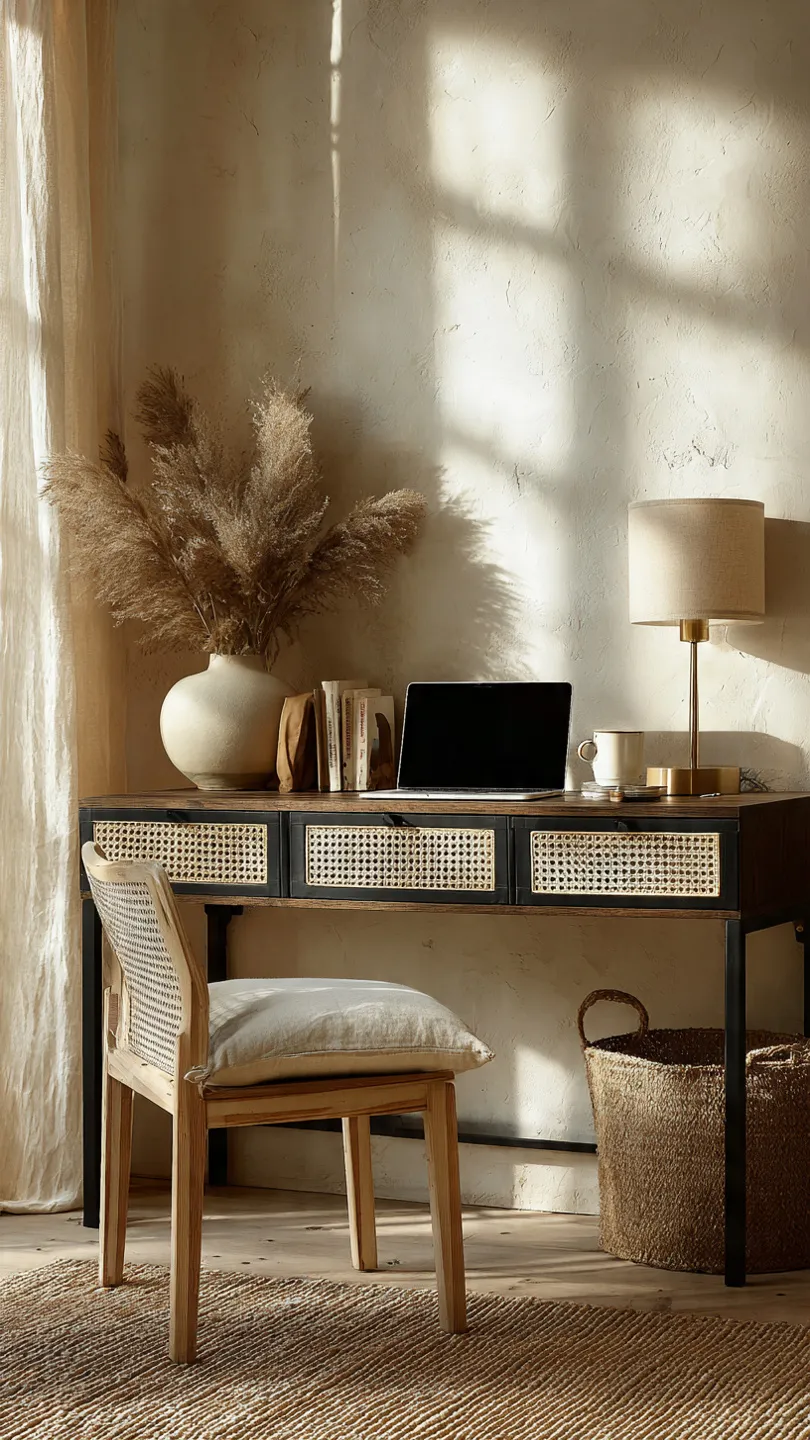
Desk With Cane Details
Key Features:
- Cane adds organic texture and visual interest
- Lighter appearance than solid wood drawer fronts
- Connects to nature through natural materials
- Demonstrates superior craftsmanship and detail work
- Creates relaxed, approachable office aesthetic
Natural materials bring warmth and organic texture that solid surfaces cannot replicate.
Cane webbing adds dimensional interest while maintaining the airy quality of mid-century design.
The woven pattern creates subtle visual movement as sun angles change throughout the day.
I’ve noticed how cane details make furniture feel handcrafted and special, signaling high quality.
This connects your workspace to nature through materials rather than just adding plants.
The cane aesthetic works beautifully in bohemian or organic modern settings with layered textures.
The material also provides slight ventilation for enclosed storage, which is a practical bonus.
In my experience, cane details age gracefully and develop a gentle, appealing patina.
Vintage pieces featuring cane remain popular because the material maintains its appeal across decades.
Cane details prove that office ideas can feel textured while maintaining clean lines and clarity.
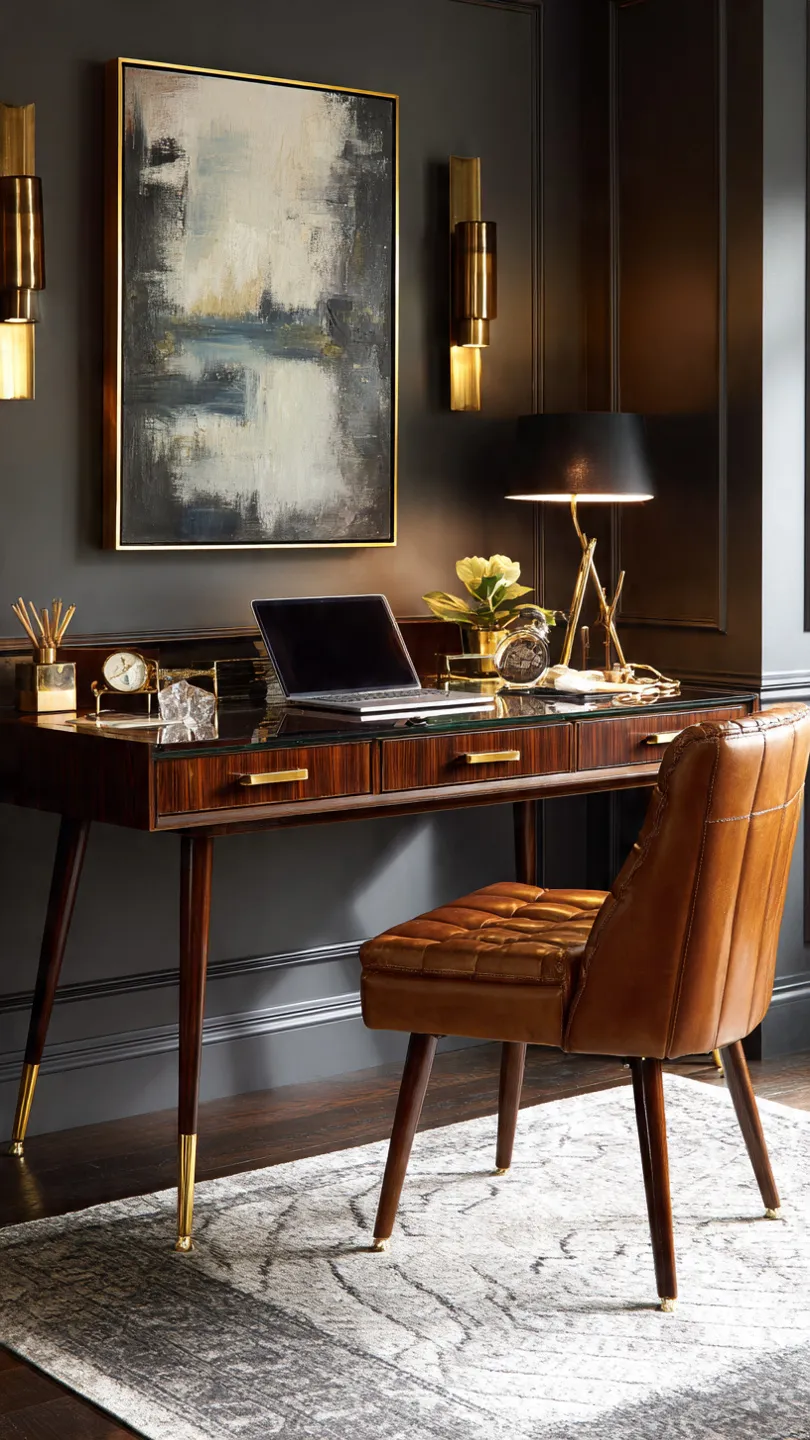
Desk With Brass Hardware
Key Features:
- Brass adds warmth and luxurious shine
- Hardware becomes jewelry for furniture
- Creates visual interest through metallic contrast
- Easily updated by changing pulls on existing desks
- Connects to broader mid-century metallic trends
Hardware details transform functional furniture into a decorative statement for your room.
Oversized brass pulls add instant sophistication while serving a necessary daily purpose.
The warm metallic finish contrasts beautifully with walnut’s deep tones to create visual depth.
I’ve seen simple desk transformations accomplished entirely through hardware upgrades on existing pieces.
Brass particularly suits mid-century desks because the material was prevalent and iconic during that era.
Metallic accents allow for coordination with other room elements like lighting and picture frames.
This attention to detail elevates a space from simply acceptable to truly exceptional.
In my experience, quality brass develops a rich patina that actually enhances its appearance over time.
Investing in solid brass hardware is a lifetime purchase that generally improves with age.
The warm finish also looks great in photos, making your workspace look professionally designed.
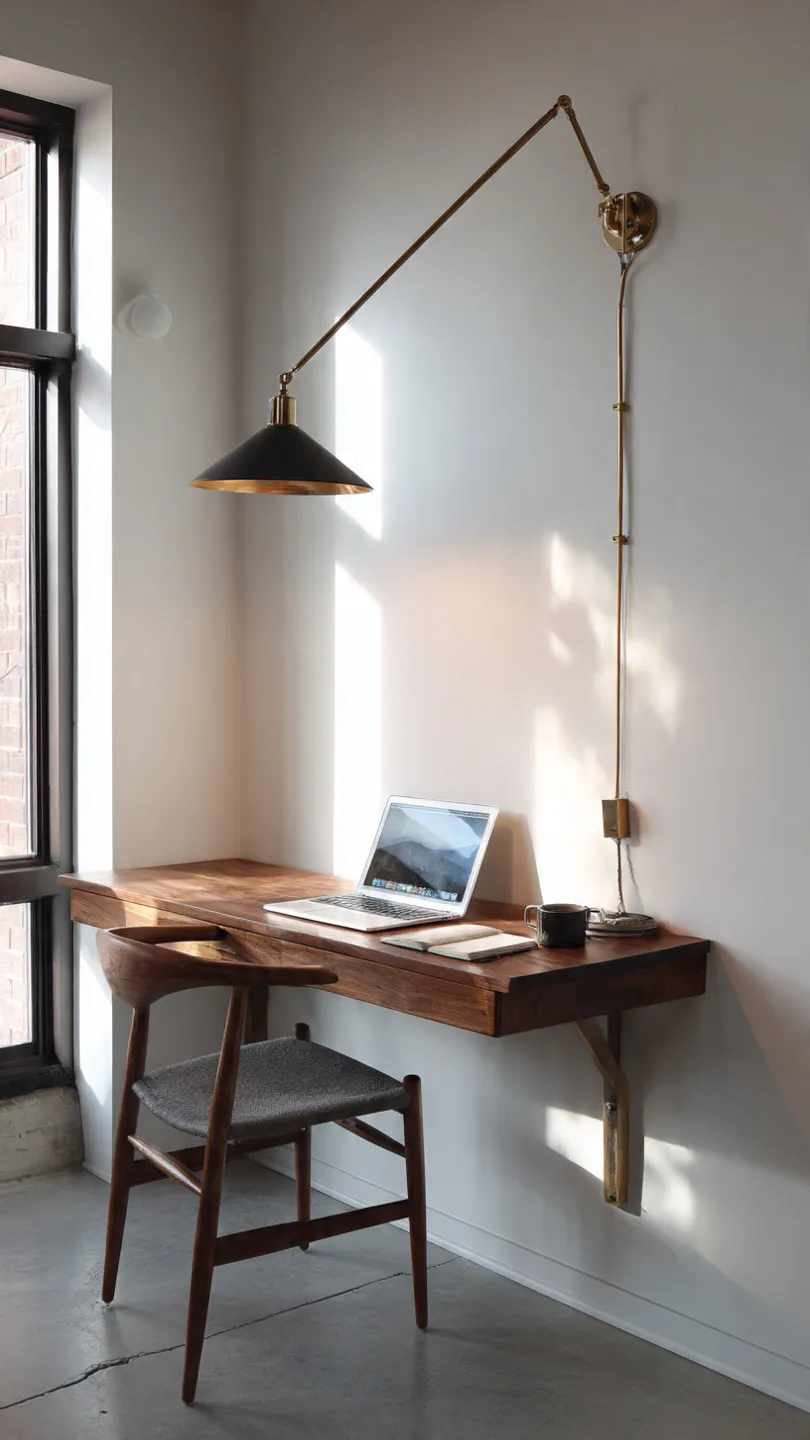
Desk With Wall-Mounted Task Light
Key Features:
- Frees desk surface from lamp clutter
- Provides adjustable, directed task lighting
- Creates architectural interest on walls
- Demonstrates space-efficient lighting solution
- Perfect for small desks with limited surface area
Wall-mounted lighting solves desktop real estate problems elegantly and efficiently.
An articulating task light provides necessary illumination without consuming your precious work surface.
The adjustable arm allows you to position light exactly where it’s needed for different tasks.
I’ve noticed how this particularly benefits those using smaller desks that pre-date modern computer equipment.
Wall mounting preserves clean lines while meeting functional requirements that didn’t exist decades ago.
The visible fixture becomes an architectural detail that adds an industrial edge to the room.
Brass or matte black finishes complement wood tones while introducing interesting material contrast.
In my experience, the flexibility of this lighting significantly reduces eye strain throughout the day.
Targeted illumination creates focused work zones, even in large or open rooms.
The combination of old and new can coexist beautifully when lighting is thoughtfully integrated.
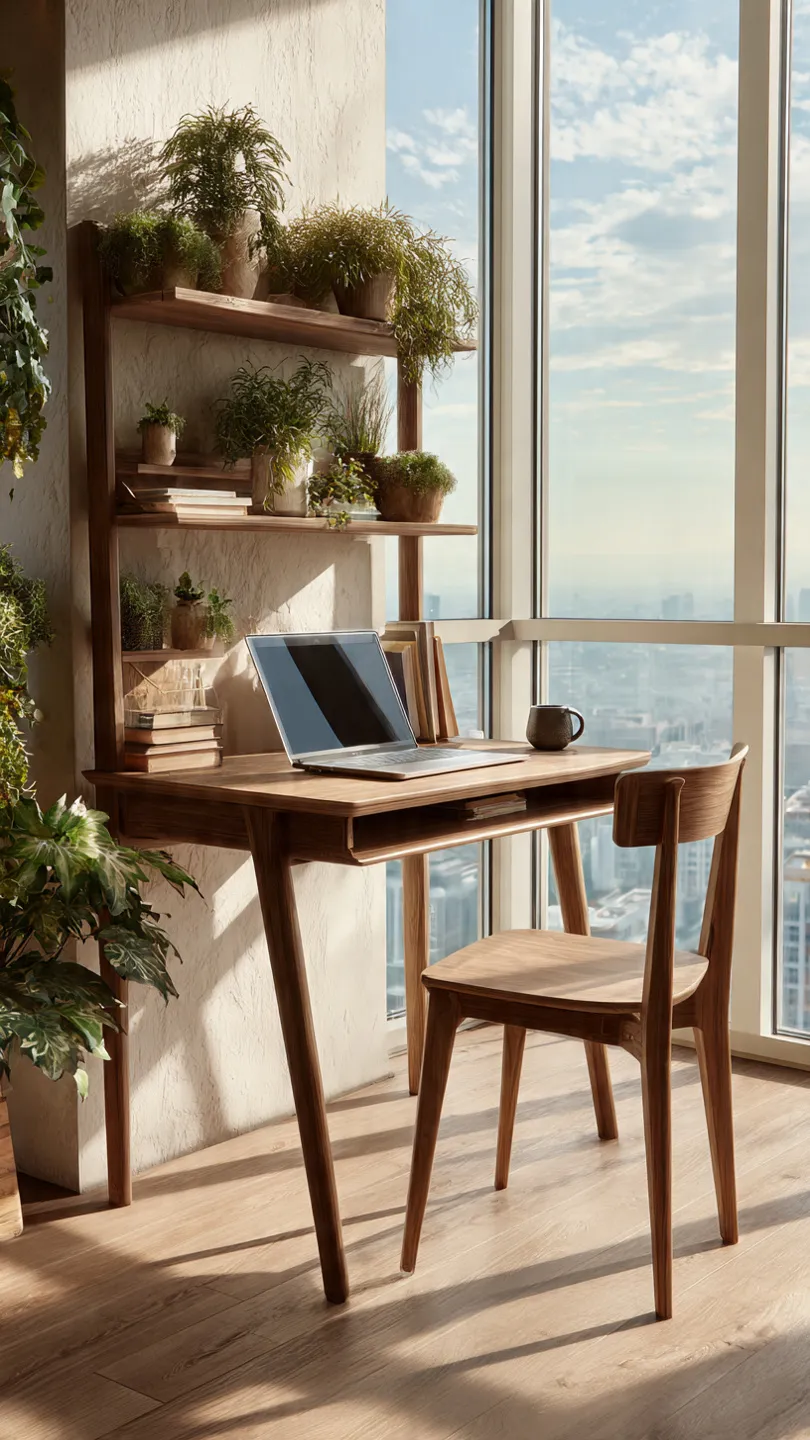
Desk With Plant Shelf
Key Features:
- Brings greenery to eye level without desktop clutter
- Creates natural backdrop for video calls
- Integrated shelf maintains furniture’s cohesive design
- Improves air quality and workspace atmosphere
- Demonstrates biophilic design in functional furniture
Living elements transform sterile offices into nurturing environments that support well-being.
An integrated plant shelf elevates greenery to eye level for maximum psychological benefit.
The raised position also creates a beautiful background for video calls and meetings.
I’ve noticed how plants at eye level reduce stress more effectively than floor plants.
They are in your sight line naturally throughout the day, providing vital visual breaks from screen work.
The integration also solves watering worries, as overflow stays on the shelf away from electronics.
The consistent shelf depth allows for plant groupings that create a high visual impact.
In my experience, caring for workspace plants provides a valuable mental break during long sessions.
Biophilic office design is research-backed to measurably improve productivity and general happiness.
Functional furniture can nurture both your work output and your personal wellness simultaneously.
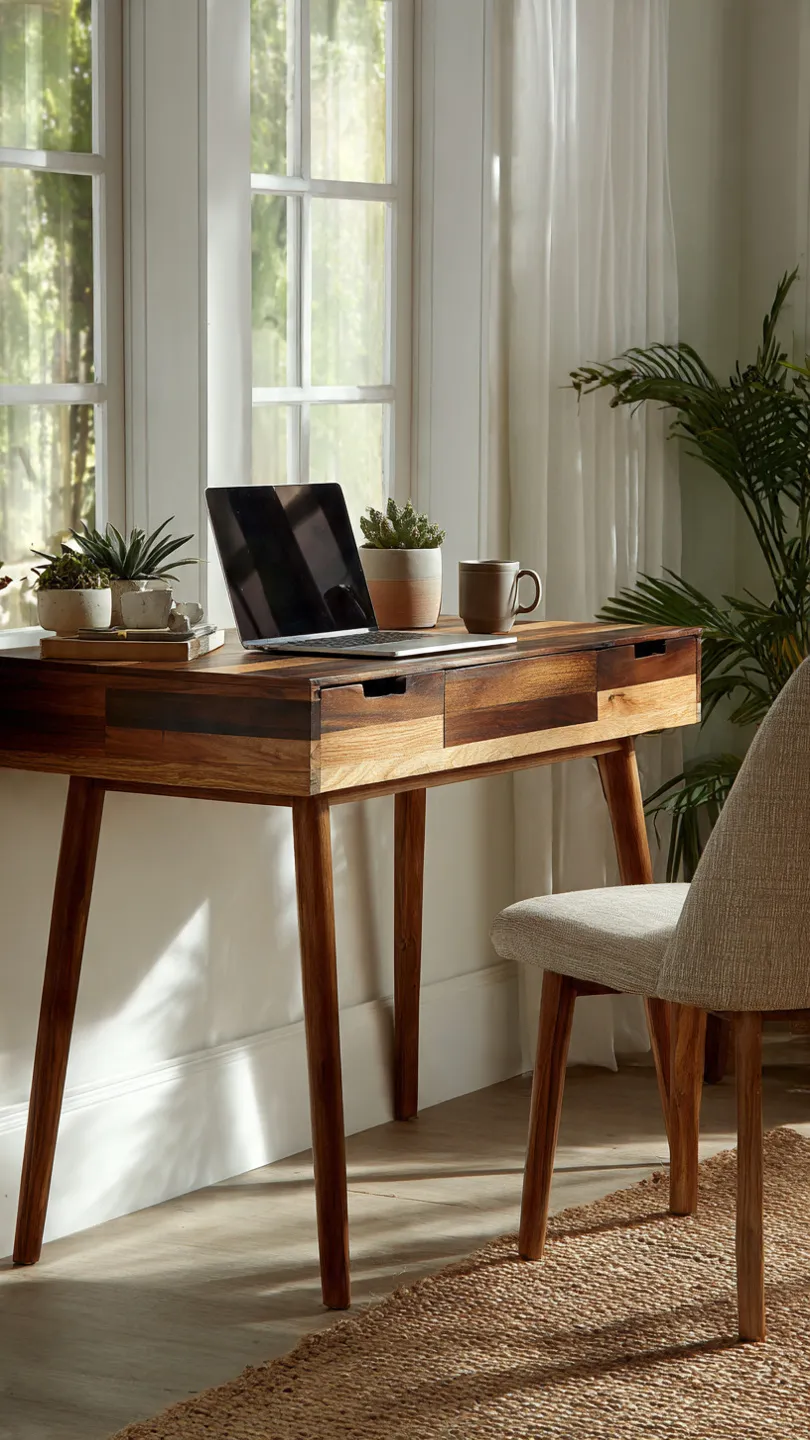
Desk With Mixed Wood Tones
Key Features:
- Multiple wood tones add depth and complexity
- Creates visual interest without color or pattern
- Demonstrates sophisticated material mixing
- Easier to coordinate with varied room furniture
- Allows flexibility in future furniture additions
Wood tone variation creates a subtle sophistication that monochromatic pieces simply cannot achieve.
Mixed woods add dimension and movement while maintaining a warm and inviting feel.
Contrast between a darker body and lighter accents draws attention to clever design details.
I’ve seen this approach work beautifully for those building furniture collections gradually over time.
You’re not locked into matching exact species, which allows for more flexible purchasing decisions.
The mixed approach reflects authentic mid-century practice where designers combined materials thoughtfully.
Variety creates a visual hierarchy that guides the eye across the furniture’s form.
In my experience, rooms with multiple wood tones feel more personally curated and lived-in.
Overly coordinated rooms can sometimes feel stiff, like a sterile furniture showroom.
Wood mixing proves you can maintain cohesion while embracing material variety for a rich aesthetic.
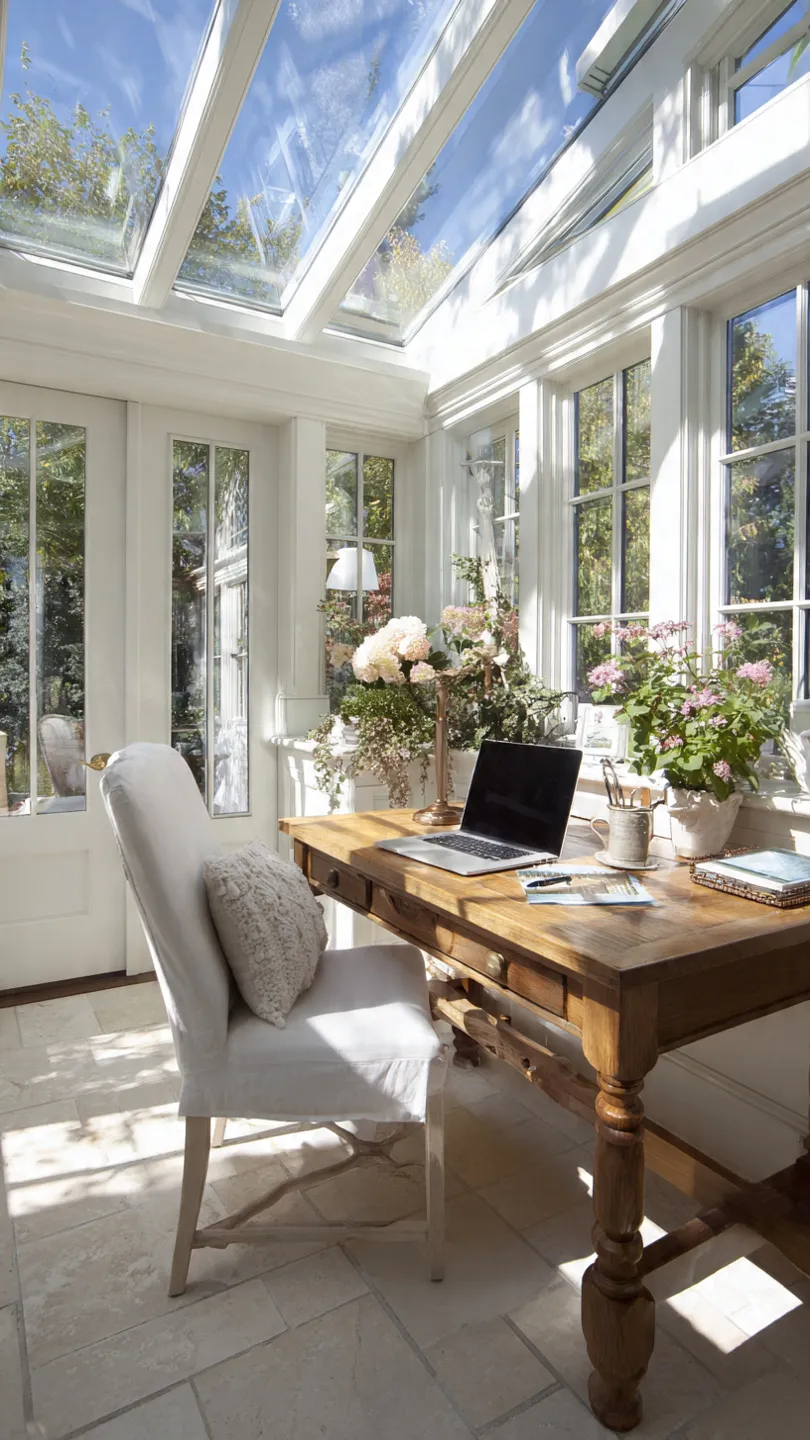
Desk In Sunroom Conversion
Key Features:
- Maximum natural light reduces eye strain
- Connection to outdoors improves mental wellbeing
- Seasonal changes provide evolving workspace views
- Sunroom’s glass walls eliminate confined office feeling
- Creates inspiring environment that supports creativity
Location dramatically affects how you experience your workspace on a daily basis.
Positioning your desk in a sunroom provides light quality and outdoor connection that interior rooms cannot.
Abundant natural illumination reduces reliance on artificial lighting and creates a dynamic environment.
I’ve noticed how working surrounded by windows fundamentally alters your mood for the better.
You remain connected to the natural world rather than feeling isolated in a dark interior box.
The sunroom location does require some consideration for glare management and temperature control.
Strategic window treatments and desk positioning will ensure comfort during actual work sessions.
In my experience, the effort invested in optimizing a sunroom office pays off through improved energy.
Transitioning a sunroom or enclosed porch into an office is a great way to utilize available space.
Abundant light also makes these spaces perfect for video meetings, improving your professional appearance.
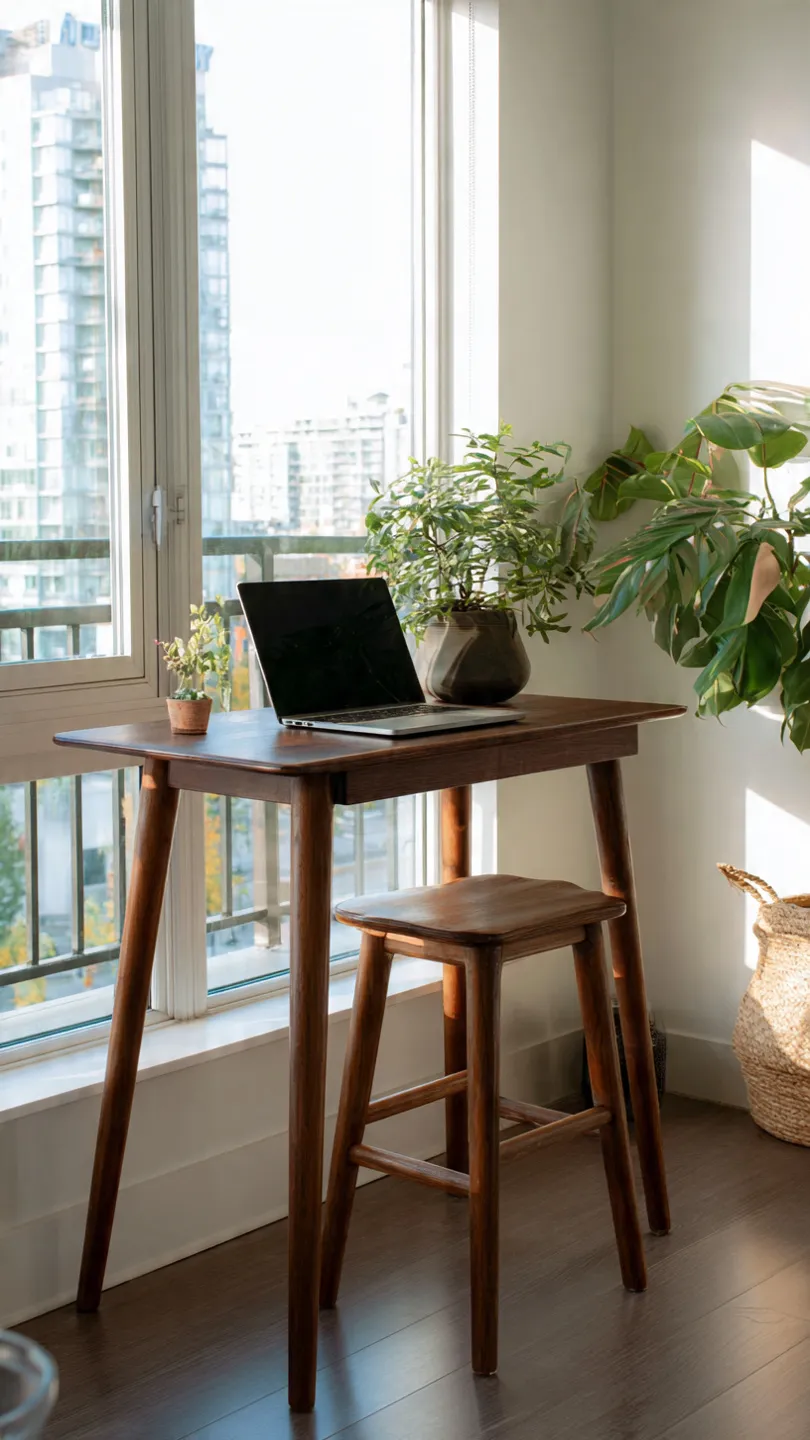
Desk With Minimal Footprint
Key Features:
- Perfect for studio apartments or small rooms
- Proves functional workspace doesn’t require large footprint
- Allows office integration without dominating the space
- Easier to relocate and rearrange than larger furniture
- Maintains mid-century aesthetic in scaled-down size
Small spaces demand furniture discipline and very careful selection to be successful.
A compact desk provides genuine functionality while respecting severe square footage limitations.
The minimal footprint allows for office integration in hallways or corners where space is tight.
I’ve seen these petite desks transform unused corners into productive zones without disrupting the room.
The scale makes the furniture approachable and maintains the open feeling that small spaces need.
The limited size actually encourages better work habits by preventing the accumulation of clutter.
Constraint forces regular editing and organization, as there is nowhere to hide extra items.
In my experience, working at a small desk creates surprising focus since only current tasks fit.
The compact approach also costs significantly less, making quality pieces accessible on a budget.
Sometimes limitations force creative solutions that ultimately work better for your productivity.
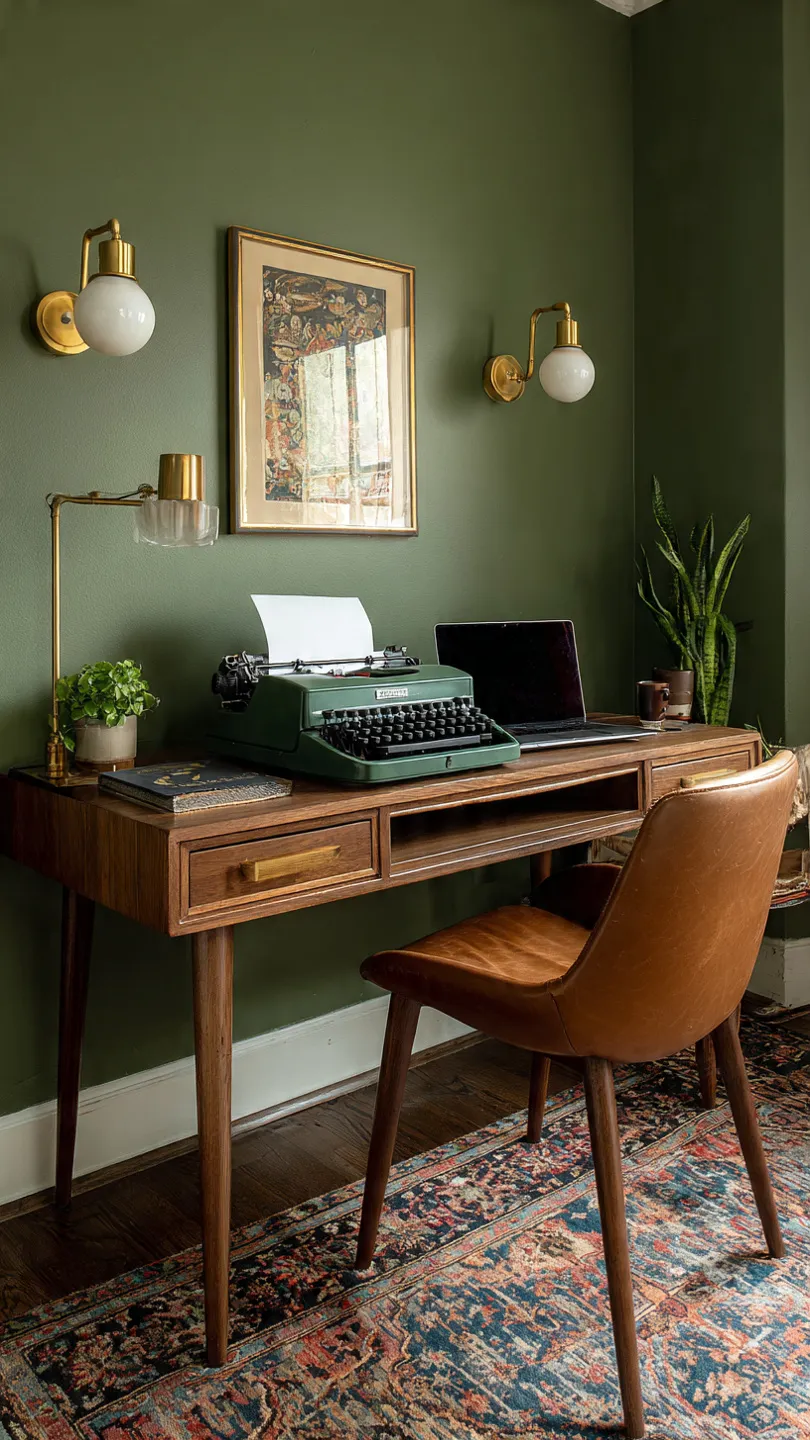
Desk With Vintage Typewriter Display
Key Features:
- Celebrates analog tools in digital workspace
- Creates conversation-starting visual interest
- Adds authentic vintage character and history
- Encourages occasional analog work and creativity
- Demonstrates personal interests through decor choices
Meaningful objects transform generic offices into personal sanctuaries that inspire you.
A vintage typewriter serves as both functional art and a reminder of work’s history.
The mechanical beauty and tactile experience offer a welcome contrast to silent modern keyboards.
I’ve noticed how displaying typewriters often reignites interest in manual creative writing.
The typewriter becomes both art and tool, honoring the past while supporting your current work.
The presence of a typewriter signals your personal relationship with the craft of work.
It starts conversations and reveals your personality in ways generic accessories cannot achieve.
In my experience, meaningful vintage objects anchor a space emotionally, making it feel like yours.
Displaying items with personal significance is better than buying generic decorator accessories.
This approach respects the past while functioning fully in the present with beautiful, handcrafted objects.
Conclusion
Creating a workspace you actually love changes everything about your workday experience.
These Mid-Century Modern Office Ideas prove that functional spaces can be stunningly beautiful.
Whether you choose a standout desk or experiment with bold color, each decision supports your productivity.
I’ve seen how even small changes can completely transform how a space feels and functions.
Start with the idea that resonates most, trust your design instincts, and build gradually.
Save this post to revisit for inspiration and share it with anyone dreaming of a workspace upgrade.
Your perfect mid-century modern office is much closer than you think!