
Vitamin D Deficiency – The Silent Problem Destroying Your Health
Do you feel tired all the time for no clear reason?
Vitamin D deficiency might be the hidden cause behind your exhaustion.
And you’re not alone — over one billion people suffer from vitamin D deficiency worldwide.
That’s a scary number.
Vitamin D is often called the “sunshine vitamin.”
Your body makes it when sunlight touches your skin.
But modern life keeps most of us indoors all day.
That’s why so many people are running dangerously low.
The worst part? Most people don’t even know they’re deficient.
The signs are sneaky and easy to miss.
But ignoring them can lead to serious health problems.
Let’s uncover everything you need to know — in the simplest way possible. ☀️
🔹 What Is Vitamin D Deficiency? 🤔
Vitamin D is a nutrient your body desperately needs.
It helps your bones stay strong.
It keeps your immune system working properly.
It even affects your mood and energy levels.
Vitamin D deficiency means your body doesn’t have enough of it.
Think of vitamin D like oil in a car engine.
Without enough oil, the engine starts grinding and breaking down.
Your body works the same way without enough vitamin D.
Everything slowly starts falling apart.
Your bones get weak.
Your muscles ache.
Your mood drops.
And you feel tired — constantly.
The tricky part?
Your body can’t make vitamin D on its own without sunlight.
So if you stay indoors too much, you run low.
Doctors check vitamin D levels through a simple blood test.
A level below 20 ng/mL is considered deficient.
Between 20–29 ng/mL is considered insufficient.
And 30 ng/mL or above is considered healthy. (Source: Cleveland Clinic)
🔹 How Common Is Vitamin D Deficiency? 📊
This problem is far more common than most people realize.
Here are some real global statistics:
- 📌 About 1 billion people worldwide have vitamin D deficiency. (Source: NIH)
- 📌 In the United States, roughly 42% of adults are vitamin D deficient. The rate jumps to 82% among Black adults and 69% among Hispanic adults.
- 📌 According to the World Health Organization, vitamin D deficiency is considered a global public health problem affecting every age group.
- 📌 A study in The Lancet found that people in northern countries are at highest risk due to limited sunlight exposure. (Source: The Lancet Diabetes & Endocrinology)
- 📌 Even in sunny countries like India and Saudi Arabia, vitamin D deficiency rates are shockingly high — above 70% in some populations.
So geography alone doesn’t protect you.
Your lifestyle and diet matter just as much.
🔹 Top Causes of Vitamin D Deficiency ☀️ (Main Section)
Why do so many people lack vitamin D?
Here are the most common reasons.
1. 🏠 Not Getting Enough Sunlight
Sunlight is your body’s primary source of vitamin D.
If you work indoors all day, you miss out.
Example: Priya works from home 10 hours daily.
She barely sees sunlight and her vitamin D levels crashed to 12 ng/mL.
2. 🧴 Using Too Much Sunscreen
Sunscreen blocks UV rays.
UV rays are what your skin needs to produce vitamin D.
SPF 30 can reduce vitamin D production by over 95%.
That doesn’t mean skip sunscreen — just get some unprotected sun time first.
3. 🌍 Living in Northern Regions
People living far from the equator get less intense sunlight.
Countries like Canada, UK, and Scandinavia have very short winters.
During those months, the sun isn’t strong enough to trigger vitamin D production.
4. 🍔 Poor Diet Choices
Very few foods naturally contain vitamin D.
If your diet lacks fatty fish, eggs, and fortified foods, you’re at risk.
Example: Jake ate mostly processed food and fast food.
His blood test showed severe vitamin D deficiency at just 9 ng/mL.
5. 🎨 Darker Skin Tone
Melanin is the pigment that gives skin its color.
More melanin means your skin absorbs less UV light.
That’s why people with darker skin need more sun exposure to make the same amount of vitamin D.
6. 👴 Aging
As you get older, your skin produces less vitamin D.
People over 65 make about 75% less vitamin D than younger adults.
That’s why older adults are at much higher risk.
7. ⚖️ Being Overweight or Obese
Vitamin D is fat-soluble.
That means excess body fat traps vitamin D inside fat cells.
So it can’t circulate properly in your blood.
Example: Maria weighed 220 pounds and always felt exhausted.
Her doctor discovered her vitamin D was extremely low.
8. 🫁 Gut Absorption Problems
Some gut conditions make it hard to absorb vitamin D from food.
Crohn’s disease, celiac disease, and IBS can all reduce absorption.
If your gut isn’t healthy, vitamin D can’t get into your blood properly.
9. 🏥 Kidney or Liver Disease
Your kidneys and liver convert vitamin D into its active form.
If either organ isn’t working well, vitamin D activation drops.
This is more common in older adults and people with chronic illness.
10. 💊 Certain Medications
Some medications interfere with vitamin D metabolism.
Steroids, weight-loss drugs, and some seizure medications are common culprits.
Always ask your doctor if your medication affects vitamin D levels.
🔹 Warning Signs & Symptoms of Vitamin D Deficiency ⚠️
Vitamin D deficiency symptoms are often silent and subtle.
But here’s what to watch for:
✅ Constant fatigue — feeling exhausted even after a full night of sleep.
✅ Bone pain or aching joints — especially in your back, hips, or legs.
✅ Frequent illness — catching colds, flu, or infections more than usual.
✅ Muscle weakness — struggling with simple tasks like climbing stairs.
✅ Low mood or depression — feeling sad or anxious without a clear reason.
✅ Slow wound healing — cuts and bruises take longer than normal to heal.
✅ Hair loss — unexplained hair thinning or shedding beyond normal.
✅ Brain fog — trouble focusing, poor memory, and mental sluggishness.
🩺 See a doctor if you notice 2 or more of these signs lasting more than a few weeks.
Don’t ignore them.
Early detection can prevent serious complications.
🔹 How to Prevent Vitamin D Deficiency ☀️ (Prevention Tips)
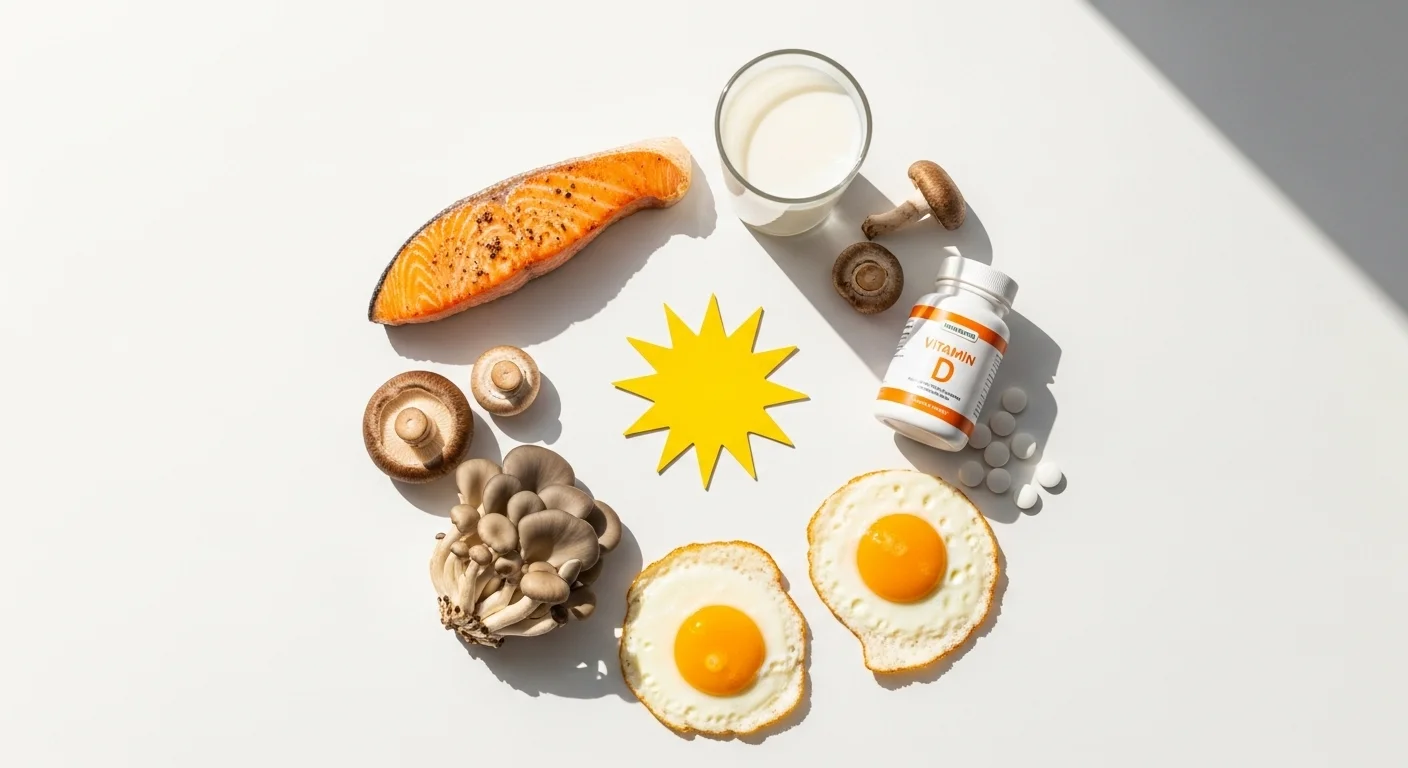
The good news? Fixing and preventing this problem is very doable.
Here’s how to keep your vitamin D levels healthy.
1. ☀️ Get 15–20 Minutes of Sunlight Daily
Step outside during midday when the sun is strongest.
Expose your arms, face, and legs without sunscreen for 15–20 minutes.
This is the easiest and most natural way to boost vitamin D.
2. 🐟 Eat Vitamin D-Rich Foods
Add these foods to your weekly meals:
- Fatty fish (salmon, tuna, mackerel, sardines)
- Egg yolks
- Fortified milk and orange juice
- Mushrooms exposed to sunlight
- Cod liver oil
Even small dietary changes make a real difference over time.
3. 💊 Take a Vitamin D Supplement
If you can’t get enough from sun and food, supplements help.
Most doctors recommend 600–2000 IU of vitamin D3 daily.
Always check with your doctor for the right dosage for you. (Source: Mayo Clinic)
4. 🏋️ Exercise Outdoors When Possible
Outdoor workouts give you two benefits at once.
You get your exercise AND your sunshine.
Walking, jogging, cycling, or even gardening counts.
5. 🧘 Manage Your Stress Levels
Chronic stress can deplete nutrients faster — including vitamin D.
Practice meditation, deep breathing, or yoga regularly.
A calm mind supports a healthier body.
6. 🩺 Get Your Levels Tested Regularly
A simple blood test called 25-hydroxyvitamin D tells you exactly where you stand.
Get tested at least once a year.
If you’re at high risk, test every 6 months.
7. ⚖️ Maintain a Healthy Weight
Since excess fat traps vitamin D, losing weight helps release it.
Focus on whole foods and regular movement.
Even a 5–10% weight loss can improve your levels noticeably.
8. 🚫 Limit Alcohol and Processed Foods
Alcohol can damage your liver, which processes vitamin D.
Processed foods are usually empty of real nutrients.
Choosing clean, whole foods supports better vitamin D absorption.
🔹 When to See a Doctor 🩺
Don’t wait until things get serious.
Visit a healthcare professional if:
- ☑️ You feel tired and weak for weeks without explanation
- ☑️ You have bone pain, frequent fractures, or muscle cramps
- ☑️ You get sick very often (more than 4–5 times a year)
- ☑️ You notice sudden hair loss or mood changes
- ☑️ You belong to a high-risk group (elderly, darker skin, obese, indoor lifestyle)
- ☑️ You’ve never had your vitamin D levels checked before
A simple blood test is all it takes.
It’s quick, painless, and could change your life.
Don’t be afraid — knowing your numbers is empowering. ❤️
🔹 Frequently Asked Questions (FAQ) ❓
Q1: How do I know if I have vitamin D deficiency?
The only sure way is a blood test called 25(OH)D.
Common signs include constant tiredness, bone pain, and frequent infections.
But many people with vitamin D deficiency have zero obvious symptoms.
Q2: Can I get enough vitamin D from food alone?
It’s very difficult.
Very few foods naturally contain vitamin D in large amounts.
That’s why sunlight and supplements are usually needed too.
Q3: How long does it take to fix vitamin D deficiency?
With proper supplementation, most people see improvement in 6–8 weeks.
Severe cases may take 3–6 months to fully correct.
Your doctor will retest and adjust your dosage as needed.
Q4: Is too much vitamin D dangerous?
Yes, taking excessive amounts can cause toxicity.
Symptoms include nausea, vomiting, kidney stones, and high calcium levels.
Always follow your doctor’s recommended dose and never self-megadose.
Q5: Does vitamin D deficiency cause weight gain?
Research suggests low vitamin D is linked to higher body weight.
But it’s not a direct cause of weight gain.
Fixing your vitamin D deficiency can support easier weight management over time.
🔹 Conclusion 🎯
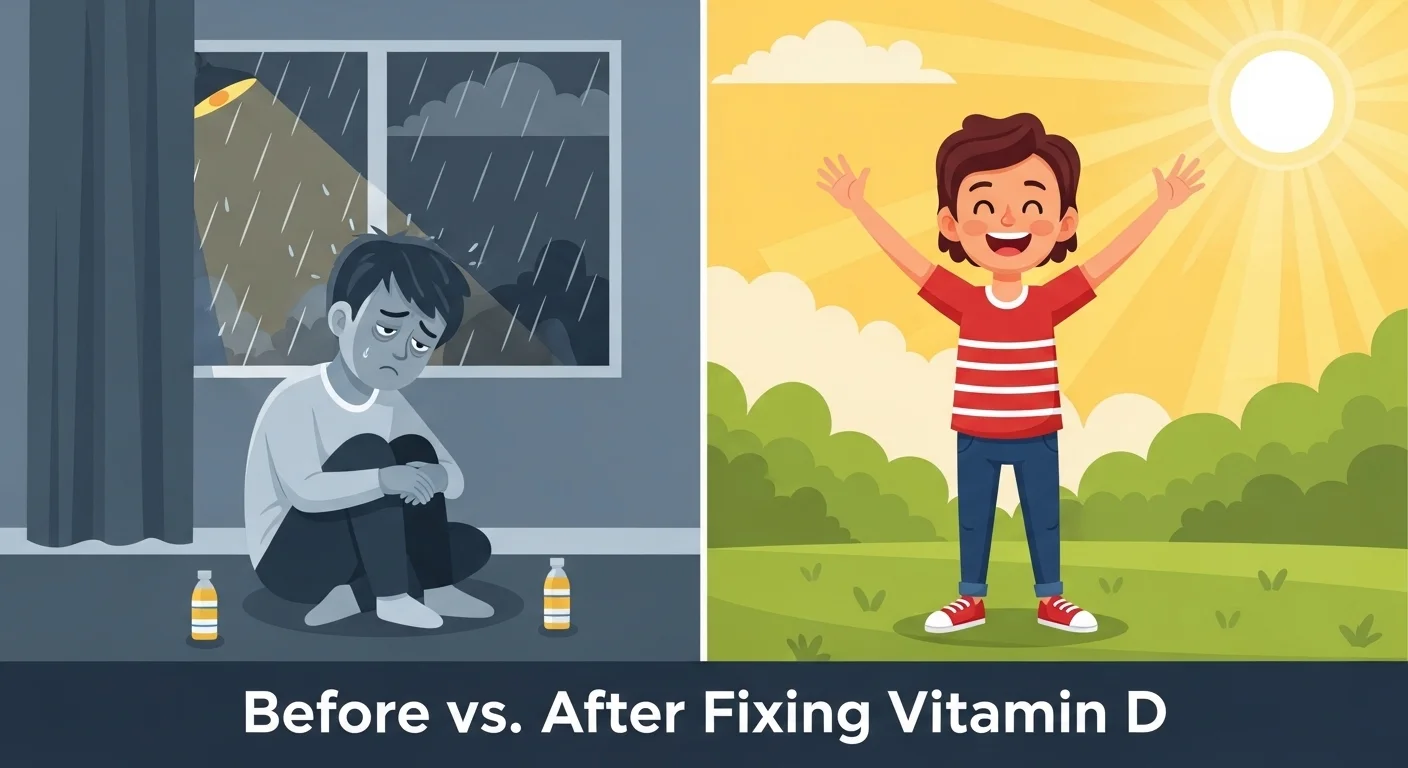
Vitamin D deficiency is incredibly common but completely fixable.
Your body needs sunlight, good food, and sometimes a supplement.
Don’t ignore the warning signs — fatigue, bone pain, and low mood matter.
A simple blood test can reveal the truth about your levels.
Start today — step outside, eat better, and talk to your doctor.
Small changes create massive results over time.
Your health is worth a few minutes of attention each day.
Share this post with a friend or family member who needs this information! 💛
Taking control of your health starts with understanding vitamin D deficiency. ☀️
⚕️ Medical Disclaimer
Disclaimer: This blog post is for informational and educational purposes only. It is NOT a substitute for professional medical advice, diagnosis, or treatment. Always consult a qualified healthcare provider before starting any supplements or making changes to your health routine. Individual results may vary. If you suspect vitamin D deficiency or have underlying health conditions, please seek personalized medical guidance. Never self-diagnose or self-treat based on internet content alone.