Stress Low Testosterone Sexual Performance-5 Shocking Ways They Destroy You | QuickDawa
You wake up tired even though you slept for seven hours.
Your morning energy is gone.
You used to feel strong and confident.
Now you feel drained before the day even starts.
Work pressure keeps piling up.
Your mind races at night.
And then your partner reaches out to you in bed.
And your body just does not respond.
Stress low testosterone sexual performance problems are silently ruining the lives of millions of men right now.
And most of them have no clue these three things are connected.
Here is what nobody tells you.
Stress does not just make you feel mentally exhausted.
It actually changes your hormones.
It quietly lowers your testosterone.
And when testosterone drops, your sexual performance crashes with it.
It is like a chain reaction happening inside your body.
One problem leads to another.
And before you know it, you are stuck in a cycle that feels impossible to break.
But it is NOT impossible.
Once you understand the link between stress, low testosterone, and sexual performance, you can start breaking that chain.
At QuickDawa, we are all about making health topics easy to understand, especially the ones men are too embarrassed to talk about. So let’s break down this connection in simple, clear, honest language.
💊 What Is the Stress, Testosterone, and Sexual Performance Connection?
This is a hormonal and psychological chain reaction that happens inside your body.
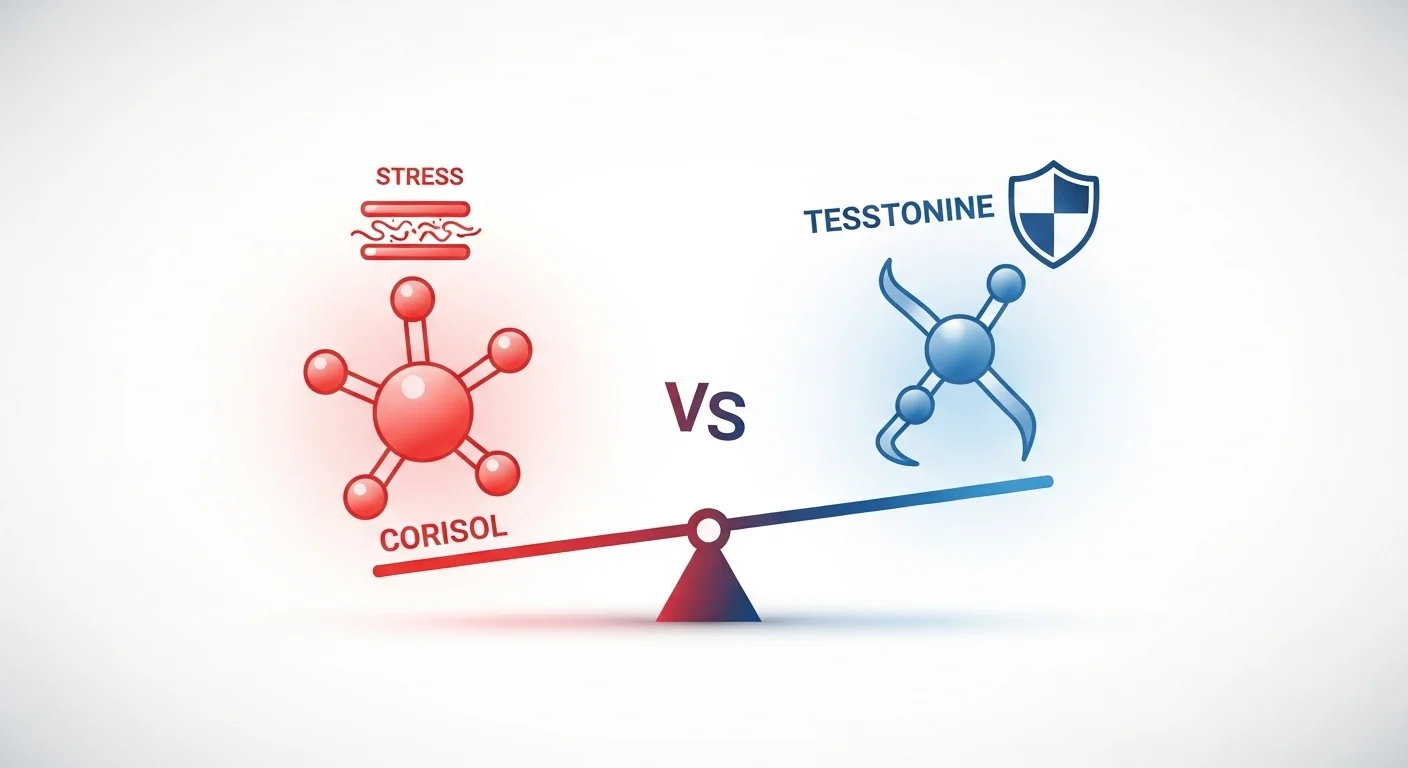
Chronic stress raises cortisol (your stress hormone).
High cortisol suppresses testosterone production.
Low testosterone weakens your sex drive, erections, and overall performance.
Think of it as three dominoes falling one after another.
Push the first one (stress), and the rest fall automatically.
😰 How Stress Destroys Your Testosterone Levels
Let’s start at the very beginning of this chain.
Stress.
Everyone experiences stress.
A little bit of stress is actually normal and even healthy.
But when stress becomes chronic, it becomes a serious problem for your hormones.
🧪 The Cortisol vs Testosterone Battle
Here is what happens inside your body when you are stressed.
Your brain signals your adrenal glands to produce cortisol.
Cortisol is your body’s survival hormone.
It puts your body into “fight or flight” mode.
Now here is the key part.
Cortisol and testosterone are made from the same raw material.
Your body uses cholesterol to make both hormones.
When stress is high, your body prioritizes cortisol over testosterone.
It is like your body is saying, “Survival first, reproduction later.”
The more cortisol your body makes, the less testosterone it produces.
This is not a theory.
Research published by the National Institutes of Health has confirmed this inverse relationship between cortisol and testosterone.
📉 What Chronic Stress Does Over Time
Short-term stress might lower your testosterone temporarily.
But chronic stress creates long-term hormonal damage:
- Consistently elevated cortisol keeps testosterone suppressed for weeks or months
- Sleep disruption from stress further reduces testosterone production
- Weight gain caused by cortisol increases estrogen and further lowers testosterone
- Inflammation from chronic stress damages the cells that produce testosterone
- Mental exhaustion kills your desire and arousal even if testosterone is borderline normal
It is a snowball effect.
And the longer it continues, the harder it becomes to reverse.
📉 Signs of Low Testosterone Caused by Stress
How do you know if stress has already lowered your testosterone?
Watch for these warning signs:
- Low sex drive that is noticeably different from before
- Weak or inconsistent erections
- Fatigue that coffee cannot fix
- Loss of muscle mass even if you work out
- Increased belly fat especially around the waistline
- Mood swings or feeling irritable for no reason
- Brain fog and difficulty concentrating
- Feeling unmotivated about things you used to enjoy
- Poor sleep or waking up multiple times at night
- Depression or anxiety that was not there before
If you are nodding along to three or more of these, your testosterone levels might be suffering.
And at QuickDawa, we always say this. Recognizing the problem is the first step toward fixing it.
🛏️ How Low Testosterone Ruins Sexual Performance
Now let’s connect the second domino to the third.
When testosterone drops, your sexual health takes a direct hit.
Here is exactly how:
1. Your Sex Drive Disappears
Testosterone is the primary hormone that drives sexual desire in men.
When levels drop, you simply stop wanting intimacy.
It is not that you do not love your partner.
Your body just is not sending the right signals anymore.
2. Erections Become Weak or Unreliable
Testosterone helps trigger the release of nitric oxide in your blood vessels.
Nitric oxide is what relaxes blood vessels and allows blood to flow into the penis.
Less testosterone means less nitric oxide.
Less nitric oxide means weaker blood flow and weaker erections.
3. Stamina and Energy Drop
Low testosterone zaps your overall energy.
You feel tired before you even begin.
This affects both your physical endurance and your mental confidence during intimacy.
4. Performance Anxiety Kicks In
Once you experience a few “failures” in the bedroom, anxiety sets in.
And guess what anxiety does?
It creates more stress.
More stress creates more cortisol.
More cortisol pushes testosterone even lower.
And the cycle repeats.
This is the vicious loop that traps millions of men without them even knowing it.
🔄 The Vicious Cycle Explained Simply
Let me lay this out clearly so you can see the full picture:
- Step 1: Life stress hits you (work, money, relationships, health worries)
- Step 2: Cortisol levels rise and stay high
- Step 3: Testosterone production slows down
- Step 4: Sex drive drops and erections weaken
- Step 5: Sexual problems cause embarrassment and frustration
- Step 6: Embarrassment creates MORE stress and anxiety
- Step 7: More stress pushes cortisol even higher
- Step 8: Testosterone drops even further
- Step 9: The cycle continues and gets worse
This is the silent chain that destroys men’s confidence and relationships.
But the beautiful thing about a chain is this.
Break one link, and the whole thing falls apart.
💪 How to Break the Stress, Low Testosterone, Sexual Performance Chain

Now for the most important part.
Here is how you can start breaking this cycle today.
🧘 1. Manage Your Stress First
Since stress is the first domino, start here.
You cannot boost testosterone while your cortisol is through the roof.
Proven ways to lower cortisol:
- Deep breathing exercises for 5 to 10 minutes daily
- Meditation or mindfulness (even just 10 minutes helps)
- Walking in nature reduces cortisol significantly
- Limiting social media and news that trigger anxiety
- Talking to someone about your stress, whether a friend, partner, or therapist
- Saying no to things that overwhelm you
- Journaling your thoughts before bed to clear your mind
🏋️ 2. Exercise Smartly
Exercise is one of the most powerful ways to lower cortisol and raise testosterone at the same time.
Best exercises for testosterone:
- Strength training (squats, deadlifts, bench press, pull-ups)
- High-intensity interval training (HIIT) for short bursts
- Brisk walking for 30 minutes daily
- Swimming for full-body circulation
Warning: Over-exercising can actually raise cortisol and hurt testosterone. Keep workouts under 60 minutes and allow rest days.
😴 3. Fix Your Sleep
This is non-negotiable.
Your body produces most of its testosterone during deep sleep.
If you are sleeping poorly, your testosterone will stay low no matter what else you do.
Sleep tips:
- Aim for 7 to 9 hours every night
- Keep your bedroom cool and dark
- Stop screens one hour before bed
- Avoid caffeine after 2 PM
- Go to bed and wake up at the same time daily
🥩 4. Eat Testosterone-Friendly Foods
What you eat directly affects your hormone levels.
Foods that support healthy testosterone:
- Eggs (cholesterol in eggs is the building block of testosterone)
- Fatty fish like salmon and sardines (omega-3 fats reduce inflammation)
- Red meat in moderation (zinc and protein for testosterone production)
- Garlic (contains allicin which may lower cortisol)
- Pomegranate (antioxidants that protect testosterone molecules)
- Ginger (studies show it may boost testosterone by up to 17%)
- Oysters (highest zinc content of any food)
- Leafy greens like spinach (magnesium supports testosterone)
- Nuts and seeds especially Brazil nuts (selenium for hormonal health)
Foods to AVOID:
- Processed sugar (spikes insulin and lowers testosterone)
- Soy products in excess (may increase estrogen-like activity)
- Heavy alcohol (directly toxic to testosterone-producing cells)
- Processed junk food (inflammation and weight gain)
🍷 5. Limit Alcohol
One or two drinks occasionally is probably fine.
But heavy or regular drinking directly suppresses testosterone production.
Alcohol also disrupts sleep quality, which makes things worse.
If you are struggling with sexual performance, cutting back on alcohol is one of the fastest wins.
💧 6. Stay Hydrated
Dehydration increases cortisol levels.
It also makes your blood thicker, which reduces circulation.
Drink at least 8 glasses of water throughout the day.
🩺 7. Consider Getting Your Levels Tested
If you have tried lifestyle changes and still feel off, ask your doctor for a blood test.
A simple test can check:
- Total testosterone levels
- Free testosterone levels
- Cortisol levels
- Thyroid function
- Vitamin D and zinc levels
Knowing your actual numbers gives you and your doctor a clear roadmap.
🧠 8. Address the Mental Health Side
Sometimes the stress is too deep for lifestyle changes alone.
And that is completely okay.
Talking to a therapist or counselor can be life-changing.
Cognitive behavioral therapy (CBT) has been shown to help with both performance anxiety and chronic stress.
There is nothing weak about asking for help.
It is actually one of the bravest things a man can do.
🩺 When to Call Your Doctor
Do not wait until things get unbearable.
See your doctor if:
- Low sex drive has lasted more than 4 weeks
- You are experiencing consistent erection problems
- You feel chronically exhausted despite sleeping enough
- You have gained unexplained weight especially around your belly
- You feel depressed, anxious, or emotionally numb
- Lifestyle changes have not helped after 2 to 3 months
- You suspect your medication might be affecting your hormones
- You want to get your testosterone and cortisol levels tested
Your doctor can help determine if you need lifestyle adjustments, therapy, hormone therapy, or other medical support.
🙋 Frequently Asked Questions (FAQ)
Q: Can stress cause low testosterone in men?
A: Yes. Chronic stress raises cortisol, which directly suppresses testosterone production. The longer the stress continues, the more testosterone drops. Learn more at Mayo Clinic.
Q: How long does it take for testosterone to recover after stress?
A: It depends on how long the stress lasted. With proper lifestyle changes, many men see improvement within 4 to 12 weeks. Chronic cases may take longer and could need medical support. Read more at WebMD.
Q: Is stress-related erectile dysfunction reversible?
A: In most cases, yes. When stress is managed and testosterone levels stabilize, sexual performance typically improves. Therapy, exercise, and sleep improvements are key. Reference: Cleveland Clinic.
Q: Can you take testosterone supplements for stress-related low T?
A: Over-the-counter testosterone boosters are not proven to be effective. Prescription testosterone therapy should only be used under medical supervision after proper blood tests. Never self-medicate. Check at MedlinePlus.
Q: Cortisol vs testosterone: which one wins?
A: When both are competing for the same resources, cortisol always wins. Your body prioritizes survival (cortisol) over reproduction (testosterone). That is why stress management is the first step in fixing low T. Learn more at Healthline.
Q: How does poor sleep affect testosterone?
A: Sleeping less than 5 hours per night can reduce testosterone levels by 10 to 15% in just one week. Deep sleep is when most testosterone is produced. Reference: Sleep Foundation.
Q: Can exercise boost testosterone and reduce stress at the same time?
A: Absolutely. Strength training and moderate cardio lower cortisol and raise testosterone simultaneously. It is one of the most effective natural strategies. Just avoid overtraining. Read at Harvard Health.
🏁 Break the Chain Starting Today
Let me leave you with this.
Stress low testosterone sexual performance problems are real, they are common, and they are nothing to be ashamed of.
Millions of men are going through the exact same thing right now.
The difference between staying stuck and getting better is understanding what is happening inside your body.
Now you know the chain.
Stress raises cortisol.
Cortisol crushes testosterone.
Low testosterone destroys sexual performance.
And the cycle feeds itself.
But you also know how to break it.
Manage stress. Sleep better. Eat right. Move your body. Get help when needed.
You are not broken.
Your body is just responding to what life has been throwing at it.
And once you change the inputs, the outputs change too.
At QuickDawa, we believe that understanding your health is just as important as treating it. Knowledge is the first step toward better health. If you found this guide helpful, share it with someone who needs it and explore more health guides on QuickDawa.com for trusted, easy-to-understand health information.
Have a question about stress, testosterone, or sexual health? We would love to hear from you. Drop your question in the comments below or reach out through our QuickDawa Contact Page. No judgment, just honest help.
⚠️ Medical Disclaimer
The information provided in this article is intended for educational and informational purposes only. It is not a substitute for professional medical advice, diagnosis, or treatment. Always seek the guidance of your qualified doctor, pharmacist, or healthcare provider with any questions you may have regarding a medical condition, medication, or treatment plan.
Never disregard professional medical advice or delay seeking it because of something you read on QuickDawa or any other website. If you think you may have a medical emergency, call your doctor, go to the nearest emergency room, or call emergency services immediately.
Drug information, dosages, and interactions described in this post are provided for general awareness only and may not apply to your individual health situation. Medications affect people differently based on age, weight, health conditions, and other factors.
QuickDawa and its authors do not assume any liability for any consequences arising from the use or misuse of information presented on this website.
🌐 Sources and External References
- Mayo Clinic: Male Hypogonadism (Low Testosterone)
- MedlinePlus: Testosterone Levels and Hormonal Health
- WebMD: What Low Testosterone Can Mean for Your Health
- Cleveland Clinic: Erectile Dysfunction Overview
- Harvard Health: Testosterone and What It Does
- Sleep Foundation: How Sleep Affects Testosterone