3 3 3 Rule for Ibuprofen – The Safe Dosing Trick Most People Miss | QuickDawa
You wake up with a pounding headache.
Or maybe your back is killing you after a long day.
So what do you do?
You pop an ibuprofen and move on with your life.
No big deal, right?
But here’s the thing most people never think about.
How many tablets did you actually take?
How many times did you take them today?
And how many days in a row have you been doing this?
These questions matter more than you think.
Taking too much ibuprofen can cause real problems.
We’re talking stomach ulcers, kidney issues, and even heart risks.
Scary stuff for a pill most of us treat like candy.
That’s exactly why the 3 3 3 rule for ibuprofen exists.
It’s a dead simple way to remember how to use ibuprofen safely.
No medical degree needed.
No confusing charts or numbers.
Just three easy numbers to keep in your head.
And trust me, once you learn this rule, you’ll never forget it.
At QuickDawa, we’re all about making medicine easy to understand.
So let’s break down everything you need to know about the 3-3-3 rule for ibuprofen in simple, clear language.
💊 What Is Ibuprofen?
Ibuprofen is a common over-the-counter pain reliever.
It belongs to a group of medicines called NSAIDs (non-steroidal anti-inflammatory drugs).
People use it for headaches, muscle pain, toothaches, menstrual cramps, and fever.
Brand names include Advil, Motrin, and Nurofen.
You can buy it without a prescription at most pharmacies.
🔢 So What Exactly Is the 3 3 3 Rule for Ibuprofen?
Okay, let’s get to the good stuff.
The 3 3 3 rule for ibuprofen is a simple memory trick.
It helps you remember how to take ibuprofen without overdoing it.
Here’s how it works:
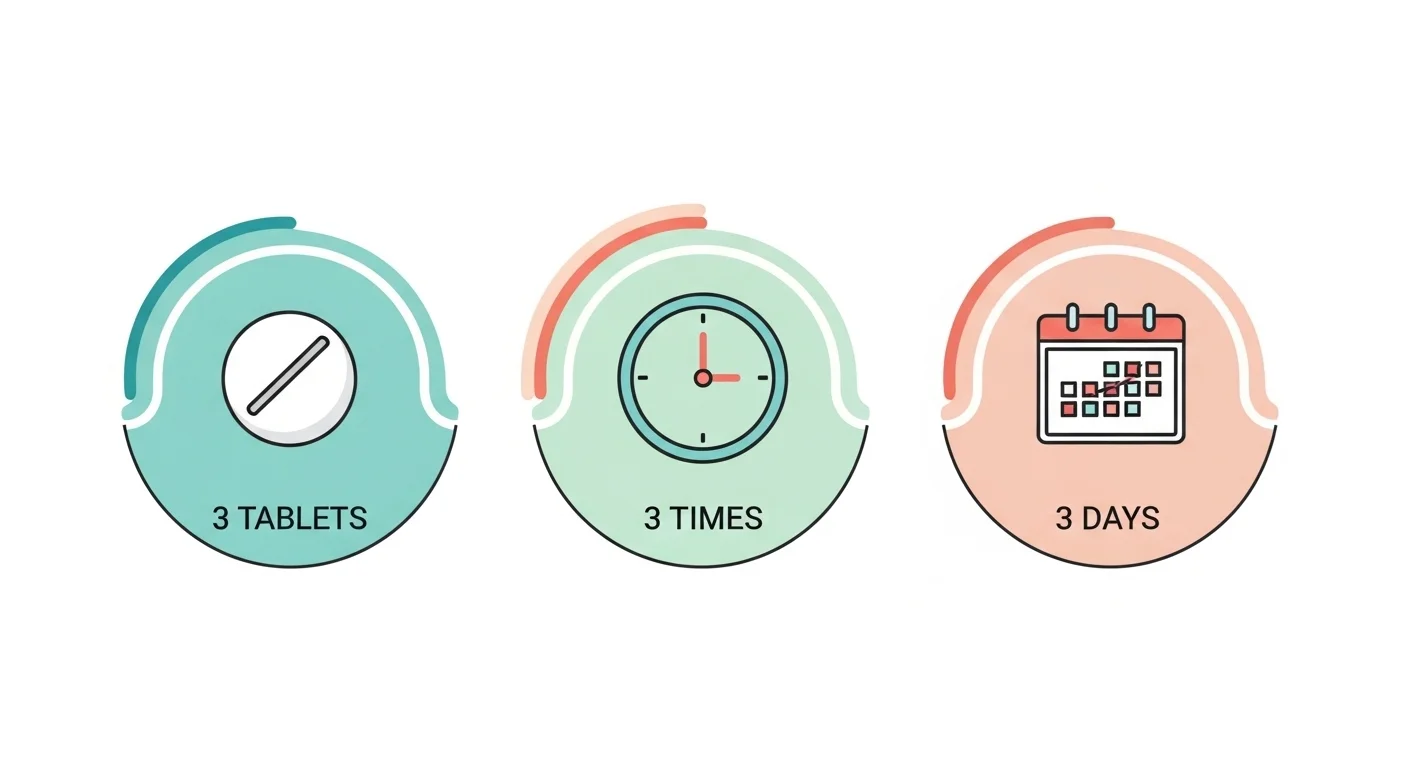
- 3 tablets maximum at one time (that’s 600mg if each tablet is 200mg)
- 3 times per day maximum (morning, afternoon, and evening)
- 3 days maximum without talking to your doctor
That’s it.
Three numbers. Super easy to remember.
This rule is meant for standard 200mg over-the-counter ibuprofen tablets.
If your doctor prescribed a different strength, follow their instructions instead.
But for everyday use when you grab a bottle from the pharmacy shelf?
The 3 3 3 rule is your best friend.
🤔 Why Does This Rule Matter So Much?
Here’s the honest truth.
Most people don’t read the label on their pain medicine.
They just take whatever feels right.
One person takes two tablets every couple of hours.
Another takes four at once because the pain is really bad.
Both of these are mistakes.
And both can lead to serious health problems.
Ibuprofen is safe when used correctly.
But when you take too much or use it for too long, it can cause:
- Stomach bleeding and ulcers
- Kidney damage, especially if you’re dehydrated
- Increased risk of heart attack or stroke with long-term use
- Liver problems in rare cases
- High blood pressure
The 3 3 3 rule keeps you in the safe zone.
It’s like a guardrail on a mountain road.
You can enjoy the ride without going over the edge.
📏 Breaking Down Each “3” in Detail
Let’s look at each part of the rule a little closer.
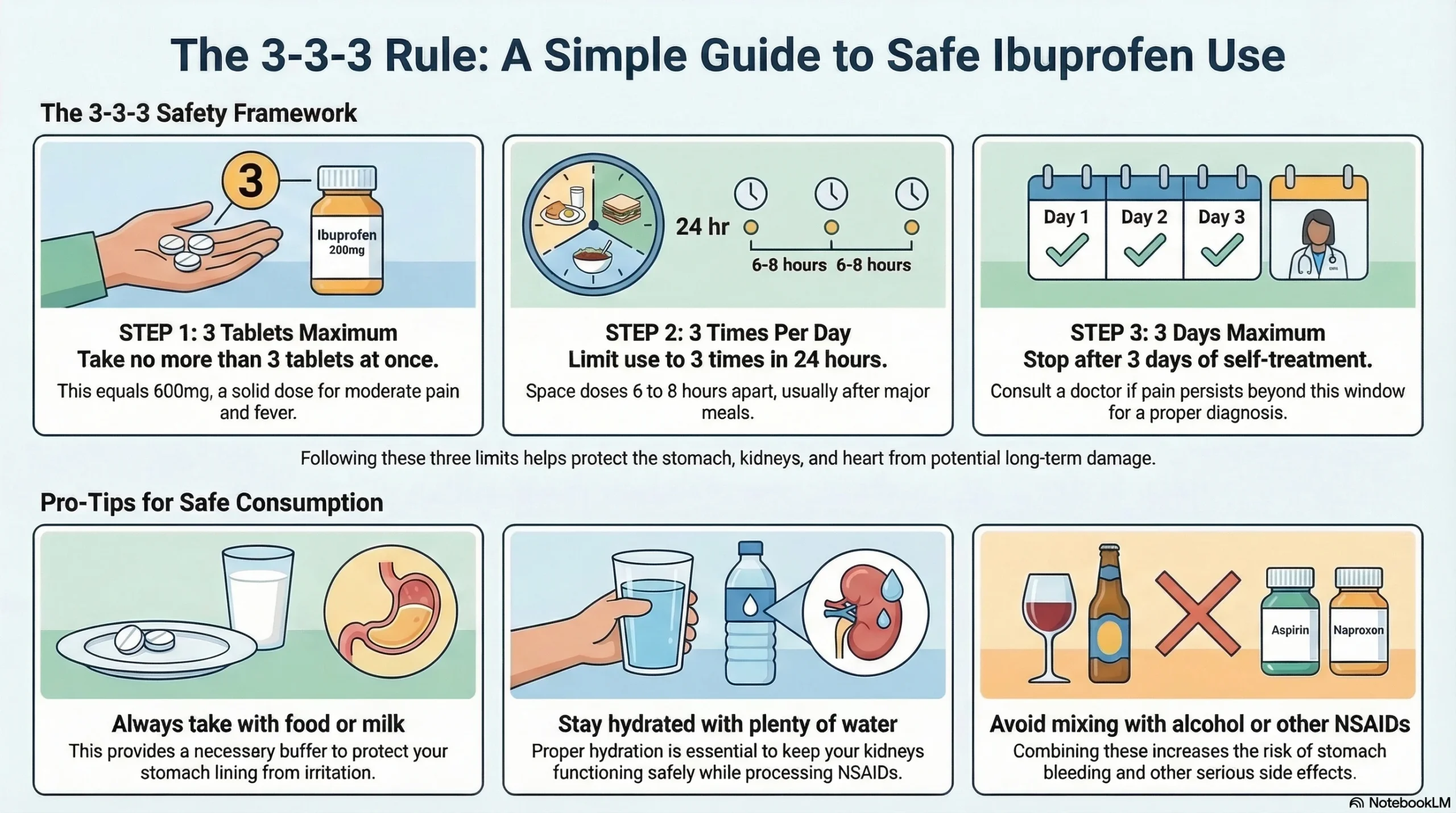
3 Tablets at a Time
Each standard ibuprofen tablet is 200mg.
So 3 tablets equal 600mg per dose.
This is a solid dose for moderate pain and fever.
For many adults, even 1 or 2 tablets (200mg to 400mg) will do the job.
You don’t always need the full 600mg.
Start low and see how your body responds.
Only go up to 3 tablets if the lower dose isn’t helping enough.
3 Times Per Day
Space out your doses evenly.
That means roughly every 6 to 8 hours.
So your schedule might look like this:
- Morning dose after breakfast
- Afternoon dose after lunch
- Evening dose after dinner
This adds up to a maximum of 1800mg per day.
The absolute maximum daily dose for adults is 2400mg under a doctor’s watch.
But for self-treatment at home, 1800mg is the safe daily ceiling.
3 Days Maximum
This is the part most people ignore.
If you still need ibuprofen after 3 days, something deeper might be going on.
Your pain might need a proper diagnosis.
Or you might need a different treatment plan.
Don’t just keep popping pills and hoping for the best.
After 3 days, call your doctor and get checked out.
✅ Tips to Take Ibuprofen Safely
Want to get the most out of ibuprofen without the risks?
Here are some practical tips from QuickDawa:
- Always take ibuprofen with food or a glass of milk to protect your stomach.
- Drink plenty of water while using ibuprofen to keep your kidneys happy.
- Don’t mix ibuprofen with other NSAIDs like aspirin or naproxen unless your doctor says so.
- Avoid alcohol while taking ibuprofen because it increases the risk of stomach bleeding.
- Check other medicines you’re taking since ibuprofen can interact with blood thinners and some heart medications.
- Stick to the lowest effective dose for the shortest time possible.
Simple stuff, but it makes a huge difference.
⚠️ Who Should Be Extra Careful with Ibuprofen?
Ibuprofen is not for everyone.
Some people need to be extra cautious or avoid it completely.
- Pregnant women, especially in the third trimester
- People with a history of stomach ulcers or bleeding
- Anyone with kidney disease or reduced kidney function
- People with heart disease or high blood pressure
- Those who are allergic to aspirin or other NSAIDs
- Children under 6 months should not take ibuprofen
- Elderly adults because their kidneys and stomach are more sensitive
If any of these apply to you, talk to your doctor before using ibuprofen.
Even a simple OTC medicine deserves respect.
🩺 When to Call Your Doctor
Don’t wait too long if something feels off.
Call your doctor right away if you notice:
- Black or bloody stools
- Vomiting blood or something that looks like coffee grounds
- Severe stomach pain that won’t go away
- Swelling in your face, lips, or throat
- Difficulty breathing after taking ibuprofen
- Chest pain or sudden weakness on one side of your body
- Your pain is getting worse instead of better after 3 days
- Signs of an allergic reaction like rash or hives
These are warning signs that your body needs professional help.
Please don’t ignore them.
Your health is always more important than toughing it out.
🙋 Frequently Asked Questions (FAQ)

Q: Can you take ibuprofen and acetaminophen together?
A: Yes, many doctors say it’s generally safe to alternate ibuprofen and acetaminophen (Tylenol) for pain.
They work differently, so they can complement each other.
But always confirm with your pharmacist first.
Learn more on Drugs.com
Q: How long does ibuprofen take to work?
A: Most people feel relief within 20 to 30 minutes after taking ibuprofen.
The full effect usually kicks in around 1 to 2 hours.
Source: NHS UK
Q: Is ibuprofen safe for kids?
A: Ibuprofen is approved for children 6 months and older in appropriate doses.
Always use the children’s liquid formula and follow the weight-based dosing on the package.
Check with your pediatrician if you’re unsure.
Read more on MedlinePlus
Q: Ibuprofen vs naproxen: which is better for pain?
A: Both are NSAIDs and work similarly.
Naproxen (Aleve) lasts longer, so you take it less often.
Ibuprofen works faster but wears off sooner.
Your choice depends on your specific needs and medical history.
Compare on WebMD
Q: Can you take ibuprofen on an empty stomach?
A: You can, but it’s not recommended.
Taking ibuprofen without food increases the chance of stomach irritation and ulcers.
A small snack or glass of milk before your dose goes a long way.
Read more on Mayo Clinic
Q: Is ibuprofen safe during pregnancy?
A: Ibuprofen is not recommended during pregnancy, especially during the third trimester.
It can cause serious problems for the baby’s heart and kidneys.
Always talk to your OB-GYN about safe pain relief options during pregnancy.
FDA warning on NSAIDs in pregnancy
Q: Can ibuprofen help with toothache pain?
A: Absolutely. Ibuprofen is one of the best OTC options for toothache relief because it reduces both pain and inflammation.
But see a dentist if the pain continues beyond a day or two.
Read more on Cleveland Clinic
🏁 Final Thoughts: Keep It Simple, Keep It Safe
So there you have it.
The 3 3 3 rule for ibuprofen is honestly one of the easiest health tips you’ll ever learn.
Three tablets max per dose.
Three times per day max.
Three days max before seeing your doctor.
That’s the whole thing.
No complicated math. No confusing medical jargon.
Just a simple rule that can protect your stomach, kidneys, and heart.
Ibuprofen is a wonderful medicine when you use it the right way.
But like anything, too much of a good thing can become a bad thing.
So next time you reach for that bottle, just remember 3, 3, 3.
At QuickDawa, we believe that understanding your medicine is just as important as taking it. Knowledge is the first step toward better health. If you found this guide helpful, share it with someone who needs it and explore more medicine guides on QuickDawa.com for trusted, easy-to-understand health information.
Got a question about ibuprofen or any other medicine?
Drop it in the comments below or reach out to us through our contact page.
We love hearing from you!
⚠️ Medical Disclaimer
The information provided in this article is intended for educational and informational purposes only. It is not a substitute for professional medical advice, diagnosis, or treatment. Always seek the guidance of your qualified doctor, pharmacist, or healthcare provider with any questions you may have regarding a medical condition, medication, or treatment plan.
Never disregard professional medical advice or delay seeking it because of something you read on QuickDawa or any other website. If you think you may have a medical emergency, call your doctor, go to the nearest emergency room, or call emergency services immediately.
Drug information, dosages, and interactions described in this post are provided for general awareness only and may not apply to your individual health situation. Medications affect people differently based on age, weight, health conditions, and other factors.
QuickDawa and its authors do not assume any liability for any consequences arising from the use or misuse of information presented on this website.
🌐 Sources & External References
- FDA Drug Safety Communication on NSAIDs
- MedlinePlus — Ibuprofen
- Drugs.com — Ibuprofen Full Information
- WebMD — Ibuprofen Oral Uses and Side Effects
- Mayo Clinic — Ibuprofen Proper Use
- RxList — Ibuprofen