The 3-3-3 Rule for Toothache – Does it Actually Work? | QuickDawa
You know that feeling.
It’s 2 AM. Everyone in the house is asleep. And your tooth starts screaming.
Not a little ache. Not something you can ignore. Real, pounding, take-over-your-whole-head kind of pain.
You can’t chew. You can’t think straight. Forget about sleeping.
And of course — your dentist’s office won’t open for another seven hours.
So what do you do? You grab your phone. You Google “how to stop a toothache fast.” And somewhere between the clove oil tips and the salt water rinses, you come across something called the 3-3-3 rule for toothache.
Sounds simple. Sounds like it might actually help. But does it really work? Is it safe? Should you try it tonight?
I’ve been there myself. So I get it.
That’s exactly why I’m writing this guide for you today.
At QuickDawa, we’re all about making health information simple and honest. No confusing medical jargon. No fluff. Just real answers you can actually use.
So let’s break down the 3-3-3 rule for toothache — step by step, in plain language — so you know exactly what to do when that pain hits.
🦷 What Exactly Is the 3-3-3 Rule for Toothache?

Let me keep this really simple.
The 3-3-3 rule for toothache is a short-term pain relief method using ibuprofen.
Each number “3” stands for something specific:
- 3 tablets of ibuprofen (200 mg each = 600 mg total)
- 3 times a day (once every 8 hours)
- For 3 days only
That’s it. That’s the whole rule.
You take 600 mg of ibuprofen. You do it three times a day. And you stop after three days.
Now here’s the thing most people don’t realize.
This isn’t some random internet trick.
Dentists have been recommending this exact dosing pattern for years. They use it after tooth extractions. After root canals. After gum surgeries.
The internet just gave it a catchy name.
The 3-3-3 rule for toothache works because it fights the real enemy — inflammation. And I’ll explain exactly how in just a minute.
💊 Breaking Down Each “3” — What Does Each Number Mean?
Let’s go one by one. Because getting this wrong can either make the rule useless — or actually harmful.
The First 3 — Three Tablets (600 mg)
You grab regular ibuprofen from the store. The kind you see everywhere. Advil. Motrin. Generic. Doesn’t matter.
Each tablet is 200 mg.
You take three at once. That gives you 600 mg.
Now you might ask — why not just take one or two?
Here’s why:
- 200 mg (one tablet) gives you mild pain relief. That’s about it.
- 400 mg (two tablets) starts to fight inflammation a little.
- 600 mg (three tablets) — this is where ibuprofen hits its full anti-inflammatory power.
At 600 mg, the medicine doesn’t just numb the pain.
It goes after the swelling that’s causing the pain in the first place.
And that’s a big difference.
One important thing: 600 mg is actually a prescription-strength dose. The standard over-the-counter suggestion is only 400 mg. So this is a higher amount.
That’s why the 3-3-3 rule for toothache should only be used short-term. And ideally after checking with your pharmacist or doctor.
The Second 3 — Three Times a Day (Every 8 Hours)
Timing matters more than most people think.
Ibuprofen’s effect lasts about 6 to 8 hours. After that, it starts wearing off.
If you don’t take the next dose on time, the inflammation comes rushing back. And the pain hits even harder than before.
That’s the “roller coaster” effect. Pain goes down. Medicine wears off. Pain shoots back up. It’s awful.
The 3-3-3 rule for toothache avoids this by keeping the medicine steady in your system.
Here’s a simple schedule you can follow:
- Morning dose — 7:00 AM
- Afternoon dose — 3:00 PM
- Night dose — 11:00 PM
Set an alarm on your phone. Seriously. Don’t guess.
Consistency is what makes this rule actually work.
The Third 3 — Three Days Maximum
This is the part people ignore. And it’s the most important one.
The 3-3-3 rule for toothache is designed to last 72 hours only.
Not four days. Not five. Not “until I feel better.”
Three days. Then you stop.
Why? Because taking high-dose ibuprofen for too long can cause real damage:
- Stomach ulcers and bleeding
- Kidney problems
- Heart risks
Three days is enough time for the medicine to bring down serious inflammation.
But after that, your body needs a break from the drug.
And more importantly — you need to see a dentist. Because the rule didn’t fix anything. It just bought you time.
🧬 Why Does the 3-3-3 Rule for Toothache Actually Work?
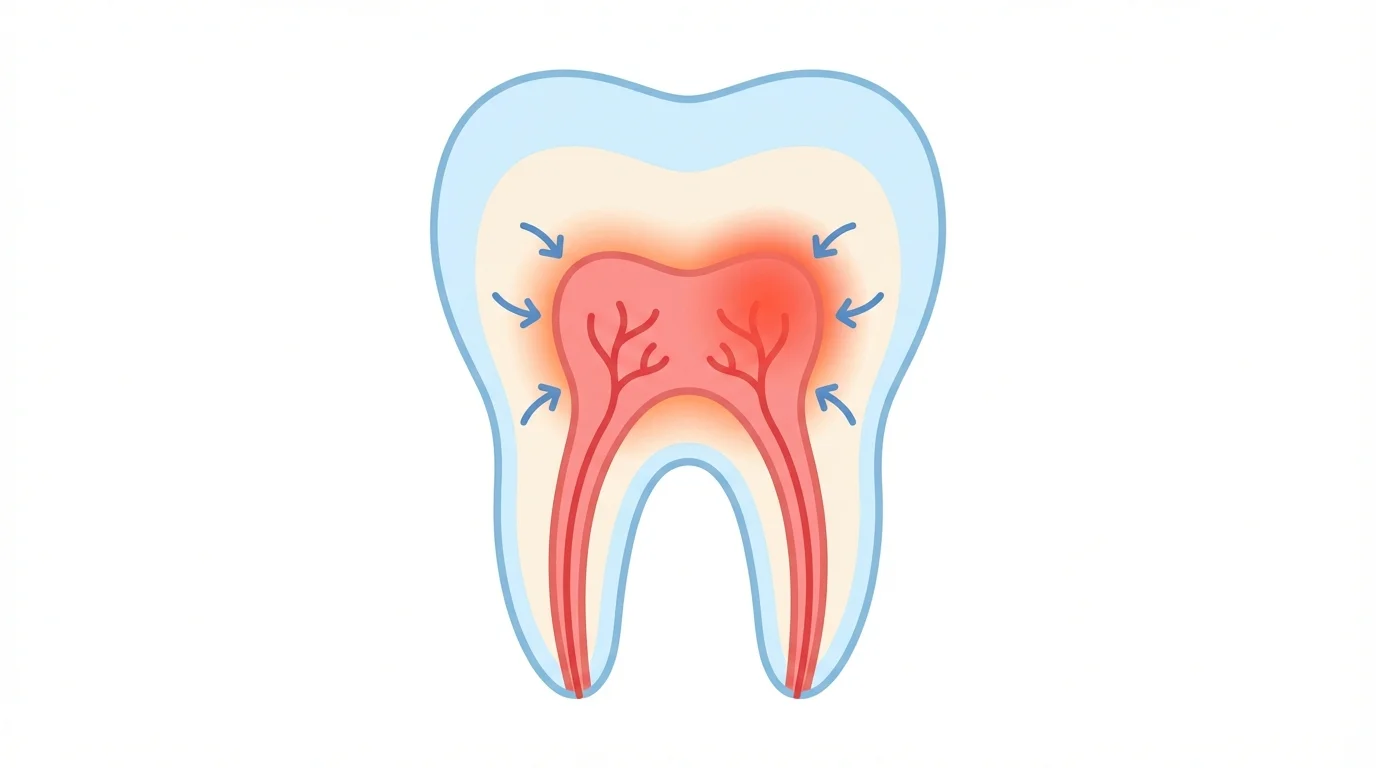
Here’s what most people don’t understand about toothaches.
The pain isn’t coming from the cavity itself. Or the crack. Or even the infection.
The pain comes from swelling.
Let me walk you through what happens inside your mouth:
- Something damages the tooth — bacteria get in, or a crack forms
- Your immune system freaks out and sends white blood cells to fight it
- Those cells release chemicals called prostaglandins
- Prostaglandins make the tissue swell
- The tooth is a hard, rigid structure — the swelling has nowhere to go
- So it pushes against the nerve
- And that nerve screams
That’s your toothache.
Now here’s where ibuprofen comes in.
Ibuprofen blocks an enzyme called COX (cyclooxygenase). This enzyme is what makes prostaglandins. No prostaglandins = less swelling = less pressure on the nerve = less pain.
And that’s why the 3-3-3 rule for toothache specifically uses ibuprofen — not Tylenol.
Tylenol (acetaminophen) helps with pain. But it does almost nothing for inflammation.
It turns down the volume on the pain signal in your brain. But it doesn’t stop the swelling that’s causing the signal.
For a toothache driven by inflammation? Ibuprofen wins. Every time.
📋 How to Use the 3-3-3 Rule for Toothache — Step by Step
Follow these steps exactly. Don’t skip any.
Step 1: Make sure you have regular 200 mg ibuprofen tablets.
Step 2: Eat something first. A cracker. A banana. Anything. Never take ibuprofen on an empty stomach. It can tear up your stomach lining.
Step 3: Take 3 tablets (600 mg) with a full glass of water.
Step 4: Set an alarm for 8 hours from now.
Step 5: When the alarm goes off, eat something again. Take 3 more tablets.
Step 6: Repeat one more time, 8 hours later. That’s your third dose for the day.
Step 7: Do this same thing for 3 days straight.
Step 8: During those 3 days, call your dentist and book an appointment. This rule is a bridge. Not a solution.
Step 9: After 3 days, stop the ibuprofen. Even if you still have some pain.
That’s it. Simple. Clear. Effective.
🚫 Who Should NOT Use the 3-3-3 Rule for Toothache?
This is where I need to be really honest with you.
The 3-3-3 rule for toothache is not safe for everyone. Period.
Do NOT use this rule — or talk to your doctor first — if you have any of these:
- Stomach ulcers or history of GI bleeding — Ibuprofen makes this worse. It weakens the lining of your stomach.
- Kidney disease — Ibuprofen reduces blood flow to the kidneys. This can cause serious damage.
- Heart disease or history of heart attack/stroke — High-dose ibuprofen raises cardiovascular risk.
- Pregnancy (especially third trimester) — Ibuprofen can harm the baby’s heart development.
- Breastfeeding — Small amounts pass into breast milk. Ask your doctor first.
- Children under 12 — 600 mg is too much. Kids need weight-based dosing.
- People on blood thinners (like warfarin) — Ibuprofen increases bleeding risk.
- People already taking aspirin or naproxen — These are all NSAIDs. Stacking them is dangerous.
- NSAID-sensitive asthma — Ibuprofen can trigger breathing problems.
- Liver disease — The liver processes ibuprofen. A sick liver can’t handle it well.
- People who drink alcohol regularly — Alcohol + ibuprofen = high risk of stomach bleeding.
If any of these apply to you, please don’t just pop ibuprofen and hope for the best.
Talk to your doctor. There may be a safer option for your situation.
At QuickDawa, we always say — knowing what NOT to take is just as important as knowing what to take.
⚖️ How the 3-3-3 Rule Compares to Other Toothache Remedies
People try all kinds of things for toothaches. Let’s see how they stack up against the 3-3-3 rule for toothache:
- 3-3-3 Rule (Ibuprofen 600mg x 3/day) — Pain relief: Excellent. Anti-inflammatory: Excellent. Lasts 6-8 hours per dose. Strong clinical evidence behind it.
- Tylenol (Acetaminophen 500mg) — Pain relief: Moderate. Anti-inflammatory: Almost none. Lasts 4-6 hours. Helps with pain signal only, doesn’t touch the swelling.
- Clove Oil (Eugenol) — Pain relief: Moderate. Works as a natural numbing agent. Lasts about 30-60 minutes. Decent for spot relief.
- Salt Water Rinse — Pain relief: Mild. Reduces bacteria a bit. Soothes inflamed gums. Lasts 15-30 minutes at best.
- Cold Compress — Pain relief: Moderate. Reduces swelling from the outside. Only works while you’re holding it on your face.
- Hydrogen Peroxide Rinse — Pain relief: Very low. It kills some bacteria but doesn’t do much for pain.
- Garlic Paste — Pain relief: Minimal. Mostly based on old wives’ tales. Very little evidence.
- Whiskey on the tooth — Pain relief: Almost none. Can actually irritate the tissue more. Please don’t do this.
- Orajel (Benzocaine) — Pain relief: Moderate. Numbs the surface for 15-30 minutes. No anti-inflammatory effect at all.
The clear winner? The 3-3-3 rule for toothache. It’s the only option that actually targets the root cause of most dental pain — inflammation.
💡 Pro Tip: Combine These for Maximum Relief
Many dentists recommend pairing the 3-3-3 rule for toothache with a few other safe strategies:
- Alternate with acetaminophen — Take 500 mg of Tylenol at the 4-hour mark between ibuprofen doses. They work through different pathways. Together, they can rival prescription painkillers.
- Cold compress — 20 minutes on, 20 minutes off. Place it on the outside of your cheek.
- Warm salt water rinse — Half a teaspoon of salt in a glass of warm water. Swish gently for 30 seconds. Spit it out. Do this 3-4 times a day.
- Elevate your head at night — Use an extra pillow. This reduces blood flow to your head and cuts down that awful throbbing pain.
- Clove oil — Dab a tiny bit on a cotton ball. Press it against the sore tooth. It numbs the area naturally for a little while.
This combination approach? It can genuinely make the difference between a miserable night and a manageable one.
❌ 12 Common Mistakes People Make with the 3-3-3 Rule for Toothache
I see these mistakes all the time. Please don’t make them.
1. Taking more than 600 mg at once.
Four tablets won’t work faster. They’ll just hurt your stomach.
2. Taking doses more than 3 times a day.
Every 6 hours at 600 mg? That’s too much. Stick to every 8 hours.
3. Taking ibuprofen on an empty stomach.
This is how stomach ulcers start. Always eat something first.
4. Mixing ibuprofen with aspirin or naproxen.
They’re all NSAIDs. Combining them multiplies the risks without adding benefits.
5. Drinking alcohol during the 3 days.
Alcohol plus ibuprofen is a recipe for stomach bleeding. Just don’t.
6. Skipping a dose and then doubling up.
Missed a dose? Take the regular amount and get back on schedule. Never double up.
7. Continuing past 3 days.
The rule has a hard limit for a reason. Your kidneys and stomach will thank you for stopping.
8. Using this as a substitute for seeing a dentist.
The 3-3-3 rule for toothache manages pain. It doesn’t fix teeth. You still need a dentist.
9. Ignoring worsening symptoms.
If the pain gets worse, your face swells, or you get a fever — that’s an emergency. Go to a doctor. Now.
10. Using expired ibuprofen.
It might not be strong enough to work properly. Check the date on the bottle.
11. Crushing or chewing the tablets.
Swallow them whole with water. Crushing them can irritate your stomach faster.
12. Not drinking enough water.
Your kidneys process ibuprofen. Help them out. Drink plenty of water throughout the day.
🚨 Warning Signs — When You Need Emergency Help RIGHT NOW

The 3-3-3 rule for toothache is for temporary relief.
But some situations are too serious for any home remedy.
Go to an emergency dentist or hospital immediately if:
- Your face or neck is swelling up
- You have a fever above 101°F (38.3°C) with tooth pain
- You have trouble breathing or swallowing
- Pus is coming out from the gum near the tooth
- 600 mg of ibuprofen gives you zero relief
- You see exposed nerve tissue from a broken tooth
- You have uncontrollable bleeding from your gums
- Your lip, chin, or tongue feels numb or tingly
- Pain from a recent dental procedure keeps getting worse
These could be signs of a dental abscess, cellulitis, or even Ludwig’s angina — a life-threatening infection of the floor of the mouth.
I’m not saying this to scare you. I’m saying it because these things are real. And waiting too long can turn a bad toothache into a hospital stay.
🩺 What Do Dentists Actually Think About the 3-3-3 Rule for Toothache?
Good news — most dentists support it.
Here’s what dental professionals generally agree on:
What they support:
- 600 mg is an appropriate dose for dental inflammation
- Every 8 hours keeps the drug level steady
- 3 days is a safe, reasonable time limit
- Ibuprofen beats Tylenol for most inflammatory tooth pain
What they warn about:
- Too many patients use the rule to avoid going to the dentist
- It doesn’t work well for dental abscesses — those need antibiotics too
- Some people push past 3 days and risk organ damage
- Not everyone can safely take NSAIDs
The bottom line from every dentist I’ve spoken to?
The 3-3-3 rule for toothache is a tool, not a treatment.
Use it to survive until your appointment. Don’t use it to avoid making one.
🔧 Why the 3-3-3 Rule Can Never Replace a Dentist Visit
I need to say this clearly because too many people get this wrong.
The 3-3-3 rule for toothache treats the symptom. Not the cause.
Let me show you what I mean:
- Deep cavity reaching the nerve — The rule reduces pain temporarily. But you still need a filling, crown, or root canal.
- Dental abscess (infection) — The rule might dull the pain a little. But that infection keeps spreading. You need antibiotics and possibly drainage.
- Cracked tooth — Inflammation goes down with ibuprofen. But the crack stays. You may need a crown or extraction.
- Gum disease — Ibuprofen barely helps here. You need deep cleaning and ongoing dental care.
- Impacted wisdom tooth — Temporary relief at best. The tooth needs to come out surgically.
- Failed filling or crown — The rule helps with pain from exposed tooth structure. But you need a replacement restoration.
In every single scenario, the 3-3-3 rule for toothache buys you time. Nothing more.
Delaying a dentist visit can lead to:
- Infection spreading to your jaw, sinuses, or bloodstream
- Bone loss around the tooth
- Losing the tooth completely
- Needing more expensive and painful procedures later
- Rare but life-threatening emergencies
Please don’t let temporary relief trick you into thinking the problem went away. It didn’t.
❓ Frequently Asked Questions (FAQs)
Is the 3-3-3 rule for toothache safe for everyone?
No. People with stomach ulcers, kidney problems, heart disease, liver disease, bleeding disorders, or NSAID-triggered asthma should not use it without a doctor’s approval. Pregnant women and children should also avoid it unless cleared by their healthcare provider.
Can I use the 3-3-3 rule instead of going to the dentist?
No way. This rule manages pain temporarily. It doesn’t fix anything. You absolutely still need to see a dentist.
What if ibuprofen doesn’t stop my toothache?
If 600 mg of ibuprofen doesn’t reduce your pain at all, you may have a severe infection or a dead nerve. Contact an emergency dentist right away.
Can I take ibuprofen and Tylenol together for a toothache?
Yes, usually. They work through different pathways and can be alternated safely. Many dentists recommend taking 600 mg ibuprofen, then 500 mg Tylenol 4 hours later, and repeating. But always check with your pharmacist first.
Can I mix ibuprofen with aspirin or Aleve?
No. They’re all NSAIDs. Taking them together dramatically increases the risk of stomach bleeding and kidney problems without giving you better pain relief.
Why does my toothache hurt more at night?
Two reasons. First, lying down sends more blood to your head, which increases pressure on the inflamed nerve. Second, there are fewer distractions at night, so the pain feels louder. Try sleeping with your head elevated on extra pillows.
Can kids use the 3-3-3 rule for toothache?
Not in the adult version. 600 mg is too much for most children. Kids need weight-based dosing — usually 5 to 10 mg per kilogram of body weight. Always consult a pediatrician first.
What happens if I use the 3-3-3 rule for more than 3 days?
You increase your risk of stomach ulcers, GI bleeding, kidney damage, high blood pressure, and cardiovascular problems. If you still have pain after 3 days, see a doctor or dentist immediately.
Does the 3-3-3 rule work for every type of tooth pain?
It works best for inflammatory pain — like an inflamed nerve (pulpitis) or swelling after a dental procedure. It’s less effective for dead nerves, dry sockets, TMJ pain, or sinus-related tooth pain.
Can I use ibuprofen for a toothache if I take blood pressure medication?
Be careful. Ibuprofen can reduce the effectiveness of certain blood pressure drugs (like ACE inhibitors and diuretics) and may raise your blood pressure. Talk to your prescribing doctor before using the 3-3-3 rule for toothache.
How quickly does the 3-3-3 rule start working?
Most people feel noticeable relief within 30 to 60 minutes of the first dose. Full anti-inflammatory effects build up over the first 24 to 48 hours of consistent dosing.
Is there a natural alternative to the 3-3-3 rule for toothache?
Clove oil provides temporary numbing. Salt water rinses reduce bacteria. Cold compresses reduce swelling. But honestly? None of them come close to the consistent relief that the 3-3-3 rule for toothache provides. They’re best used as add-ons, not replacements.
✅ Final Thoughts from QuickDawa
Look — I know toothaches are miserable. I’ve been there.
And the 3-3-3 rule for toothache genuinely works for most people as a short-term lifeline.
Three tablets. Three times a day. Three days.
Simple. Effective. Evidence-backed.
But here’s what I need you to remember:
It’s not a cure. It’s a bridge.
It buys you time until you can sit in that dentist’s chair and actually fix the problem.
Don’t stretch it past three days. Don’t use it if you have health conditions that make ibuprofen risky. And don’t let temporary relief convince you that everything’s fine.
The smartest move? Start the 3-3-3 rule for toothache tonight — and call your dentist first thing tomorrow morning.
At QuickDawa, we believe that understanding your medicine is just as important as taking it. Knowledge is the first step toward better health. If you found this guide helpful, share it with someone who needs it — and explore more medicine guides on QuickDawa.com for trusted, easy-to-understand health information.
Got questions? Drop them in the comments below or reach out to us on our contact page. We read every single message. 💬
⚠️ Medical Disclaimer
The information provided in this article is intended for educational and informational purposes only. It is not a substitute for professional medical advice, diagnosis, or treatment. Always seek the guidance of your qualified doctor, pharmacist, or healthcare provider with any questions you may have regarding a medical condition, medication, or treatment plan.
Never disregard professional medical advice or delay seeking it because of something you read on QuickDawa or any other website. If you think you may have a medical emergency, call your doctor, go to the nearest emergency room, or call emergency services immediately.
Drug information, dosages, and interactions described in this post are provided for general awareness only and may not apply to your individual health situation. Medications affect people differently based on age, weight, health conditions, and other factors.
QuickDawa and its authors do not assume any liability for any consequences arising from the use or misuse of information presented on this website.
🌐 Sources & External References
- FDA — Ibuprofen Drug Information
- MedlinePlus — Ibuprofen
- Drugs.com — Ibuprofen Full Prescribing Information
- WebMD — Ibuprofen Oral: Uses, Side Effects, Interactions
- Mayo Clinic — Ibuprofen (Oral Route)
- RxList — Ibuprofen