29 FREE Printable Chair Yoga for Seniors – Quick Dawa | Free PDF
QuickDawa brings you 29 chair yoga practices that build strength, improve flexibility, and reduce pain—no floor work needed. These gentle exercises build real strength and flexibility while supporting the movements that matter most in your daily life.
Movement doesn’t have to mean getting down on the floor or heading to a gym, sometimes the most transformative practices happen right from your favorite chair.
These printable chair yoga for seniors routines prove that gentle, accessible movement can build real strength, improve flexibility, and create a deeper sense of calm and wellbeing.
Whether you’re looking to ease morning stiffness, improve balance, or simply move your body in ways that feel good, chair-based practices offer a perfect solution that meets you exactly where you are.
I’ve noticed that many people avoid movement entirely because traditional exercise feels intimidating, uncomfortable, or physically out of reach.
Chair yoga changes that equation completely by removing barriers while keeping all the benefits. Each of these 29 ideas addresses specific aspects of mobility, strength, and flexibility that matter in daily life, from reaching overhead to climbing stairs to simply sitting comfortably for extended periods.
The beauty of chair-based movement is its adaptability: you control the intensity, the duration, and which exercises feel right for your body on any given day.
This collection gives you options for every mood, every energy level, and every goal, all designed to help you move with greater ease, confidence, and joy.
Seated Mountain Pose Basics
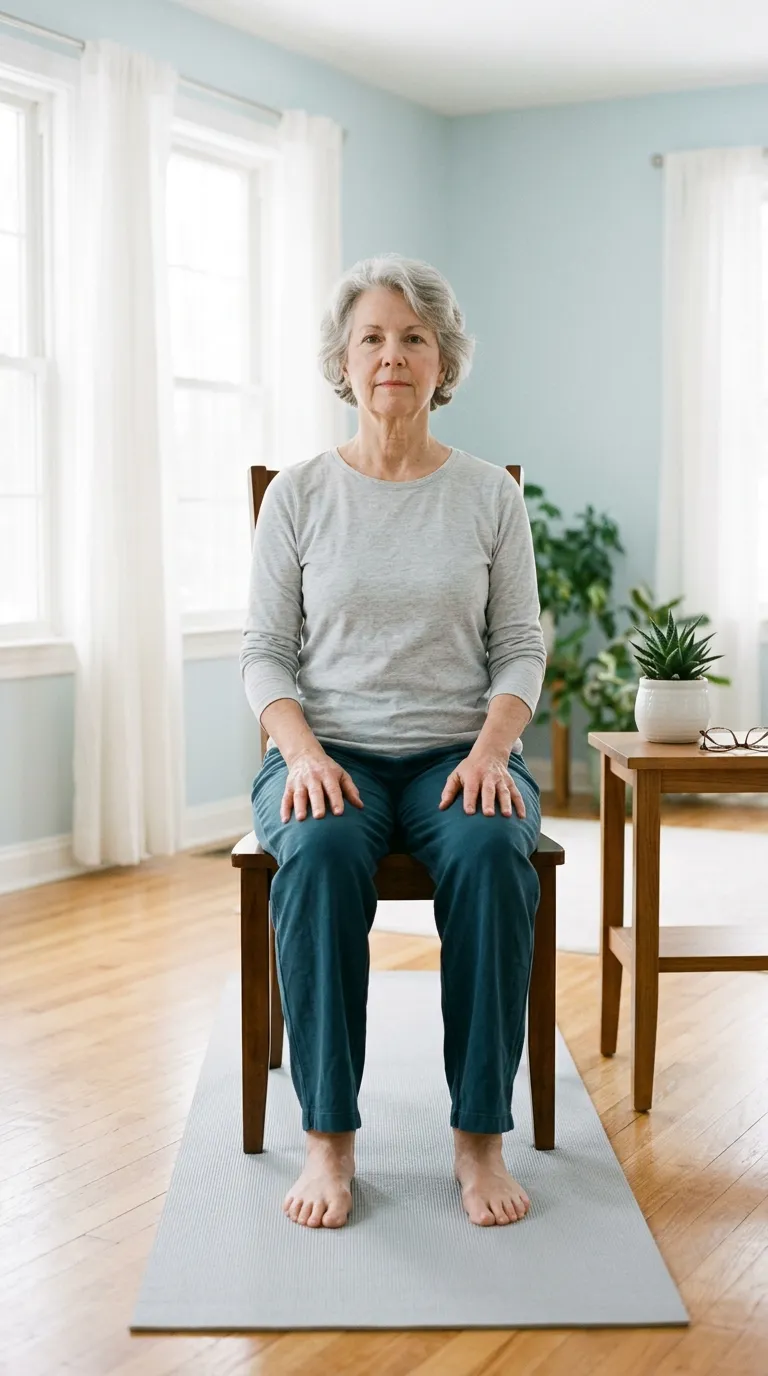
- Perfect starting point for anyone new to gentle movement practices
- Builds core stability while sitting comfortably
- Encourages proper spinal alignment without strain
- Creates a grounding foundation for the entire session
- Works beautifully for morning routines or midday breaks
Imagine starting your day with a practice that requires nothing more than a sturdy chair and a few mindful minutes.
Seated mountain pose teaches your body to find strength in stillness, encouraging tall posture and deep breathing.
In my experience, this simple position helps people reconnect with their center, especially when energy feels scattered.
It’s gentle enough for complete beginners yet powerful enough to reset your entire mood.
The beauty lies in its accessibility, no floor work required, just you and your chair creating a moment of calm.
This foundational posture becomes the anchor for every movement that follows, making it essential in any printable chair yoga for seniors routine.
I’ve noticed how quickly people feel taller and more confident once they understand proper alignment.
The visual impact is subtle but meaningful: shoulders relax, breathing deepens, and tension begins to melt away.
Think of it as pressing a gentle reset button for your body.
When practiced consistently, even this one simple pose can improve posture throughout your entire day, proving that transformation doesn’t always require complicated movements.
Gentle Neck Rolls
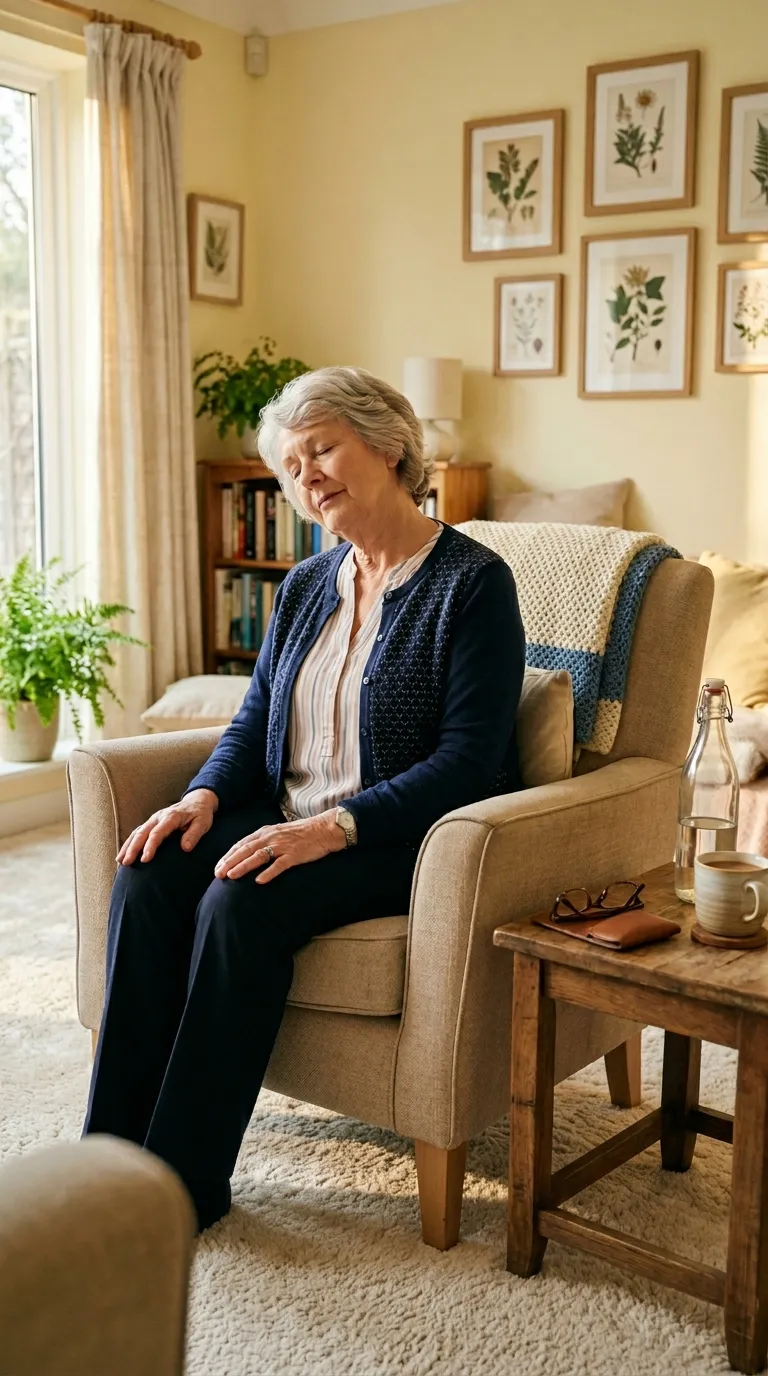
- Releases tension that builds up from daily activities
- Improves neck mobility with slow, controlled movements
- Reduces stiffness from reading, watching TV, or computer use
- Requires no equipment beyond your chair
- Takes less than two minutes but feels incredibly soothing
Neck stiffness creeps up so quietly that many people don’t realize how restricted their movement has become until they try gentle rolls.
This exercise brings immediate relief by encouraging blood flow and releasing tight muscles around the shoulders and base of the skull.
What makes it so effective is the slow, intentional pace, rushing defeats the purpose entirely.
I’ve seen this simple movement help people who wake up with neck soreness or spend hours looking down at phones.
The key is breathing deeply while moving, allowing each exhale to soften tension a little more.
Adding gentle neck rolls to your chair-based routine creates a noticeable difference in how your upper body feels throughout the day.
That’s why many movement specialists recommend starting sessions with this area, as it’s where stress often accumulates first.
The practice takes minimal effort but delivers maximum comfort, especially when combined with other seated stretches.
You’ll notice improved range of motion within just a few sessions.
Consider this small movement a gift to yourself, a two-minute investment that pays dividends in comfort, mobility, and the simple pleasure of moving without discomfort or restriction.
Shoulder Blade Squeezes
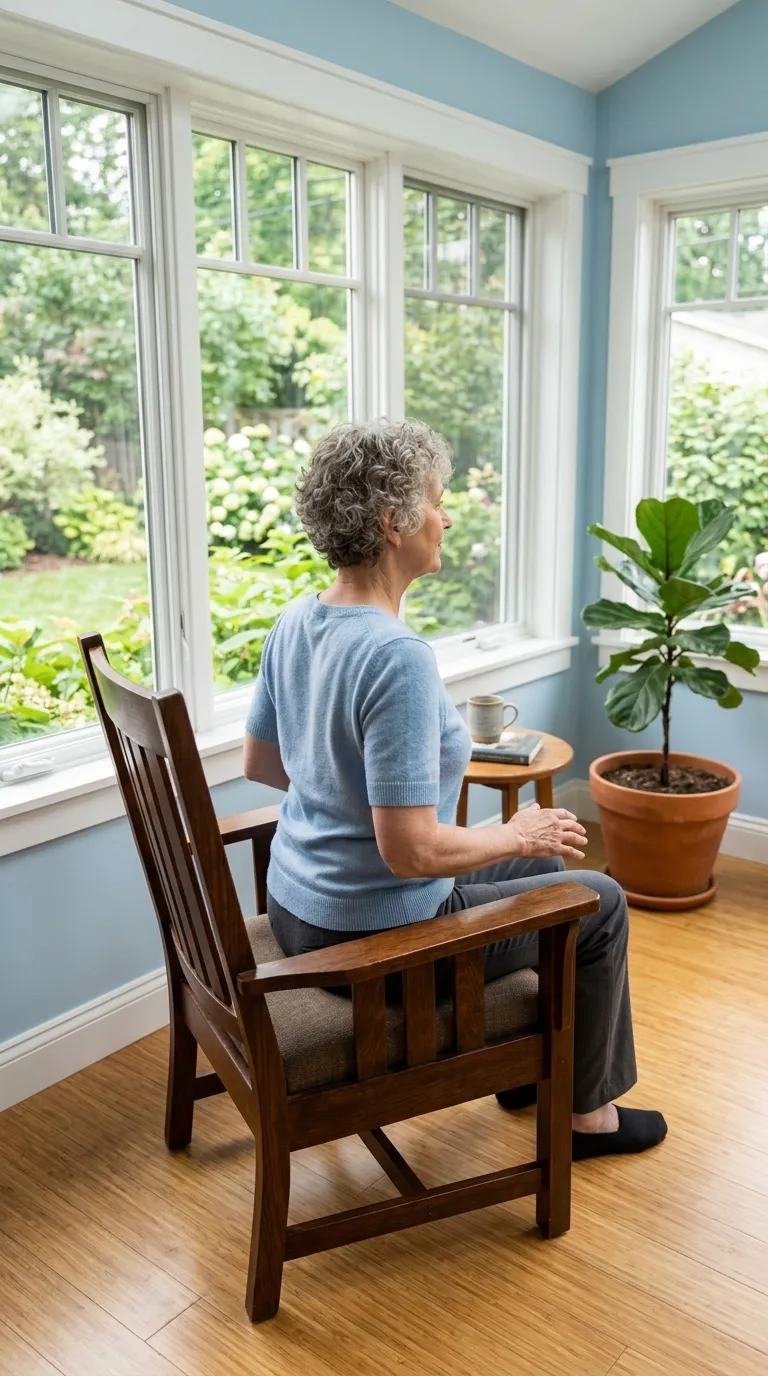
- Counteracts rounded shoulders from sitting and daily tasks
- Strengthens upper back muscles often neglected in daily movement
- Improves posture with a simple, repeatable motion
- Feels satisfying as you engage muscles you didn’t know needed attention
- Pairs perfectly with breathing exercises for added benefits
Rounded shoulders have become almost universal in our screen-focused world, making this exercise more relevant than ever before.
Shoulder blade squeezes gently pull your body back into alignment by activating muscles along your spine and between your shoulder blades.
The movement is small but mighty, imagine trying to hold a pencil between your shoulder blades without using your hands.
I’ve noticed people often feel an immediate sense of opening across their chest, which naturally encourages deeper breathing.
It’s one of those exercises that feels good while you’re doing it and even better hours later.
Including shoulder blade squeezes in printable chair yoga for seniors helps combat the forward slump that develops from years of sitting, driving, and bending forward.
This isn’t about building bulky muscles; it’s about reawakening ones that have been quietly sleeping while others compensate.
The visual transformation happens gradually but unmistakably, posture straightens, confidence grows, and breathing becomes easier.
Think of each squeeze as a gentle reminder to your body about proper alignment.
Within a few weeks, you’ll likely notice standing and sitting taller becomes your new normal, not something you have to consciously remember.
Seated Cat-Cow Stretch
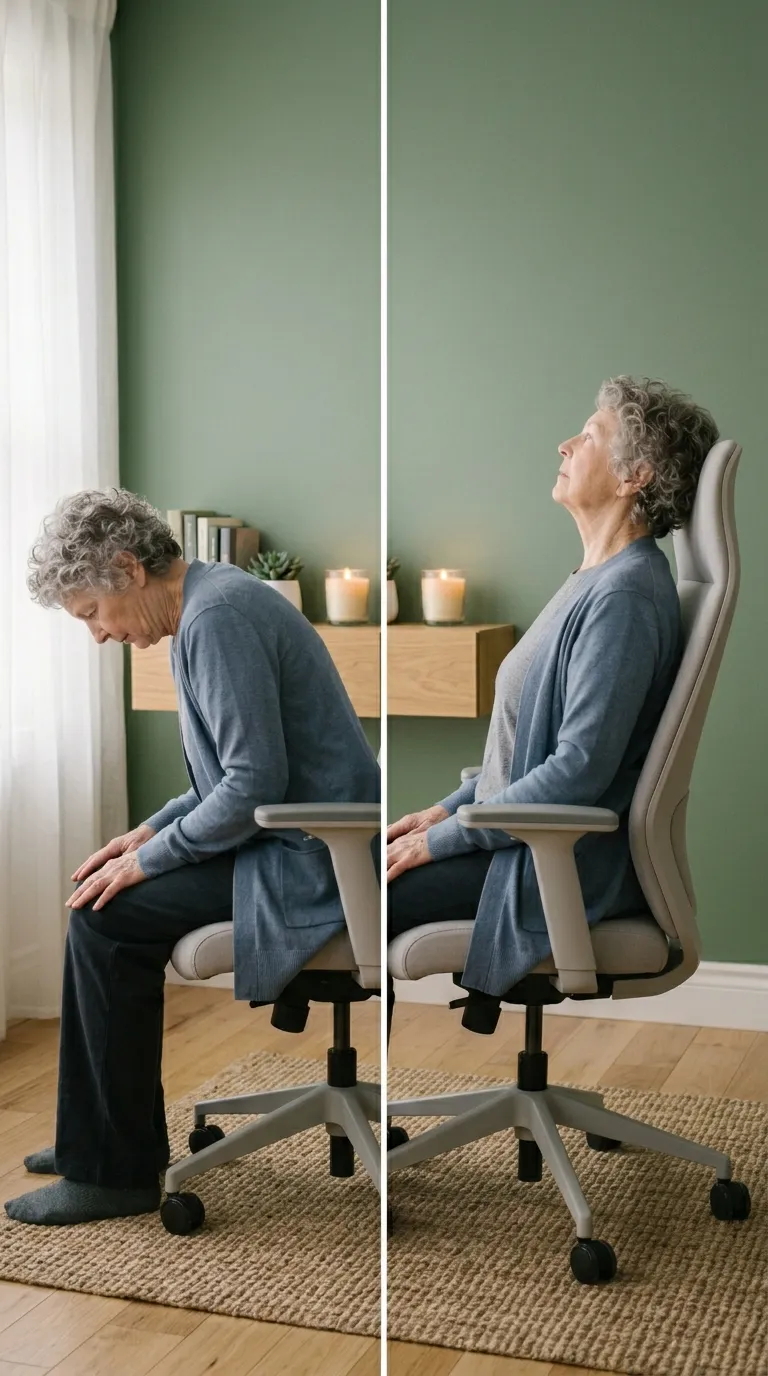
- Brings gentle movement to the entire spine
- Alternates between two complementary positions for maximum benefit
- Relieves lower back stiffness without getting on the floor
- Coordinates breath with movement for a calming rhythm
- Accessible for those who find traditional yoga poses challenging
Spinal mobility matters more than most people realize until they start losing it, which is exactly why seated cat-cow stretches deserve a place in every gentle movement practice.
This flowing exercise alternates between arching and rounding your back while seated, creating movement through every vertebra from your neck down to your tailbone.
The rhythmic quality, paired with intentional breathing, transforms a simple stretch into something almost meditative.
I’ve tried this during afternoon energy slumps and found it remarkably effective at shaking off that heavy, stuck feeling.
The beauty is in the wave-like motion that wakes up your entire spine.
Incorporating this dynamic stretch into your routine addresses stiffness that accumulates from static positions, whether you’re sitting, standing, or sleeping in one position too long.
In my experience, people who practice this regularly report fewer instances of back discomfort and greater ease in everyday movements like reaching or twisting.
The visual element is subtle but powerful, you’re literally reshaping your posture with each repetition.
Consider this movement a gentle massage for your spine, one that you control completely.
Over time, you’ll likely notice improved flexibility and a more comfortable relationship with your body’s natural range of motion.
Ankle Circles and Flexes
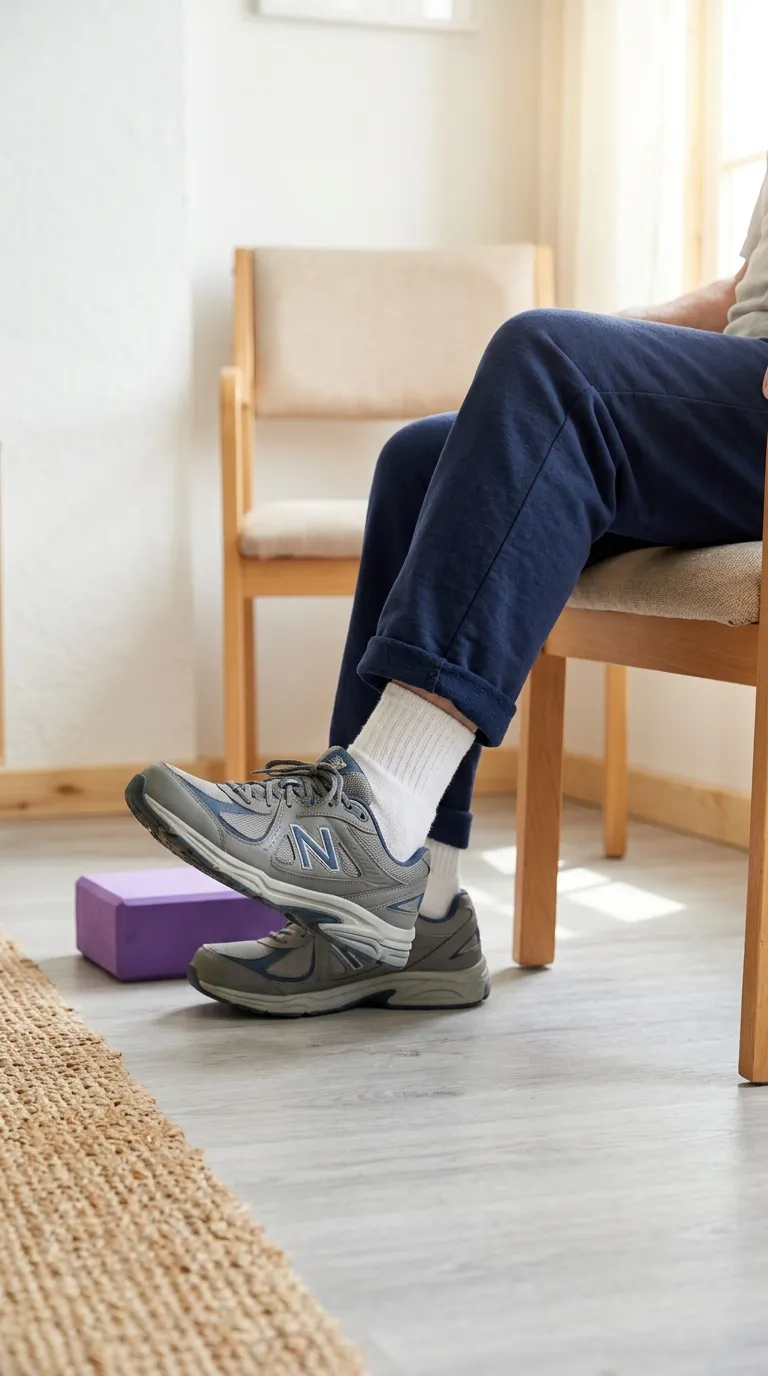
- Improves circulation in feet and lower legs
- Reduces swelling that often occurs from prolonged sitting
- Strengthens ankle stability for safer walking and balance
- Requires no flexibility or previous experience
- Can be done almost anywhere, even while watching TV
Feet and ankles rarely get the attention they deserve, yet they carry us through every single day without complaint.
Ankle circles and flexes might seem too simple to matter, but this gentle movement stimulates blood flow and keeps joints supple and responsive.
I’ve noticed that people who sit for extended periods often experience puffy ankles or restless legs, this exercise directly addresses both issues.
The circular motion lubricates the joint while flexing and pointing strengthens the surrounding muscles.
What makes it particularly valuable is that it’s virtually impossible to do incorrectly, making it perfect for beginners.
Adding ankle work to your chair-based movement practice supports overall mobility and balance, which become increasingly important with each passing year.
That’s why many physical therapists recommend daily ankle exercises as preventive care against falls and injuries.
The practice takes only minutes but can significantly improve how your feet and legs feel, especially if you tend toward stiffness or poor circulation.
Think of it as a wake-up call for the parts of your body farthest from your heart.
Regular practice often leads to steadier walking, reduced cramping, and the simple pleasure of feet that feel energized rather than tired and heavy.
Seated Side Stretches
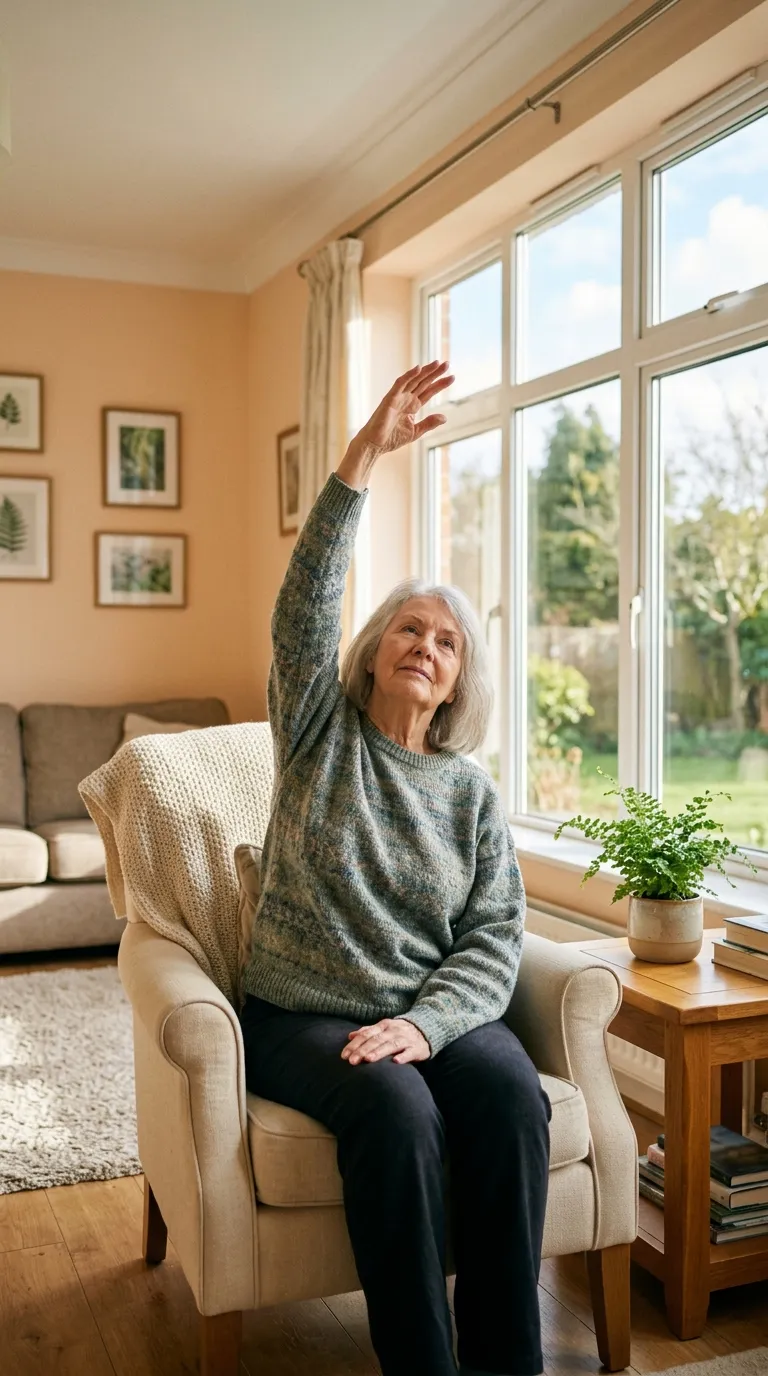
- Opens up the often-tight muscles along your sides
- Improves breathing capacity by expanding rib cage
- Counteracts the compression that comes from sitting
- Feels refreshing and energizing without being strenuous
- Creates length through your entire torso
The muscles running along your sides rarely get stretched in daily life, which is exactly why seated side stretches feel so satisfying when you finally give them attention.
This movement involves reaching one arm overhead and gently leaning to the opposite side, creating space between your ribs and hip.
I’ve found this particularly helpful after long periods of sitting, as it seems to open up areas that have been quietly compressed for hours.
The stretch is gentle enough for anyone yet effective enough to create real change in how your torso feels.
Breathing becomes noticeably easier as your rib cage expands.
Including lateral stretches in your printable chair yoga for seniors routine addresses an often-overlooked plane of movement that impacts everything from breathing to posture.
The visual transformation is subtle but meaningful, your body regains some of the natural length that gets compressed throughout the day.
I’ve seen this simple movement help people who struggle with shallow breathing or feel chronically tight through their midsection.
Think of it as creating more room for your lungs to expand and your spine to lengthen.
With consistent practice, you’ll likely notice improved posture, easier breathing, and a general sense of openness through your entire upper body.
Gentle Seated Twists
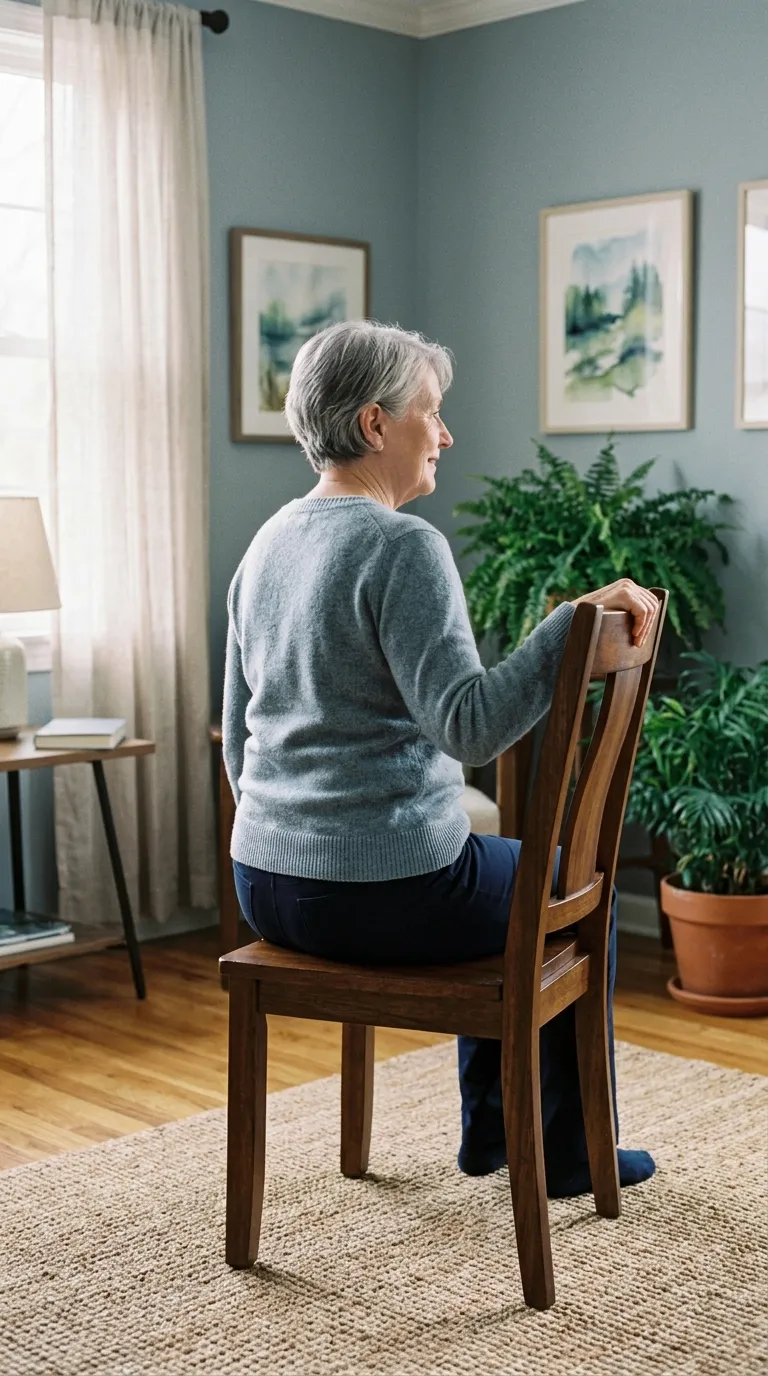
- Promotes spinal mobility through gentle rotation
- Aids digestion by massaging internal organs
- Releases tension held in the mid and lower back
- Improves your ability to look over your shoulder safely
- Feels grounding while simultaneously energizing
Twisting movements often disappear from daily life as we age, yet they remain essential for maintaining a healthy, mobile spine.
Seated twists bring rotation back into your body in the safest possible way, using your chair as support and leverage.
The movement involves sitting tall, placing one hand on the opposite knee or chair back, and gently rotating your torso while keeping your hips stable.
What I appreciate most about this exercise is how it seems to wring out tension like squeezing water from a towel.
The gentle compression and release feels therapeutic for both your spine and your digestive system.
Adding twists to your seated routine helps maintain the rotational mobility needed for everyday activities like reaching for your seatbelt or turning to talk with someone beside you.
That’s why many yoga practitioners consider twists essential for spinal health regardless of age or fitness level.
The practice creates length through your spine while simultaneously releasing tightness that accumulates from repetitive forward-facing activities.
Think of each twist as a mini-massage for your back muscles and internal organs.
Over time, you’ll likely notice improved flexibility, better digestion, and the satisfying feeling of a spine that moves freely in all directions rather than just forward and back.
Seated Forward Fold
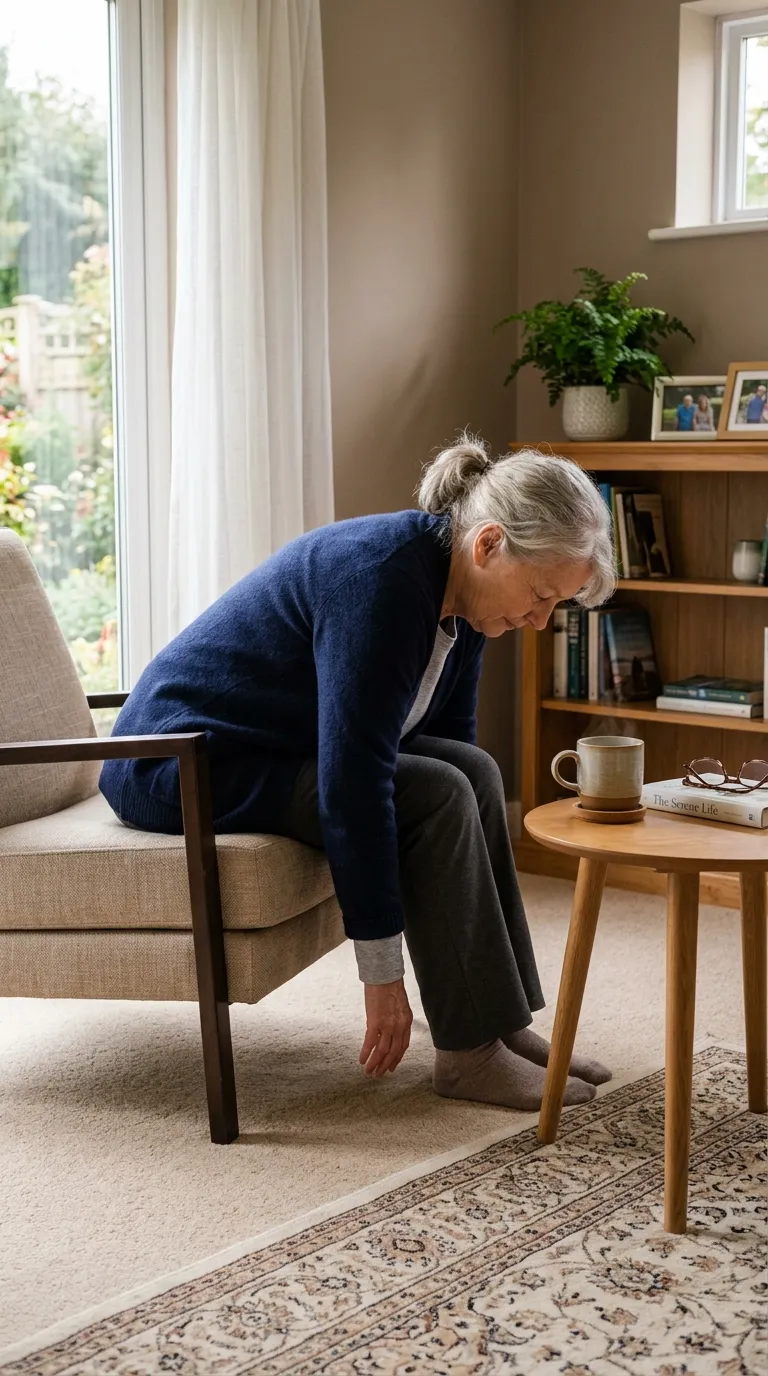
- Stretches the entire back body from neck to heels
- Encourages relaxation through gentle inversion
- Releases tension in lower back and hamstrings
- Calms the nervous system with its grounding quality
- Modifiable to any flexibility level
Forward folds hold a special place in movement practices because they naturally encourage introspection and release.
The seated version makes this calming stretch accessible by providing support and removing balance challenges.
You simply hinge forward from your hips, letting your upper body drape toward your thighs while your arms hang toward the floor or rest on your legs.
I’ve noticed this position helps people who feel overwhelmed or anxious, there’s something deeply soothing about folding inward.
The gentle stretch along your entire back body releases physical tension while the forward position quiets mental chatter.
Including forward folds in chair-based movement routines offers both physical and emotional benefits that extend well beyond the practice itself.
The stretch targets commonly tight areas like the lower back, hamstrings, and shoulders while simultaneously activating your parasympathetic nervous system, which promotes relaxation and stress reduction.
In my experience, people often emerge from this simple pose feeling noticeably calmer and more centered.
Think of it as a brief refuge from the demands of your day.
With regular practice, you’ll likely notice improved flexibility in your back and legs, plus an increased ability to find calm even during challenging moments throughout your day.
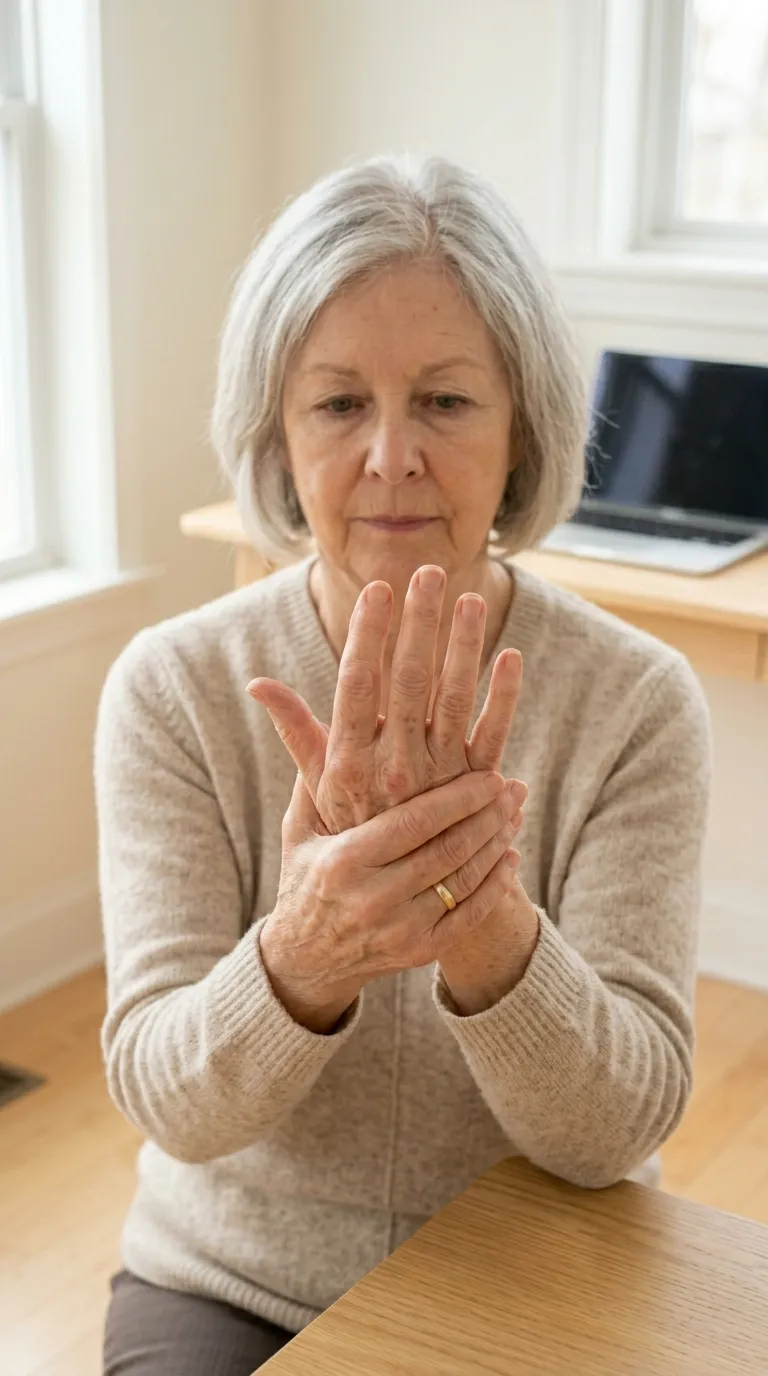
Wrist and Finger Stretches
- Counteracts stiffness from typing, texting, and daily hand use
- Improves dexterity and grip strength
- Reduces discomfort from arthritis or repetitive strain
- Takes minimal time but offers significant relief
- Essential for maintaining independence in daily tasks
Hands work tirelessly throughout every day, yet they rarely receive the care and attention they deserve until discomfort forces the issue.
Wrist and finger stretches address the cramping, stiffness, and reduced mobility that develop from repetitive activities like typing, gardening, or gripping steering wheels.
The exercises involve gentle movements like spreading fingers wide, making fists, circling wrists, and gently pulling each finger into extension.
What makes these stretches particularly valuable is their direct impact on daily function, stronger, more flexible hands make everything from opening jars to buttoning shirts easier.
I’ve found even two minutes of focused hand stretches can relieve surprising amounts of tension.
Adding hand and wrist work to printable chair yoga for seniors ensures these hardworking joints receive regular maintenance before problems develop.
Many occupational therapists recommend daily hand exercises as preventive care against conditions like carpal tunnel syndrome and arthritis-related stiffness.
The movements are small and subtle but remarkably effective at maintaining the fine motor control needed for countless daily activities.
Think of these stretches as insurance for your independence, healthy hands mean continued ability to care for yourself without assistance.
Over time, consistent practice often leads to improved grip strength, reduced pain, and the continued ability to enjoy hobbies and activities that require manual dexterity and precision.
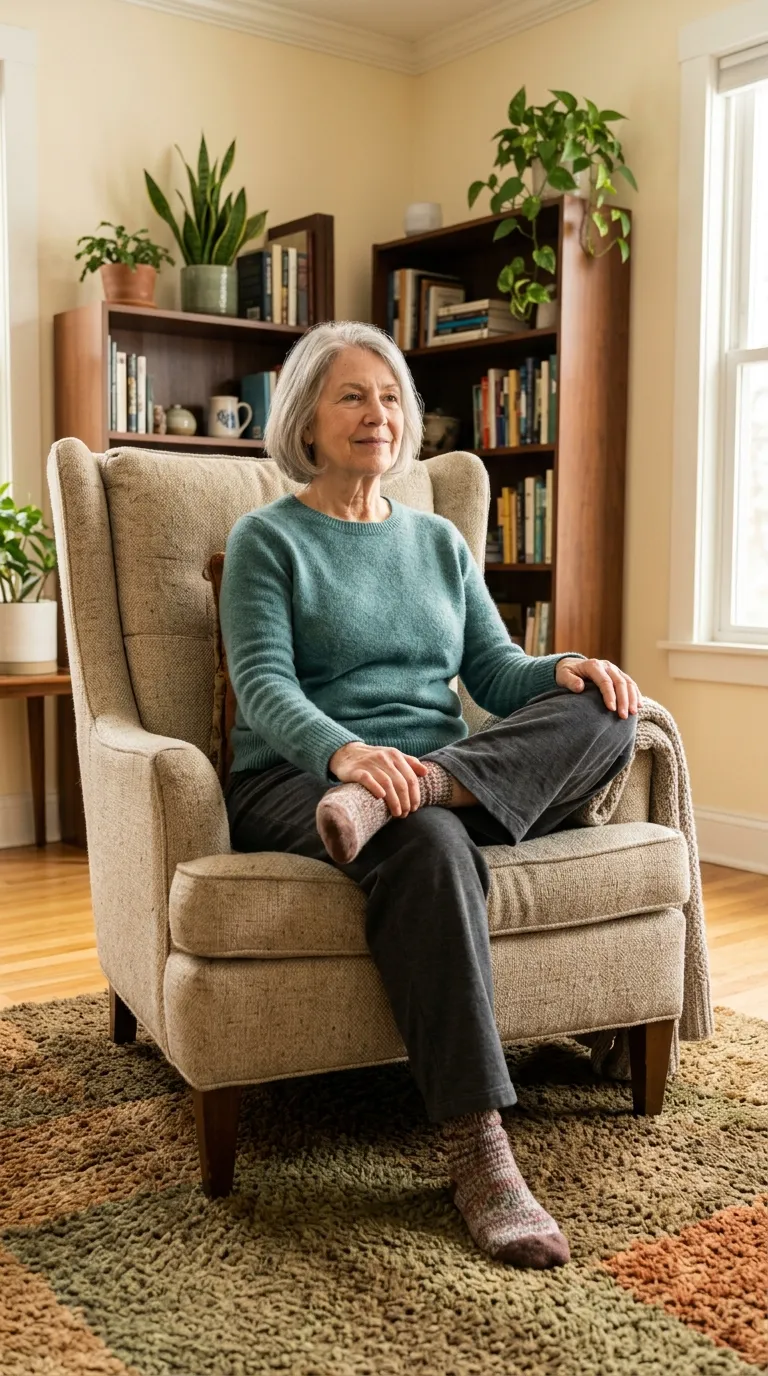
Seated Hip Openers
- Releases tightness in hips and outer thighs
- Improves flexibility for activities like getting in and out of cars
- Reduces lower back discomfort caused by tight hips
- Gentle enough for sensitive joints
- Creates noticeable improvement in how walking feels
Hip flexibility often declines so gradually that people don’t realize how restricted they’ve become until simple movements start feeling difficult or uncomfortable.
Seated hip openers address this limitation by gently stretching the muscles around your hip joints without requiring you to get down on the floor.
The most common variation involves crossing one ankle over the opposite knee while seated, creating a figure-four shape with your legs.
I’ve noticed this position can feel intense at first, which actually indicates how much those muscles need attention.
The key is breathing through the stretch rather than forcing anything beyond your current comfort level.
Including hip openers in your routine helps maintain the range of motion needed for everyday activities like walking, climbing stairs, and simply moving comfortably through your day.
That’s why many physical therapists emphasize hip flexibility as a key component of healthy aging and injury prevention.
The practice addresses tightness that develops from prolonged sitting, which is unfortunately the default position for much of modern life.
Think of hip openers as creating more freedom in how your body moves and feels.
With consistent practice, you’ll likely notice easier movement, reduced lower back tension, and improved comfort during activities that require hip flexibility like dancing, gardening, or playing with grandchildren.
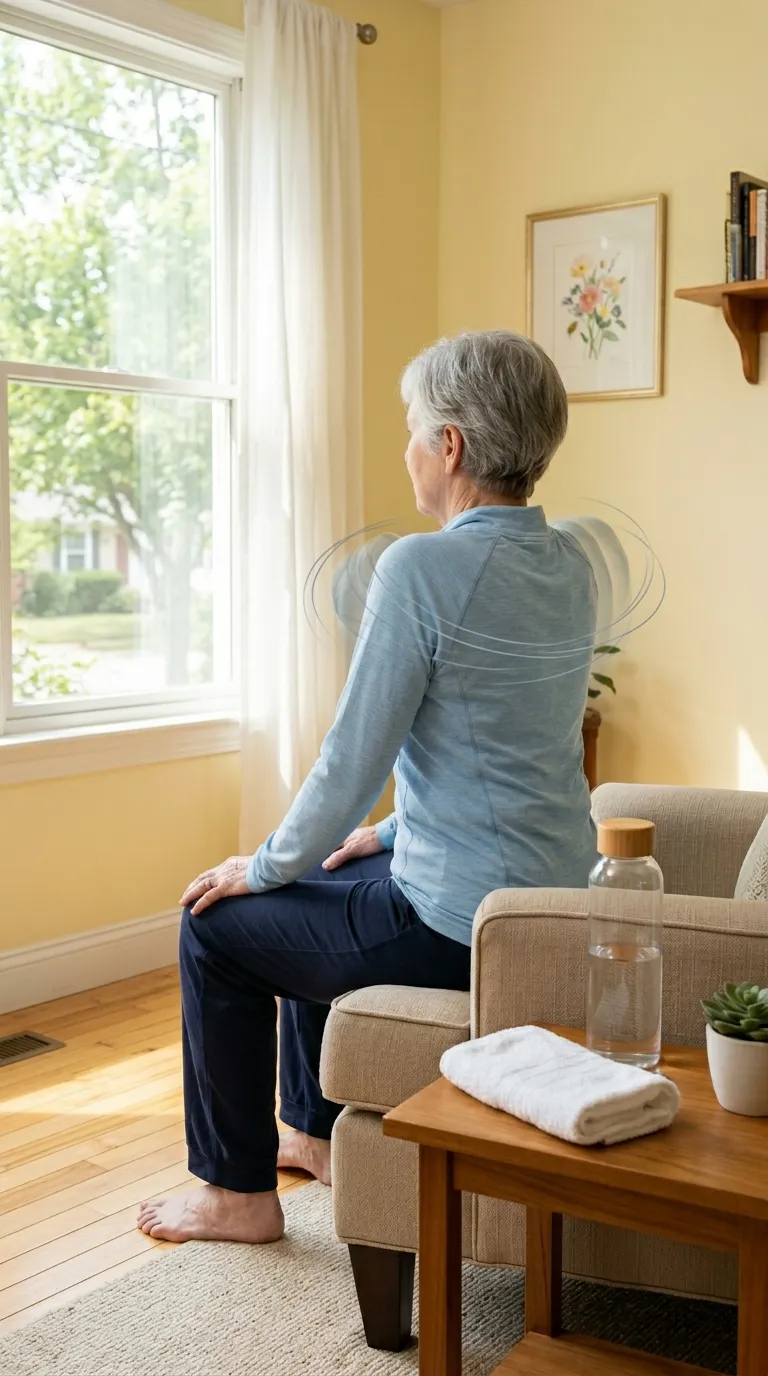
Shoulder Rolls and Circles
- Releases shoulder tension from stress and poor posture
- Increases circulation to upper body muscles
- Improves range of motion for reaching and lifting
- Feels satisfying and immediately relieving
- Can be done throughout the day for ongoing relief
Shoulders carry more than just physical weight, they also hold stress, worry, and the cumulative effect of hunching over phones, computers, and steering wheels.
Shoulder rolls and circles offer immediate relief by encouraging movement through the full range of motion while promoting blood flow to chronically tight muscles.
The exercise involves slowly rolling shoulders backward and forward, then making larger circular motions that engage the entire shoulder girdle.
What I appreciate about this movement is its simplicity combined with its effectiveness, you can do it anywhere, anytime, without drawing attention.
The gentle motion seems to unlock tension that’s been building for hours or even days.
Adding shoulder mobility work to your chair-based practice helps prevent the frozen, painful shoulders that plague many people as they age.
In my experience, people who incorporate daily shoulder rolls report fewer headaches, less neck pain, and improved ability to reach overhead without discomfort.
The movement pattern is natural and intuitive, making it perfect for beginners who might feel intimidated by more complex exercises.
Think of each shoulder circle as unwinding knots that have been tightening without your conscious awareness.
Over time, consistent practice leads to shoulders that feel lighter, more mobile, and far less prone to the chronic achiness that so many people accept as inevitable or normal.
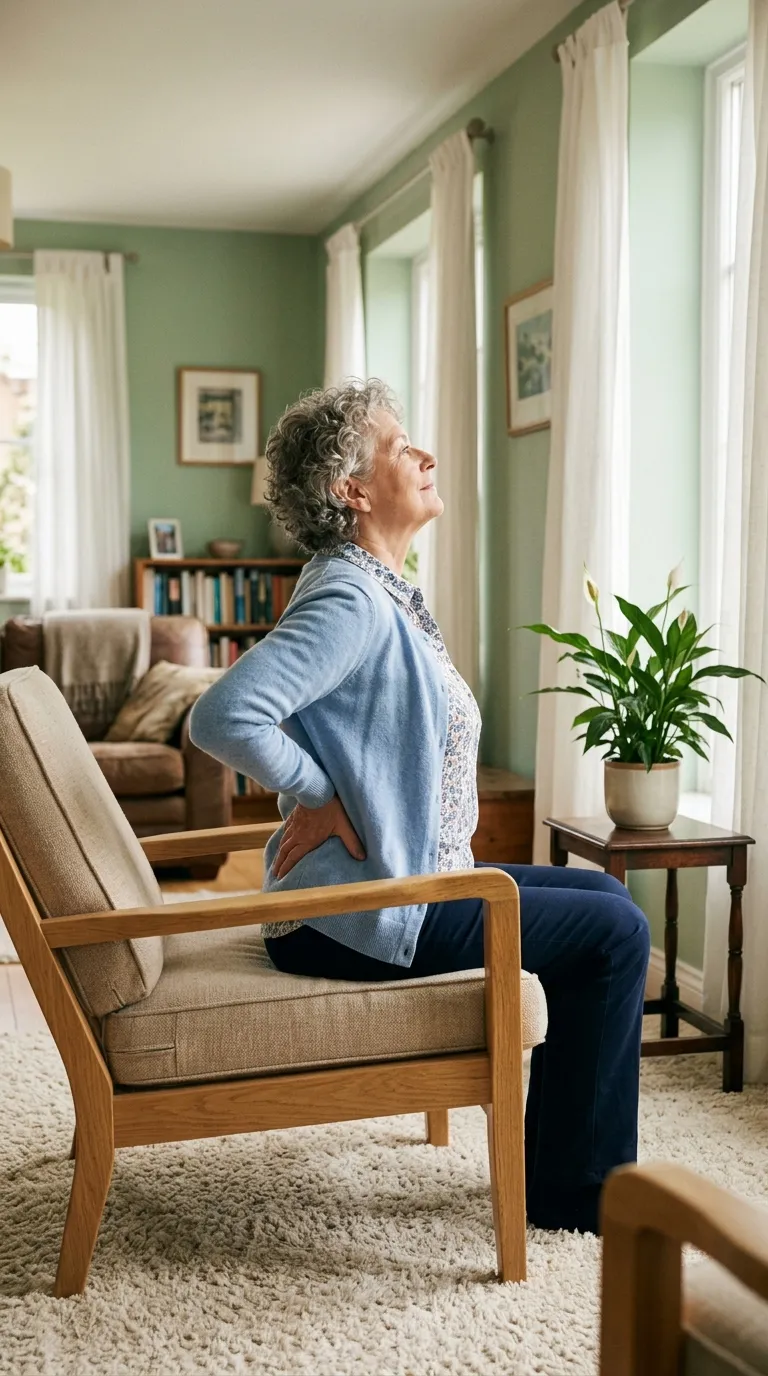
Gentle Seated Backbends
- Counteracts the forward slump from daily activities
- Opens chest and improves breathing capacity
- Strengthens back muscles that support good posture
- Feels energizing and mood-lifting
- Safer alternative to floor-based backbends
Most people spend their days moving forward, leaning toward computers, bending over tasks, reaching forward for objects, which gradually trains the spine into a rounded, compressed position.
Seated backbends offer the opposite movement, gently extending your spine backward to restore balance and create space.
The movement involves sitting tall, placing hands on your lower back for support, and arching gently backward while lifting your chest toward the ceiling.
I’ve found this simple counter-movement incredibly effective at relieving that heavy, compressed feeling that develops from too much forward bending.
The chest-opening quality naturally improves breathing while the backward motion strengthens often-neglected back muscles.
Including gentle backbends in printable chair yoga for seniors helps maintain the full range of spinal movement rather than allowing your body to settle into one dominant pattern.
That’s why many movement specialists recommend regular extension exercises as essential balance to the forward flexion that dominates modern life.
The practice creates visible improvements in posture while simultaneously lifting mood and energy levels, there’s real science behind the connection between upright posture and positive emotions.
Think of backbends as pressing refresh on your entire system.
With regular practice, you’ll likely notice improved posture, easier breathing, reduced back pain, and an unexpected boost in how confident and energized you feel throughout your day.
Seated Leg Lifts
- Strengthens quadriceps muscles essential for walking and standing
- Improves knee stability and joint health
- Builds strength without impact or strain
- Helps maintain independence in daily movements
- Progress is visible and motivating
Leg strength determines so much of your independence and quality of life, yet it’s often the first thing to decline when people become less active.
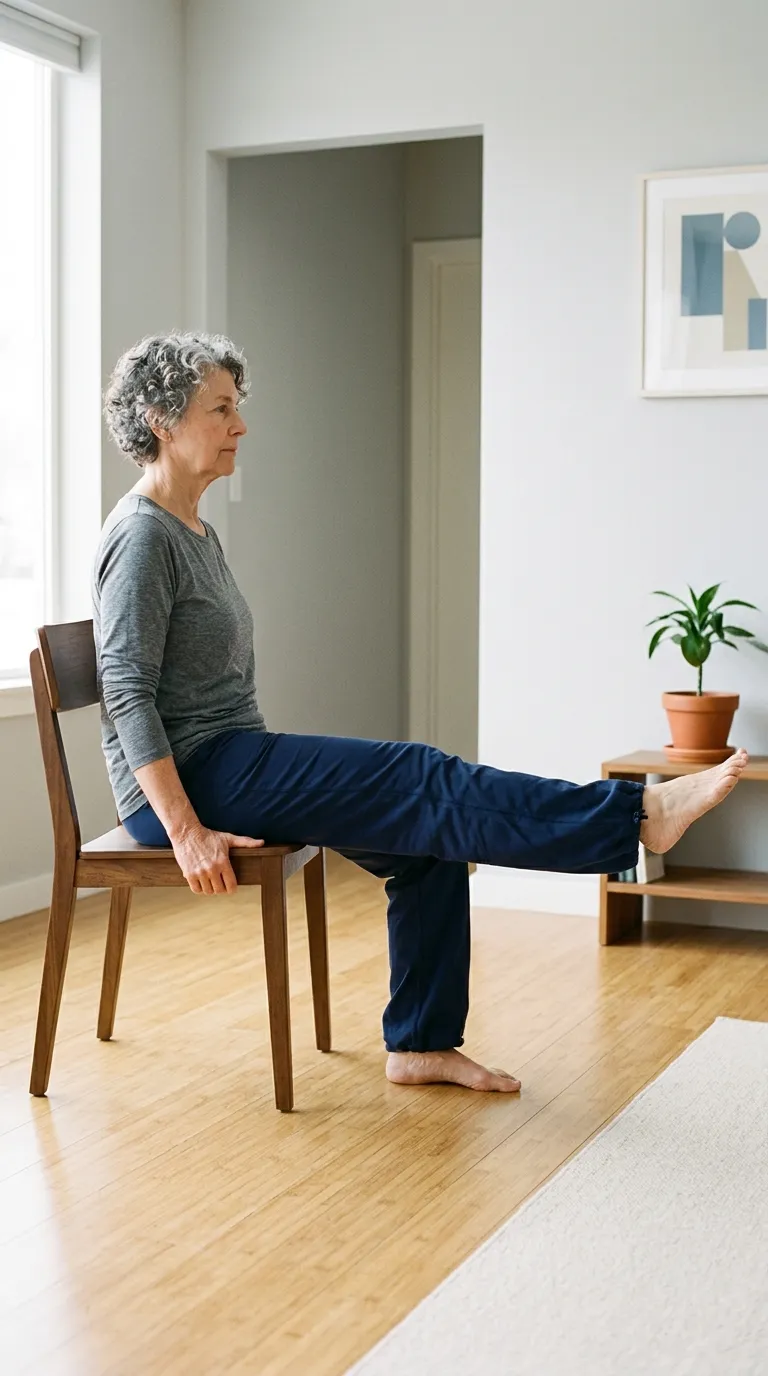
Seated leg lifts provide a safe, effective way to maintain and build quadriceps strength without the balance challenges or joint stress of standing exercises.
The movement is straightforward, while seated, you extend one leg straight out in front of you, hold briefly, then lower it with control.
What makes this exercise particularly valuable is its direct translation to real-world function: stronger quadriceps mean easier standing from chairs, climbing stairs without strain, and walking with confidence.
I’ve seen people transform their daily comfort level through this one simple movement.
Adding leg lifts to your routine addresses the muscle loss that naturally occurs with aging but accelerates dramatically when people become sedentary.
In my experience, people often notice improved strength within just a few weeks of consistent practice, which provides powerful motivation to continue.
The exercise requires no equipment beyond your chair and a willingness to challenge your muscles just enough to stimulate growth.
Think of each repetition as an investment in your continued mobility and independence.
Over time, you’ll likely notice activities like getting up from low chairs, walking distances, and climbing steps become noticeably easier, proving that simple exercises performed consistently create remarkable real-world benefits.
Seated Knee Lifts
- Strengthens hip flexors needed for walking and stair climbing
- Improves core stability and balance
- Activates abdominal muscles without floor work
- Gentle on joints while still challenging muscles
- Easy to modify based on current fitness level
Hip flexors do the essential work of lifting your leg with each step you take, yet most people never think about strengthening them until movement starts feeling difficult.
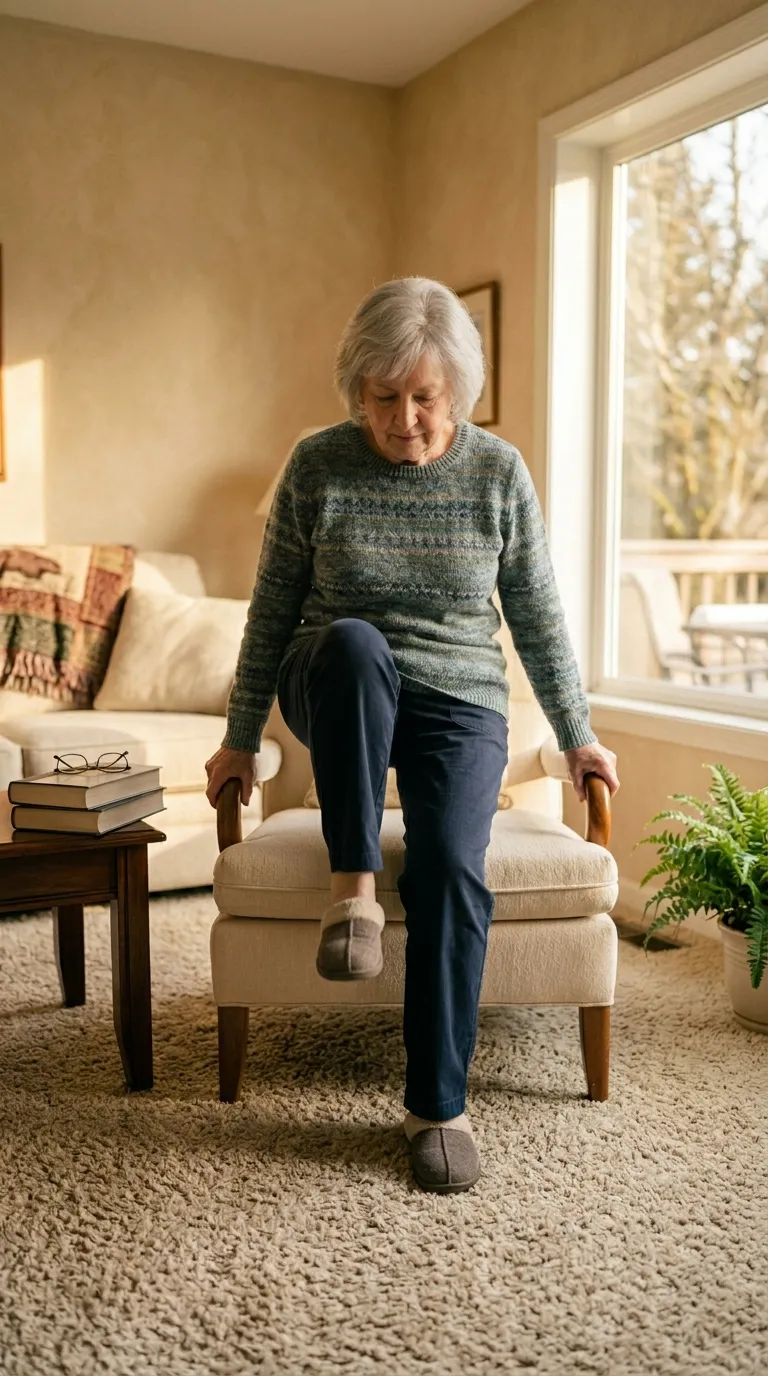
Seated knee lifts target these crucial muscles by having you lift one knee toward your chest while seated, engaging both your hip flexors and your core stabilizers.
The movement seems simple, but done with intention and control, it builds significant functional strength.
What I appreciate about this exercise is how quickly it translates to everyday activities, stronger hip flexors mean easier walking, less fatigue when moving around, and better balance overall.
The seated position makes it accessible even for those with significant balance concerns.
Including knee lifts in your chair-based practice helps maintain the strength needed for independent movement well into your later years.
That’s why many physical therapists prescribe variations of this exercise for people recovering from injuries or working to prevent falls.
The movement pattern mimics the action of walking, making it excellent functional training that directly improves how you move through daily life.
Think of each knee lift as practice for all the steps you’ll take throughout your day.
With consistent practice, you’ll likely notice improved walking stamina, better stair climbing ability, and increased confidence in your body’s ability to move you wherever you want to go without struggle or excessive fatigue.
Seated Heel Raises
- Strengthens calf muscles important for walking and balance
- Improves circulation in lower legs and feet
- Helps prevent ankle instability and falls
- Requires no special equipment or flexibility
- Can be done while reading, watching TV, or talking
Calf strength often goes unnoticed until you find yourself struggling with balance, experiencing foot fatigue, or dealing with swollen ankles from poor circulation.
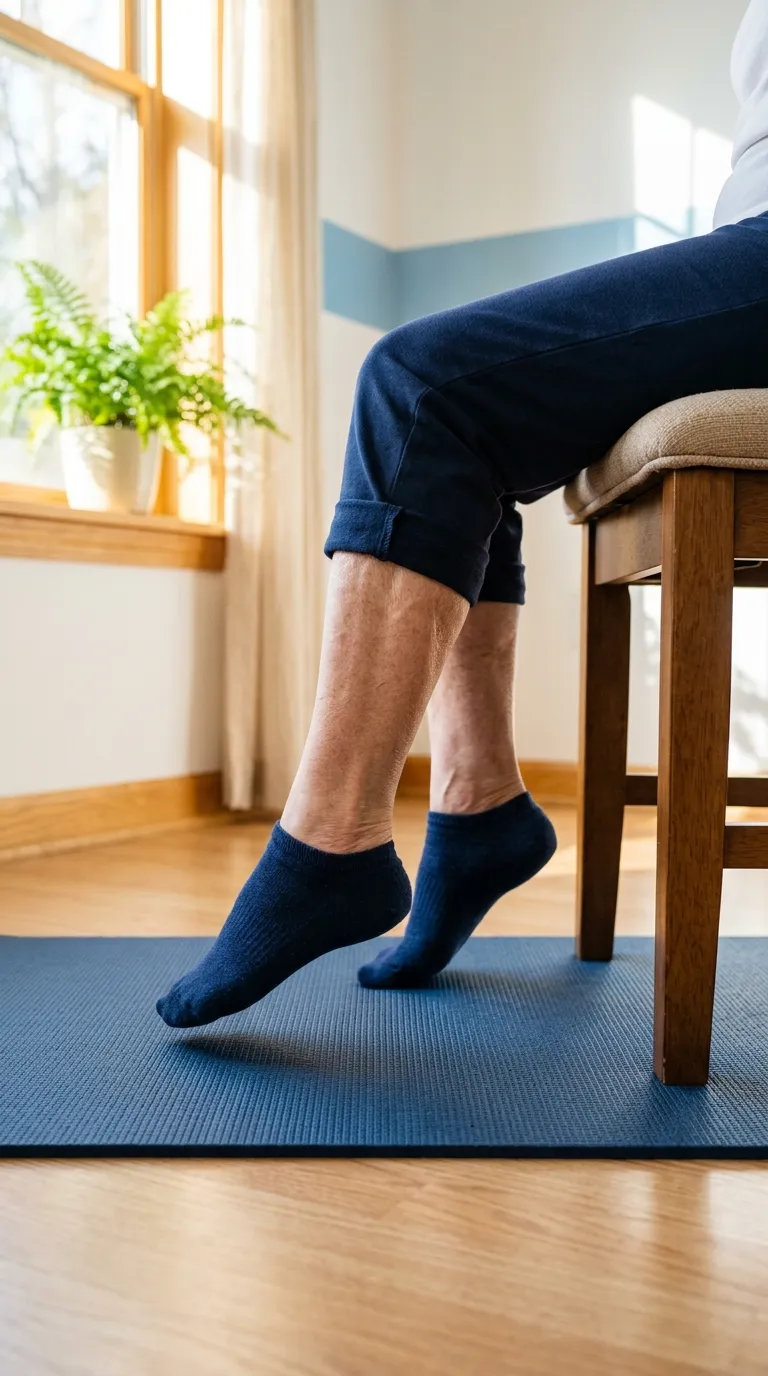
Seated heel raises address all these issues through one simple movement: while seated, you press through the balls of your feet to lift your heels off the floor, hold briefly, then lower with control.
The exercise might seem too basic to matter, but it’s remarkably effective at building the lower leg strength essential for stable walking and injury prevention.
I’ve noticed that people who practice calf raises regularly report fewer instances of ankle rolling and better overall balance.
The pumping action also encourages blood flow back toward your heart, reducing swelling.
Adding calf strengthening to printable chair yoga for seniors helps maintain the foundation of stability that keeps you moving confidently through your environment.
In my experience, stronger calves translate directly to steadier walking, reduced fall risk, and less fatigue when standing or moving for extended periods.
The movement is so simple it can be incorporated into almost any part of your day, while brushing teeth, talking on the phone, or during commercial breaks.
Think of each heel raise as fortifying the foundation that supports your entire body.
Over time, you’ll likely notice improved balance, reduced swelling in feet and ankles, and the satisfying sense of stability that comes from strong, responsive lower leg muscles.
Chest Opener Stretch
- Counteracts rounded shoulders and collapsed chest
- Improves breathing by opening rib cage
- Releases tension in chest and shoulder muscles
- Feels expansive and emotionally uplifting
- Creates noticeable improvement in posture
Chest muscles tighten and shorten from countless daily activities that involve reaching forward, creating a collapsed posture that restricts breathing and projects an image of fatigue or defeat.
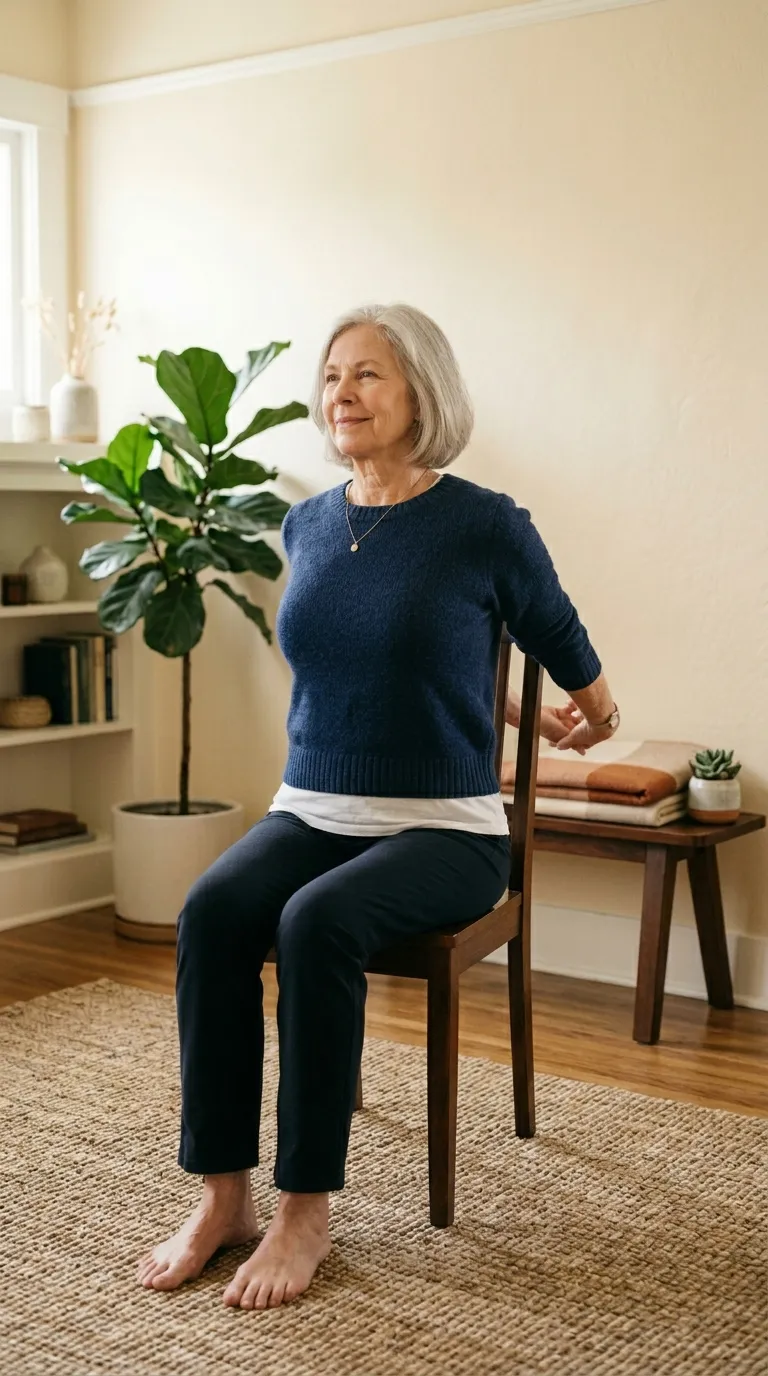
Chest opener stretches reverse this pattern by encouraging your shoulders back and your chest forward, literally opening the front of your body.
The exercise typically involves clasping hands behind your back and gently lifting your chest while drawing shoulder blades together.
What makes this stretch particularly powerful is its dual benefit, physical opening combined with an emotional sense of expansion and confidence.
I’ve found this one of the most satisfying stretches in any practice, as the relief feels both physical and psychological.
Including chest openers in your seated routine helps combat the forward collapse that develops from modern life’s demands and habits.
That’s why many posture specialists recommend daily chest stretches as essential counterbalance to the hours spent in forward-facing positions.
The practice creates visible changes in how you carry yourself while simultaneously improving breathing capacity and shoulder mobility.
Think of this stretch as reclaiming space that’s been gradually closing over months or years.
With consistent practice, you’ll likely notice improved posture, easier breathing, reduced shoulder and neck tension, and an unexpected boost in mood and confidence that comes from literally and figuratively opening your heart space to the world.
Seated Torso Twists
- Increases spinal mobility through dynamic rotation
- Engages core muscles for stability and strength
- Improves functional movement for daily twisting actions
- Energizes without requiring intense effort
- Helps maintain flexibility in mid and upper back
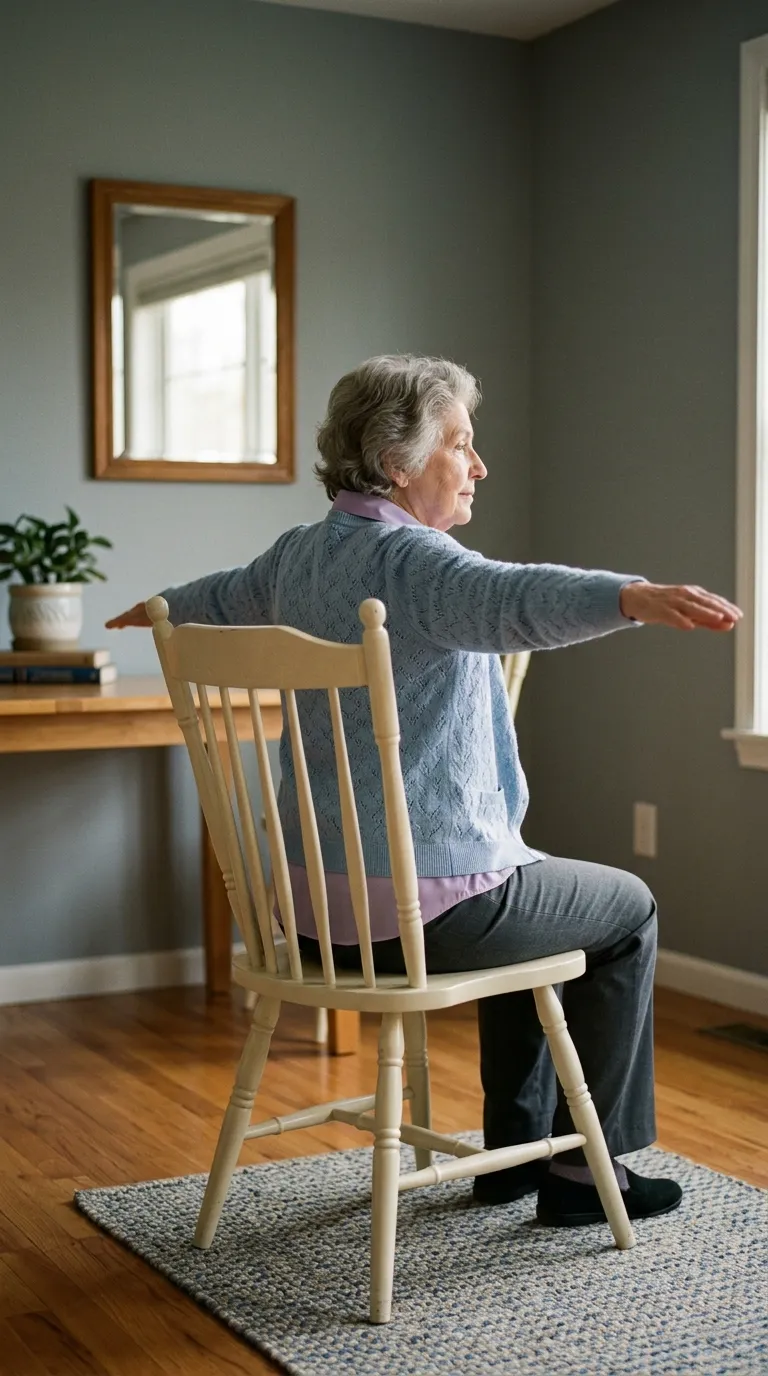
Dynamic twisting movements wake up your spine and core in ways that static stretches simply cannot match.
Seated torso twists involve rotating your upper body from side to side with controlled momentum, either with arms extended or crossed at your chest.
The rhythmic rotation creates movement through every vertebra while engaging your oblique muscles to control the motion.
What I appreciate about this exercise is its energizing quality, it feels invigorating rather than passive, yet remains gentle and accessible.
The twisting action also provides a mild massage effect for your internal organs, supporting healthy digestion. It’s one of those movements that makes you feel more alive and awake almost immediately.
Adding dynamic twists to your chair-based practice helps maintain the rotational mobility that makes daily life easier and safer.
In my experience, people who practice regular twisting movements find tasks like reaching into back seats, turning to look behind them, and accessing high shelves become noticeably less challenging.
The movement builds core strength while simultaneously improving spinal flexibility, creating a body that’s both stable and mobile.
Think of each twist as oiling the gears of your spine, keeping everything moving smoothly and freely.
Over time, you’ll likely notice improved core strength, better balance, reduced back stiffness, and increased confidence in your body’s ability to move in all directions without discomfort or limitation.
Seated Arm Circles
- Improves shoulder mobility and range of motion
- Warms up upper body muscles before other activities
- Releases stiffness from sleeping positions or repetitive tasks
- Increases circulation to arms and shoulders
- Simple enough to do without instruction yet highly effective
Shoulder joints possess remarkable range of motion when healthy but lose flexibility quickly when that movement isn’t regularly practiced.
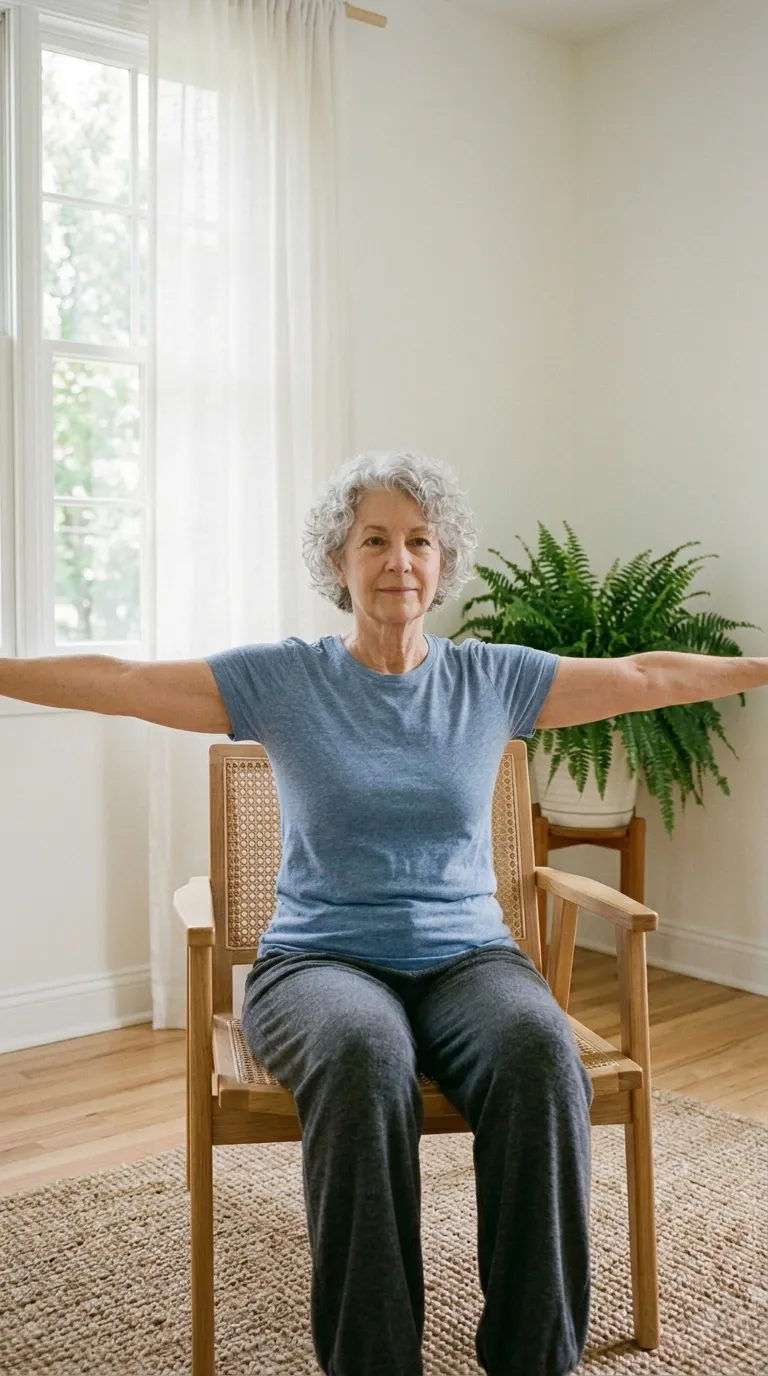
Arm circles address this by taking your shoulders through their full circular range in both forward and backward directions.
The exercise begins with arms extended to the sides and progresses through increasingly larger circles, warming muscles and lubricating joints.
What makes this movement particularly valuable is its comprehensiveness, it touches every part of your shoulder’s movement capacity in one simple pattern.
I’ve noticed that people often discover restricted areas they didn’t know existed until they try making full circles. The awareness itself becomes part of the healing process.
Including arm circles in printable chair yoga for seniors ensures shoulder joints receive the varied movement they need to stay healthy and pain-free.
That’s why many physical therapists use this exercise in rehabilitation programs, it’s gentle enough for injured shoulders yet effective enough to create real change.
The circular motion encourages synovial fluid production, which naturally lubricates joints and reduces friction during movement.
Think of arm circles as a full service maintenance routine for your shoulders.
Over time, consistent practice leads to improved range of motion, reduced pain during overhead reaching, better posture, and the satisfying freedom of shoulders that move easily in all directions rather than feeling stuck or limited in their capacity.
Seated Breathing Exercises
- Reduces stress and anxiety through intentional breathing
- Improves oxygen intake and energy levels
- Calms nervous system naturally
- Requires no physical flexibility or strength
- Creates foundation for all other movement practices
Breathing happens automatically, which means most people never consider whether they’re doing it well or poorly, yet breathing patterns profoundly impact everything from stress levels to physical performance.
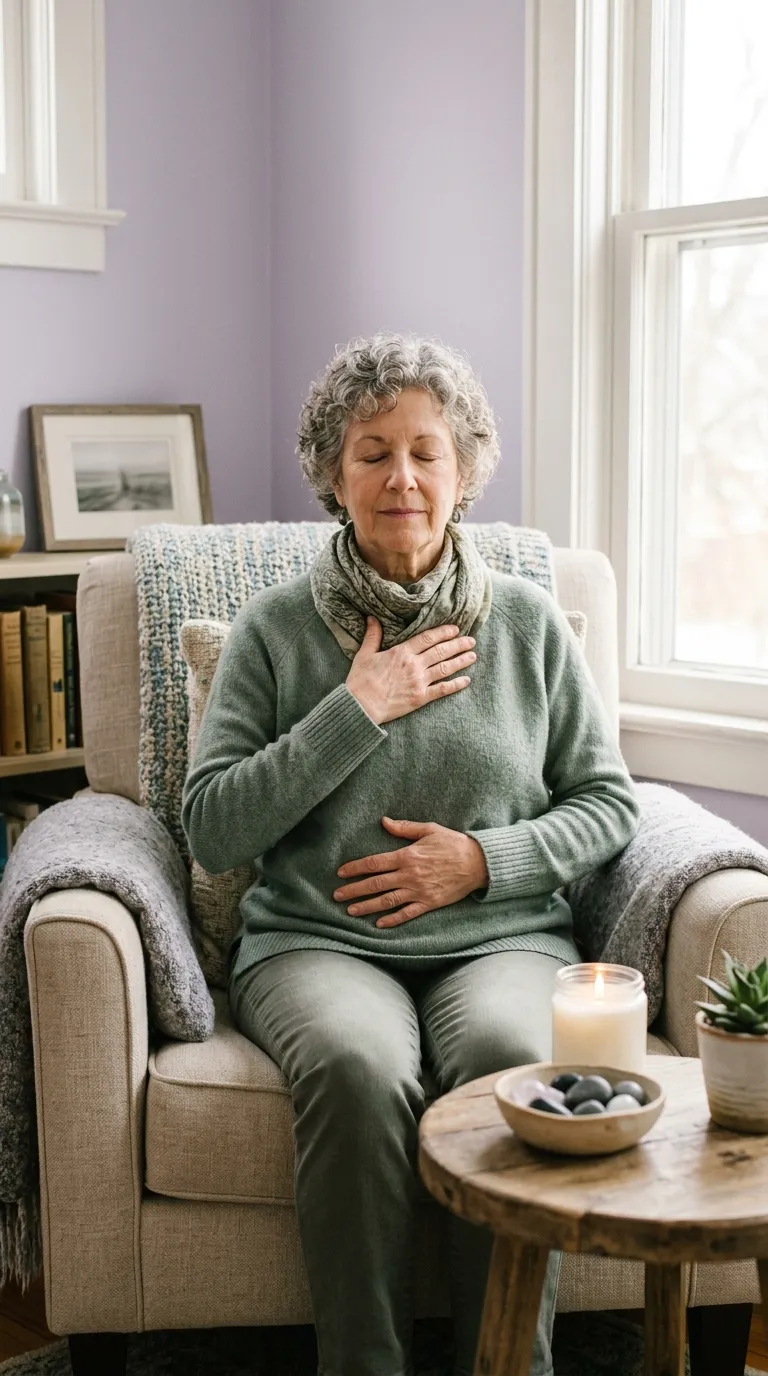
Seated breathing exercises bring conscious awareness to this fundamental process, teaching slower, deeper, more efficient breathing that calms your entire system.
Techniques might include belly breathing, counted breaths, or alternate nostril breathing, each offering specific benefits.
What I find most compelling about breathwork is its immediate impact, within just a few intentional breaths, your heart rate slows, tension decreases, and mental clarity improves.
It’s the most accessible tool for managing stress that exists, yet it’s often overlooked.
Adding intentional breathing practice to your seated routine transforms it from purely physical exercise into a holistic mind-body experience.
In my experience, people who learn proper breathing techniques report better sleep, reduced anxiety, improved focus, and greater emotional resilience.
The practice requires nothing but your attention and a few quiet minutes, making it perfectly suited for anyone regardless of age or physical condition.
Think of breathwork as the foundation supporting every other aspect of your wellbeing.
Over time, conscious breathing often becomes automatic, meaning you’ll naturally breathe more efficiently throughout your day, experiencing less stress, more energy, better mental clarity, and an increased sense of calm even during challenging situations.
Seated Side Bends
- Stretches intercostal muscles between ribs
- Improves breathing capacity and lung function
- Releases tension in sides of torso and lower back
- Creates length through often-compressed areas
- Feels refreshing and energizing
Lateral bending, movement to the sides, is one of the most neglected directions in typical daily activity, yet it’s essential for maintaining a healthy, mobile spine.
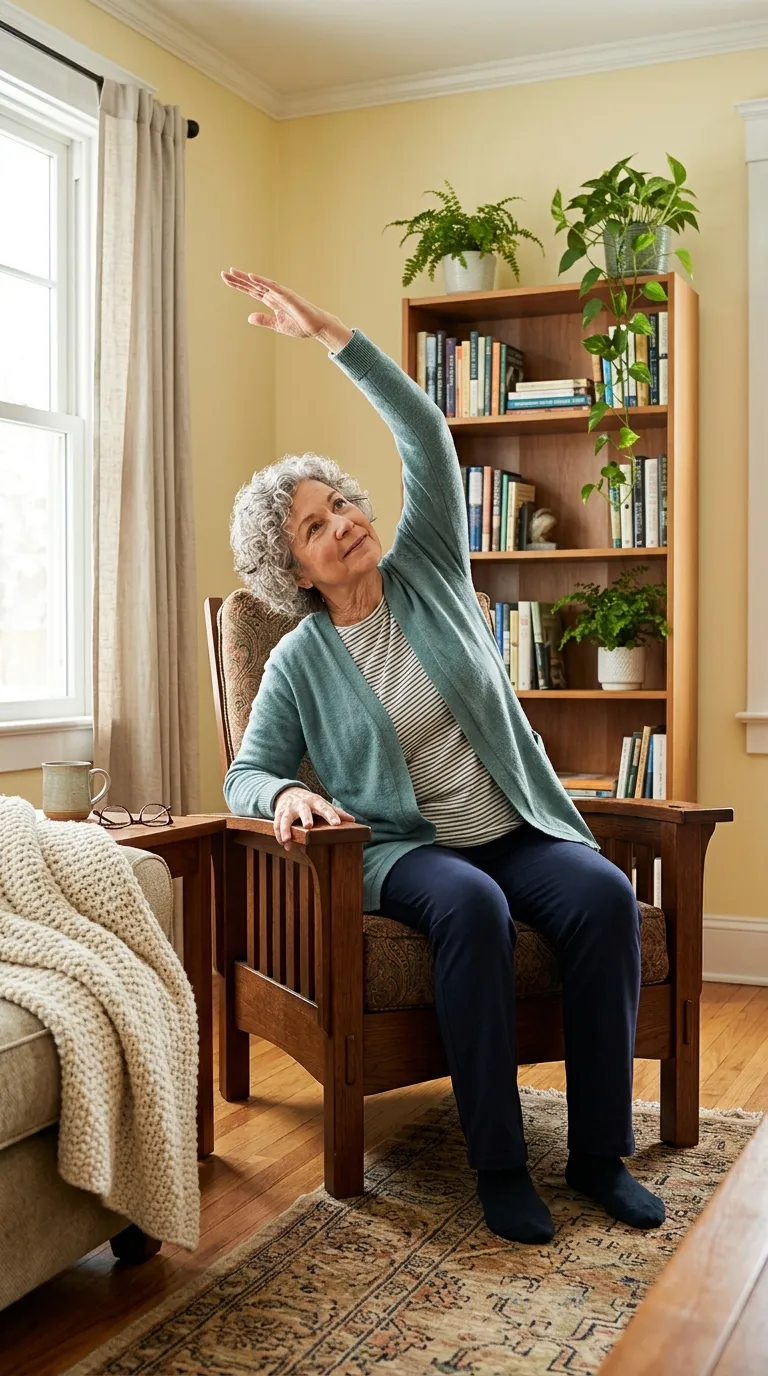
Seated side bends bring attention to this often-forgotten plane of movement by having you reach one arm overhead and gently bend toward the opposite side, creating a long arc through your entire torso.
The stretch targets the intercostal muscles between your ribs and the quadratus lumborum along your lower back, areas that often hold tension without your awareness.
I’ve found this movement particularly effective after periods of sitting or anytime breathing feels shallow or restricted.
The lateral opening creates space for your lungs to expand more fully.
Including side bends in your chair-based practice helps maintain the full range of spinal movement necessary for everyday activities like reaching into cabinets, twisting to see around corners, or simply moving comfortably through space.
That’s why many yoga traditions emphasize movement in all directions rather than focusing solely on forward and back.
The practice creates visible improvements in posture while addressing chronic tightness that contributes to back pain and restricted breathing.
Think of each side bend as creating more room in your body for breath, movement, and comfort.
Over time, you’ll likely notice improved posture, easier breathing, reduced side and back discomfort, and a general sense of length and openness through your torso that translates to greater ease in movement.
Gentle Seated Core Work
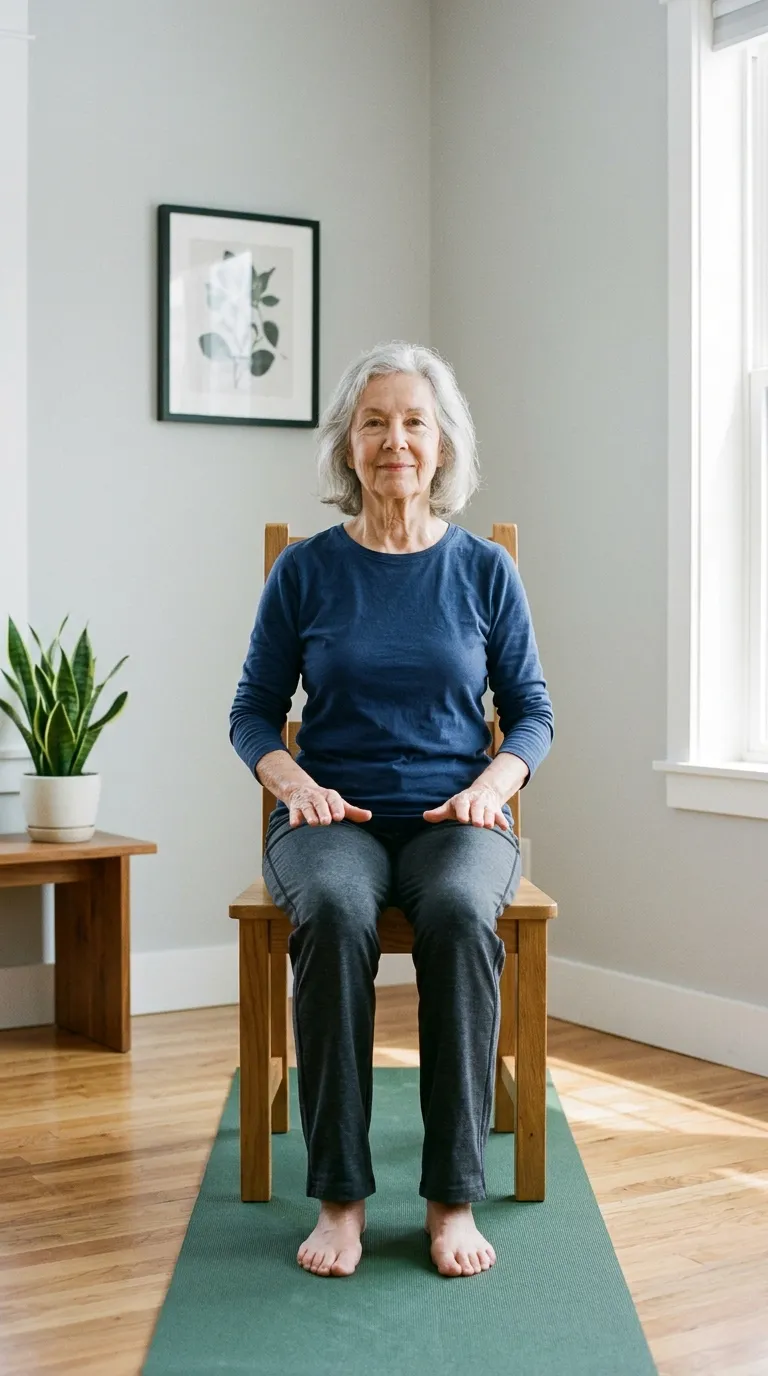
- Strengthens abdominal muscles that support your spine
- Improves balance and stability for all movements
- Protects lower back from strain and injury
- Builds strength without requiring floor exercises
- Essential foundation for functional fitness
Core strength determines far more than just your appearance, it’s the foundation of nearly every movement you make and the primary protector of your spine.
Gentle seated core work makes abdominal strengthening accessible by removing the need to get down on the floor while still effectively challenging these crucial muscles.
Exercises might include seated marches with core engagement, gentle pelvic tilts, or simply holding good posture against resistance.
What makes core work so valuable is its direct impact on daily function: a strong core makes standing easier, improves balance, reduces back pain, and supports confident movement.
I’ve noticed people often feel taller and more stable after just a few weeks of consistent core practice.
Adding core strengthening to printable chair yoga for seniors addresses one of the most critical components of healthy aging and injury prevention.
In my experience, people with strong cores report fewer falls, less back pain, better posture, and greater confidence in their physical abilities.
The exercises don’t need to be complicated or intense to be effective, consistency matters far more than intensity.
Think of your core as the central support system that everything else depends on.
Over time, regular core work leads to improved balance, reduced back discomfort, better posture, easier movement through daily activities, and the satisfying sense of strength and stability that comes from a body supported by strong foundational muscles.
Seated Hamstring Stretch
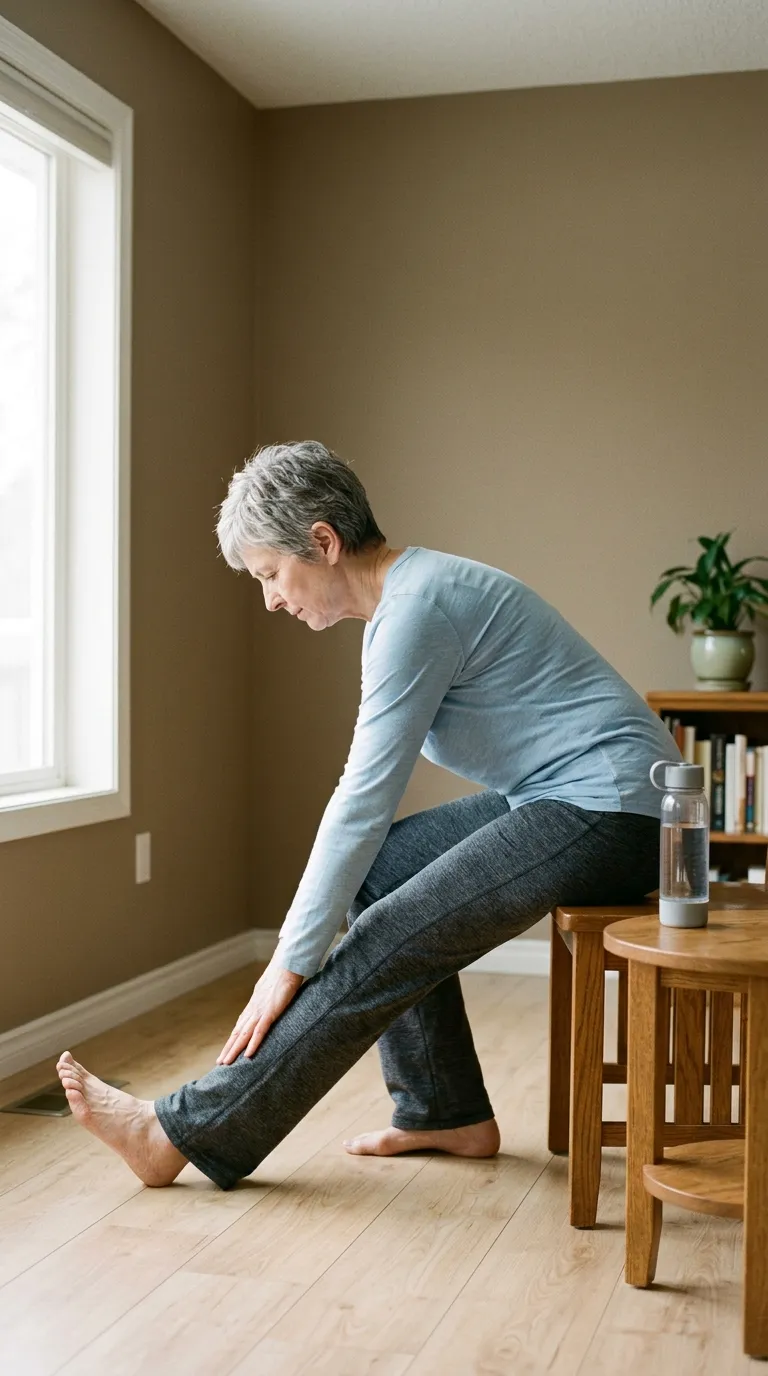
- Releases tight hamstrings that contribute to back pain
- Improves flexibility for bending and daily movements
- Reduces strain on lower back by addressing root cause
- Gentle on knees and joints
- Accessible modification of traditional floor stretches
Tight hamstrings create a cascade of problems throughout your entire body, pulling on your pelvis and contributing to lower back pain, poor posture, and restricted movement.
Seated hamstring stretches address this common issue by allowing you to extend one leg while seated and fold gently forward from your hips, creating a controlled stretch along the back of your thigh.
The beauty of the seated version is its stability, you’re supported by your chair rather than balancing on one leg or sitting on the floor.
I’ve found this stretch particularly effective for people who spend lots of time sitting, as prolonged sitting notoriously tightens hamstrings.
The key is patience; hamstrings respond better to gentle, sustained stretching than aggressive forcing.
Including hamstring work in your routine helps address one of the most common sources of movement restriction and discomfort.
That’s why many back pain specialists focus heavily on hamstring flexibility, the connection between tight hamstrings and lower back problems is well-established and significant.
The practice creates gradual but meaningful improvements in flexibility that translate directly to easier bending, more comfortable sitting, and reduced back strain.
Think of hamstring stretching as an investment that pays returns throughout your entire kinetic chain.
Over time, you’ll likely notice easier toe-touching, more comfortable forward bending, reduced lower back tension, improved posture, and the simple pleasure of moving through daily activities without the constant pull of chronically tight muscles limiting your range.
Seated Quad Stretch
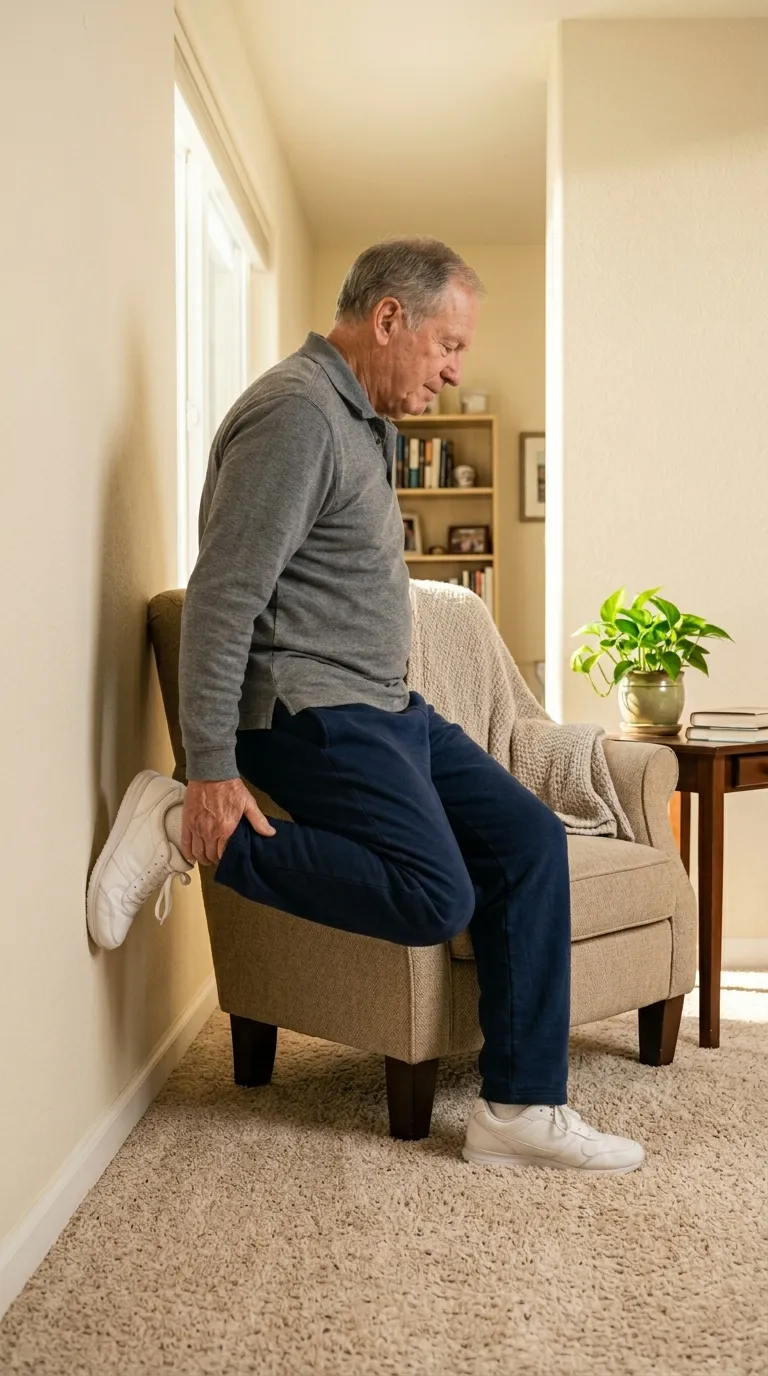
- Stretches front thigh muscles often tight from sitting
- Improves knee flexibility and joint health
- Balances hamstring stretches for complete leg care
- Helps prevent muscle imbalances that cause pain
- Accessible with chair support for stability
Quadriceps muscles at the front of your thighs become shortened and tight from prolonged sitting, creating imbalances that affect everything from your knees to your lower back.
Seated quad stretches address this by having you reach back to hold one ankle while seated, gently pulling your heel toward your buttocks to stretch the front of your thigh.
The seated position provides stability that makes this stretch accessible even for those with balance concerns, and the chair offers support if needed.
What I appreciate about this movement is how quickly you feel the stretch, quadriceps often hold considerable tension that becomes obvious the moment you attempt to lengthen them.
The awareness itself helps you understand why this area needs regular attention.
Adding quad stretches to your chair-based practice creates balance by addressing both the front and back of your thighs, preventing the muscle imbalances that commonly contribute to knee and hip problems.
In my experience, people who regularly stretch their quadriceps report reduced knee discomfort, better walking mechanics, and improved ability to climb stairs without strain.
The practice takes only minutes but addresses a significant source of tightness that affects movement quality.
Think of quad stretching as maintaining balance in your legs so no single muscle group becomes dominant or problematically tight.
Over time, you’ll likely notice improved knee flexibility, reduced front-thigh tightness, better walking comfort, and more balanced leg strength that supports healthy movement patterns rather than compensatory ones.
Seated Calf Stretch
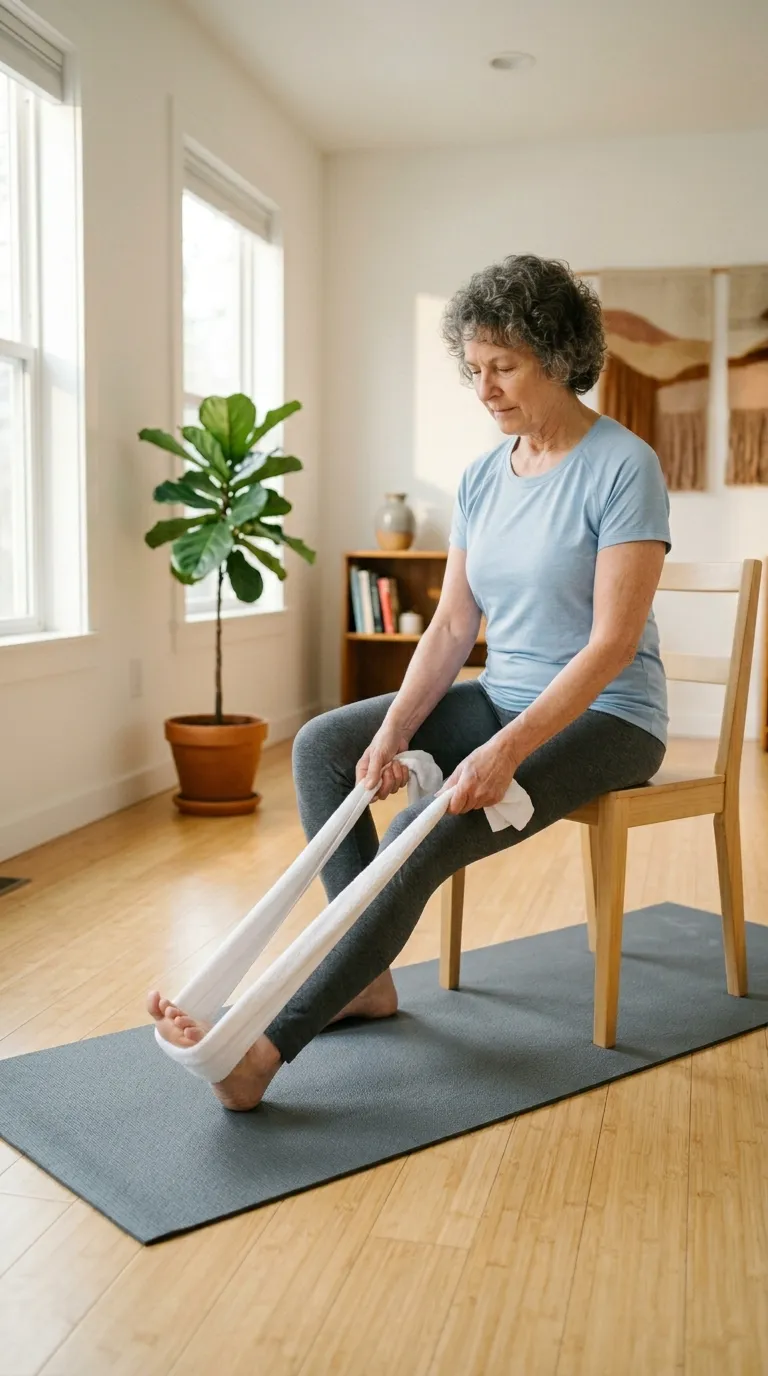
- Releases tight calf muscles that restrict ankle movement
- Reduces risk of cramping and muscle strain
- Improves flexibility for walking and stair climbing
- Gentle on joints while effectively stretching muscles
- Can use towel or strap for assistance
Calf muscles bear the load of walking, standing, and climbing every day, yet they rarely receive the stretching attention they need to stay healthy and flexible.
Seated calf stretches make this essential maintenance accessible by allowing you to extend one leg while seated and pull the ball of your foot toward your body using a towel, strap, or your hands.
The stretch targets both the gastrocnemius and soleus muscles that make up your calf, releasing tightness that contributes to everything from foot pain to knee problems.
I’ve noticed that people who regularly stretch their calves experience fewer nighttime cramps and more comfortable walking.
The supported position removes balance challenges while still delivering an effective stretch.
Including calf stretches in printable chair yoga for seniors addresses a commonly overlooked source of mobility restriction and discomfort.
That’s why many physical therapists prescribe calf stretching for conditions ranging from plantar fasciitis to knee pain, the connections throughout your lower body mean tight calves affect multiple areas.
The practice creates gradual improvements in ankle flexibility that directly translate to safer, more comfortable movement.
Think of calf stretching as essential maintenance for the muscles that literally carry you through each day.
Over time, you’ll likely notice improved ankle flexibility, reduced cramping, easier walking and stair climbing, better balance, and the satisfying relief that comes from muscles that feel loose and responsive rather than chronically tight and restricted.
Seated Glute Stretch
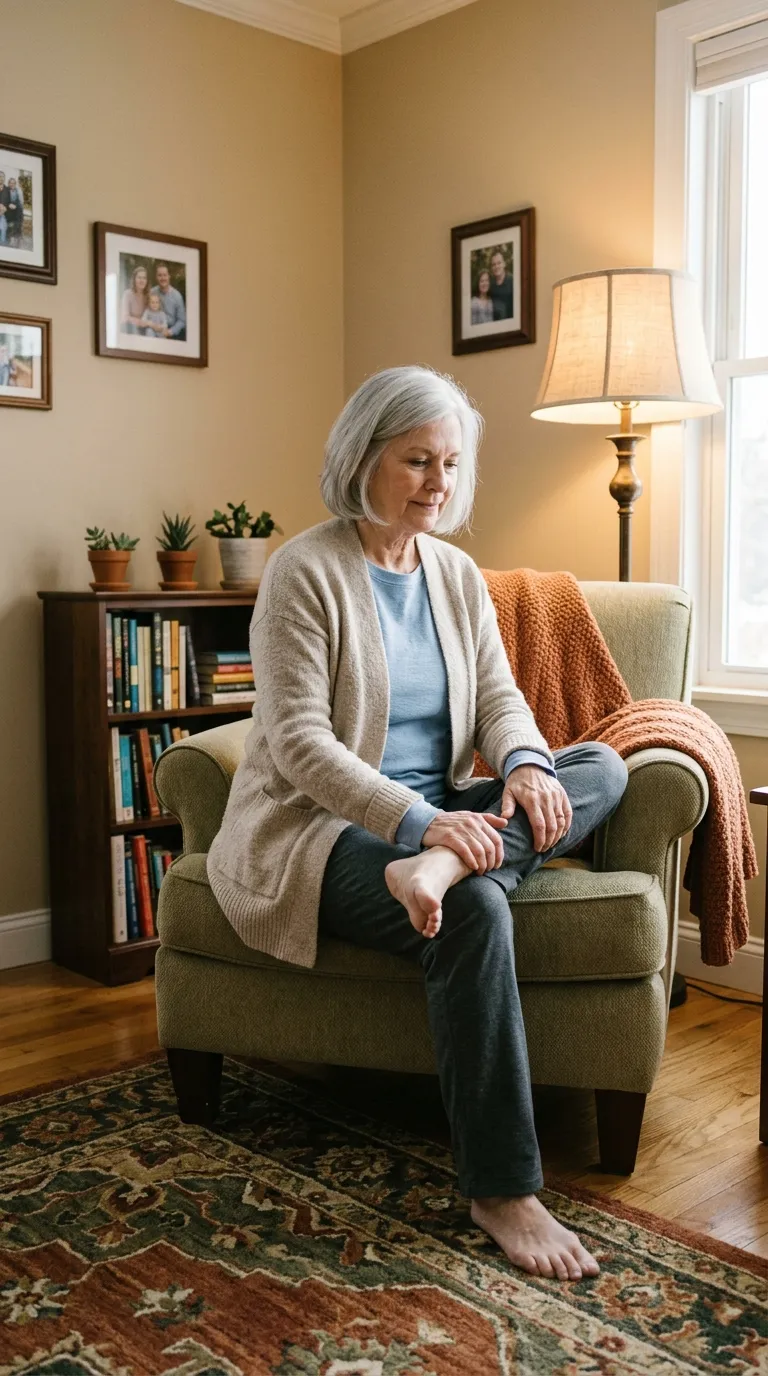
- Releases tension in glutes and outer hips
- Addresses sciatic nerve discomfort
- Improves hip flexibility for daily movements
- Gentle on lower back while stretching hips
- Accessible alternative to floor-based pigeon pose
Gluteal muscles do the powerful work of moving your body through space, but they also become chronically tight from prolonged sitting and repetitive movements.
Seated glute stretches address this tension by positioning one ankle over the opposite knee in a figure-four shape, then gently leaning forward to deepen the stretch through your hip and outer buttock.
The position targets the gluteus maximus, medius, and minimus along with the piriformis muscle that often contributes to sciatic nerve irritation.
What makes this stretch particularly valuable is its ability to release deep tension that’s difficult to access through other movements.
I’ve found this position helpful for people dealing with everything from lower back pain to hip stiffness to sciatic discomfort.
Adding glute stretches to your routine helps maintain hip flexibility that’s essential for comfortable sitting, standing, walking, and virtually every other daily movement.
In my experience, people who regularly stretch their glutes report significant reductions in lower back pain and improved comfort during prolonged sitting.
The practice addresses tightness at its source rather than just treating symptoms, creating lasting improvements in how your entire lower body feels and functions.
Think of glute stretching as releasing the foundation that supports your spine and enables your legs.
Over time, you’ll likely notice reduced lower back tension, improved hip mobility, decreased sciatic discomfort, easier transitions from sitting to standing, and the profound relief that comes from releasing chronically tight muscles that affect your entire body.
Seated Spinal Balance
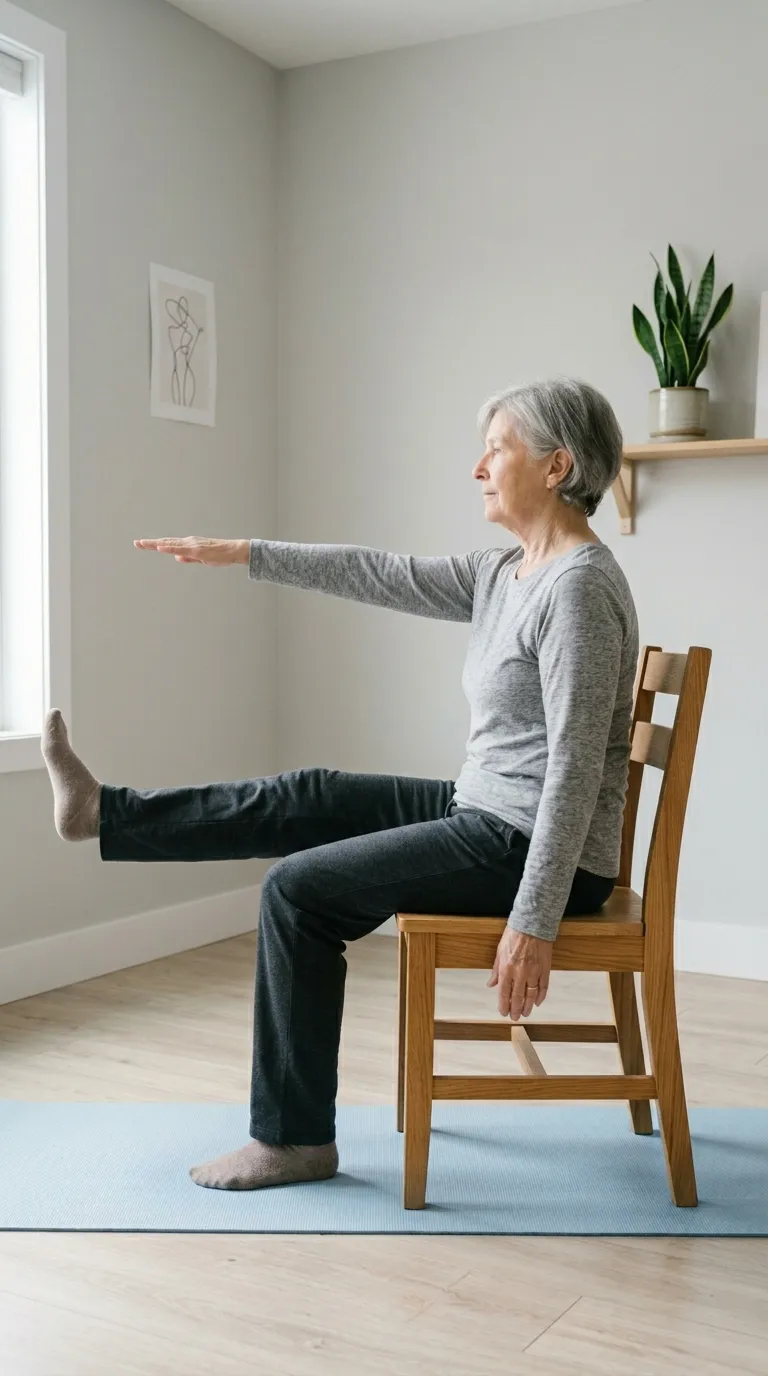
- Challenges balance safely while seated
- Strengthens core stabilizers
- Improves coordination between opposite sides of body
- Builds confidence in controlled movements
- Enhances body awareness and proprioception
Balance often declines gradually with age, but much of that deterioration comes from lack of practice rather than inevitable decline.
Seated spinal balance exercises challenge your stability in a safe environment by having you extend opposite arm and leg while maintaining an upright seated position.
The movement requires core engagement, coordination, and body awareness, all of which improve with practice.
What I appreciate about this exercise is how it builds balance confidence without the fear of falling, you’re supported by your chair throughout the movement.
The cross-body pattern also enhances neural connections between your brain’s hemispheres, supporting cognitive function alongside physical benefits. It’s surprisingly challenging despite looking simple.
Including balance work in your chair-based practice helps maintain the stability and coordination needed to prevent falls and move confidently through your environment.
That’s why many fall-prevention programs emphasize balance training as their primary focus, improved stability dramatically reduces injury risk.
The seated version makes this crucial training accessible even for those currently experiencing balance challenges.
Think of balance practice as insurance against one of the most common causes of serious injury in older adults.
Over time, you’ll likely notice improved stability, better core strength, enhanced coordination, increased body awareness, and greater confidence in your physical abilities, all of which translate to safer, more assured movement whether you’re navigating crowded spaces, uneven terrain, or simply moving through your home.
Seated Upper Body Circles
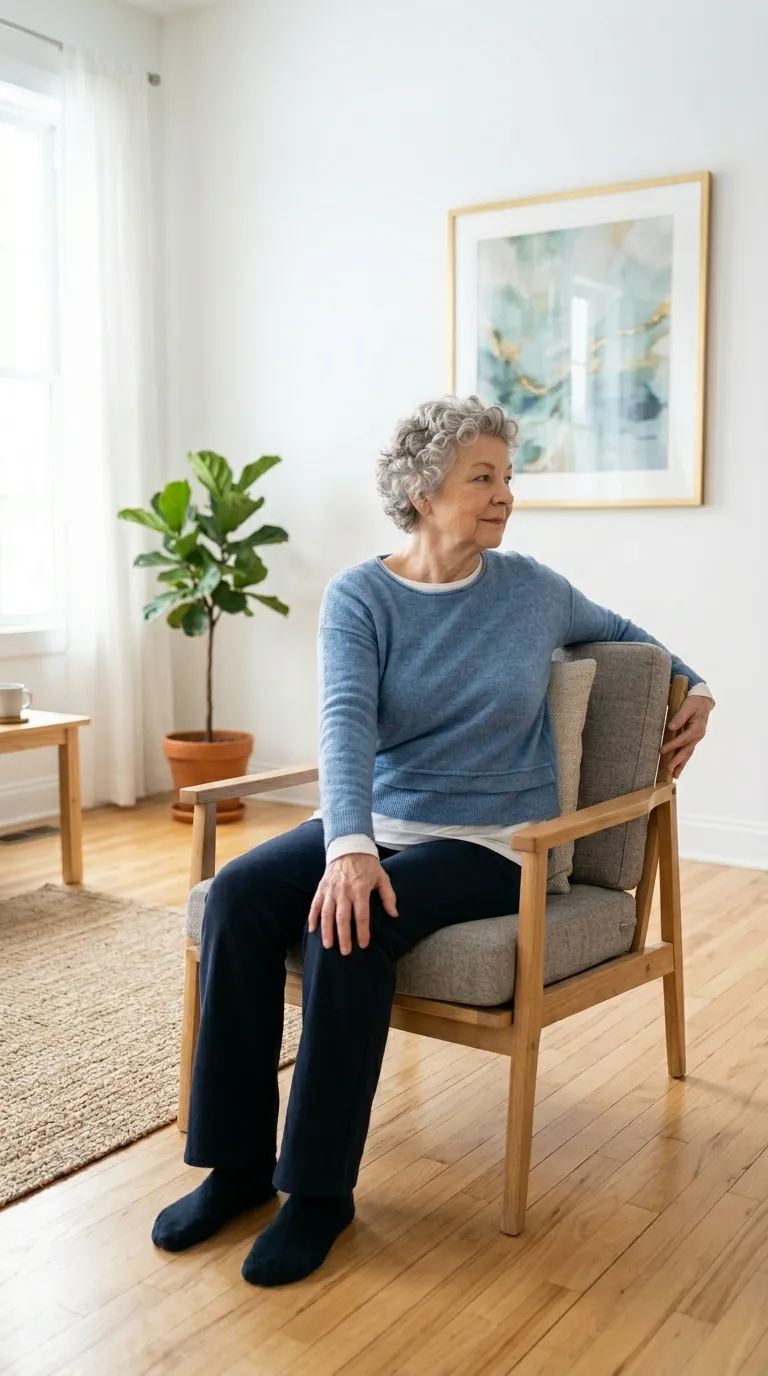
- Mobilizes entire spine through circular motion
- Releases stiffness from static positions
- Engages core muscles for stability
- Feels playful and freeing
- Combines multiple movement planes in one exercise
Spinal movement doesn’t happen in just straight lines, your spine is designed for complex, three-dimensional motion that gets limited when daily life locks you into repetitive patterns.
Seated upper body circles restore that full range by having you trace large circles with your torso while seated, moving through forward flexion, side bending, back extension, and the opposite side in one continuous flow.
The circular pattern touches every plane of movement your spine is capable of, releasing restrictions and building mobility simultaneously.
I’ve found this movement particularly satisfying because it feels freeing rather than clinical, there’s an element of play that makes it enjoyable rather than just therapeutic.
The continuous motion builds warmth and fluidity throughout your entire back.
Adding circular movements to printable chair yoga for seniors helps maintain the comprehensive spinal mobility that makes everyday life comfortable and unrestricted.
In my experience, people who practice multi-directional spine movements report fewer instances of that stuck, stiff feeling that makes simple tasks uncomfortable.
The practice addresses limitations in all planes of motion rather than just one direction, creating a more complete approach to spinal health.
Think of body circles as a massage for your spine delivered through your own movement.
Over time, you’ll likely notice improved flexibility in all directions, reduced back stiffness, better posture, enhanced core strength, and the satisfying sense of a spine that moves freely and comfortably rather than feeling locked into limited, uncomfortable patterns.
Seated Mindful Meditation Pose
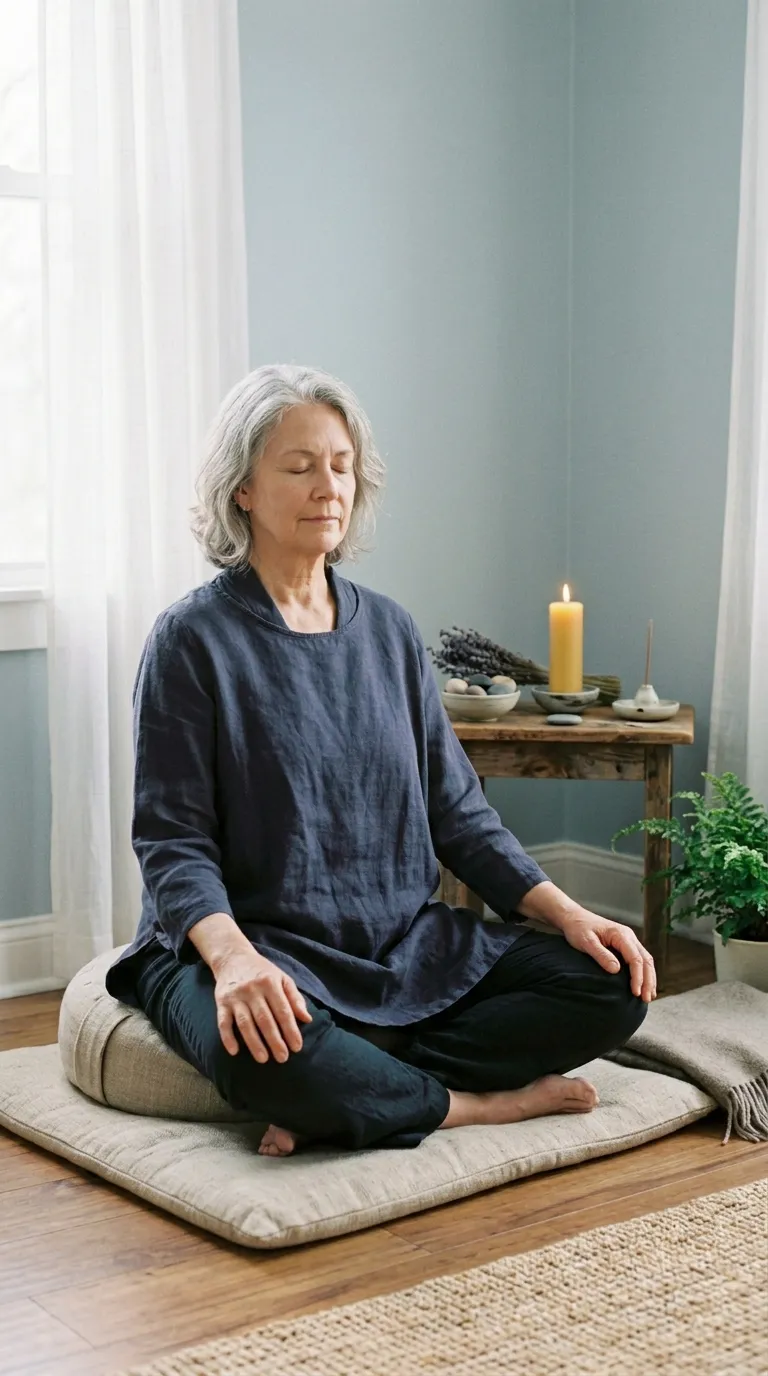
- Combines physical stillness with mental focus
- Reduces stress through mindful awareness
- Improves concentration and mental clarity
- Requires no physical ability, only willingness
- Creates foundation for mind-body connection
Meditation doesn’t require perfect lotus position or hours of practice, it simply asks for present-moment awareness, which can happen just as easily in a chair as anywhere else.
Seated meditation pose establishes proper alignment for sustained comfortable sitting while bringing attention to breath, body sensations, or a chosen point of focus.
The practice involves sitting upright but relaxed, with hands resting comfortably and attention turned inward.
What makes meditation so powerful is its scientifically-proven impact on stress reduction, emotional regulation, and even physical health markers like blood pressure and inflammation.
I’ve found even five minutes of seated meditation can shift my entire day, creating space between stimulus and response that prevents reactive patterns.
Including meditation in your movement practice transforms it from purely physical exercise into a holistic wellness routine addressing both body and mind.
That’s why many healthcare providers now recommend meditation as complementary treatment for everything from chronic pain to anxiety to cardiovascular disease.
The practice costs nothing, requires no equipment, and delivers benefits that extend far beyond the minutes you spend sitting.
Think of meditation as training for your mind just as physical exercises train your body.
Over time, regular practice often leads to reduced stress and anxiety, improved emotional regulation, better sleep quality, enhanced focus and concentration, lower blood pressure, and an increased sense of calm and centeredness that carries you more gracefully through challenging situations and daily life.
Seated Cool Down Sequence
- Gradually returns body to resting state
- Prevents stiffness after movement
- Integrates benefits of practice
- Creates smooth transition back to daily activities
- Honors the work your body just completed
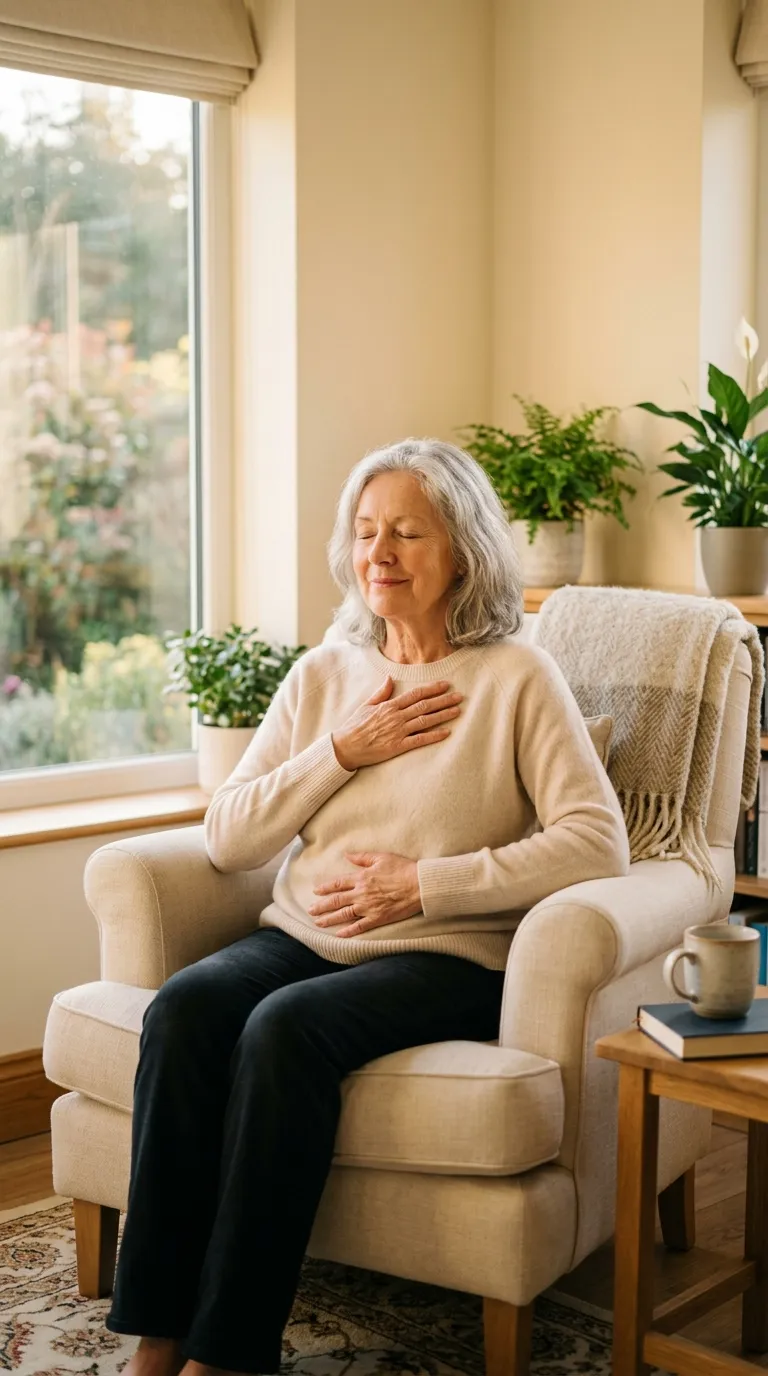
Every movement practice deserves a proper conclusion that allows your body to gradually transition from active engagement back to resting state.
A seated cool-down sequence typically includes gentle stretches, slower breathing, and mindful awareness of how your body feels after practice.
This closing period isn’t just pleasant, it serves important physiological purposes by allowing heart rate to normalize, preventing blood pooling in extremities, and giving your nervous system time to shift from active to restful states.
What I appreciate most about cool-downs is the integration period they provide, allowing the benefits of your practice to settle into your system.
Rushing from exercise directly into your next activity often means losing some of the value you just created.
Including a proper cool-down in your routine shows respect for your body and dramatically improves how you feel both immediately after practice and hours later.
In my experience, people who skip cool-downs often experience more post-exercise stiffness and soreness than those who take just a few minutes to ease back into rest.
The practice creates a clear boundary between movement time and regular activity, which can enhance the sense of self-care and intentionality around your practice.
Think of cool-downs as the period where benefits get locked in and your body receives the message that the work is complete.
Over time, this closing ritual becomes something you look forward to, a few peaceful minutes honoring your commitment to movement and wellbeing before returning to the demands and activities of your day.
Conclusion
Your journey toward greater strength, flexibility, and comfort can start today with just a chair and a few intentional minutes.
These printable chair yoga for seniors ideas prove that transformation doesn’t require equipment, expertise, or exceptional flexibility, just consistency and kindness toward your body.
I’ve seen how small, regular movement practices create remarkable changes over time, building not just physical capability but genuine confidence in what your body can do.
Save this collection so you can return whenever you need inspiration, guidance, or a gentle reminder that caring for yourself is always worth the time.
Try one idea today, then another tomorrow, and watch how these simple practices gradually reshape how your body feels and moves through the world.