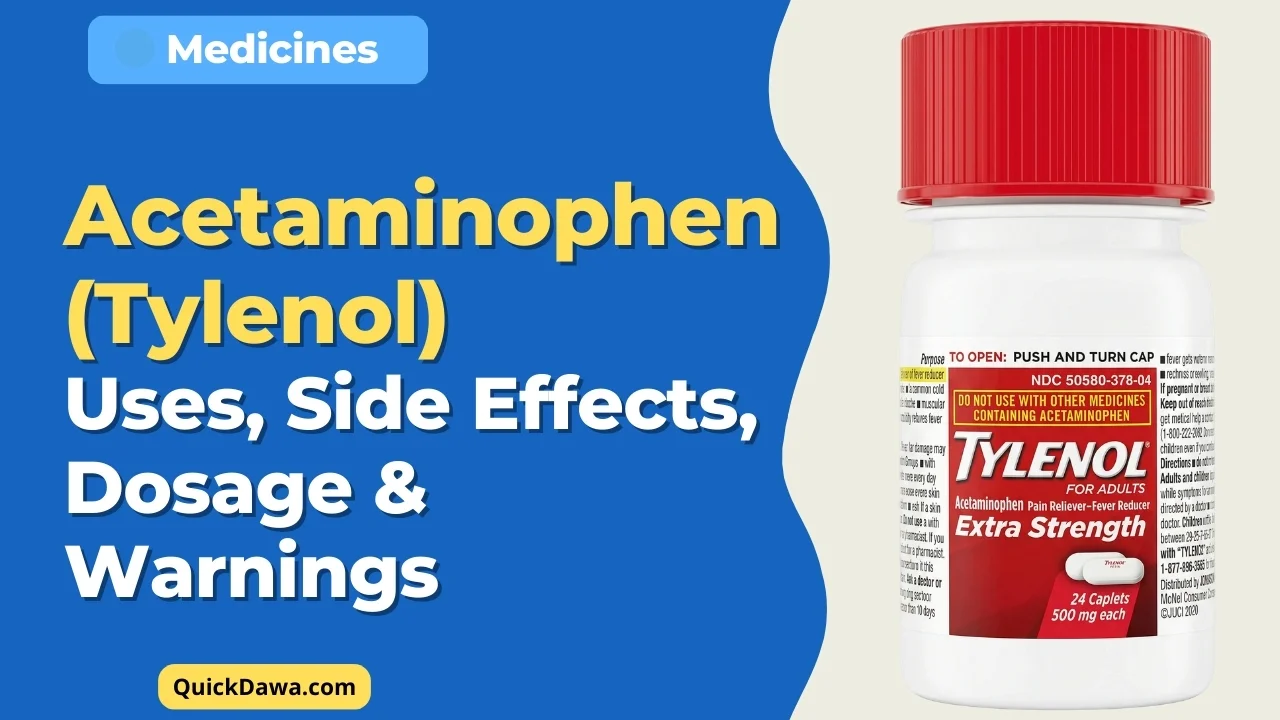
Acetaminophen (Tylenol) – Uses, Side Effects, Dosage & Warnings – Your Complete Guide
Let’s paint a picture.
It’s 2 AM. You’re tossing and turning in bed.
Your head is pounding. Maybe you’ve got a fever that crept up after a long, exhausting day.
You drag yourself to the medicine cabinet and reach for that familiar white bottle — Tylenol.
Sound familiar?
Acetaminophen — the active ingredient in Tylenol — is probably the most commonly used pain reliever and fever reducer on the planet. Millions of people take it every single day.
It’s in cold medicines. It’s in flu medicines. It’s in PM sleep aids. It’s basically everywhere.
But here’s the thing. Just because it’s common doesn’t mean you know everything about it. And what you don’t know can actually hurt you.
How much is too much? Can you mix it with other meds? What happens if you accidentally take extra?
These are important questions. And today, we’re answering all of them.
At QuickDawa, we’re all about making medicine easy to understand — so let’s break down everything you need to know about acetaminophen (Tylenol) in simple, clear language.
💊 What Is Acetaminophen?
Acetaminophen is an over-the-counter (OTC) medication used to relieve pain and reduce fever.
You probably know it best by its brand name — Tylenol. But it goes by other names too, like paracetamol (that’s what it’s called in most countries outside the U.S.).
It belongs to a class of drugs called analgesics (pain relievers) and antipyretics (fever reducers).
It’s manufactured by many companies, but the most well-known brand, Tylenol, is made by Johnson & Johnson (through its subsidiary Kenvue).
Here’s what makes acetaminophen special: unlike ibuprofen or aspirin, it’s not an anti-inflammatory drug (not an NSAID). This makes it gentler on the stomach, which is why doctors often recommend it for people who can’t tolerate NSAIDs.
It’s one of the most widely used medicines in the world — and for good reason. It works, it’s affordable, and it’s available practically everywhere.
But like any medicine, it comes with rules. Let’s go through them.
✅ Uses of Acetaminophen
Acetaminophen is what I like to call a “utility player.” It does a lot of jobs, and it does them well.
Let’s break down the most common uses.
🔹 Pain Relief (Analgesic)
This is the #1 reason people reach for acetaminophen.
It works for all kinds of mild to moderate pain:
- Headaches and migraines
- Toothaches
- Muscle aches and body pain
- Back pain
- Menstrual cramps
- Pain from colds and flu
- Minor arthritis pain
Think of it this way — if your pain is a 3 to 6 out of 10, acetaminophen is often your first go-to.
🔹 Fever Reduction (Antipyretic)
Got a fever? Acetaminophen can bring your temperature down.
This is why pediatricians recommend it for kids with fevers. It’s also widely used in hospitals for post-surgical fever management.
It doesn’t cure whatever’s causing the fever — but it makes you a lot more comfortable while your body fights the infection.
🔹 Cold and Flu Symptom Relief
Acetaminophen is a key ingredient in many combination cold and flu medicines. Brands like NyQuil, DayQuil, Theraflu, and Excedrin all contain acetaminophen.
This is important to know — because if you’re already taking Tylenol and a cold medicine with acetaminophen, you could accidentally take too much. We’ll cover that in detail later.
🔹 Post-Surgical or Post-Procedure Pain
Doctors often recommend acetaminophen after minor surgeries, dental procedures, or vaccinations. It helps manage mild pain without the risks associated with stronger painkillers like opioids.
🔹 Off-Label Uses
Some doctors may recommend acetaminophen for:
- Osteoarthritis management (long-term, low-dose use)
- Pain management in patients who can’t take NSAIDs due to stomach ulcers or kidney issues
(Off-label means the drug is used in a way that’s not officially FDA-approved for that specific purpose, but doctors may still prescribe it based on their clinical judgment.)
🔹 How Does It Work in the Body?
Here’s the simple version.
Nobody knows the exact mechanism 100%, but here’s what scientists believe:
Acetaminophen works in your brain. It blocks certain chemical signals (called prostaglandins) that tell your brain, “Hey, something hurts!” and “Time to raise the temperature!”
By reducing those signals, you feel less pain and your fever goes down.
Think of it like turning down the volume on a loudspeaker. The noise (pain) is still there, but it’s way more manageable.
Unlike NSAIDs, it doesn’t really reduce inflammation or swelling. So if you have a swollen ankle, ibuprofen might be a better choice. But for pure pain and fever? Acetaminophen is a champ.
⚠️ Side Effects of Acetaminophen
Now, here’s where a lot of people get a false sense of security.
Because acetaminophen is available over the counter and is so widely used, many people assume it’s completely harmless. And for most people, it is — when used correctly.
But side effects can happen. Let’s go over them honestly.
🟢 Common Side Effects (Most People Tolerate It Well)
Honestly? Most people experience zero side effects at normal doses. That’s part of why it’s so popular.
But some people may notice:
- Nausea — a mild queasy feeling, especially on an empty stomach
- Headache — yes, ironically, a pain reliever can sometimes cause a headache, especially with overuse (called a “rebound headache”)
- Mild stomach discomfort
These are usually mild and go away on their own.
🟡 Less Common Side Effects
These don’t happen often, but they’re worth knowing:
- Rash or itching (could signal a mild allergic reaction)
- Dizziness or lightheadedness
- Constipation or diarrhea (more common when combined with other drugs like codeine)
- Slight drop in blood pressure (rare)
If any of these bother you or stick around, talk to your doctor.
🔴 Rare but Serious Side Effects — Seek Help Immediately
This is the part that matters most. These side effects are rare, but they’re serious:
- Severe allergic reaction (anaphylaxis) — trouble breathing, swelling of the face/throat, severe hives. Call 911 immediately.
- Liver damage — this is the BIG one. Acetaminophen is processed by your liver. Taking too much can cause serious, even fatal liver injury. Symptoms include:
- Yellowing of the skin or eyes (jaundice)
- Dark urine
- Upper right-side abdominal pain
- Unusual tiredness
- Loss of appetite
- Stevens-Johnson Syndrome (SJS) — an extremely rare but dangerous skin reaction involving blistering, peeling skin, and sores. This is a medical emergency.
- Severe skin reactions — reddening, blistering, or a widespread rash
💡 Reassuring note: Side effects don’t happen to everyone. The vast majority of people use acetaminophen with no problems at all. But it’s important to be aware — because knowing the warning signs can literally save your life.
🚨 Warnings & Precautions
Alright, let’s get into the serious stuff. This section could save you — or someone you love — from real harm.
🔹 Who Should NOT Take Acetaminophen?
- People with a known allergy to acetaminophen or any of its inactive ingredients
- People with severe liver disease or active liver failure
- People who have experienced a severe skin reaction to acetaminophen in the past
If you fall into any of these categories, do not take acetaminophen without your doctor’s explicit approval.
🔹 ⚠️ Liver Warning — This Is Critical
This is the single most important warning about acetaminophen.
Your liver processes this drug. If you take too much — or if your liver is already weakened — it can cause severe liver damage.
The FDA has set the maximum daily dose for adults at 4,000 mg (4 grams). But many liver specialists recommend staying under 3,000 mg per day to be safe, especially if you take it regularly.
People at higher risk for liver damage include:
- Heavy alcohol drinkers (3 or more drinks per day)
- People with hepatitis or other liver conditions
- People taking multiple medications that contain acetaminophen
🔹 Alcohol Warning
Do NOT drink heavily while taking acetaminophen.
Alcohol and acetaminophen are both processed by the liver. Combining them increases the risk of liver damage — even at normal doses.
If you drink regularly, talk to your doctor before taking this medication.
🔹 Pregnancy & Breastfeeding
- Pregnancy: Acetaminophen has traditionally been considered one of the safer pain relievers during pregnancy. However, recent studies have raised questions about long-term use during pregnancy. Always consult your OB-GYN.
- Breastfeeding: Small amounts pass into breast milk, but it’s generally considered safe in normal doses. Still — check with your doctor first.
🔹 Children & Elderly
- Children: Acetaminophen is approved for infants and children, but dosing is based on weight, not just age. Always use the measuring device that comes with the product. Never guess.
- Elderly: Older adults may need lower doses because their liver and kidneys may not work as efficiently.
🔹 Driving & Machinery
Acetaminophen alone usually doesn’t cause drowsiness. But if it’s combined with other drugs (like in PM formulas or cold medicines), it might. Be careful.
🔄 Drug Interactions
Acetaminophen plays well with most medicines. But there are some important combinations to watch out for.
Here’s a quick overview:
| Drug / Substance | Type of Interaction | What Happens |
|---|---|---|
| Warfarin (Coumadin) | Major | Can increase the blood-thinning effect of warfarin, raising the risk of bleeding. Your INR levels may spike. |
| Alcohol (3+ drinks/day) | Major | Dramatically increases the risk of severe liver damage, even at normal acetaminophen doses. |
| Isoniazid (TB medication) | Major | Increases the risk of liver toxicity when combined with acetaminophen. |
| Carbamazepine (Tegretol) | Moderate | May reduce acetaminophen’s effectiveness and increase liver toxicity risk. |
| Other acetaminophen-containing products | Major | This is the sneaky one. Many cold, flu, and PM medicines already contain acetaminophen. Taking Tylenol on top of them can push you over the safe dose limit. |
| St. John’s Wort (herbal supplement) | Moderate | May speed up how fast your liver breaks down acetaminophen, making it less effective and potentially increasing toxic byproducts. |
| Phenobarbital / Phenytoin (seizure meds) | Moderate | Can increase the rate your body processes acetaminophen, potentially increasing liver risk. |
📌 Always tell your doctor or pharmacist about every medicine, supplement, or herbal product you’re currently taking before starting acetaminophen. This includes vitamins, teas, and natural remedies. Better safe than sorry.
💉 Overdose / Missed Dose
This section is serious. But I’m going to keep it calm and clear because panicking doesn’t help anyone.
🔸 Acetaminophen Overdose
Acetaminophen overdose is one of the leading causes of acute liver failure in the United States. That’s a fact. And it often happens by accident — people don’t realize how much they’re actually taking.
Signs and symptoms of overdose include:
Within the first 24 hours:
- Nausea and vomiting
- Loss of appetite
- Sweating
- Feeling generally unwell
After 24–72 hours (if untreated):
- Upper right abdominal pain (liver area)
- Dark urine
- Jaundice (yellowing skin and eyes)
- Confusion
What to do if you suspect an overdose:
- Call Poison Control immediately: 1-800-222-1222 (U.S.)
- Go to the nearest emergency room. Don’t wait for symptoms — liver damage from acetaminophen can be silent at first and deadly later.
- The antidote is N-acetylcysteine (NAC) — but it works best when given early. Time matters.
Do NOT wait to “see how you feel.” Early treatment saves lives.
🔸 Missed Dose
If you’re taking acetaminophen on a regular schedule (for example, every 6 hours for ongoing pain), and you miss a dose:
- Take it as soon as you remember.
- If it’s almost time for your next dose, skip the missed one.
- Never take a double dose to make up for the one you missed.
Acetaminophen is often taken “as needed,” so a missed dose usually isn’t a big deal. Just don’t overcompensate.
📊 Dosage Guide
Here’s a general overview of acetaminophen dosing. But remember — this is general information, not a personal prescription.
🔹 Adults (12 years and older)
- Regular Strength (325 mg tablets): 2 tablets every 4–6 hours as needed
- Extra Strength (500 mg tablets): 2 tablets every 6 hours as needed
- Maximum daily dose: Do not exceed 3,000–4,000 mg in 24 hours (most experts now recommend staying at or below 3,000 mg)
🔹 Children (under 12 years)
- Dosing is based on weight, not age alone
- Use only children’s or infant’s formulations
- Always use the measuring syringe or cup provided — kitchen spoons are not accurate
- Ask your pediatrician for exact dosing, especially for infants under 2 years
🔹 Elderly
- May need lower doses due to reduced liver and kidney function
- Doctor supervision is recommended for regular use
🔹 Available Forms
Acetaminophen comes in many forms:
- Tablets and caplets (regular and extra strength)
- Liquid suspension (for children)
- Chewable tablets
- Dissolving tablets (orally disintegrating)
- Rectal suppositories
- IV (intravenous) — used in hospitals
⚠️ “This dosage information is for general awareness only. Always follow your doctor’s prescription or the instructions on your medicine packaging.”
🙋 Tylenol (Acetaminophen) FAQ
How many 500 mg Tylenol can I take?
Up to 2 tablets every 6 hours. Do not exceed 6 tablets (3,000 mg) in 24 hours. Max limit is 4,000 mg/day, but lower is safer.
Most common side effect?
Nausea. In excess, liver damage is the most serious risk.
What should you not mix with Tylenol?
Alcohol, other acetaminophen-containing products, blood thinners (warfarin), and certain seizure/TB medications.
Why do doctors prefer Tylenol over ibuprofen?
It’s gentler on the stomach, kidneys, and heart, and is safer for pregnant women and people on blood thinners.
What is the 3-3-3 rule for ibuprofen?
No more than 3 times a day, 3 days for fever, 3 days for pain — without medical advice.
When should you never take Tylenol?
With liver disease, heavy alcohol use, allergy to acetaminophen, or if already taking products containing acetaminophen.
Why not lay down right after taking it?
To prevent the pill from irritating the esophagus. Stay upright ~10 minutes.
What not to eat or drink with Tylenol?
Avoid alcohol primarily. No major food restrictions, but high-fat meals may slow absorption.
Does Tylenol raise blood pressure?
Recent studies suggest regular/long-term use may slightly raise blood pressure.
Can you eat bananas with Tylenol?
Yes — bananas are perfectly safe with Tylenol.
⚠️ Always consult your doctor or pharmacist for personalized advice.
🏁 Conclusion — Stay Safe, Stay Informed
Let’s wrap this up.
Acetaminophen (Tylenol) is one of the safest, most effective, and most widely used medicines in the world — when it’s used properly.
It’s amazing for headaches, fevers, body aches, and everyday pain. It’s gentle on the stomach. It’s affordable. And it’s available without a prescription.
But — and this is a big “but” — it demands respect.
Taking too much can seriously damage your liver. Mixing it with alcohol is risky. And accidentally doubling up by taking multiple products that contain acetaminophen is more common than people think.
So here’s my advice: read labels carefully, stick to recommended doses, and when in doubt — ask your doctor or pharmacist. That’s it. Simple rules that keep you safe.
At QuickDawa, we believe that understanding your medicine is just as important as taking it. Knowledge is the first step toward better health. If you found this guide helpful, share it with someone who needs it — and explore more medicine guides on QuickDawa.com for trusted, easy-to-understand health information.
💬 Got a question about acetaminophen — or any other medicine? Drop it in the comments below or reach out to us through our contact page. We love hearing from you!
⚠️ Medical Disclaimer
The information provided in this article is intended for educational and informational purposes only. It is not a substitute for professional medical advice, diagnosis, or treatment. Always seek the guidance of your qualified doctor, pharmacist, or healthcare provider with any questions you may have regarding a medical condition, medication, or treatment plan.
Never disregard professional medical advice or delay seeking it because of something you read on QuickDawa.com or any other website. If you think you may have a medical emergency, call your doctor, go to the nearest emergency room, or call emergency services immediately.
Drug information, dosages, and interactions described in this post are provided for general awareness only and may not apply to your individual health situation. Medications affect people differently based on age, weight, health conditions, and other factors.
QuickDawa.com and its authors do not assume any liability for any consequences arising from the use or misuse of information presented on this website.
🌐 Sources & External References
Here are trusted, authoritative sources where you can learn even more about acetaminophen:
- FDA Drug Information — Acetaminophen — Official FDA resource
- MedlinePlus — Acetaminophen — U.S. National Library of Medicine
- Drugs.com — Acetaminophen Full Information — Comprehensive drug database
- WebMD — Acetaminophen Oral — Consumer-friendly drug info
- Mayo Clinic — Acetaminophen (Oral Route) — Trusted medical institution
- RxList — Tylenol (Acetaminophen) — Detailed drug reference