

12 Brain Boosting Drinks for Focus, Memory & Mental Clarity (Science-Backed)
Your brain is tired.
You can feel it.
The foggy mornings.
The wandering attention.
The forgotten passwords.
The mid-afternoon crash that makes you feel like a zombie.
You are not alone.
Mental fatigue, poor focus, and shrinking attention spans have become the new normal.
Digital overload is frying our brains.
Poor sleep is stealing our sharpness.
Chronic stress is quietly eating away at our cognitive power.
And here is the uncomfortable truth.
Your brain takes the hit before anything else.
But what if I told you that something as simple as what you drink could change all of that?
Not a magic pill.
Not some expensive supplement.
Just real, natural, science-backed beverages that fuel your neurons and protect your mind.
Sounds too simple?
That is exactly why it works.
Certain brain boosting drinks can sharpen your focus, strengthen your memory, protect against cognitive decline, and help you think clearly — every single day.
They work by reducing inflammation in the brain.
They boost neurotransmitters like serotonin and dopamine.
They improve blood circulation to the areas of your brain responsible for thinking, learning, and decision-making.
And the best part?
Most of them are already sitting in your kitchen.
At QuickDawa, we believe that powerful health solutions do not have to be complicated.
Sometimes the simplest habits create the biggest changes.
This guide is proof of that.
Here are 12 powerful brain boosting drinks that can help you think more clearly, remember better, and feel mentally sharper — naturally.
1. 🟡 Turmeric Latte — The Golden Elixir for Brain Power
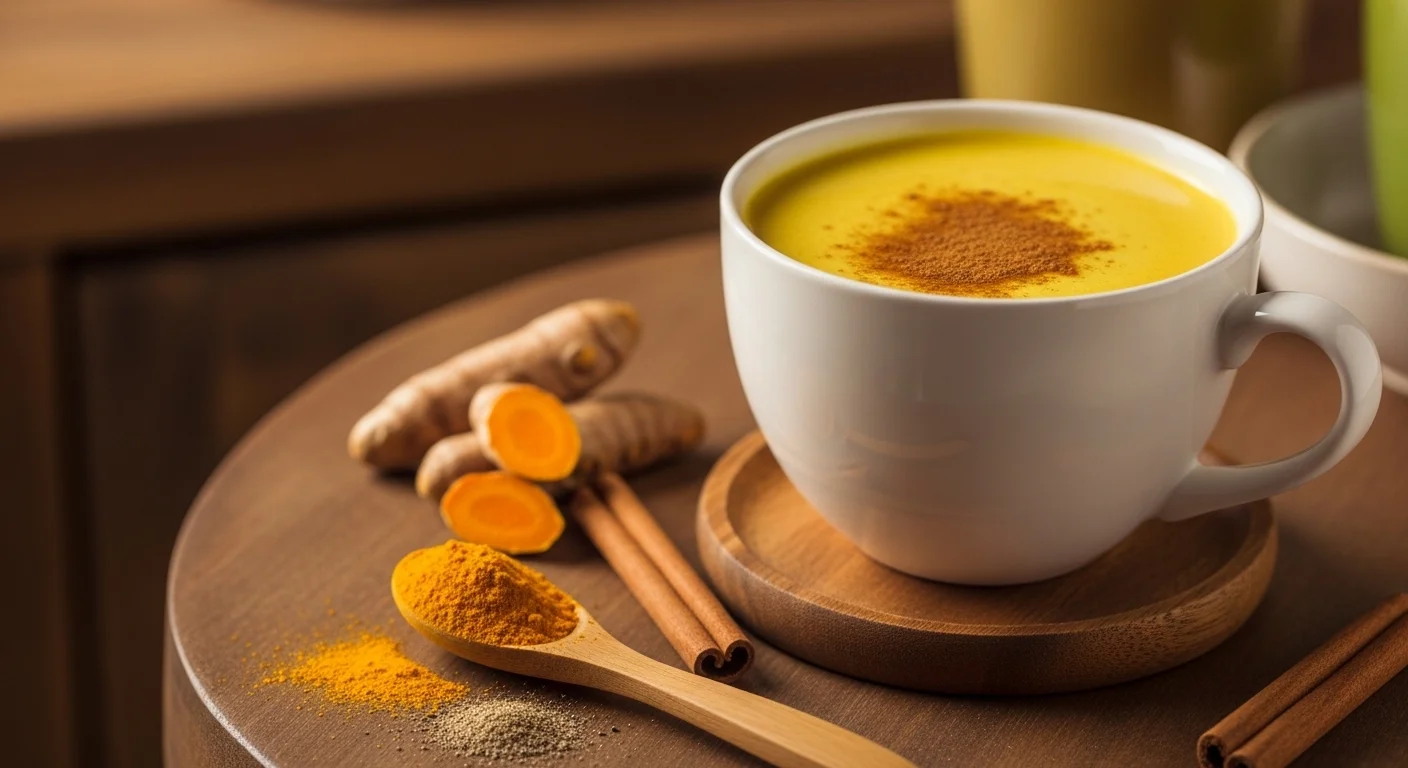
This one has been around for centuries.
Your grandparents probably drank it.
And science is now proving they were absolutely right.
Turmeric latte, also called golden milk, is one of the oldest natural tonics for brain health on the planet.
It is made by blending turmeric with warm milk and spices like cinnamon and black pepper.
Simple.
Warm.
Incredibly powerful.
The magic ingredient is curcumin.
Curcumin is the active compound in turmeric.
It is a strong anti-inflammatory agent.
It is a potent antioxidant.
And it does something remarkable for your brain.
It increases BDNF — Brain-Derived Neurotrophic Factor.
Think of BDNF as fertilizer for your brain cells.
It supports the growth of new neurons.
It strengthens existing neural connections.
It directly improves memory formation and learning ability.
What the research says:
- A UCLA study found that adults who took curcumin daily improved their memory performance by 28% over 18 months. That is not a small number.
- Curcumin also increases serotonin and dopamine levels in the brain. These are the neurotransmitters responsible for happiness, motivation, and emotional balance.
- It reduces brain inflammation, which is now considered a leading factor in depression, anxiety, and cognitive decline.
How to make it:
- Heat one cup of milk. Use dairy milk, almond milk, oat milk, or coconut milk — whatever you prefer.
- Add half a teaspoon of turmeric powder.
- Add a pinch of black pepper. This is crucial. Black pepper contains piperine, which increases curcumin absorption by up to 2,000%.
- Add a pinch of cinnamon for flavor and extra anti-inflammatory benefits.
- Stir well and drink it warm.
When to drink it:
- Before bed for deep, restorative sleep.
- Mid-afternoon when your brain starts to feel sluggish.
This simple daily ritual calms the mind, supports learning, and helps your brain recover from the stress of the day.
It is comfort in a cup.
And it is one of the most effective brain boosting drinks you will ever try.
2. 🫧 Kombucha — Gut Health Meets Brain Boost
Here is something most people do not realize.
Your gut and your brain are deeply connected.
Scientists call it the gut-brain axis.
When your gut is healthy, your mind works better.
When your gut is a mess, your brain suffers too.
That is where kombucha comes in.
Among the top brain boosting drinks, kombucha stands out because it targets this powerful gut-brain connection.
Kombucha is a fermented tea made with beneficial bacteria and yeast.
It has been consumed for thousands of years, originally in China and later across Asia and Europe.
It tastes slightly tangy, slightly fizzy, and surprisingly refreshing.
How it helps your brain:
- It improves the balance of gut bacteria. A healthy gut microbiome produces more serotonin — the “feel-good” neurotransmitter. Here is a mind-blowing fact: approximately 90% of your serotonin is produced in your gut, not your brain.
- The antioxidants from the tea base protect your brain cells against oxidative stress. Oxidative stress is one of the main causes of brain fog, mental fatigue, and long-term cognitive decline.
- It supports digestion and nutrient absorption, which means your brain gets more of the vitamins and minerals it needs to function optimally.
- It reduces systemic inflammation, which directly affects mood, focus, and mental energy.
How to drink it:
- Start with 100 ml per day. Your gut needs time to adjust to the probiotics.
- Gradually increase to one full glass daily.
- Avoid high-sugar commercial versions. Read the label. Some brands load their kombucha with added sugars, which defeats the purpose.
- Look for brands with less than 5 grams of sugar per serving.
- Or better yet, make your own at home.
What to expect:
Consistent daily use improves digestion, stabilizes mood, and clears mental fog.
You will not feel a dramatic instant effect.
But over weeks, you will notice that your thinking is cleaner.
Your mood is steadier.
Your focus lasts longer.
That is the power of fixing your gut to fix your brain.
3. 🍷 Red Wine — Moderation for Neuroprotection
Wait.
Alcohol as a brain boosting drink?
Before you raise an eyebrow, hear this out.
Red wine — when consumed responsibly and in very small amounts — can actually support long-term brain function.
The key word here is moderation.
We are not talking about drinking a whole bottle.
We are talking about a small glass, a few times a week.
The star compound in red wine is resveratrol.
Resveratrol is an antioxidant found in the skins of red grapes.
And it does some impressive things inside your brain.
Why it works:
- Resveratrol reduces inflammation in brain tissue. Chronic brain inflammation is linked to Alzheimer’s disease, Parkinson’s disease, and general cognitive decline.
- It protects neurons from oxidative stress, which damages brain cells over time.
- It improves blood flow to the brain, enhancing oxygen and nutrient delivery.
- Some studies suggest it may slow the progression of age-related cognitive decline.
How to enjoy it responsibly:
- Stick to one small glass (about 150 ml).
- Drink it only a few times per week, not daily.
- Choose dry, low-sugar varieties like Pinot Noir, Merlot, or Cabernet Sauvignon.
- Always pair it with a meal. Never drink on an empty stomach.
- If you do not drink alcohol, skip this entirely. You can get resveratrol from grapes, berries, and supplements instead.
Important note:
More is not better.
Excessive alcohol consumption damages brain cells, impairs memory, and increases the risk of dementia.
This recommendation is strictly about small, occasional amounts.
If you have any history of alcohol dependence, this option is not for you.
4. 🫐 Blueberry Smoothie — Antioxidant-Packed Memory Aid
If there is one fruit that deserves the title of “brain superfood,” it is the blueberry.
These tiny berries are absolute powerhouses for your mind.
A blueberry smoothie is one of the most delicious and effective brain boosting drinks you can make at home.
What makes blueberries special:
They are loaded with anthocyanins.
Anthocyanins are the compounds that give blueberries their deep blue-purple color.
But they do much more than look pretty.
- They cross the blood-brain barrier, which means they can directly act on brain cells.
- They protect neurons from oxidative damage.
- They improve communication between brain cells.
- They enhance memory formation and recall.
What the science says:
- A 2021 clinical trial showed that older adults who drank blueberry smoothies daily for 12 weeks had significantly better memory and learning scores compared to those who did not.
- Another study found that regular blueberry consumption delayed cognitive aging by up to 2.5 years.
- Blueberries also reduce neuroinflammation, which is linked to brain fog, depression, and dementia.
How to make the perfect brain-boosting blueberry smoothie:
- Take one cup of fresh or frozen blueberries.
- Add half a cup of plain Greek yogurt for protein and probiotics.
- Add two tablespoons of oats for sustained energy and fiber.
- Add one cup of almond milk or regular milk.
- Blend until smooth.
When to drink it:
- As a breakfast replacement on busy mornings.
- As an afternoon pick-me-up when your brain starts fading.
The combination of antioxidants, protein, fiber, and complex carbs gives your brain steady fuel without the crash.
This is not just a tasty drink.
It is a cognitive upgrade in a glass.
5. ☕ Black Coffee — The Classic Cognitive Kickstart
Let’s be honest.
Millions of people around the world already rely on coffee to wake up their brains.
And for good reason.
Black coffee remains one of the simplest, most widely available brain boosting drinks on the planet.
How it works:
Caffeine blocks a neurotransmitter called adenosine.
Adenosine makes you feel sleepy and sluggish.
When caffeine blocks it, you feel more awake, alert, and focused.
But that is not all coffee does.
- It increases dopamine and norepinephrine, which improve mood, reaction time, and general cognitive function.
- It enhances short-term memory and concentration.
- It contains antioxidants that protect brain cells from damage.
What the science says:
- Moderate coffee drinkers have a 30% lower risk of developing Parkinson’s disease.
- Regular consumption is linked to a reduced risk of Alzheimer’s disease.
- Coffee drinkers consistently show faster reaction times and better sustained attention in cognitive tests.
How to drink it right:
- Stick to 2 to 4 cups per day. That is the sweet spot for most people.
- Drink it black. No sugar. No flavored syrups. No whipped cream.
- Consume it before noon if possible. Caffeine has a half-life of about 5 hours, so drinking it late in the day can mess with your sleep.
- Avoid it on an empty stomach if you have a sensitive gut.
One important warning:
Too much coffee backfires.
Excessive caffeine causes anxiety, jitters, racing heart, and poor sleep.
And poor sleep is one of the worst things for your brain.
So enjoy coffee, but respect the limits.
6. 🥬 Green Smoothies — Nutrient-Dense Brain Fuel
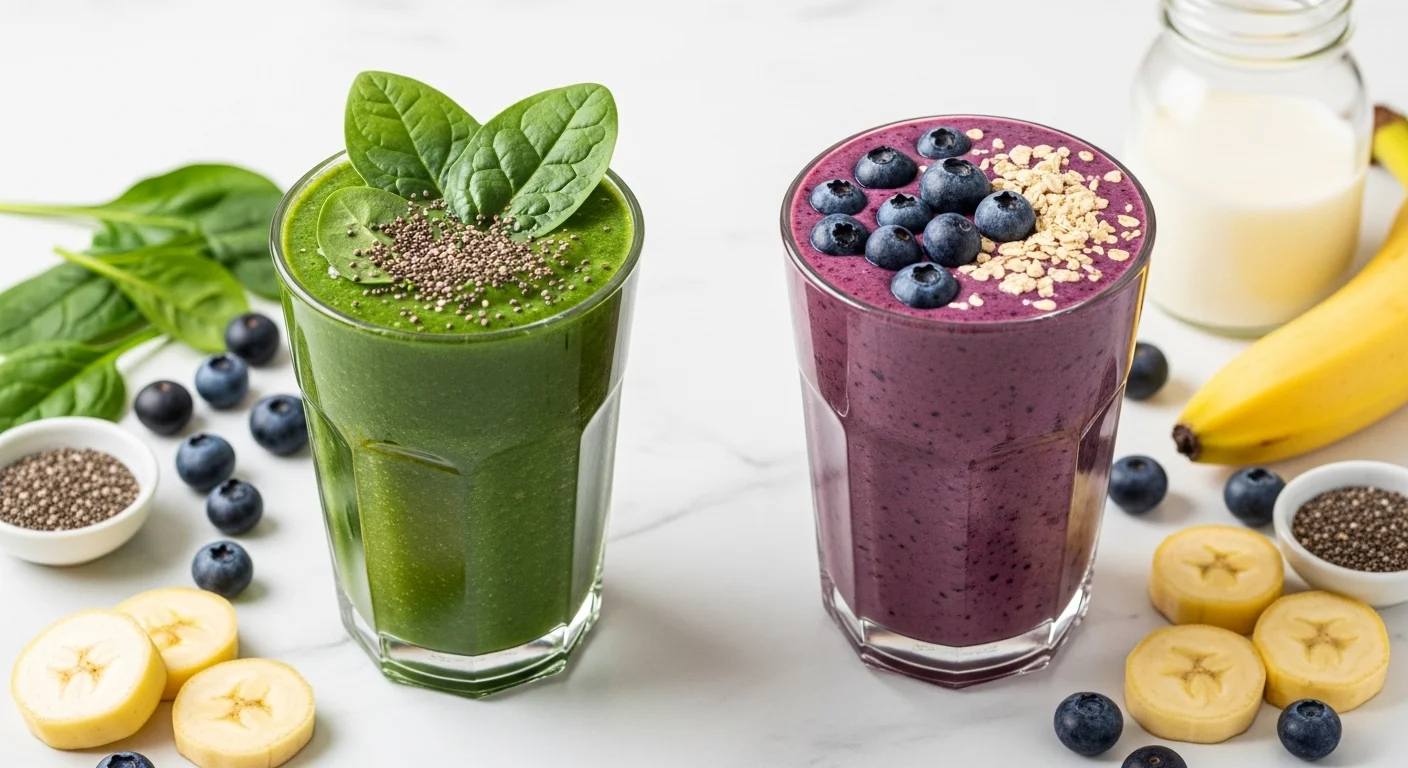
If your brain were a car, green smoothies would be premium fuel.
Green smoothies are one of the easiest, most nutrient-rich brain boosting drinks you can make.
They are loaded with vitamins, minerals, and compounds that your brain desperately needs.
Key brain-boosting nutrients in green smoothies:
- Folate from spinach and kale. Folate is essential for neurotransmitter production and mood regulation.
- Lutein from leafy greens. Lutein accumulates in the brain and improves processing speed and memory.
- Vitamin K from spinach and broccoli. Vitamin K supports brain cell survival and cognitive function.
- Magnesium from leafy greens and seeds. Magnesium calms the nervous system and improves sleep quality.
- Fiber from fruits and vegetables. Fiber feeds healthy gut bacteria, which in turn support brain function.
What the evidence shows:
- A study from Rush University found that people who consumed leafy greens daily had brains that functioned as if they were up to 11 years younger than their actual age.
- That is not a typo. Eleven years younger. Just from eating greens every day.
Simple green smoothie recipe:
- One large handful of fresh spinach (you will not even taste it).
- One ripe banana for natural sweetness.
- One tablespoon of chia seeds for omega-3 fatty acids and fiber.
- One cup of almond milk or any milk of your choice.
- Optional: a tablespoon of honey or a few frozen berries for extra flavor.
- Blend everything until smooth.
When to drink it:
- Perfect for breakfast to start your day with brain-friendly nutrition.
- Great as a midday energy boost instead of reaching for junk food.
Green smoothies are the easiest way to flood your brain with the nutrients it craves.
One glass.
Five minutes to make.
Eleven years of brain protection.
That is a deal you cannot refuse.
7. 🍵 Green Tea — Calm Focus in Every Sip
Green tea is the quiet genius of brain boosting drinks.
It does not scream for attention like coffee.
It does not give you a jolt followed by a crash.
Instead, it gives you something far more valuable.
Calm, sustained, crystal-clear focus.
The secret: caffeine plus L-theanine
Green tea contains caffeine, but in smaller amounts than coffee.
What makes it truly special is L-theanine, an amino acid found almost exclusively in tea leaves.
Here is what happens when caffeine and L-theanine work together:
- Caffeine wakes you up and improves alertness.
- L-theanine calms your nervous system and prevents the jitters.
- Together, they create a state of relaxed concentration — the perfect mental zone for deep work, studying, or creative thinking.
Additional brain benefits:
- L-theanine promotes alpha brain waves. These are the brain waves associated with calm focus, creativity, and a meditative state of mind.
- Green tea contains EGCG (epigallocatechin gallate), a powerful antioxidant that protects brain cells from aging and oxidative stress.
- Regular green tea consumption is linked to lower rates of cognitive decline and a reduced risk of dementia.
- It also supports neuroplasticity — your brain’s ability to form new connections and learn new things.
How to drink it:
- Brew one to two cups daily.
- Drink it in the morning or early afternoon.
- Do not add sugar. A tiny bit of honey is fine if needed.
- Best time: 30 minutes before starting deep, focused work.
Pro tip:
If you want maximum L-theanine, try matcha.
Matcha is powdered green tea.
You consume the entire leaf, so you get a much higher concentration of L-theanine and antioxidants.
It is like green tea on steroids — in the best possible way.
8. 🔴 Beetroot Juice — Oxygen Boost for Decision-Making
This one might surprise you.
Beetroot juice is not something most people associate with brain health.
But science tells a different story.
Beetroot juice is a natural, powerful brain boosting drink that works by increasing nitric oxide levels in your blood.
Why nitric oxide matters for your brain:
Nitric oxide is a molecule that relaxes and widens your blood vessels.
When your blood vessels are wider, more blood flows to your brain.
More blood means more oxygen and nutrients reaching your neurons.
And when your brain gets more oxygen, it works faster, sharper, and more efficiently.
What the research shows:
- A study from Wake Forest University found that beetroot juice enhanced brain connectivity and improved cognitive function in older adults.
- The improved blood flow was especially noticeable in the frontal lobe, which controls decision-making, planning, and problem-solving.
- Other studies show beetroot juice can improve reaction time and reduce mental fatigue during challenging tasks.
How to drink it:
- Mix fresh beetroot juice with apple or carrot juice to improve the taste. Raw beet juice can be quite earthy on its own.
- Start with half a glass daily and increase to a full glass as your body adjusts.
- Drink it in the morning for an all-day brain boost.
- It is also excellent before a workout or before an important meeting or exam.
Quick warning:
Beetroot juice can temporarily turn your urine pink or reddish.
Do not panic. That is completely normal. It is harmless.
Think of beetroot juice as opening the highways inside your brain.
Traffic flows better.
Information moves faster.
Decisions come easier.
9. 🌿 Herbal Tea — Natural Nootropics for Memory
Not everyone wants caffeine.
And that is perfectly okay.
Herbal teas are caffeine-free brain boosting drinks that support different aspects of cognitive function.
They have been used in traditional medicine for centuries.
And modern science is finally catching up to what ancient healers already knew.
Top herbal teas for brain health:
Sage Tea — The Memory Booster
- Sage has been shown to improve recall and memory retention.
- A study published in Pharmacology Biochemistry and Behavior found that participants who consumed sage performed significantly better on memory tests.
- It also has anti-inflammatory and antioxidant properties that protect brain cells.
Ginseng Tea — The Mental Endurance Builder
- Ginseng increases mental stamina and sustained attention.
- It helps your brain perform better under stress and fatigue.
- Studies show it can improve working memory and reaction time.
Ashwagandha Tea — The Stress Crusher
- Ashwagandha is an adaptogen, which means it helps your body manage stress more effectively.
- It reduces cortisol levels — the stress hormone that damages brain cells when chronically elevated.
- Lower cortisol means clearer thinking, better mood, and improved sleep.
Peppermint Tea — The Alertness Lifter
- The aroma alone has been shown to improve alertness and memory.
- It is refreshing, calming, and perfect for an afternoon brain reset.
Chamomile Tea — The Calm Thinker’s Choice
- Chamomile reduces anxiety and promotes deep, restorative sleep.
- Better sleep equals a better-functioning brain the next day.
How to use herbal teas:
- Switch them based on your needs. Need to study? Drink sage tea. Feeling stressed? Reach for ashwagandha. Need to sleep better? Chamomile is your friend.
- Brew them fresh whenever possible.
- Drink one to two cups daily.
- Avoid adding sugar. A small amount of raw honey is fine.
Herbal teas are gentle, effective, and completely natural.
They do not overstimulate.
They support.
They nourish.
They protect.
10. 🍊 Orange Juice — Vitamin C for Cognitive Agility
Sometimes the simplest things are the most effective.
A glass of fresh orange juice is proof of that.
Orange juice is a refreshing, natural brain boosting drink packed with vitamin C — one of the most important nutrients for brain health.
Why vitamin C matters for your brain:
- Vitamin C is a powerful antioxidant that protects brain cells from free radical damage.
- It is essential for the production of neurotransmitters like dopamine, norepinephrine, and serotonin.
- It supports the integrity of blood vessels in the brain, ensuring proper blood flow.
- It helps your brain manage stress by reducing cortisol levels.
What the science says:
- A study from the University of Reading in the UK found that adults who drank orange juice daily for 8 weeks showed significant improvements in focus, reaction time, and overall cognitive performance.
- Vitamin C deficiency is linked to impaired cognitive function, poor mood, and increased risk of neurodegenerative diseases.
How to drink it:
- Use fresh-squeezed orange juice whenever possible. The nutritional value is far superior to packaged versions.
- If buying store-bought, choose 100% pure orange juice with no added sugar.
- Drink one glass daily, preferably in the morning with breakfast.
- Do not overdo it. Orange juice still contains natural sugars, so one glass is enough.
Quick alternative:
If you do not like orange juice, eat a whole orange instead.
You get the same vitamin C plus the added benefit of fiber.
11. 🍄 Lion’s Mane Mushroom Drink — Fungi for Brain Growth
This one is the most exciting brain boosting drink on the entire list.
Lion’s Mane mushroom is a medicinal mushroom that looks like a fluffy white pom-pom.
It has been used in traditional Chinese and Japanese medicine for centuries.
And modern neuroscience is now discovering why.
Lion’s Mane is one of the only known natural substances that supports neurogenesis — the growth of new brain cells.
Yes, you read that correctly.
It can actually help your brain grow new neurons.
How it works:
Lion’s Mane stimulates the production of NGF — Nerve Growth Factor.
NGF is a protein that is essential for the survival, maintenance, and regeneration of neurons.
More NGF means:
- Better neural connections.
- Faster learning and information processing.
- Improved memory consolidation.
- Enhanced brain cell repair after damage.
What the research shows:
- A 16-week Japanese clinical trial found that participants who took Lion’s Mane consistently showed significant improvements in cognitive function compared to the placebo group.
- When they stopped taking it, the cognitive improvements gradually declined — suggesting that consistent use is key.
- Other studies show Lion’s Mane may help reduce symptoms of anxiety and depression by supporting nerve growth and reducing inflammation.
How to use it:
- Add half a teaspoon of Lion’s Mane mushroom powder to your morning coffee, tea, or smoothie.
- You can also find it in capsule form if you prefer.
- Take it daily for best results. This is not a one-time fix. The benefits build over weeks and months of consistent use.
- Choose high-quality, organic Lion’s Mane powder from a reputable source.
What it tastes like:
Surprisingly mild.
Slightly earthy with a hint of sweetness.
Most people do not even notice it when mixed into coffee.
Lion’s Mane is like a construction crew for your brain.
It builds new pathways.
It repairs old damage.
It keeps your neural architecture strong and growing.
If you want to explore Lion’s Mane supplements and other natural brain health products, QuickDawa offers reliable information and resources to help you make the right choice.
12. 💧 Water — The Essential Brain Hydrator
We saved the most important one for last.
No fancy ingredients.
No exotic compounds.
Just plain, simple, life-giving water.
Water is the most fundamental and most overlooked brain boosting drink in existence.
Your brain is approximately 75% water.
Every single chemical reaction in your brain requires water.
Every neural signal depends on proper hydration.
When you do not drink enough water, your brain literally cannot function properly.
What dehydration does to your brain:
- Even a 2% drop in hydration is enough to slow memory, reduce focus, and impair mood regulation.
- Mild dehydration causes headaches, brain fog, and difficulty concentrating.
- Chronic dehydration is linked to increased anxiety, irritability, and mental fatigue.
- Your brain cannot store water. It needs a constant, steady supply throughout the day.
The research is clear:
- Multiple studies confirm that proper hydration improves working memory, attention, and processing speed.
- Dehydrated students consistently perform worse on exams than hydrated students.
- Even athletes show significant drops in decision-making ability when dehydrated.
How much to drink:
- Aim for at least 8 glasses of water per day. That is roughly 2 liters.
- Space your intake throughout the day. Do not chug 2 liters at once. Sip consistently.
- Drink a full glass of water first thing in the morning before anything else. Your brain is dehydrated after hours of sleep.
- Carry a water bottle with you everywhere. If it is in front of you, you will drink more.
- If plain water bores you, add sliced lemon, cucumber, or mint for a refreshing twist.
Signs you are not drinking enough:
- Dark yellow urine.
- Frequent headaches.
- Feeling tired for no obvious reason.
- Difficulty concentrating.
- Dry mouth and lips.
Water is free.
Water is available everywhere.
And water is the foundation upon which every other brain boosting drink works.
Without proper hydration, none of the other drinks on this list will reach their full potential.
Drink your water first.
Everything else is a bonus.
🧩 How to Integrate Brain Boosting Drinks Into Your Daily Routine
You do not need to drink all twelve every day.
That would be overwhelming and unnecessary.
The smartest approach is to pick two or three that fit naturally into your lifestyle.
Then stay consistent.
Here is a simple sample plan to get you started:
Morning:
- Start with a full glass of water as soon as you wake up.
- Follow it with green tea or black coffee for calm focus or quick alertness.
Mid-Morning:
- Sip on a second glass of water.
- If you need extra brain fuel, have a small glass of orange juice with breakfast.
Afternoon:
- Blend a quick blueberry smoothie or green smoothie for sustained energy and mental clarity.
- Or drink a glass of beetroot juice before an important meeting or study session.
Evening:
- Wind down with a warm turmeric latte to calm your mind and reduce inflammation.
- Or brew a cup of herbal tea — chamomile for sleep, sage for memory, ashwagandha for stress relief.
Throughout the day:
- Keep water flowing. Steady sips, not occasional gulps.
Weekly additions:
- Enjoy a small glass of kombucha a few times a week for gut-brain health.
- Add Lion’s Mane mushroom powder to your morning coffee or tea daily for long-term brain growth.
- Have a small glass of red wine once or twice a week if you choose (completely optional).
Small, consistent choices build lasting focus, stronger memory, and clearer thinking.
You will not notice dramatic changes overnight.
But within a few weeks, the difference will be undeniable.
💡 The Bottom Line
Brain health is not something that happens by accident.
It depends on the daily choices you make.
Every single day.
These 12 brain boosting drinks are not gimmicks.
They are backed by science.
They reduce inflammation.
They improve neurotransmitter function.
They protect against long-term cognitive decline.
And they are simple enough for anyone to start today.
You do not need to overhaul your entire life.
Start simple.
Stay hydrated.
Add one or two brain boosting drinks to your daily routine.
Stay consistent for a few weeks.
That is it.
Within weeks, you will notice sharper focus.
Stronger memory.
Steadier energy.
Better mood.
Clearer thinking.
Your brain is the most powerful organ in your body.
Treat it well.
Fuel it properly.
And it will repay you with a lifetime of clear, brilliant thinking.
For more practical wellness insights, natural health guides, and science-backed tips, visit QuickDawa — your trusted resource for natural health solutions that actually work.
⚠️ Medical Disclaimer
The information provided in this article is for educational and informational purposes only. It is not intended as a substitute for professional medical advice, diagnosis, or treatment. Always consult your physician, dietitian, or qualified healthcare provider before starting any new diet, supplement, or wellness regimen — especially if you have pre-existing medical conditions, food allergies, or are currently taking medications. Individual results may vary. The content on QuickDawa (quickdawa.com) regarding health information is based on data collected from public domains. QuickDawa does not claim to diagnose, treat, cure, or prevent any disease. Readers are advised to use the information provided at their own discretion and risk. We do not assume any responsibility for any consequences arising from the use of the information on this blog. Always seek the guidance of a qualified medical professional for personalized advice. Thank you.
📚 References & Further Reading
- Harvard Health Publishing — Foods Linked to Better Brainpower
https://www.health.harvard.edu/mind-and-mood/foods-linked-to-better-brainpower - National Library of Medicine (PubMed) — Curcumin Improves Memory and Mood in Non-Demented Adults
https://pubmed.ncbi.nlm.nih.gov/29246725/ - Mayo Clinic — Water: How Much Should You Drink Every Day?
https://www.mayoclinic.org/healthy-lifestyle/nutrition-and-healthy-eating/in-depth/water/art-20044256 - National Institutes of Health (NIH) — Dietary Nitrate and Brain Health
https://www.ncbi.nlm.nih.gov/pmc/articles/PMC6147587/ - Alzheimer’s Research UK — Mediterranean Diet and Brain Health
https://www.alzheimersresearchuk.org/blog/mediterranean-diet-and-dementia/