
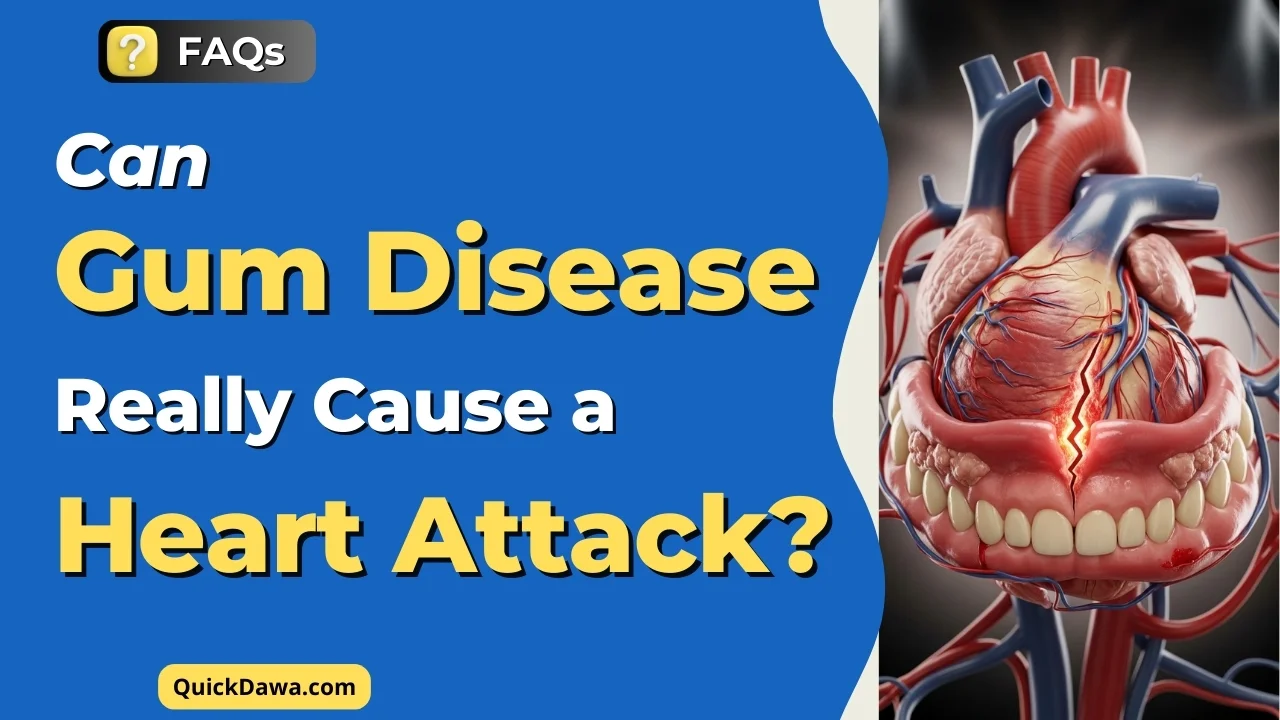
Gum Disease and Heart Attacks – FAQs
Frequently Asked Questions (FAQs)
Can gum disease really cause a heart attack?
Gum disease doesn’t directly cause heart attacks, but it significantly increases your risk.
The bacteria from infected gums enter your bloodstream and travel to your heart.
There, they trigger inflammation and contribute to plaque buildup in your arteries.
Research shows that people with moderate to severe periodontitis have a 20-28% higher risk of heart attack compared to those with healthy gums.
If you have other risk factors like high blood pressure or diabetes, this risk is even higher.
What are the first signs of gum disease I should watch for?
The earliest sign is usually bleeding gums when you brush or floss.
Many people think this is normal, but it’s not.
Other early signs include bad breath that doesn’t go away, red or swollen gums, and tender gums.
You might also notice a bad taste in your mouth or see that your gums look darker red than normal.
The tricky part is that early gum disease often doesn’t hurt, so people ignore these signs.
By the time you feel pain, the disease may already be advanced.
How does gum disease affect your heart exactly?
When you have gum disease, bacteria from your mouth enter your bloodstream through tiny openings in inflamed gum tissue.
These bacteria can attach to the walls of your blood vessels and heart.
Your immune system responds by creating inflammation throughout your body, not just in your mouth.
This chronic inflammation damages blood vessel walls and speeds up the formation of arterial plaques.
The bacteria can also make your blood more likely to form clots, increasing stroke and heart attack risk.
Scientists have even found oral bacteria DNA inside the plaque removed from blocked arteries.
Can treating gum disease reduce my risk of heart problems?
Yes, research shows that treating gum disease can improve several cardiovascular markers.
Professional periodontal treatment (like deep cleaning) has been shown to reduce C-reactive protein (CRP), a key inflammation marker linked to heart disease.
Some studies found that gum disease treatment improved blood vessel function and even lowered blood pressure in some patients.
While more long-term research is needed, current evidence suggests that keeping your gums healthy is a worthwhile strategy for protecting your heart.
Think of it as one more tool in your heart health toolkit, along with exercise, healthy eating, and not smoking.
How often should I see a dentist if I have gum disease?
If you’ve been diagnosed with gum disease, you typically need more frequent cleanings than the standard twice-a-year schedule.
Most periodontists recommend professional cleanings every 3 to 4 months for patients with active gum disease.
This more frequent schedule helps keep bacteria under control and gives your gums a better chance to heal.
Once your gum disease is under control and stable, your dentist might move you back to cleanings every 6 months.
However, if you also have heart disease or diabetes, staying on the 3-4 month schedule long-term is often recommended.
Is gum disease genetic? Am I doomed if my parents had it?
Genetics do play a role in gum disease susceptibility.
Some people have genetic variations that make them more prone to severe gum inflammation and faster bone loss.
If both your parents had gum disease, you’re at higher risk.
However, genetics aren’t destiny.
With excellent oral hygiene, regular professional cleanings, and a healthy lifestyle, you can prevent or control gum disease even if you’re genetically predisposed.
Think of it this way: genetics might load the gun, but lifestyle pulls the trigger.
Focus on what you can control—brushing, flossing, not smoking, eating well, and seeing your dentist regularly.
What’s the difference between gingivitis and periodontitis?
Gingivitis is the early, reversible stage of gum disease.
Your gums are inflamed and may bleed, but there’s no permanent damage yet.
With improved oral hygiene and professional cleaning, gingivitis can be completely reversed.
Periodontitis is the advanced stage where the infection has spread below the gum line.
It destroys the bone and connective tissue that hold your teeth in place.
This damage is permanent—you can stop it from getting worse, but you can’t regrow lost bone without surgery.
The key is catching it at the gingivitis stage before it progresses.
Do I need antibiotics for gum disease?
Not everyone with gum disease needs antibiotics.
For mild to moderate cases, professional cleaning combined with good home care is usually enough.
Your dentist might prescribe antibiotics if you have severe infection, deep gum pockets, or if cleaning alone isn’t controlling the bacteria.
Antibiotics for gum disease can be pills you swallow or gels placed directly in gum pockets.
Common ones include doxycycline, metronidazole, and amoxicillin.
Important: antibiotics are always used alongside professional cleaning, never as a replacement for it.
Using antibiotics alone won’t cure gum disease.
Can gum disease come back after treatment?
Yes, gum disease can return if you don’t maintain good oral hygiene.
Even after successful treatment, the bacteria that cause gum disease are always present in your mouth.
Without consistent brushing, flossing, and regular professional cleanings, they can rebuild and reinfect your gums.
This is why periodontal maintenance cleanings (every 3-4 months) are so important.
Think of gum disease like a chronic condition that requires ongoing management, similar to high blood pressure or diabetes.
You can control it with proper care, but you can’t cure it permanently and then forget about it.
Are electric toothbrushes better for preventing gum disease?
Yes, research shows that electric toothbrushes are generally more effective than manual brushing.
A review of multiple studies found that electric toothbrushes reduced gingivitis by 11% more than manual brushing after three months.
They also removed 21% more plaque.
The reason is that electric brushes make thousands more brush strokes per minute than you can do manually.
Many also have timers to ensure you brush for the full two minutes.
However, a manual brush used correctly is still effective.
The most important factors are brushing twice daily for two minutes and using proper technique.