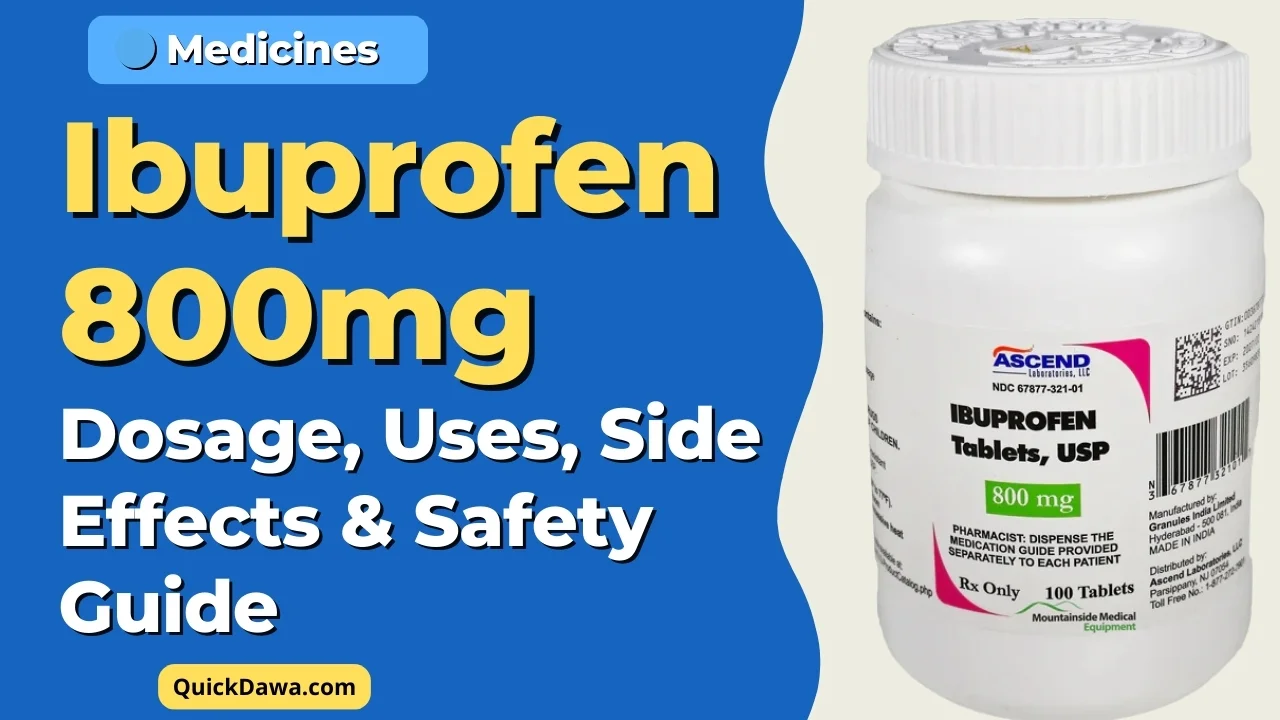
Ibuprofen 800mg – Dosage, Uses, Side Effects & Safety Guide
Let’s paint a quick picture.
You wake up one morning, and your lower back is absolutely killing you.
Or maybe you just had a dental procedure, and the throbbing pain won’t let you think straight.
Perhaps your doctor handed you a prescription for Ibuprofen 800mg, and you went home wondering , “Is this thing actually safe?
What exactly does it do? And why is the dose so much higher than the stuff I grab off the shelf at the pharmacy?”
You’re not alone.
Ibuprofen is one of the most widely used pain-relieving medications on the planet.
You’ve probably taken the over-the-counter 200 mg version dozens of times.
But when your doctor prescribes the 800 mg strength, things suddenly feel a bit more serious , and honestly, you deserve to know exactly what you’re putting into your body.
That’s exactly why this guide exists.
At QuickDawa, we’re all about making medicine easy to understand , so let’s break down everything you need to know about Ibuprofen 800 mg in simple, clear language.
No confusing medical jargon, no scare tactics , just honest, helpful information from one human to another.
💊 What Is Ibuprofen 800mg?
Ibuprofen 800 mg is a prescription-strength nonsteroidal anti-inflammatory drug — or NSAID, for short.
You’ve probably already met its younger sibling: the 200 mg tablet you can grab at any drugstore under brand names like Advil or Motrin.
The 800 mg version, though, is the heavy lifter. It’s the same active ingredient, just at a much stronger dose that requires a doctor’s prescription.
It belongs to the propionic acid class of NSAIDs, and it’s manufactured by multiple pharmaceutical companies worldwide.
Some common brand names for prescription-strength ibuprofen include Motrin, Brufen, and Caldolor (the IV form).
Ibuprofen 800 mg is primarily used to manage moderate to severe pain, inflammation, and fever in conditions where lower doses simply aren’t doing the job.
It’s trusted by doctors globally and has been around for decades — first approved by the FDA way back in 1974.
✅ Uses of Ibuprofen 800 mg
Now, let’s talk about the why — why would your doctor prescribe the 800 mg dose instead of just telling you to pop a couple of regular Advil tablets? The answer comes down to intensity and duration of your symptoms.
🦴 Pain Relief (Mild to Severe)
This is the bread and butter of ibuprofen. Whether it’s a pounding headache, post-surgical pain, a sore tooth after a root canal, or general body aches , Ibuprofen 800 mg for pain is one of the most commonly prescribed solutions.
At this dose, it targets pain at a deeper, more sustained level than the OTC version.
Think of it like this: if OTC ibuprofen is a garden hose putting out a small fire, the 800 mg prescription dose is a fire truck showing up for a bigger blaze.
🔥 Inflammation Reduction
Ibuprofen isn’t just a painkiller — it’s an anti-inflammatory. That means it actively works to reduce swelling, redness, and heat in your tissues. This is why it’s a go-to for conditions like:
- Rheumatoid arthritis (autoimmune joint inflammation)
- Osteoarthritis (wear-and-tear joint damage)
- Tendonitis (inflamed tendons)
- Bursitis (inflamed fluid sacs around joints)
🩸 Menstrual Cramp Relief (Dysmenorrhea)
Ladies, if you’ve ever had period cramps that made you want to curl up into a ball, you know how debilitating they can be.
Ibuprofen 800 mg is frequently prescribed for primary dysmenorrhea , severe menstrual cramps.
It works by reducing the production of prostaglandins, which are the hormone-like chemicals that cause your uterus to contract painfully during your period.
🌡️ Fever Reduction
While doctors don’t usually reach for the 800 mg dose just for fever, ibuprofen does have antipyretic (fever-reducing) properties.
In situations where fever accompanies significant pain or inflammation, the prescription dose covers both bases.
🏥 Off-Label Uses
Some doctors may prescribe Ibuprofen 800 mg off-label for:
- Gout flare-ups — to reduce acute inflammation and pain
- Migraine management — especially when combined with other treatments
- Post-operative dental pain — a very common use after extractions or oral surgery
- Pericarditis — inflammation of the lining around the heart (under close supervision)
Off-label doesn’t mean unsafe — it just means the FDA hasn’t specifically approved it for that particular condition, even though clinical evidence and doctor experience support its use.
⚙️ How Does It Work in the Body?
Here’s the simple version: your body produces enzymes called COX-1 and COX-2 (cyclooxygenase). These enzymes help create prostaglandins — chemicals that trigger pain, inflammation, and fever.
Ibuprofen blocks these COX enzymes, which means fewer prostaglandins are produced. Less prostaglandins = less pain, less swelling, and lower fever.
It’s like turning down the volume on your body’s pain alarm system.
⚠️ Side Effects of Ibuprofen 800 mg
Alright, let’s talk about the flip side. Every medication — even the ones that have been around for decades , comes with potential side effects.
The good news? Most people tolerate ibuprofen just fine, especially when taken correctly and for short periods. But you should still know what to watch for.
Common Side Effects (Most People May Experience)
These are generally mild and often go away as your body adjusts:
- Upset stomach or nausea — This is the most common complaint. Ibuprofen can irritate your stomach lining, especially if taken on an empty stomach.
- Heartburn or indigestion — That burning feeling in your chest? Very common with NSAIDs.
- Dizziness or lightheadedness — Some people feel a bit woozy, especially at the beginning.
- Headache — Ironic, right? A pain reliever that can cause headaches. It’s usually mild and temporary.
- Bloating or gas — Your digestive system may not love ibuprofen as much as you do.
- Mild diarrhea or constipation — It can go either way for some folks.
Less Common Side Effects
These don’t happen to most people but are worth noting:
- Ringing in the ears (tinnitus)
- Blurred vision
- Fluid retention or mild swelling in the hands, ankles, or feet
- Skin rash or itching
- Increased blood pressure — particularly in people who already have hypertension
- Nervousness or anxiety
🚑 Rare but Serious Side Effects — Seek Medical Help Immediately
Stop taking ibuprofen and get medical attention right away if you experience any of the following:
- Black, tarry, or bloody stools — could indicate gastrointestinal bleeding
- Vomiting blood or material that looks like coffee grounds
- Severe stomach pain that doesn’t go away
- Chest pain, shortness of breath, or sudden weakness on one side of the body — signs of a heart attack or stroke
- Yellowing of the skin or eyes (jaundice) — possible liver damage
- Unexplained weight gain and swelling — could signal kidney problems
- Severe allergic reaction — hives, difficulty breathing, swelling of the face, lips, tongue, or throat
- Blistering or peeling skin — a sign of a rare but severe skin reaction (Stevens-Johnson Syndrome)
💬 Side effects don’t happen to everyone. Many people use Ibuprofen 800 mg with no issues at all. But it’s important to be aware so you can act quickly if something feels off. When in doubt, call your doctor.
🚨 Warnings & Precautions
This section is critically important, so please read it carefully. Ibuprofen 800 mg is generally a safe medication when used properly, but there are certain situations and certain people who need to exercise extra caution — or avoid it altogether.
⛔ Who Should NOT Take Ibuprofen 800 mg?
- People allergic to ibuprofen or any other NSAID (aspirin, naproxen, etc.). If you’ve ever had hives, asthma attacks, or facial swelling after taking an NSAID, do NOT take this drug.
- Anyone about to undergo or who has recently had coronary artery bypass graft surgery (CABG). The FDA specifically warns against NSAID use in this scenario.
- Individuals with active stomach ulcers or gastrointestinal bleeding.
- People with severe kidney or liver disease — ibuprofen can worsen these conditions.
🤰 Pregnancy & Breastfeeding
- Pregnancy: Ibuprofen should be avoided during the third trimester (after 30 weeks). It can cause premature closure of a blood vessel in the baby’s heart called the ductus arteriosus. During the first and second trimesters, it should only be used if the benefits clearly outweigh the risks — and only under your doctor’s guidance.
- Breastfeeding: Small amounts of ibuprofen pass into breast milk, but it’s generally considered compatible with breastfeeding at standard doses. Still, talk to your doctor before taking the 800 mg strength while nursing.
🫀 Cardiovascular Warning — FDA Black Box Warning
⚠️ This is serious. The FDA has placed a Black Box Warning on all NSAIDs, including ibuprofen:
“NSAIDs may increase the risk of serious cardiovascular thrombotic events, including heart attack and stroke, which can be fatal. This risk may increase with duration of use and in patients with existing cardiovascular disease or risk factors.”
This means: if you have a history of heart disease, high blood pressure, high cholesterol, or diabetes, talk to your doctor very carefully before using Ibuprofen 800 mg, especially for extended periods.
🫁 Gastrointestinal Warning — FDA Black Box Warning
The second Black Box Warning concerns your gut:
“NSAIDs cause an increased risk of serious gastrointestinal adverse events including bleeding, ulceration, and perforation of the stomach or intestines, which can be fatal.”
Elderly patients are at the highest risk. The risk also increases if you’re taking blood thinners, corticosteroids, or if you consume alcohol regularly while on ibuprofen.
👴 Age-Related Precautions
- Elderly patients are more susceptible to stomach bleeding, kidney problems, and cardiovascular events. Doctors typically prescribe the lowest effective dose for the shortest time possible.
- Children: Ibuprofen 800 mg is not recommended for children unless specifically prescribed by a pediatrician. Over-the-counter pediatric formulations are available for kids.
🍺 Alcohol Warning
Mixing alcohol and ibuprofen increases your risk of stomach bleeding significantly. If you drink three or more alcoholic beverages daily, talk to your doctor before taking this medication.
🚗 Driving & Machinery
Ibuprofen can cause dizziness and drowsiness in some people. Until you know how it affects you, be cautious about driving or operating heavy machinery.
🔄 Drug Interactions
Major Interactions
- Aspirin (low-dose) — Can reduce aspirin’s heart-protective effects with regular combined use; timing of doses matters if you’re on daily aspirin for heart health
- Warfarin (Coumadin) / Blood Thinners — Increases the risk of dangerous bleeding, particularly in the stomach and intestines
- Methotrexate — Can raise methotrexate levels in the blood, increasing the risk of toxicity
- Lithium — Can elevate lithium levels, potentially leading to lithium toxicity
Moderate Interactions
- ACE Inhibitors / ARBs (blood pressure meds) — Can reduce the effectiveness of these medications and worsen kidney function
- Diuretics (water pills) — Can decrease diuretic effectiveness and increase the risk of kidney damage
- SSRIs (antidepressants like sertraline, fluoxetine) — Combined use raises the risk of gastrointestinal bleeding
- Corticosteroids (prednisone, etc.) — Increases the risk of stomach ulcers and bleeding
- Alcohol — Significantly raises the risk of stomach irritation and bleeding
Minor Interactions
- Ginkgo Biloba (herbal supplement) — May increase bleeding risk due to ginkgo’s blood-thinning properties
💡 Always tell your doctor or pharmacist about every medicine, supplement, or herbal product you’re currently taking before starting Ibuprofen 800 mg. Even something as harmless-sounding as a vitamin or herbal tea could interact in unexpected ways.
💉 Overdose / Missed Dose
🆘 Overdose — What to Watch For
Taking too much ibuprofen is a medical emergency. While an occasional extra tablet likely won’t cause disaster, a significant overdose can be dangerous — even life-threatening.
Signs and symptoms of Ibuprofen 800 mg overdose may include:
- Severe nausea and vomiting
- Stomach pain
- Drowsiness or extreme fatigue
- Headache
- Blurred vision or ringing in the ears
- Slow or shallow breathing
- Seizures (in severe cases)
- Loss of consciousness
What to do if you suspect an overdose:
- Call Poison Control immediately: 📞 1-800-222-1222 (in the US)
- Or call 911 / your local emergency number
- Do NOT try to make the person vomit unless instructed by a medical professional
- If possible, tell the emergency team how many tablets were taken and when
The key message here? Never take more than your prescribed dose, and keep ibuprofen out of reach of children.
⏰ Missed Dose — What to Do
Life gets busy, and forgetting a dose happens. Here’s what to do:
- If you remember soon after the missed time: Take the dose as soon as you remember.
- If it’s almost time for your next dose: Skip the missed dose entirely. Just take your next dose at the regular time.
- Do NOT double up. Taking two doses at once to “catch up” significantly increases your risk of side effects — especially stomach issues.
If you’re consistently forgetting doses, try setting a phone alarm or keeping your medication next to something you use daily (like your toothbrush or coffee mug).
📊 Dosage Guide
Here’s a general overview of how Ibuprofen 800 mg is typically dosed. Remember — your doctor may adjust your dose based on your specific condition, body weight, age, and overall health.
👨⚕️ Adults (General Pain & Inflammation)
- Typical dose: 400 mg to 800 mg, taken every 6 to 8 hours as needed
- Maximum daily dose: 3,200 mg per day (that’s four 800 mg tablets)
- Most doctors recommend taking the lowest effective dose for the shortest period necessary to control symptoms
🧒 Children
- Ibuprofen 800 mg tablets are generally NOT designed for children. Pediatric dosing uses the lower-strength formulations (100 mg/5 mL suspension or chewable tablets) and is calculated based on the child’s weight.
- Always consult your pediatrician for proper dosing in children.
👴 Elderly Patients
- Doctors usually start with a lower dose and monitor closely for side effects — especially stomach bleeding, kidney function, and cardiovascular health.
💊 Available Forms
Ibuprofen is available in multiple forms:
- Tablets (200 mg, 400 mg, 600 mg, 800 mg)
- Capsules
- Oral suspension (liquid)
- Chewable tablets (for children)
- IV injection (Caldolor — used in hospital settings)
⚠️ This dosage information is for general awareness only. Always follow your doctor’s prescription or the instructions on your medicine packaging. Do not adjust your dose on your own.
🙋 Frequently Asked Questions (FAQ)
1. How much ibuprofen can I take?
Adults can take 200–400 mg per dose (OTC) or up to 800 mg per dose with a prescription — never exceed 3,200 mg per day.
2. How often can you take ibuprofen?
Every 6 to 8 hours as needed, but don’t exceed the maximum daily limit and always use the lowest effective dose.
3. How much ibuprofen can I take in one day?
The absolute maximum for adults is 3,200 mg per day (prescription-supervised); for OTC use, don’t exceed 1,200 mg per day unless directed by your doctor.
4. Is Advil ibuprofen?
Yes — Advil is simply a brand name for ibuprofen; they are the exact same medication.
5. Is ibuprofen a blood thinner?
No, ibuprofen is not a blood thinner, but it does temporarily reduce blood clotting by affecting platelets, which can increase bleeding risk.
6. How long does ibuprofen last?
The pain-relieving effects typically last 4 to 6 hours, with peak relief hitting around 1 to 2 hours after taking it.
7. Can you take Tylenol and ibuprofen together?
Yes, they work through different mechanisms and doctors often recommend alternating them for better pain relief — but always confirm with your doctor first.
8. Is Aleve ibuprofen?
No — Aleve is naproxen sodium, a different NSAID that lasts longer but is not the same drug as ibuprofen.
9. Can you take ibuprofen while pregnant?
Ibuprofen should be avoided especially after 20 weeks of pregnancy due to risks to the baby; always consult your OB-GYN before taking any NSAID while pregnant.
🏁 Conclusion — Your Health, Your Knowledge
Let’s bring it all home.
Ibuprofen 800 mg is a powerful, well-established, and widely trusted medication for managing pain, inflammation, and fever. When used responsibly — at the right dose, for the right duration, and under proper medical guidance — it can make a real difference in your quality of life. Whether you’re dealing with arthritis flare-ups, recovering from surgery, battling tough menstrual cramps, or managing a painful injury, this medication has helped millions of people get through the day with less suffering.
But like any tool, it works best when you understand how to use it properly. Know the side effects. Respect the warnings. Be honest with your doctor about your health history and what other medications you’re taking. And never hesitate to ask questions — there’s no such thing as a dumb question when it comes to your health.
At QuickDawa, we believe that understanding your medicine is just as important as taking it. Knowledge is the first step toward better health. If you found this guide helpful, share it with someone who needs it — and explore more medicine guides on QuickDawa.com for trusted, easy-to-understand health information.
💬 Got a question about Ibuprofen 800 mg that we didn’t cover? Drop it in the comments below or reach out to us through our Contact Page. We’d love to hear from you!
⚠️ Medical Disclaimer
The information provided in this article is intended for educational and informational purposes only. It is not a substitute for professional medical advice, diagnosis, or treatment. Always seek the guidance of your qualified doctor, pharmacist, or healthcare provider with any questions you may have regarding a medical condition, medication, or treatment plan.
Never disregard professional medical advice or delay seeking it because of something you read on QuickDawa.com or any other website. If you think you may have a medical emergency, call your doctor, go to the nearest emergency room, or call emergency services immediately.
Drug information, dosages, and interactions described in this post are provided for general awareness only and may not apply to your individual health situation. Medications affect people differently based on age, weight, health conditions, and other factors.
QuickDawa.com and its authors do not assume any liability for any consequences arising from the use or misuse of information presented on this website.
🌐 Sources & External References
For those who want to dive deeper or verify the information in this guide, here are trusted, authoritative sources: