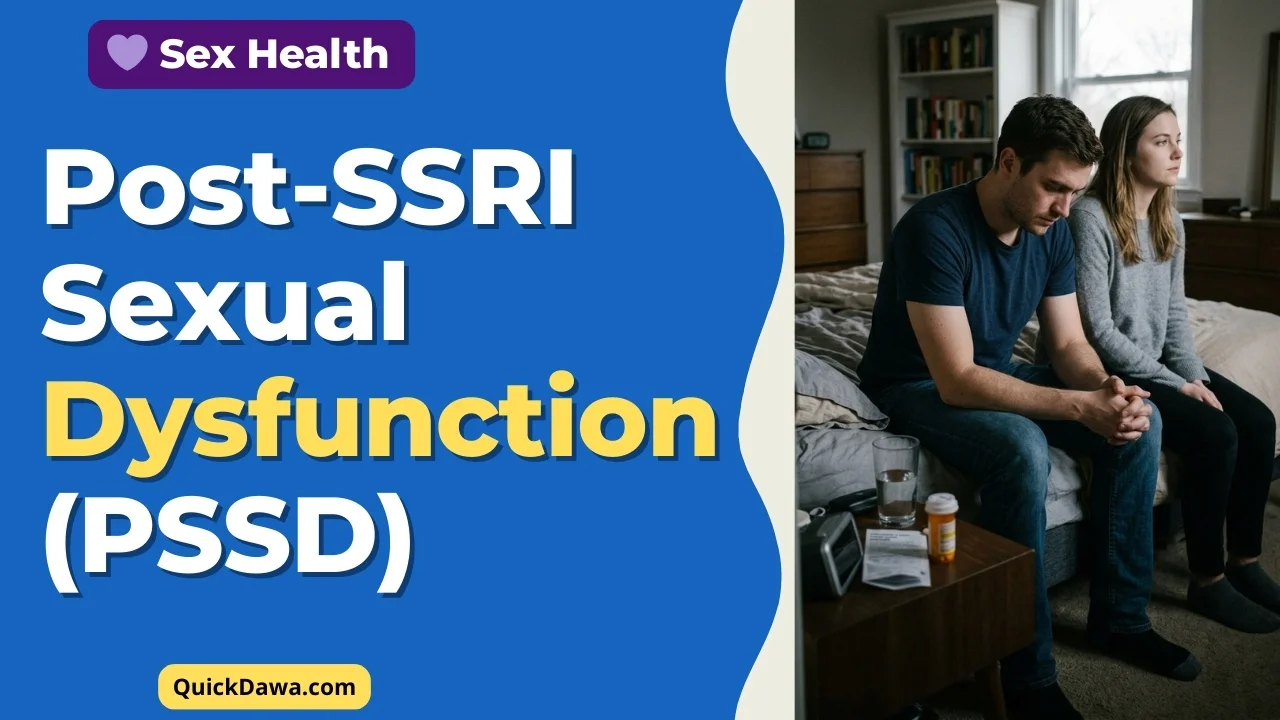
Post-SSRI Sexual Dysfunction (PSSD) – The Antidepressant Side Effect That Can Outlast Your Medication by Years
Have you stopped taking antidepressants — but your sex drive and sensation never came back?
You may be experiencing post-SSRI sexual dysfunction, also known as PSSD.
For years, patients reported this terrifying reality to their doctors — and were told it was impossible.
But in 2019, the European Medicines Agency officially recognized post-SSRI sexual dysfunction as a real medical condition.
It is real. You are not imagining it. And you are absolutely not alone.
Millions of people worldwide take antidepressants called SSRIs every day.
What most of them are never told is that for some, the sexual side effects don’t stop when the medication does.
This guide explains everything , clearly, compassionately, and completely.
🔹 WHAT IS POST-SSRI SEXUAL DYSFUNCTION? 🧠
Let’s start simple. Your brain uses chemical messengers to communicate.
Two important ones are serotonin and dopamine. Serotonin is the “feel calm” chemical. Dopamine is the “feel pleasure and desire” chemical.
SSRIs — antidepressants like Prozac, Zoloft, and Lexapro — work by increasing serotonin. That helps lift depression and reduce anxiety.
But serotonin and dopamine have a complicated relationship. When serotonin rises too high, dopamine gets suppressed. And dopamine is critical for sexual desire and arousal.
Post-SSRI sexual dysfunction (PSSD) happens when these changes in brain chemistry don’t reverse after stopping the medication. The sexual numbness, lost desire, and inability to experience pleasure stay — sometimes for months, sometimes for years.
🧒 Simple analogy: Imagine your brain is a music player. SSRIs turn up the “calm” volume knob (serotonin). But in doing so, they accidentally turn down the “desire” volume knob (dopamine). In PSSD, even after removing the disc (stopping the drug), the desire knob stays turned down. Your brain forgot how to turn it back up.
🔹 HOW COMMON IS POST-SSRI SEXUAL DYSFUNCTION? 📊
PSSD is more widespread than official numbers suggest — because it is massively underreported.
- 🔵 13.2% of all US adults currently take antidepressants, according to the CDC. That is tens of millions of people at potential risk.
- 🔵 During SSRI treatment, 25% to 73% of patients experience sexual side effects — making it one of the most common side effects of all.
- 🔵 Formal PSSD risk estimates suggest approximately 1 in 216 patients (0.46%) develop irreversible PSSD after stopping SSRIs, per a 2023 PMC study.
- 🔵 Critically, this number is almost certainly an underestimate. Many patients never report symptoms to doctors. Many doctors dismiss the symptoms when they do. Unpublished phase 1 trials found that over 50% of healthy volunteers had severe sexual dysfunction that in some cases persisted after stopping the drug.
The true scale of this condition remains unknown — but experts agree it is far more common than official data reflects. PMC 2024 – Post-SSRI Sexual Dysfunction Research
🔹 TOP FACTORS THAT CAUSE & WORSEN POST-SSRI SEXUAL DYSFUNCTION ⚡
Here is what we currently know about how PSSD develops.
🔸 Factor 1: Long-Term Changes to Brain Chemistry
SSRIs change how your brain’s serotonin system works. These changes can last long after the drug leaves your body.
Research published in Academic Oxford confirms that SSRIs may cause “long-term alterations in brain function.” Your neural wiring literally changes. And for some people, it doesn’t change back easily.
🔸 Factor 2: Dopamine Suppression from Serotonin Overload
Serotonin and dopamine compete in your brain. Dopamine drives desire, arousal, motivation, and pleasure.
When SSRIs flood your system with serotonin, dopamine pathways get suppressed. In PSSD, this suppression doesn’t lift even when the drug stops. Your brain’s reward-pleasure system stays blunted — sometimes for years.
Like a see-saw: push serotonin up, and dopamine gets pushed down. In PSSD, the see-saw gets stuck.
🔸 Factor 3: Nerve Damage in Genital Tissue
Research has found that serotonin receptors exist in the peripheral nervous system — the nerves in your skin and genitals. SSRIs may trigger excessive serotonin activity in these nerves.
This can damage the local nerve pathways that create sexual sensation. That’s why many PSSD sufferers describe their genitals feeling “numb” or “dead” — even though there’s nothing physically wrong with the tissue itself.
🔸 Factor 4: Bioelectric Changes in the Nervous System
One of the newest theories involves bioelectric changes — alterations in how electrical signals travel along your nerves (similar to how a dimmer switch can get stuck rather than just flipping off).
A 2021 PMC paper proposed that PSSD may involve persistent changes in ion channels — the tiny gates that allow electrical signals to cross nerve cells. This could explain why the condition persists after the drug is gone. PMC – PSSD Bioelectric Mechanism
🔸 Factor 5: Disruption of Neuroactive Steroids
Neuroactive steroids (also called neurosteroids) are brain hormones that support sexual desire and sensation. Think of them as your brain’s natural aphrodisiac chemicals.
SSRIs appear to interfere with the production and signaling of these neurosteroids. When that interference persists after stopping the drug, the result is lasting loss of sexual feeling and desire.
🔸 Factor 6: Androgen Receptor Disruption
Testosterone works through androgen receptors — docking stations in your cells where testosterone attaches and does its job.
Some researchers believe SSRIs may alter the sensitivity of androgen receptors, reducing the brain’s ability to “hear” testosterone signals. Even if testosterone levels are normal, the signal never arrives properly. That translates to absent desire and reduced arousal.
🔸 Factor 7: Higher Doses and Longer Duration of Use
Not everyone who takes SSRIs develops PSSD. But longer treatment periods and higher doses appear to increase risk.
Imagine painting a wall: a thin coat can be painted over. But thick, repeated coats of paint may permanently change the surface. Long-term, high-dose SSRI use may do something similar to certain neural pathways.
Patients who took SSRIs for years at high doses report more persistent and severe PSSD symptoms than those who had shorter treatment courses.
🔸 Factor 8: Specific Medications (Some SSRIs Are Higher Risk)
Not all antidepressants carry equal PSSD risk. Paroxetine (Paxil) is consistently reported as having the highest risk. Sertraline (Zoloft), fluoxetine (Prozac), escitalopram (Lexapro), and venlafaxine (Effexor) also have documented PSSD reports.
Australia’s TGA specifically noted that sertraline, desvenlafaxine, and venlafaxine already carry warnings about persistent sexual dysfunction. Different drugs affect serotonin receptors differently — and that matters for PSSD risk.
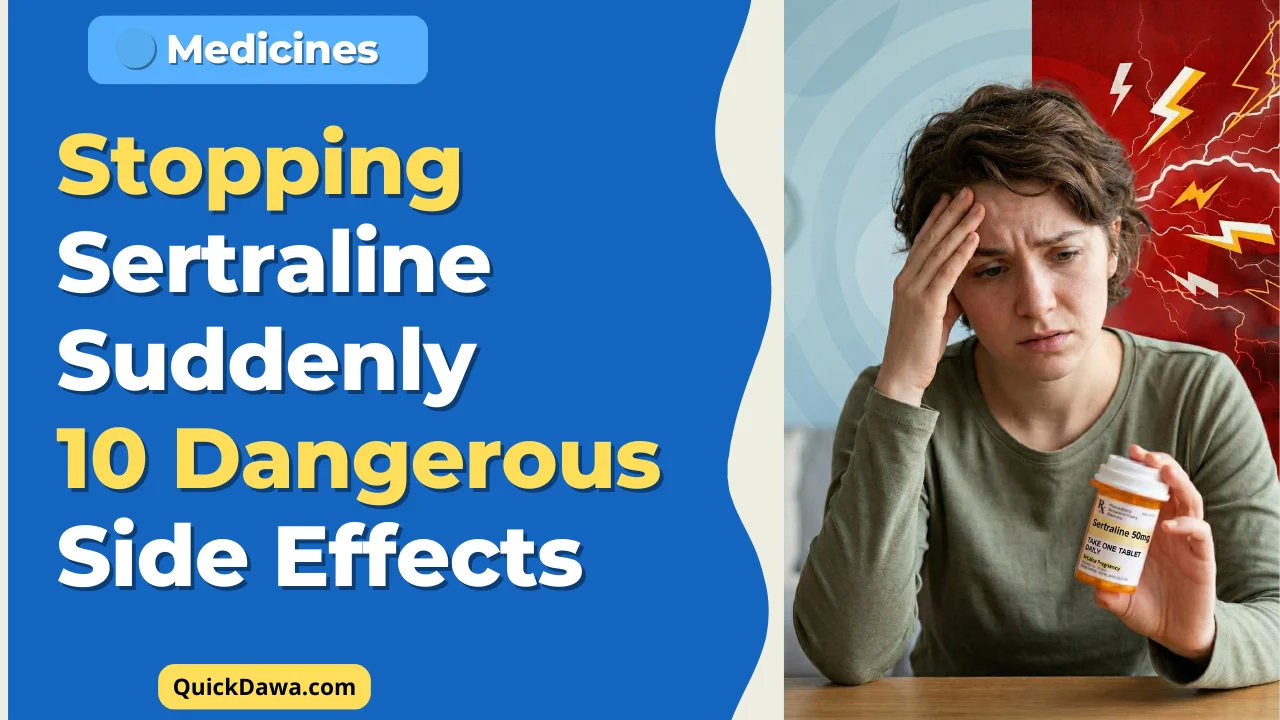
🔸 Factor 9: Abrupt Discontinuation
Stopping SSRIs suddenly — rather than tapering slowly — may worsen or trigger PSSD. Abrupt withdrawal creates a sudden serotonin crash.
This shock to the nervous system may worsen the neurological changes associated with PSSD onset. Always work with a doctor to taper gradually when discontinuing SSRIs.
🔸 Factor 10: Underlying Vulnerability (Genetic or Neurological)
Some people may be genetically more susceptible to PSSD than others. Their nervous systems may be more sensitive to serotonin’s effects on dopamine and neurosteroid systems.
Currently, there is no genetic test to predict PSSD risk before treatment. Research into identifying vulnerable patient populations is ongoing.
🔹 WARNING SIGNS & SYMPTOMS OF POST-SSRI SEXUAL DYSFUNCTION 🚨
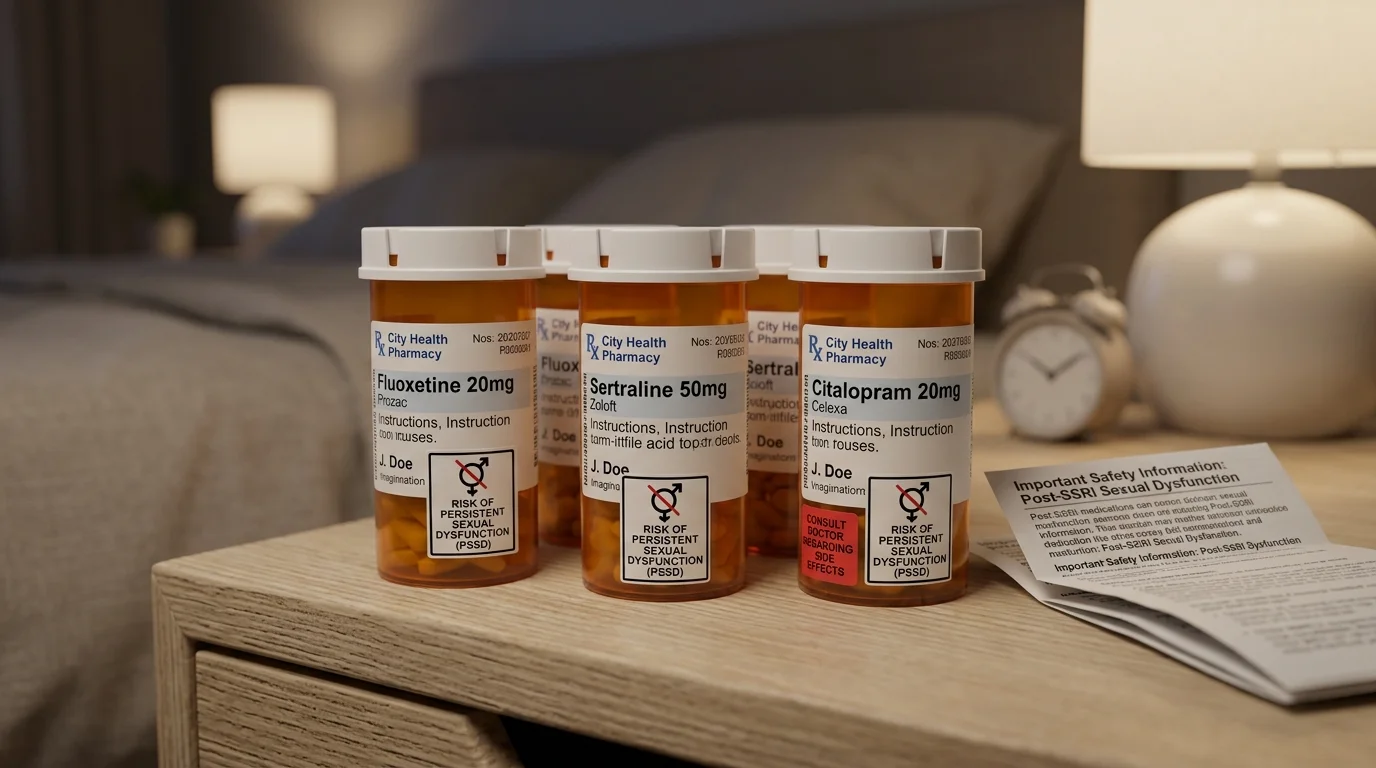
These symptoms may appear during SSRI treatment and persist after stopping. This persistence after stopping is what defines PSSD.
✅ Genital numbness — your genitals feel physically numb, like touching them through a thick glove.
✅ Complete loss of libido — sexual desire disappears entirely, not just a reduction.
✅ Pleasureless or weak orgasm — orgasms feel mechanical, hollow, or barely noticeable.
✅ Inability to orgasm at all (anorgasmia) — reaching climax becomes impossible or extremely difficult.
✅ Erectile dysfunction in men — difficulty achieving or maintaining an erection without the presence of desire.
✅ Vaginal dryness and reduced lubrication in women — physical arousal responses no longer function properly.
✅ Emotional blunting — feelings during intimacy are flat, disconnected, and emotionally empty.
✅ Reduced nipple sensitivity — tactile sensation across the body may be diminished, not just genitals.
✅ Cognitive fog during intimacy — difficulty focusing, staying present, or feeling mentally engaged during sex.
⚠️ See a doctor if you notice these signs — especially if they began during SSRI treatment and have continued after stopping. Do not suffer in silence. PSSD is a recognized medical condition, and you deserve proper care.
🔹 HOW TO MINIMIZE PSSD RISK AND SUPPORT RECOVERY 💪
While there is currently no single proven cure for PSSD, here is what the evidence and clinical experience suggest.
🌿 Tip 1: Have an Honest Sexual Health Conversation Before Starting SSRIs
Before starting any antidepressant, ask your doctor directly about sexual side effects. Ask: “What sexual side effects should I watch for — and what should I do if they persist after stopping?”
This documented, informed conversation protects you — and puts your doctor on notice to monitor your sexual health from the start of treatment.
🌿 Tip 2: Always Taper SSRIs Slowly — Never Stop Suddenly
Abrupt SSRI discontinuation is associated with worse outcomes. Work with your prescriber to create a slow, gradual tapering schedule.
A slow taper gives your nervous system time to readjust. It reduces the severity of discontinuation effects that may contribute to PSSD persistence.
🌿 Tip 3: Report Symptoms Immediately and Persistently
If you notice sexual changes during SSRI treatment, report them to your doctor right away. Don’t wait. Don’t assume it will pass.
Early recognition and documentation of symptoms creates a record that supports proper diagnosis and treatment. Sadly, many doctors still dismiss PSSD — so being persistent and informed is essential.
🌿 Tip 4: Explore Lower-Risk Antidepressant Alternatives With Your Doctor
Some antidepressants have lower documented PSSD risk. Bupropion (Wellbutrin) is a dopamine-focused antidepressant with a much lower rate of sexual dysfunction.
Ask your doctor whether your depression or anxiety could be managed with a different medication class — one with a lower impact on sexual function and dopamine pathways.
🌿 Tip 5: Support Your Dopamine System Through Lifestyle 🏃
Your dopamine system is the key to desire and pleasure. Support it actively.
Regular exercise is one of the most powerful natural dopamine boosters available. Aim for 30 minutes of moderate aerobic activity daily. Activities like running, cycling, and swimming show particularly strong dopamine-supportive effects in research.
🌿 Tip 6: Eat to Support Neurotransmitter Production 🥦
Your brain makes dopamine and serotonin from amino acids found in food. Specifically, L-tyrosine and phenylalanine are precursors to dopamine.
Add these dopamine-supporting foods to your diet: eggs, chicken, turkey, almonds, avocado, dark chocolate (in moderation), and legumes. Avoid ultra-processed foods and high-sugar diets — they impair dopamine receptor sensitivity over time.
🌿 Tip 7: Prioritize Sleep and Stress Management 🧘
Sleep deprivation and chronic stress are two of the most powerful suppressors of both testosterone and dopamine. Both directly worsen PSSD symptoms.
Aim for 7–9 hours of quality sleep every night. Practice daily stress reduction — whether through mindfulness meditation, gentle yoga, journaling, or simple deep-breathing exercises. These are not luxury habits — they are neurological necessities.
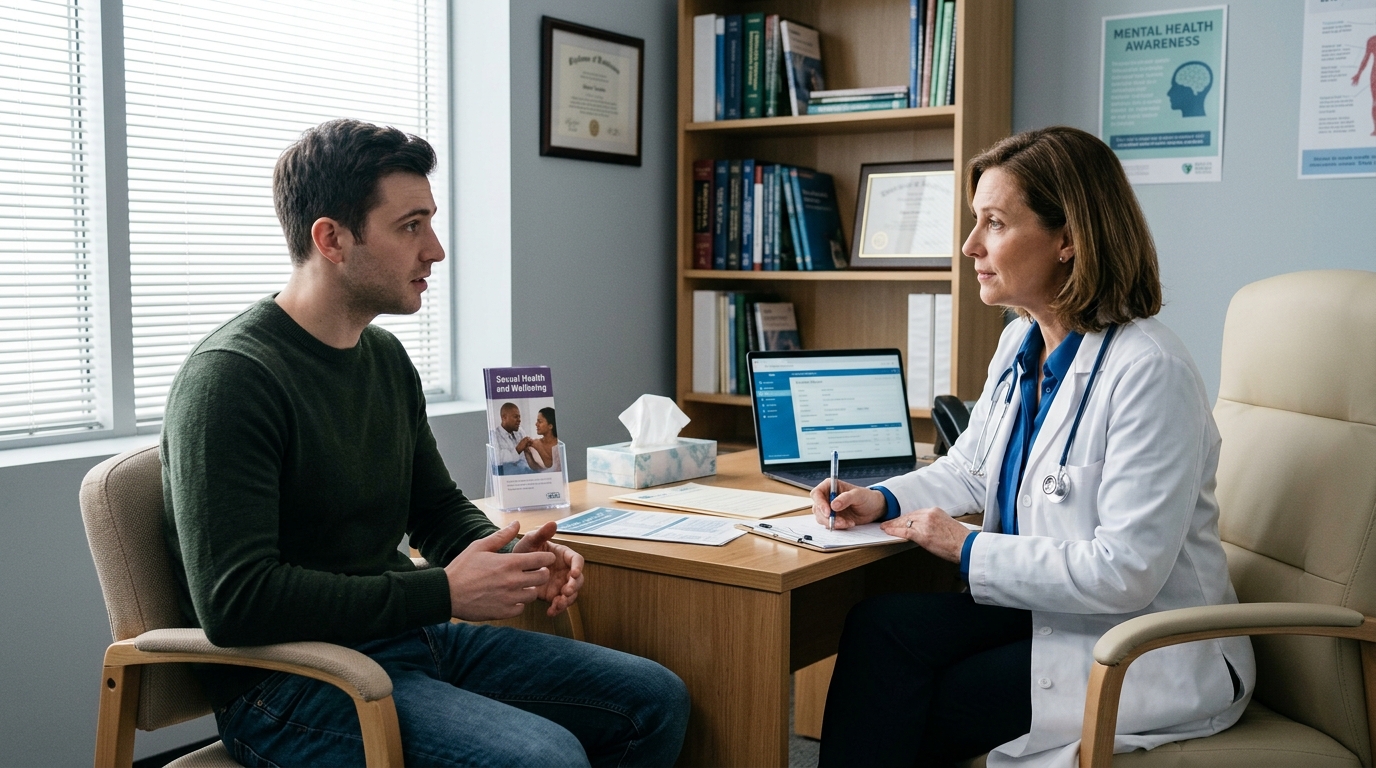
🌿 Tip 8: Seek Specialist Mental Health Support for PSSD
PSSD takes a devastating psychological toll. The experience of feeling sexually “dead” — especially after trying to treat depression — can lead to grief, relationship breakdown, and suicidal thoughts in severe cases.
A psychologist or sex therapist who understands PSSD can help you navigate the emotional reality of this condition. Organizations like the PSSD Network (pssdnetwork.org) also provide peer support and updated research for those affected.
🔹 WHEN TO SEE A DOCTOR 🩺
Please seek medical help if:
- ☑️ You experience sexual dysfunction during SSRI treatment that seems severe
- ☑️ Sexual problems persist for more than 4–6 weeks after stopping your antidepressant
- ☑️ You experience complete genital numbness that doesn’t improve
- ☑️ You feel emotionally flat, disconnected, and unable to experience pleasure in any area of life
- ☑️ PSSD symptoms are causing relationship distress or thoughts of self-harm
- ☑️ Your doctor dismisses your symptoms without investigation — seek a second opinion
You deserve to be heard. PSSD is recognized by the European Medicines Agency, UK MHRA, and Australia’s TGA. If your doctor is unaware, print the official EMA or TGA statements and bring them to your appointment. Your symptoms are real, valid, and medically recognized.
🔹 FREQUENTLY ASKED QUESTIONS ❓
Q1: What is post-SSRI sexual dysfunction and how do I know if I have it?
Post-SSRI sexual dysfunction (PSSD) is a condition where sexual side effects from antidepressants continue or appear after stopping the medication. Key signs include genital numbness, absent libido, inability to orgasm, and emotional blunting during intimacy. If these symptoms started during or after SSRI treatment and have persisted for weeks or months after stopping, PSSD is a strong possibility.
Q2: Is PSSD permanent or can it go away?
PSSD is not permanent for everyone — but recovery is highly variable. Some people recover within 6 months to 2 years. Others take 3+ years. A smaller group reports symptoms lasting many years. Currently there is no proven cure, but research is actively progressing. Gradual tapering, lifestyle support, and specialist care all contribute to recovery outcomes.
Q3: Which antidepressants are most likely to cause PSSD?
Any SSRI or SNRI can potentially cause post-SSRI sexual dysfunction. The highest-risk medications based on current reports include paroxetine (Paxil), sertraline (Zoloft), escitalopram (Lexapro), fluoxetine (Prozac), and venlafaxine (Effexor). Paroxetine consistently appears in the highest proportion of PSSD case reports. However, PSSD has been reported with all SSRIs.
Q4: Can I still take antidepressants if I’m worried about PSSD?
Yes — but have an informed conversation with your doctor first. Antidepressants genuinely help millions of people with depression and anxiety. The key is risk awareness, monitoring, and exploring lower-risk options if sexual health is a priority concern. Some alternatives like bupropion (Wellbutrin) have a much lower rate of sexual dysfunction. Never stop your antidepressant without medical supervision.
Q5: Is PSSD an officially recognized medical condition?
Yes. Post-SSRI sexual dysfunction is officially recognized by the European Medicines Agency (EMA, since 2019), the UK’s Medicines and Healthcare products Regulatory Agency (MHRA), and Australia’s Therapeutic Goods Administration (TGA), which updated its warnings in 2024. Despite this, many individual doctors are still unaware. If your doctor dismisses your symptoms, refer them to the EMA or TGA official statements.
🔹 CONCLUSION 💙
Post-SSRI sexual dysfunction is real, it is recognized, and it affects far more people than official statistics show.
If antidepressants helped your mental health but left your sexual health behind — you have not imagined it, you have not failed, and you are not alone. Thousands of people around the world are experiencing the same thing. Science is finally beginning to catch up.
Talk to a specialist. Report your symptoms. Advocate for yourself. Support your dopamine system with sleep, movement, and nutrition. And connect with communities like the PSSD Network who are funding the research that will change this.
💬 Please share this post with anyone who takes or has taken antidepressants. You might be the first person to give them a name for something they’ve been silently suffering for years. That single act of sharing could change someone’s life.
You deserve pleasure. You deserve intimacy. You deserve answers. Recovery from post-SSRI sexual dysfunction starts with finally being believed. 💙
⚕️ MEDICAL DISCLAIMER
Disclaimer: This blog post is written strictly for informational and educational purposes only. It is not intended as medical advice, diagnosis, or treatment of any kind.
Post-SSRI Sexual Dysfunction (PSSD) is a serious medical condition. If you believe you may be experiencing PSSD, please consult a qualified psychiatrist, sexual health specialist, or other licensed healthcare provider immediately. Do not make any changes to your antidepressant medication — including stopping, reducing, or switching — without direct medical supervision. Abruptly stopping antidepressants can be dangerous and may cause serious withdrawal effects.
Antidepressant medications are life-saving treatments for millions of people with depression, anxiety, and other mental health conditions. The existence of PSSD as a potential risk does not mean these medications should be avoided — it means they should be used with full informed consent and careful monitoring.
The regulatory recognitions cited in this article (EMA 2019, TGA 2024, MHRA) reflect formal acknowledgment of PSSD as a documented adverse effect. Individual experiences, severity, and outcomes vary significantly.
If you are experiencing thoughts of self-harm related to PSSD or any other condition, please contact a crisis helpline immediately: 🆘 US: 988 Suicide & Crisis Lifeline — call or text 988 🆘 UK: Samaritans — 116 123 🆘 International: https://www.befrienders.org
The author and publisher of this content accept no liability for health outcomes resulting from the use or misuse of information in this article. Always seek professional medical advice tailored to your individual circumstances.