⚠️ Why Taking Vitamin D Without K2 is Secretly Damaging Your Arteries (And What to Do Instead)
Did you know that millions of people take vitamin D every day — but are unknowingly hurting themselves?
Taking vitamin D without K2 is one of the most common supplement mistakes today.
Most people don’t even know K2 exists.
They pop their vitamin D and feel proud.
But behind the scenes, something dangerous may be happening inside their bodies.
Calcium is building up. In the wrong places.
This post explains why you should never take vitamin D without K2.
By the end, you’ll understand exactly what to do instead.
Let’s fix this — starting right now.
🔹 WHAT IS THE VITAMIN D AND K2 CONNECTION? 🌟
Think of vitamin D and K2 like a team of delivery workers.
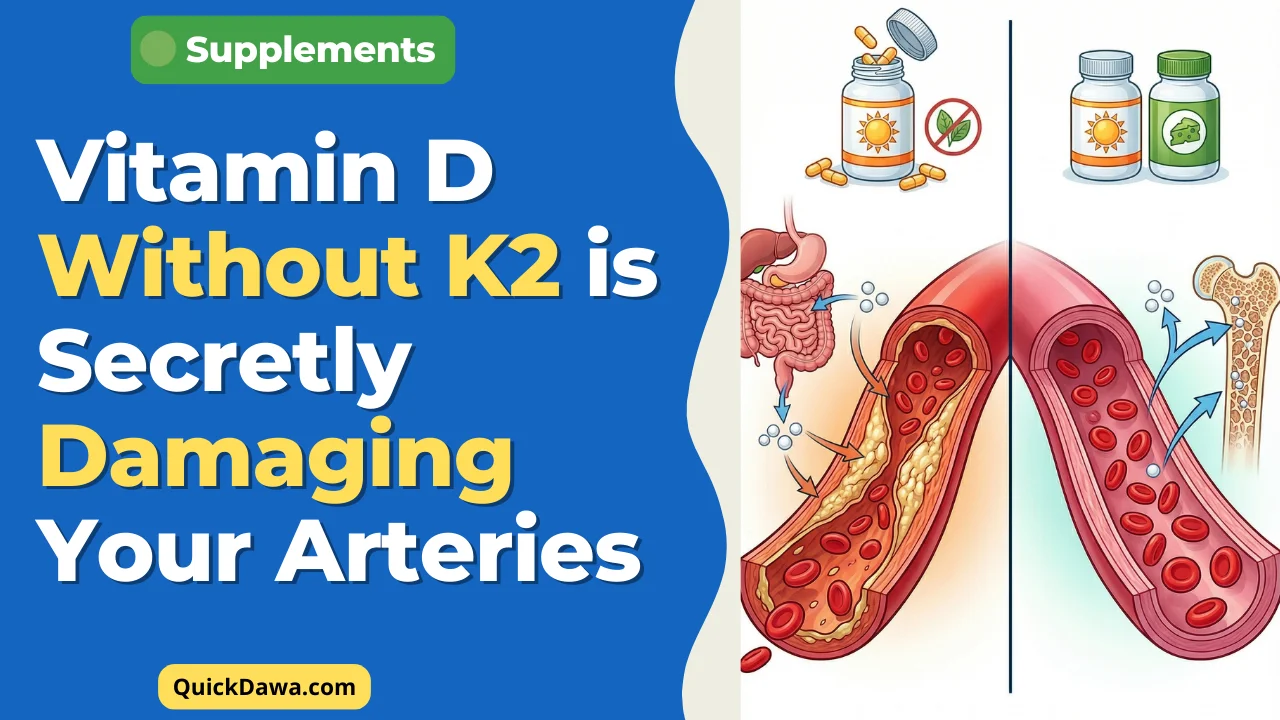
Vitamin D is the first worker. Its job is to pick up calcium from your food and carry it into your blood. That sounds great, right?
But vitamin D’s job stops there. It doesn’t know where to put the calcium.
That’s where vitamin K2 comes in. K2 is the second worker. It grabs that calcium from your blood. Then it delivers it to exactly the right place — your bones and teeth.
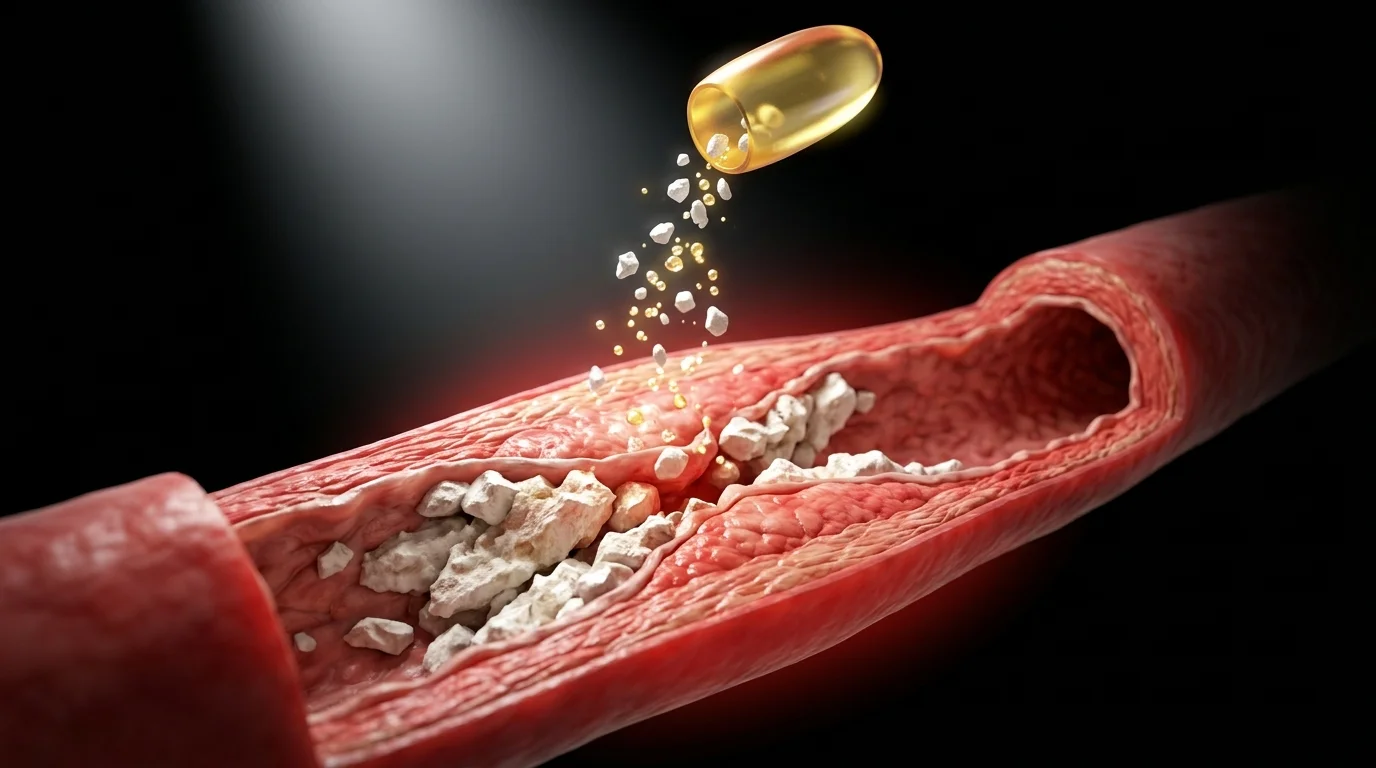
Without K2, calcium just floats around in your blood. It has nowhere to go. So it settles in your arteries, kidneys, and soft tissues. That is a big problem.
🧒 Simple analogy: Imagine ordering a pizza (vitamin D gets the pizza). But no one is home to put it away (no K2). So the pizza sits on your counter and goes bad (calcium deposits in arteries). That’s what happens inside your body.
🔹 HOW COMMON IS THIS PROBLEM? 📊
This issue is far more widespread than most people realize.
- 🔵 1 billion people worldwide have vitamin D deficiency, according to Cleveland Clinic.
- 🔵 50% of the global population has vitamin D insufficiency — meaning half the world is at risk.
- 🔵 97% of Americans are estimated to be missing adequate levels of vitamin K2, according to research data from MenaQ7.
- 🔵 35% of US adults are currently vitamin D deficient — and most of them supplement without K2.
So the problem of taking vitamin D without K2 is not rare. It is everywhere.
🔹 TOP CAUSES: WHY THIS COMBINATION IS DANGEROUS ⚡
Let’s break down exactly why taking vitamin D without K2 creates serious health risks.
🔸 Cause 1: Calcium Goes to the Wrong Places
Vitamin D absorbs calcium from your gut into your bloodstream. That’s its job.
But without K2, no one is directing that calcium. It floats freely in your blood. Then it starts depositing in places like arteries and kidneys.
Think of traffic with no traffic lights. Cars (calcium) pile up in the wrong places.
🔸 Cause 2: Arterial Calcification (Hardening of Arteries)
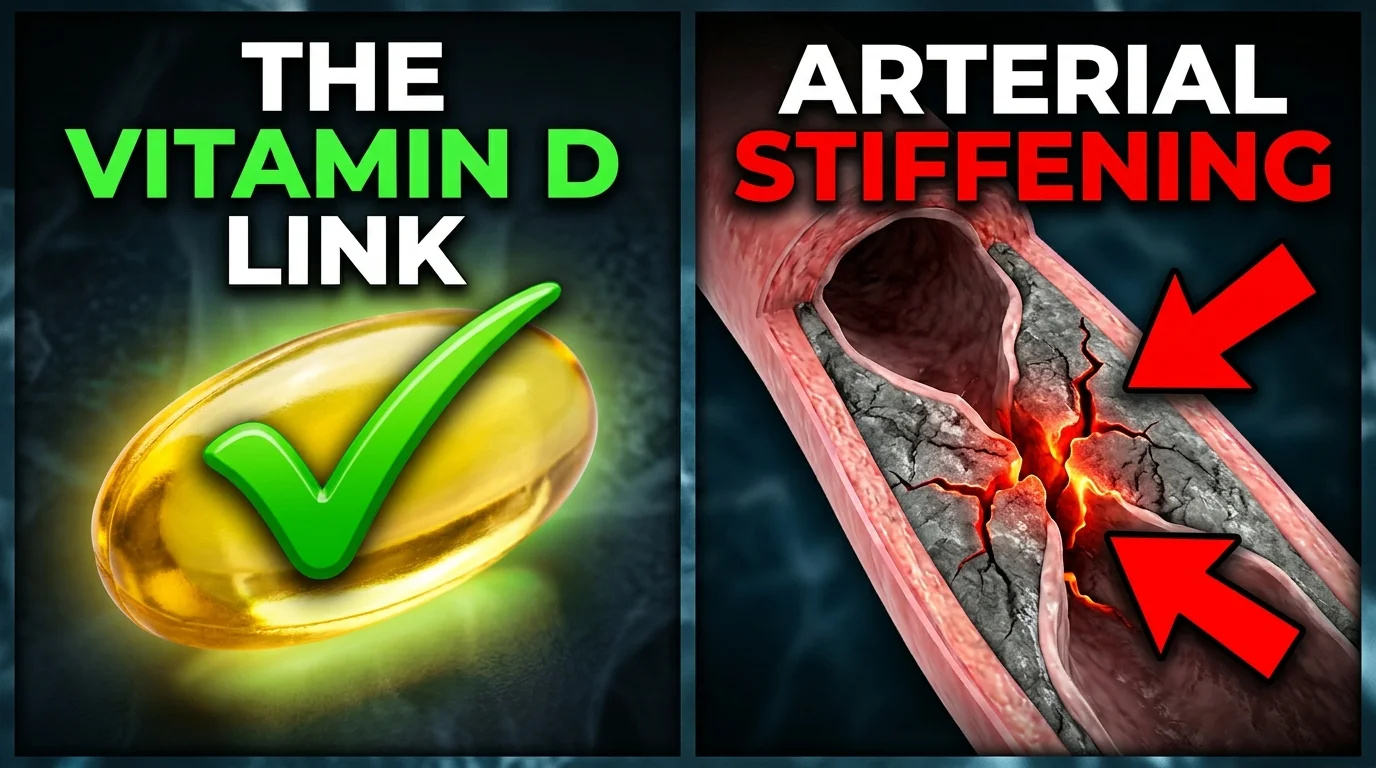
Calcium deposits inside blood vessels cause them to harden. Doctors call this arterial calcification. It makes your arteries stiff and narrow. This increases your risk of heart attack and stroke.
Animal studies have shown that high doses of vitamin D can trigger arterial calcification — especially when vitamin K is low or absent. PMC Research – Vitamins D and K
🔸 Cause 3: Vitamin K2 Proteins Stay “Switched Off”
Vitamin K2 activates two very important proteins in your body. One is called osteocalcin. The other is Matrix Gla Protein (MGP).
These proteins need K2 to work. Osteocalcin pulls calcium into bones. MGP removes calcium from artery walls.
Without K2, both proteins stay inactive. Calcium keeps building up in the wrong places.
🔸 Cause 4: Weak Bones Despite Taking Vitamin D
Here is the irony. You take vitamin D to build strong bones. But without K2, the calcium never actually reaches your bones properly.
Osteocalcin cannot bind calcium to bone without K2. So you get more calcium floating in blood — but weaker bones. That is the opposite of what you wanted.
🔸 Cause 5: Increased Blood Pressure Risk
A major study published by the American Heart Association found something alarming. People low in both vitamin D and vitamin K had significantly higher blood pressure. The combination of deficiency in both vitamins increased hypertension risk. American Heart Association Study
🔸 Cause 6: Kidney Stone Formation
When calcium deposits don’t go to bones, they can also collect in your kidneys. This contributes to the formation of kidney stones. Taking high-dose vitamin D without K2 for a long time can silently raise this risk.
Imagine tiny pebbles forming inside your kidneys. That’s what calcium crystals look like. Painful — and preventable.
🔸 Cause 7: Vitamin D Toxicity Gets Worse Without K2
Taking too much vitamin D is already dangerous. It can cause nausea, weakness, and confusion.
But without K2, even moderate vitamin D doses may become more harmful. K2 helps regulate how calcium behaves in the body. Without it, vitamin D’s calcium-raising effects go unchecked.
🔸 Cause 8: Cardiovascular Inflammation Risk
Calcium buildup in artery walls doesn’t just harden them. It also triggers inflammation. Chronic inflammation in blood vessels is a key driver of heart disease.
K2 helps prevent this by activating MGP. MGP clears calcium from artery walls. No K2 = no MGP activation = more inflammation.
🔸 Cause 9: Imbalanced Calcium-to-Magnesium Ratio
Vitamin D also affects magnesium levels. High vitamin D intake can deplete magnesium. And magnesium is needed for vitamin K2 to work properly. This creates a dangerous chain reaction — especially if you’re already low in magnesium.
🔸 Cause 10: Most Vitamin D Supplements Don’t Include K2
Walk into any pharmacy. Pick up a vitamin D supplement. Flip it over.
Most of them contain only vitamin D3. No K2. No instructions about taking K2 alongside. This design gap means millions of well-meaning people are supplementing incorrectly every single day.
🔹 WARNING SIGNS & SYMPTOMS 🚨
Watch for these signs. They may mean you’ve been taking vitamin D without K2 for too long:
✅ Joint pain or stiffness — calcium depositing in joints instead of bones.
✅ Unexplained fatigue — poor calcium metabolism drains your energy.
✅ Brain fog or poor concentration — mineral imbalances affect cognitive function.
✅ Frequent muscle cramps — disrupted calcium-magnesium balance causes cramps.
✅ Kidney pain or frequent urination — early signs of calcium deposits in kidneys.
✅ High blood pressure — arterial stiffness from calcium buildup raises pressure.
✅ Bone pain or reduced bone density — calcium is in your blood, not your bones.
✅ Increased thirst — a sign of hypercalcemia (too much calcium in blood).
⚠️ See a doctor if you notice these signs. Don’t wait. Early action makes a huge difference.
🔹 HOW TO PREVENT THIS: 8 SMART STEPS 🛡️
You don’t have to stay at risk. Here is exactly what to do.
🌿 Tip 1: Always Pair Vitamin D3 with Vitamin K2
This is the most important tip. Never take vitamin D3 without K2.
Look for supplements that combine both in one capsule. The best form of K2 is MK-7 (menaquinone-7). It stays in your body longer than MK-4. Aim for 90–200 mcg of K2 (MK-7) per day.
🌿 Tip 2: Eat K2-Rich Foods Daily
Diet matters too. Add these K2-rich foods to your meals:
- Natto (fermented soybeans) — the richest source of K2
- Aged hard cheeses like Gouda and Edam
- Egg yolks
- Grass-fed butter
- Chicken liver
Eating these foods naturally boosts your K2 levels.
🌿 Tip 3: Get Your Vitamin D Levels Tested
Before you supplement, know your baseline. Ask your doctor for a 25-hydroxyvitamin D blood test.
This tells you how much vitamin D your body actually has. Most doctors recommend levels between 40–60 ng/mL. Knowing your level helps you dose correctly.
🌿 Tip 4: Don’t Mega-Dose Vitamin D Without Supervision
More is not always better. Taking very high doses of vitamin D — like 10,000 IU daily without testing — is risky.
Keep your daily dose reasonable. For most adults, 1,000–4,000 IU per day is considered safe. Always talk to your doctor before going higher.
🌿 Tip 5: Add Magnesium to Your Routine
Vitamin D needs magnesium to be activated properly in the body.
Many people are magnesium-deficient. Low magnesium makes vitamin D less effective — and increases calcium-related risks. Try 200–400 mg of magnesium glycinate or citrate daily.
🌿 Tip 6: Spend Time in the Sunlight
Your body makes vitamin D naturally from sunlight. Just 15–30 minutes of midday sun on bare skin helps most people.
Sunlight-made vitamin D is safer than supplementing blindly. And it comes with no risk of overdose.
🌿 Tip 7: Maintain a Heart-Healthy Diet 💚
A diet rich in leafy greens, omega-3 fats, and whole grains supports both vitamin K levels and heart health.
Green vegetables like kale, spinach, and broccoli are loaded with vitamin K1, which your body can partially convert to K2. Eat the rainbow every day.
🌿 Tip 8: Manage Stress to Support Mineral Balance 🧘
Chronic stress raises cortisol. High cortisol interferes with calcium and vitamin D metabolism.
Daily stress-relief habits — like deep breathing, yoga, or even a 10-minute walk — protect your mineral balance. Your heart and bones will thank you.
🔹 WHEN TO SEE A DOCTOR 🩺
You should book an appointment if:
- ☑️ You’ve been taking vitamin D alone for more than 3 months
- ☑️ You experience unexplained fatigue, muscle cramps, or bone pain
- ☑️ Your blood pressure has been rising without clear reason
- ☑️ You have a history of kidney stones
- ☑️ You’re taking high-dose vitamin D (over 5,000 IU daily)
- ☑️ You notice symptoms of hypercalcemia (thirst, nausea, confusion)
Your doctor can run simple blood tests to check your vitamin D, calcium, and K2 status. These tests could protect you from serious long-term harm. There is no shame in asking. It is always better to be safe.
🔹 FREQUENTLY ASKED QUESTIONS (FAQ) ❓
Q1: Is taking vitamin D without K2 really dangerous?
Taking vitamin D without K2 can be risky — especially at higher doses or over a long period. Without K2, extra calcium absorbed by vitamin D has nowhere to go. It can settle in arteries, kidneys, and soft tissue instead of bones.
Q2: How much K2 should I take with vitamin D?
Most experts suggest 90–200 mcg of K2 (MK-7 form) per day when taking vitamin D. The exact amount depends on your vitamin D dose and your individual needs. Ask your doctor for personalized advice.
Q3: What are the best food sources of vitamin K2?
The top food sources are natto, aged cheeses (especially Gouda), egg yolks, grass-fed butter, and chicken liver. These foods naturally help balance calcium in your body.
Q4: Can taking vitamin D without K2 cause kidney stones?
Yes, there is a risk. When excess calcium doesn’t go to bones, it may collect in the kidneys. Over time, this increases the chance of forming calcium-based kidney stones — especially with high vitamin D doses.
Q5: What is the best supplement to take — D3 only or D3 + K2 together?
A combined D3 + K2 supplement is almost always the better choice. Taking vitamin D without K2 leaves calcium unguided in your bloodstream. A quality D3 + K2 (MK-7) combo ensures the calcium goes exactly where it should — your bones, not your arteries.
🔹 CONCLUSION 🌟
Taking vitamin D is a great health habit. But taking vitamin D without K2 turns that good habit into a hidden risk.
Vitamin D pulls calcium in. Vitamin K2 puts it in the right place. Without K2, calcium ends up in your arteries, kidneys, and joints — instead of your bones.
The fix is simple: always take K2 alongside your vitamin D. Eat K2-rich foods. Get your levels tested. And listen to your body’s warning signs.
You deserve to supplement smartly — not just heavily. Share this post with someone who takes vitamin D every day. You might just save their heart. ❤️
Remember: taking vitamin D without K2 is a mistake you can avoid — starting today.
Medical Disclaimer: This article is for informational purposes only and relies on current medical research as of 2026. It is not a substitute for professional medical advice, diagnosis, or treatment. Never change the timing or dosage of your medication without explicitly consulting your physician or pharmacist. Some formulations (like extended-release vs. immediate-release) have specific requirements that may differ from general rules.