35 Amazing Indoor Herb Garden Ideas
Imagine stepping into your kitchen and snipping fresh basil, rosemary, and mint whenever you need them, no garden required. An indoor herb garden isn’t just practical; it’s a game-changer for anyone who loves cooking, wants fresher ingredients, or simply enjoys bringing nature into their home.
Whether you live in a tiny apartment, have limited outdoor space, or just want herbs at your fingertips, growing herbs indoors has never been easier or more beautiful. From sleek modern designs to cozy farmhouse vibes, there’s a setup for every style and skill level.
This guide shares 35 inspiring herb garden ideas that combine functionality with aesthetic appeal. You’ll discover creative planters, space-saving solutions, lighting hacks, and DIY approaches that make indoor herb gardening accessible and exciting. Each idea is designed to help you create a thriving, gorgeous herb planter setup that works for your life.
Ready to transform your space? Let’s grow something beautiful together.
Hanging Glass Jars
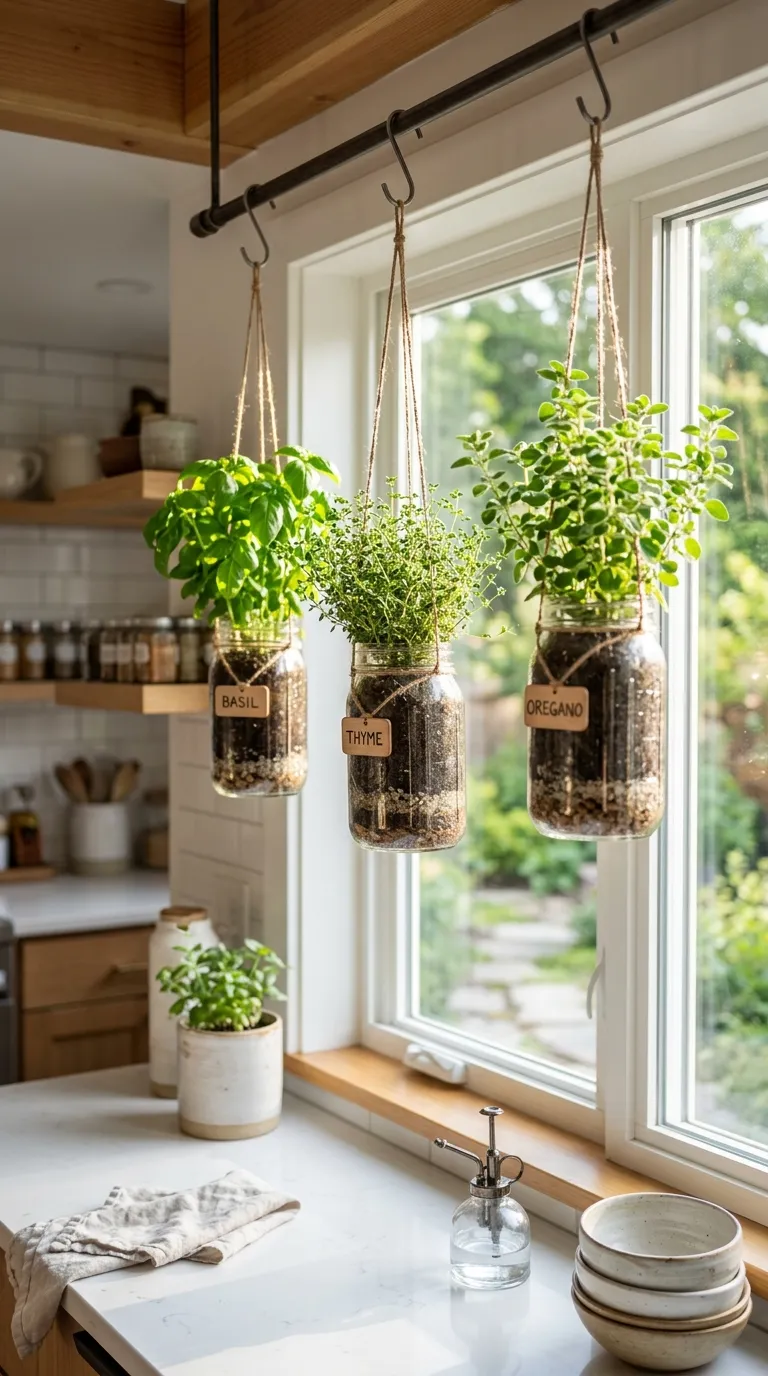
Growing herbs in hanging glass jars brings both beauty and practicality to small spaces. This indoor herb garden setup maximizes vertical space while keeping your fresh herbs visible and accessible right from your kitchen counter. The transparent glass lets you monitor soil moisture easily, and the hanging design creates a stunning focal point that catches light beautifully.
I’ve found that glass jars work wonderfully for lighter herbs like basil, oregano, and thyme. The plants get excellent air circulation, which reduces disease risk significantly. Your kitchen transforms into a botanical display that’s both functional and utterly Instagram-worthy.
Windowsill Planter Box
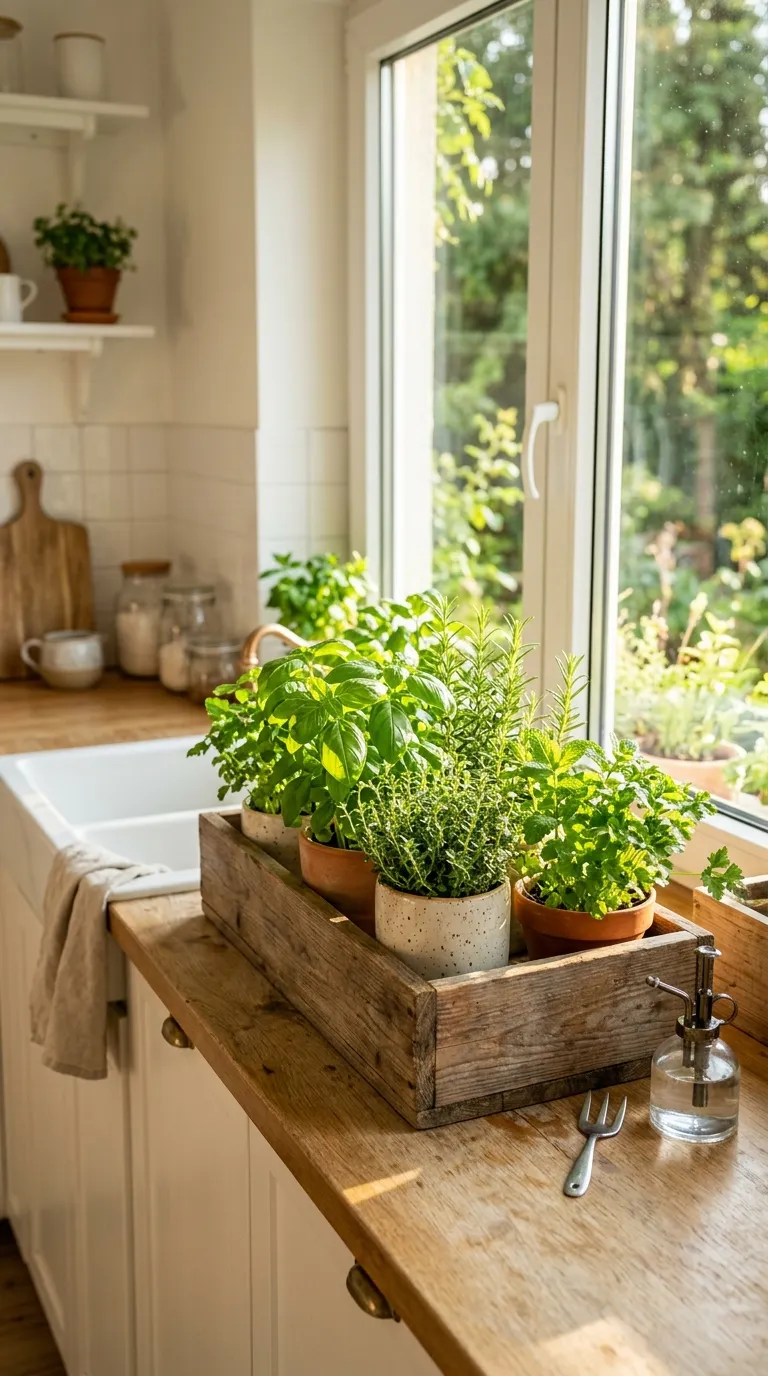
A windowsill planter box is the ultimate beginner-friendly herb planter idea that requires zero installation. Simply place a long wooden or ceramic box on your sunniest window and fill it with individual pots of your favorite culinary herbs. This setup maximizes natural light exposure, which is critical for robust growth and flavor development.
In my experience, south-facing or west-facing windows provide the ideal 6-8 hours of direct sunlight that herbs crave. The convenience factor is incredible, you’re cooking and can grab fresh herbs instantly. This simple approach works beautifully in any kitchen style without requiring wall space or special equipment.
Magnetic Spice Jar System
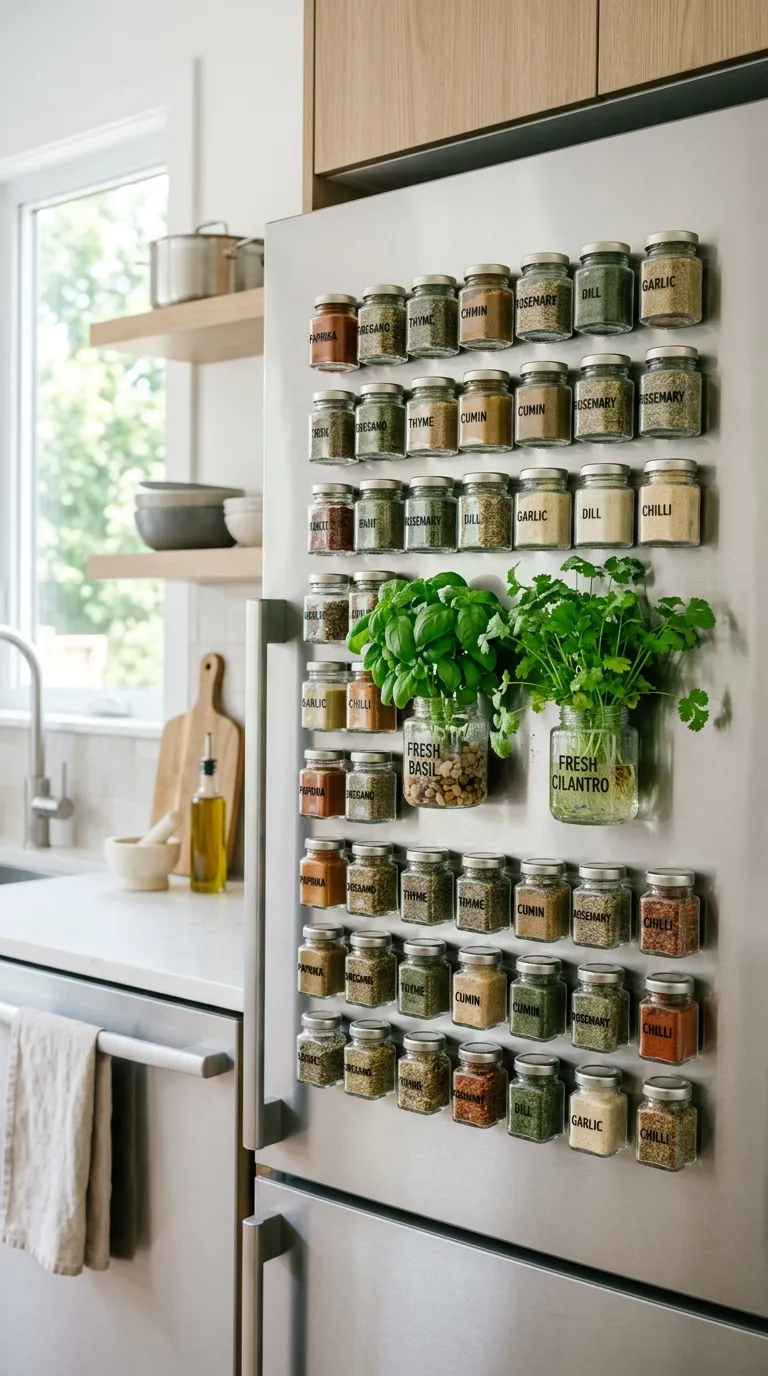
Transform your refrigerator into a clever herb garden using magnetic spice jars. These small glass containers stick securely to metal surfaces, keeping herbs at eye level and within arm’s reach while cooking. The system looks contemporary and organized while freeing up valuable counter and shelf space in your kitchen.
I’ve noticed this approach works exceptionally well for herbs you use frequently like basil, cilantro, and dill. The proximity to your cooking area means you’ll actually use the herbs more consistently. The visual reminder keeps you thinking creatively about incorporating fresh flavors into everyday meals rather than letting herbs wilt unused.
Tiered Shelving Display
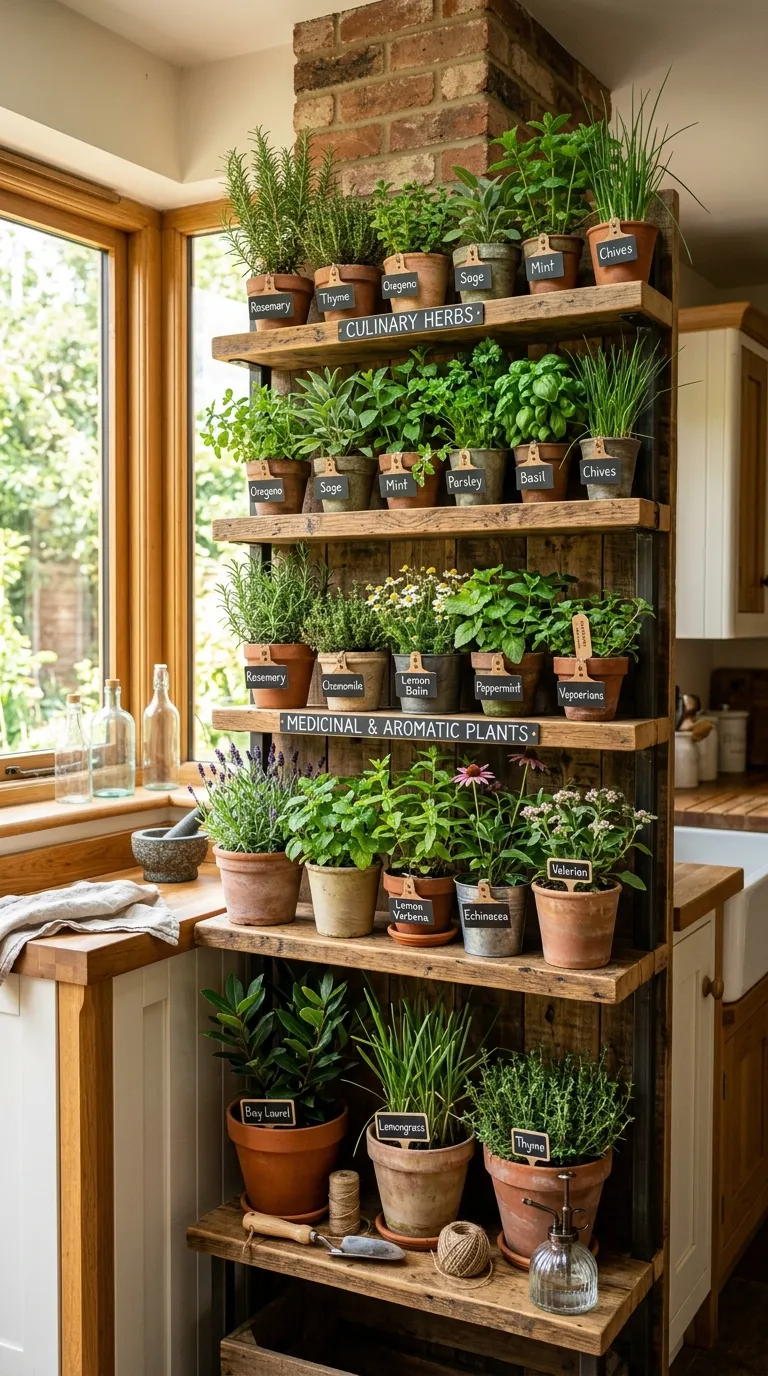
Vertical tiered shelving maximizes growing space while creating a stunning focal point in any room. This indoor herb gardening setup allows you to cultivate dozens of different herbs in a compact footprint. Each shelf level gets adequate light and air circulation, promoting healthy growth across your entire collection.
From what I’ve seen, this design works beautifully in kitchens, dining rooms, or even bright corners. You can organize herbs by type, culinary together, medicinal separately, ornamental herbs on display. The tiered approach makes watering and maintenance easier since everything sits at accessible heights, and the visual impact is genuinely beautiful enough to inspire daily use.
Wall-Mounted Pocket Planter
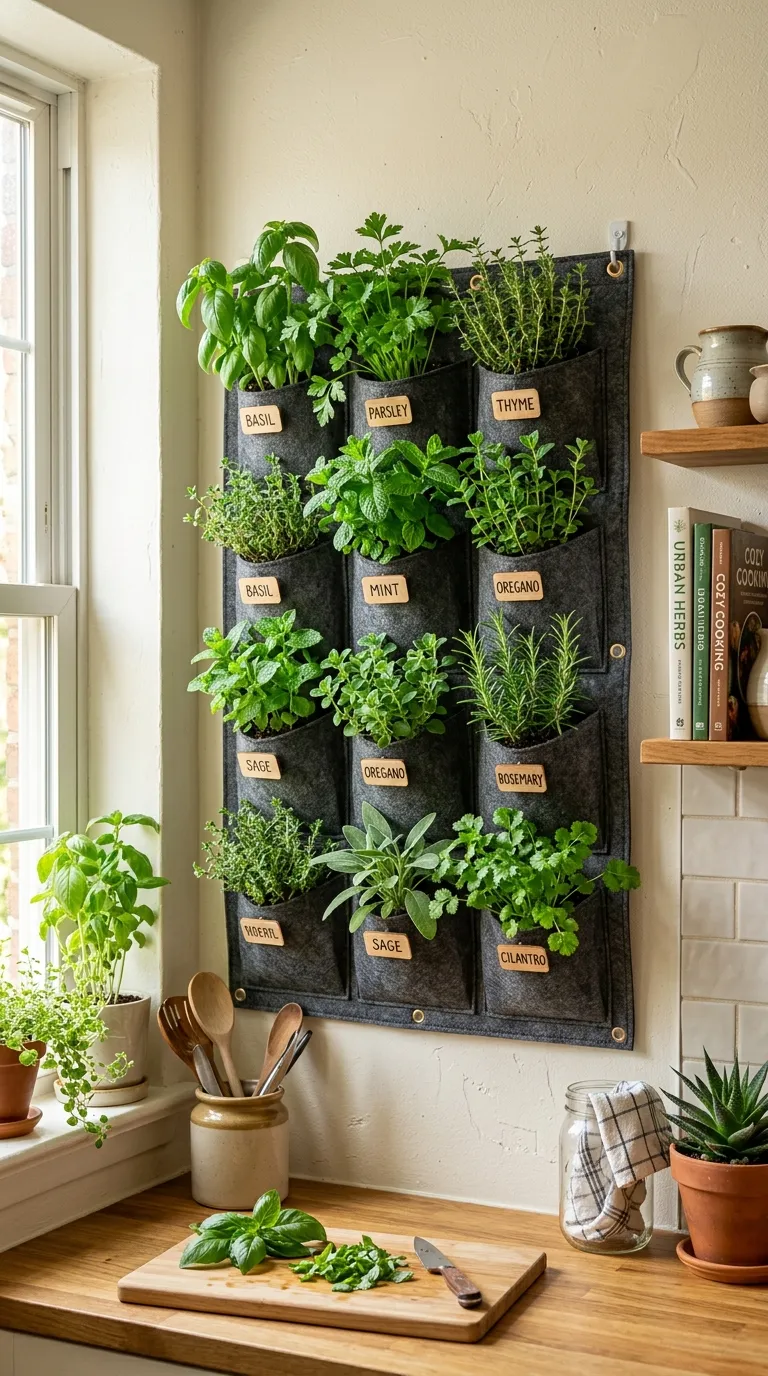
Wall-mounted pocket planters revolutionize small-space indoor herb gardening by utilizing vertical surfaces you already have. These fabric organizers hold individual herbs in clear pockets, creating a living wall display that’s both gorgeous and practical. Installation is simple, just hang on any sunny wall without drilling or permanent damage.
I’ve experimented with this approach in apartments and kitchens with limited counter space. The pocket system allows excellent drainage and airflow around each plant. You get a dramatic visual impact that makes your space feel more vibrant while growing fresh herbs continuously throughout the year. It’s genuinely one of the most space-efficient solutions available.
LED Grow Light Station
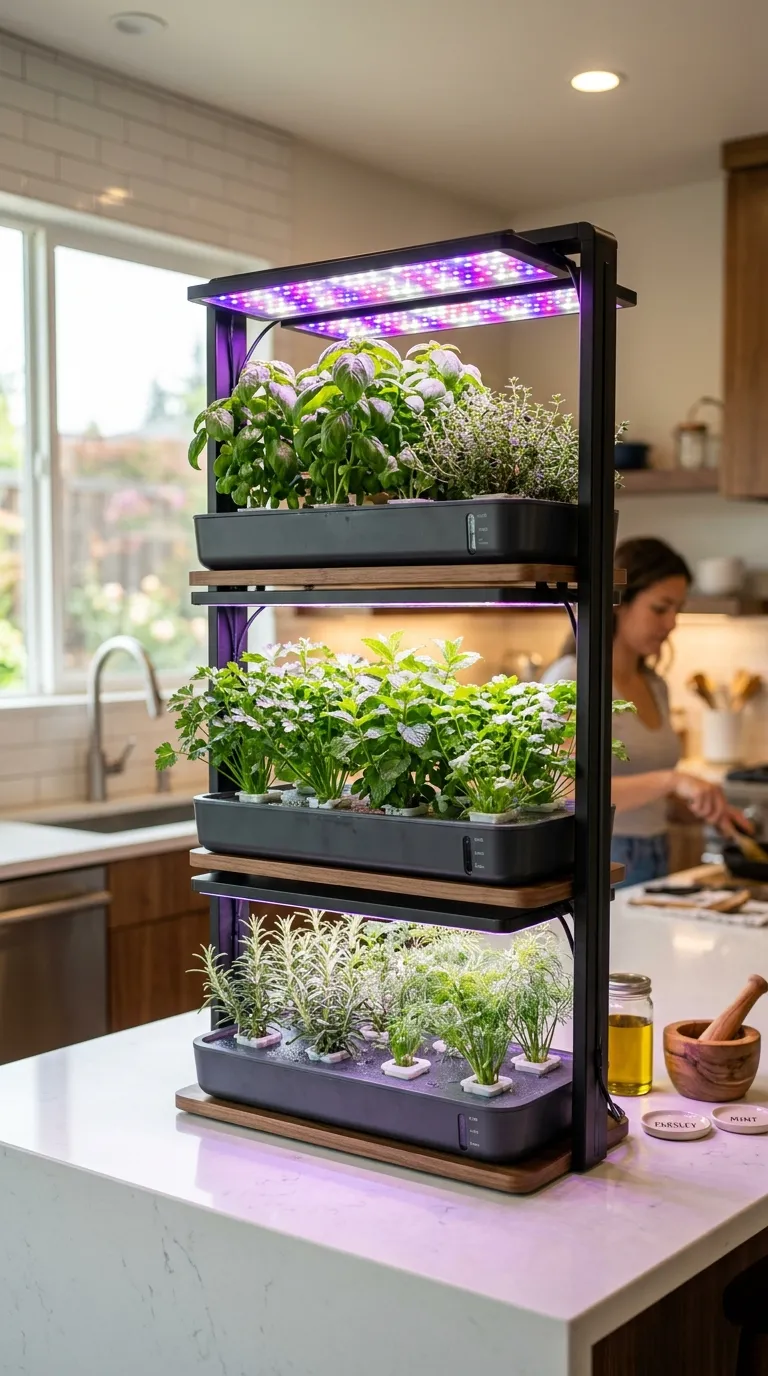
An LED grow light station removes the guesswork from indoor herb planter success by providing optimal artificial lighting. This setup works perfectly in corners, basements, or anywhere natural light is limited. Modern LED lights consume minimal electricity while delivering the exact light spectrum herbs need for photosynthesis and vigorous growth.
In my experience, LED stations transform previously unsuitable spaces into thriving herb garden areas. You control light duration and intensity precisely, resulting in consistently healthy, flavorful herbs year-round regardless of season. The investment pays for itself through reduced waste and increased fresh herb usage in your cooking. Many units fold or adjust, fitting into tight spaces seamlessly.
Rustic Wooden Crate Garden
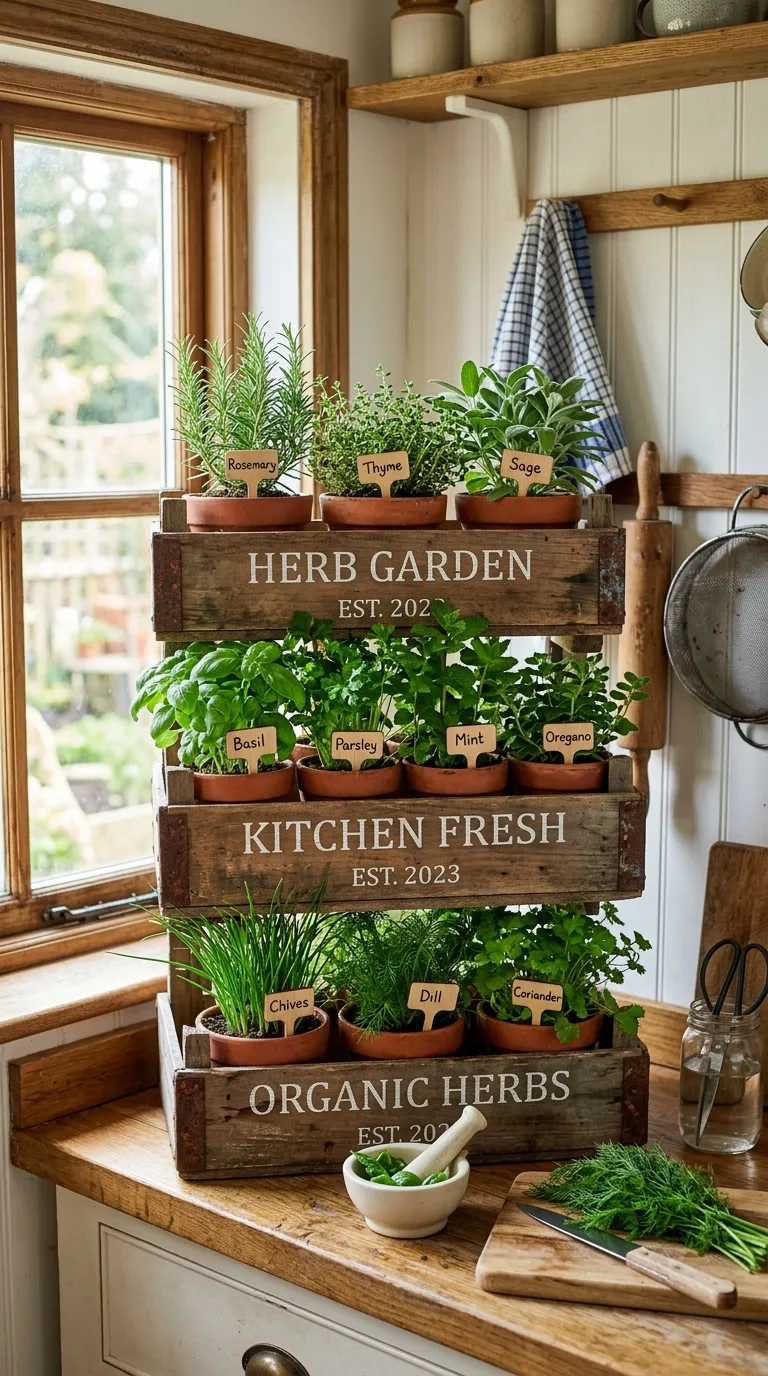
Stacked wooden crates create a charming, rustic herb garden setup that’s surprisingly functional and deeply Instagram-worthy. You can find vintage crates at thrift stores, farmer’s markets, or online, making this an affordable DIY herb garden project. The natural wood aesthetic suits farmhouse, cottage, or eclectic home styles beautifully.
I’ve seen how this approach works wonderfully on patios, balconies, or bright entryways. You can arrange crates in various configurations, pyramid stacks, tiered displays, or random combinations. The open-slatted design provides excellent drainage and air circulation. Your herb planter becomes a decorative focal point that guests admire while serving serious functional purpose in your daily cooking routine.
Hydroponic Herb Kit
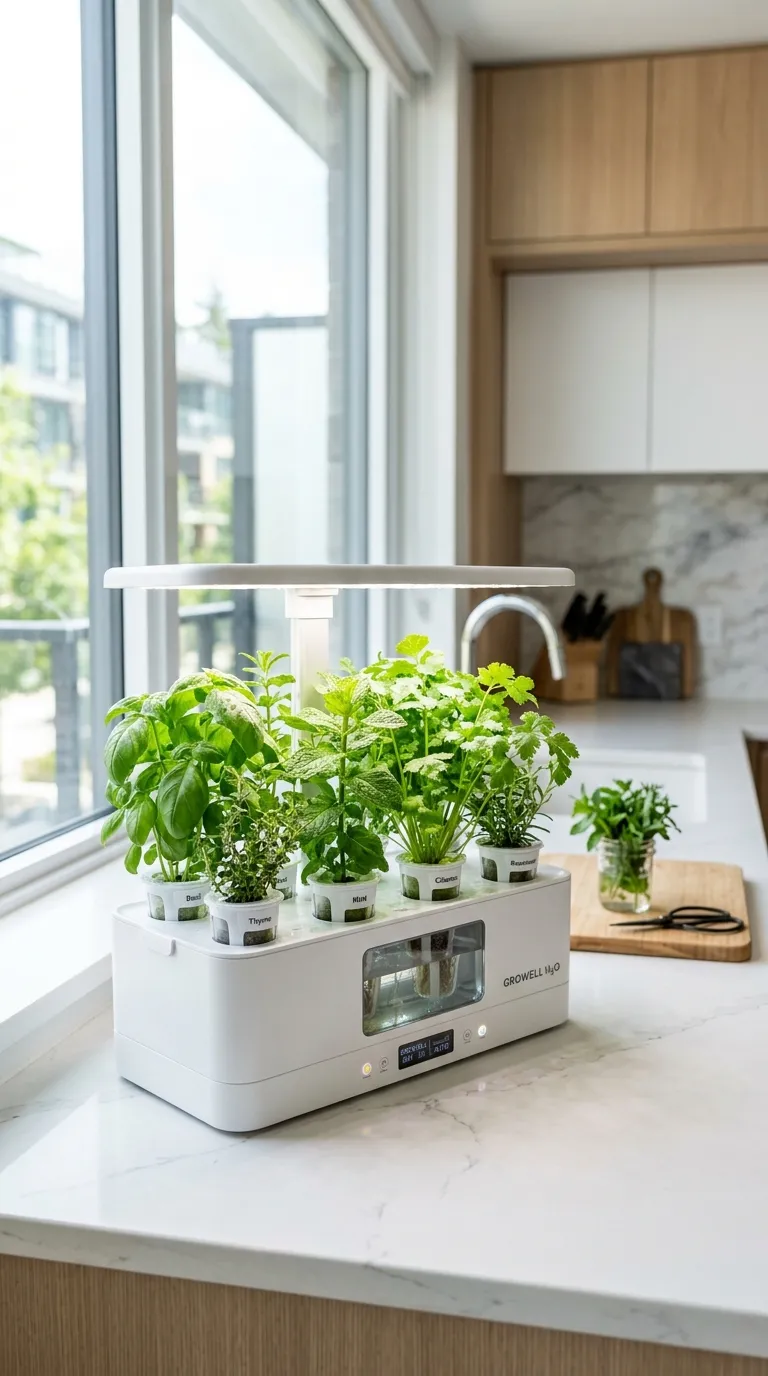
Hydroponic systems represent cutting-edge indoor herb gardening technology that grows herbs in nutrient-rich water instead of soil. These indoor herb gardens kits deliver faster growth, use less water, and produce remarkably healthy plants with minimal maintenance. Perfect for tech-savvy gardeners or anyone seeking a modern, space-efficient solution.
From what I’ve observed, hydroponic setups eliminate common soil-related problems like fungal gnats and overwatering issues. The plants grow visibly faster since nutrients are delivered directly to roots. These best indoor herb gardens for efficiency require electricity but use minimal water and grow space. Many kits are beautiful enough to display proudly on kitchen counters as both functional gardens and modern décor.
Copper Pipe Herb Tower
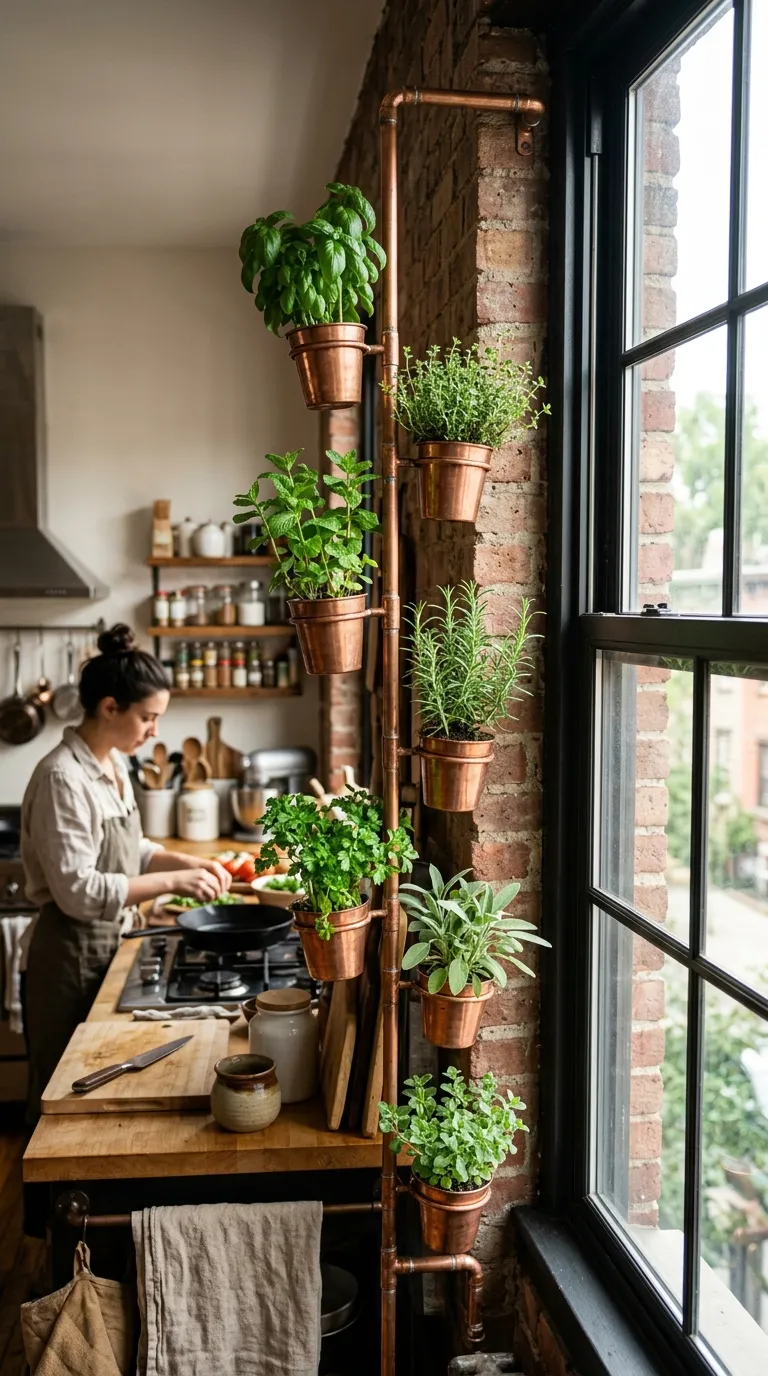
A copper pipe herb planter tower is a stunning DIY herb garden project that combines industrial style with botanical beauty. This vertical tower holds multiple plants in a compact footprint while creating sculptural impact in any space. The copper develops a beautiful patina over time, adding character and warmth to your indoor herb gardening display.
I’ve found that building this structure requires basic plumbing skills and materials available at hardware stores. The vertical design maximizes growing space while looking absolutely striking as a design element. Your herb garden becomes a conversation piece that demonstrates creativity and horticultural enthusiasm. It works beautifully in modern, industrial, or eclectic home styles, transforming function into functional art.
Ceramic Herb Set
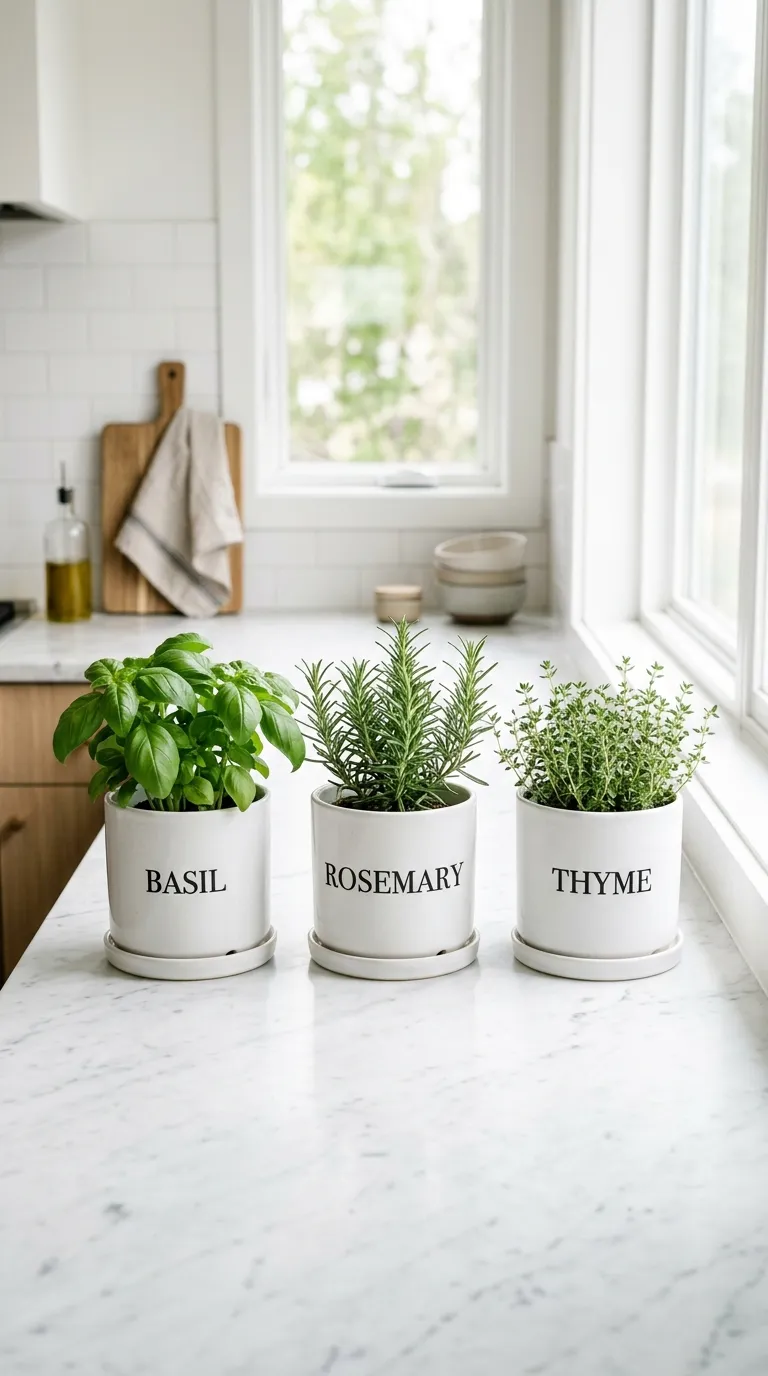
A coordinated ceramic herb planter set brings effortless sophistication to kitchen design while keeping your indoor herb garden beautifully organized. Matching pots in white, terracotta, or decorated ceramic create visual harmony while each pot clearly displays which herb it contains. This approach works beautifully on counters, shelves, or windowsills.
In my experience, the visual coherence of matching planters makes your growing herbs indoors setup feel intentional and designed rather than haphazard. Quality ceramic pots provide excellent drainage and insulation for roots. The organized appearance encourages consistent watering and care since everything looks beautiful and deliberately curated. This simple styling choice transforms casual herb gardening into intentional home décor.
Mason Jar Propagation Station
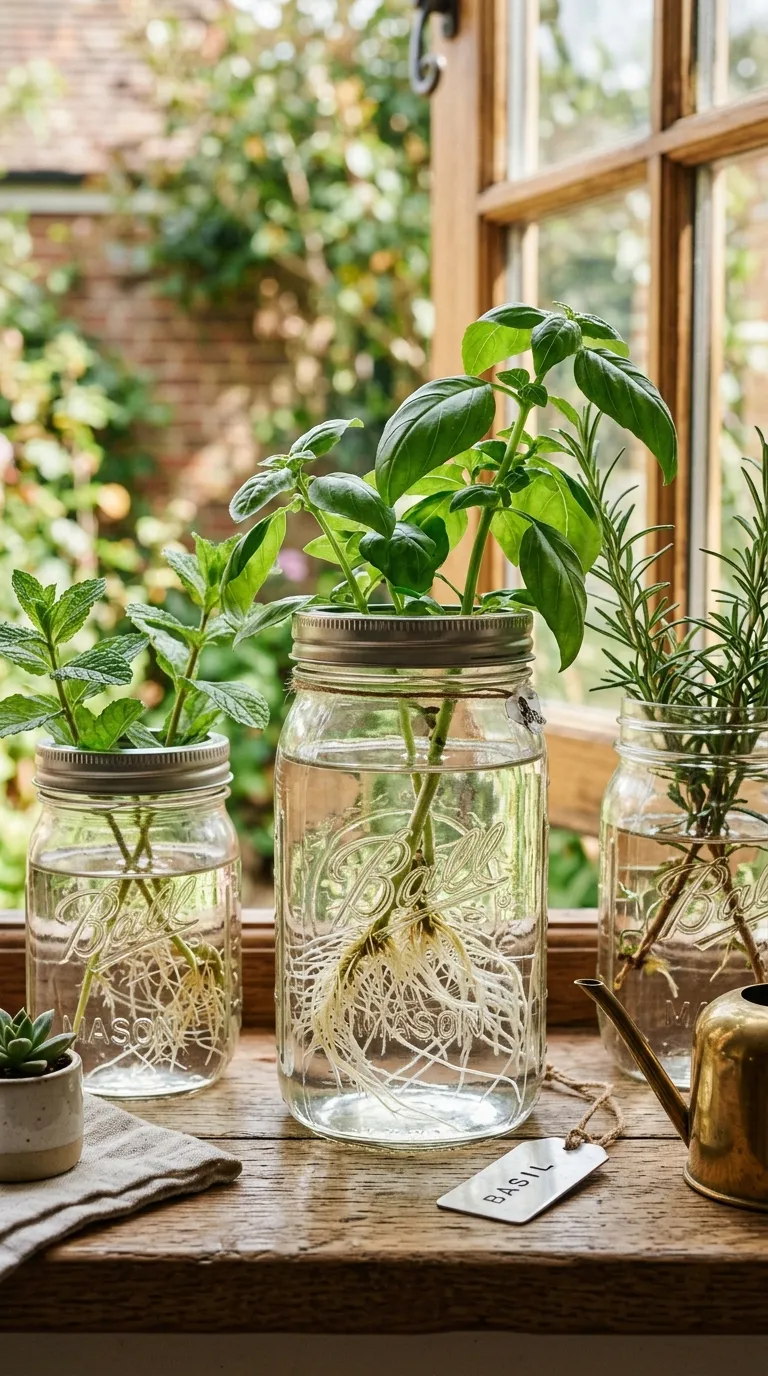
Mason jars filled with water create a beautiful propagation station for rooting herb cuttings before planting. This transparent setup lets you watch roots develop, which is endlessly fascinating and educational. Your indoor herb garden expansion becomes visible and exciting as new plants root and prepare for potting into soil.
From what I’ve seen, water propagation works wonderfully for basil, mint, oregano, and other tender herbs. The clear jars display the rooting process beautifully, making this an engaging activity for families or anyone interested in plant biology. It’s an incredibly affordable way to multiply your herb planter collection or share plants with friends. The aesthetic is clean and minimalist, fitting any kitchen style.
Vintage Metal Tins
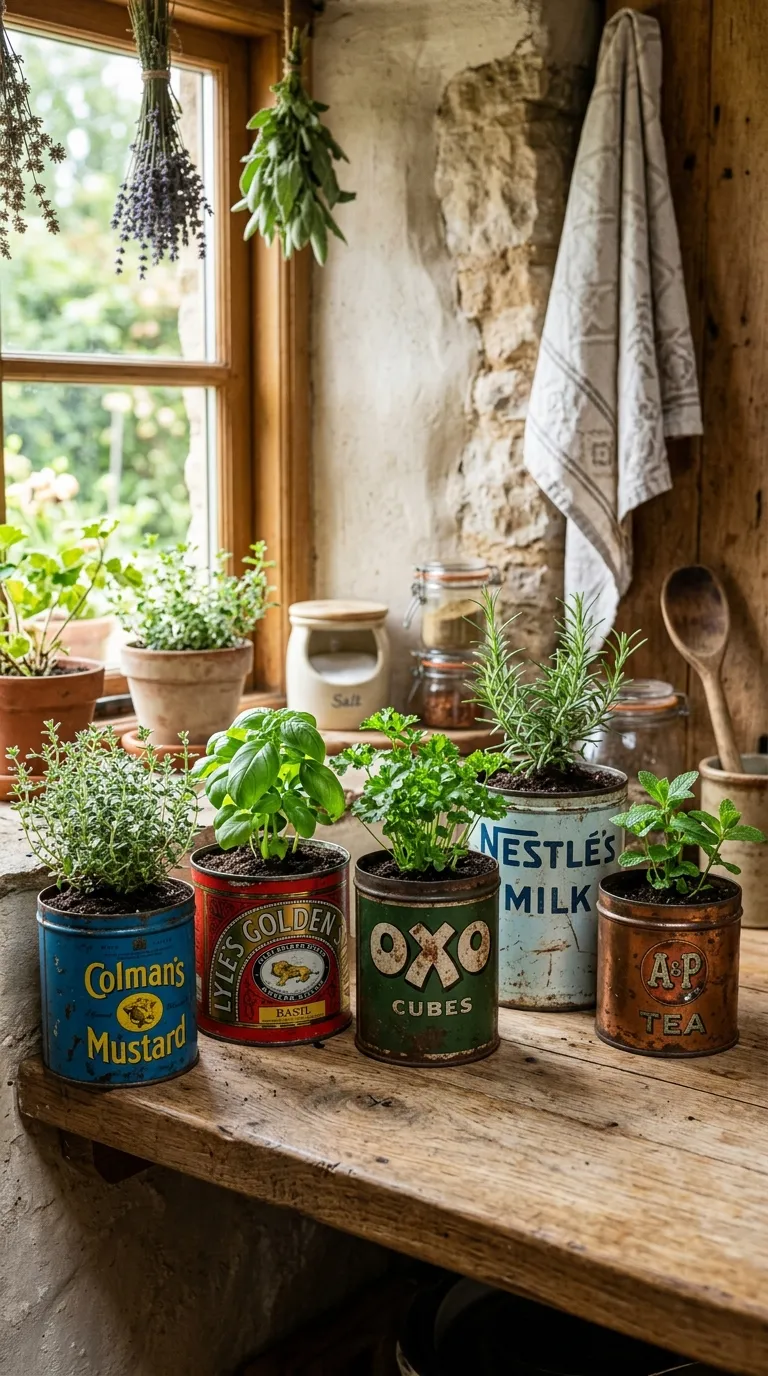
Vintage metal tins transform into charming herb planters for a one-of-a-kind DIY herb garden with genuine character and history. This upcycled approach gives new life to thrifted treasures while creating a collected, eclectic display. Each tin becomes a unique vessel that tells a story while growing your culinary herbs.
I’ve noticed how beautifully this works for creating a farmhouse or cottage aesthetic. You’ll want to add drainage holes to each tin, which is simple with a basic drill. The vintage patina and varied sizes create visual interest and personality that commercial planters simply can’t match. Your indoor herb gardening becomes a creative expression reflecting your personal style while honoring sustainability and resourcefulness.
Corner Shelving Unit
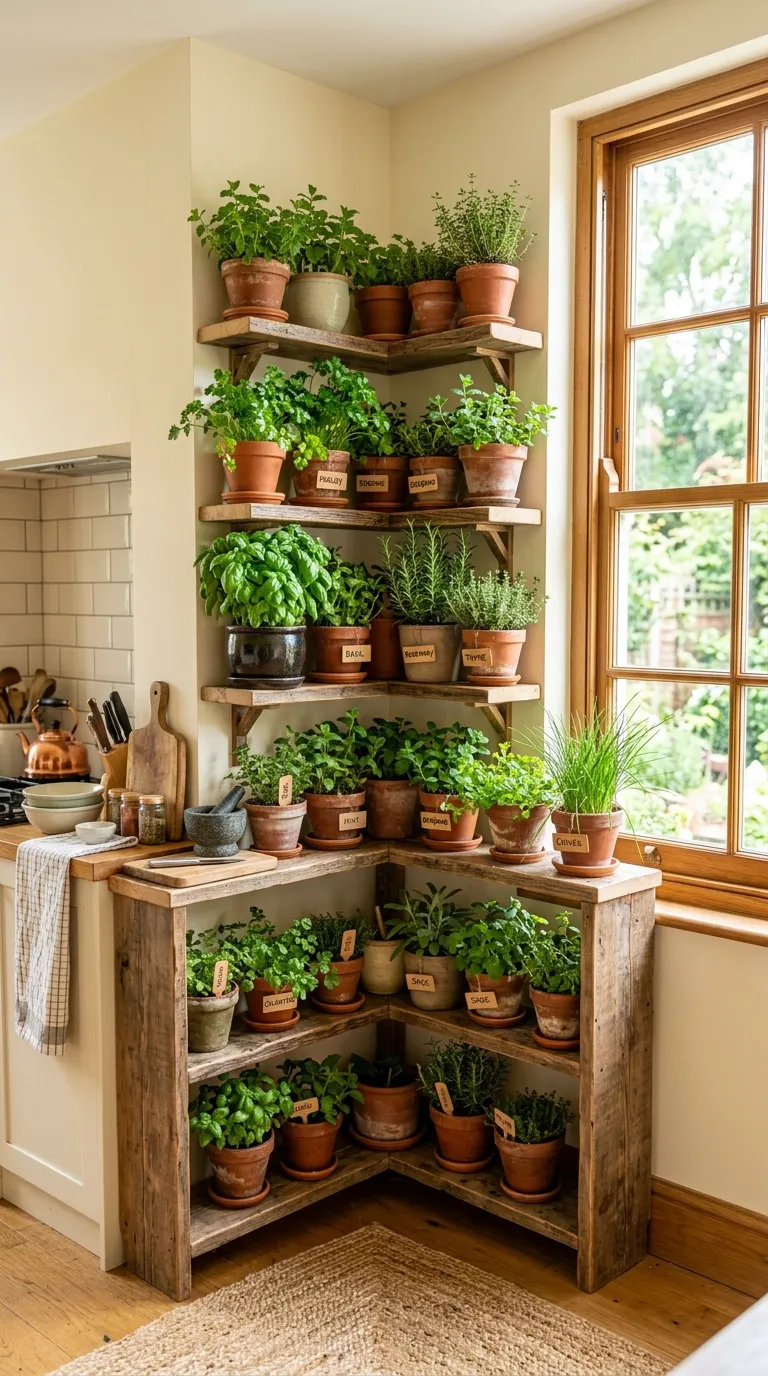
A corner shelving unit maximizes often-unused corner space for a substantial indoor herb garden that fits seamlessly into any room. This setup grows numerous herbs without consuming valuable counter, wall, or floor space elsewhere. Corner placement typically receives excellent natural light while staying out of primary traffic patterns.
In my experience, corner installations are often overlooked by homeowners looking for herb garden ideas. Yet they’re genuinely ideal locations, accessible, well-lit, and completely hidden from prime kitchen real estate. You can stack multiple shelves vertically, creating a dramatic botanical display. The organized arrangement makes watering simple and maintenance manageable even with dozens of plants thriving in this consolidated space.
Hanging Rope Planters
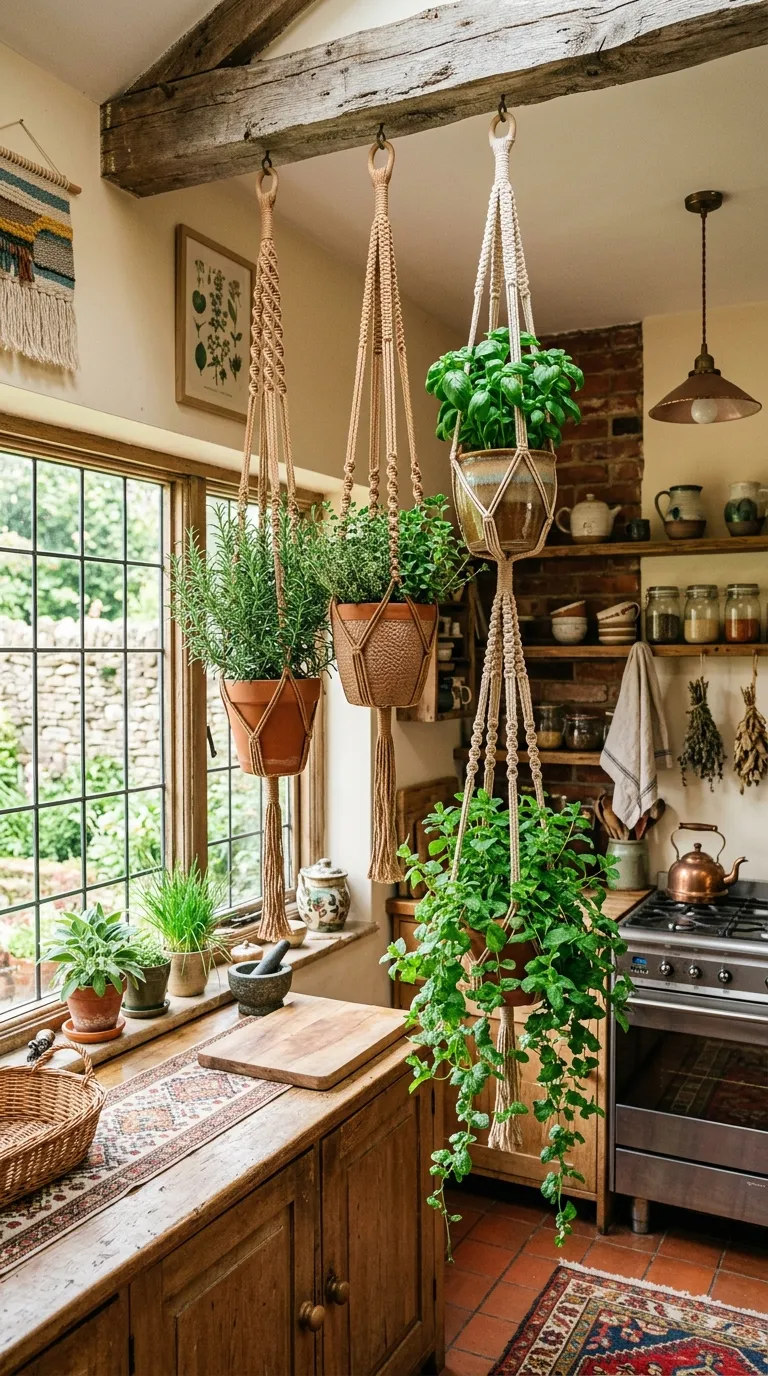
Hanging rope herb planters create a boho, artistic vibe while maximizing vertical growing space in any room. Macramé or simple rope suspensions hold individual pots at varying heights, creating visual interest and botanical drama. This approach works beautifully in kitchens, dining areas, or any space where you want a softer, more handmade aesthetic.
From what I’ve observed, this design appeals to those seeking a less structured, more organic feeling indoor herb garden. The natural materials feel authentic and warm compared to metal or plastic alternatives. Installation is straightforward, just mount a sturdy rod and hang planters securely. Your herb garden ideas become tangible art installations that grow food while beautifying your space with genuine character and warmth.
Mirrored Wall Backdrop
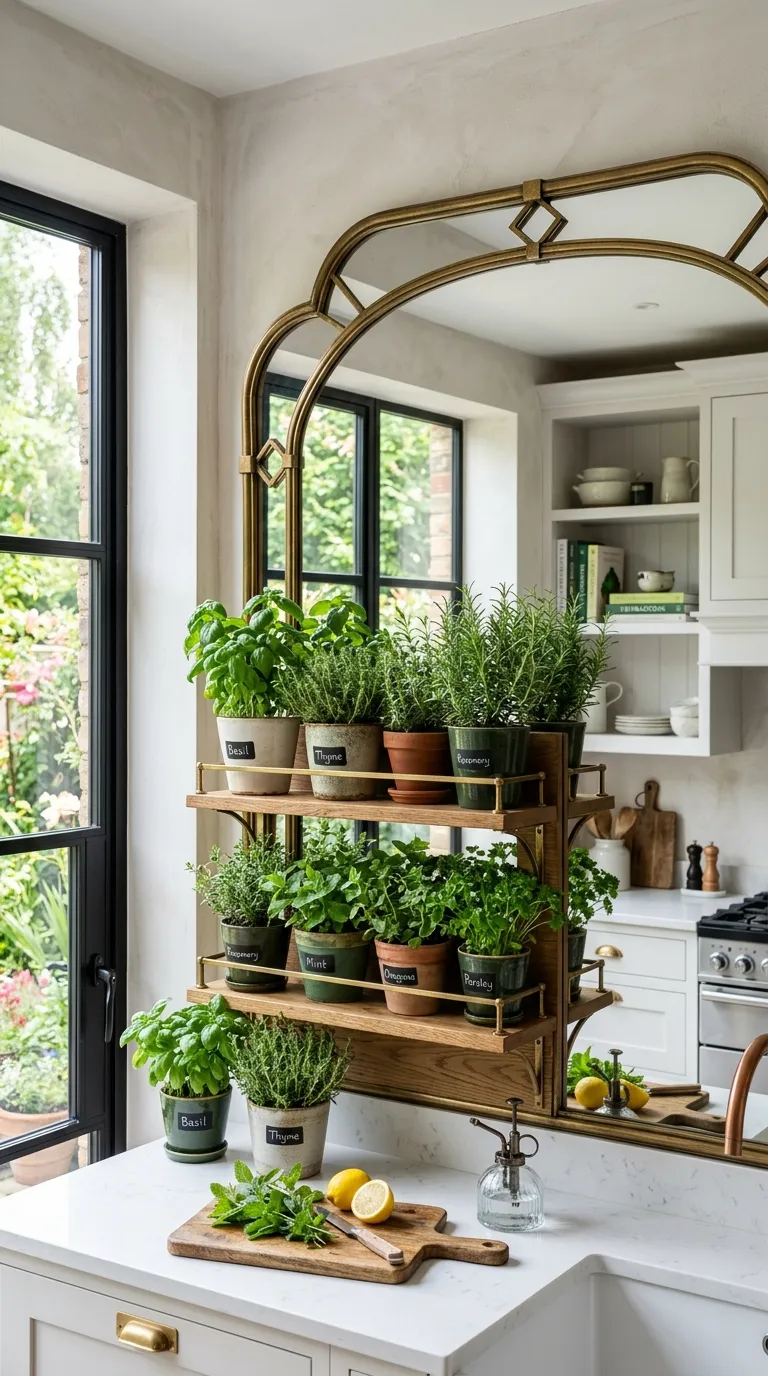
Adding a mirrored backdrop behind your herb planter arrangement doubles the visual impact while amplifying natural light throughout the space. Mirrors reflect sunshine deeper into the plants while making your indoor herb garden appear larger and more dramatic. This styling elevates growing herbs indoors from practical task to intentional design feature.
I’ve found this approach particularly effective in kitchens or dining areas where you want plants to feel like a design statement. The mirror creates visual depth and elegance while actually improving plant health through reflected light. Your herb gardening setup becomes a glamorous focal point worthy of magazine features. The combination of greenery and reflective surfaces creates sophisticated botanical sophistication that feels elevated and intentional.
Tiered Staircase Display
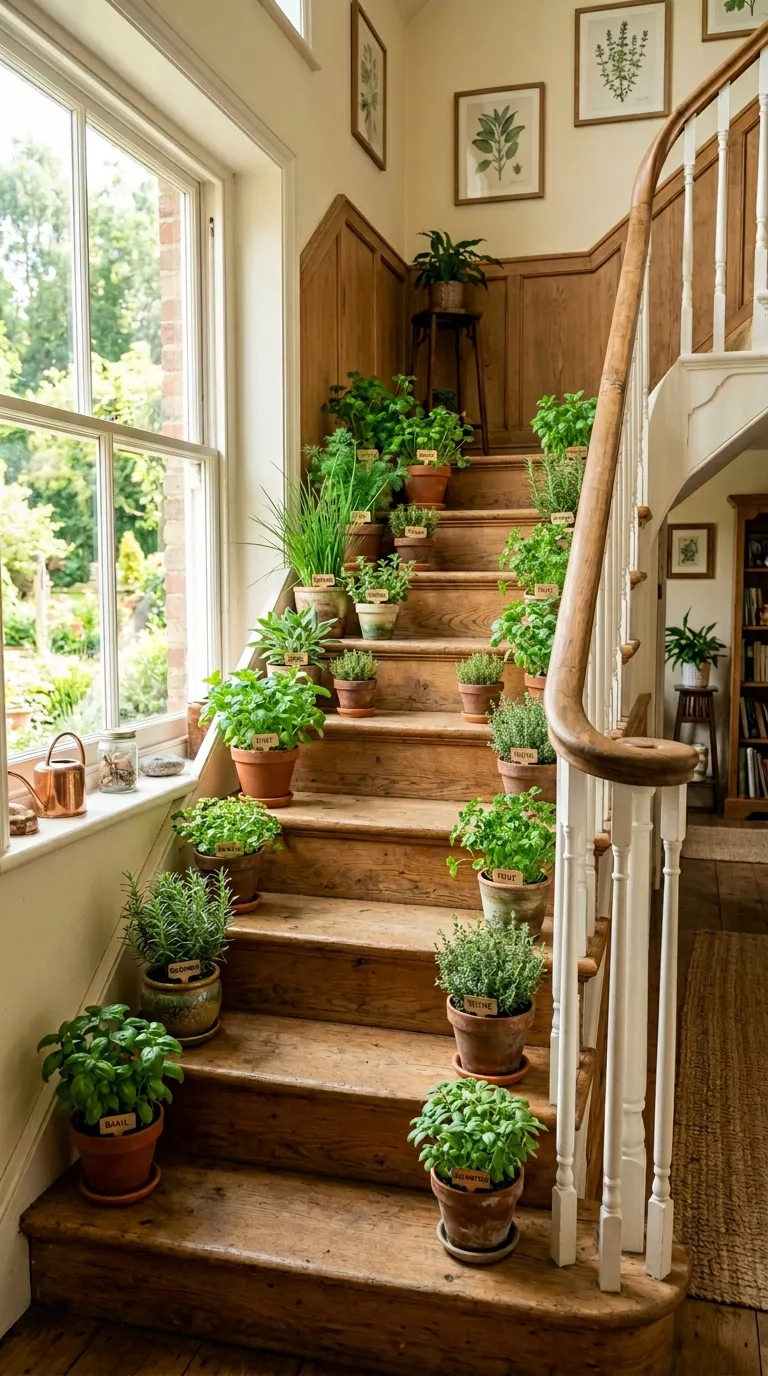
Transform your staircase into a living herb garden display by arranging potted plants on each step. This creative use of existing architectural features creates a stunning visual progression while keeping herbs within arm’s reach during transitions between levels. It’s an innovative indoor herb gardening solution that works beautifully in homes with decorative staircases.
From what I’ve seen, this approach works especially well for smaller herbs and in homes with wide, shallow steps. The ascending arrangement creates dynamic visual interest and makes efficient use of space that might otherwise remain decorative only. The staircase becomes a botanical journey that welcomes visitors and demonstrates your creative approach to herb garden design. It’s unconventional yet utterly functional.
Windowsill Herb Ladder
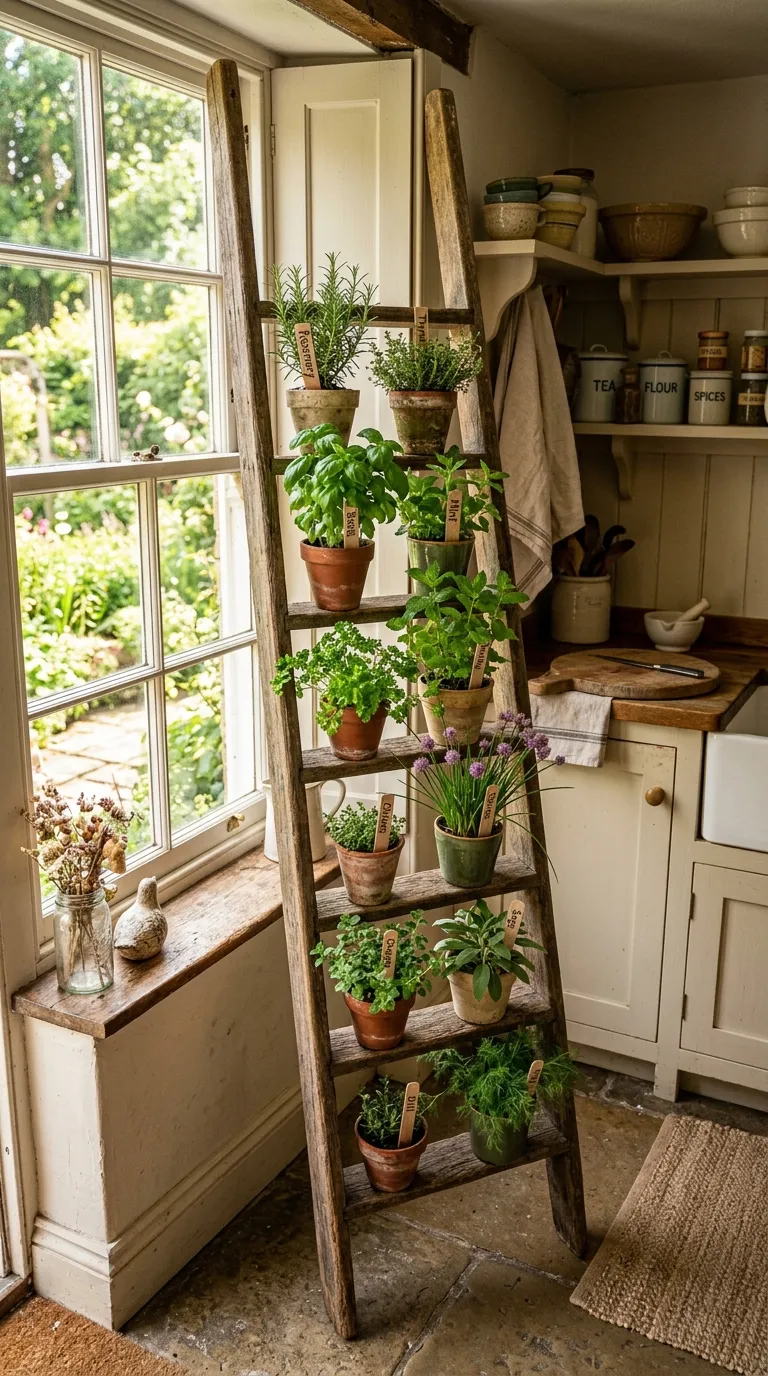
A simple wooden ladder positioned in front of your window creates a charming, functional herb planter display with rustic appeal. Each rung holds individual pots at progressively higher levels, maximizing light exposure while creating visual interest. This indoor herb garden solution works beautifully in farmhouse, cottage, or eclectic style homes.
I’ve noticed this setup appeals especially to people seeking herb garden ideas that feel less “designed” and more naturally collected. Ladders are affordable, easy to find, and require no installation. The tiered arrangement ensures each plant receives excellent light exposure. Your growing herbs indoors becomes a design statement that feels charming and intentional while remaining completely functional and low-pressure.
Backlit Herb Wall
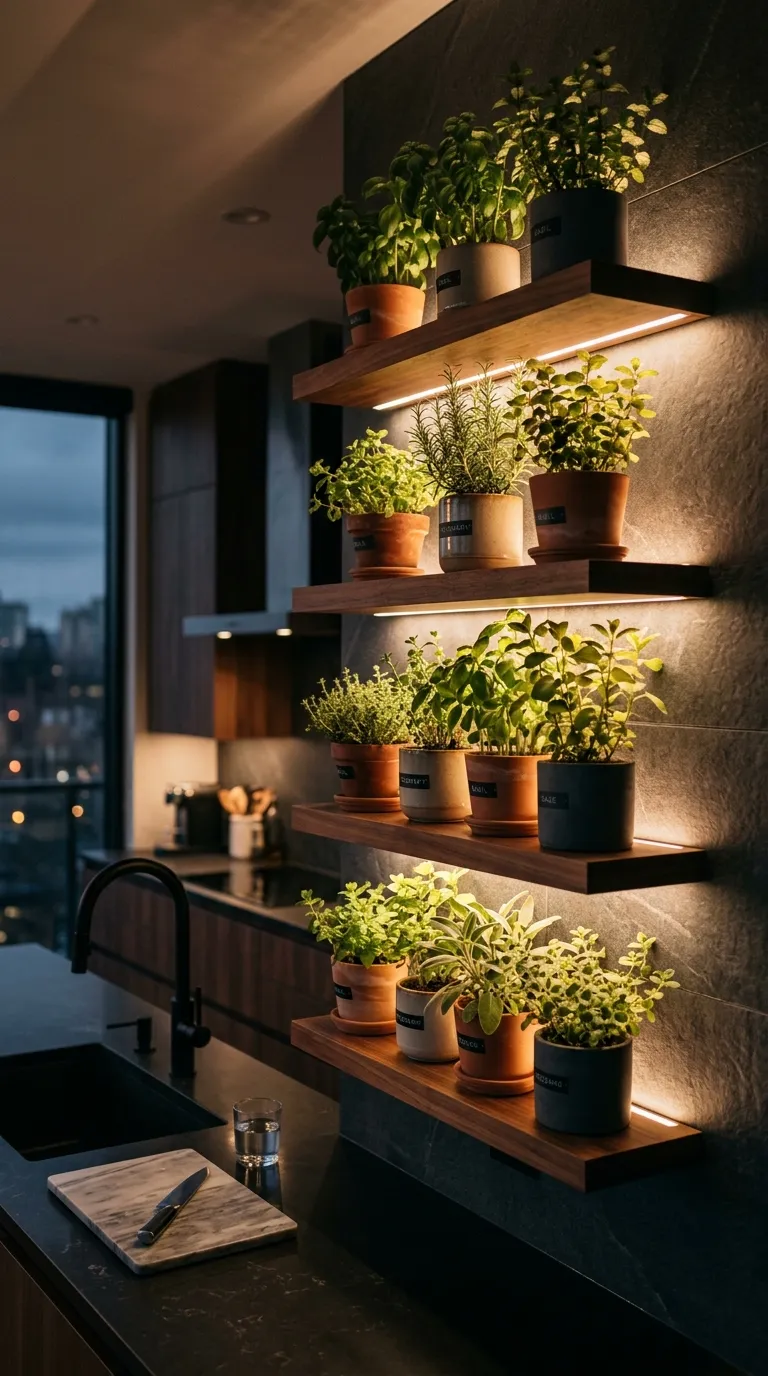
Backlit shelving transforms your indoor herb garden into a stunning nighttime display that’s equally beautiful during daylight. Soft LED lights positioned behind plants create glowing silhouettes that look absolutely gallery-worthy. This approach combines indoor herb gardening with ambient lighting that beautifies your entire space after sunset.
In my experience, backlighting particularly elevates herb planter displays in kitchens or dining areas where you spend evening time. The effect feels sophisticated and intentional, transforming simple plants into focal points worthy of attention. The lighting actually benefits herb growth while creating that beautiful glow you’d otherwise achieve only through restaurant or boutique design. Your herb garden becomes both functional and genuinely artistic.
Tiered Birdcage Planter
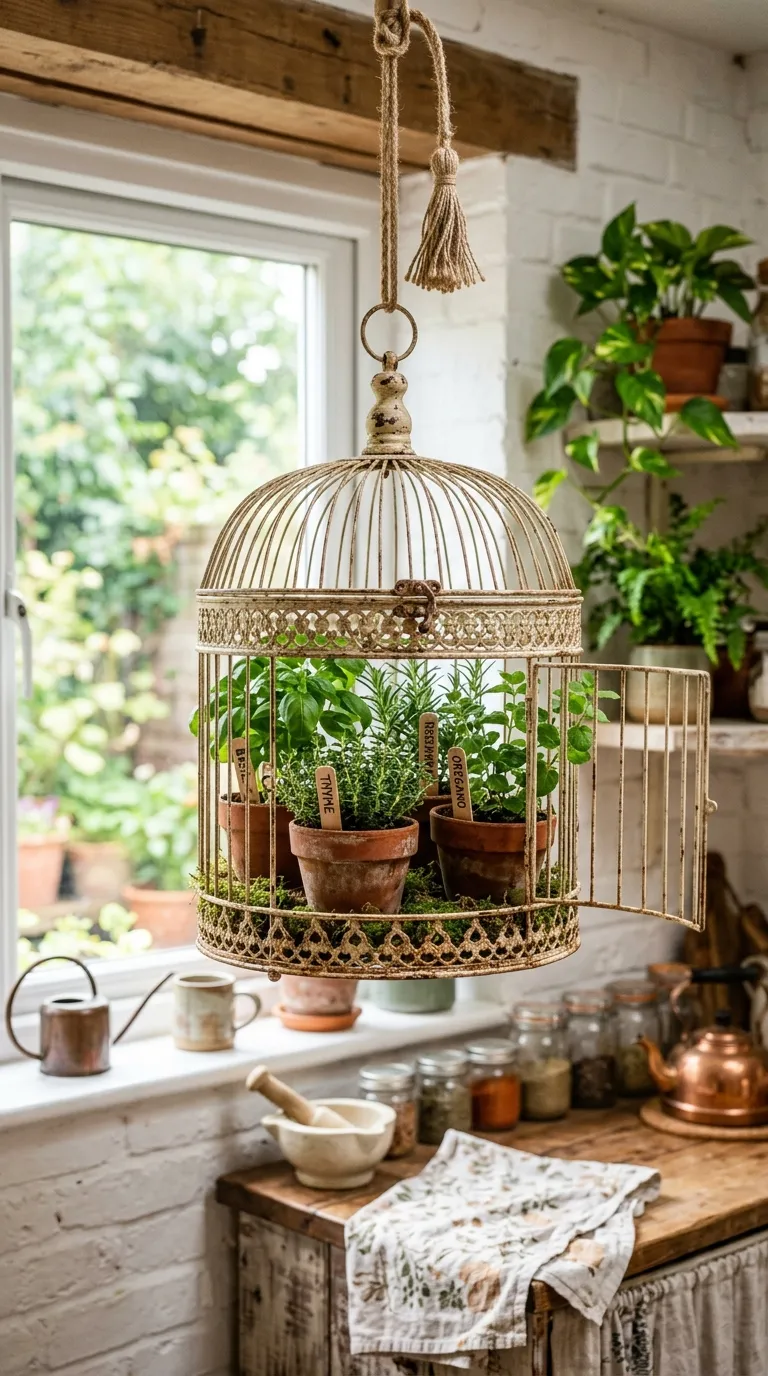
A decorative birdcage becomes a whimsical herb planter holder for a truly unique DIY herb garden that sparks conversation. These vertical structures hold multiple small pots while creating a sculptural focal point. This approach works beautifully in eclectic, bohemian, or vintage-inspired spaces where personality and originality matter more than conventional design.
From what I’ve observed, birdcage herb gardens appeal to creative individuals seeking herb garden ideas that reflect their personality. The ornamental structure provides an interesting silhouette while serving practical growing purpose. It’s an unconventional approach that demonstrates horticultural creativity. Your indoor herb gardening becomes artistic expression celebrating both botanical enthusiasm and resourceful upcycling of vintage finds.
Concrete Planter Boxes
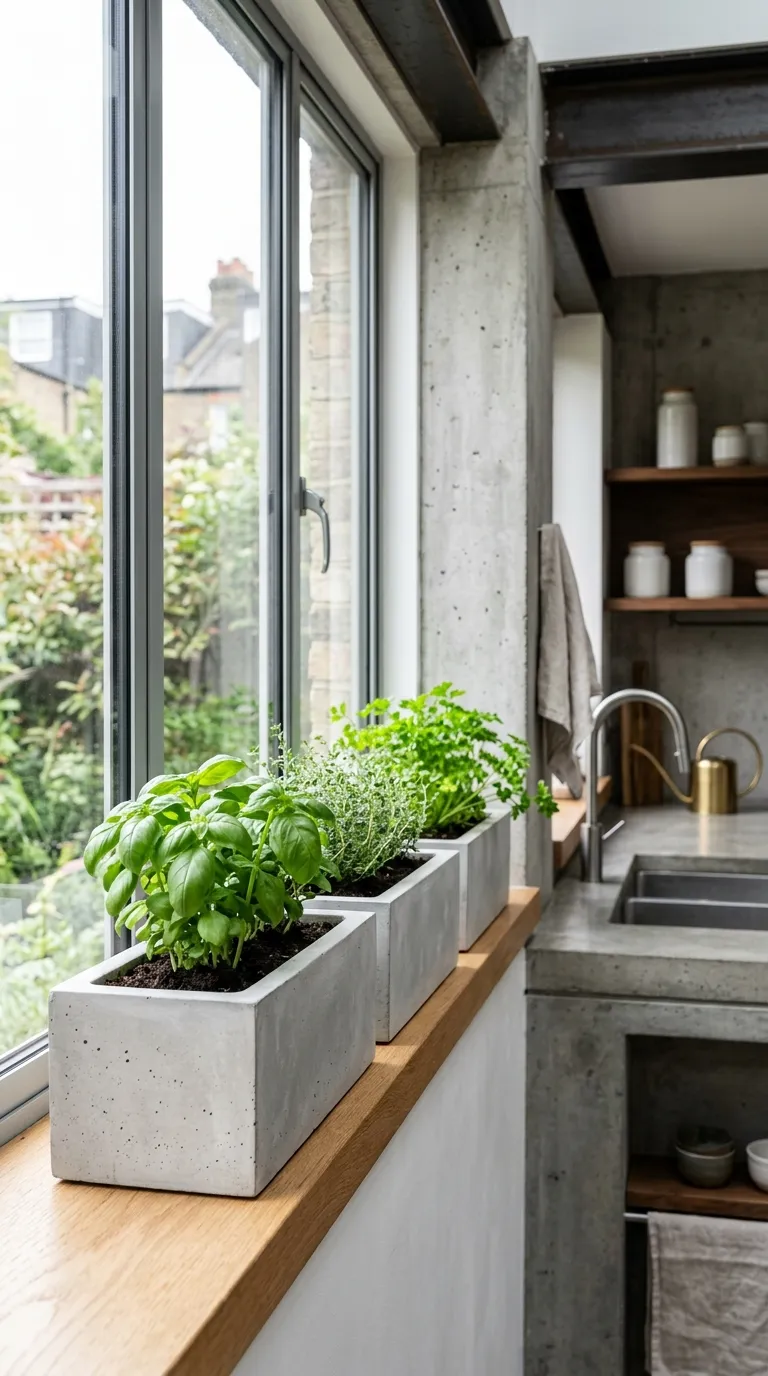
Sleek concrete herb planters bring industrial minimalist style to your indoor herb garden while providing durable, long-lasting growing vessels. These modern boxes suit contemporary kitchens and apartments perfectly, creating a curated, design-forward aesthetic. Concrete’s neutral tone works with any décor while its substantial presence feels intentional and sophisticated.
I’ve found that concrete planters work beautifully for creating a cohesive, designed look with multiple matching units. The material provides excellent drainage and durability. Your growing herbs indoors in concrete boxes feels elevated and intentional, suitable for modern, industrial, or Scandinavian-inspired spaces. The visual weight and minimalist aesthetic transform simple herb gardening into contemporary design that looks magazine-worthy.
Suspended Glass Terrariums
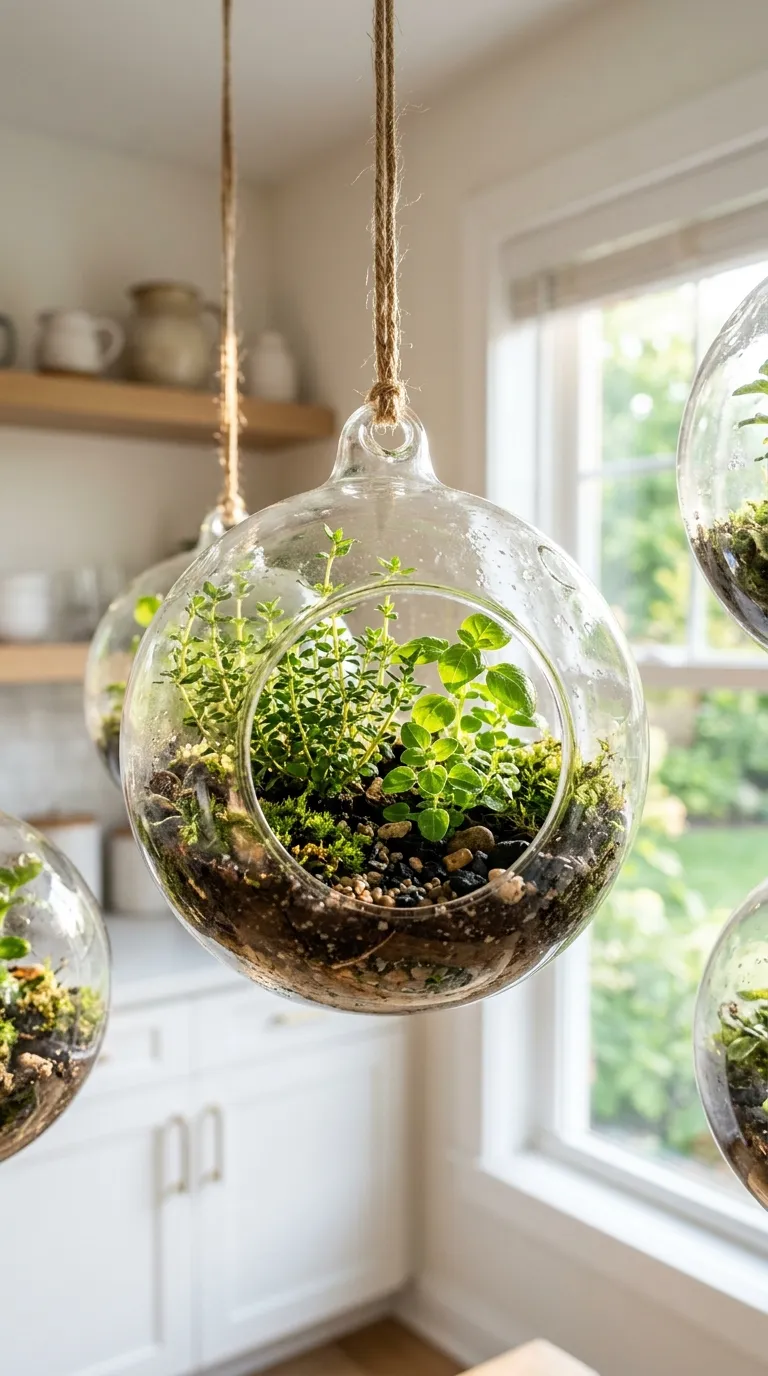
Hanging glass terrariums create an ethereal, floating indoor herb garden that looks absolutely magical. Each suspended bubble holds a small herb plant, creating the appearance of botanical magic suspended in air. This delicate approach suits modern, minimalist, or artistic spaces where unconventional beauty matters deeply.
From what I’ve seen, these herb planter setups work best for smaller, slow-growing herbs like thyme or oregano. The enclosed environment requires minimal watering while the transparent display makes plants feel like living art installations. Your indoor herb gardening becomes genuinely conversation-starting with this ethereal approach. It demonstrates creativity and botanical passion while creating an almost magical living display that captures light beautifully throughout the day.
Kitchen Island Herb Cart
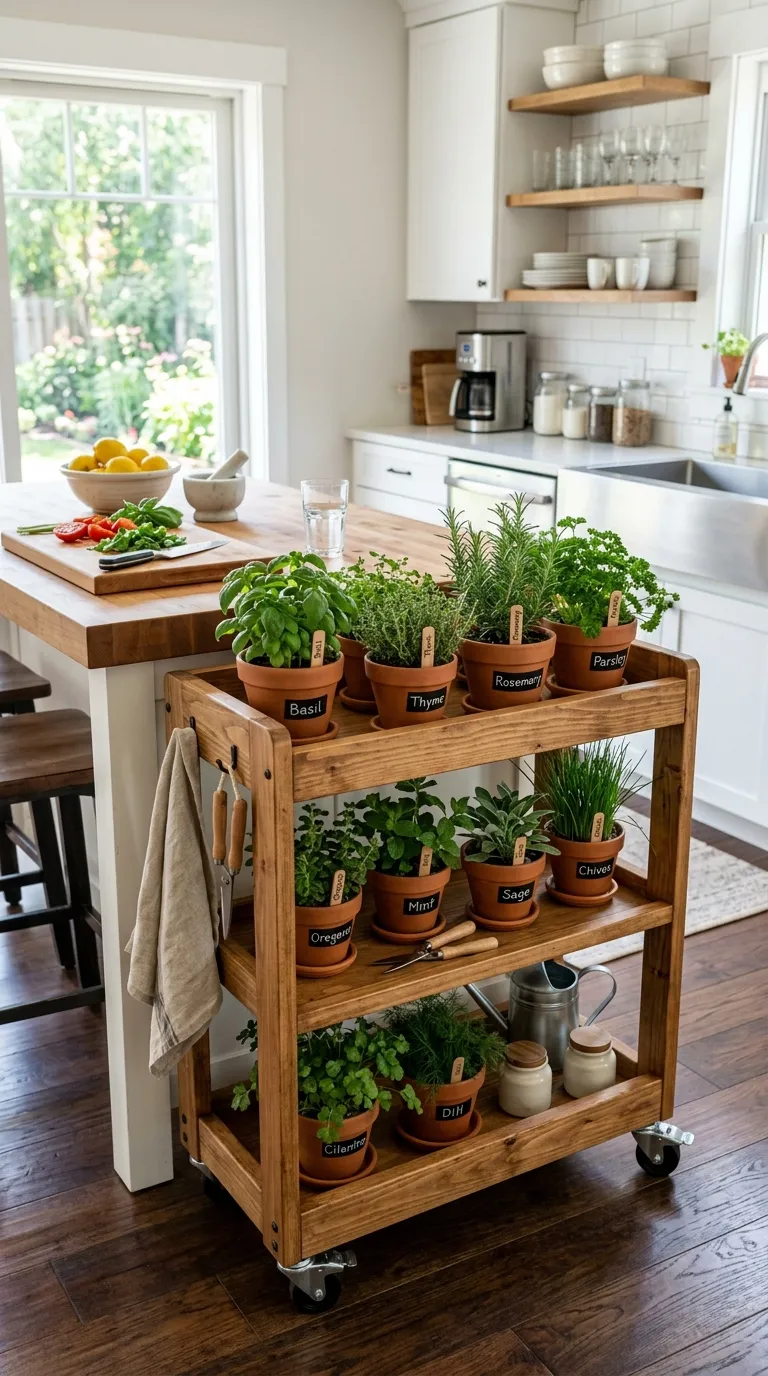
A rolling herb cart positioned at your kitchen island combines functionality with mobility, allowing you to move your indoor herb garden wherever light and access serve you best. This herb planter solution keeps fresh herbs inches from your cooking surface while remaining movable for cleaning or rearrangement. Perfect for cooks who want maximum convenience.
In my experience, mobile carts revolutionize indoor herb gardening by eliminating stationary limitations. You can reposition for seasonal light changes or move herbs away from high-traffic areas. The tiered design holds numerous herbs while remaining compact and accessible. Your herb garden ideas become reality through a simple, hardworking piece that actively supports your cooking while looking intentionally designed and organized on display.
Bamboo Shelving System
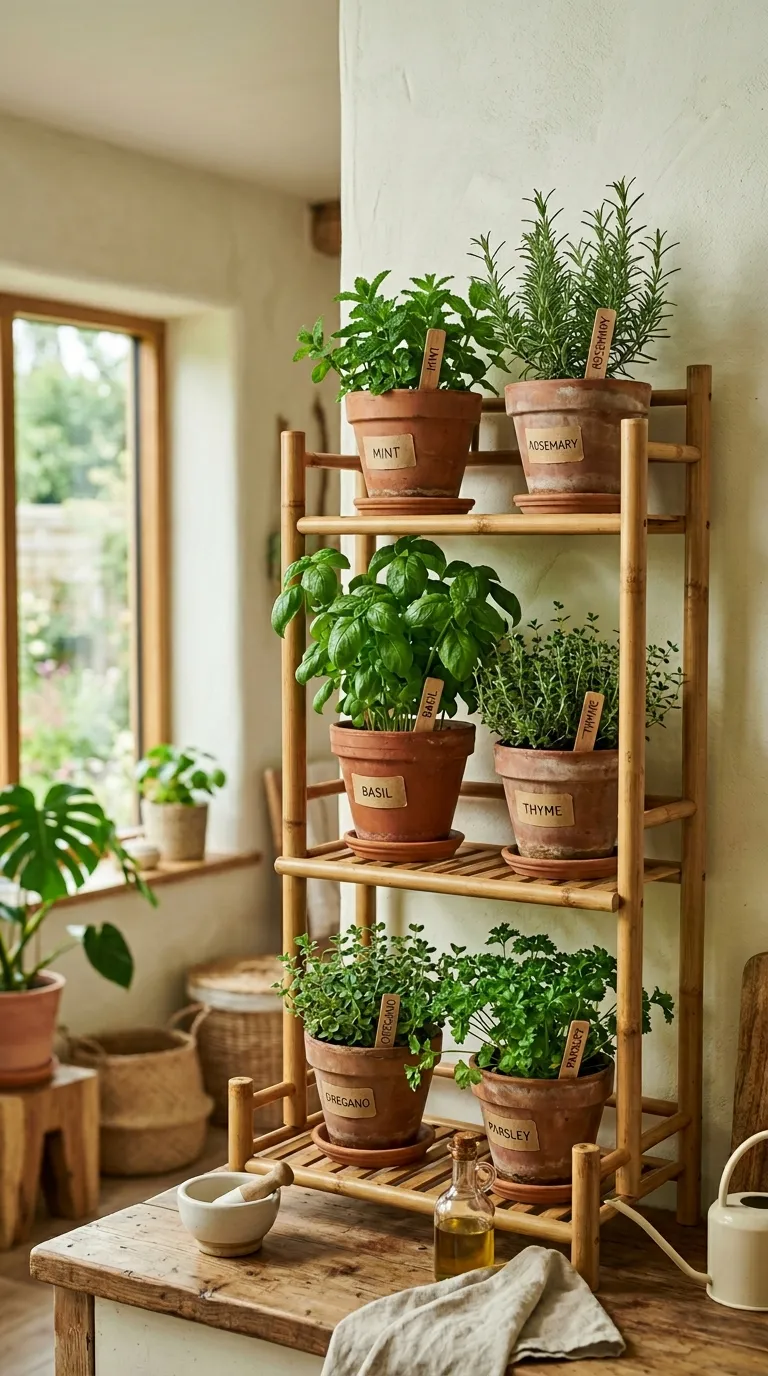
Sustainable bamboo shelving creates an eco-conscious indoor herb garden display that suits modern, botanical, or naturalistic home styles. Bamboo’s warm tones complement green foliage beautifully while the lightweight structure is surprisingly sturdy. This herb planter setup celebrates natural materials while promoting your growing herbs indoors practice sustainably.
From what I’ve observed, bamboo appeals to environmentally conscious gardeners seeking herb garden ideas that align with sustainability values. The warm, natural material aesthetic feels inviting and authentic. Bamboo shelving typically requires no tools for assembly and can be adjusted for different plant sizes. Your indoor herb gardening setup demonstrates commitment to natural materials and sustainable living while growing beautiful, functional herbs efficiently and beautifully.
Aromatic Herb Wall Cluster
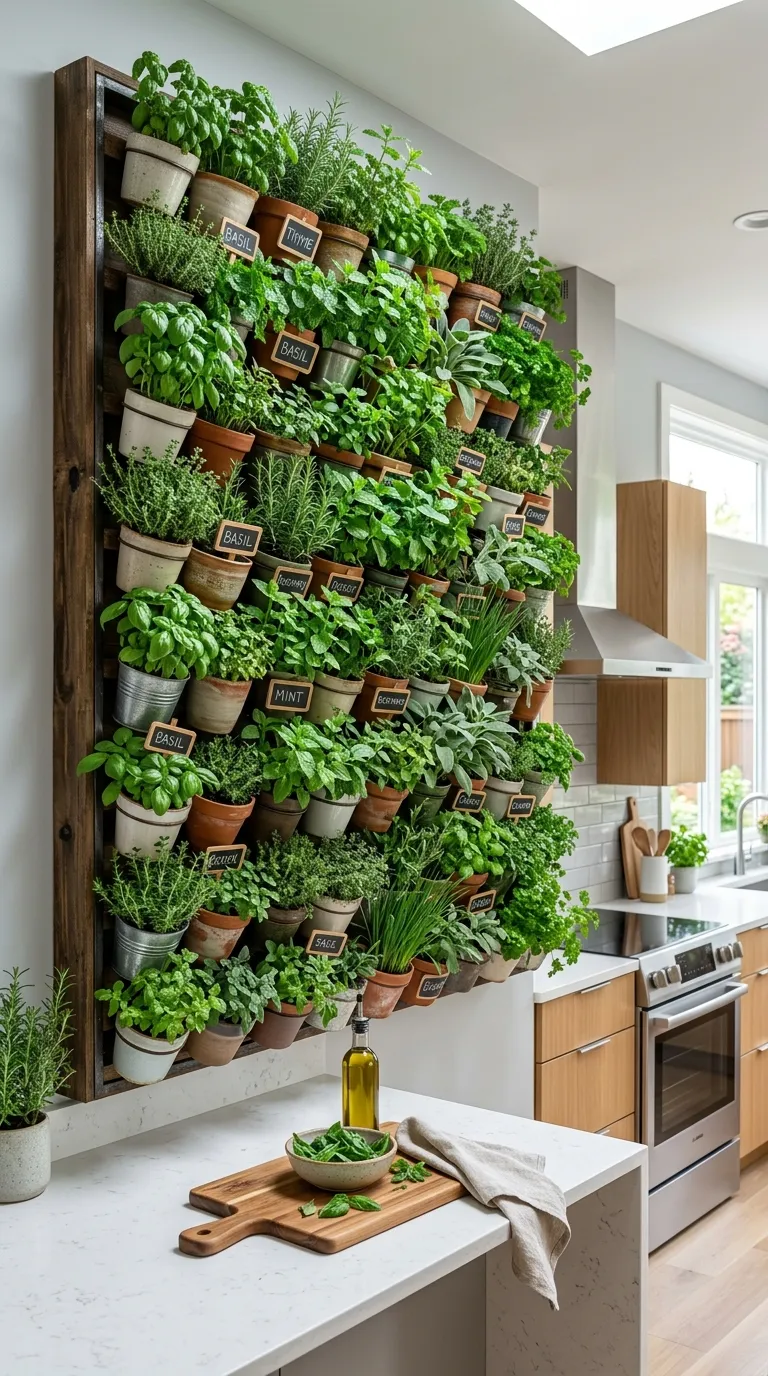
Create an abundant herb garden wall by clustering numerous small herb planters closely together, forming a living botanical mural. This approach maximizes your growing capacity while creating dramatic visual impact. The dense arrangement celebrates abundance and variety while filling vertical space with productive, beautiful plants.
I’ve seen how this approach works beautifully in spacious kitchens or dining areas where visual drama enhances the space. The closely-packed arrangement creates an artistic pattern while each plant receives adequate light and airflow. Your indoor herb gardening becomes a statement about abundance, creativity, and botanical enthusiasm. The visual effect is genuinely stunning, a living wall that produces endless fresh herbs while functioning as dramatic, organic artwork.
Scandinavian Minimalist Shelf
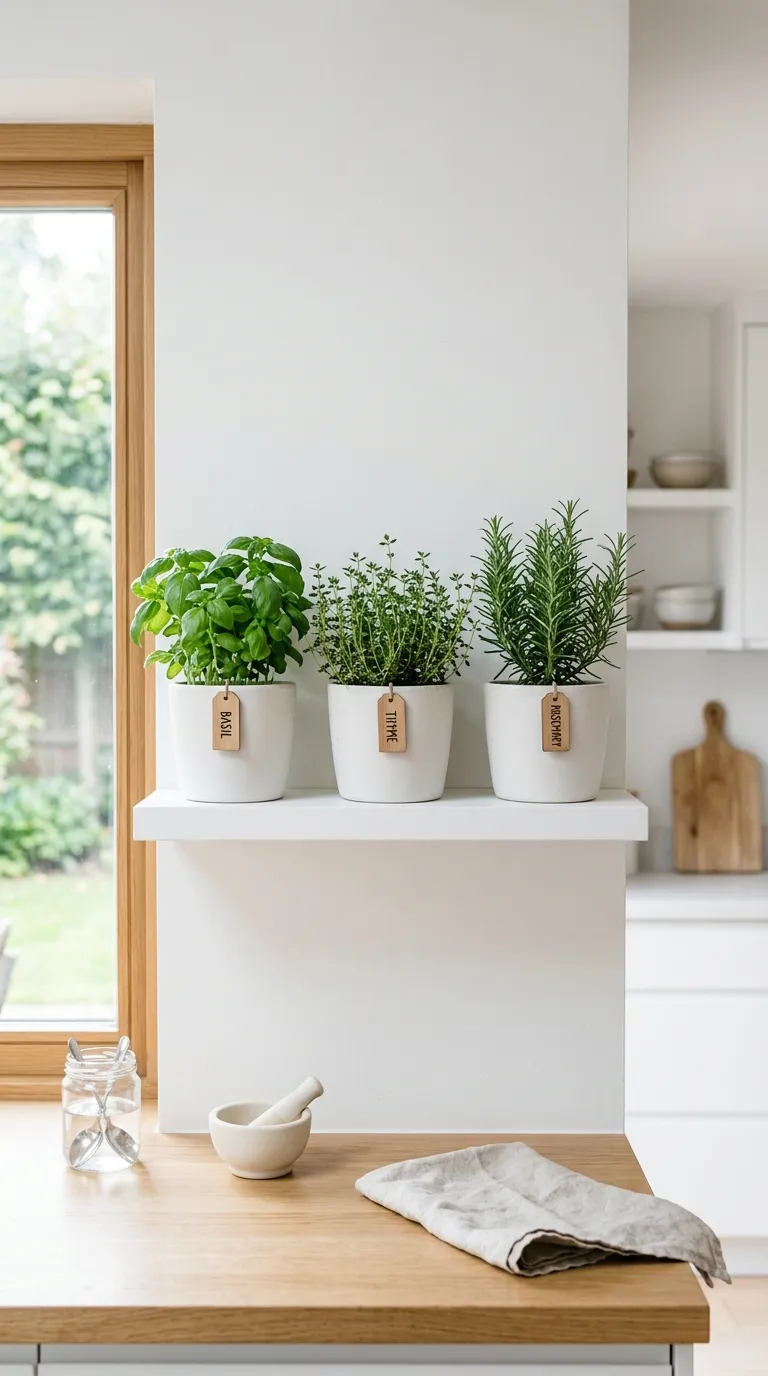
Embrace minimalist Scandinavian design through a carefully curated indoor herb garden featuring just a few perfectly-displayed plants on clean, floating shelves. This less-is-more approach celebrates simplicity and intention, allowing each plant to shine individually. The restrained design suits modern, peaceful, or mindful-living aesthetics beautifully.
From what I’ve observed, Scandinavian-style herb planter displays appeal to those seeking calm, uncluttered spaces. Spacing plants generously prevents crowding and focuses attention on individual beauty. Your growing herbs indoors becomes a meditation in simplicity and mindfulness. This approach proves that abundance isn’t necessary for success, sometimes three perfectly-chosen plants on a clean shelf communicates intention, peace, and sophisticated restraint more powerfully than dozens of options.
Vintage Window Frame Herb Display
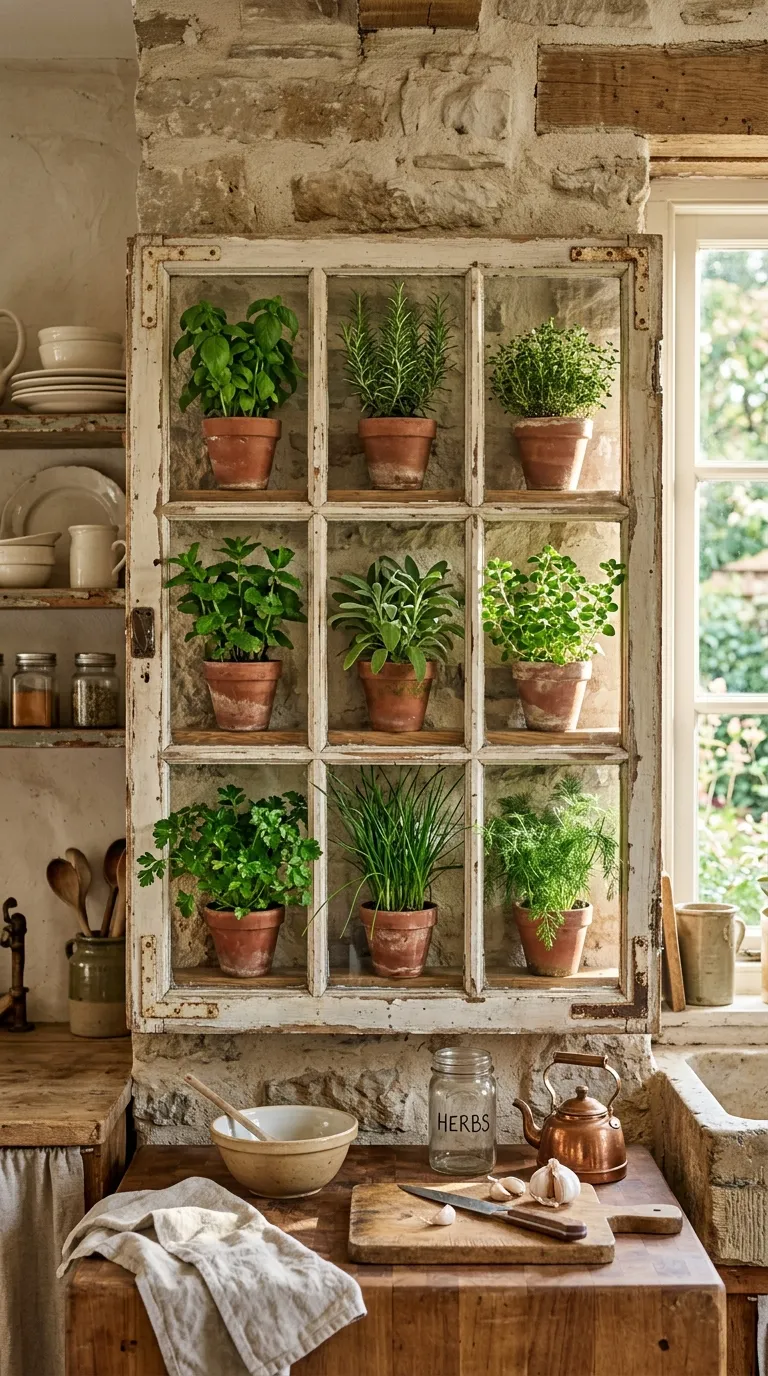
An old window frame becomes a charming herb planter backdrop by mounting small pots in each pane opening. This creative repurposing celebrates vintage aesthetics while creating a functional indoor herb garden with genuine character. The frame’s grid pattern naturally organizes multiple herbs into an attractive arrangement.
I’ve found this approach particularly appealing for farmhouse, cottage, or eclectic decorating styles. The window frame’s history and patina create conversation pieces while serving practical growing purposes. Installation is simple using removable hooks that don’t damage walls. Your herb garden ideas become reality through resourceful upcycling that demonstrates creativity and sustainability. The nostalgic display celebrates thrift culture while growing beautiful, productive herbs.
Stacked Terra Cotta Tower
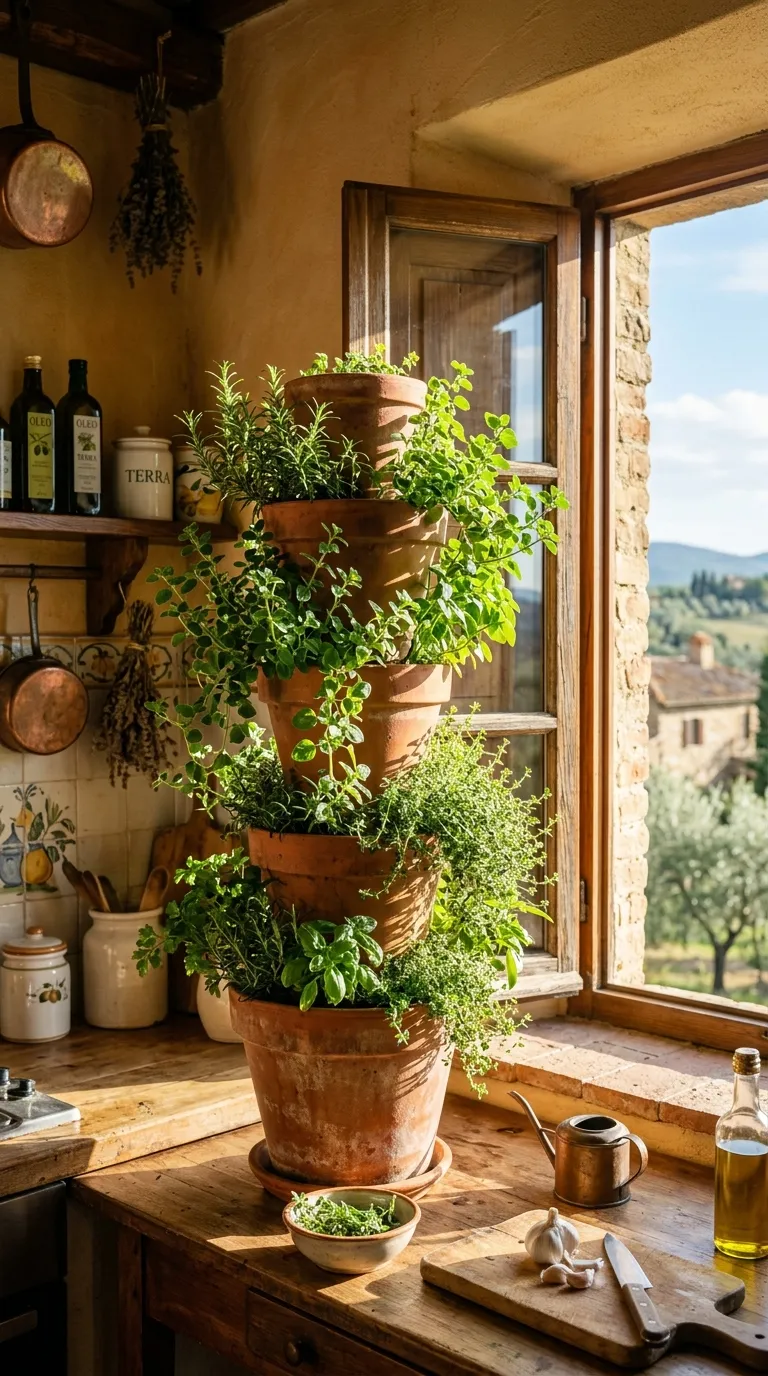
Stack terra cotta pots of graduating sizes to create a rustic, organic-looking herb planter tower that maximizes vertical space. This DIY herb garden approach requires only inexpensive pots and soil, making it wonderfully budget-friendly. The classic terra cotta material evokes traditional gardening while looking timelessly beautiful in any setting.
From what I’ve seen, terra cotta towers work beautifully for cascading herbs like oregano or thyme that gracefully spill over pot edges. The earthy orange tones create warmth and visual interest against white walls. Your growing herbs indoors becomes a sculptural statement combining practicality with simple, organic beauty. This traditional approach proves that sophisticated indoor herb gardening doesn’t require modern materials, sometimes time-honored terra cotta creates the most satisfying, beautiful results.
Floating Herb Garden Shelves
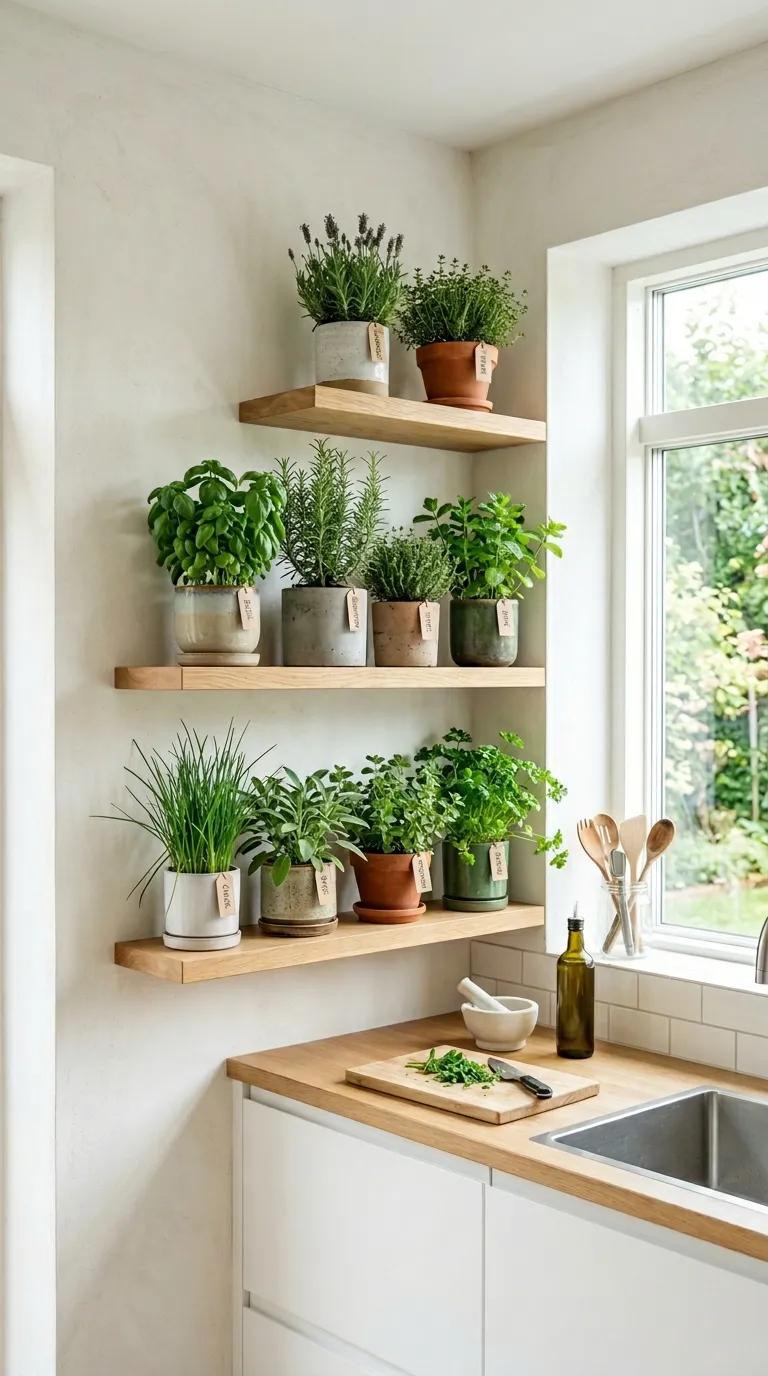
Floating shelves mounted at staggered heights create a modern, minimalist indoor herb garden with architectural elegance. The invisible mounting system makes plants appear to hover, emphasizing lightness and contemporary design. This approach maximizes vertical space while maintaining visual clarity and simplicity.
In my experience, floating shelves work beautifully for creating a gallery-like herb garden display that feels curated and intentional. The varying heights ensure all plants receive adequate light while creating dynamic visual interest. Your herb planter arrangement feels effortless and designer-quality despite simple assembly. This modern approach to indoor herb gardening suits contemporary, minimalist, or Scandinavian-inspired spaces where clean lines and intentional spacing define the aesthetic.
Herb Garden Kitchen Pendant
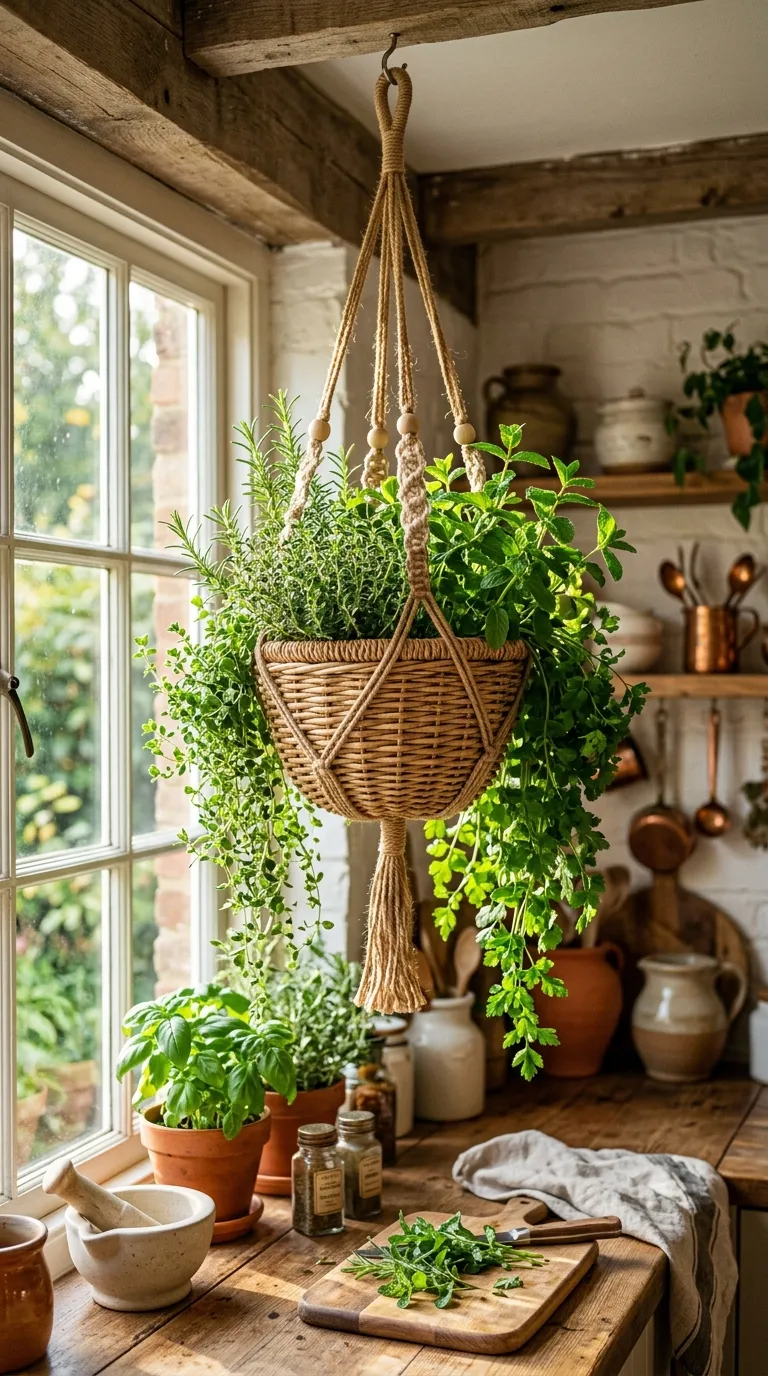
A hanging woven basket brings bohemian charm to your indoor herb garden while keeping herbs within easy cooking reach. Macramé or woven baskets hold soil and plants beautifully while the organic materials suit eclectic, boho, or artisanal home aesthetics. Cascading herbs create a stunning visual effect as they grow downward.
From what I’ve observed, this herb planter approach appeals particularly to those seeking herb garden ideas reflecting personal artistry and natural style. The organic materials age beautifully, developing character over time. Your growing herbs indoors becomes a living artwork celebrating natural materials and handmade aesthetics. Installation is simple using sturdy hooks, and the effect is genuinely beautiful, a functional, artistic statement that grows food while enhancing your kitchen’s warmth and character.
Color-Coordinated Herb Pots
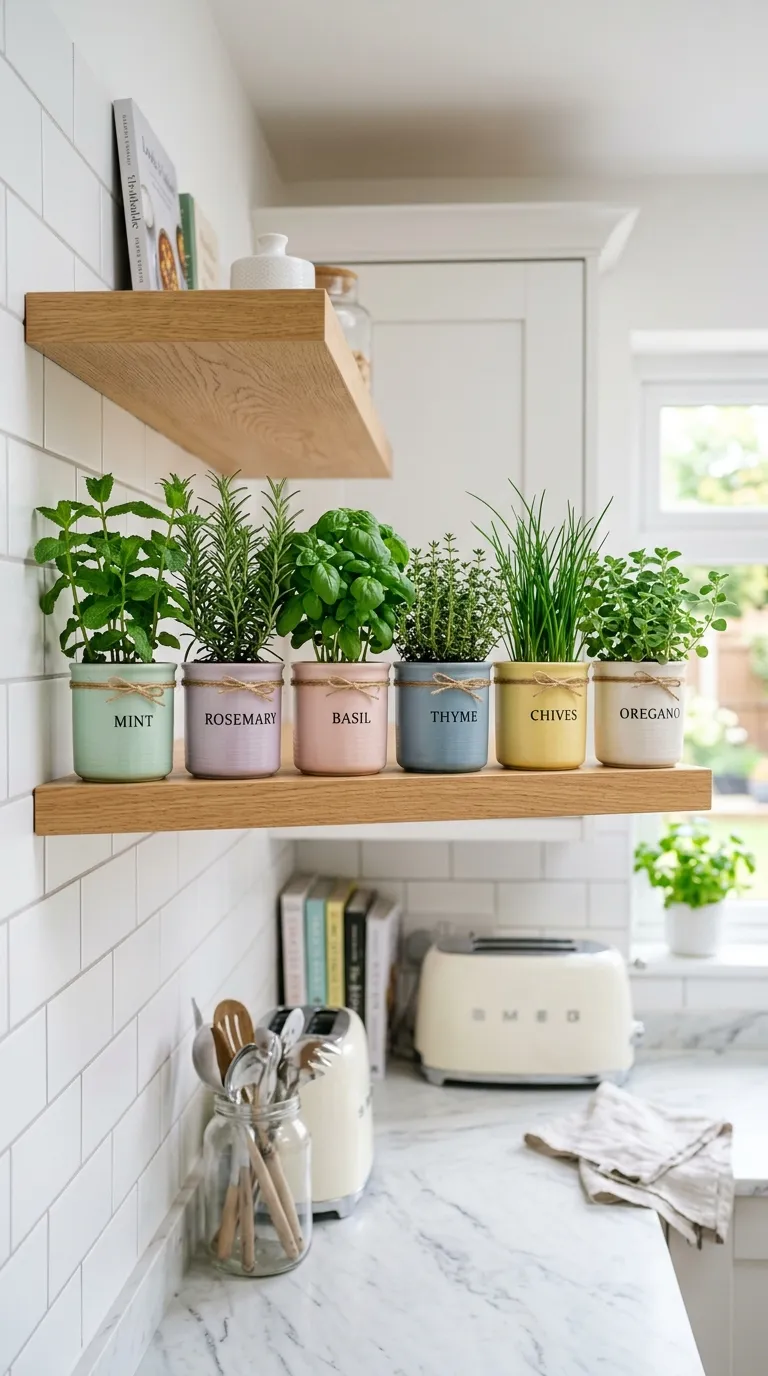
Coordinate your herb planters in a carefully chosen color palette to transform your indoor herb garden into a cohesive design statement. Choosing whites, grays, pastels, or jewel tones for matching pots creates intentional visual harmony. This curated approach elevates herb planter displays from practical to deliberately designed and magazine-worthy.
I’ve found that color coordination creates impressive visual impact even with modest plant quantities. Matching pots make your herb gardening setup feel intentional and thoughtfully conceived. Your growing herbs indoors reflects design consciousness and attention to aesthetic details. This simple styling choice proves that coordinated color choices matter deeply, your indoor herb garden becomes a design feature showcasing both horticultural knowledge and interior design awareness.
Wall-Mounted Wooden Crate Display
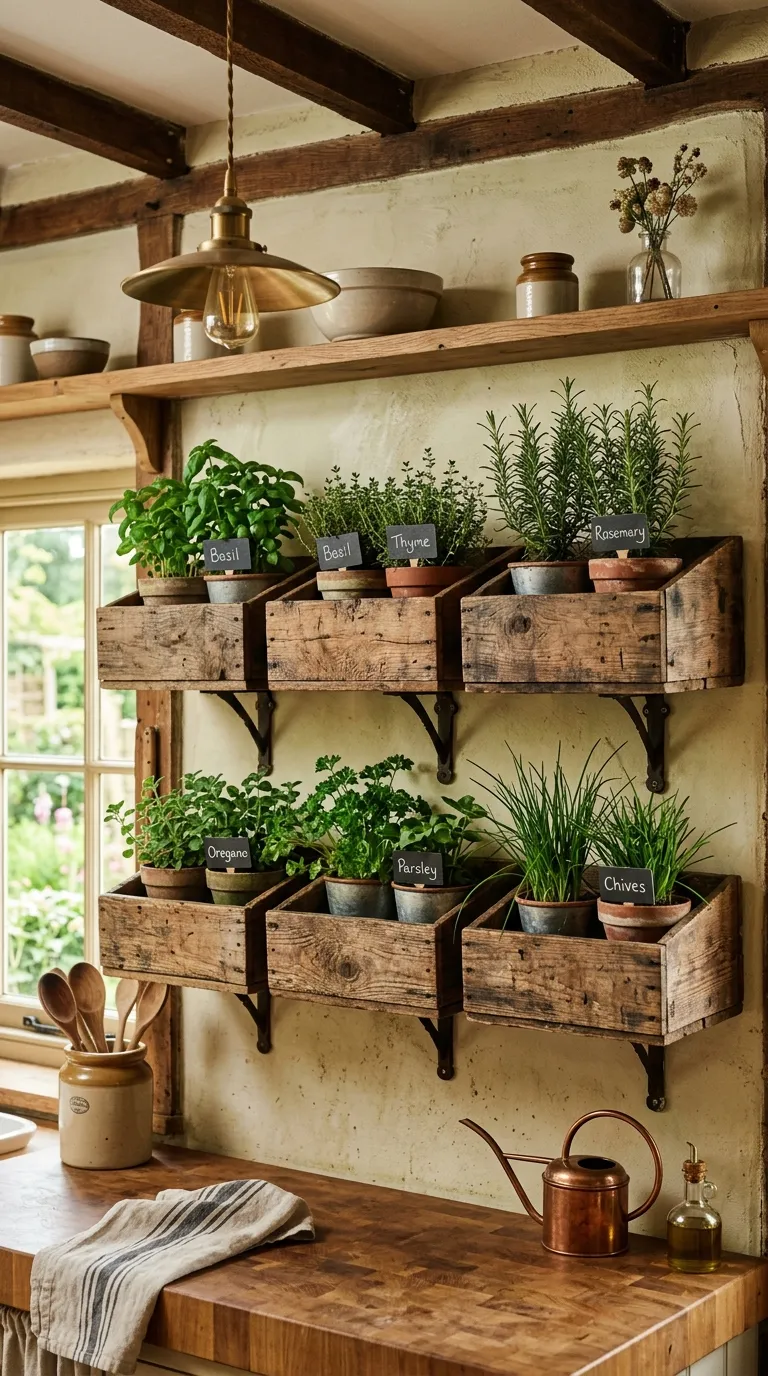
Mount salvaged wooden crates directly on walls to create a rustic, gallery-inspired herb planter display combining vertical space with farmhouse charm. Each crate holds multiple small pots in a configuration that maximizes growing area while celebrating reclaimed materials. This DIY herb garden approach brings character and sustainability together beautifully.
From what I’ve seen, wall-mounted crates work wonderfully for creating an eclectic, collected aesthetic that feels genuine rather than overly designed. The varying wood tones and weathered finish celebrate history and authenticity. Your indoor herb gardening becomes a statement about sustainability and resourcefulness. The arrangement can be adjusted anytime, allowing flexibility as your plant collection grows or changes. Your herb garden ideas become tangible through simple, accessible materials.
Mediterranean-Inspired Herb Terrace
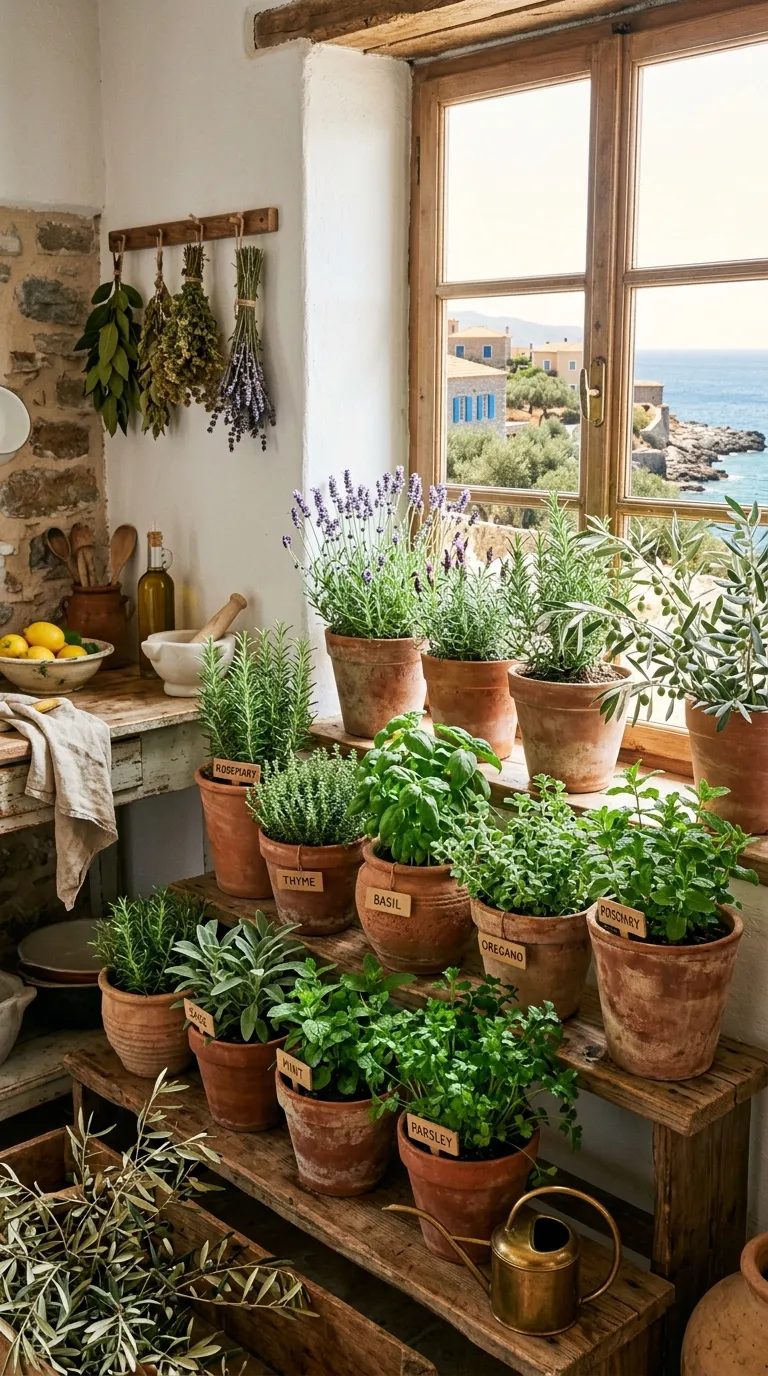
Create a Mediterranean escape through arranging herbs in traditional terra cotta pots that evoke sunny regions where culinary herbs flourish naturally. This indoor herb garden approach celebrates the aesthetic roots of herb gardening while practical growing happens efficiently. The warm, sun-drenched appeal transports you mentally to Italian or Spanish gardens.
In my experience, Mediterranean styling appeals especially to cooking enthusiasts who appreciate connection between herbs and cuisine origins. Terra cotta’s natural warmth and traditional materials create authentic aesthetic without pretense. Your herb planter arrangement becomes a celebration of culinary culture and gardening heritage. This approach proves that growing herbs indoors connects directly to lifestyle and culinary inspiration, your indoor herb gardening becomes an expression of cooking passion and appreciation for Mediterranean culture.
Sleek Modern Vertical Wall System
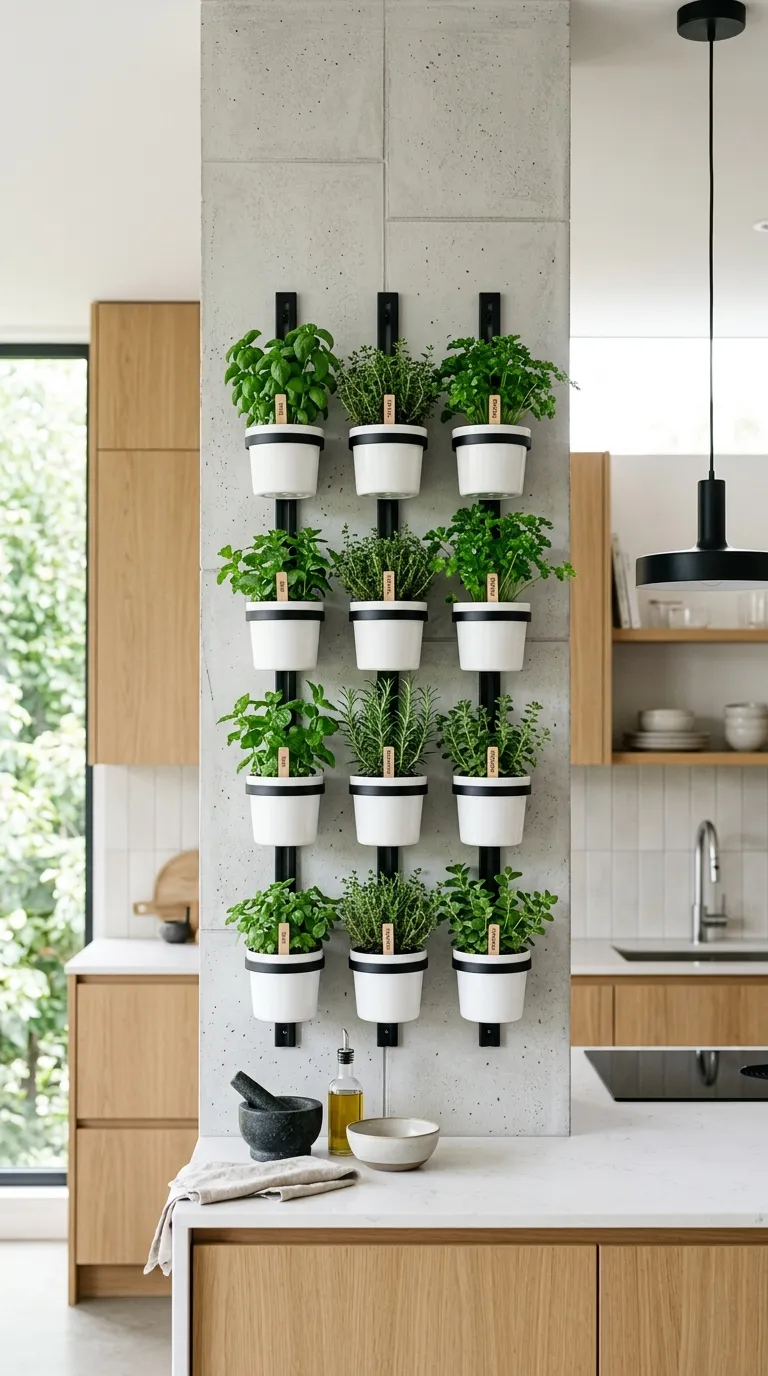
A modern vertical wall system with individual mounting brackets transforms your indoor herb garden into architectural statement pieces combining function with contemporary design. Each pot attaches securely to wall-mounted hardware creating adjustable, expandable growing capacity. This approach suits modern, minimalist, industrial spaces seeking sophisticated herb gardening solutions.
From what I’ve observed, vertical wall systems appeal to modern apartment dwellers and design-conscious individuals seeking herb garden ideas reflecting contemporary aesthetics. The adjustable brackets allow reconfiguration as your herb planter collection grows. Your indoor herb gardening becomes a built-in architectural feature integrated seamlessly into your space design. This sophisticated approach proves that practical herb growing and contemporary interior design work together beautifully when thoughtfully combined.
Shaded Herb Corner Nook
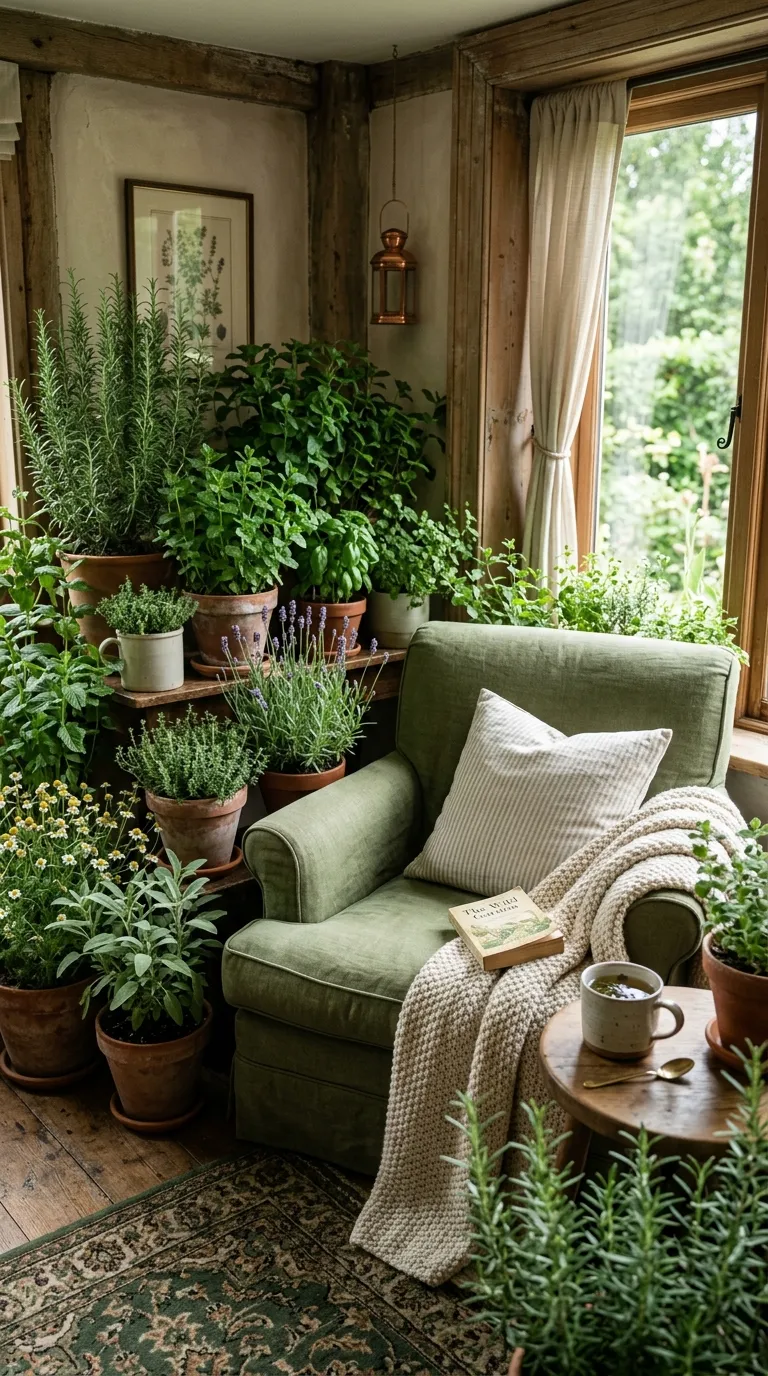
Create a peaceful botanical retreat by establishing a shaded corner with tall herbs creating a natural privacy screen around a comfortable seating area. This indoor herb garden approach provides both fresh herbs and atmospheric benefits as plants freshen air and create soothing green surroundings. Your herbs become functional décor creating a sanctuary within your home.
I’ve seen how this approach transforms ordinary corners into calm havens perfect for morning coffee or evening relaxation. Taller herbs like basil or bay laurel create visual barriers while psychological benefits of being surrounded by plants are genuinely restorative. Your herb gardening becomes wellness practice rather than simple food production. This indoor herb garden makes herbs serve multiple purposes, culinary, decorative, and deeply therapeutic through creating peaceful green spaces.
Seasonal Rotating Herb Display
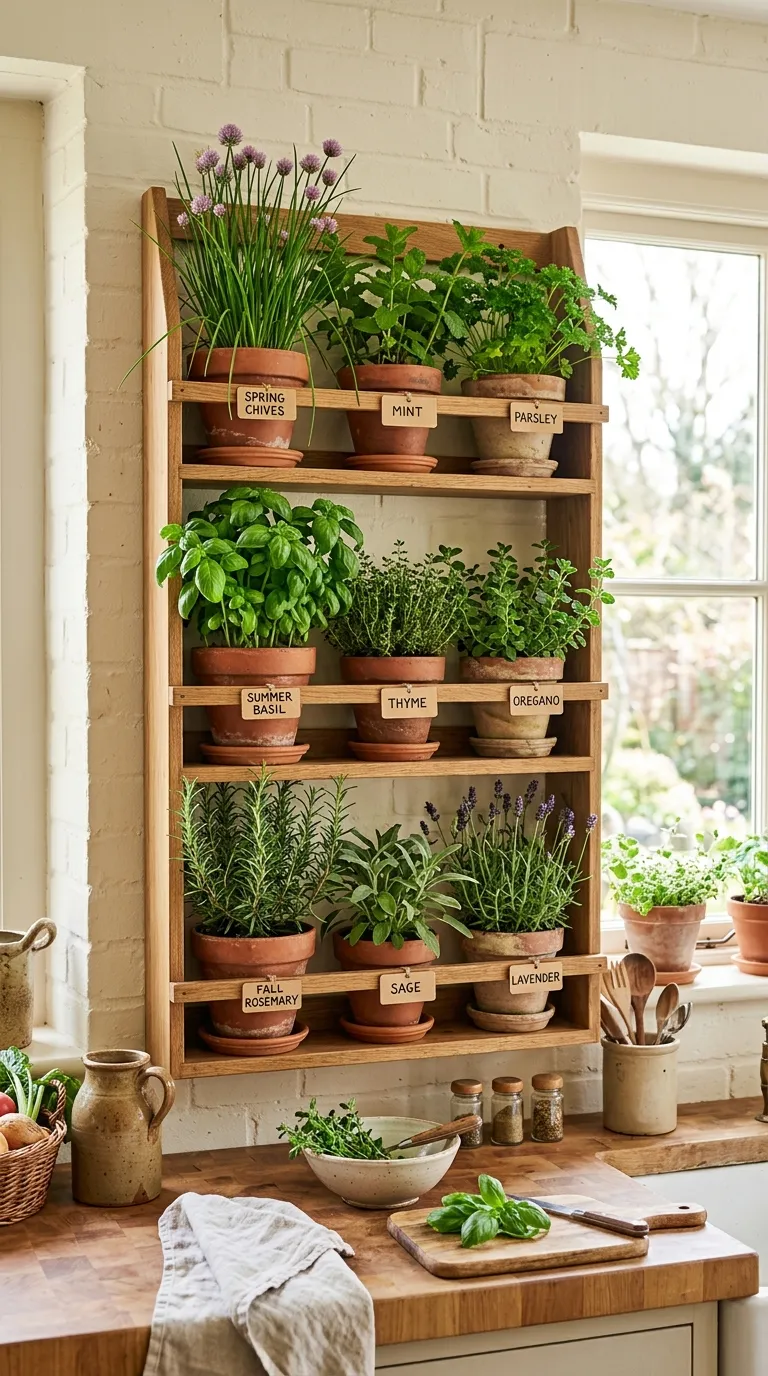
Celebrate seasonal changes by rotating your herb planter collection throughout the year, featuring herbs that grow best in each season. Spring brings delicate chives and cilantro, summer overflows with basil and oregano, fall features heartier rosemary and thyme. This indoor herb gardening approach connects you deeply with natural seasonal rhythms.
From what I’ve observed, seasonal rotation creates fresh visual interest while honoring the natural growing season. Your indoor herb garden becomes a living calendar reflecting seasonal progression. The changing displays keep your growing herbs indoors practice feeling dynamic and engaged rather than monotonous. This approach deepens horticultural knowledge through seasonal awareness. Your herb garden ideas become a year-round celebration of botanical rhythm and intentional, mindful gardening reflecting nature’s eternal cycle.
CONCLUSION
Your indoor herb garden journey begins with choosing one idea that speaks to your space, style, and cooking ambitions. Whether you prefer sleek modern systems, rustic wooden displays, or bohemian hanging arrangements, fresh herbs are genuinely within reach regardless of apartment size or outdoor space limitations.
I’ve seen how small changes like these completely transform both kitchens and cooking habits. These 35 herb garden ideas offer something for every aesthetic preference and skill level. From DIY herb garden projects requiring only recycled materials to sophisticated indoor herb gardening kits with modern technology, your perfect solution exists here.
The magic of growing herbs indoors lies in convenience, freshness, and daily connection with living plants. Imagine reaching past these beautiful displays during cooking, snipping vibrant leaves minutes before they enhance your meals. Your herb planter becomes both functional garden and visual sanctuary, a beautiful reminder that food growing, home design, and botanical passion naturally belong together.
Start today with one idea. Share your indoor herb garden on Pinterest. Watch your space transform into a greener, fresher, more vibrant reflection of your cooking enthusiasm. Your future self will absolutely thank you.