
Ibuprofen vs Acetaminophen – Which Painkiller Actually Works Better? | QuickDawa
You’re standing in front of your medicine cabinet at 2 AM.
Your head is pounding.
You see two bottles sitting right next to each other.
One says ibuprofen.
The other says acetaminophen.
And suddenly your brain asks the million dollar question.
Which one should I grab right now?
Sound familiar?
You’re definitely not alone in this.
Ibuprofen vs acetaminophen is one of the most common health questions people search every single day.
Both are over the counter painkillers.
Both can help with headaches, fevers, and body pain.
But they are NOT the same thing.
They work differently inside your body.
They have different risks.
And honestly, picking the wrong one at the wrong time could cause problems you don’t want.
That’s exactly why this guide exists.
At QuickDawa, we’re all about making medicine easy to understand.
So let’s break down everything you need to know about ibuprofen vs acetaminophen in simple, clear language.
Let’s dive in.
💊 What Is Ibuprofen?
Ibuprofen is a nonsteroidal anti-inflammatory drug, also called an NSAID.
It reduces pain, swelling, and fever all at the same time.
You probably know it by brand names like Advil or Motrin.
It works by blocking chemicals in your body called prostaglandins that cause inflammation and pain.
Ibuprofen is available over the counter in 200mg tablets and also in higher prescription strengths.
💊 What Is Acetaminophen?
Acetaminophen is a pain reliever and fever reducer.
But here’s the key difference.
It does NOT reduce inflammation.
The most famous brand name is Tylenol.
It works in a completely different way by acting on the pain signals in your brain.
Acetaminophen is one of the most widely used medicines in the entire world.
You’ll find it in tons of combination medicines like cold and flu products.
🔬 Ibuprofen vs Acetaminophen: How Do They Work Differently?
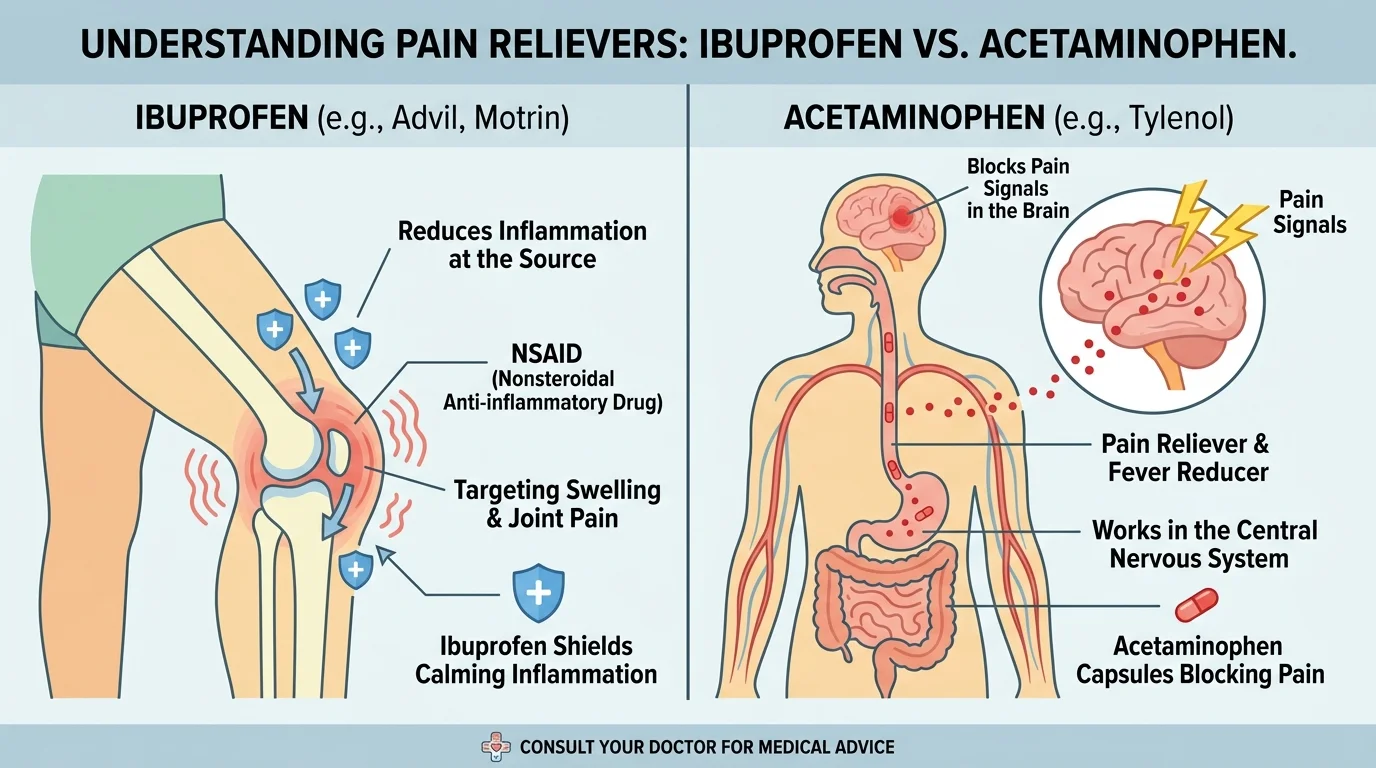
This is the part most people never really understand.
So let me keep it super simple.
Ibuprofen fights pain at the source.
It goes to where the inflammation is happening in your body and calms it down.
Think of a swollen ankle or a sore throat.
The swelling itself is causing the pain.
Ibuprofen reduces that swelling, so the pain goes away too.
Acetaminophen works differently.
It talks to your brain instead.
It tells the brain to stop sending those pain signals throughout your body.
But it doesn’t do anything about the actual swelling or inflammation.
So here’s a simple way to remember it:
- Ibuprofen = fights inflammation AND pain
- Acetaminophen = fights pain signals AND fever (but NOT inflammation)
This one difference changes everything about when you should use each one.
🤔 When Should You Use Ibuprofen?
Ibuprofen is your go to choice when inflammation is the main problem.
Here are the best times to reach for ibuprofen:
- Muscle strains or sprains where swelling is present
- Toothache with gum inflammation
- Menstrual cramps (it’s amazing for period pain)
- Arthritis pain or joint stiffness
- Back pain caused by muscle inflammation
- Headaches related to tension or sinus pressure
- Mild fever in adults and children
If something in your body is red, swollen, or inflamed, ibuprofen is usually the better pick.
🤔 When Should You Use Acetaminophen?
Acetaminophen is a safer choice in many situations.
Especially when you just need simple pain relief without the anti-inflammatory effect.
Here’s when acetaminophen might be better for you:
- General headache or mild body aches
- Fever reduction (it’s very effective for fevers)
- Pain relief after surgery when your doctor recommends it
- Osteoarthritis pain without heavy inflammation
- When you have stomach problems or acid reflux
- When you’re on blood thinners or have bleeding risks
- During pregnancy (acetaminophen is generally considered safer, but always check with your doctor first)
Acetaminophen is gentler on your stomach.
That’s one of its biggest advantages.
⚖️ Ibuprofen vs Acetaminophen: Side by Side Comparison
Let me make this really easy for you.
Here’s how these two medicines compare on all the important stuff.
Drug Class:
- Ibuprofen: NSAID (anti-inflammatory)
- Acetaminophen: Analgesic and antipyretic (pain and fever reliever)
Reduces Inflammation:
- Ibuprofen: Yes
- Acetaminophen: No
Reduces Fever:
- Ibuprofen: Yes
- Acetaminophen: Yes
Relieves Pain:
- Ibuprofen: Yes
- Acetaminophen: Yes
Common Brand Names:
- Ibuprofen: Advil, Motrin
- Acetaminophen: Tylenol
Impact on Stomach:
- Ibuprofen: Can irritate stomach lining
- Acetaminophen: Gentle on stomach
Impact on Liver:
- Ibuprofen: Lower liver risk
- Acetaminophen: Can damage liver in high doses
Impact on Kidneys:
- Ibuprofen: Can affect kidney function
- Acetaminophen: Lower kidney risk
Safe During Pregnancy:
- Ibuprofen: Generally NOT recommended, especially in 3rd trimester
- Acetaminophen: Generally considered safer (consult your doctor)
Available Over the Counter:
- Ibuprofen: Yes
- Acetaminophen: Yes
This breakdown shows you that neither one is “better” overall.
It depends on YOUR specific situation.
🧠 Liver vs Kidney: A Critical Difference
This is something QuickDawa really wants you to pay attention to.
When people talk about ibuprofen vs acetaminophen, the liver vs kidney conversation is huge.
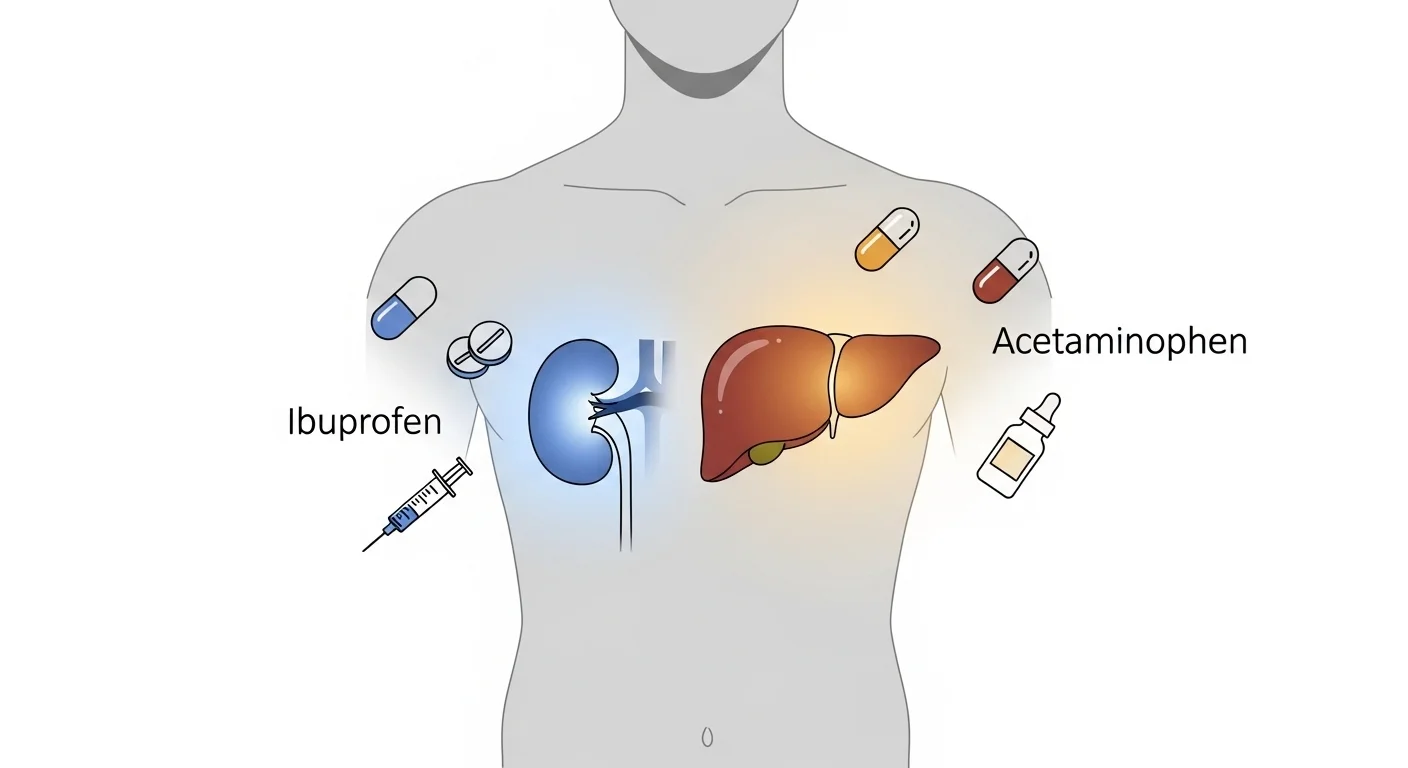
Acetaminophen is processed by your liver.
If you take too much of it, or if you take it while drinking alcohol, it can cause serious liver damage.
In fact, acetaminophen overdose is one of the leading causes of liver failure in many countries.
The maximum safe dose for most adults is 3,000 to 4,000 mg per day.
But many doctors recommend staying well below that.
Ibuprofen is processed by your kidneys.
Long term use or high doses can affect your kidney function.
It can also raise blood pressure and increase the risk of heart problems if used for extended periods.
So here’s the simple rule:
- If you have liver problems or drink alcohol regularly, be very careful with acetaminophen
- If you have kidney problems or heart issues, be cautious with ibuprofen
Always talk to your doctor if you have any of these conditions.
🌡️ Which One Is Better for Fever?
Great question.
Both ibuprofen and acetaminophen are effective fever reducers.
Studies have shown that their fever efficacy is quite similar in most cases.
However, ibuprofen may last a bit longer.
Ibuprofen typically works for 6 to 8 hours.
Acetaminophen usually works for 4 to 6 hours.
For children with high fevers, some doctors recommend alternating between both medicines.
But never do this on your own without your doctor’s guidance.
For simple fever in adults, either one works well.
Pick the one that’s safer for your personal health situation.
🦷 Ibuprofen vs Acetaminophen for Toothache
If you’ve ever had a nasty toothache, you know the pain can be unbearable.
So which medicine works better?
For most toothaches, ibuprofen wins.
Here’s why.
Tooth pain is usually caused by inflammation in the gums or around the tooth root.
Since ibuprofen fights inflammation directly, it attacks the root cause of the pain.
Acetaminophen can help dull the pain.
But it won’t reduce the swelling that’s causing it.
Some dentists even recommend taking both together for severe tooth pain.
For example, 400mg ibuprofen plus 500mg acetaminophen at the same time.
This combination has been shown to be very effective.
But again, always check with your dentist or doctor before combining medicines.
🤰 Which One Is Safer During Pregnancy?
This is a really important topic.
Acetaminophen is generally considered the safer option during pregnancy.
It has been used for decades and is widely recommended by doctors for pregnant women who need pain or fever relief.
Ibuprofen is generally NOT recommended during pregnancy.
Especially during the third trimester, ibuprofen can cause serious problems for the baby.
It may affect the baby’s heart and reduce amniotic fluid.
Even in the first and second trimesters, many doctors advise avoiding ibuprofen unless absolutely necessary.
So if you’re pregnant and need a painkiller, acetaminophen is usually the go to.
But please, always talk to your OB-GYN before taking any medicine during pregnancy.
👶 Can Children Take Both?
Yes, both medicines are available in children’s formulations.
Children’s ibuprofen (like Children’s Advil) is approved for kids 6 months and older.
Children’s acetaminophen (like Children’s Tylenol) is approved for kids 2 months and older (with doctor’s guidance for infants).
Dosing is based on the child’s weight, not just age.
Always use the measuring tool that comes with the medicine.
Never guess.
And never give adult strength medicine to a child.
If your child has a high fever that won’t go down, call your pediatrician right away.
⚠️ Can You Take Ibuprofen and Acetaminophen Together?
This is one of the most searched questions on this topic.
And the answer might surprise you.
Yes, in many cases, you can take both together or alternate them.
Because they work in completely different ways, they don’t interfere with each other.
Some doctors and dentists actually recommend this approach for moderate to severe pain.
For example:
- Take ibuprofen first
- Then 3 hours later, take acetaminophen
- Then 3 hours later, take ibuprofen again
- And so on
This way you get continuous pain relief without exceeding the safe dose of either medicine.
But here’s the important part.
Do NOT do this without talking to your doctor first.
It depends on your age, weight, health conditions, and what other medicines you’re already taking.
🚨 When to Call Your Doctor
You should reach out to your doctor if you experience any of these while taking either medicine:
- Black or bloody stools (could indicate stomach bleeding from ibuprofen)
- Severe stomach pain or nausea
- Yellowing of skin or eyes (could indicate liver damage from acetaminophen)
- Swelling in your face, lips, or throat (allergic reaction)
- Dark urine or very little urine output
- Rash or hives after taking the medicine
- Dizziness or confusion
- Pain that doesn’t improve after 3 days of taking either medicine
- Fever that lasts more than 3 days
If you notice any serious symptoms, don’t wait.
Get medical help right away.
It’s always better to be safe.
🙋 Frequently Asked Questions (FAQ)
Q: Can you take ibuprofen and acetaminophen at the same time?
A: Yes, many doctors say you can take them together since they work differently. But always check with your healthcare provider first to make sure it’s safe for you.
Q: How long does ibuprofen take to work compared to acetaminophen?
A: Both typically start working within 30 to 60 minutes. Ibuprofen tends to last longer (6 to 8 hours) while acetaminophen usually lasts 4 to 6 hours.
Q: Is acetaminophen safe for people with kidney disease?
A: Acetaminophen is generally considered safer for kidneys compared to ibuprofen. However, if you have kidney disease, you should always consult your doctor before taking any pain medicine.
Q: Ibuprofen vs acetaminophen for headache: which is better?
A: For a regular tension headache, both work well. But if your headache involves sinus pressure or inflammation, ibuprofen may be the better choice since it reduces swelling.
Q: Can you take ibuprofen for toothache if acetaminophen is not working?
A: Yes, ibuprofen is often more effective for toothache because it reduces the inflammation causing the pain. Some dentists recommend combining both for severe dental pain. Always consult your dentist.
🏁 Final Thoughts: Which One Should You Choose?
So here’s the bottom line.
There’s no single “best” painkiller for everyone.
Ibuprofen is your friend when inflammation is the enemy.
Think swelling, sprains, dental pain, and menstrual cramps.
Acetaminophen is your friend when you need gentle, straightforward pain and fever relief.
Think headaches, mild body aches, and situations where your stomach or kidneys need protection.
The smartest thing you can do?
Understand how each one works.
Know the risks.
And always listen to your body.
If something doesn’t feel right after taking any medicine, talk to your doctor.
You are your own best health advocate.
At QuickDawa, we believe that understanding your medicine is just as important as taking it. Knowledge is the first step toward better health. If you found this guide helpful, share it with someone who needs it and explore more medicine guides on QuickDawa.com for trusted, easy to understand health information.
Got a question about ibuprofen, acetaminophen, or any other medicine?
Drop a comment below or reach out to us through our contact page.
We love hearing from you.
⚠️ Medical Disclaimer
The information provided in this article is intended for educational and informational purposes only. It is not a substitute for professional medical advice, diagnosis, or treatment. Always seek the guidance of your qualified doctor, pharmacist, or healthcare provider with any questions you may have regarding a medical condition, medication, or treatment plan.
Never disregard professional medical advice or delay seeking it because of something you read on QuickDawa.com or any other website. If you think you may have a medical emergency, call your doctor, go to the nearest emergency room, or call emergency services immediately.
Drug information, dosages, and interactions described in this post are provided for general awareness only and may not apply to your individual health situation. Medications affect people differently based on age, weight, health conditions, and other factors.
QuickDawa.com and its authors do not assume any liability for any consequences arising from the use or misuse of information presented on this website.