Ibuprofen vs Aleve – 7 Key Differences You Must Know Before Taking | QuickDawa
So your head is pounding after a long day at work.
Or maybe your back has been killing you since yesterday.
You walk into the pharmacy and see two familiar names sitting on the shelf.
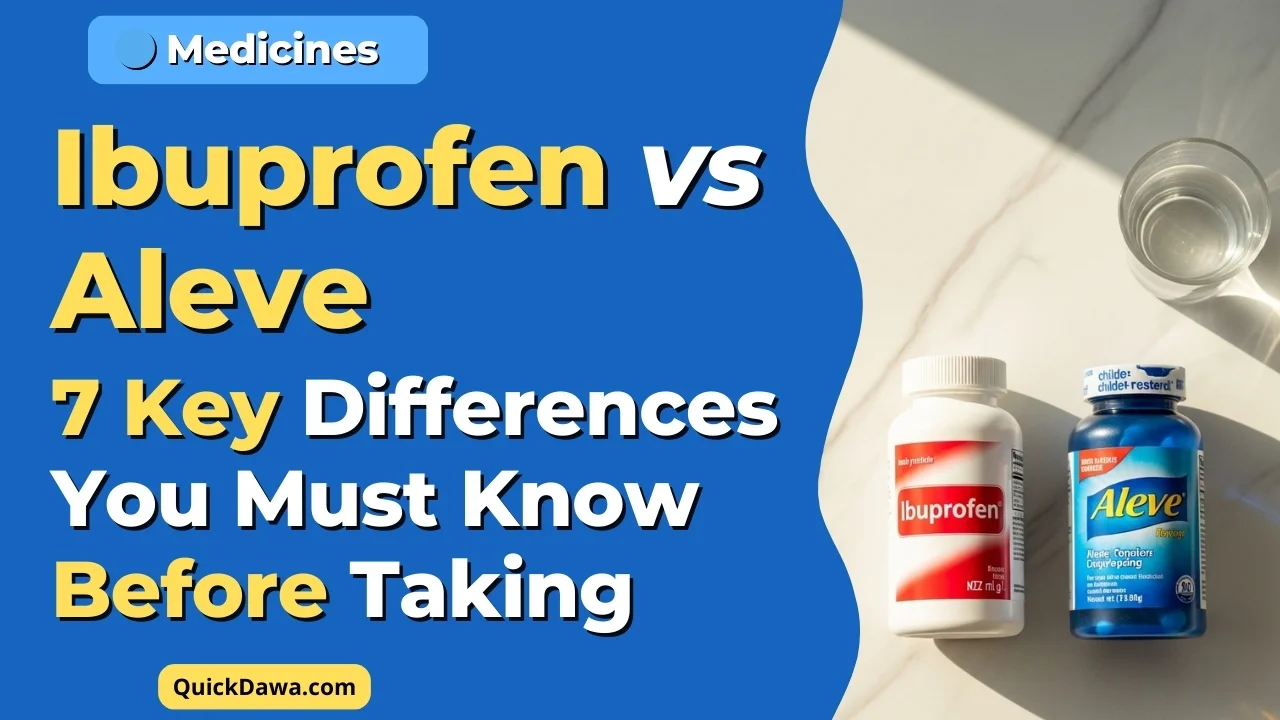
One says Ibuprofen. The other says Aleve.
Both promise to get rid of your pain. Both look reliable. Both are available without a prescription.
But here is the big question. Ibuprofen vs Aleve, which one should you actually grab?
This is a question millions of people ask every single day.
And honestly, most people just pick one randomly without knowing the real differences.
That can sometimes lead to problems.
Because even though both are painkillers, they work a little differently inside your body.
They have different dosing schedules. Different strengths. And different risks too.
Choosing the wrong one for your situation could mean less relief or more side effects.
But do not worry. You are in the right place.
At QuickDawa, we are all about making medicine easy to understand.
So let us break down everything you need to know about ibuprofen vs Aleve in simple, clear language.
By the end of this post, you will know exactly which one fits your needs better.
💊 What Is Ibuprofen?
Ibuprofen is a popular over-the-counter painkiller.
It belongs to a group of medicines called NSAIDs (nonsteroidal anti-inflammatory drugs).
You might know it by brand names like Advil or Motrin.
It helps reduce pain, fever, and inflammation.
People commonly use it for headaches, toothaches, muscle pain, menstrual cramps, and minor arthritis.
💊 What Is Aleve?
Aleve is also an NSAID painkiller available over the counter.
Its active ingredient is called naproxen sodium.
It is made by Bayer and is one of the most trusted pain relief brands worldwide.
Aleve treats the same kinds of pain as ibuprofen.
But it works longer in the body, which is one of its biggest advantages.
🔍 Ibuprofen vs Aleve: The 7 Key Differences
Now let us get to the good stuff.
Here are the 7 key differences between ibuprofen and Aleve that you really need to know.
1. Active Ingredient
This is the most basic difference.
- Ibuprofen’s active ingredient is ibuprofen itself.
- Aleve’s active ingredient is naproxen sodium.
Both are NSAIDs. But they are two completely different chemicals.
Think of it like Coca-Cola and Pepsi. Same category, different formula.
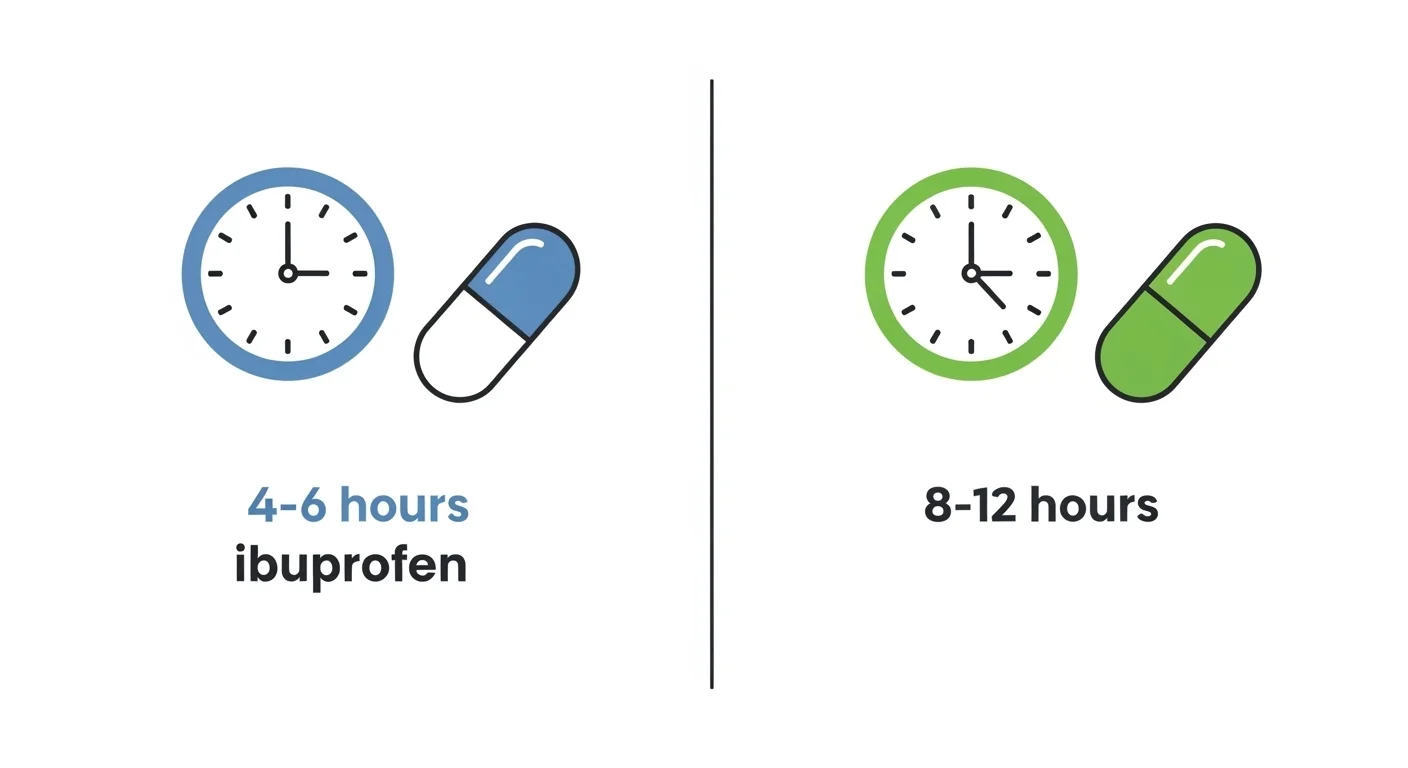
2. How Long They Last (Dosing Frequency 12h vs 4-6h)
This is where things get really interesting.
- Ibuprofen lasts about 4 to 6 hours per dose.
- Aleve lasts about 8 to 12 hours per dose.
So with ibuprofen, you might need to take it 3 to 4 times a day.
With Aleve, just 2 doses a day is usually enough.
If you hate remembering to take pills, Aleve has a clear advantage here.
3. Standard Dosage
Let us talk about how much you actually take.
- Ibuprofen: The typical adult dose is 200 to 400 mg every 4 to 6 hours. Maximum is 1200 mg per day for OTC use.
- Aleve: The typical adult dose is 220 mg every 8 to 12 hours. Maximum is 660 mg per day for OTC use.
As you can see, you take less Aleve overall because each dose lasts longer.
4. Speed of Relief
When you are in pain, you want relief fast. Right?
- Ibuprofen generally kicks in within 20 to 30 minutes.
- Aleve may take a little longer, around 30 to 60 minutes.
So ibuprofen tends to work faster for quick relief.
But Aleve keeps working longer once it starts.
It depends on what matters more to you. Speed or duration.
5. Best Uses
Both treat pain and inflammation. But some people prefer one over the other for specific conditions.
Ibuprofen works great for:
- Headaches
- Toothaches
- Fever
- Menstrual cramps
- Short-term muscle pain
Aleve works great for:
- Back pain
- Arthritis pain
- Joint stiffness
- Pain that lasts all day
- Chronic conditions that need long-lasting relief
If your pain comes and goes quickly, ibuprofen is a good pick.
If your pain sticks around for hours, Aleve might be better.
6. Side Effects Comparison
All NSAIDs carry some risks. That is just the truth.
But the side effects of ibuprofen and Aleve are slightly different in terms of likelihood.
Common side effects of both include:
- Stomach upset or pain
- Nausea
- Heartburn
- Dizziness
- Bloating
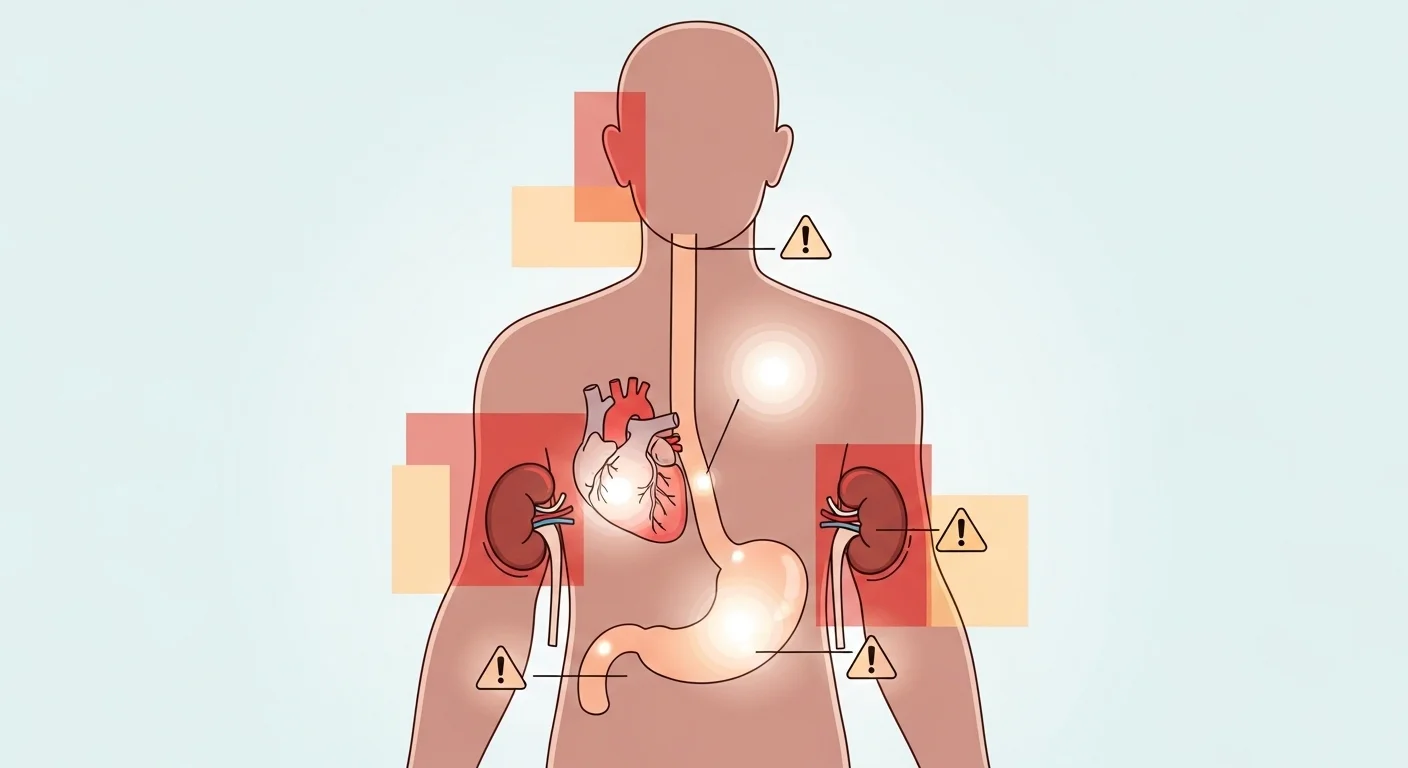
Ibuprofen may have a slightly lower risk of stomach issues when used short-term because you take it for shorter periods.
Aleve stays in your body longer, so it may cause more stomach irritation over time.
However, both can cause serious problems like stomach bleeding or kidney issues if overused.
Always stick to the recommended dose. Seriously.
7. Cardiovascular Risk Profile Comparison
This is important, especially for older adults.
Studies have shown that all NSAIDs can slightly increase the risk of heart attacks and strokes.
But here is what the research suggests:
- Ibuprofen at high doses may increase cardiovascular risk. But at low OTC doses, the risk is considered relatively low.
- Naproxen (Aleve) has generally shown a slightly lower cardiovascular risk compared to other NSAIDs.
This is one reason some doctors lean toward recommending naproxen for people who need regular NSAID use.
But if you have any heart conditions, always talk to your doctor before taking either one.
⚖️ Quick Summary: Ibuprofen vs Aleve at a Glance
Here is a simple breakdown to make your decision easier.
- Active Ingredient: Ibuprofen vs Naproxen Sodium
- Brand Names: Advil, Motrin vs Aleve
- Drug Class: NSAID vs NSAID
- Dose Frequency: Every 4 to 6 hours vs Every 8 to 12 hours
- Onset of Action: 20 to 30 minutes vs 30 to 60 minutes
- Duration: 4 to 6 hours vs 8 to 12 hours
- Max OTC Daily Dose: 1200 mg vs 660 mg
- Best For: Quick, short-term pain vs Long-lasting, chronic pain
- Stomach Risk: Moderate vs Slightly higher with prolonged use
- Heart Risk: Moderate at high doses vs Generally slightly lower
🤔 Is Aleve the Same as Ibuprofen?
This is one of the most common questions people ask.
And the short answer is no.
Aleve and ibuprofen are not the same medicine.
They are both NSAIDs, yes. They both reduce pain and inflammation, yes.
But they have different active ingredients. Different dosing schedules. And slightly different risk profiles.
Think of it this way. They are cousins, not twins.
At QuickDawa, we always encourage you to understand what you are putting into your body.
Knowing the difference between these two can help you make smarter choices.
🚫 Can You Take Ibuprofen and Aleve Together?
This is a really important question.
And the answer is generally no.
You should not take ibuprofen and Aleve at the same time unless your doctor specifically tells you to.
Why? Because they are both NSAIDs.
Taking two NSAIDs together doubles your risk of side effects like stomach bleeding, kidney damage, and high blood pressure.
It does not give you double the relief. It just gives you double the risk.
If one is not working well enough, talk to your doctor instead of stacking them.
⏰ When to Call Your Doctor
Even though both ibuprofen and Aleve are available without a prescription, they are not risk-free.
You should call your doctor right away if you notice any of the following while taking either medication:
- Black or bloody stools
- Vomiting blood or something that looks like coffee grounds
- Severe stomach pain
- Chest pain or shortness of breath
- Sudden weakness on one side of the body
- Swelling in your hands, feet, or ankles
- Skin rash or allergic reaction
- Signs of kidney problems like changes in urination
Do not ignore these signs. They could be serious.
It is also smart to call your doctor before taking either drug if you:
- Have a history of stomach ulcers
- Take blood thinners
- Have kidney or liver disease
- Have heart disease or high blood pressure
- Are pregnant or breastfeeding
- Are over 65 years old
Better safe than sorry. Always.
🙋 Frequently Asked Questions (FAQ)
Q: Can you take ibuprofen and Aleve together?
A: No, you should not take them together. Both are NSAIDs, and combining them increases the risk of stomach bleeding, kidney damage, and other serious side effects. Talk to your doctor if one is not enough.
Q: How long does Aleve last compared to ibuprofen?
A: Aleve lasts about 8 to 12 hours per dose. Ibuprofen only lasts about 4 to 6 hours. That is why Aleve requires fewer doses throughout the day.
Q: Is Aleve safe for daily use?
A: Aleve is generally safe for short-term daily use (up to 10 days for pain). But long-term daily use can increase the risk of stomach, kidney, and heart problems. Always consult your doctor for prolonged use.
Q: Ibuprofen vs Aleve for toothache, which is better?
A: Ibuprofen is often preferred for toothaches because it works faster (within 20 to 30 minutes). However, if your tooth pain lasts all day, Aleve might provide longer-lasting relief. Either one can help.
Q: Is ibuprofen or Aleve better for back pain?
A: For back pain that lasts most of the day, Aleve is often the better choice because it provides longer relief with fewer doses. But for mild or occasional back pain, ibuprofen works well too.
🏁 Conclusion
So there you have it.
Ibuprofen vs Aleve is not about one being “better” than the other.
It is about which one is better for you and your specific situation.
If you need fast, short-term relief for things like headaches or fever, ibuprofen is a great choice.
If you deal with longer-lasting pain like arthritis or chronic back pain, Aleve might serve you better.
Both are effective. Both are affordable. Both are widely available.
But both also come with risks if you misuse them.
So always read the label. Follow the dosage instructions. And when in doubt, ask your doctor or pharmacist.
At QuickDawa, we believe that understanding your medicine is just as important as taking it. Knowledge is the first step toward better health. If you found this guide helpful, share it with someone who needs it and explore more medicine guides on QuickDawa.com for trusted, easy-to-understand health information.
Got more questions? Drop them in the comments below or reach out to us through our contact page. We love hearing from you!
⚠️ Medical Disclaimer
The information provided in this article is intended for educational and informational purposes only. It is not a substitute for professional medical advice, diagnosis, or treatment. Always seek the guidance of your qualified doctor, pharmacist, or healthcare provider with any questions you may have regarding a medical condition, medication, or treatment plan.
Never disregard professional medical advice or delay seeking it because of something you read on QuickDawa.com or any other website. If you think you may have a medical emergency, call your doctor, go to the nearest emergency room, or call emergency services immediately.
Drug information, dosages, and interactions described in this post are provided for general awareness only and may not apply to your individual health situation. Medications affect people differently based on age, weight, health conditions, and other factors.
QuickDawa.com and its authors do not assume any liability for any consequences arising from the use or misuse of information presented on this website.