How to Make a Medication List After 60 | QuickDawa
Imagine you’re sitting in the doctor’s office and they ask, “What medications are you taking?”
You freeze.
Was it the small white pill or the oval one?
Was it 10 mg or 20 mg?
And what about that vitamin your daughter bought you last month?
If this sounds familiar, you’re not alone.
After 60, it’s common to take multiple medications, vitamins, supplements, and over-the-counter drugs.
Keeping track of everything can feel overwhelming.
But here’s the thing: a complete medication list after 60 isn’t just helpful.
It’s one of the most important safety tools you can have.
It helps prevent dangerous drug interactions, keeps your healthcare team informed, and can even save your life in an emergency.
At QuickDawa, we’re all about making health and medicine easier to understand, so let’s break this down in simple, clear language.
A medication list after 60 is a written record of every medicine, vitamin, supplement, and over-the-counter product you take.
It includes dosages, frequencies, and the reasons you take each one.
Keeping this list updated and sharing it with your doctors can prevent dangerous drug interactions, reduce confusion, and make healthcare visits smoother and safer.
✅ Quick Answer
A medication list after 60 should include all prescription drugs, over-the-counter medicines, vitamins, supplements, and herbal products you take.
Write down the name, dose, how often you take it, and why.
Keep it updated and bring it to every doctor visit, hospital stay, or pharmacy trip.
This simple step helps prevent medication errors and keeps you safer.
👤 Who This Article Is For
This guide is for:
- Adults aged 60 and older taking multiple medications
- Caregivers helping a parent or loved one manage medicines
- Family members preparing for doctor visits or hospital stays
- Anyone who wants to take control of their medication safety
🧠 Why a Medication List After 60 is So Important
You’re Likely Taking More Than One Medicine
After 60, it’s common to take several medications for different conditions like high blood pressure, diabetes, cholesterol, pain, or sleep.
The more medicines you take, the higher the chance of:
- Drug interactions
- Side effects
- Confusion about dosing
- Taking the wrong pill at the wrong time
A clear medication list helps you and your doctors stay on the same page.
Doctors Don’t Always Know What You’re Taking
You may see several specialists: a cardiologist, a primary care doctor, an endocrinologist, maybe an eye doctor.
Each one may prescribe something different.
They don’t always share records in real time.
Without your medication list, they may not know what else you’re taking. That can lead to duplicate prescriptions, harmful combinations, or drugs that cancel each other out.
Emergencies Happen
If you end up in the emergency room or need urgent care, medical staff need to know what’s in your system.
A medication list can be lifesaving.
It tells them what you’re allergic to, what you’re currently taking, and what might be causing a problem.
It Prevents Medicine Mix-Ups
Pills can look similar. Bottles can get mixed up. Names can sound alike.
A written list reduces mistakes, especially if you or a caregiver are managing several medicines at once.
At QuickDawa, we remind people that managing your medicines safely starts with knowing exactly what you’re taking and why.
📝 What to Include in Your Medication List After 60
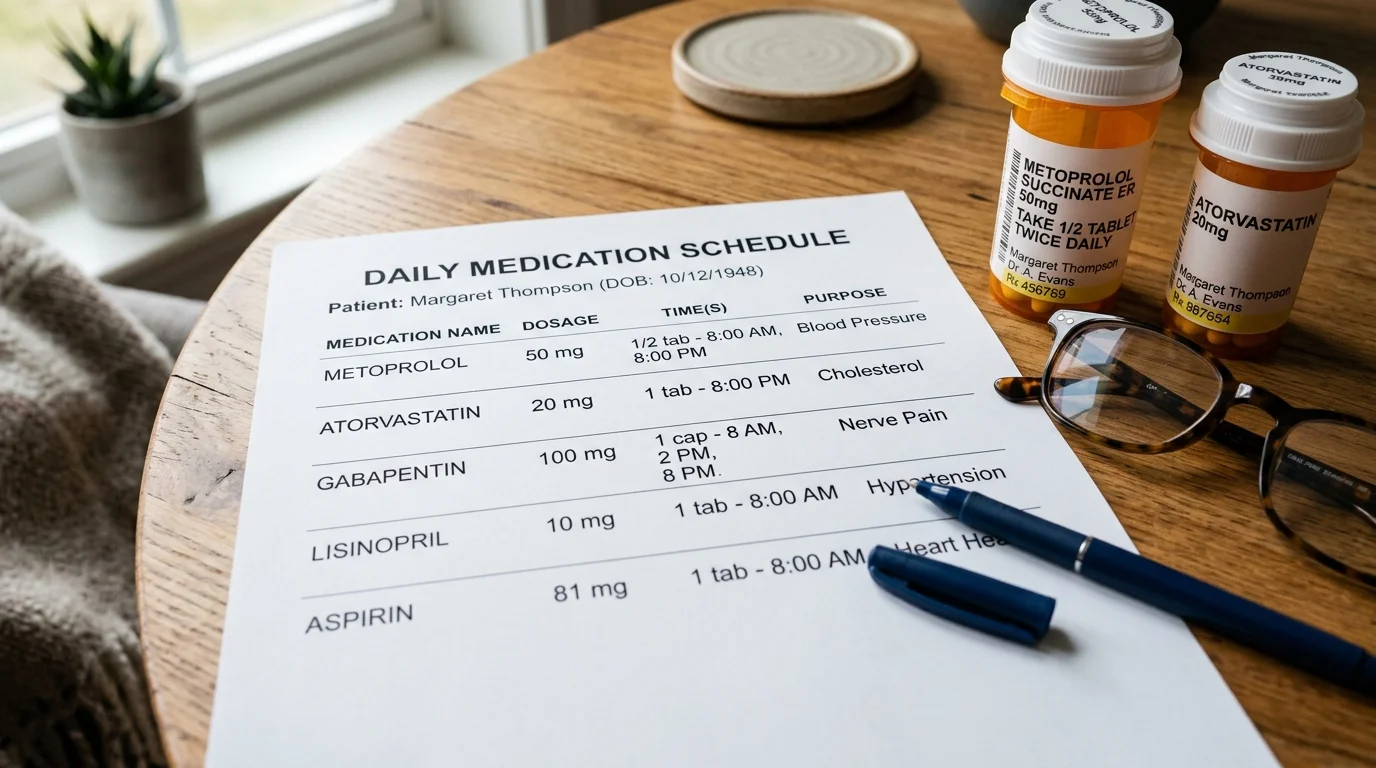
A complete medication list should include every product that goes into your body for health reasons.
Here’s what to write down:
✔️ Prescription Medications
List every prescription drug your doctor has given you.
Include:
- Full name of the medicine (brand and generic if you know it)
- Strength or dose (like 10 mg, 500 mg, etc.)
- How often you take it (once daily, twice daily, as needed)
- What it’s for (blood pressure, diabetes, cholesterol, pain, etc.)
- Prescribing doctor’s name
✔️ Over-the-Counter (OTC) Medicines
Don’t skip the things you buy without a prescription.
These include:
- Pain relievers like acetaminophen or ibuprofen
- Antacids
- Laxatives
- Cough or cold medicines
- Allergy pills
- Sleep aids
Even though they’re not prescription, they can still interact with your other medicines.
✔️ Vitamins and Supplements
Vitamins, minerals, herbal supplements, and probiotics count too.
Examples:
- Vitamin D
- Calcium
- Fish oil
- Turmeric
- Ginkgo biloba
- Multivitamins
Some supplements can affect how your prescription drugs work or increase bleeding risk, especially if you’re on blood thinners.
✔️ Eye Drops, Ear Drops, Inhalers, and Patches
If you use it regularly for your health, add it to the list.
This includes:
- Glaucoma eye drops
- Steroid inhalers for asthma or COPD
- Nicotine patches
- Pain patches
✔️ Allergy Information
Write down any drug allergies or bad reactions you’ve had in the past.
Include:
- What medicine caused the problem
- What happened (rash, swelling, trouble breathing, nausea, etc.)
This is critical information for any doctor or pharmacist.
✔️ As-Needed Medicines
Include medicines you don’t take every day but use when needed.
Examples:
- Nitroglycerin for chest pain
- Anti-nausea medicine
- Migraine medicine
- Anxiety or panic attack medicine
🛠️ How to Create Your Medication List After 60: Step-by-Step
Step 1: Gather All Your Medicines
Collect every pill bottle, vitamin jar, inhaler, patch, cream, and eye drop you use.
Put them all on the table so you can see everything at once.
Step 2: Write Down the Details
Use a notebook, a computer document, or a medication list template.
For each item, write:
- Medicine name
- Dose
- How often you take it
- What it’s for
- Prescribing doctor (if applicable)
Don’t rely on memory. Read the label carefully.
Step 3: Include Non-Prescription Items
Add your vitamins, supplements, and over-the-counter medicines.
Even if you only take them once in a while, write them down.
Step 4: Add Your Allergies
Note any allergies or bad reactions to medicines at the top of your list.
Step 5: Ask Your Pharmacist for Help
If you’re unsure about a medicine or dose, ask your pharmacist.
They can print a list of your current prescriptions from their system. This can serve as a great starting point.
Step 6: Review It with Your Doctor
Bring your list to your next doctor visit.
Go through it together. Your doctor may:
- Stop medicines you no longer need
- Adjust doses
- Spot potential interactions
- Clarify confusing instructions
Step 7: Update It Regularly
Every time a medicine is added, stopped, or changed, update your list right away.
Set a reminder every three months to review it.
📄 Free Medication List Template Ideas
You don’t need anything fancy. A simple table or list works fine.
Here’s a format you can use:
Medicine Name | Strength | How Often | What It’s For | Prescribing Doctor
Example:
- Metformin | 500 mg | Twice daily | Diabetes | Dr. X
- Lisinopril | 10 mg | Once daily | Blood pressure | Dr. Y
- Vitamin D3 | 1000 IU | Once daily | Bone health | Self
You can also ask your pharmacy for a printed medication list or use apps designed for medication tracking.
At QuickDawa, we support any system that works for you, as long as it’s clear, complete, and kept up to date.
🧳 Where to Keep Your Medication List
Keep It in Multiple Places
- In your wallet or purse (a folded copy)
- On your phone (photo or note app)
- On your refrigerator (for caregivers or emergency responders)
- In your medicine cabinet
- In your car’s glove box (if you travel often)
Share It with Key People
Give a copy to:
- Your primary care doctor
- Your spouse or caregiver
- Your adult children
- Your pharmacy
Make sure someone close to you knows where to find it in an emergency.
🩺 Questions to Ask Your Doctor About Your Medication List
Asking a few simple questions to ask before starting a new medicine can keep you safer, more confident, and in better control of your health.

Bring your medication list to every appointment and ask:
- “Am I still supposed to be taking all of these?”
- “Are any of these medicines interacting with each other?”
- “Can I stop or reduce any of these safely?”
- “Is there a generic version I can use?”
- “What should I do if I miss a dose?”
- “Are there any foods or drinks I should avoid with these medicines?”
- “Do any of these increase my fall risk?”
These questions help you stay informed and involved in your own care.
📞 When to Call a Doctor
Contact your doctor if:
- You’re confused about how to take a medicine
- You’re experiencing new or worsening side effects
- You’ve started a new vitamin or supplement and want to check for interactions
- You’re taking a medicine that was prescribed by another doctor and your primary care doctor doesn’t know about it
- You want to stop a medicine but aren’t sure if it’s safe
🚨 When to Seek Urgent Help
Go to the emergency room or call emergency services if you experience:
- Severe allergic reaction (swelling of face, lips, tongue, or throat; trouble breathing; hives)
- Chest pain or pressure
- Severe dizziness, fainting, or confusion
- Bleeding that won’t stop
- Sudden weakness, slurred speech, or vision changes
- Signs of overdose (extreme drowsiness, vomiting, fast heartbeat, seizures)
Bring your medication list with you to the hospital. It will help the medical team treat you faster and safer.
❓ FAQs
1. What is a medication list after 60?
A medication list after 60 is a complete written record of all the medicines, vitamins, supplements, and over-the-counter products you take. It includes the name, dose, frequency, and reason for each one.
2. Why is a medication list important for older adults?
It helps prevent drug interactions, reduces confusion, keeps all your doctors informed, and can be lifesaving in an emergency.
3. Do I need to include vitamins and supplements?
Yes. Vitamins and supplements can interact with prescription medicines. Always include them on your list.
4. How often should I update my medication list?
Update it every time a medicine is added, stopped, or changed. Review the entire list at least every three months or before every doctor visit.
5. Can my pharmacist help me make a medication list?
Absolutely. Most pharmacies can print a list of your current prescriptions. It’s a great starting point, but you’ll still need to add over-the-counter items and supplements.
6. Should I bring my medication list to the hospital?
Yes. Always bring your medication list to the hospital, urgent care, or any new doctor visit. It helps medical staff treat you safely.
7. What if I take medicine only as needed?
Include it on your list anyway. Write “as needed” next to the frequency and note what it’s for (like pain, nausea, or anxiety).
8. Is there an app I can use to track my medications?
Yes, there are several medication tracking apps available. Some popular ones include Medisafe, MyTherapy, and CareZone. Choose one that’s easy for you to use and keep it updated.
🏁 Summary and Final Thoughts
Creating and maintaining a complete medication list after 60 is one of the simplest, smartest things you can do for your health and safety.
It doesn’t take long. It doesn’t cost anything. And it can prevent serious problems.
Whether you’re managing your own medicines or helping a loved one, this list is a powerful tool.
It keeps everyone on the same page, reduces the risk of dangerous drug interactions, and makes doctor visits and emergencies far less stressful.
Start today. Gather your medicines. Write them down. Keep your list updated. Share it with your doctors and caregivers.
At QuickDawa, we believe that understanding your medicine or health issue is just as important as dealing with it. Knowledge is the first step toward better health. If you found this guide helpful, share it with someone who may need it, and explore more easy-to-understand health guides on QuickDawa.com.
Have questions or need help getting started? Visit the QuickDawa contact page and reach out. We’re here to help you take control of your health, one smart step at a time.
⚠️ Medical Disclaimer
The information provided in this article is intended for educational and informational purposes only. It is not a substitute for professional medical advice, diagnosis, or treatment. Always seek the guidance of your qualified doctor, pharmacist, or healthcare provider with any questions you may have regarding a medical condition, medication, or treatment plan.
Never disregard professional medical advice or delay seeking it because of something you read on QuickDawa or any other website. If you think you may have a medical emergency, call your doctor, go to the nearest emergency room, or call emergency services immediately.
Drug information, dosages, side effects, and interactions mentioned in this post are provided for general awareness only and may not apply to your personal health situation. Medicines affect people differently based on age, weight, medical conditions, and other factors.
QuickDawa and its authors do not assume any liability for any consequences arising from the use or misuse of information presented on this website.
🌐 References
- National Institute on Aging (NIA) – Safe Use of Medicines for Older Adults
https://www.nia.nih.gov/health/safe-use-medicines-older-adults - MedlinePlus – Medication List: What You Need to Know
https://medlineplus.gov/ency/patientinstructions/000881.htm - U.S. Food and Drug Administration (FDA) – My Medicine Record
https://www.fda.gov/drugs/resources-you-drugs/my-medicine-record - Mayo Clinic – Managing Medications: Tips for Older Adults
https://www.mayoclinic.org/healthy-lifestyle/healthy-aging/in-depth/medications/art-20046901 - Centers for Disease Control and Prevention (CDC) – Medication Safety Program
https://www.cdc.gov/medicationsafety/index.html - American Geriatrics Society – Medication Safety for Older Adults
https://www.healthinaging.org/tools-and-tips/tip-sheet-medication-safety-older-adults