
Ibuprofen Uses, Dosage, Side Effects and Warnings (2026) – Complete Guide | QuickDawa
Just Imagine this!
It’s a Monday morning.
Your alarm goes off and your head is already pounding.
Maybe it’s stress from work.
Maybe you slept in a weird position and your neck is stiff.
Or maybe your kid came home from school with a fever and now you’re scrambling through the medicine cabinet at midnight.
What’s the first thing you reach for?
If you’re like millions of people around the world, the answer is ibuprofen.
It’s one of the most popular painkillers on the planet.
You’ll find it in almost every home, every office drawer, and every travel bag.
It’s cheap, it’s easy to find, and it works fast.
But here’s something most people don’t think about.
Just because ibuprofen is sold over the counter doesn’t mean it’s harmless.
Just because you don’t need a prescription doesn’t mean you can pop as many as you want.
The truth is , ibuprofen is a real medicine with real rules.
There are right ways to take it.
There are wrong ways that can seriously hurt you.
And there are certain people who should never take it at all.
Scary?
Not really.
Not if you have the right information.
And that’s exactly what this guide is for.
At QuickDawa, we’re all about making medicine easy to understand , so let’s break down everything you need to know about ibuprofen in simple, clear language.
No confusing medical terms.
No doctor-speak.
Just honest, friendly, straight talk from someone who genuinely cares about your health.
Ready?
Let’s go.
💊 What Is Ibuprofen?
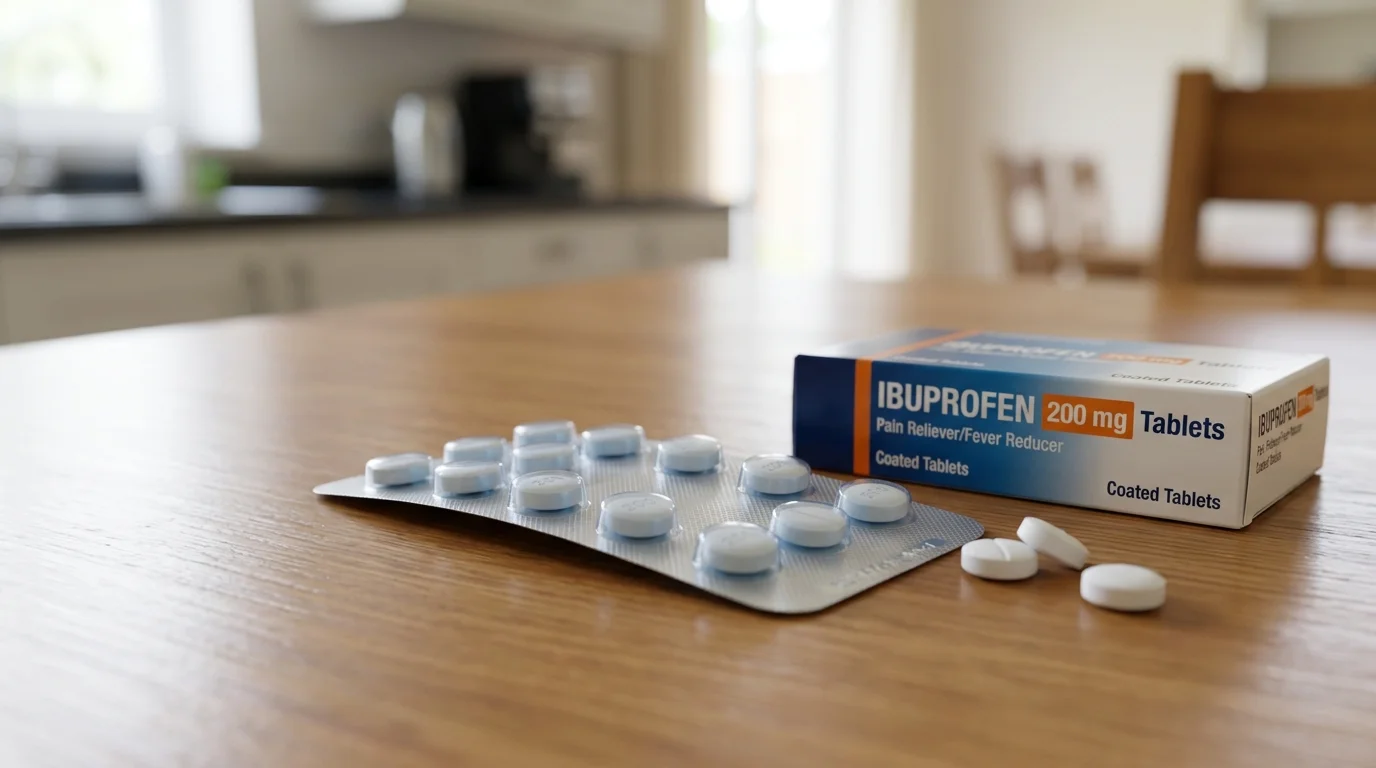
Ibuprofen is a nonsteroidal anti-inflammatory drug , or NSAID for short.
Now, don’t let that long name intimidate you.
All it really means is that ibuprofen does three things really well.
It reduces pain.
It lowers fever.
And it fights inflammation (swelling and redness).
It belongs to the same family of medicines as aspirin and naproxen.
But ibuprofen has its own unique balance of effectiveness and safety that makes it incredibly popular.
You probably know it by brand names like Advil, Motrin, Nurofen, or Brufen.
Different companies make it in different countries.
But the active ingredient , ibuprofen, is exactly the same regardless of the brand name on the box.
You can buy it over the counter in most countries without a prescription.
The standard OTC strength is usually 200 mg per tablet.
But doctors can also prescribe stronger versions , 400 mg, 600 mg, or even Ibuprofen 800 mg tablets , for more serious conditions like arthritis or post-surgical pain.
It comes in many forms too.
Tablets, capsules, liquid gels, syrups for kids, chewable tablets, topical creams, and even IV injections for hospital use.
Think of ibuprofen as the Swiss Army knife of your medicine cabinet.
It’s versatile, reliable, and almost always within arm’s reach when you need it.
But just like a Swiss Army knife, you need to know how to use it properly to avoid cutting yourself.
📜 A Brief History of Ibuprofen

Here’s a fun little backstory that most people don’t know.
Ibuprofen was discovered in the 1960s by a British scientist named Dr. Stewart Adams and his colleague Dr. John Nicholson.
They were working at a company called Boots Group in Nottingham, England.
Their goal was simple , find a better alternative to aspirin that was easier on the stomach.
After years of research and testing hundreds of compounds, they finally found the winner.
Ibuprofen.
Legend has it that Dr. Adams actually tested the very first dose on himself , to cure a hangover headache before giving a big presentation.
It worked.
The drug was first launched in the UK in 1969 as a prescription medicine.
Then in 1984, it became available over the counter in the United States.
That was a game-changer.
Suddenly, anyone could walk into a pharmacy and buy effective pain relief without seeing a doctor.
Today, ibuprofen is on the World Health Organization’s List of Essential Medicines.
That means it’s considered one of the most important medications that every healthcare system should have available.
Not bad for a drug that started as a hangover cure, right?
⚖️ Ibuprofen vs Acetaminophen (Tylenol) – What’s the Difference?
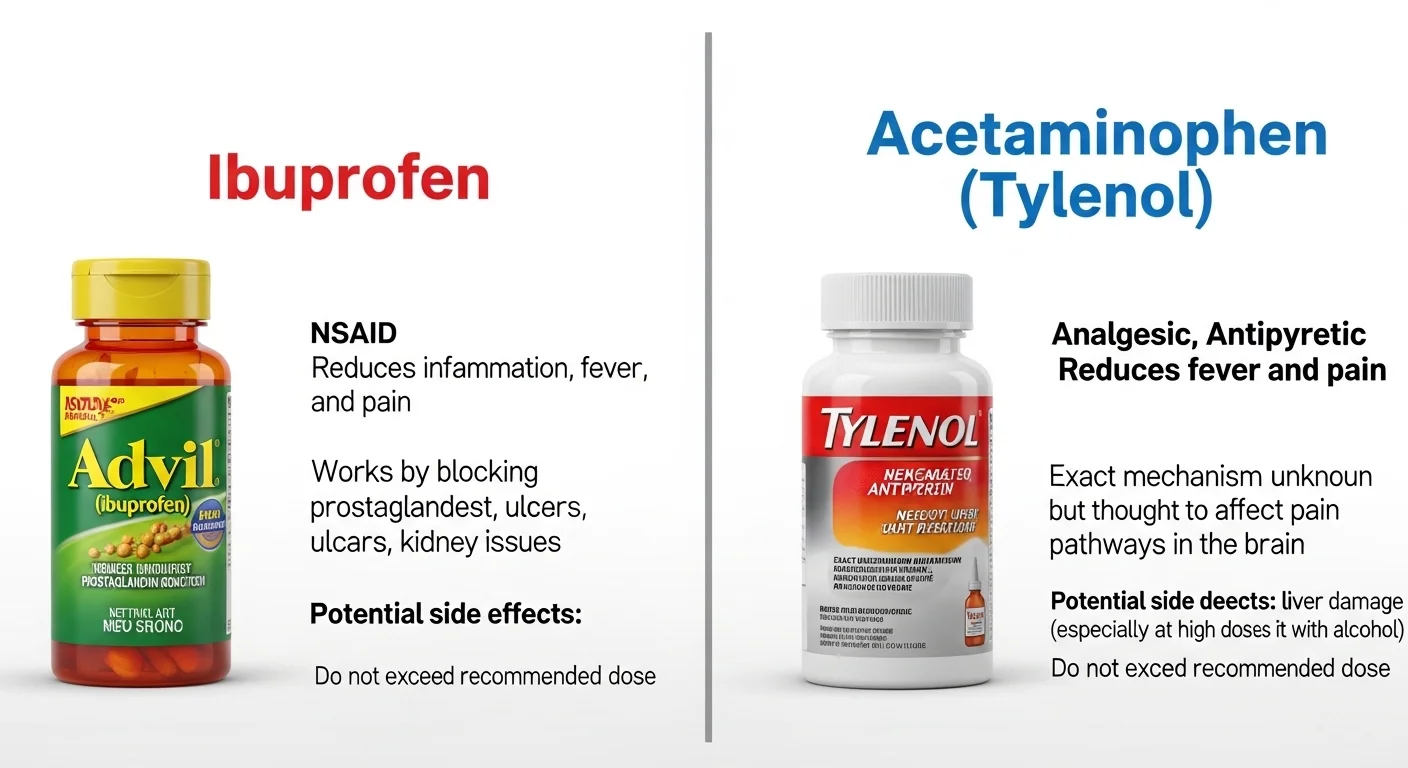
This is one of the most common questions people ask.
“Should I take ibuprofen or Tylenol?”
Great question.
Let me break it down simply.
Ibuprofen (Advil, Motrin) is an anti-inflammatory painkiller.
It reduces pain AND swelling AND fever.
Acetaminophen (Tylenol, Paracetamol) is a pain reliever and fever reducer only.
It does NOT reduce inflammation.
So here’s the practical difference.
If your pain involves swelling , like a sprained ankle, arthritis, a sports injury, or a swollen toothache , ibuprofen is usually the better choice because it targets both the pain and the inflammation causing it.
If you just have a headache or fever with no significant swelling, either one can work.
If you have stomach problems, acetaminophen is often gentler on the stomach than ibuprofen.
If you have liver problems, ibuprofen might be the safer choice because acetaminophen is processed by the liver.
If you have kidney problems, acetaminophen is usually preferred because ibuprofen can strain the kidneys.
Here’s a quick comparison:
| Feature | Ibuprofen | Acetaminophen (Tylenol) |
|---|---|---|
| Reduces Pain | ✅ Yes | ✅ Yes |
| Reduces Fever | ✅ Yes | ✅ Yes |
| Reduces Inflammation | ✅ Yes | ❌ No |
| Gentle on Stomach | ❌ Can irritate | ✅ Usually gentler |
| Safe for Liver | ✅ Generally yes | ⚠️ Can damage liver in high doses |
| Safe for Kidneys | ⚠️ Can affect kidneys | ✅ Usually safer |
| Available OTC | ✅ Yes | ✅ Yes |
Can you take both together?
Actually, yes , in many cases, doctors say it’s okay to alternate between ibuprofen and acetaminophen for better pain control.
But never do this without asking your doctor or pharmacist first.
They’ll guide you on the right timing and doses.
✅ Uses of Ibuprofen
Ibuprofen is incredibly versatile.
It’s used for way more conditions than most people realize.
Let me walk you through all the important ones.
Pain Relief – The #1 Reason People Take It
Pain relief is the number one reason people reach for ibuprofen.
It helps with mild to moderate pain of all kinds.
We’re talking headaches, toothaches, earaches, muscle aches, and backaches.
Got a sore throat?
Ibuprofen can help with that too.
Twisted your ankle playing basketball?
Ibuprofen.
Woke up with neck pain from sleeping funny?
Yep, ibuprofen.
If something hurts and it’s not too severe, ibuprofen is usually a solid first choice.
It typically starts working within 20 to 30 minutes and the relief lasts about 4 to 6 hours.
Fever Reduction
Got a fever?
Ibuprofen brings your temperature down pretty quickly.
Ibuprofen for fever in both adults and children (over 6 months old).
Many parents keep children’s ibuprofen at home for those middle-of-the-night fever scares.
Here’s a helpful tip , for fevers, ibuprofen often works better than acetaminophen alone.
Some pediatricians even recommend alternating between the two for stubborn fevers.
But always check with your child’s doctor before doing that.
Inflammation and Swelling
This is where ibuprofen really shines compared to some other painkillers.
It doesn’t just block pain , it also reduces inflammation.
Inflammation is your body’s response to injury or illness.
It’s actually a good thing in small amounts , it means your body is trying to heal.
But too much inflammation causes pain, swelling, redness, and stiffness.
That’s where ibuprofen steps in.
It’s great for conditions like:
- Osteoarthritis – The “wear and tear” type of arthritis that affects joints as you age.
- Rheumatoid arthritis – An autoimmune condition where your immune system attacks your joints.
- Sprains and strains – Twisted ankle, pulled hamstring, strained shoulder.
- Tendonitis – Inflammation of a tendon, common in elbows, shoulders, and knees.
- Bursitis – Swollen fluid sacs around your joints.
- Gout flare-ups – Painful swelling, usually in the big toe.
- Sports injuries – Runner’s knee, tennis elbow, shin splints.
Think of inflammation like a fire in your body.
Ibuprofen helps put that fire out.
Menstrual Cramps (Dysmenorrhea)
Ladies, this one’s for you.
Ibuprofen is one of the most effective medicines for period pain.
And there’s actual science behind it.
Period cramps happen because your uterus produces prostaglandins, those same chemicals I mentioned earlier.
Prostaglandins make the uterus contract, and those contractions cause cramping.
Since ibuprofen blocks prostaglandin production, it goes straight to the root cause of menstrual pain.
It doesn’t just mask the pain , it actually reduces what’s causing it.
Pro tip: It works best when you take it at the very first sign of cramps , or even a few hours before you expect them to start.
Don’t wait until the pain gets unbearable.
By then, too many prostaglandins have already been released and the medicine has to play catch-up.
Dental Pain
Just had a tooth pulled?
Dealing with a throbbing toothache at night?
Dentists often recommend ibuprofen to improve your oral wellness because it tackles both the pain and the swelling around the tooth.
In fact, many dental studies show that ibuprofen combined with acetaminophen can be even more effective than some prescription painkillers for dental pain.
Pretty impressive for two over-the-counter medicines.
Headaches and Migraines
Ibuprofen is a go-to for tension headaches , the most common type.
It’s also approved for treating mild migraines.
For migraines, the key is to take it as early as possible once you feel the headache coming on.
If you wait too long, it may not work as well.
Back Pain
Lower back pain is one of the most common reasons adults visit a doctor.
And guess what most doctors recommend first?
Ibuprofen.
It helps reduce both the pain and any underlying inflammation in the muscles or joints of the back.
For acute back pain (the kind that comes on suddenly), a short course of Ibuprofen for back pain combined with gentle movement is often very effective.
Post-Surgical Pain
After minor surgeries , like dental procedures, orthopedic repairs, or minor outpatient surgeries , doctors frequently prescribe ibuprofen as part of the pain management plan.
Sometimes it’s used alone.
Sometimes it’s combined with acetaminophen or a prescription painkiller for stronger relief.
Off-Label Uses
Some doctors prescribe ibuprofen for conditions that aren’t on the official label.
For example, it’s sometimes used to help close a specific type of heart defect (called patent ductus arteriosus) in premature babies, but that’s strictly under medical supervision in a hospital setting.
It’s also occasionally used to reduce the risk of Alzheimer’s disease or colon polyps in research settings , but these uses are still being studied and are not officially approved.
How Does It Actually Work in Your Body?
Here’s the simple version.
When you get hurt or sick, your body produces chemicals called prostaglandins.
These prostaglandins are like tiny alarm signals.
They tell your body, “Hey, something’s wrong here!”
And they trigger three responses , pain, swelling, and fever.
Now, your body makes prostaglandins using an enzyme called COX (cyclooxygenase).
Ibuprofen works by blocking the COX enzyme.
When COX is blocked, your body can’t produce as many prostaglandins.
And fewer prostaglandins means less pain, less swelling, and lower fever.
It’s like turning down the volume on your body’s alarm system.
The alarm was useful , it told you something was wrong.
But once you know about the problem, you don’t need the alarm blaring in your ear anymore.
That’s what ibuprofen does.
It turns down the noise so you can actually function and heal comfortably.
Pretty straightforward, right?
🧑⚕️ How to Take Ibuprofen Properly
This is a section most guides skip entirely.
But I think it’s one of the most important ones.
Because how to take Ibuprofen dosage for Adults and how much can you safely take is the big question.
Always Take It with Food or Water
This is rule number one.
Ibuprofen can irritate your stomach lining while taking Ibuprofen on empty stomach.
Taking it with food, milk, or at least a full glass of water creates a buffer that protects your stomach.
Never swallow an ibuprofen tablet on an empty stomach if you can avoid it.
Even a few crackers or a banana can make a difference.
Swallow Tablets Whole
Unless you have a chewable version, swallow the tablet whole.
Don’t crush it, chew it, or break it in half (unless the tablet has a score line designed for splitting).
Crushing can release the medicine too quickly and increase stomach irritation.
Don’t Lie Down Right After Taking It
Wait at least 10 to 15 minutes before lying down after taking ibuprofen.
This helps the tablet travel down to your stomach properly and reduces the risk of heartburn.
Stick to the Recommended Dose
I know it’s tempting to take an extra pill when you’re in serious pain.
But more ibuprofen does not always mean more relief.
After a certain point, you just get more side effects without additional benefit.
Stick to the dose on the label or what your doctor prescribed.
Don’t Use It Long-Term Without Medical Advice
Ibuprofen is meant for short-term use.
For OTC use, the general rule is:
- No more than 10 days for pain.
- No more than 3 days for fever.
If your symptoms haven’t improved by then, see your doctor.
Long-term use increases the risk of stomach ulcers, kidney damage, and cardiovascular problems.
Time Your Doses Properly
Space your doses 4 to 6 hours apart for regular-strength (200-400 mg).
For prescription-strength (600-800 mg), it’s usually every 6 to 8 hours.
Set a phone alarm if you need to, it helps you stay on track without accidentally taking doses too close together.
⚠️ Side Effects of Ibuprofen

Now let’s talk about the stuff most people skip over on the label.
Every medicine has them.
That doesn’t mean you’ll definitely experience them.
But you should know what to watch for.
Common Side Effects (Most People May Experience)
These are usually mild and tend to go away on their own:
- Stomach upset or nausea – This is the most common one by far. Taking ibuprofen with food helps a lot. Think of it like this , ibuprofen is slightly “rough” on your stomach lining, and food acts like a cushion.
- Heartburn or indigestion – That burning feeling in your chest or upper stomach after taking a pill. Drinking a full glass of water with your dose usually helps.
- Dizziness – Some people feel a little lightheaded, especially when standing up quickly.
- Mild headache – Ironic, right? A painkiller causing a headache. It happens sometimes, especially when you first start taking it.
- Bloating or gas – Your stomach might feel puffy or uncomfortable.
- Diarrhea – Usually mild and temporary.
Less Common Side Effects
These happen less often but are still worth knowing about:
- Ringing in the ears (tinnitus) – This usually means the dose might be too high for you.
- Skin rash or itching – Could be a sign of mild sensitivity.
- Constipation – The opposite of diarrhea, but it can happen.
- Blurred vision – Rare but reported by some users.
- Fluid retention – You might notice slight swelling in your hands, ankles, or feet.
- Increased blood pressure – Ibuprofen can raise blood pressure slightly, especially with regular use.
- Nervousness or anxiety – Some people feel jittery.
Rare but Serious Side Effects (Seek Medical Help Immediately) 🚨
These are uncommon, but if you experience any of the following, stop taking ibuprofen and get medical help right away:
- Stomach bleeding – Look for black, tarry stools, or vomiting blood or material that looks like coffee grounds. This is the most serious GI risk.
- Severe allergic reaction (anaphylaxis) – Swelling of face, lips, tongue, or throat. Trouble breathing. Hives covering your body. This is a medical emergency.
- Chest pain or shortness of breath – Could signal heart attack or other cardiovascular problems.
- Signs of kidney problems – Very little urination, swelling in ankles, unusual tiredness, foamy urine.
- Signs of liver problems – Yellowing of skin or eyes (jaundice), dark urine, severe upper stomach pain, persistent nausea.
- Severe skin reactions (Stevens-Johnson Syndrome) – Blistering, peeling, or a widespread red rash. Extremely rare but very dangerous.
- Stroke symptoms – Sudden numbness on one side, confusion, trouble speaking, sudden severe headache, vision changes.
A reassuring note: I don’t tell you these things to scare you. Side effects don’t happen to everyone. Millions of people use ibuprofen every single day with absolutely no issues at all. But it’s always important to be aware – because knowledge keeps you safe. Being informed is not the same as being afraid.
🚨 Warnings & Precautions – Please Read This Carefully
This section could honestly save your life.
Or at least save you from a really bad experience.
Please don’t skip it.
⛔ Who Should NOT Take Ibuprofen?
Ibuprofen is not safe for everyone.
Do not take it if:
- You are allergic to ibuprofen or any other NSAID (like aspirin or naproxen).
- You’ve ever had an asthma attack, hives, or allergic reaction after taking aspirin or another NSAID. This is called the “aspirin triad” and it’s more common than you’d think.
- You are about to have or just had heart bypass surgery (coronary artery bypass graft / CABG). The FDA specifically warns against NSAID use around this surgery.
- You have active stomach ulcers or a history of gastrointestinal bleeding.
- You have severe kidney disease or severe liver disease.
- You are in the third trimester of pregnancy (after 28 weeks).
🤰 Pregnancy & Breastfeeding
Is Ibuprofen Safe While Breastfeeding?
This is a big one.
Ibuprofen should be avoided during pregnancy – especially after 20 weeks.
The FDA issued a strong warning in 2020 that NSAIDs like ibuprofen can cause serious kidney problems in the unborn baby starting at around 20 weeks of pregnancy.
This can lead to low amniotic fluid levels, which is dangerous for both the mother and the baby.
After 30 weeks, ibuprofen can also cause a critical blood vessel in the baby’s heart (called the ductus arteriosus) to close prematurely.
This can lead to life-threatening heart and lung problems in the newborn.
In the first trimester, some studies suggest a possible link to miscarriage, though the evidence is not conclusive.
The bottom line – if you’re pregnant or trying to get pregnant, talk to your doctor before taking ibuprofen. Acetaminophen (Tylenol) is usually considered safer during pregnancy, but even that should be used under medical guidance.
During breastfeeding, ibuprofen is actually considered one of the safer painkillers because very little passes into breast milk. Most medical guidelines say it’s compatible with breastfeeding in standard doses. But still – always check with your doctor first.
🫀 Heart Disease Warning – FDA Black Box Warning
⚠️ This is the most serious warning the FDA can give a medicine.
NSAIDs, including ibuprofen, can increase your risk of heart attack and stroke.
This is not a maybe , it’s a proven risk.
Here’s what you need to know:
- The risk goes up the longer you use it.
- The risk goes up at higher doses.
- People with existing heart disease or risk factors for heart disease (high blood pressure, diabetes, high cholesterol, smoking, family history) are at even greater risk.
- The increased risk can happen as early as the first few weeks of regular use.
The golden rule: Use the lowest effective dose for the shortest possible time.
If you have heart disease or have had a heart attack or stroke in the past, talk to your doctor before taking any NSAID , including ibuprofen.
🫁 Kidney and Liver Concerns
Your kidneys are responsible for filtering waste from your blood.
Ibuprofen can reduce blood flow to the kidneys, which makes them work harder.
If your kidneys are already struggling, ibuprofen can push them over the edge.
Signs of kidney problems include very little urination, swelling in your legs or feet, unusual fatigue, and foamy or dark urine.
Similarly, if you have liver disease, ibuprofen can make it worse.
Your doctor may need to adjust your dose, monitor your liver function, or suggest a completely different painkiller.
If you have either condition, never take ibuprofen without talking to your doctor first.
👴 Elderly Patients
Older adults are more vulnerable to ibuprofen’s side effects.
The reasons are simple , as we age, our kidneys and liver don’t work as efficiently, our stomach lining gets thinner, and our cardiovascular system is more fragile.
This means seniors face a higher risk of:
- Stomach bleeding and ulcers
- Kidney damage
- Heart complications
- Elevated blood pressure
Doctors often recommend lower doses and shorter treatment periods for elderly patients.
If you’re over 65, always talk to your doctor before starting ibuprofen , even for a short time.
👶 Children
Is Ibuprofen Safe for Kids? is the most asked question by parents while visiting the doctors.
Ibuprofen is generally safe for kids 6 months and older.
But there are important rules:
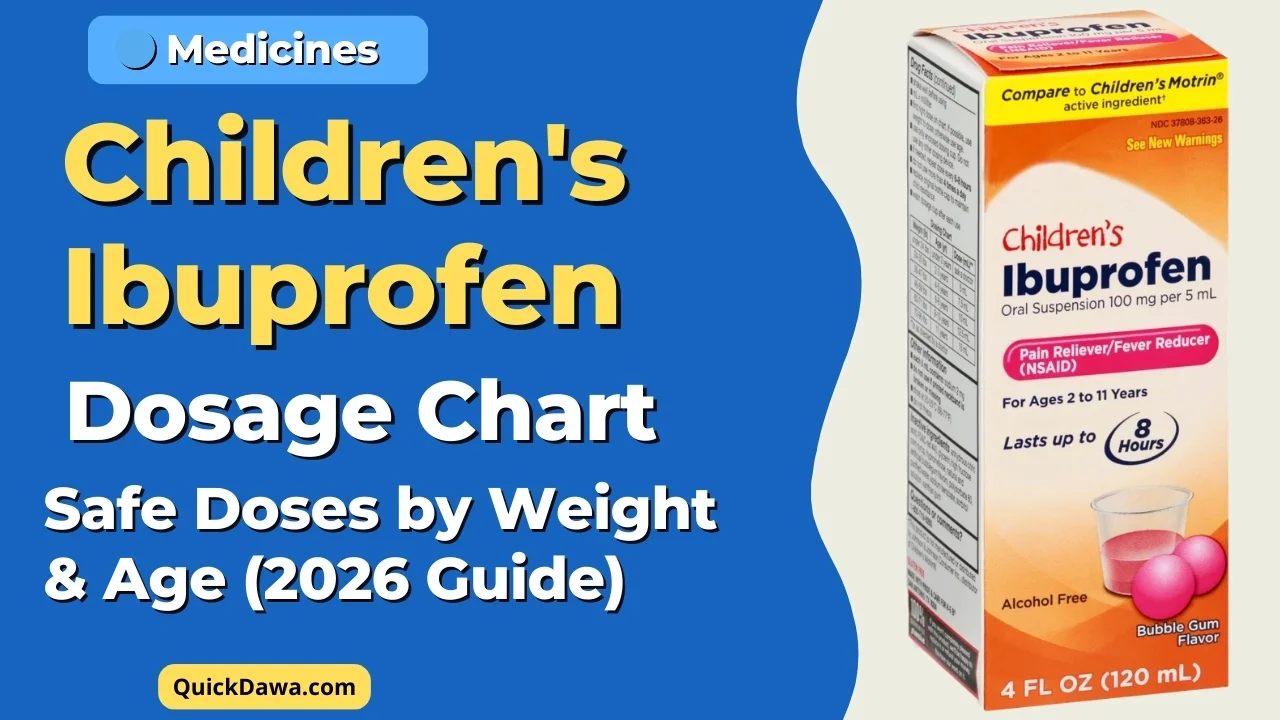
- Always use the children’s Ibuprofen dosage chart – liquid suspension or chewable tablets.
- Dose by weight, not just age. The weight-based dose is much more accurate and safe.
- Never give adult ibuprofen tablets to a small child.
- Always use the measuring device that comes with the medicine. Kitchen spoons are wildly inaccurate.
- Never give ibuprofen to babies under 6 months old unless specifically directed by a pediatrician.
- If your child has chickenpox or is dehydrated, avoid ibuprofen – it can increase the risk of complications.
🍺 Alcohol Warning
Do not drink alcohol while taking ibuprofen.
Both alcohol and ibuprofen irritate your stomach lining.
Combine them and you dramatically increase your risk of stomach bleeding and ulcers.
Even moderate drinking (a glass of wine or a beer) while taking ibuprofen can be risky if done regularly.
If you drink alcohol frequently (3 or more drinks per day), talk to your doctor before using ibuprofen or any NSAID.
🚗 Driving and Machinery
Ibuprofen can cause dizziness or drowsiness in some people.
This is more likely at higher doses or when you first start taking it.
If it affects you this way, avoid driving or operating heavy machinery until you know how your body reacts.
Most people are fine, but it’s worth being cautious – especially the first time.
🫁 Asthma Warning
If you have asthma, be careful with ibuprofen.
About 10-20% of people with asthma are sensitive to NSAIDs.
Ibuprofen can trigger bronchospasm – a sudden tightening of the muscles around your airways – which can cause a serious asthma attack.
This is especially true if you also have nasal polyps or are sensitive to aspirin.
If you have asthma and have never taken ibuprofen before, talk to your doctor first.
🔄Ibuprofen Drug Interactions
Ibuprofen doesn’t play nicely with every medicine out there.
Some combinations can be downright dangerous.
Knowing the full ibuprofen drug interactions list is not just helpful.
Here are the most important interactions you need to know about.
🔴 Major Interactions (Most Dangerous)
- Aspirin (low-dose) – Ibuprofen can reduce aspirin’s heart-protective effects. If you take both, take ibuprofen at least 8 hours before or 30 minutes after your aspirin.
- Blood thinners (Warfarin, Heparin, Eliquis) – Increased risk of serious, potentially life-threatening bleeding.
- Other NSAIDs (Naproxen, Diclofenac, Meloxicam) – Doubling up on NSAIDs multiplies side effects without extra benefit. Never combine two NSAIDs.
- Methotrexate – Can increase methotrexate toxicity, potentially leading to serious bone marrow and kidney problems.
🟡 Moderate Interactions (Use with Caution)
- ACE inhibitors / ARBs (Lisinopril, Losartan) – Ibuprofen can raise blood pressure and reduce the effectiveness of these blood pressure drugs. Can also harm kidneys when combined.
- Diuretics (Furosemide, Hydrochlorothiazide) – Can reduce how well diuretics work. May also harm your kidneys when combined.
- SSRIs (Fluoxetine, Sertraline, Citalopram) – Higher bleeding risk, especially stomach bleeding.
- Lithium – Ibuprofen can increase lithium levels in your blood to potentially dangerous amounts. Requires monitoring.
- Cyclosporine – Increased risk of kidney damage when combined.
- Alcohol – Dramatically increases the chance of stomach bleeding and ulcers.
- Corticosteroids (Prednisone, Dexamethasone) – Greater risk of stomach ulcers and GI bleeding when combined.
- Digoxin – Ibuprofen may increase digoxin levels, potentially causing toxicity.
🟢 Minor Interactions (Still Worth Knowing)
- Ginkgo Biloba (herbal supplement) – May increase bleeding risk due to blood-thinning properties of ginkgo.
Important reminder: Always tell your doctor or pharmacist about every medicine, supplement, or herbal product you’re currently taking before starting ibuprofen. Even things that seem harmless – like herbal teas, turmeric supplements, fish oil, or vitamin E – can interact with medicines in unexpected ways.
💉 Overdose / Missed Dose
Ibuprofen Overdose Amount – What Happens If You Take Too Much?
Taking tIbuprofen overdose amount is a medical emergency.
It can happen by accident , especially with children who might get into the medicine cabinet.
Or it can happen when adults take extra doses because the pain won’t go away.
Symptoms of ibuprofen overdose may include:
- Severe nausea and vomiting
- Intense stomach pain
- Drowsiness or extreme fatigue
- Blurred vision
- Ringing in the ears
- Severe headache
- Slow or difficult breathing
- Rapid or irregular heartbeat
- Seizures (in severe cases)
- Loss of consciousness
- Hypothermia (low body temperature)
What to do immediately:
- Call Poison Control at 1-800-222-1222 (in the US) or your local emergency number immediately.
- Go to the nearest emergency room if symptoms are severe.
- Try to tell them how many tablets were taken, what strength they were, and when they were taken.
- Do NOT try to make yourself vomit unless a medical professional tells you to.
- If the person is unconscious, lay them on their side (recovery position) to prevent choking.
Please, do NOT take double doses to make up for a missed one.
More is not better when it comes to medicine.
An overdose of ibuprofen can cause serious stomach damage, kidney failure, metabolic acidosis, and in rare severe cases, it can be fatal.
Take this seriously.
Missed Dose – What to Do
If you’re taking ibuprofen on a regular schedule (as prescribed by your doctor) and you miss a dose:
- Take it as soon as you remember.
- But if it’s almost time for your next dose, just skip the missed one.
- Never double up to catch up.
One missed dose of ibuprofen is not the end of the world.
Don’t panic.
Just get back on your regular schedule with the next dose.
If you’re just using ibuprofen as needed for occasional pain (not on a fixed schedule), then missed doses aren’t really a concern , just take it when you need it.
📊 Dosage Guide
Here’s a general overview of how ibuprofen is typically dosed.
Ibuprofen Dosage for Adults (Ages 12 and Up)
Ibuprofen dosage for adults is given below;
- For pain or fever (OTC): 200 mg to 400 mg every 4 to 6 hours as needed.
- Maximum daily dose (OTC): 1,200 mg per day (that’s six 200mg tablets) , unless a doctor tells you otherwise.
- Maximum daily dose (prescription): Up to 3,200 mg per day , but only under strict medical supervision.
- For arthritis or chronic conditions: Doctors typically prescribe 400 mg to 800 mg, three to four times daily.
- Use 3 3 3 ibuprofen rule which is very effective.
Children (Ages 6 Months to 11 Years)
- Dosage is based on the child’s weight, not just age.
- Typical dose: 5 to 10 mg per kg of body weight every 6 to 8 hours.
- Maximum: 40 mg per kg per day.
- Always use the measuring device (syringe or dosing cup) that comes with children’s liquid ibuprofen. Kitchen spoons are NOT accurate and can lead to over- or under-dosing.
Here’s a quick reference for children’s dosing by weight:
| Child’s Weight | Dose (every 6–8 hours) |
|---|---|
| 5–7 kg (11–15 lbs) | 50 mg |
| 8–10 kg (17–22 lbs) | 75 mg |
| 11–15 kg (24–33 lbs) | 100 mg |
| 16–21 kg (35–46 lbs) | 150 mg |
| 22–27 kg (48–59 lbs) | 200 mg |
| 28–32 kg (61–70 lbs) | 250 mg |
| 33–43 kg (72–95 lbs) | 300 mg |
Always verify with your pediatrician or the dosing chart on the product packaging.
Elderly Patients
- Start at the lowest effective dose.
- Shorter treatment duration is strongly recommended.
- More frequent monitoring for side effects is important , especially kidney function and blood pressure.
- Many geriatricians recommend trying acetaminophen first before resorting to ibuprofen in older adults.
Available Forms
Ibuprofen comes in many forms to suit different needs:
- Tablets and caplets (200 mg, 400 mg, 600 mg, 800 mg)
- Liquid-filled gel capsules (soft gels) , often absorbed faster
- Oral suspension / liquid (for children , typically 100 mg per 5 mL)
- Chewable tablets (for children who can’t swallow pills)
- Topical gel or cream (applied directly to the skin for localized muscle/joint pain)
- IV injection (hospital use only , for pain management or fever in patients who can’t take oral meds)
- Effervescent tablets (dissolve in water , available in some countries)
Pro tip from QuickDawa: Always take ibuprofen with food or a full glass of water to protect your stomach lining. If you choose gel capsules, they tend to work slightly faster because the medicine is already in liquid form inside the capsule.
⚠️ This dosage information is for general awareness only. Always follow your doctor’s prescription or the instructions on your medicine packaging. Your individual needs may differ based on your weight, age, health conditions, and other medications.
🩺 When to Call Your Doctor

Don’t ignore warning signs.
Your body talks to you , you just need to listen.
Call your doctor or seek immediate medical help if you notice any of the following while taking ibuprofen:
- Black, tarry, or bloody stools – this could mean stomach or intestinal bleeding. Don’t wait on this one.
- Vomiting blood or material that looks like coffee grounds.
- Chest pain, sudden weakness on one side, slurred speech, or sudden severe headache – these are signs of a possible heart attack or stroke. Call 911 immediately.
- Severe stomach pain that won’t go away.
- Swelling of your face, lips, tongue, or throat – signs of a serious allergic reaction called anaphylaxis. This is life-threatening.
- Trouble breathing or wheezing – especially if you have asthma.
- Unusual weight gain or swelling in your legs or feet – could indicate fluid retention or kidney problems.
- Yellowing of your skin or eyes – possible liver issue (jaundice).
- Little or no urination – possible kidney damage.
- Skin rash that blisters or peels – rare but very serious skin reaction.
- Your symptoms are getting worse instead of better after a few days.
- You’ve been using ibuprofen for more than 10 days for pain (or 3 days for fever) without talking to a doctor.
When in doubt, call your doctor.
It’s always better to ask and find out everything is fine than to ignore something serious.
Your health is not something to gamble with.
As we say at QuickDawa , when your body sends a warning signal, don’t hit snooze.
🔍 Ibuprofen Myths vs Facts

There’s a lot of misinformation floating around about ibuprofen.
Let’s clear up some of the most common myths.
Myth #1: “Ibuprofen is completely safe because it’s over the counter.”
Fact: OTC doesn’t mean risk-free. Ibuprofen can cause stomach ulcers, kidney damage, and increase heart attack and stroke risk , especially with long-term use or high doses. Always respect the recommended dose.
Myth #2: “You can take ibuprofen and aspirin together without any problem.”
Fact: Taking ibuprofen with low-dose aspirin can actually block aspirin’s heart-protective effects. If you need both, the FDA recommends taking ibuprofen at least 8 hours before or 30 minutes after your aspirin dose.
Myth #3: “More ibuprofen means faster pain relief.”
Fact: Taking more than the recommended dose does NOT make it work faster or better. It just increases your risk of serious side effects. Stick to the proper dose and be patient.
Myth #4: “Ibuprofen is bad for your stomach, so it doesn’t matter if you take it with food or not.”
Fact: Taking ibuprofen with food actually makes a big difference. Food creates a protective buffer in your stomach and significantly reduces the chance of irritation, nausea, and ulcers.
Myth #5: “Ibuprofen and acetaminophen are the same thing.”
Fact: They are completely different medicines that work in different ways. Ibuprofen reduces pain AND inflammation. Acetaminophen reduces pain and fever but does NOT fight inflammation. They can often be used together (alternated) safely , but always check with your doctor.
Myth #6: “If ibuprofen doesn’t work, I should just take more.”
Fact: If standard doses aren’t controlling your pain, see your doctor instead of increasing the dose on your own. You might need a different medicine, a combination approach, or further investigation into what’s causing the pain.
🏠 Storage and Handling Tips
Taking care of your medicine properly ensures it stays effective and safe.
Here are some quick storage tips for ibuprofen:
- Store at room temperature – between 20°C to 25°C (68°F to 77°F).
- Keep it away from moisture and heat – don’t store it in the bathroom (the humidity can degrade the medicine).
- Keep it in the original container – with the lid tightly closed.
- Keep it out of reach of children – ibuprofen overdose in kids can be very serious.
- Check the expiration date – expired ibuprofen may not work as well and could potentially be harmful.
- Don’t transfer tablets into random containers – you might confuse them with other medicines.
- Dispose of unused or expired ibuprofen properly – bring it to a pharmacy take-back program or follow FDA disposal guidelines. Don’t flush it down the toilet.
🙋 Frequently Asked Questions (FAQ)
Here are the most asked questions about ibuprofen;
Q: Is ibuprofen safe during pregnancy?
A: No, ibuprofen should be avoided during pregnancy, especially after 20 weeks. It can cause kidney problems in the baby and reduce amniotic fluid. After 30 weeks, it can cause a critical heart vessel to close prematurely. Always consult your OB-GYN for a safe pain relief alternative – acetaminophen is usually recommended instead.
Q: Can I take ibuprofen on an empty stomach?
A: You technically can, but it’s not recommended. Taking ibuprofen without food increases the chance of stomach irritation, nausea, and even ulcers over time. Always try to take it with food, a snack, milk, or at least a full glass of water.
Q: How long does ibuprofen take to work?
A: Most people start feeling relief within 20 to 30 minutes. Full effects usually kick in within 1 to 2 hours. The pain relief typically lasts around 4 to 6 hours, depending on the dose, the formulation (gel caps tend to work slightly faster), and the severity of your pain.
Q: Can children take ibuprofen?
A: Yes, children 6 months and older can take ibuprofen. But you must use the children’s formulation (liquid or chewable) and dose based on the child’s weight, not just age. Never give adult tablets to young children. When in doubt, ask your pediatrician.
Q: Can I drink alcohol while taking ibuprofen?
A: It’s strongly advised that you do not. Alcohol combined with ibuprofen significantly increases your risk of stomach bleeding and ulcers. If you drink regularly (3 or more drinks per day), talk to your doctor before using ibuprofen.
Q: Is ibuprofen better than acetaminophen (Tylenol)?
A: Neither is universally “better.” They work differently. Ibuprofen is better for pain involving inflammation (swelling), like sprains, arthritis, and menstrual cramps. Acetaminophen is gentler on the stomach and often preferred for simple headaches and fevers. For some types of pain, your doctor may recommend alternating or combining both.
Q: Can I take ibuprofen every day?
A: Not without your doctor’s guidance. Daily use of ibuprofen increases your risk of stomach ulcers, kidney problems, and cardiovascular events. For OTC use, don’t take it for more than 10 consecutive days for pain (or 3 days for fever) without seeing a doctor.
Q: Does ibuprofen make you sleepy?
A: Ibuprofen is not a sedative, so it doesn’t typically cause drowsiness. However, some people do experience mild dizziness or fatigue as a side effect. If you notice this, avoid driving or operating machinery until you know how your body reacts.
Q: Can I take ibuprofen for COVID-19 fever?
A: Yes. Despite early concerns in 2020, major health organizations (including the WHO and FDA) confirmed that ibuprofen is safe to use for COVID-related fever and body aches. Acetaminophen is also a good option. Use whichever works best for you.
Q: How long can I safely take ibuprofen?
A: For self-treatment (OTC), stick to 10 days max for pain and 3 days max for fever. If your doctor prescribes it for a chronic condition like arthritis, they’ll monitor you with regular check-ups and blood tests to watch for side effects.
🌐 Sources & External References
Here are trusted sources where you can learn even more about ibuprofen:
- FDA Drug Label – Ibuprofen – Official FDA prescribing information.
- MedlinePlus – Ibuprofen – Patient-friendly drug information from the U.S. National Library of Medicine.
- Drugs.com – Ibuprofen – Comprehensive drug details, interactions, and user reviews.
- WebMD – Ibuprofen Oral – Easy-to-read overview with side effects and precautions.
- Mayo Clinic – Ibuprofen (Oral Route) – Trusted medical institution resource.
- RxList – Ibuprofen – Detailed prescribing data and clinical information.
🏁 Conclusion – Use Ibuprofen Wisely, Stay Safe
Let’s wrap this up.
Ibuprofen is one of the most widely used and trusted painkillers in the world.
And for good reason – it works.
It relieves pain, brings down fevers, and fights inflammation.
It’s affordable, accessible, and available in forms that work for almost everyone , from tiny babies to elderly grandparents.
But it’s not candy.
It’s a real medicine with real side effects, real warnings, and real interactions that you need to respect.
Here are the key takeaways from this entire guide:
- Always take the lowest effective dose for the shortest time.
- Take it with food to protect your stomach.
- Don’t mix it with alcohol, blood thinners, or other NSAIDs.
- Avoid it during pregnancy (especially after 20 weeks).
- Be extra careful if you have heart disease, kidney disease, liver disease, or asthma.
- Watch for serious warning signs like stomach bleeding, chest pain, or allergic reactions.
- Don’t exceed the maximum daily dose – more pills don’t equal more relief.
- Talk to your doctor if you need it for more than 10 days.
- Keep it out of reach of children.
- Never take someone else’s prescription-strength ibuprofen.
You are now more informed than 90% of people who pop ibuprofen without a second thought.
And that knowledge is genuinely powerful.
It could save you from unnecessary side effects.
It could help you make better choices for your family.
It could even save a life.
At QuickDawa, we believe that understanding your medicine is just as important as taking it. Knowledge is the first step toward better health. If you found this guide helpful, share it with someone who needs it , a friend, a parent, a coworker, anyone. And explore more medicine guides on QuickDawa.com for trusted, easy-to-understand health information written by real people who actually care.
Got questions? Drop them in the comments below or reach out through our contact page. We love hearing from you and we’re always here to help.
Stay safe. Stay informed. Take care of yourself and the people you love. 💙
– Hussain, QuickDawa.com
⚠️ Medical Disclaimer
The information provided in this article is intended for educational and informational purposes only. It is not a substitute for professional medical advice, diagnosis, or treatment. Always seek the guidance of your qualified doctor, pharmacist, or healthcare provider with any questions you may have regarding a medical condition, medication, or treatment plan.
Never disregard professional medical advice or delay seeking it because of something you read on QuickDawa.com or any other website. If you think you may have a medical emergency, call your doctor, go to the nearest emergency room, or call emergency services immediately.
Drug information, dosages, and interactions described in this post are provided for general awareness only and may not apply to your individual health situation. Medications affect people differently based on age, weight, health conditions, and other factors.
QuickDawa.com and its authors do not assume any liability for any consequences arising from the use or misuse of information presented on this website.